The northern villages of Teror, Arucas, and Gáldar offer a side of Gran Canaria that has nothing to do with beach resorts. Spread across the green, mist-softened hills of the island's north, these three towns preserve centuries of Canarian architecture, religious tradition, and agricultural life that most visitors never reach.
Teror, Arucas, and Gáldar sit across Gran Canaria's northern highlands like a loose string of pearls, each with its own distinct character: Teror for its Sunday market and baroque basilica, Arucas for its rum distillery and neo-Gothic church that locals call a cathedral, and Gáldar for its pre-Hispanic archaeology and market-town atmosphere. Together they form a corridor through a greener, quieter Gran Canaria that most package tourists never see.
Orientation
These three towns sit in the northern third of Gran Canaria, fanning out from Las Palmas de Gran Canaria across a landscape of banana plantations, ravines, and eucalyptus-covered ridges. None of them are beach destinations in the conventional sense. They are interior and coastal-north municipalities, each with its own historic centre, and visiting all three in a single day requires either a car or careful planning with the island's interurban bus network.
Teror is the furthest inland of the three, sitting roughly 20 kilometres southwest of Las Palmas in the green heart of the island at around 540 metres elevation. Its historic core is compact and walkable, concentrated around the Plaza del Pino and the streets radiating from the Basílica de Nuestra Señora del Pino. Arucas lies closer to the north coast, about 12 kilometres from the capital, and its centre stretches along a gentle rise above banana fields. Gáldar sits on the northwest corner of the island, roughly 30 kilometres from Las Palmas, and functions as a proper market town with a bus station that connects it to the capital and the western coast.
Together, these villages form part of what the Gran Canaria Tourism Board calls the Northern Route, a circuit through the island's most historically layered terrain. The route connects naturally to nearby places like Agaete on the northwest coast, and the interior mountain scenery that leads eventually toward Tejeda and the central peaks.
Character & Atmosphere
What separates the northern villages from the rest of Gran Canaria's visitor circuit is the absence of performance. There are no waiters handing out menus in three languages, no organized beach bars, no resort infrastructure. The towns exist for the people who live in them, and visitors are welcome but not catered to in the southern-resort sense.
Teror in the early morning is particularly atmospheric. The air at 540 metres carries moisture from the trade winds, and the stone streets around the plaza are often damp and cool before ten o'clock. Locals move through the market stalls with the focused rhythm of people doing their weekly shopping, not browsing. The smell of chorizo de Teror, a soft, spreadable sausage that is one of the town's defining products, drifts from the shops along Calle Real de la Plaza. By noon, when the tour groups begin arriving, the plaza fills considerably, but even then the overall scale of the town keeps it from feeling overwhelming.
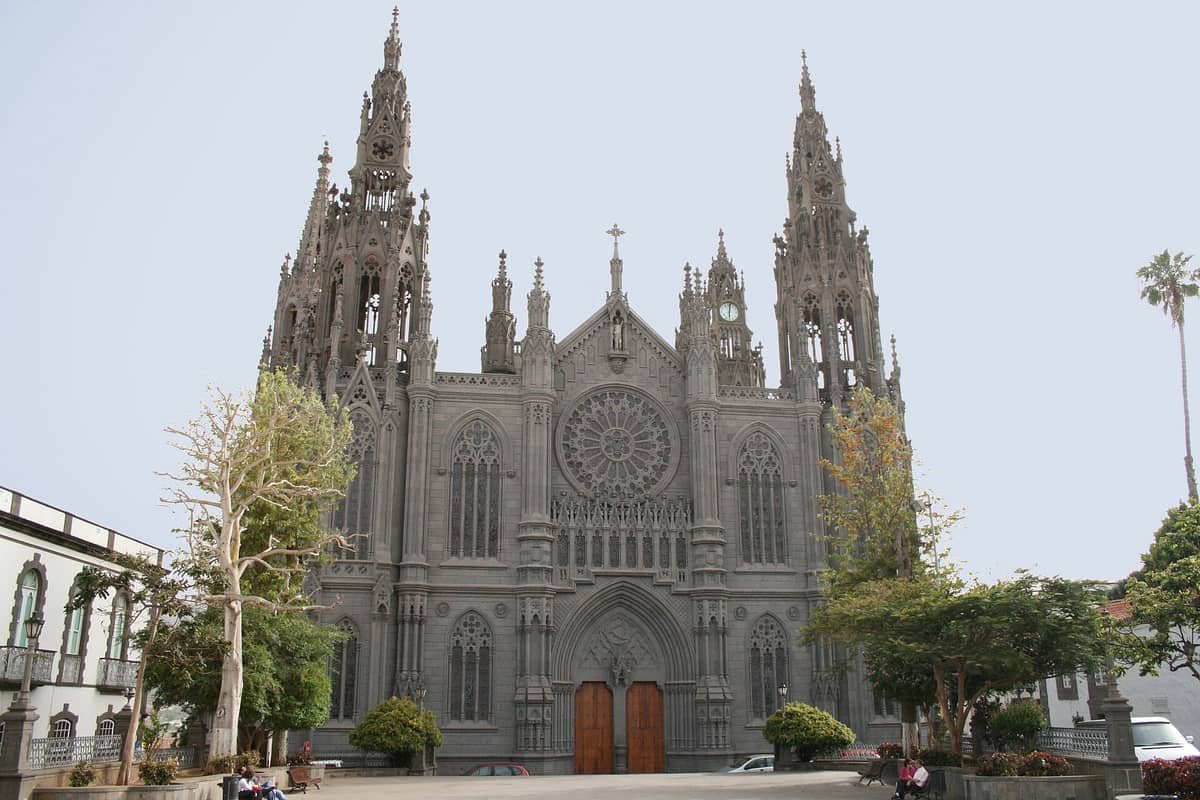
Arucas has a slightly more urban feel. Its centre has cafés and tapas bars along the streets near the church of San Juan Bautista, and on weekday afternoons it operates at the comfortable pace of a Canarian town going about its business. The church itself, a neo-Gothic structure built from dark local stone, dominates the skyline in a way that surprises visitors expecting something modest. It was constructed between 1909 and 1977 and is frequently described as a cathedral, though it carries the formal designation of a parish church.
Gáldar has the most workaday character of the three. It is a functioning agricultural and administrative centre for the northwest of the island, and its streets have the lived-in quality of a place that does not think of itself as a tourist destination. The covered market, the streets around the main square, and the proximity to important pre-Hispanic sites give it a depth that rewards slower exploration. Early mornings here, before the heat builds, are the best time to walk the town centre before the working day takes over.
💡 Local tip
Sunday is the essential day to visit Teror. The weekly market around the basilica draws vendors and shoppers from across the island and offers the best selection of local cheeseboards, chorizo, mojo sauces, honey, and handmade goods. It runs through the morning and starts winding down after midday.
What to See & Do
Teror
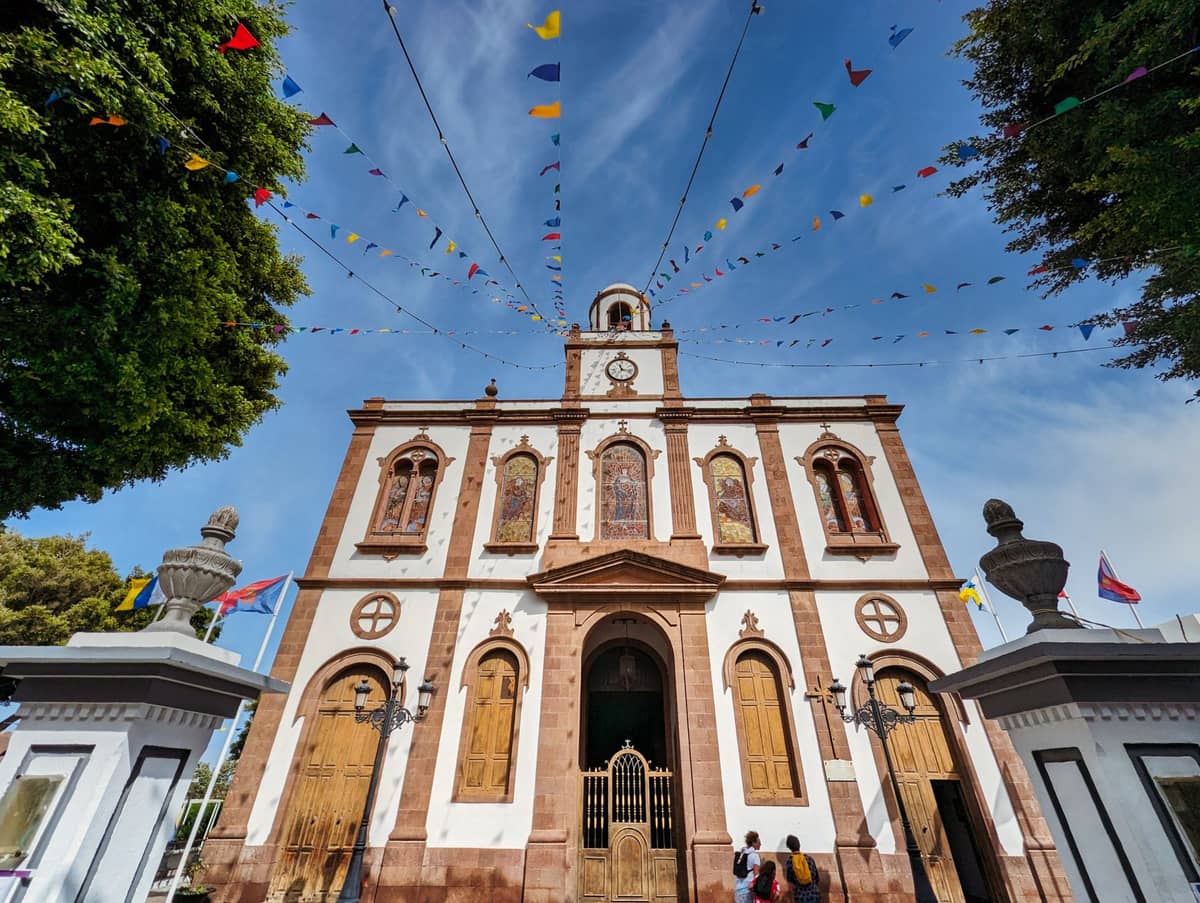
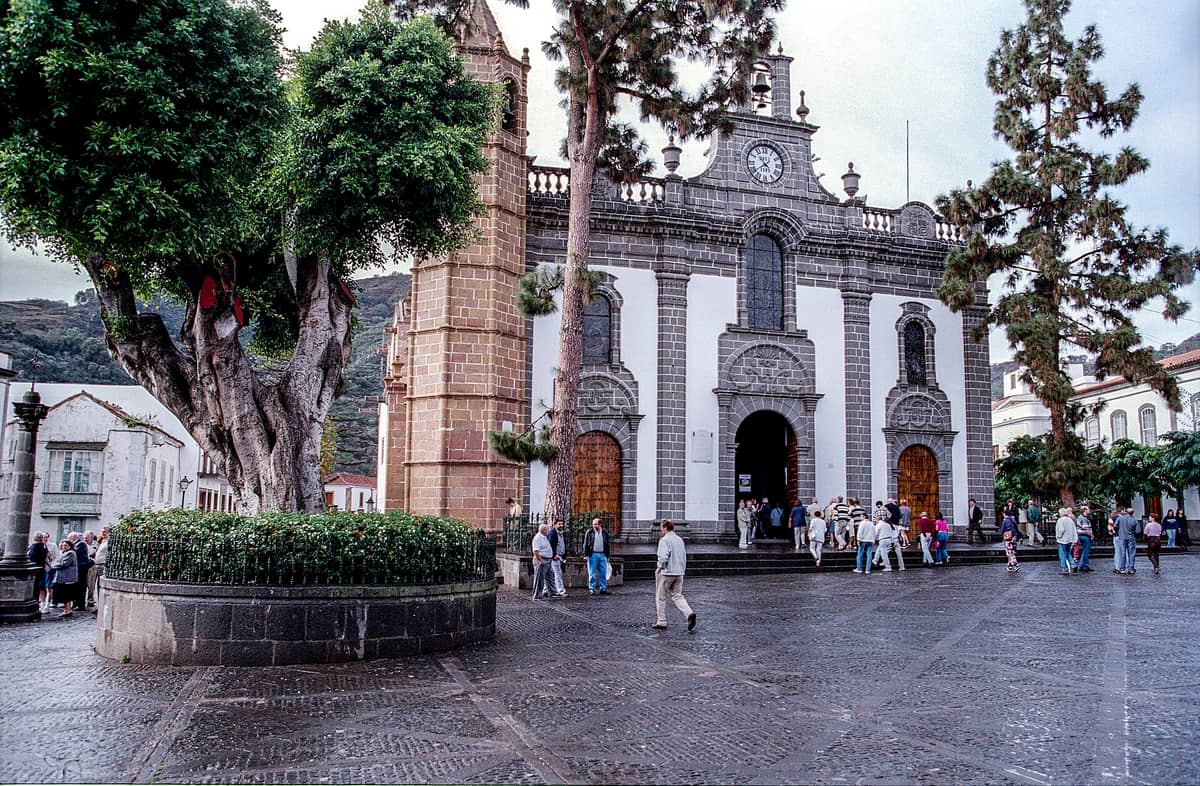
The Basílica de Nuestra Señora del Pino is the spiritual and architectural centre of Teror, and it earns the visit on its own merits. The Virgin of the Pine is the patron saint of Gran Canaria, and the basilica draws pilgrims year-round, not just during the famous Fiesta del Pino each September. The interior has layers of Canarian religious art accumulated over centuries, and the plaza surrounding it is lined with traditional houses featuring the elaborately carved wooden balconies that define the island's vernacular architecture.
The Fiesta del Pino, held annually on 8 September, is one of Gran Canaria’s most important religious festivals, drawing pilgrims and visitors from across the island in numbers that transform its normally quiet streets into something closer to a religious fair. If attending, arrive early and expect crowds on the approaches to the plaza.
Arucas
The Church of San Juan Bautista is the visual anchor of Arucas, built from dark grey trachyte quarried locally and rising with genuine Gothic ambition over the town's rooflines. Alongside it, the Arucas Municipal Garden (Jardín Municipal) offers a quiet terrace of tropical planting worth a half-hour circuit. The town's rum distillery, Destilerías Arehucas, has been producing Canarian rum since 1884 and offers tours of its aging cellar, which reportedly holds one of the largest collections of rum barrels in Spain. Check the Arucas Church attraction page for opening hours and visitor information.
Gáldar
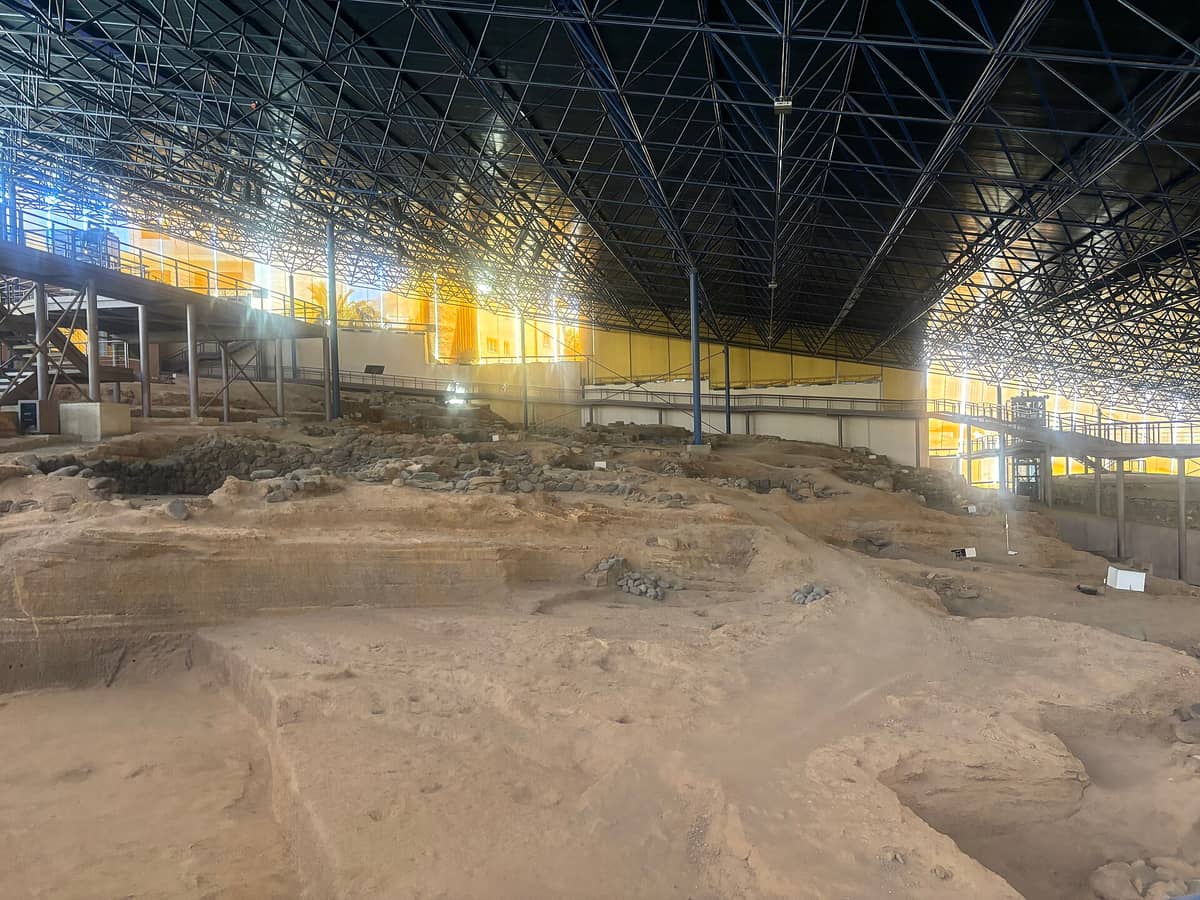
Gáldar's most significant attraction is the Cueva Pintada, a Guanche archaeological site containing painted cave chambers that represent some of the best-preserved pre-Hispanic art in the Canary Islands. The site includes a purpose-built museum that contextualizes the indigenous Canarian civilization that inhabited Gran Canaria before the Spanish conquest in the 15th century. It is genuinely important and consistently overlooked by visitors who stay in the south. Booking ahead is advisable, as access to the cave itself is managed in small groups to protect the paintings.
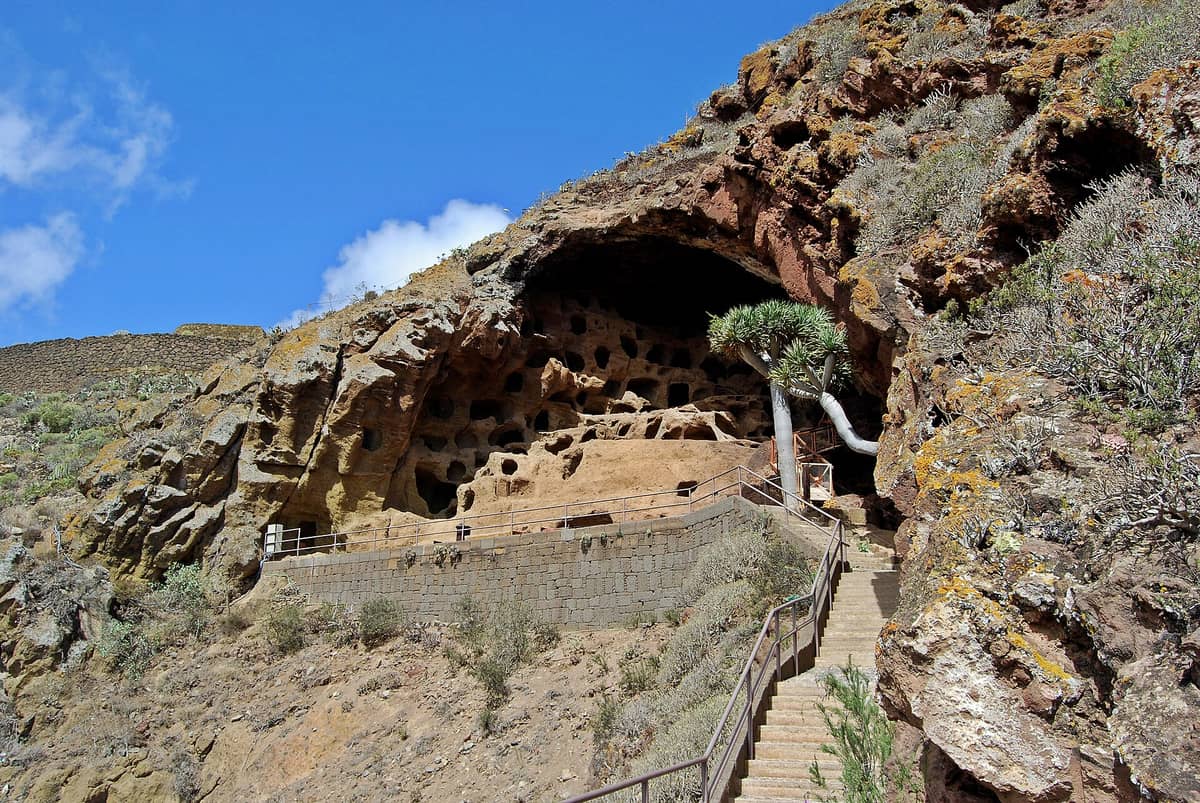
From Gáldar, it is also straightforward to continue west along the coast to Cenobio de Valeron, a remarkable complex of around 300 pre-Hispanic granary caves carved into a volcanic cliff face above the coastal plain. Both sites together make a compelling case for the northwest as one of the island's most archaeologically significant areas.
ℹ️ Good to know
The Cueva Pintada in Gáldar is closed on Mondays. Entry is by ticket and access to the painted chambers is limited to guided visits in small groups. Book online before visiting to avoid disappointment, especially in high season.
Eating & Drinking
The food culture across the northern villages is Canarian without compromise. These are not towns with international menus or fusion restaurants catering to tourist tastes. If you eat here, you are eating what local families eat, which is a significant part of the appeal.
In Teror, the chorizo de Teror is the product to seek out. It is a fresh, spreadable pork sausage seasoned with paprika and spices, traditionally eaten on bread and found in almost every deli and market stall in the town. Combined with local cheeses and a jar of mojo, it makes for an excellent self-assembled lunch. For a broader sense of what the island eats, the guide to what to eat in Gran Canaria provides useful context on papas arrugadas, gofio, and the range of Canarian staples you will encounter in the northern restaurants.
Arucas has the strongest café and bar scene of the three towns. The streets near the church support several tapas bars where workers stop for a morning coffee and toast with tomato, and where early lunches stretch into the afternoon over plates of fried fish or stewed goat. Rum from the local Arehucas distillery is the drink of choice in many bars, either straight or mixed, and ordering a local rum rather than an imported spirit is a reasonable way to signal that you are paying attention.
Gáldar's eating options are more functional than scenic, oriented toward the working population of the town. Look for the covered market for fresh produce, local cheeses from the interior, and the kind of sandwich and coffee counters that sustain a market town through its working week. There are traditional restaurants serving comida canaria, the broad category of stewed meats, boiled potatoes, and salted fish that defines Canarian home cooking, at prices well below what the tourist south charges.
Chorizo de Teror: buy from market stalls on Sunday or from delis along Calle Real de la Plaza
Local cheeses: semi-cured goat and sheep cheeses from northern farms, sold at the Sunday market
Rum from Destilerías Arehucas: available at the distillery shop and in most Arucas bars
Papas arrugadas with mojo: available in virtually every traditional restaurant across all three towns
Fresh fish: Gáldar's proximity to the north coast means coastal catches appear on menus regularly
Getting There & Around
The practical reality is that a rental car makes the northern villages significantly more accessible and allows you to combine all three in a single day with detours to coastal viewpoints and ravines along the way. The guide to getting around Gran Canaria covers the island's transport options in detail, including the Global interurban bus network and car hire logistics.
By bus from Las Palmas, each village is reachable independently. Bus 216 runs directly from Las Palmas to Teror. Arucas, being only 12 kilometres from the capital, is served by bus routes from the city and sits on the northern road corridor. For Gáldar, bus L105 runs daily between Estación San Telmo in Las Palmas and the Gáldar bus station (Estación de Guaguas), typically taking around 45 to 55 minutes depending on stops. Verify current schedules with the Global operator before travelling, as timetables and fares change.
Linking the three towns by public transport in a single day requires careful planning around departure times and will likely mean spending limited time at each. The towns are not connected to each other by direct frequent bus services, so you would generally need to return to Las Palmas between destinations or take less frequent rural routes. For most visitors, this makes a car the more practical option for a full northern circuit.
Within each town, everything worth seeing is walkable from the central square or bus stop. Teror's historic core takes about an hour to walk thoroughly at a relaxed pace. Arucas's centre and the approach to the church are similarly compact. Gáldar's town centre and the Cueva Pintada museum are within easy walking distance of the bus station.
💡 Local tip
If you are combining the northern villages with a road trip across the island, consider the route that connects Teror through the interior toward Cruz de Tejeda before descending to the south. It passes through genuinely dramatic mountain scenery and links the north's heritage towns with the island's volcanic heart.
Where to Stay
Accommodation in the northern villages is limited and largely oriented toward rural tourism rather than resort-style stays. Teror has a small number of rural guesthouses and casa rural options in and around the town, which suit visitors looking for a quiet base from which to explore the interior of the island. Staying in Teror on a Saturday night allows you to walk to the Sunday market before the tour buses arrive, which is the single best advantage of sleeping in the north.
Most visitors choose to base themselves in Las Palmas de Gran Canaria and make day trips to the northern villages. This works well, given that even Gáldar is under an hour from the capital by bus. The where to stay in Gran Canaria guide covers the full range of accommodation options across the island, including Las Palmas neighbourhoods like Santa Catalina and Triana that serve as practical bases for northern day trips.
Arucas and Gáldar have minimal tourist accommodation infrastructure. They function as day-trip destinations rather than overnight bases for most visitors, which is an honest reflection of what they offer. If you are planning an extended slow-travel itinerary focused on the rural north, look for casa rural listings in the broader municipalities rather than in the town centres themselves.
⚠️ What to skip
Do not expect resort amenities, hotel concierges, or English-speaking staff at rural accommodation in the northern interior. These are working guesthouses and farmstays. A basic level of Spanish makes the experience significantly smoother.
Practical Considerations
The northern villages are not a destination that rewards rushed visits. They are quieter, slower, and less obviously rewarding than the island's beaches or interior peaks like Roque Nublo. But for visitors interested in what Gran Canaria looked like before mass tourism reshaped its southern coast, they are irreplaceable.
The north's climate differs noticeably from the south and east. Trade winds push moisture against the northern slopes, and even on days when Las Palmas is bright and dry, Teror can be sitting in low cloud. This greenness is part of the appeal, but bring a layer if visiting between November and March. Summer visits are generally warm and clear across all three towns.
For visitors planning a broader exploration of the island, the northern circuit pairs well with a Gran Canaria road trip that incorporates both coastal and interior routes. The northwest corner around Gáldar also connects to Agaete and the Valle de Agaete, one of the most fertile and scenically striking valleys on the island.
Safety across all three towns follows the standard pattern of small Spanish municipalities: routine urban precautions apply, and none of the official tourism pages flag specific security concerns. Petty theft around busy market days in Teror is worth being aware of, as Sunday draws large crowds to a compact space. Keep bags closed and phones in pockets during the busiest market hours.
TL;DR
Teror, Arucas, and Gáldar are Gran Canaria's most rewarding northern day trips for visitors interested in history, architecture, food culture, and pre-Hispanic archaeology.
Teror is best visited on Sundays for its weekly market around the basilica; Arucas for its neo-Gothic church and rum distillery; Gáldar for the Cueva Pintada painted caves and Cenobio de Valeron.
A rental car is the most practical way to combine all three in a day. Each is individually reachable by bus from Las Palmas, but connecting between them by public transport is time-consuming.
These towns are not for visitors seeking resort amenities, international restaurants, or beach access. They suit travellers who want to see Gran Canaria beyond the tourist corridor.
Staying overnight in the north is possible through rural guesthouses, particularly in Teror, but most visitors base themselves in Las Palmas and visit on day trips.
Top Attractions in Northern Villages: Teror, Arucas & Gáldar
Three days is enough to experience Gran Canaria's remarkable range: a well-preserved colonial old town, Atlantic dune fields, volcanic mountain villages, and some of Spain's best urban beaches. This itinerary is built around real transport logistics, honest time estimates, and a deliberate mix of coast and interior.
Gran Canaria packs an extraordinary variety of beaches into one island: vast dune-backed shores in the south, a world-class urban beach in Las Palmas, sheltered family coves on the southwest coast, and raw Atlantic surf breaks in the north. This guide covers the best of all of them.
Gran Canaria earns its reputation as the 'island of eternal spring' for good reason. This guide breaks down every season, explains how the island's microclimates affect your plans, and tells you honestly when to go and when to avoid the crowds.
Gran Canaria packs extraordinary variety into 1,560 square kilometres. These are the best day trips from any base on the island, from the sacred peaks of the interior to the quiet fishing harbours of the west coast.
Gran Canaria is not a walkable island. This guide breaks down every realistic transport option, from Global bus routes and regulated taxi fares to car rental logistics and seasonal road warnings, so you can move around confidently from day one.
Gran Canaria all-inclusive resorts range from budget-friendly complexes in Playa del Inglés to upmarket retreats in Puerto de Mogán. This guide covers the best areas, realistic price expectations by season, and a clear take on when all-inclusive actually makes sense on this island.
Gran Canaria Carnival is one of Spain's biggest pre-Lent celebrations, centred on Las Palmas de Gran Canaria and running for four to five weeks each February and March. This guide covers every major event, how to get tickets, where to stay, and what first-timers consistently get wrong.
Gran Canaria has quietly become one of Europe's most practical bases for remote workers. Year-round subtropical warmth, 20+ coworking spaces, mid-range costs, and fast internet make Las Palmas de Gran Canaria a compelling alternative to Lisbon or Bali. This guide covers everything you need to plan a productive stay.
Everything you need to know about taking a ferry from Gran Canaria to the other Canary Islands. Covers the main routes, operators, realistic prices, departure ports, and the common mistakes that catch first-time travellers off guard.
Gran Canaria offers far more for couples than beach resorts. This guide covers the island's most romantic experiences, from volcanic viewpoints and wine-tasting in the interior to private catamaran trips and candlelit dinners in a harbour town that earns its 'Little Venice' nickname.
Gran Canaria packs an extraordinary amount of natural beauty, history, and culture into a single island — and a surprising amount of it is completely free. From sweeping volcanic landscapes and ancient Guanche sites to world-class urban beaches and genuinely free museums, here is how to get the most out of the island without opening your wallet.
Gran Canaria packs extraordinary variety into 1,560 square kilometres, yet most visitors see only a fraction of it. These are the volcanic ravines, pre-Hispanic ruins, wild coastlines, and slow villages that reward those willing to look beyond the southern resort strip.
December is one of the most underrated months to visit Gran Canaria. Daytime temperatures hover around 22°C, the southern beaches stay dry and sunny, and the island shifts into a relaxed festive rhythm. This guide covers the weather in detail, where to base yourself, what to do, and a few honest caveats about the rainy north.
Gran Canaria has over 130 luxury hotels spread across beach resorts, spa retreats, boutique city properties, and adults-only hideaways. This guide cuts through the marketing to tell you exactly where to stay, what to spend, and which areas suit different styles of upscale travel.
Gran Canaria nightlife spans four distinct zones, each with its own character, crowd, and closing time. This guide breaks down every major area, from the legendary Yumbo Centre to the bar-lined streets of Las Palmas, with practical advice on pricing, timing, and getting around after dark.
Gran Canaria offers genuine value if you know how to work the island's public transport network, tap into its free outdoor attractions, and eat where locals eat. This guide breaks down the real costs, the smart shortcuts, and the common mistakes that drain tourist wallets.
Gran Canaria packs semi-arid landscapes, volcanic peaks, and colonial towns into 1,560 km² — small enough to drive in a day, varied enough to spend a week exploring by car. This guide covers car rental costs, the best driving routes, the GC-200 road closure reality, and practical rules of the road so you can plan without surprises.
Both Gran Canaria and Tenerife promise year-round sunshine, dramatic scenery, and good value for European travellers. But they deliver very different holidays. This guide breaks down the real differences across beaches, landscapes, cost, family travel, and nightlife so you can stop second-guessing and start booking.
Gran Canaria's Atlantic coastline delivers world-class water sports year-round, from beginner surf lessons at Las Canteras to competition-level windsurfing at Pozo Izquierdo. This guide covers the best spots, realistic prices, seasonal conditions, and how to avoid the common pitfalls.
Gran Canaria delivers year-round sunshine, a stack of theme parks, safe beaches, and reliable public transport that make it genuinely practical for families. This guide cuts through the marketing to tell you exactly where to go, what to spend, and how to get around with children in tow.
Gran Canaria packs extraordinary hiking variety into 1,560 km². Alpine pine forests, volcanic rock formations, green ravines, and coastal cliffs are all within reach. This guide covers the best trails on the island, from quick walks to full-day mountain routes.
Gran Canaria packs an extraordinary range of landscapes, climates, and experiences into just 1,560 km². This guide cuts through the brochure language to tell you exactly who the island suits, what it does well, where it falls short, and how to decide if it belongs on your travel list.
Gran Canaria's volcanic coastline is dotted with natural sea pools carved from ancient lava flows. This guide covers the finest spots around the island, from well-equipped salinas in the northwest to wild rock pools on the west coast, with practical advice on when to go and what to expect.
Seven days is enough to experience Gran Canaria's remarkable contrasts: Atlantic beaches, volcanic peaks, colonial old towns, and quiet rural villages. This day-by-day itinerary covers the highlights without wasting a single afternoon.
Gran Canaria packs an extraordinary range of experiences into just 1,560 km². This guide covers the best things to do across the island, from world-class beaches and dramatic mountain hikes to historic old towns and boat trips, with practical advice on what's worth your time and what to skip.
Las Palmas de Gran Canaria is one of Spain's most underrated cities: a working Atlantic capital with a world-class urban beach, a remarkably preserved historic quarter, serious food culture, and year-round sunshine. This guide covers the best things to do across every corner of the city, with practical logistics, honest opinions, and no filler.
Gran Canaria's food culture runs deeper than most visitors expect. This guide covers the essential dishes, local ingredients, where to find authentic Canarian cooking, and what to skip — so you eat well from day one.
Gran Canaria divides neatly into three very different worlds: a cosmopolitan northern city, a sun-baked southern resort strip, and a rugged volcanic interior. Where you stay shapes your entire experience. This guide breaks down every main area by atmosphere, accommodation type, price range, and who it suits best.