Gran Canaria Carnival: Complete Guide to the Las Palmas Festivities
Gran Canaria Carnival is one of Spain's biggest pre-Lent celebrations, centred on Las Palmas de Gran Canaria and running for four to five weeks each February and March. This guide covers every major event, how to get tickets, where to stay, and what first-timers consistently get wrong.
TL;DR
- Gran Canaria Carnival refers specifically to the Las Palmas de Gran Canaria Carnival, running roughly from early February to mid-March each year.
- The biggest ticketed events are the Drag Queen Gala and the Carnival Queen Gala; most parades and street parties are free.
- Book accommodation near Las Canteras beach or Parque Santa Catalina months in advance — these areas sell out fast during gala weekends.
- Each municipality on the island runs its own carnival; Maspalomas and Telde have separate events with different dates.
- Check the official program at lpacarnaval.com and cross-reference with the best time to visit Gran Canaria if you are planning around the festival.
What Gran Canaria Carnival Actually Is
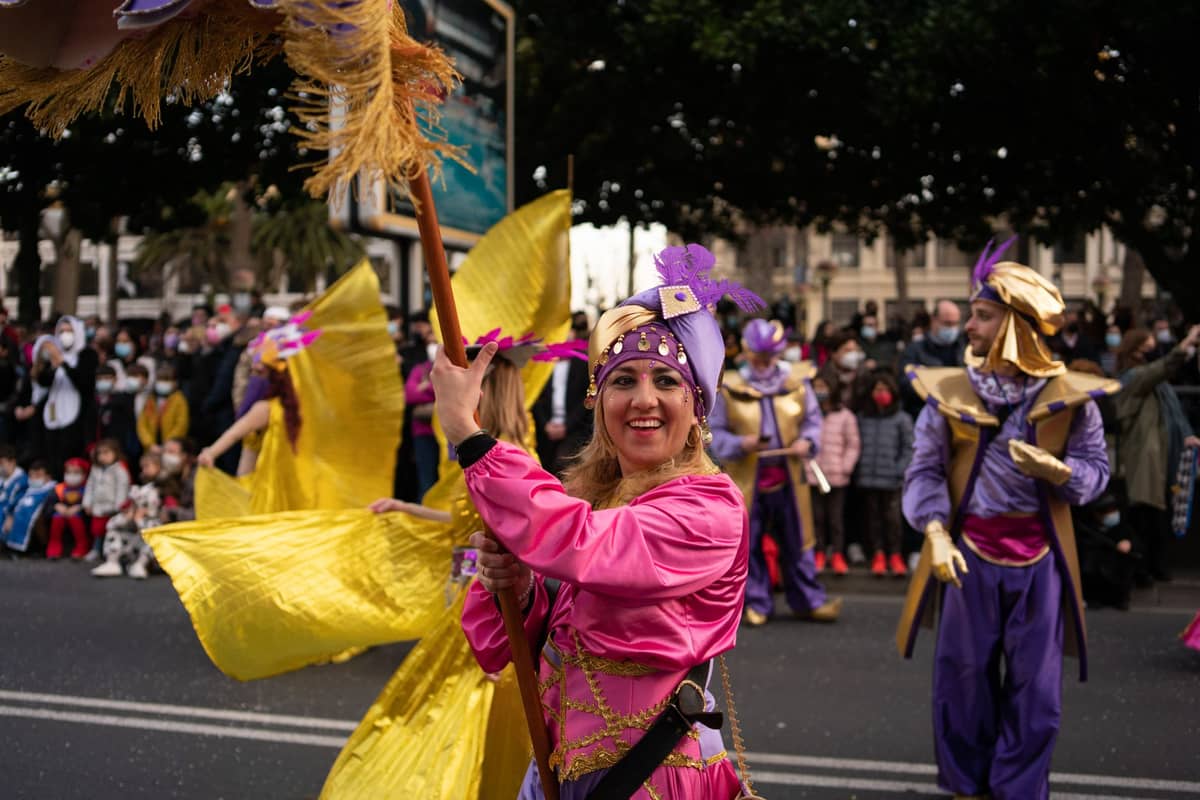
Gran Canaria Carnival is a pre-Lent festival rooted in centuries of Iberian and Atlantic tradition. On paper it is a Spanish Catholic observance marking the period before Lent. In practice it is an elaborate, weeks-long street party that combines competitive performance arts, elaborate costume culture, political satire, and some of the biggest open-air crowds in the Canary Islands. The city of Las Palmas de Gran Canaria — the capital of the island and one of Spain's largest cities, with around 380,000 residents — hosts the principal event.
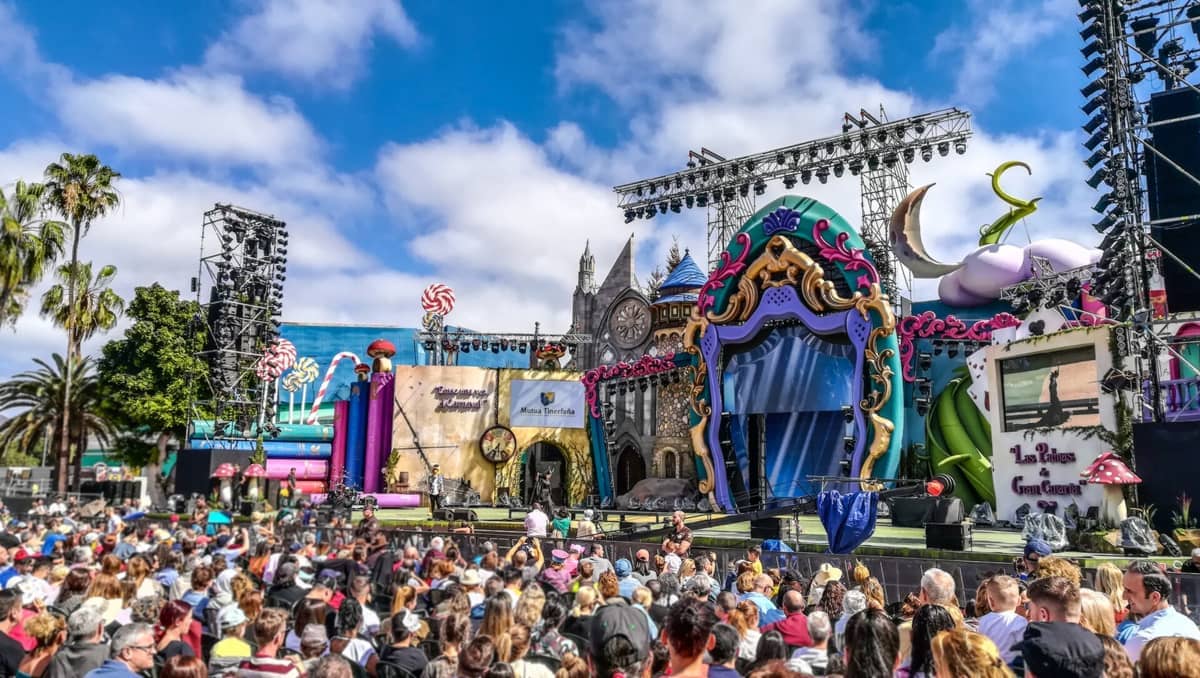
The carnival in Las Palmas consistently draws comparisons to Rio de Janeiro and the Tenerife Carnival in Santa Cruz (the other major Canarian rival). Whether it beats Tenerife is a locally contested question, but Las Palmas makes a credible case: the Drag Queen Gala alone has earned international press coverage as one of the most spectacular individual events in any European carnival. The full programme runs four to five weeks, with a concentrated peak of major events spanning roughly ten days in late February and early March.
ℹ️ Good to know
Gran Canaria is part of Spain's Canary Islands autonomous community and follows Spanish law and the euro (EUR). The island sits at UTC+0 (UTC+1 during summer daylight saving), one hour behind mainland Spain in winter. Emergency number: 112, available 24 hours in multiple languages.
The Main Events: What Happens and When
The 2025 edition ran from 8 February to 16 March, which is representative of a typical carnival calendar. Exact dates shift by a few days each year based on when Easter falls, so always verify on the official carnival site (lpacarnaval.com) before booking travel. The following breakdown uses 2025 as a reference point.
- Pregón (Opening Proclamation) The ceremonial launch of carnival, usually early February. A public figure or celebrity officially opens the festivities with a speech, often followed by music and street celebrations around Parque Santa Catalina.
- Murga Competitions (mid-to-late February) Murgas are satirical singing groups that perform original, often politically sharp compositions in costume. Multiple rounds take place over several evenings, typically between 17 and 22 February. These are beloved by locals and largely overlooked by tourists — which makes them worth attending.
- Carnival Queen Gala (late February) One of the centrepiece events, held in the Santa Catalina auditorium or a large indoor venue. Contestants in extraordinary architectural costumes — some weighing hundreds of kilograms and requiring structural support — compete for the title. In 2025 this fell on 28 February. Televised nationally in Spain.
- Main Carnival Parade and Daytime Carnival (early March) The Gran Cabalgata (main parade) draws tens of thousands of participants and spectators along the seafront and central streets. The Carnaval de Día (Daytime Carnival) follows, a more family-oriented street celebration. In 2025 these fell on 1 March.
- Drag Queen Gala (first Friday of March) Internationally recognised as the headline event. Drag performers compete in spectacular, conceptually ambitious costumes and choreography. The 2025 edition was held on 7 March. This is not a minor sideshow; it sells out and generates coverage across European media.
- Comparsas Competitions Dance troupes (comparsas) perform in coordinated, themed costumes. These competitions run across several evenings and offer some of the most visually impressive performances outside the main galas.
- Entierro de la Sardina (Burial of the Sardine) The closing ceremony, held on Las Canteras beach. A mock funeral procession mourns a symbolic sardine, which is then ceremonially burned or buried. It is a theatrical, emotional sendoff to the carnival season. In 2025 this took place on 16 March.
💡 Local tip
Carnival Tuesday (Martes de Carnaval) is a local public holiday in Las Palmas de Gran Canaria. Many offices, some shops, and services operate on reduced hours or close entirely. Plan grocery runs and logistics the day before.
Tickets: What Is Free and What Requires Booking
The split between free and ticketed events is one of the most important things to understand before planning your trip. Getting this wrong means either overpaying for something you could attend freely, or arriving at a gala without a seat.
- Free events: all street parades including the Gran Cabalgata, the Daytime Carnival (Carnaval de Día), the Pregón, murga street performances, and the Burial of the Sardine on Las Canteras beach. No ticket, no registration — just show up early for a good position.
- Ticketed events: the Drag Queen Gala, the Carnival Queen Gala, and most competitive murga and comparsa indoor finals. Tickets are sold through the official carnival platform linked from lpacarnaval.com.
- Gala tickets sell out weeks in advance, particularly for the Drag Queen Gala. Prices vary by seating category but are generally affordable by European festival standards — expect a range of roughly €15 to €50 depending on seat location and event, though verify current pricing at point of booking.
- Standing or general admission areas at some indoor venues may be available at lower cost, but expect crowding and limited sightlines from those spots.
⚠️ What to skip
Third-party resale sites do operate around Gran Canaria Carnival gala tickets. Buy only through the official carnival platform to avoid inflated prices and counterfeit tickets. If an event shows as sold out officially, it is sold out — secondary market prices can be extreme.
Where to Stay and How to Get Around During Carnival
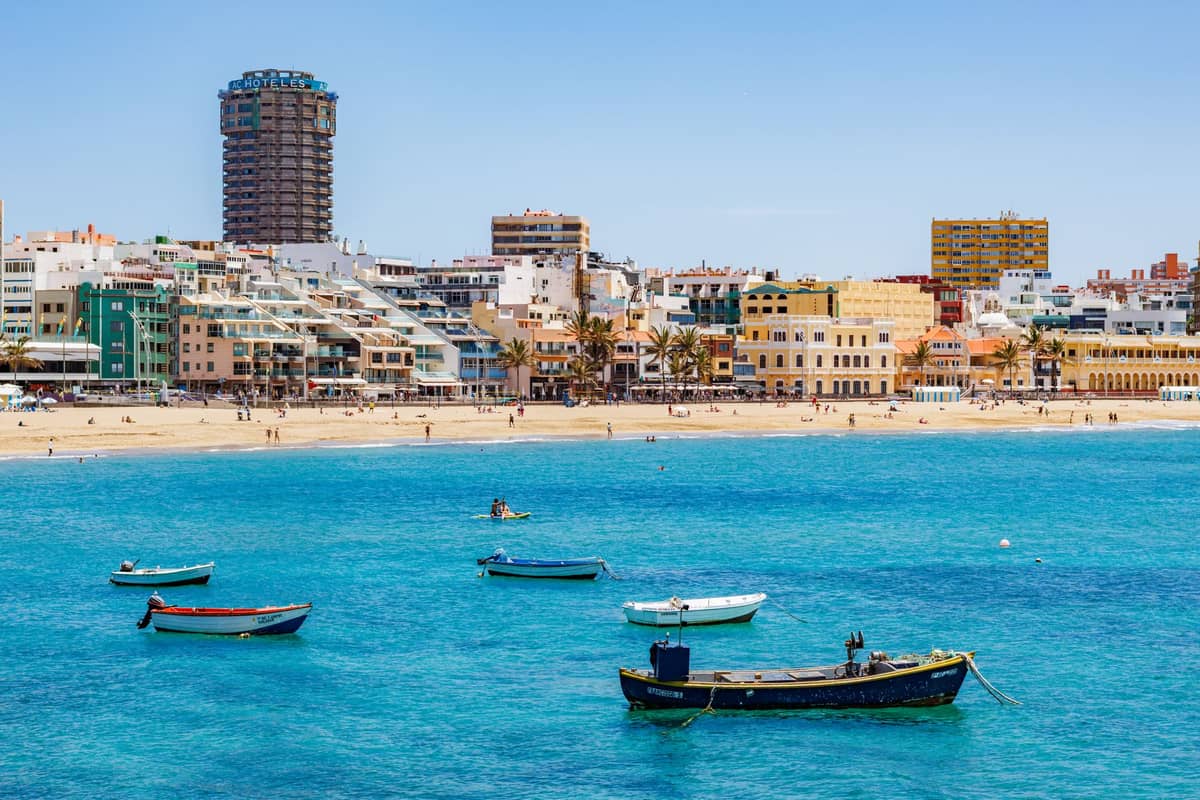
The prime base for carnival is Las Palmas de Gran Canaria, specifically the areas around Parque Santa Catalina and Las Canteras beach. Both are within walking distance of the main event venues, which matters enormously on parade nights when streets close and taxis become nearly impossible to find. Book accommodation in these neighbourhoods three to four months ahead if your dates coincide with gala weekends.
Staying in the south of the island — in Maspalomas or Playa del Inglés — is a viable option if you cannot find accommodation in Las Palmas, but it adds significant logistical complexity. The Global bus Line 1 connects the south to Las Palmas in around 50 minutes under normal conditions, but carnival nights are not normal conditions. Late-night return journeys from major events are stressful and slow. Budget for a taxi if you stay in the south and plan to attend evening galas.
Getting to Las Palmas from Gran Canaria Airport (IATA: LPA) is straightforward. Global bus Line 60 connects the airport to Santa Catalina for around €2.95 one way. A taxi costs approximately €25 to €35 depending on traffic and exact destination, and takes around 20 to 30 minutes. For full options, see the getting around Gran Canaria guide.
✨ Pro tip
On the nights of the Gran Cabalgata and the Drag Queen Gala, central Las Palmas roads close well before events begin. If you are driving or relying on taxis, build in at least 90 minutes of buffer. The urban bus network (guaguas) often adds extra services on carnival nights — check the Guaguas Municipales app or website for event-night timetables.
Other Carnivals Across the Island
Las Palmas gets the headlines, but every municipality on Gran Canaria runs its own carnival with distinct dates, themes, and character. These are not satellite events of the capital festival — they are independent celebrations with their own queen galas, murga competitions, and closing ceremonies.
The Maspalomas Carnival attracts a large international crowd, particularly from the LGBTQ+ community, and typically runs in late February or March with its own schedule. Puerto de Mogán holds a smaller, more intimate version that locals genuinely love. Telde and Agaete also have their own carnivals, each worth considering if you want a more local, less tourist-facing experience.
If you are planning a broader island trip around carnival, consider pairing the Las Palmas events with time in the interior. The mountain villages around Tejeda and Agaete offer a complete change of pace from the coastal festival energy. The Gran Canaria road trip guide covers how to combine coastal and interior stops efficiently.
Practical Tips for First-Timers
February and early March in Las Palmas means daytime temperatures around 19 to 22°C, pleasant for walking and watching parades. Evenings on the seafront can be noticeably breezy, especially on Las Canteras beach during the Burial of the Sardine. Bring a light jacket for any evening event that takes place near the water.
- Costume culture is encouraged but not mandatory. Many visitors dress up; many do not. The galas are costume competitions and the atmosphere is heightened if you participate, but there is no pressure.
- Arrive early for parade positions. The Gran Cabalgata route fills up fast; spots along Mesa y López (the main shopping street) and the waterfront promenade go first.
- Cash is useful. Street food stalls, small bars set up along parade routes, and some costume vendors prefer or only accept cash. ATMs in the Santa Catalina area queue badly on peak nights.
- Spanish is dominant at murga and comparsa events. These competitions are conducted entirely in Spanish, often in local dialect. Non-Spanish speakers can still enjoy the spectacle and energy, but the satirical content will be lost without the language.
- The Drag Queen Gala is family-attended in the sense that all ages are present in the audience, but the performances can be adult in theme and content. The daytime carnival and children's parades are the explicitly family-friendly options.
- Tap water in Las Palmas is technically safe but desalinated and has a distinct taste. Most visitors buy bottled water; this is standard practice on the island.
If carnival is your primary reason for visiting, check the where to stay in Gran Canaria guide for a full breakdown of neighbourhoods and price ranges. For everything the island offers beyond carnival, the things to do in Las Palmas de Gran Canaria guide covers the city's year-round attractions, including the historic Vegueta district and the city's excellent museum circuit.
FAQ
When is the Gran Canaria Carnival?
Las Palmas de Gran Canaria Carnival usually runs from early February into March, with exact dates shifting each year around Easter. The 2025 edition ran from 8 February to 16 March. Key events typically include the Carnival Queen Gala, the main parade and Daytime Carnival, the Drag Queen Gala, and the Burial of the Sardine. Always check lpacarnaval.com for the current year's official programme before booking.
Do I need tickets for Gran Canaria Carnival?
Most events are free, including all street parades, the Daytime Carnival, and the Burial of the Sardine. The Drag Queen Gala, Carnival Queen Gala, and indoor murga and comparsa finals require tickets, purchased through the official carnival platform at lpacarnaval.com. Gala tickets sell out weeks in advance, so book early.
Is the Drag Queen Gala suitable for all visitors?
The Drag Queen Gala is one of the carnival's headline events and is attended by a wide audience including families, but performances can be adult in theme. It is not a minor event — it is internationally recognised and sells out annually. If you are planning to attend, book tickets as soon as they go on sale.
Is Gran Canaria Carnival the same as Maspalomas Carnival?
No. Las Palmas de Gran Canaria Carnival and Maspalomas Carnival are separate events run by different municipalities, with different dates, programmes, and atmospheres. Maspalomas Carnival is particularly known for its LGBTQ+ focus and international crowd. Each municipality on the island runs its own independent carnival.
Where should I stay for Gran Canaria Carnival?
The best base is central Las Palmas de Gran Canaria, specifically near Parque Santa Catalina or Las Canteras beach. These put you within walking distance of major venues, which is essential on nights when roads close for events. Book three to four months in advance for gala weekends. Staying in the south (Maspalomas, Playa del Inglés) is possible but adds significant travel complexity on event nights.