Best Things to Do in Las Palmas de Gran Canaria: The Definitive Guide
Las Palmas de Gran Canaria is one of Spain's most underrated cities: a working Atlantic capital with a world-class urban beach, a remarkably preserved historic quarter, serious food culture, and year-round sunshine. This guide covers the best things to do across every corner of the city, with practical logistics, honest opinions, and no filler.
TL;DR
- Las Palmas de Gran Canaria is the island's capital city, not the island itself. With around 380,000 residents, it is the largest city in the Canary Islands and Spain's ninth-largest municipality.
- The top experiences split cleanly into three zones: the historic district of Vegueta, the urban beach at Las Canteras, and the commercial and cultural hub around Santa Catalina.
- The city has a subtropical climate with average winter highs around 21°C and summer highs around 27°C. Rain is rare outside November to February.
- Getting around is easy on the urban guaguas (municipal buses) for around €1.40 per trip, or €5 for a 24-hour tourist pass on Guaguas Municipales.
- Las Palmas also works well as a base for day trips across Gran Canaria, including the dunes, mountain villages, and natural pools.
Vegueta: The Historic Quarter
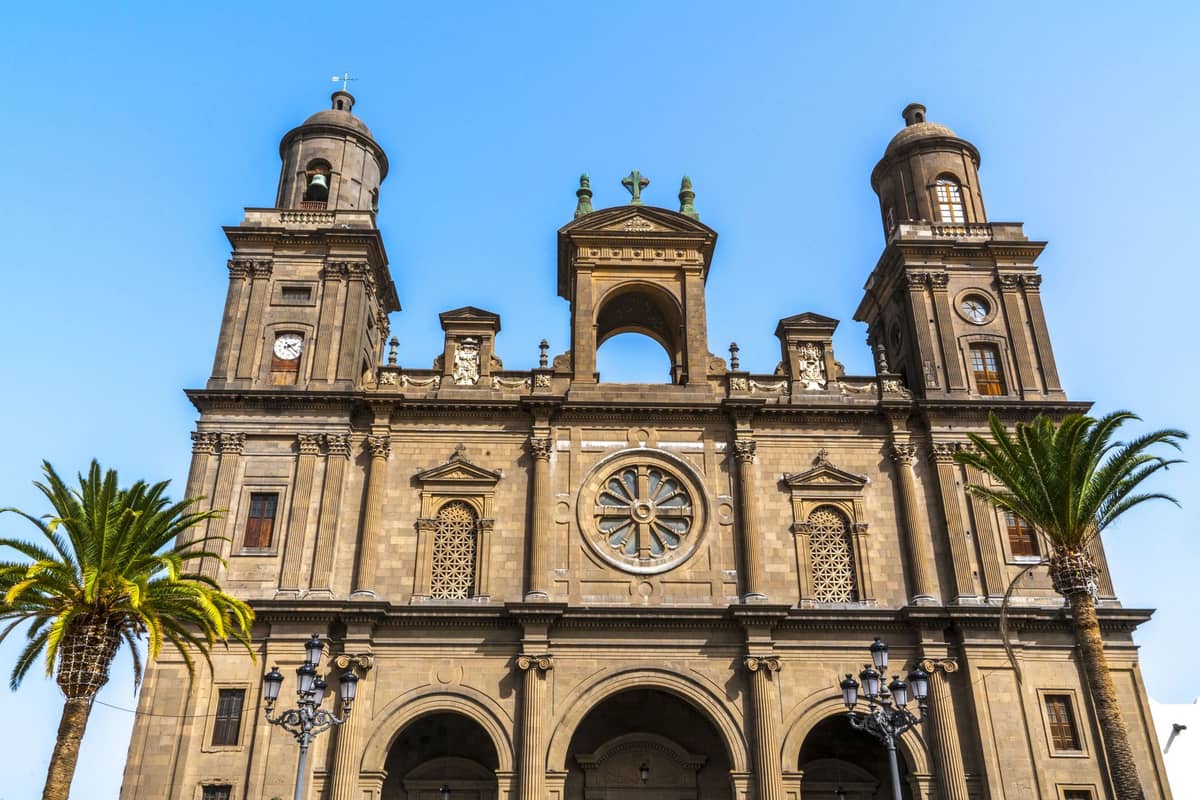
Vegueta is the oldest part of Las Palmas and the place to start any serious visit. The district dates to the late 15th century, when the Spanish Crown established the first permanent settlement on Gran Canaria. The street grid, the colonial plazas, and much of the architecture have survived largely intact. Walking through it feels genuinely different from the resort side of the island. The Catedral de Santa Ana anchors the neighbourhood, its facade overlooking a wide square that fills with locals in the early evenings.
Just off the cathedral square, the Casa de Colón is one of the city's most historically significant buildings. It served as the residence of the island's governors and, according to local tradition, is where Christopher Columbus stopped during his 1492 voyage. The museum inside covers Canarian and Atlantic history across several beautifully restored courtyard rooms, and admission is free. Allow 60 to 90 minutes.
The Museo Canario nearby is the most serious archaeological museum on the island, covering the pre-Hispanic Guanche culture in depth. The collection includes skulls, mummies, pottery, and tools from the island's indigenous population. It is scholarly and unhurried, and far less visited than it deserves to be. Entry costs around €6 for adults. On Sunday mornings, the Vegueta market takes over the streets around the district, worth factoring into your timing.
💡 Local tip
Vegueta is best explored on foot. City bus Lines 12 (Port–Vegueta) and 17 (Auditorium–Triana) stop nearby. The streets are narrow and often car-free, and the best courtyards are tucked behind unmarked doors. Look up — the carved wooden balconies on residential buildings are a defining feature of Canarian architecture.
Las Canteras Beach and the Santa Catalina Area
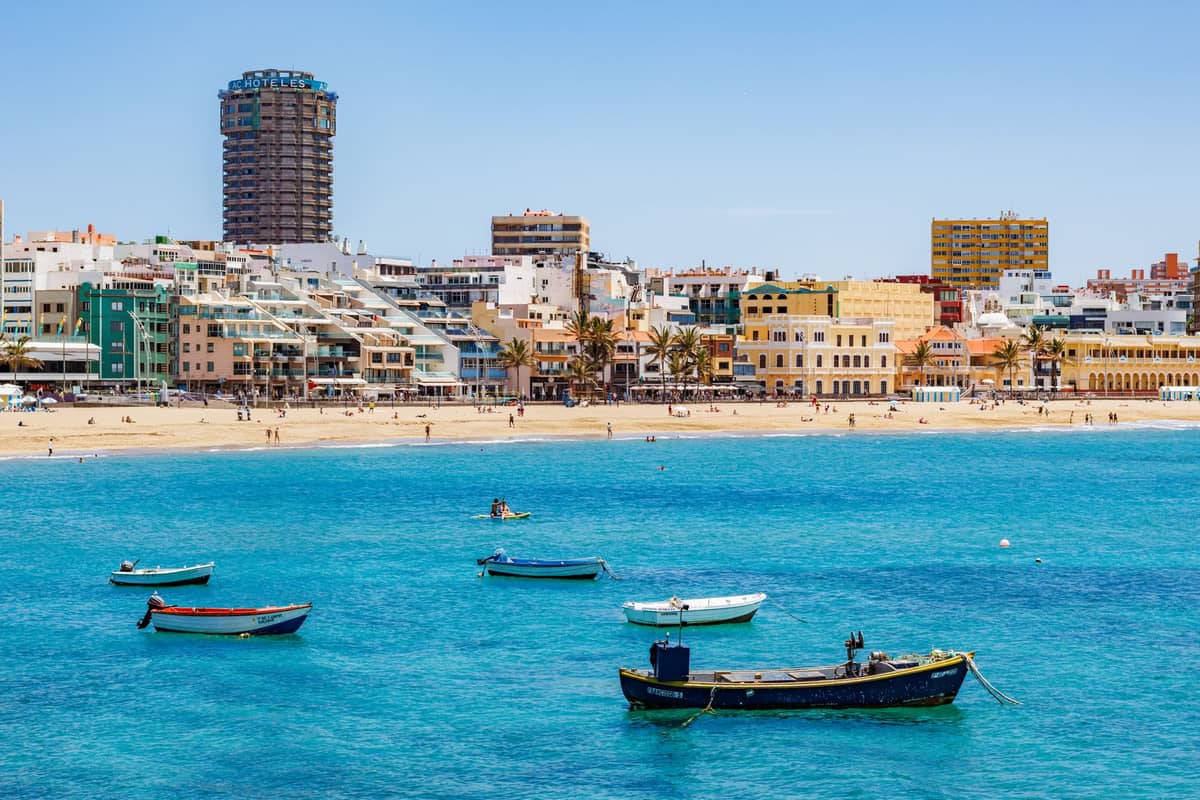
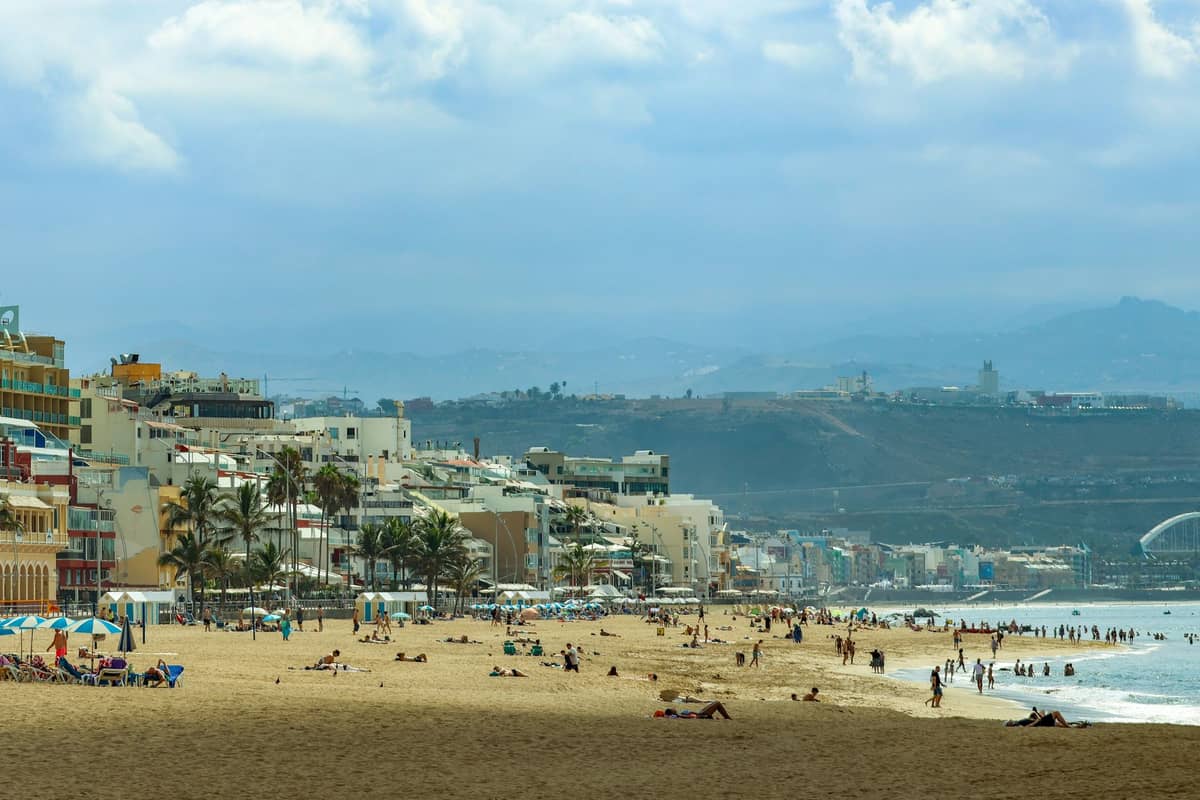
Las Canteras is a 3-kilometre urban beach that runs along the west side of the city's peninsula. It is regularly ranked among the best city beaches in Europe, and the ranking is not undeserved. A natural lava reef called La Barra runs parallel to most of the beach, creating a sheltered lagoon that is calm enough for swimmers of all levels while keeping the water clean and clear. The northern end, near El Confital, is rougher and draws surfers.
The promenade (Paseo de Las Canteras) behind the beach is lined with restaurants, cafes, and ice cream shops. It is functional and lively without being particularly polished. Early mornings are the best time to walk it — locals swim before work, older residents do laps in the natural pool at the southern end, and the light off the Atlantic is exceptional. The beach gets busy on weekends year-round given the city's population. For more context on the full beach experience, the Las Canteras neighbourhood guide covers accommodation and dining in detail.
A short walk south from the beach, Parque de Santa Catalina is the city's main transport hub and a social crossroads. The park itself is nothing special aesthetically, but the Elder Museum of Science and Technology on its edge is genuinely excellent for families and curious adults alike. Nearby, the Poema del Mar Aquarium is one of the most ambitious aquariums in Europe, with a deep-ocean tank that recreates a 7,000-metre underwater descent. Admission is around €18–20 for adults. Book in advance for weekend visits.
⚠️ What to skip
Las Canteras beach does not have lifeguards posted year-round. Swim within the reef area if you are not a strong swimmer, particularly from October to March when swells pick up at the northern end. The water quality is consistently monitored and generally excellent, but always check the flag system on the day.
Triana and the City Centre
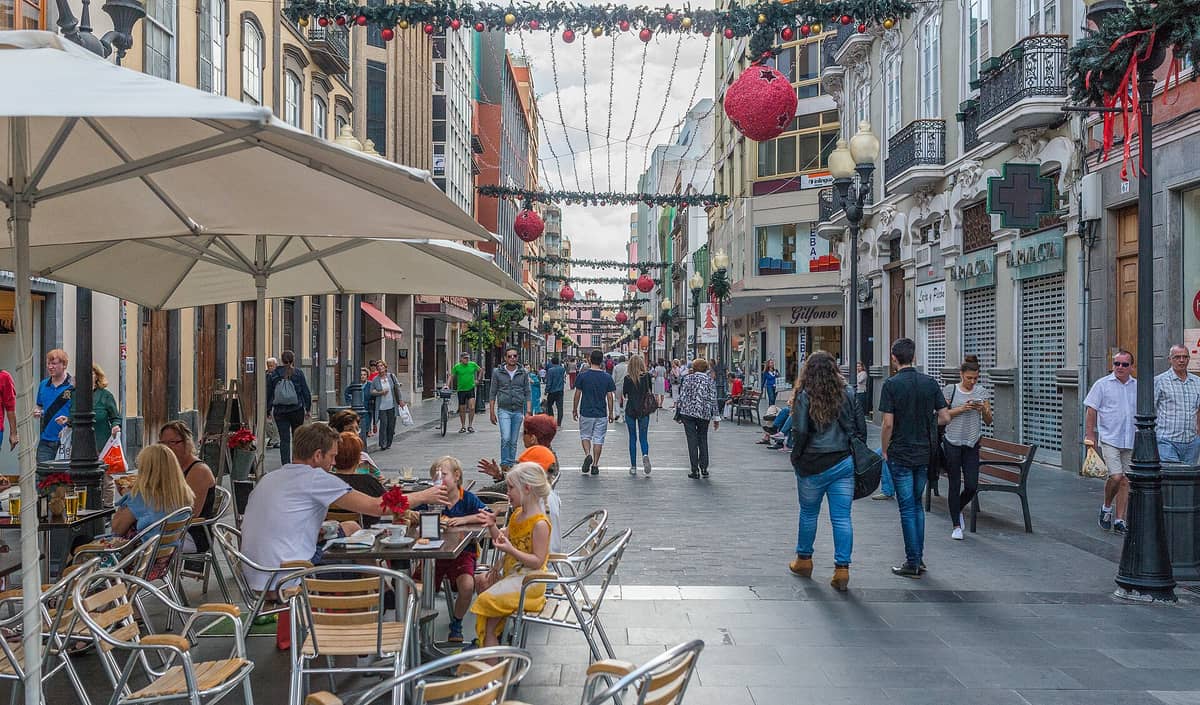
Triana is the pedestrianised shopping district that connects Vegueta to the Santa Catalina area. Calle Mayor de Triana is the main street: a wide, largely car-free boulevard with a mix of independent shops, old-school bars, and Canarian pastry shops. It is where the city does its daily business, and that ordinariness is part of its appeal. The architecture is 19th and early 20th century, including several examples of Canarian Modernism that are easy to miss if you are walking fast. Bus Line 17 serves the Triana district directly.
At the southern edge of Triana, the Parque Doramas is a quiet formal garden named after the last Guanche chieftain. It contains the Pueblo Canario, a recreated traditional village built in the 1930s that hosts folk music and dance performances on Sunday mornings. Adjacent to the park, the Santa Catalina Hotel is a landmark building from the same era and worth walking past even if you are not staying there. The park is small but genuinely pleasant and rarely crowded.
Museums, Culture, and Rainy-Day Options
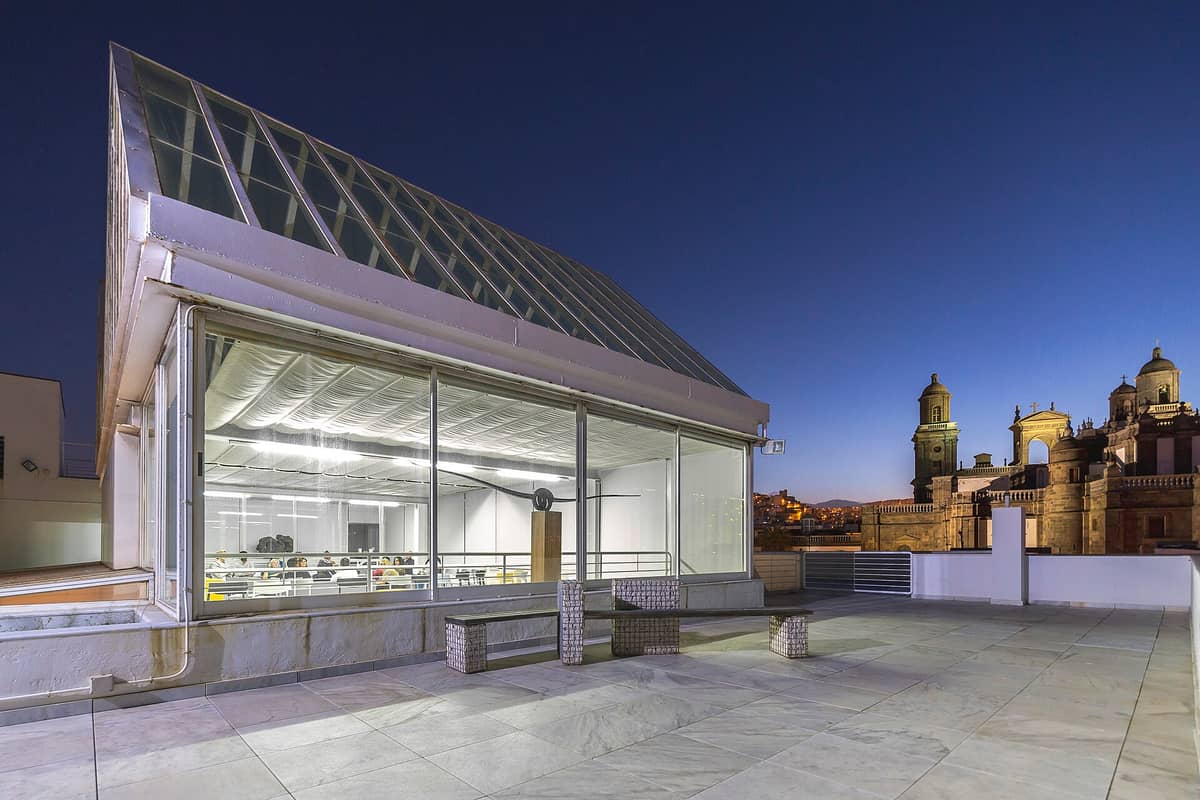
Las Palmas has a deeper cultural offer than most visitors expect. In addition to the Casa de Colón and Museo Canario mentioned above, the Centro Atlántico de Arte Moderno (CAAM) in Vegueta is a serious contemporary art museum with changing exhibitions focused on Atlantic and African connections. Entry is free for the permanent collection. The building itself, a conversion of an 18th-century mansion, is part of the experience.
The Casa-Museo Pérez Galdós is the birthplace of Spain's most celebrated 19th-century novelist, Benito Pérez Galdós. The house has been restored to reflect the period and gives a rare glimpse into upper-middle-class Canarian domestic life from that era. It is small, well-curated, and typically free to enter. Castillo de la Luz near the port is a restored 15th-century fortress that now hosts rotating art exhibitions, usually free. The setting on the waterfront is appealing even without the art.
- Casa de Colón Colonial history and the Columbus connection. Free entry. Allow 90 minutes.
- Museo Canario Pre-Hispanic Guanche archaeology. Around €6 adults. Scholarly but rewarding.
- CAAM Contemporary art with an Atlantic focus. Free permanent collection. In Vegueta.
- Elder Museum Science and technology museum. Family-friendly. Near Parque de Santa Catalina.
- Poema del Mar Aquarium One of Europe's largest aquariums. Around €18–20. Book ahead for weekends.
- Castillo de la Luz Restored 15th-century fort near the port, free rotating exhibitions.
Eating, Drinking, and Markets
The food in Las Palmas is underrated even by Canary Islands standards. Vegueta's side streets have several traditional restaurants serving papas arrugadas with mojo rojo or verde, fresh local fish, and ropa vieja (a Canarian chickpea and meat stew that bears no resemblance to the Cuban version). For a deeper look at what and where to eat, the Gran Canaria food guide covers regional dishes, markets, and dining customs across the island.
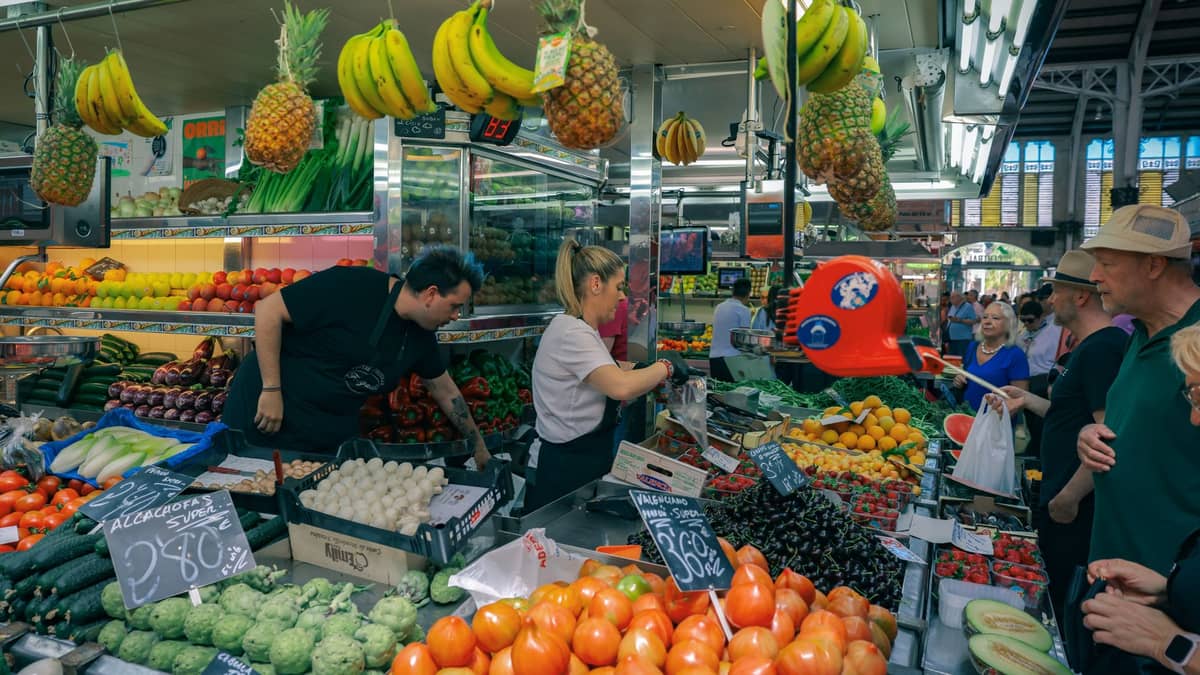
The Mercado de Vegueta, located in a 19th-century market hall on Calle Galicia, is one of the best food markets in the Canary Islands. It operates from early morning until around 14:00 Monday to Thursday, and until about 14:30 on Fridays and Saturdays; it is closed on Sundays. The produce section is stocked with tropical fruit from the island's north: mangoes, avocados, chirimoyas (custard apples), and papaya at prices well below what you find in tourist areas. The fish and meat counters are used by professional cooks. Come before 10am for the full experience.
✨ Pro tip
For coffee, skip the beachfront cafes on Las Canteras and head into Triana or Vegueta. The Canarian café con leche culture runs on small, strong cups served at the counter. Prices at local bars are typically €1.20–1.80 per coffee, versus €3–4 at tourist-facing spots on the promenade.
Practical Logistics: Getting Around and Timing Your Visit
Las Palmas is a straightforward city to navigate. The urban bus network, Guaguas Municipales, covers all major neighbourhoods. A single trip costs €1.40, and using rechargeable cards such as BonoGuagua or TransGC can reduce individual fares to around €0.85 if you are staying longer. Taxis are metered and generally reliable. Ride-hailing apps do operate in the city, though availability fluctuates and should be confirmed locally.
From Gran Canaria Airport (IATA: LPA), the airport sits on the east coast between Las Palmas and the southern resorts. Bus Line 60 connects the airport to Santa Catalina in central Las Palmas for around €2.95 (or €2.30 if you get off at San Telmo). A taxi costs approximately €25–35 depending on your exact destination in the city and takes 20–30 minutes. The airport also serves the south directly: Line 66 runs to Maspalomas and Line 91 connects to Puerto de Mogán via multiple southern stops.
- Best months for city sightseeing: March to May and September to November, when temperatures are comfortable and crowds at Las Canteras are lighter than peak summer.
- Best months for beach swimming: May to October, when sea temperatures reach their warmest.
- Rain risk: low year-round, but November to February occasionally brings Atlantic storms. Still far drier than mainland Spain in winter.
- Carnival: Las Palmas hosts one of Spain's largest carnivals, typically in February or early March. The city is electric but hotels book out months in advance.
- Avoid late July to August at Las Canteras on weekends: the beach fills with city residents and can feel overcrowded by mid-morning.
Las Palmas works well as a base for exploring the rest of the island. The south's famous dunes at Maspalomas are around 50 minutes by bus. Mountain villages like Tejeda and the summit at Pico de las Nieves are accessible by bus or car. For those planning to move around the island, a guide to getting around Gran Canaria covers all transport options in depth.
ℹ️ Good to know
Note on terminology: 'Las Palmas' in common usage refers to Las Palmas de Gran Canaria, the city. It is not the same as Gran Canaria the island. When searching for transport, accommodation, or activities, make sure you are looking at city-level information versus island-wide information, as the two are often conflated on booking platforms and travel sites.
FAQ
How many days do you need in Las Palmas de Gran Canaria?
Two full days covers the main highlights comfortably: one day for Vegueta, the museums, and the city centre; one day based at Las Canteras with the aquarium or Elder Museum worked in. A third day allows for the Triana district, Parque Doramas, and slower exploration. If you are combining Las Palmas with the rest of Gran Canaria, three to four nights in the city is a good anchor.
Is Las Palmas de Gran Canaria worth visiting compared to the south?
Yes, and for different reasons. The south (Maspalomas, Playa del Inglés, Puerto Rico) is built for sun-and-beach resort tourism. Las Palmas is a real city with a working population, a genuine food culture, major museums, and one of Spain's best urban beaches. Neither is better; they serve different kinds of trips. Many visitors make the mistake of treating Las Palmas as a half-day stop when it easily merits two to three days.
What is the best neighbourhood to stay in Las Palmas?
Las Canteras is the most practical choice for most visitors: you are on the beach, close to Santa Catalina transport hub, and a 20-minute walk or short bus ride from Vegueta. Vegueta itself has some boutique accommodation options and suits travellers who prefer a quieter, more residential atmosphere. Triana is central and convenient but has less character as a base.
Is it safe to swim at Las Canteras beach?
The beach is generally safe for swimming within the reef area, where the water is sheltered and calm. Always check the flag system posted at the beach. The northern end near El Confital has stronger currents and is not suitable for casual swimmers. Water quality is regularly monitored and consistently good.
What is the best way to get from Las Palmas to Maspalomas?
Global bus Line 1 runs from Las Palmas to Maspalomas along the coastal route and takes around 60 minutes. It is the most economical option at a few euros each way. A taxi costs considerably more. If you plan to explore multiple southern towns or the interior, renting a car for a day gives significantly more flexibility. Note that some natural sites on the island require advance reservation.