Vegueta Market: Inside the Oldest Covered Market in the Canary Islands
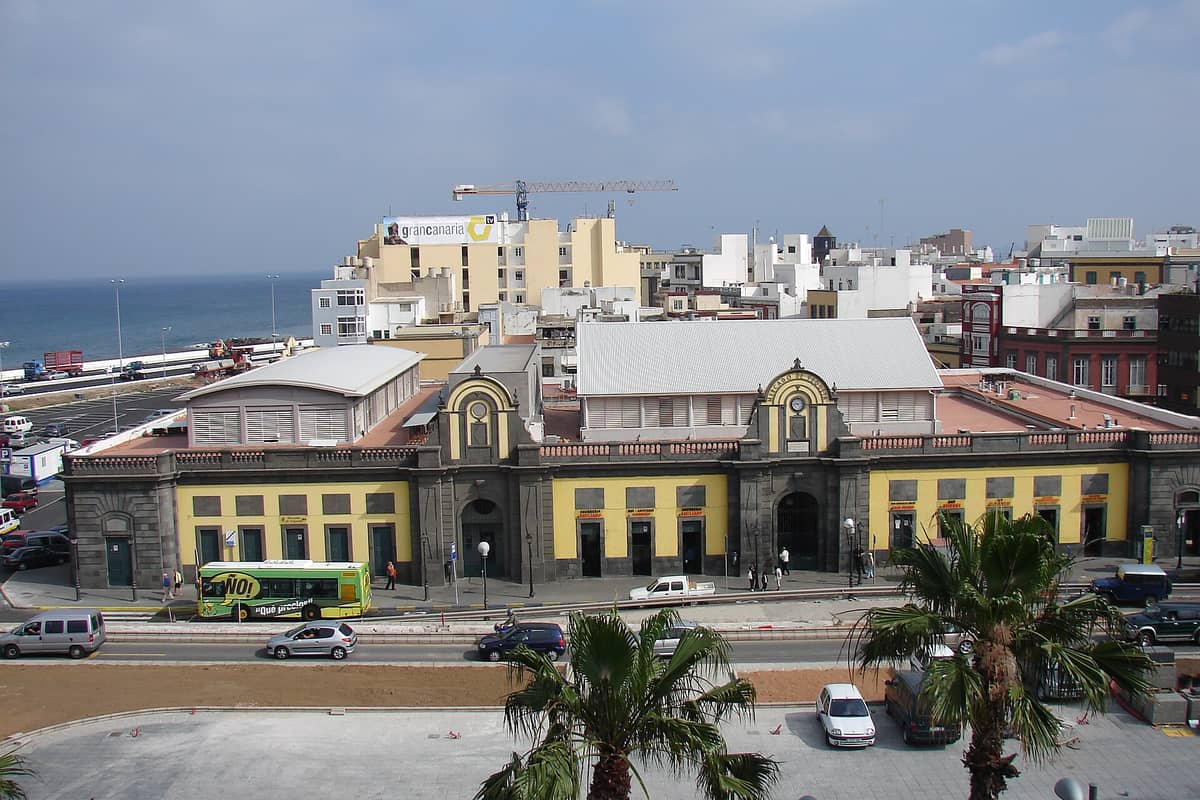
Mercado de Vegueta is a century-old covered food market at the heart of Las Palmas de Gran Canaria's historic quarter. Around 40 stalls sell fresh produce, local cheese, Canarian mojo, and more inside a striking orange building on Calle Mendizábal. Free to enter and open on weekday mornings, it offers a genuine slice of daily island life.
Quick Facts
- Location
- Calle Mendizábal 1, Vegueta, Las Palmas de Gran Canaria
- Getting There
- City bus (guagua) to Vegueta, then a short walk; no metro on the island
- Time Needed
- 30–60 minutes for the market; pair with a longer Vegueta walking loop
- Cost
- Free entry; budget euros for produce, cheese, or prepared food
- Best for
- Food lovers, self-caterers, curious travellers who want daily local life rather than tourist shops
- Official website
- www.mercadovegueta.com
What Vegueta Market Actually Is
Mercado de Vegueta is the oldest covered market in the Canary Islands, a title that carries real weight in a city as historically layered as Las Palmas de Gran Canaria. The building itself is impossible to miss: a broad, orange-painted façade on Calle Mendizábal that stands in deliberate contrast to the pale stone of the surrounding colonial architecture. Inside, around 40 stalls are arranged in a compact indoor hall lit by a combination of overhead skylights and fluorescent strip lighting, which gives the space a warm, slightly timeless quality on a clear morning.
This is not a tourist market selling magnets and woven bags. It is a working food hall where Las Palmas residents shop for their weekly groceries, and that distinction matters enormously to the quality of what you find here. The vendors are mostly long-standing stallholders with deep knowledge of their products, and the prices reflect local demand rather than visitor mark-ups.
The market sits in the Vegueta historic quarter, a short walk from the Cathedral of Santa Ana and the Casa de Colón. Combining all three into a single morning is a very efficient way to understand what makes the old town tick.
What You'll Find Inside
The stall mix skews heavily toward fresh produce: tropical and subtropical fruits that simply aren't available at this ripeness outside the islands, root vegetables, leafy greens, and herbs. Look for papaya, custard apple (chirimoya), and various varieties of banana that don't travel well enough to reach mainland supermarkets. Alongside the fruit and vegetable stands, several stalls specialise in locally produced cheese, including the soft, slightly tangy fresh goat's cheese that is a staple of Canarian cooking.
You'll also find stalls selling mojo rojo and mojo verde, the island's two signature sauces, along with honey from the inland apiaries and a small selection of dried goods, pulses, and spices. A few counters sell fresh fish and meat, with the catch depending on what came in that morning. The smells shift as you move through the hall: from the mineral coolness near the fish counter to the sweet, almost floral warmth around the fruit stands.
💡 Local tip
If you're self-catering or staying in an apartment, arrive before 09:00 on a Friday or Saturday morning for the widest selection. Stallholders begin selling off surplus from around 13:00 on any day, but the best produce is gone well before then.
How the Market Changes Through the Morning
The market opens at 07:00 Monday through Thursday (07:00–14:00), and 07:00–14:30 on Fridays and Saturdays; closed Sundays. The first hour is the most authentically local: pensioners with wheeled shopping trolleys, café workers restocking for the day, and stallholders still finishing their setups. Conversation is unhurried and almost entirely in Spanish. English is understood at some stalls but not all, so a few basic Spanish phrases go a long way.
By around 09:30, the hall reaches its peak energy. The light through the skylights is at its best angle, the produce displays are fully stocked, and there is enough foot traffic to make the space feel alive without becoming uncomfortable to navigate. This is the ideal window for photography. By 12:00, the crowd thins out again, and the atmosphere shifts toward a quieter, end-of-morning pace as vendors begin wrapping remaining stock.
⚠️ What to skip
The market is closed on Sundays. The market is closed on Sundays. Do not rely on the food market being open if you plan a weekend morning visit.
The Historical and Architectural Context
Vegueta is the oldest neighbourhood in Las Palmas de Gran Canaria, and the city itself is one of the oldest Spanish colonial foundations in the Atlantic. The market fits into a neighbourhood that has been a centre of daily trade for centuries. Its current orange-painted building on Calle Mendizábal serves as a quiet but deliberate marker of continuity: in a district full of formal monuments and museums, the market is the living institution, the one place where the architecture of daily life has remained essentially unchanged in purpose even as the city grew around it.
The surrounding streets amplify the experience. Stone pavements, painted wooden balconies on upper-floor residences, and the occasional smell of fresh bread from a nearby bakery create a context that no museum exhibit can replicate. Walking from the market toward the cathedral takes less than five minutes and passes through one of the best-preserved colonial streetscapes in the Canary Islands.
For a broader understanding of what the Vegueta district offers beyond the market, the neighbourhood guide covers the full quarter in detail, including the best routes between the major sights.Vegueta covers the full quarter in detail, including the best routes between the major sights.
Getting There and Getting Around
Gran Canaria has no metro system. Within Las Palmas de Gran Canaria, the urban bus network (locally called guaguas) connects all main neighbourhoods. The Vegueta area is served by several city lines and is the most practical point of arrival. From there, the market on Calle Mendizábal is a short, flat walk of under 10 minutes through the historic quarter.
If you're coming from the airport (IATA: LPA), the Global interurban bus network connects directly to the city, with fares typically around €2.95 for the airport-to-Las Palmas route on Line 60, though fares change periodically and should be verified before travel. Taxis from the airport to central Las Palmas typically run in the €25–35 range depending on time of day and exact destination. Verify current fares before your trip.
The market is on ground level with direct street access. No ticket barriers or formal entrance procedures exist. Visitors with pushchairs or wheelchairs should be aware that while the building itself is at street level, the cobblestone streets of Vegueta can be uneven; the direct approach along Calle Mendizábal is manageable, but side streets are less predictable. For specific accessibility queries, the market can be contacted by phone.
ℹ️ Good to know
The TransGC rechargeable card reduces urban bus fares significantly compared to paying cash. If you're spending more than a couple of days in Las Palmas, it's worth picking one up. Fares and card details are subject to change; check the current rates with the bus operator before your trip.
Honest Assessment: What This Market Is and Isn't
Vegueta Market is a genuinely good food market with real historical depth. That said, visitors expecting a sprawling covered market on the scale of, say, La Boqueria in Barcelona or Mercado Central in Valencia will find it modest in size. Forty stalls in a single hall is compact, and it's possible to see everything in 20 minutes if you're moving quickly. The value of this place is in spending time, not covering ground.
Travellers staying in the southern resorts around Maspalomas or Playa del Inglés and making a day trip to Las Palmas may find the market feels like a brief stop rather than a destination in itself. It works best when combined with a broader walking loop through Vegueta.
The market pairs naturally with The market pairs naturally with the Museo Canario, which is within easy walking distance and provides archaeological context for the island's pre-Hispanic history. Together, these two stops give you both the living culture and the deep history of the old quarter in a single morning.Museo Canario, which is within easy walking distance and provides archaeological context for the island's pre-Hispanic history. Together, these two stops give you both the living culture and the deep history of the old quarter in a single morning.
If your interest is specifically in food culture across the island, the guide to local Canarian cuisine puts the market's products into a broader culinary context, explaining how ingredients like mojo, papas arrugadas, and fresh goat's cheese fit into the wider Canarian table.what to eat in Gran Canaria puts the market's products into a broader culinary context, explaining how ingredients like mojo, papas arrugadas, and fresh goat's cheese fit into the wider Canarian table.
Insider Tips
- The stalls closest to the main entrance tend to carry the most photogenic displays and attract the most attention. Walk to the back of the hall for the more utilitarian stalls selling dried goods, local honey, and spices.
- If you ask vendors about their products in even broken Spanish, many will offer small tastings of cheese or sliced fruit. This is not a formal policy, just a result of long-standing stall culture in a neighbourhood market where regulars are known by name.
- On Friday mornings, the market runs until 14:30 rather than 14:00 and tends to draw a larger crowd of weekly shoppers. It's the best single day to visit for atmosphere, but arrive before 10:00 if you want the first pick of the fish counter.
- The orange building is striking in morning light from around 09:00 to 11:00. The best exterior photograph is taken from the opposite side of Calle Mendizábal looking directly at the façade with the street empty or lightly trafficked.
- There is no café inside the market itself. For coffee after your visit, the streets surrounding Plaza de Santo Domingo, There is no café inside the market itself. For coffee after your visit, the streets surrounding Plaza de Santo Domingo have several small local cafés.
Who Is Vegueta Market For?
- Food travellers and self-caterers wanting locally grown subtropical produce, Canarian cheese, and artisan condiments
- Visitors interested in everyday Canarian culture and neighbourhood life rather than staged tourist experiences
- Photographers looking for authentic morning-light scenes in a historic setting
- Travellers combining Vegueta's monuments into a single half-day walking route
- Anyone wanting to understand what Las Palmas actually eats before they sit down in a local restaurant
Nearby Attractions
Other things to see while in Vegueta:
- CAAM – Centro Atlántico de Arte Moderno
Housed in restored colonial buildings on one of Vegueta's most atmospheric streets, the Centro Atlántico de Arte Moderno (CAAM) is Las Palmas de Gran Canaria's leading contemporary art institution. Admission is free, the programming is genuinely ambitious, and the setting alone justifies the detour.
- Casa de Colón
Housed in one of the finest colonial buildings in the Canary Islands, Casa de Colón traces the voyages of Christopher Columbus and the founding history of Las Palmas de Gran Canaria. Located in the Vegueta old quarter, it is one of the most rewarding indoor attractions in the city, and entry is free every Sunday.
- Casa-Museo Pérez Galdós
The Casa-Museo Pérez Galdós preserves the Triana townhouse where Benito Pérez Galdós was born in 1843, offering intimate guided tours through period rooms, original manuscripts, and personal belongings. Admission is free, and the house gives real texture to the literary history of the Canary Islands.
- Catedral de Santa Ana
Standing on Plaza de Santa Ana since the late 15th century, the Catedral-Basílica de Santa Ana is the oldest cathedral in the Canary Islands and the architectural anchor of Vegueta, Las Palmas's historic quarter. Its layered Gothic and Neoclassical facade tells five centuries of island history in stone, while the tower rewards those who climb it with some of the best rooftop views in the city.