Santa Ana Cathedral: The Ancient Heart of Las Palmas de Gran Canaria
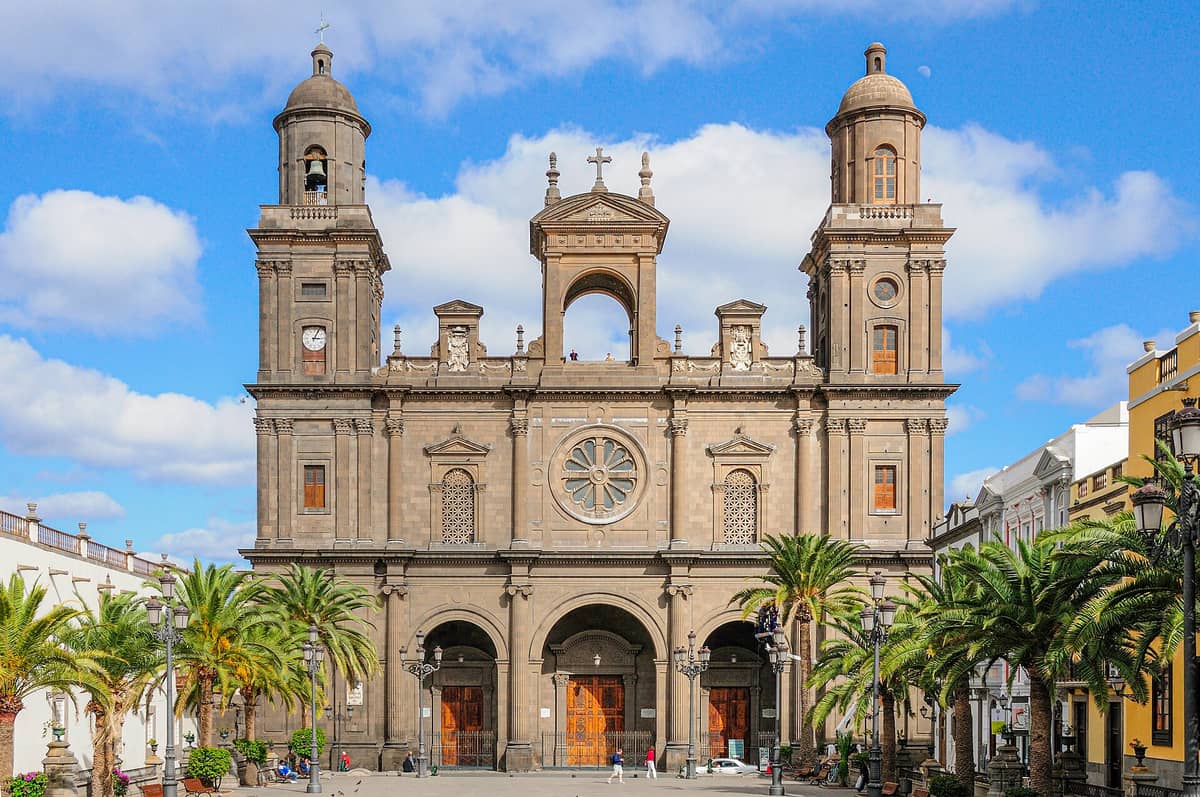
Standing on Plaza de Santa Ana since the late 15th century, the Catedral-Basílica de Santa Ana is the oldest cathedral in the Canary Islands and the architectural anchor of Vegueta, Las Palmas's historic quarter. Its layered Gothic and Neoclassical facade tells five centuries of island history in stone, while the tower rewards those who climb it with some of the best rooftop views in the city.
Quick Facts
- Location
- Plaza de Santa Ana, Vegueta, Las Palmas de Gran Canaria
- Getting There
- City bus (guagua) to Vegueta stop; roughly 15-minute walk from Santa Catalina park
- Time Needed
- 1 to 1.5 hours for cathedral, museum, and tower
- Cost
- €8 general; €6 reduced (65+, pensioners, students); free for children under 12 and residents of the province of Las Palmas. Confirm current tariffs at catedraldecanarias.es.
- Best for
- History lovers, architecture enthusiasts, photography, and anyone exploring Vegueta on foot
- Official website
- catedraldecanarias.es
Why Santa Ana Cathedral Matters
The Catedral-Basílica de Santa Ana is not just the oldest cathedral in the Canary Islands. It is the building that gave Las Palmas de Gran Canaria its reason to exist. Construction began around 1497, shortly after Castilian forces completed the conquest of Gran Canaria in 1483, and the cathedral was conceived from the start as a statement of permanence. The Spanish crown wanted Gran Canaria, the Atlantic staging point for voyages to the Americas, to look and feel like a proper city. A cathedral was essential to that ambition.
Because construction stretched across several centuries, you can read the shifts in European taste directly on the building's surfaces. The foundations and nave reflect late Gothic severity. The chapels and cloisters introduce more balanced classical proportion. The main facade, the one that greets you when you cross the plaza, is Neoclassical, added in the 18th and 19th centuries. The result is a building that looks authoritative rather than confused, the different styles having been absorbed and reconciled over time rather than competing.
The cathedral sits at the center of Vegueta, Las Palmas's old town, which is itself one of the best-preserved colonial historic quarters in the Atlantic world. A visit here pairs naturally with the nearby Casa de Colón and the Museo Canario, making Vegueta an easy half-day or full-day loop on foot.
Arriving at Plaza de Santa Ana
The approach to the cathedral sets up the experience well. Vegueta's streets are narrow, shaded by old buildings with wooden balconies and shuttered windows, and then you step out into Plaza de Santa Ana and the scale changes entirely. The plaza is wide and paved with dark volcanic stone, framed by the Bishop's Palace on one side and the old town hall on another. Eight bronze dogs stand guard on stone plinths along the central path, a long-standing symbol of the Canary Islands whose name, in one popular etymology, derives from the Latin word for dog.
In the morning, the plaza is calm. Pigeons occupy the edges. A few residents cut across on their way somewhere. The cathedral's Neoclassical facade catches the early light cleanly, and the twin towers cast long shadows across the stone. By midday, tour groups begin to arrive, and the cafe terraces on the south side of the plaza fill up. Late afternoon brings a different light, warmer and more golden, which does good things to the pale stone of the facade. If you are coming primarily to photograph the exterior, aim for late afternoon on a weekday.
💡 Local tip
Photography tip: Stand at the far end of the plaza, near the bronze dogs, for the cleanest wide shot of the facade. The full twin-tower frontage is difficult to capture any closer without a very wide lens. Morning light hits the facade from the side; afternoon light falls more directly on it.
Inside the Cathedral: What You Actually See
The interior is large and cool, a relief in the warmer months. The nave is divided by columns into five aisles, which is unusual for a cathedral of this age and gives it an airiness that single-nave Gothic churches lack. The ceiling is a ribbed vault, the stonework detailed but not overwrought. There is a stillness inside even when visitors are present, partly because the space is large enough to absorb a crowd, and partly because the thick walls and small windows keep the sound from bouncing excessively.
The chapels running along the side aisles hold the cathedral's most interesting individual pieces: carved altarpieces, painted retablos, and sculptures in the Hispano-Flemish tradition. The woodwork on the choir stalls deserves close attention. It is finely carved and, like much of the art here, reflects the cultural crossroads that the Canary Islands occupied during the Age of Exploration, with influences arriving from Spain, Flanders, and eventually the Americas.
Your ticket includes access to the Diocesan Museum of Sacred Art, housed within the cathedral complex, as well as the cathedral interior and the tower. It contains religious paintings, gold and silverwork, vestments, and carved figures spanning several centuries. The collection is genuinely good, not merely serviceable, and the labeling is adequate in Spanish with some English summaries. Allow 20 to 30 minutes for the museum if you have an interest in religious art or colonial-era craft.
The Tower: Worth the Climb
The tower ascent is the practical highlight for most visitors. The climb involves stairs, so it is not accessible to everyone, but the reward at the top is a 360-degree view over Vegueta's rooftops, the port, and on clear days, the Atlantic stretching west. The terracotta tiles and white walls of the old quarter spread out below, with the darker modern city visible beyond. It is one of the better urban viewpoints in Las Palmas, and unlike the cathedral interior, it photographs differently depending on the time of day in ways that reward experimentation.
ℹ️ Good to know
Tower access on Sundays: On Sundays, only the tower is open to visitors (typically 10:00–14:00). The main cathedral and museum are not available for tourist visits on Sunday mornings due to religious services. Plan accordingly if your schedule is tight.
Opening Hours, Tickets, and Getting There
The cathedral is open Monday to Friday from 10:00 to 18:00, with last entry at 17:30. On Saturdays, hours are 10:00 to 16:00. Sunday access is generally limited to the tower only, from around 10:00 to 14:00. Religious services take place throughout the week, and the cathedral may be partially or fully closed to tourists during Mass. Checking the official website before you visit is worthwhile, especially around public holidays and religious feast days, when schedules can shift significantly.
Tickets currently cost €8 for adults and €6 for visitors over 65, pensioners, students aged 13–23, and eligible family groups (confirm on the official site before visiting). Children under 12 and residents of the province of Las Palmas enter free Monday to Saturday. Tickets are purchased at the entrance; there is no advance booking requirement for individual visitors.
Getting to Vegueta from central Las Palmas is straightforward. City buses (locally called guaguas) connect the area to the Santa Catalina transport hub. If you are already in Vegueta for the market or other sights, the cathedral is an easy walk. Taxis and ride-hailing apps that operate in Las Palmas can drop you directly at the plaza. The surrounding streets are pedestrian-friendly, and the plaza itself is level and paved, making the outdoor areas accessible for visitors with mobility considerations. Note that the tower involves stairs and may not be suitable for all visitors.
⚠️ What to skip
Dress code: Shoulders and knees should be covered when entering the cathedral. This is a functioning place of worship, not just a tourist attraction. Light layers work well, as the interior stays cool even in summer.
Honest Assessment: Is It Worth Your Time?
Santa Ana Cathedral is the right size for what it is. It does not overwhelm like a European mega-cathedral, and it does not underwhelm like a minor parish church that has been oversold. The combination of the exterior plaza, the layered interior architecture, the museum, and the tower gives you enough to fill 60 to 90 minutes without padding. For travelers with a genuine interest in history or architecture, it will hold attention throughout. For travelers primarily interested in beaches or nightlife, it is a worthwhile 45-minute detour while passing through Vegueta, but it should not be treated as a standalone destination worth a special trip from the south of the island.
The cathedral earns its place in any serious Vegueta itinerary. If you are planning a wider exploration of Las Palmas's historic core, consider pairing it with the Vegueta Market, which operates on weekends nearby, and the Casa Museo Pérez Galdós, dedicated to the Canary Islands' most celebrated novelist, born just a few streets away. Together, these three stops make a coherent half-day in the old quarter.
Vegueta also makes a logical base for understanding the broader city. For practical guidance on getting around Las Palmas and the island, the getting around Gran Canaria guide covers bus routes, taxis, and car rental options in detail.
Insider Tips
- Come on a weekday morning to have the cathedral interior largely to yourself. Cruise ship day-trippers tend to arrive mid-morning and cluster between 10:30 and 13:00, so an early start or a post-lunch visit avoids the thickest crowds.
- The plaza benches near the bronze dogs are a good spot to sit and absorb the facade without feeling rushed. Locals use the plaza as a shortcut and gathering point, which gives it a lived-in quality that tourist-only squares lack.
- If you arrive on a Sunday specifically to visit the cathedral interior, you will be turned away from most of it. Sunday access is restricted to the tower from 10:00 to 14:00. Check the official site at catedraldecanarias.es for any changes to this schedule before your visit.
- The Diocesan Museum of Sacred Art is included in your ticket but easy to overlook. It is entered through a separate doorway within the complex. Ask at the ticket desk for directions if it is not immediately obvious, as the signage inside can be sparse.
- For the best tower photographs looking out over Vegueta, late afternoon light on a clear day works best. Morning visits are better for the plaza and facade photography.
Who Is Catedral de Santa Ana For?
- History and architecture enthusiasts who want to understand Las Palmas beyond its beaches
- Travelers exploring Vegueta on foot and combining multiple sights in the old quarter
- Photography visitors looking for an elevated city viewpoint with colonial rooftop texture
- Anyone interested in religious art spanning the late Gothic to Neoclassical periods
- Cruise passengers with a half-day in port who want a meaningful, time-efficient cultural stop
Nearby Attractions
Other things to see while in Vegueta:
- CAAM – Centro Atlántico de Arte Moderno
Housed in restored colonial buildings on one of Vegueta's most atmospheric streets, the Centro Atlántico de Arte Moderno (CAAM) is Las Palmas de Gran Canaria's leading contemporary art institution. Admission is free, the programming is genuinely ambitious, and the setting alone justifies the detour.
- Casa de Colón
Housed in one of the finest colonial buildings in the Canary Islands, Casa de Colón traces the voyages of Christopher Columbus and the founding history of Las Palmas de Gran Canaria. Located in the Vegueta old quarter, it is one of the most rewarding indoor attractions in the city, and entry is free every Sunday.
- Casa-Museo Pérez Galdós
The Casa-Museo Pérez Galdós preserves the Triana townhouse where Benito Pérez Galdós was born in 1843, offering intimate guided tours through period rooms, original manuscripts, and personal belongings. Admission is free, and the house gives real texture to the literary history of the Canary Islands.
- Museo Canario
El Museo Canario in Vegueta, Las Palmas, holds the definitive collection of pre-Hispanic Canarian artifacts, including one of the largest assemblages of ancient skulls in Europe. For anyone serious about understanding the islands' indigenous Guanche culture, this is the most important building on Gran Canaria.