Getting Around Gran Canaria: Buses, Taxis, Car Hire & Airport Transfers
Gran Canaria is not a walkable island. This guide breaks down every realistic transport option, from Global bus routes and regulated taxi fares to car rental logistics and seasonal road warnings, so you can move around confidently from day one.
TL;DR
- Gran Canaria has no metro or train. The island bus network operated by Global (Guaguas Global) is the backbone of public transport, linking the airport, Las Palmas, and the southern resorts.
- Airport bus fares range from around €2.95 to Las Palmas (Santa Catalina) to €6.80 to Puerto de Mogán. Taxis cost €25–40 depending on destination. See our Gran Canaria budget guide for ways to keep transport costs down.
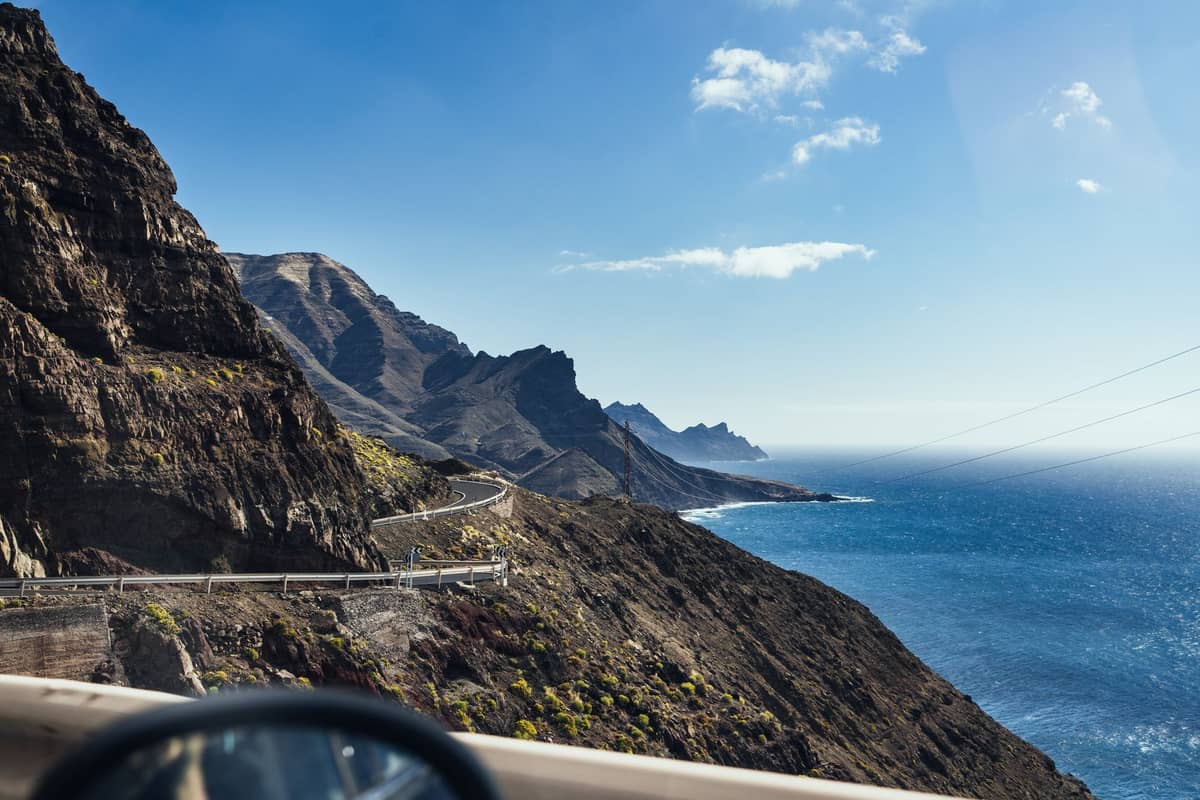
- Renting a car is the single best way to explore the interior, north coast, and mountain villages, but mountain roads can close in winter due to snow or ice.
- The TransGC rechargeable card significantly reduces bus fares inside Las Palmas, from around €1.40 to approximately €0.85 per journey.
- Line 60 serves the airport-to-Las Palmas corridor; Line 66 continues south from the airport via the resorts to Playa del Inglés and Maspalomas.
Understanding the Island's Layout Before You Travel

Gran Canaria covers 1,560 km² with a roughly circular shape, rising sharply from the coast to a mountainous interior that peaks at 1,956 m. That geography matters for transport planning. The east-coast motorway (GC-1) connects the airport south to Maspalomas and north to Las Palmas efficiently. The interior is a different story: narrow mountain roads, steep gradients, and switchback sections that require confidence behind the wheel. Coastal routes between the south resorts are generally straightforward. Routes into the interior take more time than the distances suggest.
The island divides into three zones for most visitors. The northeast is dominated by Las Palmas de Gran Canaria, a city of around 380,000 people with its own urban bus network. The south coast runs from Maspalomas through Playa del Inglés to Puerto de Mogán, the main resort corridor and the busiest stretch for tourist buses. The interior and north, including villages like Tejeda, Teror, and Arucas, require either a rental car or specific rural bus routes.
ℹ️ Good to know
Gran Canaria Airport (IATA: LPA) sits on the east coast roughly between Las Palmas and the southern resorts. This central position means taxi and bus fares to both ends of the island are surprisingly comparable in journey time, around 20–30 minutes to Las Palmas and 30–45 minutes to the southern resorts under normal traffic conditions.
Getting from the Airport to Your Destination
Global's airport bus services are the cheapest option and run frequently enough to be practical for most arrivals. Line 60 is the primary connection to Las Palmas, stopping at San Telmo and Santa Catalina. Line 66 heads directly south toward Playa del Inglés and Faro de Maspalomas. Services run roughly from around 05:15 through to about 23:15, with no buses in the very early hours; night arrivals after around 23:15 will need a taxi.
- Airport to San Telmo (Las Palmas) Approximately €2.30 by bus. Central stop for the historic end of the city.
- Airport to Santa Catalina (Las Palmas) Approximately €2.95 by bus. Main transport hub near Las Canteras beach and the cruise port.
- Airport to Playa del Inglés Approximately €3.50 by bus on Line 66. Journey time around 30–40 minutes.
- Airport to Faro de Maspalomas Approximately €4.05 by bus. Useful for dune-area hotels.
- Airport to Puerto Rico Approximately €5.45 by bus.
- Airport to Puerto de Mogán Approximately €6.80 by bus, the furthest major resort from the airport.
Taxis from the airport operate on regulated metered fares. The daytime flag-down rate is €3.85, rising to €4.25 at night and on public holidays. The per-kilometre rate is €1.35 during the day and €1.55 at night. An airport supplement of €2.10 applies per journey. In practical terms, expect to pay roughly €25–35 to Las Palmas and €35–45 to the Maspalomas area, though final fares vary with traffic and your exact drop-off point. Always confirm the taxi is metered before you set off.
⚠️ What to skip
Avoid unlicensed taxis offering fixed prices at the arrivals hall. Licensed taxis in Gran Canaria are white with a green light on the roof. The regulated fare structure is posted at official taxi ranks outside arrivals.
Using the Global Bus Network Across the Island
The interurban bus network run by Global (officially Guaguas Global) is the most extensive and affordable way to travel between major points on the island. Services connect Las Palmas, the airport, the south coast resorts, and a selection of interior towns. For budget-conscious visitors who are happy to work around timetables, buses cover the key tourist routes reliably.
- Line 60 Airport to Las Palmas (Santa Catalina). The principal airport-to-capital service, running throughout the day and into the early hours.
- Line 66 Airport to Playa del Inglés and Faro de Maspalomas. Direct south-coast service from the terminal.
- Line 1 Las Palmas to Maspalomas via the coastal GC-1 motorway. Useful for day trips between the capital and the south.
- Line 30 Maspalomas to Puerto de Mogán. Links the main south coast resort areas.
- Line 303 Las Palmas to Teror and Arucas. One of the main routes into the northern interior and mountain villages.
Within Las Palmas itself, a separate urban guagua (bus) network runs by Guaguas Municipales covers the city's neighborhoods. Single fares are around €1.40, but the TransGC rechargeable card brings this down to roughly €0.85 per journey. You can load credit onto the card at kiosks and bus stations. If you're spending more than a couple of days in Vegueta or exploring the city between Las Canteras beach and the historic quarter, the card pays for itself quickly.
💡 Local tip
The Global website (globalsu.net) has an English-language journey planner and live timetables. Download the app or check the site before your trip, as timetables on rural routes can be sparse, with some services running only a few times per day.
Renting a Car: When It's Worth It and When to Skip It
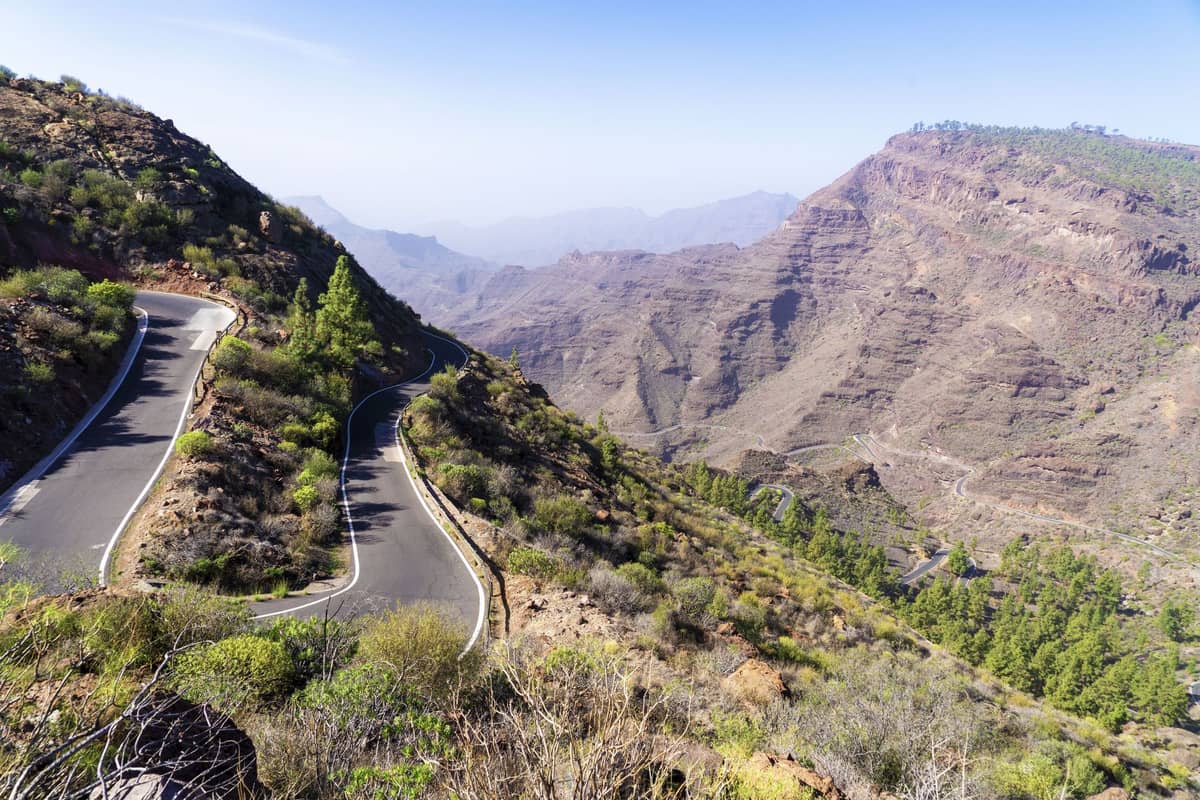
A rental car is the single most practical choice if you plan to explore beyond the main resort corridors. The interior mountain roads to places like Tejeda, the Cruz de Tejeda pass, and the Tamadaba pine forest are either not served by buses or served so infrequently that a car is the only realistic option for a day trip. The same applies to much of the north and west coast.
Gran Canaria Airport has on-site car rental desks from major operators including Avis, Europcar, Hertz, Goldcar, Cicar, and OK Mobility, all located in the arrivals area or the airport car park. Cicar is a Canary Islands-based company with competitive local pricing and is popular with repeat visitors. Booking in advance online consistently produces lower rates than walking up to the desk on arrival. For context, a Gran Canaria road trip covering the interior, the north coast, and the south resorts in a few days is one of the best ways to understand the island's dramatic variety.
A small hatchback is sufficient for most routes, but if you're planning to visit the steeper interior tracks or forest roads around Tamadaba, check whether your rental agreement covers unpaved surfaces. Most standard agreements do not, and roadside assistance becomes complicated. For sealed mountain roads, any vehicle handles fine, though manuals are common in local fleets.
⚠️ What to skip
Mountain roads, particularly access routes to the island's summit area around Pico de las Nieves and Morro de la Agujereada, can close during rare winter snow or ice events. These closures are rare but real: check local news (Canarian Weekly or the Cabildo de Gran Canaria website) before heading inland in December or January. Coastal roads are unaffected.
If your itinerary is limited to Las Palmas and the south coast resorts, a car is not essential. The GC-1 motorway corridor is well served by buses, taxis are metered and honest, and parking in Playa del Inglés can be frustrating. Save the rental for the days when you want to reach places buses cannot.
Taxis, Ride-Hailing, and Getting Around the Resorts
Licensed taxis in Gran Canaria are white with a green roof light. All must use the meter; if a driver quotes you a flat rate significantly different from the metered estimate, that is a red flag. Taxi ranks are easy to find at the airport, major hotels, bus stations, and resort centres. Short trips within the south resort area, say between Playa del Inglés and Maspalomas, cost only a few euros and are often more convenient than waiting for a bus.
Some ride-hailing-style services have appeared in Las Palmas in recent years, but there is no fully established Uber-, Bolt-, or Cabify-type network across Gran Canaria and availability outside Las Palmas is very limited. Confirm current app availability before relying on this option, as the situation has shifted over recent years and differs markedly from what visitors may be used to in larger European capitals.
For visitors staying in the southern resorts, local taxi ranks in Playa del Inglés and Puerto Rico cover evening journeys between restaurants and hotels efficiently. Costs between most resort points stay under €15. For longer transfers, such as heading to Las Palmas for a day or evening, a bus remains the better value option.
Practical Tips for Moving Around Efficiently
Gran Canaria rewards planning. The island looks compact on a map but travel times are longer than distances imply, especially inland. A week-long itinerary works best when you group destinations by zone rather than bouncing from north to south each day. Spend your first couple of days in Las Palmas, mid-trip in the interior and north, and finish on the south coast, or reverse it depending on where you're staying.
- Book airport transfers or car hire before you land, especially in peak season (December to February and July to August) when availability is tighter.
- The TransGC card works across urban buses in Las Palmas and some interurban Global services. Load it at the bus station or designated kiosks.
- Timetables on interior routes (Line 303 and similar) are sparse. Miss the last bus and you will need a taxi, which may need to be called, not hailed.
- Fuel stations are plentiful on the GC-1 corridor but sparse in the rural interior. Fill up before heading into the mountains.
- Parking in Las Palmas city centre and around Playa del Inglés can be challenging in high season. Blue-zone street parking requires a ticket; many visitors use underground car parks.
- If you are hiking in the interior, check whether the trailhead is accessible by bus or if you need to arrange a pickup. Some popular trails like Roque Nublo have limited bus connections and fill early.
For visitors combining Gran Canaria with another Canary Island, inter-island ferries run from Las Palmas port. Check our Gran Canaria ferry guide for routes, operators, and booking advice. Flying between islands is also an option from LPA, though the ferry makes more sense for Tenerife and Lanzarote.
FAQ
Can I get around Gran Canaria without a car?
Yes, if your trip is focused on Las Palmas and the south coast resorts. The Global bus network connects these zones reliably and cheaply. However, the interior mountain villages, the north coast, and most hiking trailheads are difficult or impossible to reach by public transport alone. For those areas, a rental car is the practical solution.
How do I get from Gran Canaria Airport to Maspalomas?
Line 66 runs directly from the airport to Playa del Inglés and Faro de Maspalomas for around €3.50–4.05. A taxi costs roughly €35–45 depending on your exact destination within the Maspalomas area and the time of day. The bus takes around 40 minutes under normal traffic conditions.
What is the cheapest way to get from the airport to Las Palmas?
Line 60 Global bus costs approximately €2.95 to Santa Catalina, the main central stop. Services run from around 05:15 and continue until about 23:15. For groups of three or more, a taxi at €25–35 becomes competitive once you split the fare.
Is Uber available in Gran Canaria?
Ride-hailing apps are limited on Gran Canaria, with no fully established Uber, Bolt or Cabify network; any app-based services are concentrated, if available at all, around Las Palmas, and essentially absent in the southern resorts. The licensed taxi network is reliable, metered, and readily available at ranks throughout the island. Verify current app availability before your trip.
Are mountain roads safe to drive in Gran Canaria?
In dry conditions, yes. The main interior roads are sealed and well-maintained, though narrow with sharp bends. In winter (December to February), summit roads, particularly around Pico de las Nieves, can close due to snow or ice. These closures are temporary but can disrupt plans. Check local news if you're heading inland in winter months.