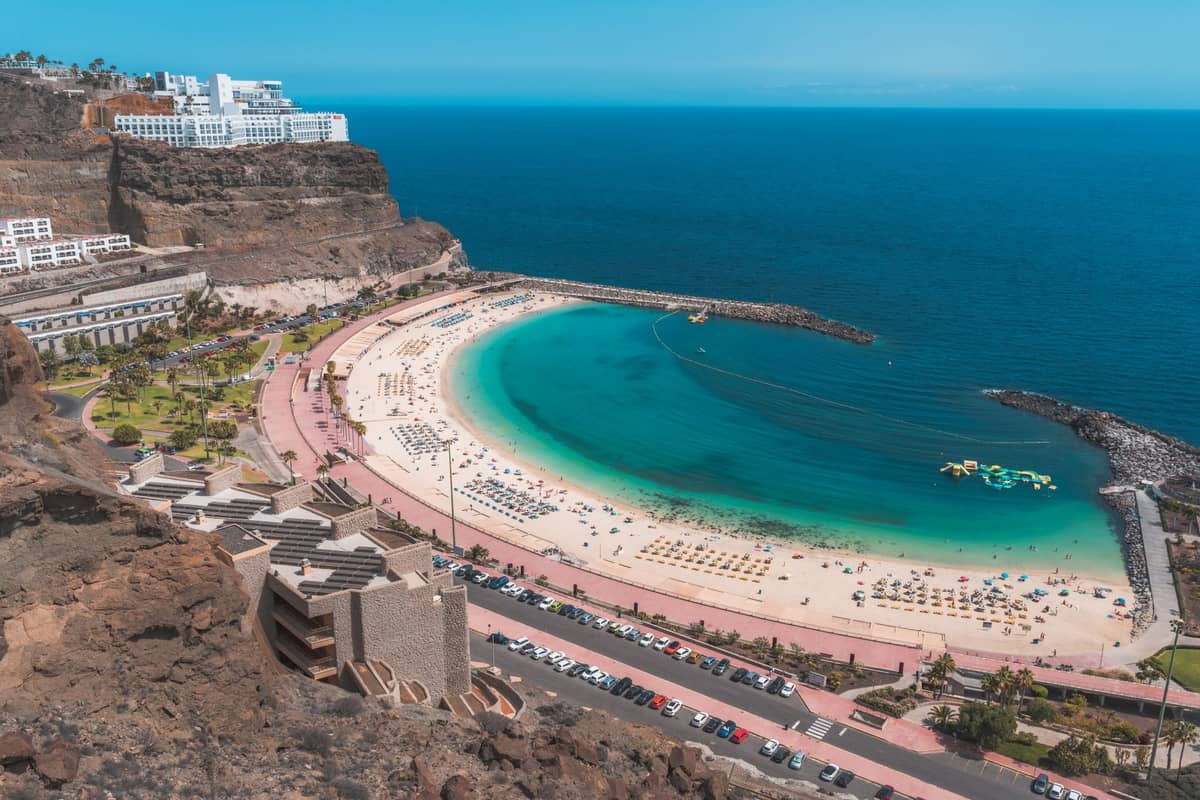
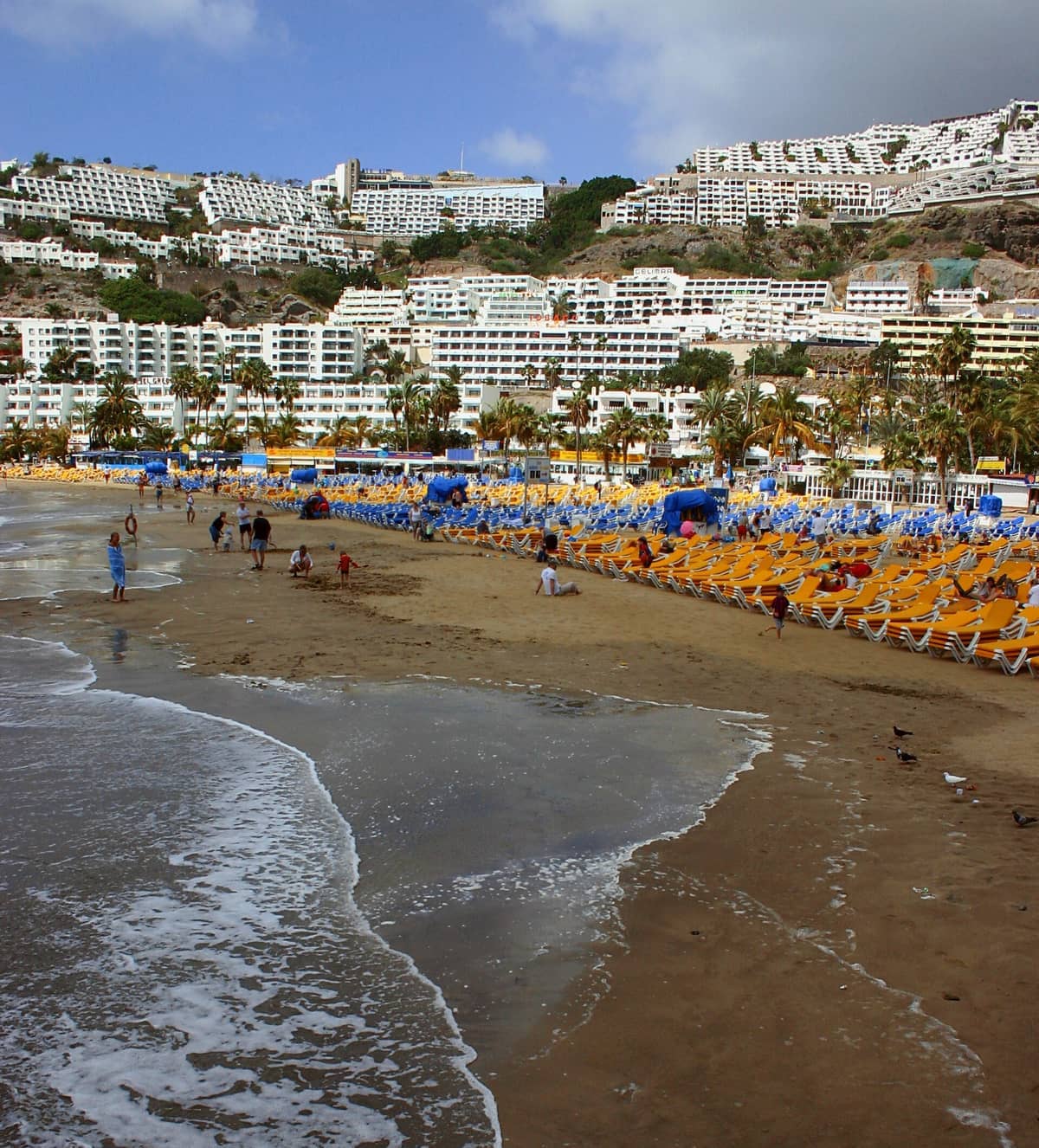
Puerto Rico de Gran Canaria is a well-established holiday resort on the island's south-west coast, built into a steep valley that opens onto a sheltered cove. With two harbours, a sandy beach, and over 320 days of sunshine per year, it draws families and northern European visitors looking for reliable sun, water sports, and easy resort living.
Puerto Rico de Gran Canaria sits in a natural amphitheatre of cliffs on the south-west coast, its white apartment blocks stepping up the hillsides above a small, calm bay. It is purpose-built for beach holidays and delivers exactly that: reliable sunshine, a protected beach, two busy marinas, and a commercial strip designed entirely around the needs of visitors.
Orientation
Puerto Rico de Gran Canaria sits on the south-west coast of the island, roughly halfway along the tourist corridor that runs from Maspalomas in the east to Puerto de Mogán in the west. It falls within the municipality of Mogán, one of Gran Canaria's least densely populated municipalities by local residents but one of its most intensively developed for tourism.
The resort occupies a single steep valley, the Barranco de Puerto Rico, with a secondary ravine, the Barranco del Lechugal, drawing development uphill and to the sides. Everything funnels down toward the seafront, where Avenida de Mogán runs behind the beach and connects the marina area to the commercial centres. The geography is dramatic: arriving by road from the coastal motorway, the GC-1, you descend sharply into the resort and the sea fills the windshield.
To the east, the road connects within a few minutes to Puerto Rico's nearest neighbour, Arguineguín, and then onward to Maspalomas. To the west, the coast road winds about 12 km to Puerto de Mogán, the most attractive of the south-west's resort towns. Las Palmas de Gran Canaria, the island capital, is roughly 60 km north-east along the GC-1.
Character and Atmosphere
Puerto Rico is not trying to be anything other than what it is: a mass-market beach resort built for northern Europeans seeking guaranteed sunshine and a full suite of holiday services. Whitewashed apartment complexes rise in tiers up the cliffs, their terraces facing the sea. At the base of the valley, the beach, the marina, and a chain of commercial centres occupy every flat metre of land.
Mornings on the beach promenade have a particular rhythm. By eight o'clock, early risers claim sun loungers. The light at this hour is clean and low, cutting across the bay from the east and turning the water a deep teal. The beach itself is compact, its sand partly artificial and carefully maintained. By mid-morning, it is busy. By noon in high season, it is packed.
The marina areas, Puerto Escala and Puerto Base, have a slightly different pace. Ferries and diving excursion boats load up at Puerto Escala through the morning. Puerto Base, the yacht harbour, is quieter, used mainly by private vessels and the operators who run water sports. In the late afternoon, when the beach crowd thins, the waterfront restaurants around both harbours fill with people watching the boats come in.
After dark, Puerto Rico concentrates its energy in the commercial centres, particularly the Pasarela centre near the beach and the main Commercial Center slightly further inland. These are open-air shopping and dining complexes with bars, restaurants, and a few clubs that run late. The nightlife is orientated toward families and couples rather than the harder party scene you find further east in Playa del Inglés. It is loud by the beach on weekend nights, but nothing that would surprise anyone who has spent time in a Mediterranean resort.
ℹ️ Good to know
Puerto Rico enjoys one of the sunniest microclimates on Gran Canaria, with the surrounding cliffs sheltering the bay from the north-east trade winds that affect the rest of the island. The south-west coast records around 320 days of sunshine annually.
What to See and Do
The resort's own beach is the obvious starting point. Puerto Rico Beach is a sheltered crescent of sand in the cove, small by Canarian standards but well-equipped, with calm, clear water that makes it especially suitable for families with young children. The artificial breakwater that defines the bay keeps the swell out and the water temperature warm.
The two harbours offer the resort's best activity options. From Puerto Escala, you can book whale and dolphin watching excursions, which operate year-round in the warm waters off the south-west coast. Diving operators work out of both harbours, serving an area that includes volcanic rock formations, sea caves, and wrecks within short boat distance. Glass-bottom boat trips depart regularly and are popular with families who want the marine experience without getting wet.
Puerto Rico is also one of the island's main water sports centres. The harbour area has operators offering jet-skiing, parasailing, and sailing lessons. For visitors who want to explore further, Gran Canaria's water sports scene extends along this entire south-west coast, with Puerto de Mogán and Puerto Rico being its two main hubs.
Day trips from Puerto Rico are straightforward. Puerto de Mogán, 12 km west, is the most rewarding short excursion: its pastel-coloured marina and canals earn it the nickname Little Venice, and its Friday market draws visitors from across the south. Maspalomas, 20 km east, offers the famous sand dunes and a long natural beach. The best day trips from Gran Canaria's south coast also include the interior mountain towns, which are under an hour by car.
Puerto Rico Beach: sheltered cove beach, calm water, sun lounger hire
Puerto Escala: ferry terminal, whale watching and diving excursion base
Puerto Base: yacht marina, water sports operators, sailing lessons
Commercial Centre Pasarela: shops, restaurants, bars, closest to the beach
Europa Center: further west, quieter mix of shops and restaurants
Mogán Mall: larger retail centre uphill, useful for practical shopping
Eating and Drinking
The eating and drinking scene in Puerto Rico is built almost entirely around the tourist trade. That is not a criticism, just context. The commercial centres and the waterfront promenade are lined with restaurants offering a predictable international range: pizza, pasta, burgers, fish and chips, and Canarian staples adapted for visitors. Prices are moderate by Gran Canaria standards, and most places offer set menus at lunch.
For Canarian food specifically, look for restaurants advertising papas arrugadas (small wrinkled potatoes with mojo sauce), fresh fish from the Atlantic, and grilled meats. The local cuisine of Gran Canaria is simple and ingredient-driven, and the south-west coast's fishing tradition means fresh fish is genuinely available, though you need to choose your restaurant. Waterfront spots near Puerto Escala tend to serve the most reliable fish dishes.
Bars are concentrated in the Pasarela and Commercial Center complexes. Most open from late morning and run until midnight or later, with live music or sports TV in many. The atmosphere is relaxed and family-friendly in the early evening, shifting toward a younger crowd later at night. There is a handful of clubs that stay open past two in the morning, though Puerto Rico's nightlife is calmer and less aggressive than Playa del Inglés or even parts of Maspalomas.
💡 Local tip
For the best-value meals, look for the set lunch menu (menú del día) offered by most restaurants between 13:00 and 16:00. This typically includes two courses, bread, and a drink for around €10-14, and is a significantly better deal than ordering à la carte in the evening.
Getting There and Around
Gran Canaria Airport (LPA) is on the east coast of the island. From there, Puerto Rico is roughly 40 km south-west by road, taking around 35-45 minutes by taxi or car. Taxis from the airport to Puerto Rico cost approximately €40-50 (verify current rates before travel, as fares change). The interurban bus network operated by Global, Gran Canaria's main bus company, also connects the airport to the south coast resorts, though journeys may require a change and take longer.
Within the south coast corridor, Puerto Rico is well-served by local bus routes. Line 39 connects Puerto Rico with Playa del Inglés and Maspalomas to the east, and the same corridor extends toward Puerto de Mogán to the west. The main bus stop is near the Tourist Office on Avenida de Mogán. Services run regularly during the day but thin out in the evening. Fares within the south coast corridor are low, especially with the TransGC rechargeable card.
Within Puerto Rico itself, the valley layout means the beach and commercial centres are reachable on foot from most lower-level accommodation. The resort does have steep sections, however. Accommodation built into the upper slopes of the valley can be a significant walk from the beach, with long staircases connecting levels. Check the specific location of your apartment or hotel before booking if walking distance matters to you.
Taxis operate from ranks near the Commercial Center and at the beach area. Car hire is available at the airport and through agencies in the resort, and is the most practical option for exploring the island's interior or the north coast. Ride-hailing apps operate on Gran Canaria, though coverage and availability should be confirmed locally before relying on them.
💡 Local tip
If you plan to visit Puerto de Mogán, consider taking the coastal ferry from Puerto Escala rather than the bus. The journey takes about 30 minutes by sea and passes dramatic coastal cliffs with no road access. Ferries run several times daily and tickets can be bought at the harbour.
Where to Stay
Puerto Rico's accommodation stock is dominated by apartment complexes and all-inclusive hotels, most of them built in the 1980s and 1990s and refurbished to varying degrees since. The tiered layout of the resort means that location within the valley matters considerably: properties at the bottom, near Avenida de Mogán and the Pasarela commercial centre, are within a short flat walk of the beach. Properties halfway up the hillside involve significant stair-climbing but offer sea views and slightly more distance from the nightlife noise. The uppermost complexes are quiet but require either a long walk or a taxi to reach the beach.
Puerto Rico suits families, couples looking for a straightforward sun holiday, and older travellers who want reliable weather and easy beach access. It is less suited to travellers looking for local culture, independent restaurants, or a sense of Spanish daily life. For a broader overview of where to base yourself on the island, our guide to choosing where to stay in Gran Canaria covers the full range of options from Las Palmas to the south coast.
All-inclusive resorts are a strong option in Puerto Rico if your priority is predictable costs and convenience. For context on how the island's all-inclusive offer compares, see Gran Canaria's all-inclusive resort guide. Families travelling with children will find the sheltered beach and calm marina waters well-suited to young swimmers, and the commercial centres have enough entertainment options to fill a week.
Safety and Practical Notes
Puerto Rico is a safe resort by any reasonable standard, but petty theft is the main concern to keep in mind. Bag-snatching and pickpocketing occur around tourist areas, the marina, and the commercial centres, consistent with patterns across the south coast resorts. Keep valuables in your accommodation safe, avoid leaving anything visible in a parked car, and be aware of your surroundings in crowded bar areas at night.
The local police office is located on Avenida de Mogán near the park leading to the beach, beside the Atlantic medical clinic. Spain's general emergency number is 112, which operates in multiple languages. The resort has pharmacy and medical facilities within the commercial centres, and English is spoken across virtually all tourist-facing services.
⚠️ What to skip
Accommodation on the upper slopes can be misleadingly described as 'close to the beach' when it may involve a 15-20 minute walk downhill with multiple staircases. For travellers with mobility considerations or young children, double-check the exact elevation of your accommodation before booking.
Tap water on Gran Canaria meets safety regulations but is largely desalinated and many visitors prefer bottled water for taste. The currency is the Euro (EUR). The country dialling code is +34. Voltage is 230V with Type F (Schuko) sockets. Tipping is appreciated but not obligatory; small tips in restaurants are the norm.
Is Puerto Rico Right for You?
Puerto Rico de Gran Canaria is one of the most straightforwardly functional holiday resorts on the island. It delivers reliably on its core promise: sun, calm water, easy access to water sports, and a full range of tourist amenities in a compact, walkable space. What it does not offer is any strong sense of Canarian character or independent local life. If your priority is experiencing the real texture of Gran Canaria, you would be better served by basing yourself in Vegueta or Triana in Las Palmas, and visiting the south coast on day trips.
For travellers whose main goal is a week of reliable beach weather with minimal planning, Puerto Rico works well. The sheltered microclimate means it is one of the most consistently sunny spots on the island, and the proximity to Puerto de Mogán and Maspalomas gives you two excellent excursion options without needing a car. See our guide to Gran Canaria with kids for more on why this part of the coast suits families particularly well.
TL;DR
Puerto Rico de Gran Canaria is a purpose-built beach resort on the south-west coast, sheltered by cliffs and consistently sunny, with over 320 days of sunshine per year.
Best suited to families, couples, and travellers seeking a simple, low-effort beach holiday with water sports, calm swimming, and easy resort infrastructure.
Not the right base for travellers looking for authentic Canarian culture, independent restaurants, or urban life — for that, Las Palmas is the better choice.
Two harbours (Puerto Escala and Puerto Base) make it one of the island's main departure points for whale watching, diving, and the ferry to Puerto de Mogán.
Petty theft is the main safety concern; the resort is otherwise considered safe, and English is spoken everywhere in tourist-facing services.
Three days is enough to experience Gran Canaria's remarkable range: a well-preserved colonial old town, Atlantic dune fields, volcanic mountain villages, and some of Spain's best urban beaches. This itinerary is built around real transport logistics, honest time estimates, and a deliberate mix of coast and interior.
Gran Canaria packs an extraordinary variety of beaches into one island: vast dune-backed shores in the south, a world-class urban beach in Las Palmas, sheltered family coves on the southwest coast, and raw Atlantic surf breaks in the north. This guide covers the best of all of them.
Gran Canaria earns its reputation as the 'island of eternal spring' for good reason. This guide breaks down every season, explains how the island's microclimates affect your plans, and tells you honestly when to go and when to avoid the crowds.
Gran Canaria packs extraordinary variety into 1,560 square kilometres. These are the best day trips from any base on the island, from the sacred peaks of the interior to the quiet fishing harbours of the west coast.
Gran Canaria is not a walkable island. This guide breaks down every realistic transport option, from Global bus routes and regulated taxi fares to car rental logistics and seasonal road warnings, so you can move around confidently from day one.
Gran Canaria all-inclusive resorts range from budget-friendly complexes in Playa del Inglés to upmarket retreats in Puerto de Mogán. This guide covers the best areas, realistic price expectations by season, and a clear take on when all-inclusive actually makes sense on this island.
Gran Canaria Carnival is one of Spain's biggest pre-Lent celebrations, centred on Las Palmas de Gran Canaria and running for four to five weeks each February and March. This guide covers every major event, how to get tickets, where to stay, and what first-timers consistently get wrong.
Gran Canaria has quietly become one of Europe's most practical bases for remote workers. Year-round subtropical warmth, 20+ coworking spaces, mid-range costs, and fast internet make Las Palmas de Gran Canaria a compelling alternative to Lisbon or Bali. This guide covers everything you need to plan a productive stay.
Everything you need to know about taking a ferry from Gran Canaria to the other Canary Islands. Covers the main routes, operators, realistic prices, departure ports, and the common mistakes that catch first-time travellers off guard.
Gran Canaria offers far more for couples than beach resorts. This guide covers the island's most romantic experiences, from volcanic viewpoints and wine-tasting in the interior to private catamaran trips and candlelit dinners in a harbour town that earns its 'Little Venice' nickname.
Gran Canaria packs an extraordinary amount of natural beauty, history, and culture into a single island — and a surprising amount of it is completely free. From sweeping volcanic landscapes and ancient Guanche sites to world-class urban beaches and genuinely free museums, here is how to get the most out of the island without opening your wallet.
Gran Canaria packs extraordinary variety into 1,560 square kilometres, yet most visitors see only a fraction of it. These are the volcanic ravines, pre-Hispanic ruins, wild coastlines, and slow villages that reward those willing to look beyond the southern resort strip.
December is one of the most underrated months to visit Gran Canaria. Daytime temperatures hover around 22°C, the southern beaches stay dry and sunny, and the island shifts into a relaxed festive rhythm. This guide covers the weather in detail, where to base yourself, what to do, and a few honest caveats about the rainy north.
Gran Canaria has over 130 luxury hotels spread across beach resorts, spa retreats, boutique city properties, and adults-only hideaways. This guide cuts through the marketing to tell you exactly where to stay, what to spend, and which areas suit different styles of upscale travel.
Gran Canaria nightlife spans four distinct zones, each with its own character, crowd, and closing time. This guide breaks down every major area, from the legendary Yumbo Centre to the bar-lined streets of Las Palmas, with practical advice on pricing, timing, and getting around after dark.
Gran Canaria offers genuine value if you know how to work the island's public transport network, tap into its free outdoor attractions, and eat where locals eat. This guide breaks down the real costs, the smart shortcuts, and the common mistakes that drain tourist wallets.
Gran Canaria packs semi-arid landscapes, volcanic peaks, and colonial towns into 1,560 km² — small enough to drive in a day, varied enough to spend a week exploring by car. This guide covers car rental costs, the best driving routes, the GC-200 road closure reality, and practical rules of the road so you can plan without surprises.
Both Gran Canaria and Tenerife promise year-round sunshine, dramatic scenery, and good value for European travellers. But they deliver very different holidays. This guide breaks down the real differences across beaches, landscapes, cost, family travel, and nightlife so you can stop second-guessing and start booking.
Gran Canaria's Atlantic coastline delivers world-class water sports year-round, from beginner surf lessons at Las Canteras to competition-level windsurfing at Pozo Izquierdo. This guide covers the best spots, realistic prices, seasonal conditions, and how to avoid the common pitfalls.
Gran Canaria delivers year-round sunshine, a stack of theme parks, safe beaches, and reliable public transport that make it genuinely practical for families. This guide cuts through the marketing to tell you exactly where to go, what to spend, and how to get around with children in tow.
Gran Canaria packs extraordinary hiking variety into 1,560 km². Alpine pine forests, volcanic rock formations, green ravines, and coastal cliffs are all within reach. This guide covers the best trails on the island, from quick walks to full-day mountain routes.
Gran Canaria packs an extraordinary range of landscapes, climates, and experiences into just 1,560 km². This guide cuts through the brochure language to tell you exactly who the island suits, what it does well, where it falls short, and how to decide if it belongs on your travel list.
Gran Canaria's volcanic coastline is dotted with natural sea pools carved from ancient lava flows. This guide covers the finest spots around the island, from well-equipped salinas in the northwest to wild rock pools on the west coast, with practical advice on when to go and what to expect.
Seven days is enough to experience Gran Canaria's remarkable contrasts: Atlantic beaches, volcanic peaks, colonial old towns, and quiet rural villages. This day-by-day itinerary covers the highlights without wasting a single afternoon.
Gran Canaria packs an extraordinary range of experiences into just 1,560 km². This guide covers the best things to do across the island, from world-class beaches and dramatic mountain hikes to historic old towns and boat trips, with practical advice on what's worth your time and what to skip.
Las Palmas de Gran Canaria is one of Spain's most underrated cities: a working Atlantic capital with a world-class urban beach, a remarkably preserved historic quarter, serious food culture, and year-round sunshine. This guide covers the best things to do across every corner of the city, with practical logistics, honest opinions, and no filler.
Gran Canaria's food culture runs deeper than most visitors expect. This guide covers the essential dishes, local ingredients, where to find authentic Canarian cooking, and what to skip — so you eat well from day one.
Gran Canaria divides neatly into three very different worlds: a cosmopolitan northern city, a sun-baked southern resort strip, and a rugged volcanic interior. Where you stay shapes your entire experience. This guide breaks down every main area by atmosphere, accommodation type, price range, and who it suits best.