Puerto Rico Beach (Playa de Puerto Rico): Gran Canaria's Sheltered Resort Shoreline
Playa de Puerto Rico is a small, arc-shaped artificial beach on Gran Canaria's south-west coast, sheltered by the Puerto Rico marina and known for its reliably calm waters. With promenade restaurants, affordable sunbed hire, and easy access from the resort centre, it suits families and first-time visitors looking for a straightforward beach day without long walks or rough surf.
Quick Facts
- Location
- Puerto Rico de Gran Canaria, Mogán, south-west Gran Canaria
- Getting There
- Global bus routes (south coast services); short walk from the resort centre and marina
- Time Needed
- 2–4 hours for a relaxed beach visit; full day if combining with the marina
- Cost
- Free beach access; sunbeds and parasols available for hire at modest daily rates (verify locally)
- Best for
- Families, swimmers, first-time visitors, couples seeking a calm and convenient beach
- Official website
- www.grancanaria.com/turismo/en/beaches/puerto-rico
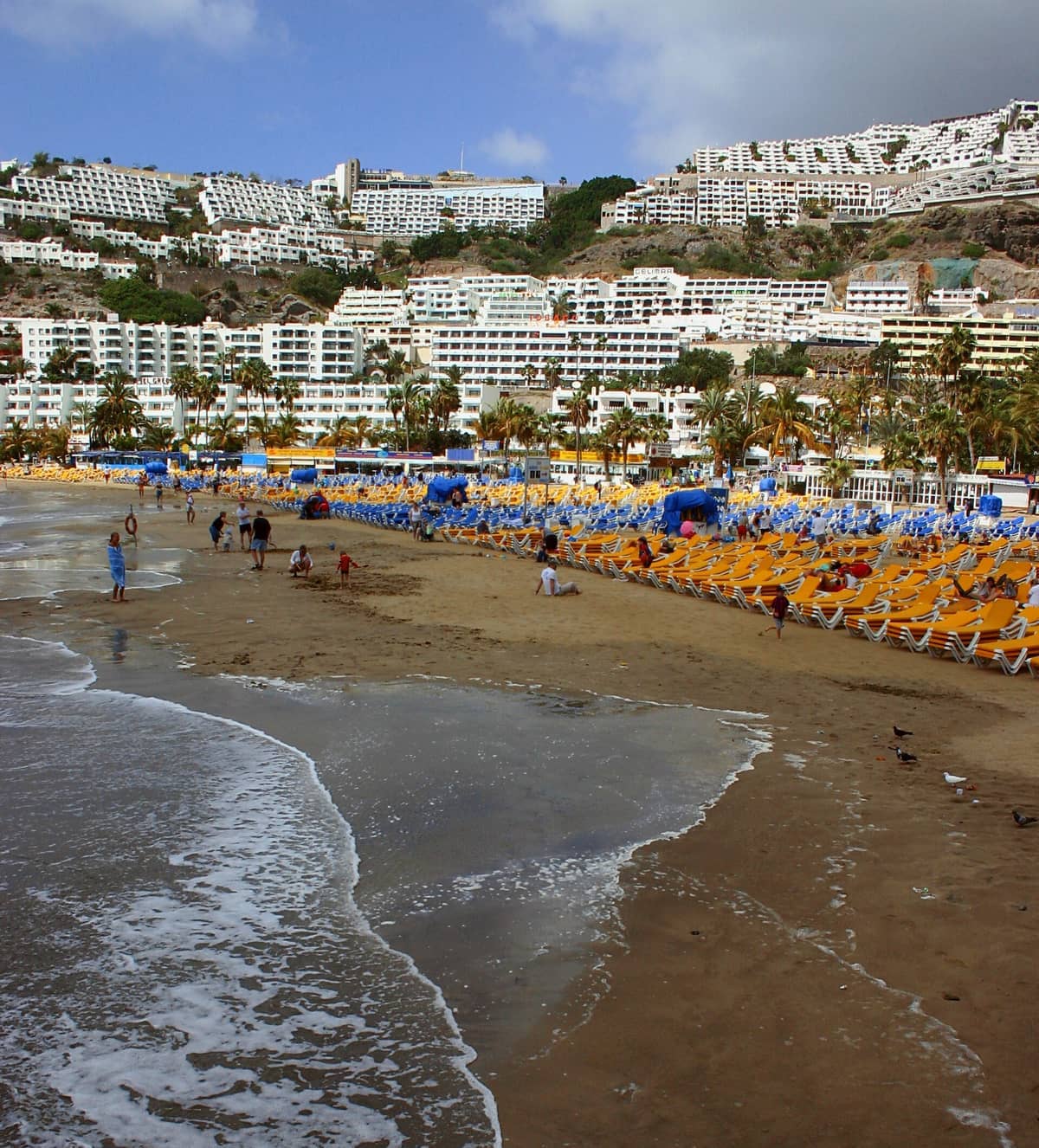
What Puerto Rico Beach Actually Is
Playa de Puerto Rico is a compact, arc-shaped beach of golden sand tucked into the resort of Puerto Rico de Gran Canaria, on the island's south-west coast in the municipality of Mogán. It is an artificial beach, one of the first purpose-built beaches created in Gran Canaria during the resort's development in the 1960s, and its shape and position are deliberate: the beach curves in a shallow shell formation, protected on both sides by the marina's breakwaters and surrounding hillside development.
That sheltered position is the single most important fact about this beach. The water here is calm in conditions that would produce chop at more exposed spots elsewhere on the island. There is no meaningful swell to contend with, no strong undertow, and the sand slopes gently into the sea. For anyone travelling with young children or nervous swimmers, that distinction matters considerably.
ℹ️ Good to know
Beach access is free and unrestricted at all times. The beach is public, as all beaches in Gran Canaria are by Spanish law. Sunbeds and parasols can be hired on the sand — verify current rates locally before your visit.
How the Beach Changes Through the Day
Early morning, roughly before 9 am, Puerto Rico Beach is a different place. The sand is freshly raked, the parasols are not yet open, and the light on the water is sharp and cool. A handful of early walkers pass along the promenade, and you can hear the rigging of boats in the marina clicking in the light breeze. This is the best time to photograph the beach without crowds in the frame, and the best time to swim without navigating around sunbeds.
By mid-morning, the beach fills steadily. Because Puerto Rico is primarily a package-holiday resort, the crowd pattern is predictable: families with young children arrive first, then couples, then groups. The beach is small enough that by noon in high season it feels genuinely busy, with sunbeds close together and the promenade behind filling with people moving between the beach and the nearby restaurants and cafés. The smell of sunscreen mixes with the salt air, and the sound level rises significantly.
Late afternoon brings a slight thinning of the crowd as some visitors return to hotels for the pre-dinner lull. The light becomes warmer and more flattering, the water temperature at its peak after a full day of sun, and the beach has a more relaxed character. Sunset is not directly visible from the beach itself, due to the surrounding hillside, but the sky to the west picks up colour from around 7 pm in summer. The promenade terraces behind the beach are at their best in this hour.
💡 Local tip
Arrive before 9 am or after 5 pm if you want space on the sand without competing for sunbeds. Midday in July and August is the most congested window, and the beach's small size means it fills faster than larger resort beaches elsewhere on the island.
The Beach Setting and What Surrounds It
The beach sits directly alongside the Puerto Rico marina, and the two are inseparable in practice. Walking from the sand toward the marina takes no more than a few minutes. The marina itself is busy with sport-fishing charters, whale-watching excursions, and boat hire companies. If you want to extend your day beyond the beach, the marina is the starting point for most of Puerto Rico's water-based activities, including diving trips, banana boats, and catamaran tours along the south-west coast.
The promenade behind the beach is lined with restaurants, beach bars, and small shops. The atmosphere is firmly tourist-facing, catering primarily to British and Northern European visitors who make up the majority of the resort's clientele. Puerto Rico is not the place to look for authentic Canarian food culture — for that, you need to travel inland or toward smaller communities. If you are curious about the wider south-west coast, the nearby Puerto de Mogán marina offers a quieter, more architecturally distinctive alternative for an afternoon excursion.
The terrain around Puerto Rico is steep and dramatic: dry, eroded hillsides rise sharply on three sides of the resort, giving it an almost amphitheatre quality when seen from the water. This topography is part of why the resort was developed where it was — the hills provide natural wind protection. It also means that in high summer, the sun stays on the beach for most of the day, which is welcome in spring but can make midday uncomfortably hot in July and August.
History and Why the Beach Looks the Way It Does
Puerto Rico was developed as a tourist resort from the 1960s onward, during the first wave of mass tourism that transformed Gran Canaria's south coast. The beach itself was created artificially: the natural coastline at this point offered little in the way of a sandy beach, so the resort was planned and built with a purpose-designed beach as its centrepiece. This was not unusual for Gran Canaria's south-west; several of the beaches in this part of the island owe their current form to deliberate construction rather than natural deposition.
The broader context is that Gran Canaria's south coast, from Maspalomas westward through Playa del Inglés and Puerto Rico to Mogán, became the engine of the island's tourism economy from the mid-twentieth century onward. Maspalomas Beach and the famous dunes at its end represent the most dramatic natural section of this coastline; Puerto Rico represents the constructed, resort-integrated model a little further west.
The municipality of Mogán has made ongoing improvements to the beach's infrastructure. The local council has installed toilet and rescue modules, showers, and foot-wash facilities directly on the beach, managed and maintained at municipal level. These are practical additions that separate Puerto Rico Beach from more basic alternatives in the area.
Getting There and Moving Around
From Las Palmas de Gran Canaria by car, take the GC-1 motorway south for approximately 78 kilometres, exit at junction 62 onto the GC-500, then follow signs toward Puerto Rico. The beach is signposted from the resort entry road and is within easy walking distance of the central resort area. Parking in Puerto Rico can be tight in high season — arriving early or using off-peak hours helps considerably.
By public bus, Gran Canaria's interurban network operated by Global serves Puerto Rico from the airport and from other south-coast resorts. The airport-to-south-coast routes and connections from Maspalomas and Playa del Inglés are the most useful for visitors not renting a car. Bus fares are modest — verify current prices directly with Global before travel. For more on moving between resorts, the getting around Gran Canaria guide covers bus routes, taxis, and car hire options in detail.
The beach is a short, flat walk from the main resort bus stops and from the marina. Once in Puerto Rico, everything relevant to a beach day is within walking distance — there is no need for a car or taxi to get between the beach, the marina, and the resort's restaurants.
💡 Local tip
If you are staying elsewhere on the south coast — in Playa del Inglés or Maspalomas — Puerto Rico Beach makes an easy half-day trip by bus. The journey takes around 30–40 minutes depending on stops, and the contrast between the larger, more exposed beaches in the east and the sheltered bay here is worth experiencing.
Practical Details: What to Bring, Weather, and Accessibility
Gran Canaria's south coast has one of the most consistent climates of any European beach destination. The hillsides around Puerto Rico block the trade winds that keep the north of the island cooler, making this corner of Gran Canaria reliably warm and sunny for most of the year. Average daytime temperatures in the resort range from around 20–21°C in winter to 24–27°C in summer. Rain is genuinely rare: the wet months of November through January still see very few rainy days, and the summer months are almost entirely dry.
This means Puerto Rico Beach is usable for swimming and sun in virtually every month of the year, which is a genuine advantage over mainland European beach destinations. For those weighing up travel timing, the best time to visit Gran Canaria guide gives a full breakdown of seasonal conditions across the island.
Bring high-factor sun protection — the sun on this part of the coast is strong even in shoulder seasons, and reflected light off the water intensifies exposure. Light footwear for the promenade and a cover-up for moving between the beach and restaurants are practical additions. The beach has public shower facilities, reducing the need to return to accommodation to rinse off.
On accessibility: the resort's general layout and the flat promenade behind the beach make it relatively manageable for visitors with mobility considerations. The calm, gently sloping water is an advantage for people who need predictable sea conditions. However, specific details on wheelchair-accessible ramps onto the sand itself should be confirmed with the municipality of Mogán before visiting, as published sources do not specify the exact nature of beach access infrastructure.
Honest Assessment: Who Will Enjoy This Beach and Who Might Not
Puerto Rico Beach earns its reputation for calm, family-friendly swimming. That is genuinely true, and for parents with small children or anyone who dislikes unpredictable surf, it is one of the more reliable beaches on the island's south coast. The facilities are decent, the setting is convenient, and the year-round weather makes it a low-risk destination.
What it is not: a wide, sweeping beach with room to spread out and find solitude. At busy times it can feel more like a packed outdoor pool than a beach. Travellers looking for dramatic scenery, authentic Canarian culture, or serious waves will not find any of those things here. The resort setting is unapologetically tourist-facing. If your priority is something more off the beaten track, the island's interior or its less-developed north coast offer very different experiences — and for a curated overview, the Gran Canaria hidden gems guide is worth reading before you plan.
Experienced beach travellers comparing Gran Canaria's south coast options should also consider that the natural pools at other points on the island, or the vast dunescapes at Maspalomas, offer more distinctive experiences. Puerto Rico Beach is excellent at what it does — it simply does a specific thing, and knowing that in advance saves disappointment.
Insider Tips
- The beach faces roughly south-west, meaning morning light is soft and the afternoon sun is strongest on the water. If you burn easily, morning sessions before 11 am are the safest window.
- Water sports and boat excursions depart from the marina right beside the beach. If you want to book a whale-watching trip or a fishing charter, walk directly to the marina operators rather than through hotel booking desks — you will typically pay less and get more information about what to expect.
- The restaurants on the promenade directly behind the beach are primarily tourist-facing and priced accordingly. Walking five minutes uphill into the resort reveals a few more locally-oriented options with better value.
- Beach furniture hire tends to sell out by mid-morning in peak season. If you arrive after 10 am in July or August without a reservation through your hotel, bring your own towel and be prepared to use the sand directly.
- Puerto Rico sits in one of the most wind-sheltered spots on the entire island. If a strong calima (hot desert wind from the Sahara) is affecting Gran Canaria — which happens occasionally in summer — the temperatures here can spike significantly above the norm. Check the forecast before a midday visit during heat events.
Who Is Puerto Rico Beach For?
- Families with young children needing calm, safe swimming water
- First-time visitors to Gran Canaria wanting a straightforward resort beach day
- Couples combining a beach morning with an afternoon at the Puerto Rico marina
- Visitors in winter or spring wanting a warm, reliably sunny beach when northern Europe is cold
- Travellers with limited mobility who need a flat promenade and predictable sea conditions