Maspalomas Beach: Gran Canaria's Southern Shore, Explained
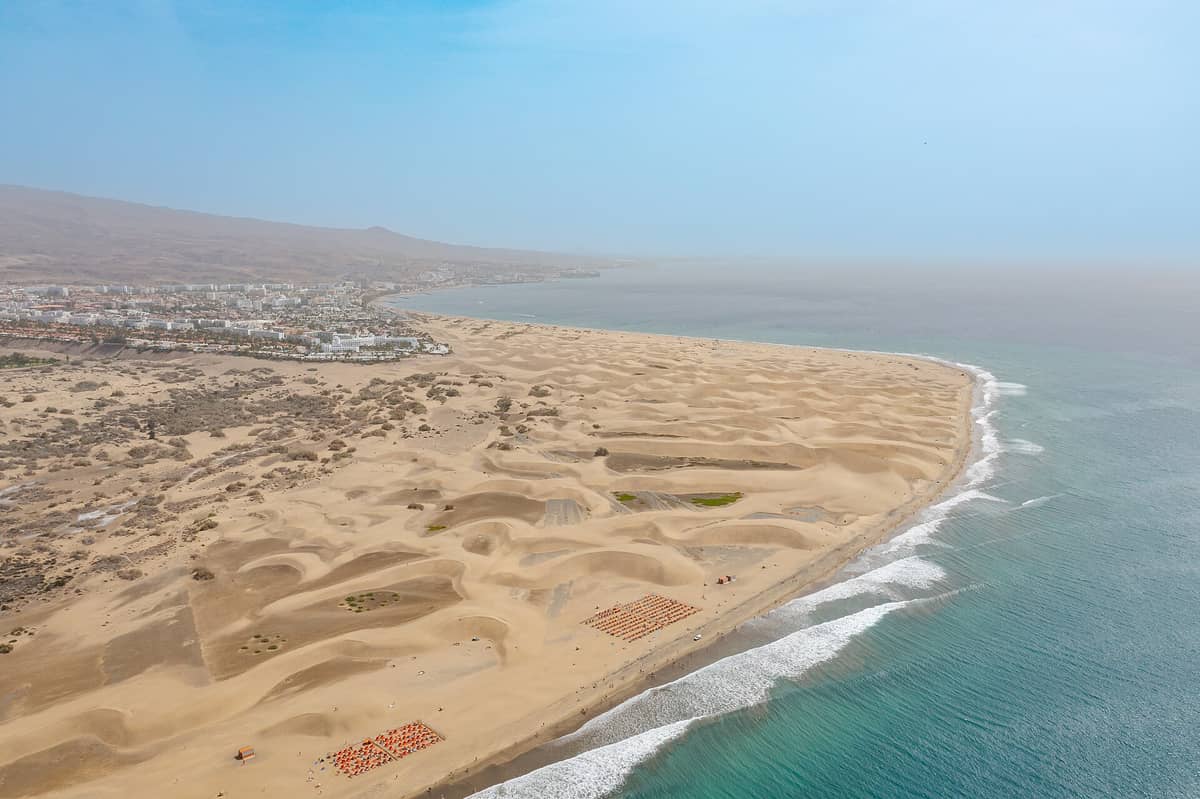
Playa de Maspalomas sits on the southern coast of Gran Canaria, where 2.7 kilometres of pale sand meets one of Europe's most remarkable dune systems., where 2.7 kilometres of pale sand meets one of Europe's most remarkable dune systems. Free to access year-round, it draws everyone from families seeking calm water to naturists and serious sunset-watchers.
Quick Facts
- Location
- Maspalomas, San Bartolomé de Tirajana, Gran Canaria — on the southern coast of the island, next to Faro de Maspalomas, next to Faro de Maspalomas
- Getting There
- Global bus lines serve Maspalomas from Las Palmas (Line 1) and the airport (Line 66); short walk to beach from bus stops. By car: GC-1 motorway, follow signs to Faro de Maspalomas; short walk to beach from bus stops. By car: GC-1 motorway, follow signs to Faro de Maspalomas
- Time Needed
- 2–5 hours for a beach visit; allow a full day if combining with the dunes or lighthouse walk
- Cost
- Free entry. Sunbed and umbrella rental charged separately by private operators (prices vary by season — confirm locally)
- Best for
- Families, sun-seekers, naturists, photographers, and anyone who wants a quieter alternative to Playa del Inglés
- Official website
- http://turismo.maspalomas.com
What Maspalomas Beach Actually Is
Playa de Maspalomas occupies the southern tip of Gran Canaria, beginning near Faro de Maspalomas — and running roughly 2,710 metres east toward Playa del Inglés. Officially measured at 75 metres wide, it is broad enough that even at peak season you rarely feel hemmed in. The sand is pale gold, fine-grained and compacted enough near the waterline to walk barefoot without effort, though further inland it softens quickly into the loose desert terrain of the protected dune reserve.
The beach sits within the Maspalomas Dunes Natural Reserve (Dunas de Maspalomas), a protected area that includes the dunes, a lagoon (Charca de Maspalomas), and a palm grove. This is not just a beach beside some sand hills — the dune system is a functioning ecological zone, shaped by trade winds and The beach sits within the Maspalomas Dunes Natural Reserve (Dunas de Maspalomas), a protected area that includes the dunes, a lagoon (Charca de Maspalomas), and a palm grove.. Visitors who walk even ten minutes behind the main shoreline find themselves in a landscape that reads more like the Sahara than the Atlantic coast of Spain.
ℹ️ Good to know
Access to Maspalomas Beach is free, 24 hours a day. There are no entry gates or ticketing. Lifeguard services and facilities like showers and toilets operate seasonally — confirm hours locally on arrival.
The beach is part of the wider Maspalomas resort zone, which also connects to Maspalomas Dunes and the Maspalomas Lighthouse. These three attractions together form a half-day or full-day circuit that rewards slow exploration far more than a rushed beach visit.
How the Beach Changes Through the Day
Early morning — roughly 7:00 to 9:30 — is when Maspalomas Beach is at its most atmospheric. The light is low and amber, raking across the rippled sand from the east. The only sounds are wind off the Atlantic and the occasional call of birds from the Charca de Maspalomas lagoon nearby. At this hour, the beach belongs almost entirely to walkers, joggers and a handful of naturists heading toward the quieter western section near the lighthouse.
By late morning, the sun-lounger operators have set up their rows of wooden beds and matching parasols, creating orderly corridors that run parallel to the water. Families claim the eastern portion closest to the resort promenade; the western section, closer to the dunes, is where the naturist zone begins and the crowd thins considerably. The sea here is generally calm, with no significant waves most days, making it suitable for young children in the shallower sections.
Midday in July and August is genuinely hot — the southern coast of Gran Canaria is more sun-exposed than the cloud-prone north of the island, and the dunes reflect heat. Shade from a rented umbrella becomes less a luxury and more a necessity. If you have no plan to rent equipment, arrive before 10:00 or after 16:00 to avoid the harshest conditions. Between October and April, midday temperatures rarely exceed 24°C at the beach, making those hours comfortable for unshaded walking.
Sunset from Maspalomas is the detail most guidebooks understate. Because the beach faces south and the lighthouse sits at the southwestern extreme, the sun drops to the right of the lighthouse on clear evenings, turning the dune crests orange-pink. The Charca de Maspalomas lagoon, a short walk behind the beach, reflects that light. Photographers and couples gather here without any sign of the crowds that left at 18:00.
The Dunes and the Lagoon: Context You Need
The Maspalomas Dunes are not a backdrop — they are the reason this beach has a different character from every other beach on Gran Canaria. The dune system covers around 400 hectares and is shaped by persistent northeast trade winds. The sand is almost entirely bioclastic, meaning it originates from crushed shells and marine organisms rather than eroded rock. Walking the dune crests on a weekday morning, when foot traffic is low, you hear the fine grains shifting under your feet with a dry, papery sound unlike anything on a typical beach.
The Charca de Maspalomas, the small freshwater-to-brackish lagoon at the western end of the beach, acts as a seasonal resting point for migratory birds using the Atlantic flyway. It is separated from the sea by a narrow bar of sand that opens and closes depending on rain and tidal conditions. For anyone with an interest in birdwatching or ecology, this corner near the lighthouse is worth twenty minutes of quiet attention. The full dune reserve context is covered in the dedicated page for the Maspalomas Dunes Natural Reserve.
Practical Walkthrough: Navigating the Beach
The main access point for most visitors is from the resort promenade (paseo marítimo) at the eastern end of the beach, near the cluster of hotels and the commercial centre. From here, the sand is wide and level, sun-lounger rows are dense, and facilities including showers and toilets are close. This section works well for families and anyone who wants maximum convenience.
The western access, near the lighthouse, requires a short walk through or around the dune fringe but rewards you with noticeably fewer people, no sun-lounger operators, and a direct view of the Faro de Maspalomas. The lighthouse is not open for internal visits, but the exterior and surrounding grounds are worth seeing at close range — the 1890 tower stands 55 metres tall and casts long shadows across the sand in the late afternoon.
💡 Local tip
If you arrive by bus, you will most likely be dropped at the Maspalomas or Playa del Inglés stops and face a 10-15 minute walk south to reach the beach proper. Check current Global bus schedules before you travel — routes and timetables are subject to seasonal change.
Parking is available near the lighthouse and along the resort access roads, but spaces fill quickly from mid-morning in high season (November through January, and June through August). The GC-1 motorway provides fast access from Las Palmas — roughly 50 kilometres north — and from Gran Canaria Airport, which sits between the capital and the south coast. A taxi from the airport to Maspalomas costs in the region of €35-40 and takes around 30 minutes, though you should verify current fares before travelling as prices are subject to change.
Photography: What Works Here
The beach is at its most photogenic in the first 90 minutes after sunrise and the 30 minutes before sunset. During both windows, the low sun creates strong directional shadows across the dune ridges immediately behind the beach, producing a depth and texture that disappears entirely in flat midday light. The lighthouse framed against a clear sky in the late afternoon is one of the most reproduced images of southern Gran Canaria for good reason — the geometry is clean and uncluttered.
If you are shooting from the dune crests toward the sea, morning light from the east produces backlit water with considerable glare. Polarising filters help significantly. For wide shots of the full beach curve, the only useful elevation is the dune system itself — the terrain is flat everywhere else. Be aware that the naturist zone in the western section means exercising care and discretion with camera use in that area.
⚠️ What to skip
The Maspalomas Dunes are a protected natural reserve. Walking off marked paths through the dune system damages the fragile vegetation and is subject to fines. Stay on designated routes when exploring beyond the beach itself.
Who Will Enjoy This Beach — and Who Might Not
Maspalomas Beach suits visitors who want a genuine beach experience rather than a resort pool. The water is clean, Atlantic-cooled and generally calm. The scale of the beach means personal space is not difficult to find. Families with young children do well in the eastern sections where facilities are concentrated and the sea is shallow. Couples and solo travellers who want a quieter atmosphere should head west toward the lighthouse end.
Visitors looking for lively beach bars, watersports concessions or a scene comparable to Ibiza will find Maspalomas underwhelming. That kind of energy is more available at Playa del Inglés immediately to the east, which connects to Maspalomas via a continuous promenade. Maspalomas itself prioritises nature and space over entertainment infrastructure.
Wheelchair users and visitors with limited mobility can access the eastern beach sections via the promenade, which is level and paved. The beach has some boardwalk access points. The dunes, however, are entirely unsuitable for wheelchair use, and the loose sand away from the waterline is difficult for anyone with mobility challenges. Plan accordingly and concentrate your visit on the promenade-adjacent section if this applies to you.
If you are building a broader itinerary around the south of Gran Canaria, the best beaches in Gran Canaria guide provides useful comparisons across the island's coastline, and the things to do in Gran Canaria page gives a wider picture of how Maspalomas fits into a multi-day trip.
When to Visit
Gran Canaria's southern coast enjoys more sunshine and less cloud cover than the north, making Maspalomas Beach genuinely usable year-round. Coastal temperatures in winter typically reach around 21°C during the day, and the Atlantic water temperature rarely drops below 18°C even in January and February. This is the reason the beach draws a significant number of Northern European visitors during the winter months — the combination of reliable sun and mild temperatures is unusual for that time of year anywhere in Europe.
Peak season runs from late November through January (driven by Northern European winter holidays) and again in July and August (Spanish domestic tourism and school holidays). Both periods see maximum crowds and higher prices for accommodation and services. For the best balance of warmth and manageable crowds, aim for May, early June, September or October. The best time to visit Gran Canaria guide breaks down seasonal trade-offs in more detail.
Rain is rare on the south coast — the island's mountainous interior shields Maspalomas from the weather systems that bring more rainfall to the north. When rain does arrive, usually between November and January, it tends to pass quickly. The more realistic weather risk is the occasional calima, a warm dusty wind blowing sand from the Sahara that reduces visibility and coats everything in fine grit. Calimas can arrive without much warning and make the beach unpleasant for a few hours or occasionally a full day.
Insider Tips
- The western end of the beach near the lighthouse loses direct sun about 30 minutes before sunset because the dunes cast a shadow. If you want the full sunset light on the sand, position yourself in the middle third of the beach rather than at the far western point.
- The Charca de Maspalomas lagoon occasionally closes its narrow outlet to the sea after dry spells, creating a shallow wading pool on its seaward side. Local children use it; it is calm and shallow, but water quality can vary — check locally before letting children in.
- Bus connections back to Las Palmas thin out significantly after 21:00. If you plan to stay for sunset and dinner in Maspalomas, either confirm the last bus time before you arrive or budget for a taxi return.
- The sun-lounger rows on the eastern section operate on a first-come basis. By 09:30 in high season, the best frontline positions are taken. Arriving at 08:30 or earlier gives you genuine choice without the midday scrum.
- The section of beach directly behind the dune entrance markers is less walked and therefore has softer, more photogenic sand. However, respect the reserve boundary markers — unauthorised dune access carries fines and causes real ecological damage.
Who Is Maspalomas Beach For?
- Families with young children: calm water, good facilities, and flat access from the promenade at the eastern end
- Nature and photography enthusiasts: the dune-beach transition at golden hour is genuinely spectacular
- Naturists: the western section near the lighthouse is a long-established, accepted naturist zone
- Winter sun seekers: reliably warm and sunny from November through February when much of Europe is cold
- Couples wanting a quieter beach: the lighthouse end is calm and crowd-free outside peak hours
Nearby Attractions
Other things to see while in Maspalomas:
- Maspalomas Dunes
The Maspalomas Dunes form one of Europe's most striking natural landscapes: a 400-hectare protected dune reserve at the southern tip of Gran Canaria, where rippling sand corridors, a coastal lagoon, and palm oasis converge. Entry is free, the reserve is open around the clock, and the experience changes dramatically depending on when you arrive.
- Maspalomas Lighthouse
Standing at the southern tip of the Gran Canaria resort coast since 1890, the Maspalomas Lighthouse is a working 19th-century navigation tower surrounded by some of the most dramatic coastal scenery in the Canary Islands. Free to visit, with an accessible ethnographic-style visitor centre inside, it sits at the meeting point of the Atlantic, the famous dune field, and the Meloneras seafront.