Best Things to Do in Gran Canaria: The Definitive Island Guide
Gran Canaria packs an extraordinary range of experiences into just 1,560 km². This guide covers the best things to do across the island, from world-class beaches and dramatic mountain hikes to historic old towns and boat trips, with practical advice on what's worth your time and what to skip.
TL;DR
- Gran Canaria is far more than a beach destination: its interior holds volcanic peaks, ancient Canarian villages, and ravines that reward hikers at any level.
- The south coast around Maspalomas and Playa del Inglés is the resort hub; the capital Vegueta in Las Palmas offers colonial history and genuine city life.
- Dolphin-watching trips from Puerto Rico run from around €35-40 per adult, but sightings are never guaranteed — choose operators that are upfront about this.
- Hiking season peaks November to April; beach season runs May to October. See our guide on the best time to visit Gran Canaria for a full breakdown.
- The island has no metro — get around by Global bus, rental car, or taxi. A rental car unlocks the interior far better than public transport alone.
Why Gran Canaria Rewards More Than a Poolside Week
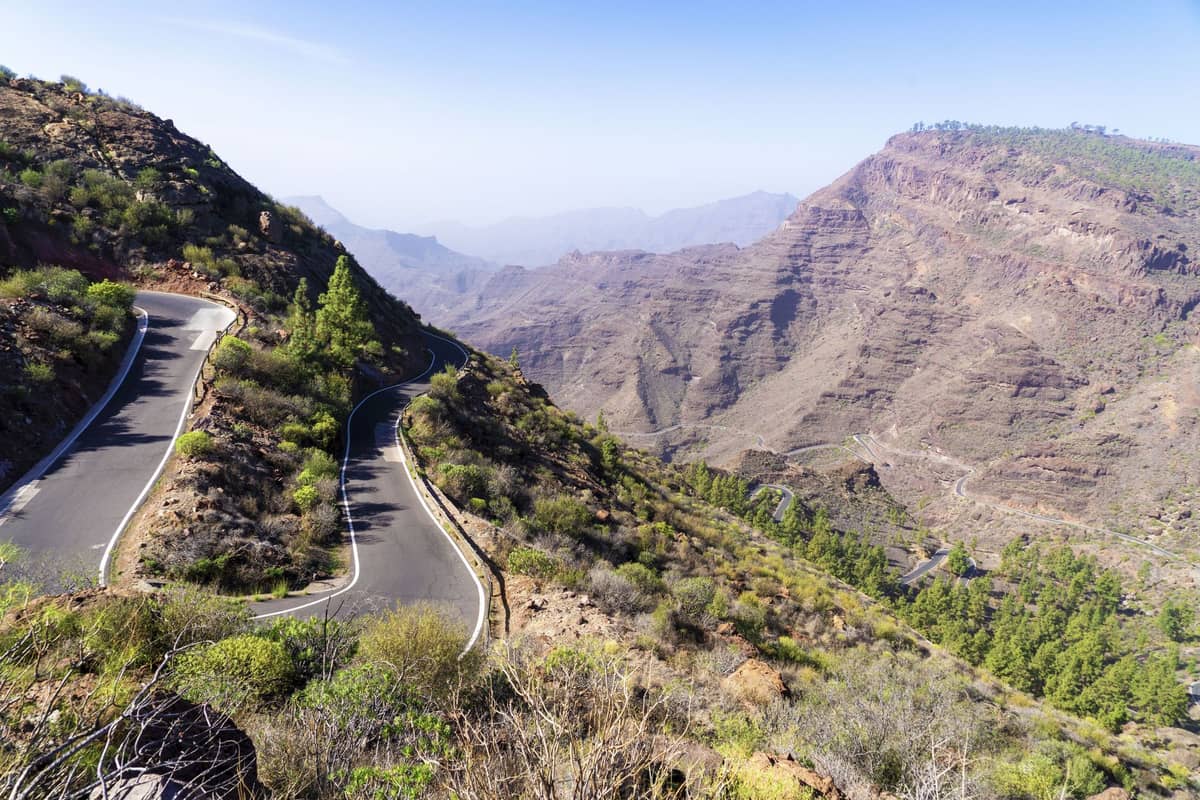
Gran Canaria sits in the Atlantic about 210 km off the northwest coast of Africa, officially part of Spain's Canary Islands autonomous community. It covers 1,560 km² and reaches 1,956 m at its highest point, which means the island packs the ecological variety of a small continent into a space you can drive across in under two hours. Spanish is the official language; English and German are widely spoken in resort areas.
The island is officially designated a UNESCO Biosphere Reserve, and roughly 43% of its territory is protected natural space. That matters for visitors because it means the interior, the ravines, the ancient pine forests around Tamadaba Natural Park, and the summit plateaus are largely intact and accessible. The things to do in Gran Canaria that tend to stick with people are rarely the ones in the brochures at the airport.
ℹ️ Good to know
Gran Canaria's tourism brand uses the phrase 'miniature continent' for good reason: the north is green and humid, the south is arid and sandy, and the interior is mountainous and cool. Pack layers if you plan to move between zones in a single day.
Beaches: Beyond the Famous Dunes
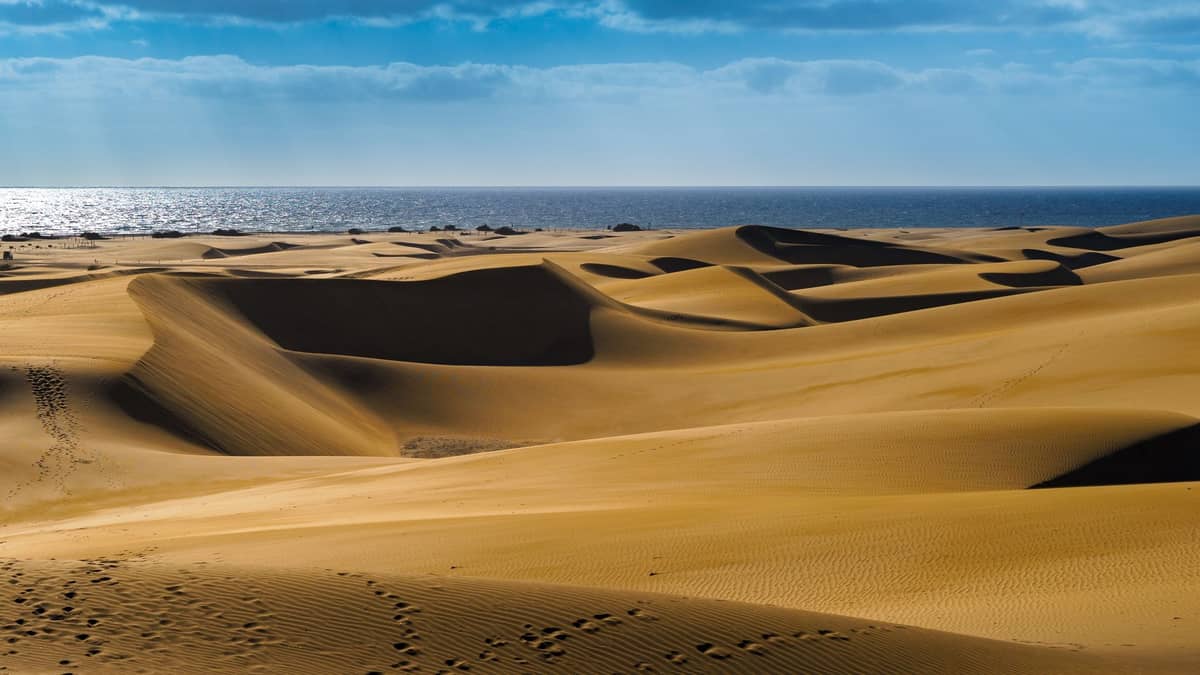
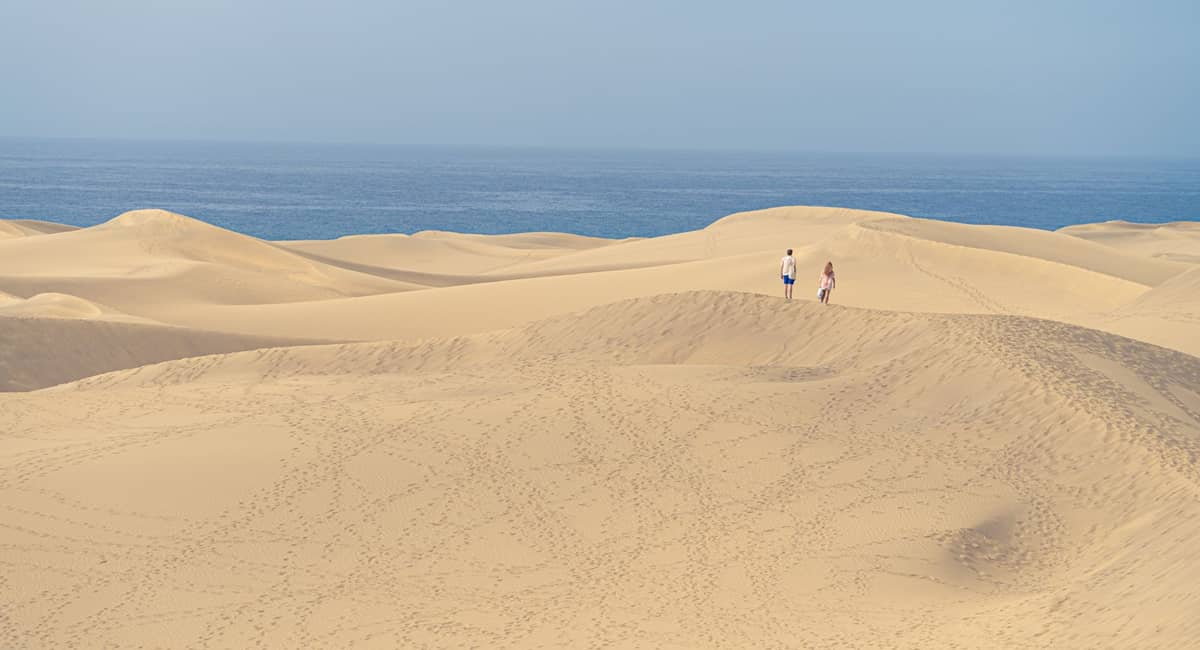
The Maspalomas Dunes are the island's most photographed feature: a roughly 404-hectare protected system of sand dunes that meets a long beach at the southern tip. They are genuinely impressive, especially at dusk when the light turns orange. But come before 9am or after 5pm if you want the landscape to yourself — by mid-morning in peak season, the boardwalk access points are crowded.
Las Canteras in Las Palmas is a different proposition entirely: a 3 km urban beach protected by a natural reef called La Barra, which keeps the water calm enough for swimming year-round. It is backed by a pedestrian promenade of restaurants, surf schools, and independent cafés rather than hotel towers. For families or anyone who wants a beach with real city infrastructure around it, Las Canteras Beach is consistently underrated by visitors who head straight south from the airport.
- Maspalomas Beach Long, wide, and backed by protected dunes. The nudist section toward the dunes is well-established and respected. Best early morning.
- Las Canteras (Las Palmas) Urban reef beach with calm water and a lively promenade. Works year-round; strong surf culture at the northern La Cícer end.
- Puerto de Mogán Small, sheltered harbour beach surrounded by whitewashed buildings and bougainvillea. Excellent for families; fewer day-trippers on weekday mornings.
- El Confital Raw, wind-exposed beach at the northern end of Las Palmas. No facilities, but it attracts serious surfers and locals who want to escape the tourist track.
- Puerto Rico Beach Artificially created but reliably calm and sheltered. Reliable for swimming and water sports across all seasons.
⚠️ What to skip
Playa del Inglés beach is large and perfectly functional but tends to be heavily packed from June to September. The sand itself blows significantly in the afternoon Alisio trade winds. If wind bothers you, plan beach time before 1pm or choose a sheltered alternative like Puerto Rico.
The Interior: Mountains, Ravines, and Ancient Villages
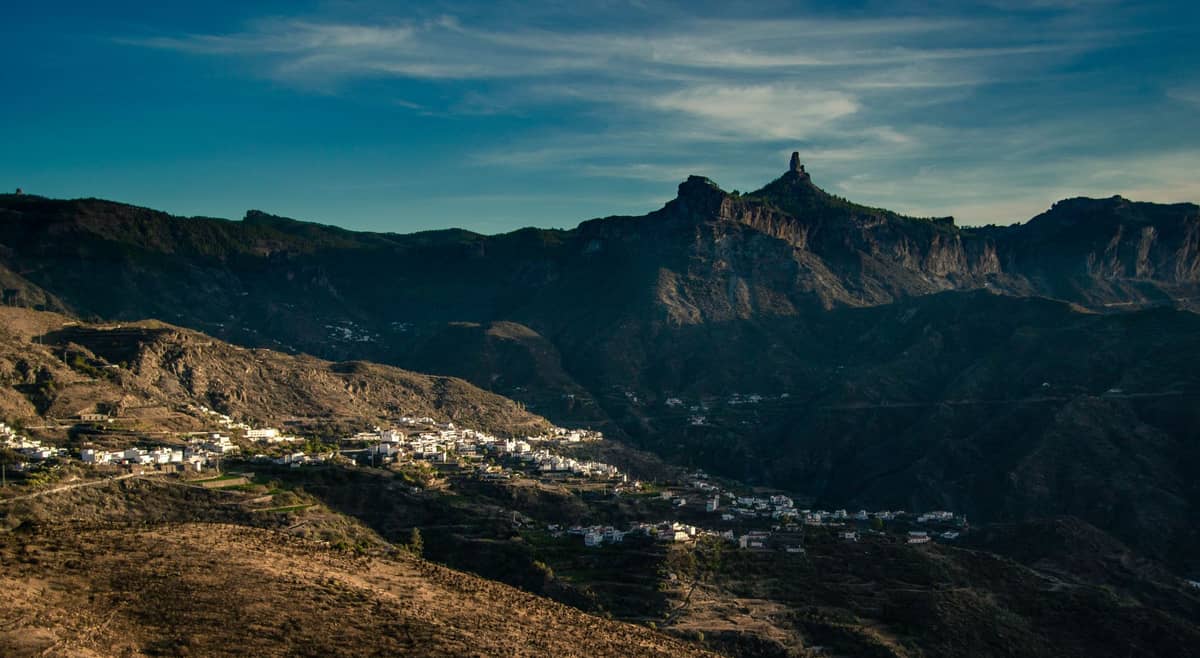
The single best day trip from any part of the island is into the central highlands around Tejeda, a village at roughly 1,000 m elevation surrounded by almond trees that bloom spectacular white and pink in late January and February. The road up through the caldera landscape is half the experience. From Tejeda, the walk to Roque Nublo — the iconic 80-metre volcanic monolith standing at 1,813 m — takes about 45 minutes each way on a well-marked path and requires no special equipment outside of sturdy footwear.
Serious hikers should plan multiple days in the interior. The hiking in Gran Canaria guide covers the best-marked routes, but a few standouts: the Barranco de Guayadeque ravine offers cave restaurants literally built into the rock face (open for lunch; book ahead on weekends), and the GR-131 long-distance trail runs the full length of the island. The cool, pine-forested area around Tamadaba is some of the quietest walking on the island.
The Cruz de Tejeda crossroads at around 1,520 m marks the geographical centre of the island and connects multiple hiking trails. There is a parador (state-run hotel) and a small market selling local cheeses, bienmesabe (almond cream), and mojo sauces. Cruz de Tejeda is accessible by Global bus from Las Palmas, but the schedule is limited — check before you go, and consider a rental car if you want flexibility.
Culture and History: Las Palmas Old Town and Beyond
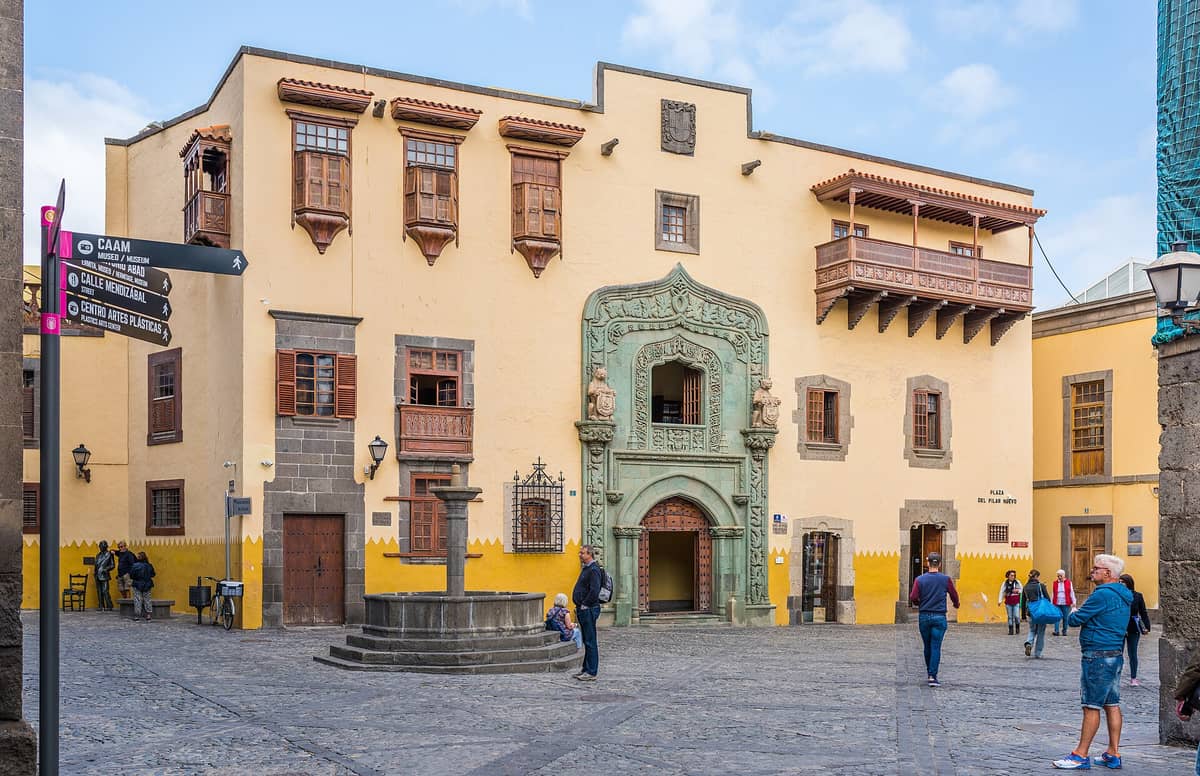
Las Palmas de Gran Canaria (population around 380,000) is a real city with a serious cultural life, not just a transit point. The neighbourhood of Vegueta is the oldest part of the city, founded in 1478, and is compact enough to cover on foot in two to three hours. The Catedral de Santa Ana took four centuries to complete and its tower offers views over the rooftops. The Casa de Colón museum occupies the building where Columbus reportedly stayed during his first voyage west — entry is free, and the pre-Columbian exhibits are genuinely interesting.
Gran Canaria's pre-Spanish indigenous population, the Guanches, left archaeological traces across the island. The Cueva Pintada in Gáldar is the most important: a cave complex with geometric painted murals that survived intact and is now a museum with strong interpretation. Book tickets in advance, especially in winter when visitor numbers peak. The Cenobio de Valerón, a network of over 300 granary caves carved into a volcanic cliff face in the north, is free to visit and requires only a short uphill walk.
✨ Pro tip
The Vegueta Saturday market runs from early morning and sells local produce, cheese, and artisan goods. It is genuinely used by residents, not curated for tourists. Combine it with a walk through the old town before the heat and crowds build up.
Boat Trips, Water Sports, and Coastal Activities
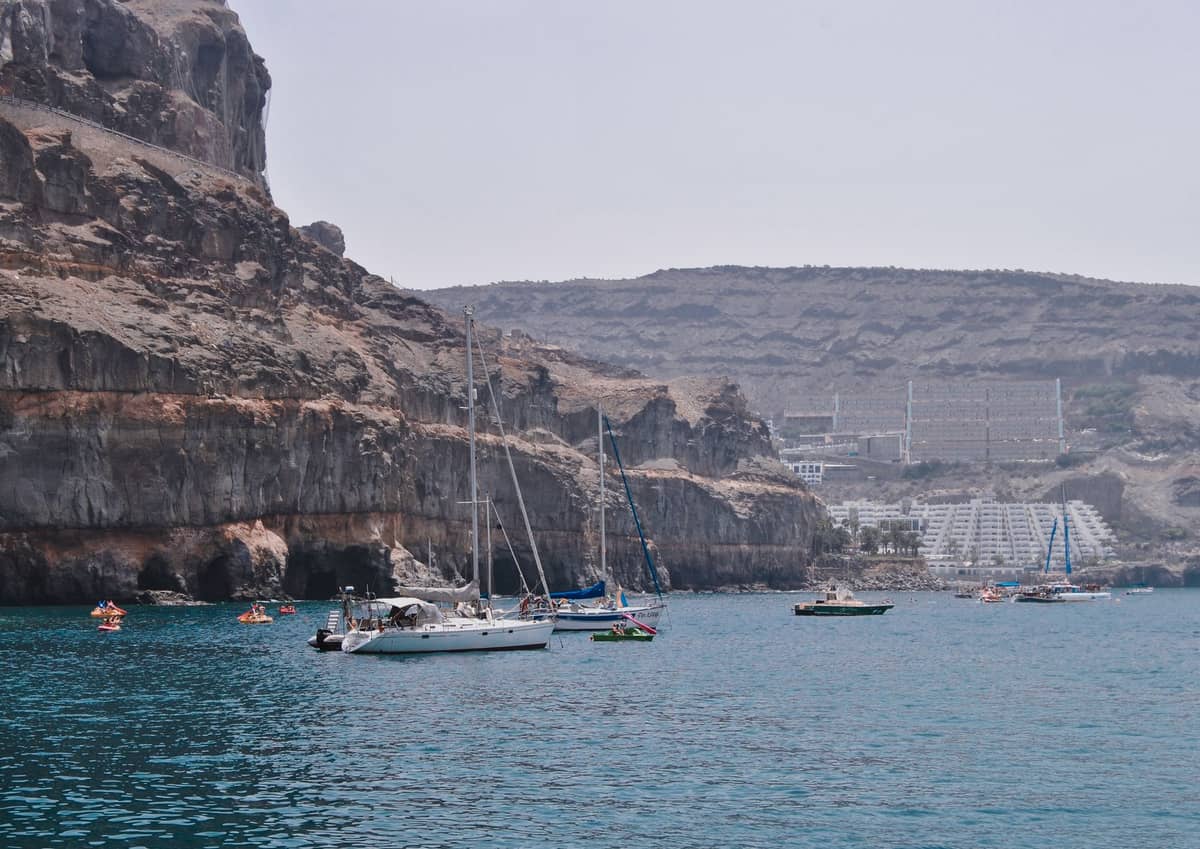
The waters off Gran Canaria's southwest coast are among the most reliably productive in Europe for cetacean sightings: resident pods of bottlenose dolphins and pilot whales, plus seasonal visits from sperm whales and orcas. Most dolphin-watching and whale-watching trips depart from Puerto Rico or Puerto de Mogán. Group catamaran tours run from around €35-40 per adult and €20-25 per child, typically lasting two to three hours. Private yacht charters often start from around €80 per person on shared trips.
One important caveat: no operator can guarantee sightings. Any tour that promises you will see dolphins is overstating what they can deliver. Choose operators who are honest about this — the reputable ones describe their trips as 'dolphin search' tours and offer partial refunds or repeat trips if conditions are poor. Sighting rates are genuinely high (some operators cite 90%+), but the sea is unpredictable.
Beyond cetacean tours, Gran Canaria has a well-developed water sports scene. Surfing is concentrated around El Confital in Las Palmas and the north coast (October to March for the best swells). Windsurfing and kitesurfing are strong around Pozo Izquierdo on the east coast, which regularly hosts world championship events. For a full rundown of options and providers, the Gran Canaria water sports guide covers conditions, schools, and seasonal timing.
- Dolphin and whale watching: depart from Puerto Rico or Mogán, €35-40 adult, 2-3 hours
- Glass-bottom boat cruises: popular with families, depart multiple south coast ports, from around €25
- Scuba diving: visibility is excellent around volcanic rock formations; multiple PADI centres in Puerto Rico and Arguineguín
- Surfing lessons: best November to March; schools at Las Canteras and the north coast
- Kayaking and paddleboarding: calmer conditions at Puerto de Mogán and Playa del Inglés lagoon area
- Deep-sea fishing: half-day and full-day charters from Puerto Rico and Pasito Blanco
Practical Information: Getting Around and Planning Your Time
Gran Canaria Airport (IATA: LPA) sits on the east coast roughly midway between Las Palmas and the southern resorts. A taxi to Las Palmas city centre costs around €25-35 and takes 20-30 minutes depending on traffic. To Maspalomas, expect roughly €40-55 and about 30 minutes. The Global bus network's Line 60 connects the airport to Las Palmas for around €2.30–2.95; Line 66 continues south to Maspalomas for a higher fare — significantly cheaper than a taxi, but slower and less convenient with luggage.
There is no metro on the island. For Las Palmas city transport, the local guaguas (urban buses) cover all major neighbourhoods with single fares around €1.40, reducible to around €1.00 with the TransGC rechargeable card. For the interior villages and rural attractions, a rental car is by far the most practical option. Getting around Gran Canaria covers all transport options in detail, including road trip routes that take in the best mountain scenery.
How long do you need? Three days covers the highlights of Las Palmas and one interior excursion. A week gives you time to explore the south coast resorts, the central mountains, and the quieter northwest without rushing. For a structured itinerary, the one week in Gran Canaria guide maps out a logical route. The island has over 20 tourist information offices including branches in Las Palmas, Maspalomas, Puerto Rico, and Mogán — useful for current trail conditions and event information.
💡 Local tip
Electricity is 230V, Type F (Schuko) plugs — same as mainland Europe. Emergency services number is 112, operating 24 hours in multiple languages. Tap water meets safety regulations but is often desalinated and most visitors prefer bottled water. Tipping is appreciated but not obligatory; rounding up the bill is the common practice in restaurants.
FAQ
What is Gran Canaria best known for?
Gran Canaria is best known for the Maspalomas Dunes, year-round beach weather, and its southern resort strip. But the island is equally remarkable for its mountainous interior: volcanic peaks, ancient Guanche archaeological sites, and pine forests. It holds UNESCO Biosphere Reserve status, and roughly 43% of the island is protected natural space.
What are the best things to do in Gran Canaria for first-time visitors?
Prioritise Roque Nublo (a straightforward hike to a spectacular volcanic monolith), Las Canteras beach in Las Palmas, the historic Vegueta old town, a dolphin-watching trip from Puerto Rico, and at least one visit to the Maspalomas Dunes at sunrise or sunset. If you have more time, add Cueva Pintada in Gáldar and the drive through Tejeda.
Is Gran Canaria worth visiting outside summer?
Yes, and in many ways it is better outside summer. Coastal temperatures range from 21°C in winter to 27°C in summer — genuinely mild year-round. Hikers prefer November to April when the mountains are cooler and clearer. The Almond Blossom Festival in Tejeda (late January/February) is one of the island's most atmospheric events. Crowds and prices are significantly lower outside July and August.
Do you need a car in Gran Canaria?
Not if you plan to stay in Las Palmas or along the south coast resort strip, where Global buses are frequent and affordable. But a rental car opens up the interior enormously — villages like Tejeda, the Guayadeque ravine, and the Tamadaba forest are technically reachable by bus but far more practical by car. Rental prices are reasonable compared to mainland Europe.
How many days do you need in Gran Canaria?
A minimum of five to seven days gives you time to see the south coast beaches, spend a day or two in Las Palmas, and explore at least part of the interior. A long weekend (three to four days) works if you focus on one zone, but the island rewards slower travel. Two weeks is not excessive if you want to hike seriously, explore the quieter northwest, and settle into the pace of the place.