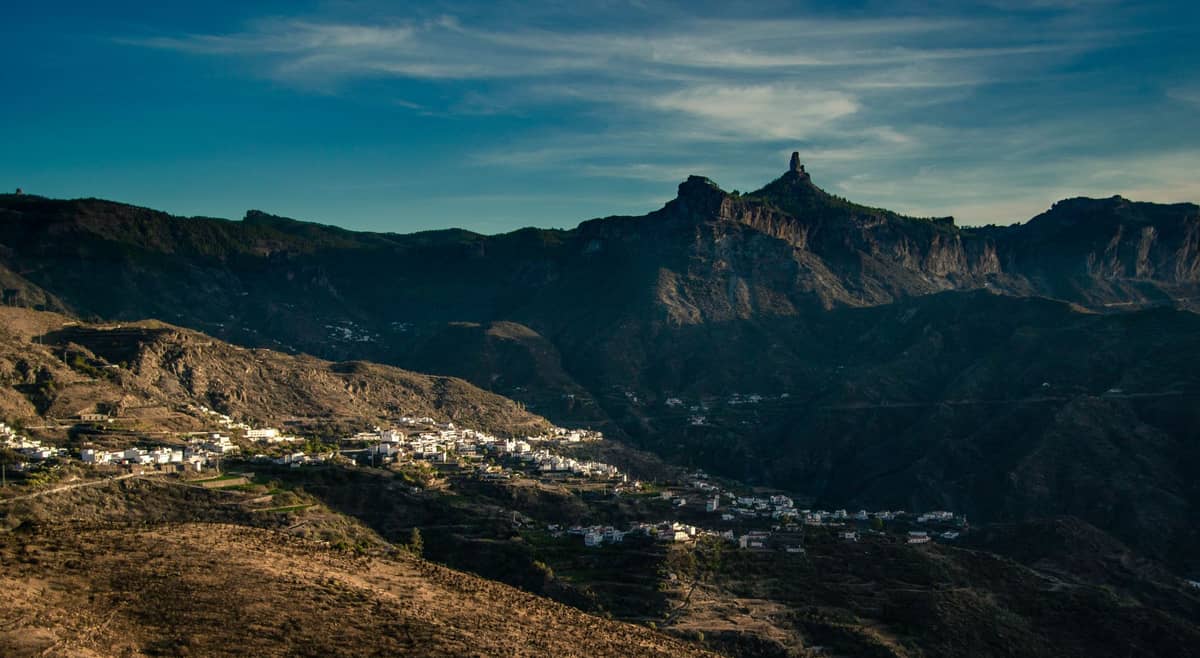
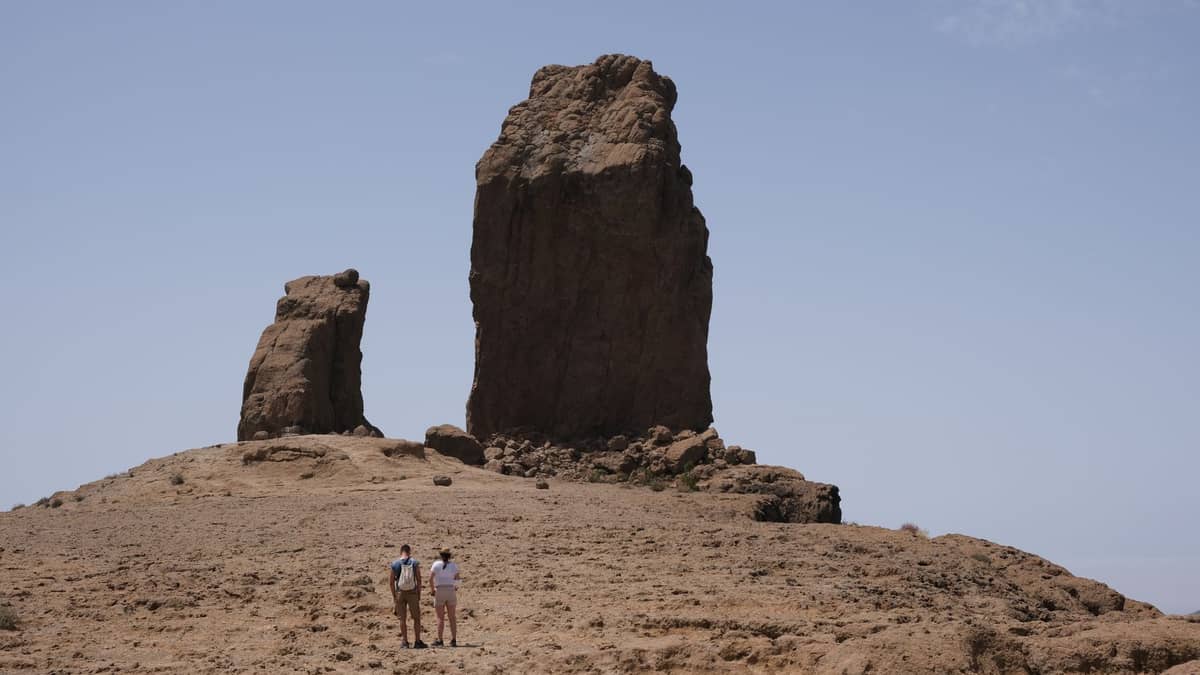
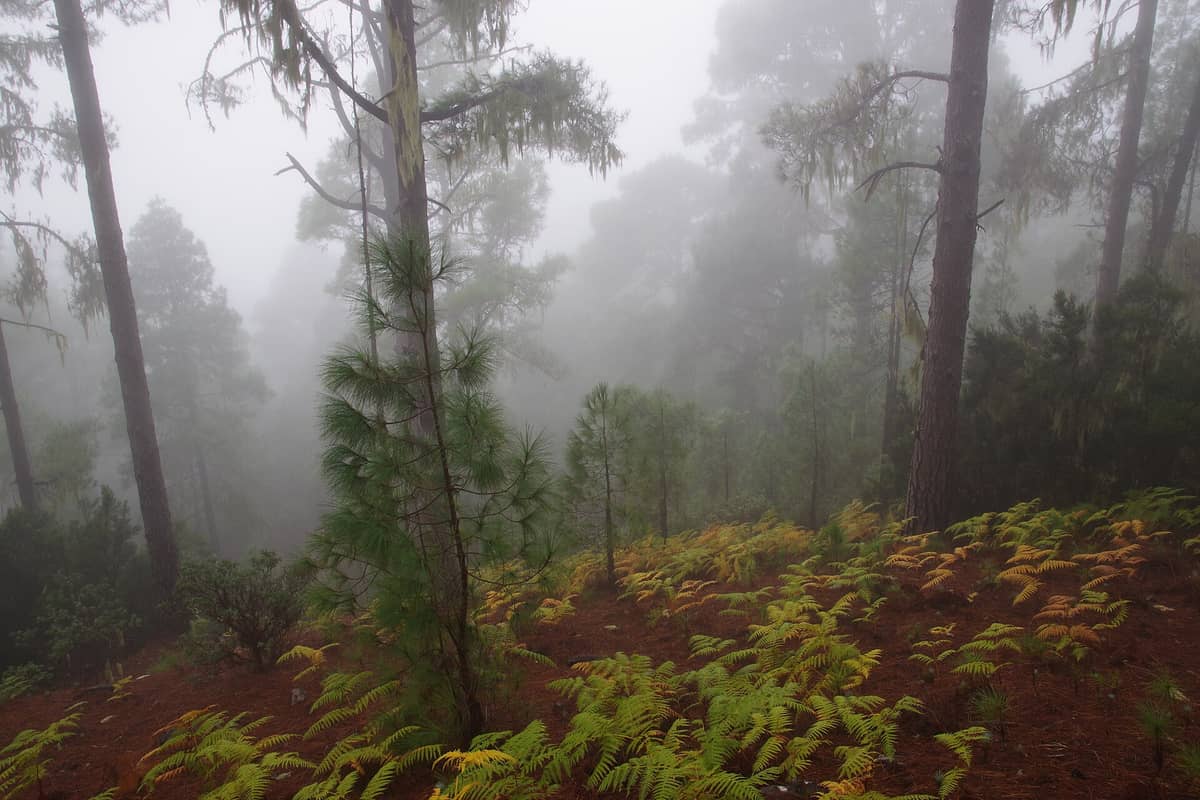
Tejeda is a compact mountain village sitting inside the ancient Caldera de Tejeda at roughly 1,050 metres above sea level, about 44 km from Las Palmas de Gran Canaria. The municipality surrounds some of the island's most dramatic natural landmarks, including Roque Nublo and Roque Bentayga, and the landscape shifts from almond orchards in winter bloom to cloud-draped pine ridges as you climb higher. For anyone who wants to see Gran Canaria beyond the beach resorts, Tejeda and the central interior are the obvious destination.
Tejeda is Gran Canaria's mountain heart: a white-walled village of under 2,000 people perched inside a volcanic caldera, surrounded by ancient rock formations, almond orchards, and some of the island's most rewarding hiking trails. The coast feels very far away up here, and that distance is exactly the point.
Orientation
Tejeda sits roughly in the geographic centre of Gran Canaria, at an altitude of around 1,050 metres, within the broad volcanic depression known as the Caldera de Tejeda. The municipality covers approximately 103 km² of the central-east highlands, and its boundaries reach up to Pico de las Nieves, traditionally cited as the island's highest point at around 1,949 metres. This is not coastal Gran Canaria, and it does not look or feel anything like the resort strips of the south.
The main road connecting the capital to Tejeda is the GC-15, which winds south from Las Palmas de Gran Canaria through San Mateo before climbing steeply into the caldera. The journey covers about 43.7 km and takes roughly an hour by car. From the southern resorts around Maspalomas, the drive is similar in length but approaches from a different angle through the GC-60 and the interior mountain roads. The village itself lies on a slope facing the caldera interior, with the surrounding peaks creating a natural amphitheatre of basalt and pine.
The broader interior zone that Tejeda anchors includes Cruz de Tejeda (the island's geographic crossroads, where the main mountain routes meet), the plateau around Pico de las Nieves, and the dramatic monolith landscapes around Roque Nublo and Roque Bentayga. These landmarks lie partly within the municipality boundaries, making Tejeda the natural base for exploring the island's mountainous core.
ℹ️ Good to know
Tejeda forms part of the Sacred Mountains of Gran Canaria, a UNESCO-inscribed cultural landscape that encompasses cave sanctuaries, pre-Hispanic rock art, and ancient Canarian footpaths. The designation covers much of the central interior and adds significant historical weight to what might otherwise seem like a scenic detour.
Character & Atmosphere
Arrive in Tejeda village early on a weekday morning and the quiet is striking. The Plaza Ntra. Sra. del Socorro, the small central square beside the church, might have a few locals having coffee at the bar, and the light comes in sideways across the caldera, catching the terraced almond trees on the opposite slopes. There is no traffic noise to speak of, no background music from beach bars, and on clear days you can see Roque Nublo's silhouette rising to the west like a petrified wave.
By mid-morning, especially on weekends and during the February almond blossom season, day-trippers and hiking groups begin arriving. The village is small enough that even modest visitor numbers give it an animated feel, and the handful of shops selling local sweets and crafts do brisk business. But the crowds thin quickly: most people take photographs at the mirador, buy some bienmesabe or marzipan, and drive on to the next viewpoint. Stay past 2pm and the village settles back into its own rhythm.
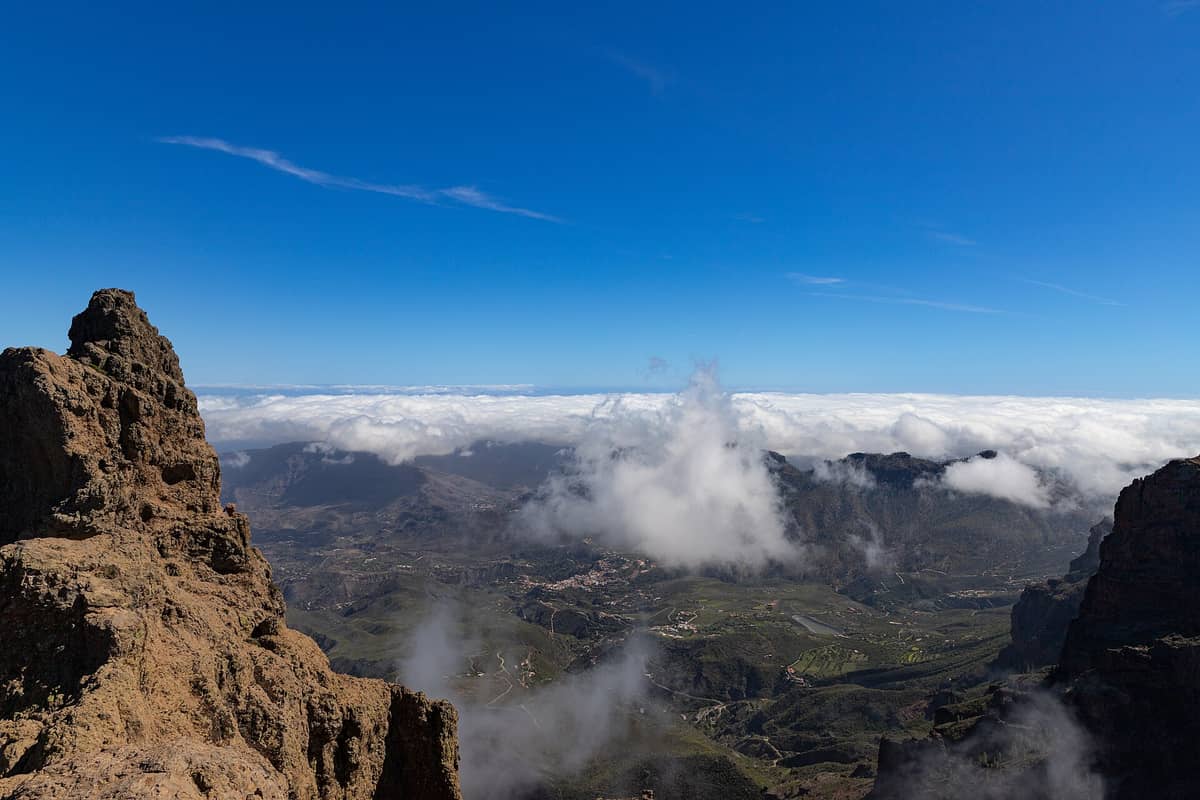
The atmosphere in the broader municipality changes significantly with altitude. Down in the village, the climate is noticeably cooler and damper than the coast, particularly from November through March. As you drive or walk up toward the Cruz de Tejeda or the pine forests approaching Pico de las Nieves, cloud can settle without warning and temperatures drop sharply. This is not a dramatic inconvenience so much as a reminder that Gran Canaria has genuine mountain character. In summer, the contrast with the coast below makes the interior feel like a different island entirely.
The population of the municipality is under 2,000, and the pace of life reflects that. Locals here are farmers, craftspeople, and people who run small guesthouses or restaurants catering to hikers and rural tourism visitors. English is spoken less freely than in the coastal resorts, and interactions in Spanish, even basic phrases, are appreciated.
What to See & Do
The two rock formations that define the Gran Canaria interior are both within reach of Tejeda. Roque NubloRoque Nublo, a basaltic volcanic monolith over 70 metres high rising from a plateau at around 1,800 metres, is accessible via a walking trail of approximately 45–60 minutes return from the access point near Degollada de La Goleta. The walk itself is straightforward on a clear day and rewards with panoramic views across the caldera and, on very clear days, toward Tenerife and the cone of Mount Teide.
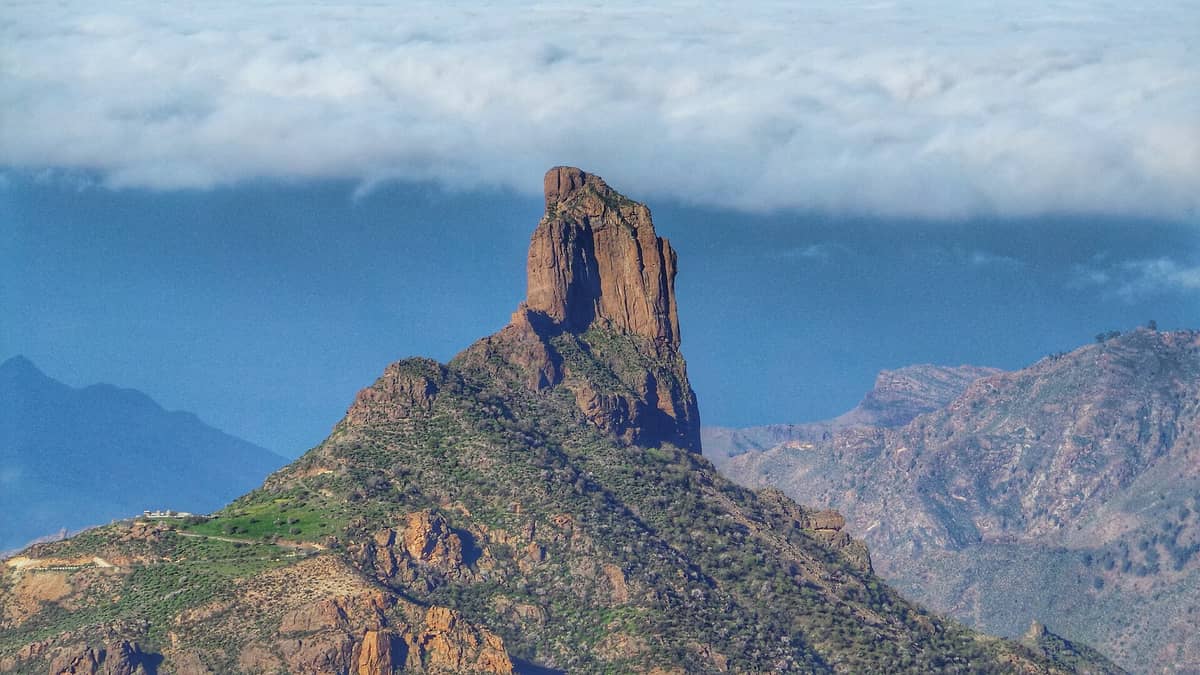
Roque Bentayga is a separate monolith with deeper pre-Hispanic significance: it served as a ritual site for the Canarii, the island's original Berber-descended inhabitants, and the area around it contains cave dwellings, grain stores, and rock markings that remain visible today. An interpretive centre near the base provides context, and the walking trail around the rock takes about an hour at a comfortable pace.
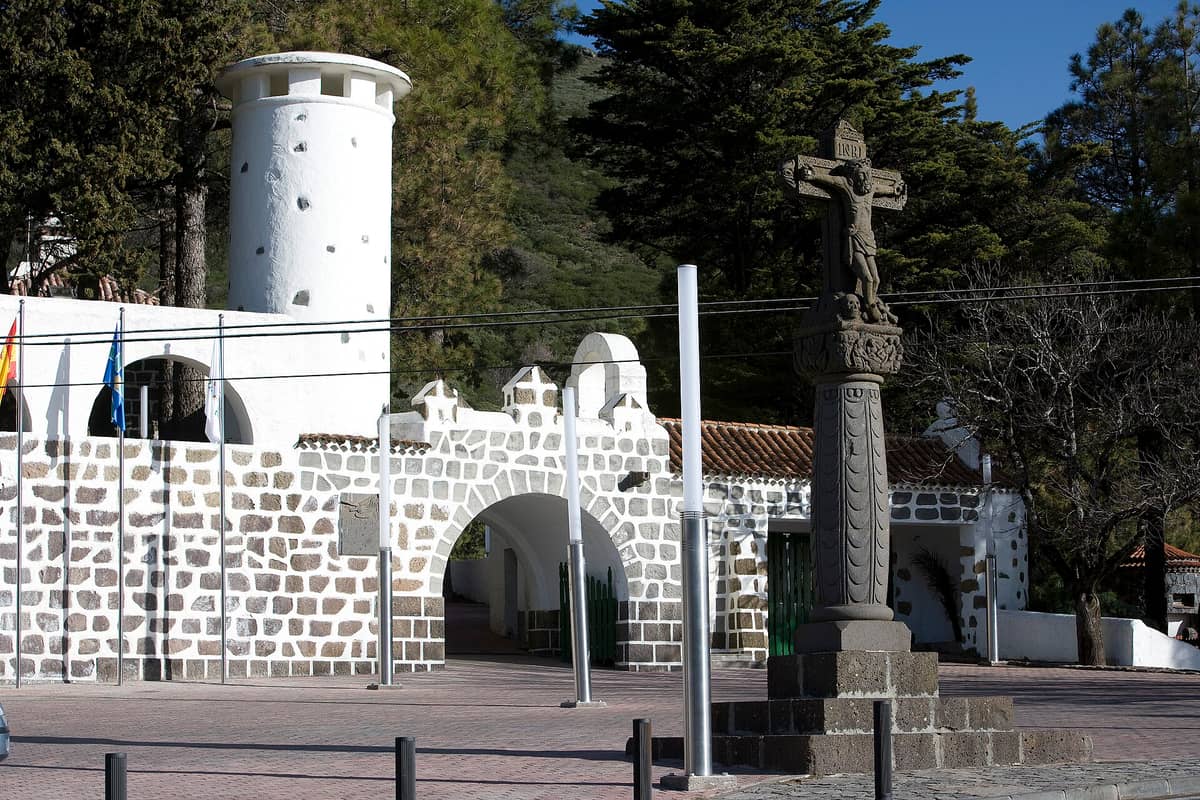
Cruz de Tejeda, the mountain crossroads sitting at approximately 1,450 metres, is worth a stop even if only for the orientation it provides: from here, multiple signed hiking routes fan out across the central massif, and the views toward both the north and south coasts of the island are extraordinary on clear days. The area also connects to the trails heading toward Pico de las Nieves, which, at around 1,949 metres, has traditionally been regarded as the island's highest accessible summit.
Roque Nublo trail: approximately 40-minute walk from La Goleta car park, best in morning before cloud builds
Roque Bentayga interpretive centre and walking circuit: allow 1.5 to 2 hours including the rock trail
Cruz de Tejeda viewpoint and hiking trailhead: signed routes to multiple destinations across the interior
Pico de las Nieves summit: accessible by road and short walk, radar installation visible at the top
Almond Blossom Festival: held in February when the orchards flower, with local food, music and artisan stalls
Local artisan shops in Tejeda village: almond-based confectionery, hand-woven goods, and ceramics
For serious walkers, the interior trail network is extensive and connects to hiking routes across the island. The hiking in Gran Canaria guide covers the main routes, including the long-distance GR-131 path that crosses the central highlands.
💡 Local tip
The best time to walk to Roque Nublo is between 9am and 11am. Cloud frequently settles on the upper peaks by early afternoon, especially from autumn through spring, and you can go from panoramic views to zero visibility in under an hour. Check the weather forecast the night before and set off early.
Eating & Drinking
Tejeda village has a small selection of bars and restaurants serving traditional Canarian food. The local specialities here are almond-based: bienmesabe (a dense sweet paste of ground almonds, sugar, egg, and lemon zest) served over ice cream or eaten by the spoonful, and various forms of marzipan and almond pastries. These are not tourist confections produced off-island but genuine local products made from the almonds grown on the surrounding terraces. Several shops in the village sell them packaged to take home.
For a full meal, the restaurants around Tejeda and at Cruz de Tejeda serve classic Canarian dishes: papas arrugadas with mojo verde or mojo rojo, caldo de papas, grilled meats and local cheeses. Portions are substantial and prices are reasonable by island standards, with a main course typically in the range of 12 to 20 euros. The parador at Cruz de Tejeda has a restaurant with a wider menu and better finishing, though it sits at a more formal price point.
Options are limited beyond these basics, and the village does not have a nightlife scene in any conventional sense. The bar on the main square is the social centre of the village, and that is not a criticism. If you are looking for cocktail bars and late kitchens, this is the wrong corner of Gran Canaria. Come here to eat well and simply, buy local food to take back to your accommodation, and move on refreshed rather than stuffed.
Getting There & Around
The practical reality of Tejeda and the mountain interior is that a hire car makes everything significantly easier. The GC-15 from Las Palmas is a well-maintained road, though it demands attention: it narrows and twists as you gain altitude, and the hairpin bends approaching the caldera require slow, careful driving. Allow at least one hour from Las Palmas and the same from Maspalomas. Parking in the village is limited but generally findable on weekdays; at Roque Nublo and Roque Bentayga, dedicated car parks fill up by mid-morning on weekends.
Public bus access exists but requires planning. Global line 305 connects Tejeda with San Mateo, and route L18 links Maspalomas (Faro) with Tejeda and San Mateo via the interior. Timetables are limited, particularly on Sundays, so check the current Global schedule before relying on buses for the return journey. For general guidance on moving around the island, the getting around Gran Canaria guide covers bus routes, hire car tips, and taxi options in detail.
Within the municipality, movement between the village, Cruz de Tejeda, Roque Nublo, and Roque Bentayga requires either a car or a willingness to walk on mountain roads. There are no local taxis based in the village. Cyclists occasionally tackle the GC-15 climb, and it is a legitimate challenge at this gradient, but the road is shared with tourist coaches and requires experience on mountain descents.
⚠️ What to skip
The mountain roads around Tejeda are steep and narrow, and some sections have poor visibility around bends. In wet or foggy conditions, which can appear quickly at altitude, reduce speed significantly. If you are not comfortable driving on hairpin mountain roads, taking a guided tour from Las Palmas or the southern resorts is a practical alternative that includes transport and context.
For those joining Tejeda to a wider island itinerary, the village works well as a midpoint stop on a Gran Canaria road trip that loops from Las Palmas through the interior and back down to the south coast. Cruz de Tejeda is the natural pivot point for that kind of route.
Where to Stay
Tejeda is not a resort destination and has no large hotels. Accommodation options are small-scale and rural: rural guesthouses (casas rurales), a handful of apartments, and the Parador de Cruz de Tejeda, a state-run hotel in the Spanish parador network that occupies the old pilgrim hostel at the mountain crossroads. The parador is the most comfortable option in the area, with stone interiors, mountain views, and a restaurant serving Canarian cuisine, but it books up well in advance during the almond blossom season and on winter weekends.
Staying overnight in Tejeda or at Cruz de Tejeda means waking to views the day-trippers never see: early light across the caldera before the coaches arrive, and the peaks to yourself for an hour or two. If hiking is your primary reason for visiting, basing yourself here for one or two nights rather than commuting from the coast each day makes a real difference to how much ground you can cover and how rested you feel doing it.
For those weighing up where to base themselves across the island, the where to stay in Gran Canaria guide sets the interior options alongside the coastal and urban alternatives. Tejeda suits travellers who prioritise nature, quiet, and walking above beach time and resort convenience.
Is Tejeda Worth the Trip?
For visitors spending more than a few days on Gran Canaria, the answer is almost certainly yes. The central interior represents a completely different side of the island from anything available on the coasts, and Tejeda provides the best single base from which to access it. The combination of geological drama at Roque Nublo and Roque Bentayga, UNESCO-recognised cultural landscapes, and the unhurried pace of a working mountain village makes for a day, or ideally two days, unlike anything else on the island. Pair it with a visit to the Cruz de Tejeda viewpoint and the summit of Pico de las Nieves, and you have a complete picture of Gran Canaria's volcanic interior.
Those on short breaks or committed to beach-only holidays can reasonably skip it, though even a half-day drive through the interior via the GC-15 reveals a landscape that reframes the island. For a broader picture of what Gran Canaria offers beyond the resort zones, the things to do in Gran Canaria guide puts the interior in context alongside the island's other major draws.
ℹ️ Good to know
February is the peak month for visiting Tejeda, when the almond orchards bloom across the caldera slopes and the municipality hosts its Almond Blossom Festival. Crowds are larger than usual during this period and accommodation books out early, but the landscape — white blossoms against dark basalt peaks — is genuinely spectacular and worth planning around.
TL;DR
Tejeda is a mountain village at 1,050 metres in the volcanic heart of Gran Canaria, sitting inside the ancient Caldera de Tejeda and surrounded by the island's most dramatic natural landmarks.
The municipality includes Roque Nublo, Roque Bentayga, Cruz de Tejeda, and Pico de las Nieves, all accessible by car with short walks to the key viewpoints and summits.
A hire car is strongly recommended: public buses serve the area but on limited schedules, and the key sites are spread across mountain roads that require independent transport.
Best suited to hikers, nature-focused travellers, and anyone wanting to see Gran Canaria beyond the beach resorts; not suitable as a base for nightlife, beach holidays, or families with very young children.
Stay overnight at a rural guesthouse or the Parador de Cruz de Tejeda to experience the landscape without day-trip crowds; February is the standout month for almond blossom scenery but requires advance booking.
Three days is enough to experience Gran Canaria's remarkable range: a well-preserved colonial old town, Atlantic dune fields, volcanic mountain villages, and some of Spain's best urban beaches. This itinerary is built around real transport logistics, honest time estimates, and a deliberate mix of coast and interior.
Gran Canaria packs an extraordinary variety of beaches into one island: vast dune-backed shores in the south, a world-class urban beach in Las Palmas, sheltered family coves on the southwest coast, and raw Atlantic surf breaks in the north. This guide covers the best of all of them.
Gran Canaria earns its reputation as the 'island of eternal spring' for good reason. This guide breaks down every season, explains how the island's microclimates affect your plans, and tells you honestly when to go and when to avoid the crowds.
Gran Canaria packs extraordinary variety into 1,560 square kilometres. These are the best day trips from any base on the island, from the sacred peaks of the interior to the quiet fishing harbours of the west coast.
Gran Canaria is not a walkable island. This guide breaks down every realistic transport option, from Global bus routes and regulated taxi fares to car rental logistics and seasonal road warnings, so you can move around confidently from day one.
Gran Canaria all-inclusive resorts range from budget-friendly complexes in Playa del Inglés to upmarket retreats in Puerto de Mogán. This guide covers the best areas, realistic price expectations by season, and a clear take on when all-inclusive actually makes sense on this island.
Gran Canaria Carnival is one of Spain's biggest pre-Lent celebrations, centred on Las Palmas de Gran Canaria and running for four to five weeks each February and March. This guide covers every major event, how to get tickets, where to stay, and what first-timers consistently get wrong.
Gran Canaria has quietly become one of Europe's most practical bases for remote workers. Year-round subtropical warmth, 20+ coworking spaces, mid-range costs, and fast internet make Las Palmas de Gran Canaria a compelling alternative to Lisbon or Bali. This guide covers everything you need to plan a productive stay.
Everything you need to know about taking a ferry from Gran Canaria to the other Canary Islands. Covers the main routes, operators, realistic prices, departure ports, and the common mistakes that catch first-time travellers off guard.
Gran Canaria offers far more for couples than beach resorts. This guide covers the island's most romantic experiences, from volcanic viewpoints and wine-tasting in the interior to private catamaran trips and candlelit dinners in a harbour town that earns its 'Little Venice' nickname.
Gran Canaria packs an extraordinary amount of natural beauty, history, and culture into a single island — and a surprising amount of it is completely free. From sweeping volcanic landscapes and ancient Guanche sites to world-class urban beaches and genuinely free museums, here is how to get the most out of the island without opening your wallet.
Gran Canaria packs extraordinary variety into 1,560 square kilometres, yet most visitors see only a fraction of it. These are the volcanic ravines, pre-Hispanic ruins, wild coastlines, and slow villages that reward those willing to look beyond the southern resort strip.
December is one of the most underrated months to visit Gran Canaria. Daytime temperatures hover around 22°C, the southern beaches stay dry and sunny, and the island shifts into a relaxed festive rhythm. This guide covers the weather in detail, where to base yourself, what to do, and a few honest caveats about the rainy north.
Gran Canaria has over 130 luxury hotels spread across beach resorts, spa retreats, boutique city properties, and adults-only hideaways. This guide cuts through the marketing to tell you exactly where to stay, what to spend, and which areas suit different styles of upscale travel.
Gran Canaria nightlife spans four distinct zones, each with its own character, crowd, and closing time. This guide breaks down every major area, from the legendary Yumbo Centre to the bar-lined streets of Las Palmas, with practical advice on pricing, timing, and getting around after dark.
Gran Canaria offers genuine value if you know how to work the island's public transport network, tap into its free outdoor attractions, and eat where locals eat. This guide breaks down the real costs, the smart shortcuts, and the common mistakes that drain tourist wallets.
Gran Canaria packs semi-arid landscapes, volcanic peaks, and colonial towns into 1,560 km² — small enough to drive in a day, varied enough to spend a week exploring by car. This guide covers car rental costs, the best driving routes, the GC-200 road closure reality, and practical rules of the road so you can plan without surprises.
Both Gran Canaria and Tenerife promise year-round sunshine, dramatic scenery, and good value for European travellers. But they deliver very different holidays. This guide breaks down the real differences across beaches, landscapes, cost, family travel, and nightlife so you can stop second-guessing and start booking.
Gran Canaria's Atlantic coastline delivers world-class water sports year-round, from beginner surf lessons at Las Canteras to competition-level windsurfing at Pozo Izquierdo. This guide covers the best spots, realistic prices, seasonal conditions, and how to avoid the common pitfalls.
Gran Canaria delivers year-round sunshine, a stack of theme parks, safe beaches, and reliable public transport that make it genuinely practical for families. This guide cuts through the marketing to tell you exactly where to go, what to spend, and how to get around with children in tow.
Gran Canaria packs extraordinary hiking variety into 1,560 km². Alpine pine forests, volcanic rock formations, green ravines, and coastal cliffs are all within reach. This guide covers the best trails on the island, from quick walks to full-day mountain routes.
Gran Canaria packs an extraordinary range of landscapes, climates, and experiences into just 1,560 km². This guide cuts through the brochure language to tell you exactly who the island suits, what it does well, where it falls short, and how to decide if it belongs on your travel list.
Gran Canaria's volcanic coastline is dotted with natural sea pools carved from ancient lava flows. This guide covers the finest spots around the island, from well-equipped salinas in the northwest to wild rock pools on the west coast, with practical advice on when to go and what to expect.
Seven days is enough to experience Gran Canaria's remarkable contrasts: Atlantic beaches, volcanic peaks, colonial old towns, and quiet rural villages. This day-by-day itinerary covers the highlights without wasting a single afternoon.
Gran Canaria packs an extraordinary range of experiences into just 1,560 km². This guide covers the best things to do across the island, from world-class beaches and dramatic mountain hikes to historic old towns and boat trips, with practical advice on what's worth your time and what to skip.
Las Palmas de Gran Canaria is one of Spain's most underrated cities: a working Atlantic capital with a world-class urban beach, a remarkably preserved historic quarter, serious food culture, and year-round sunshine. This guide covers the best things to do across every corner of the city, with practical logistics, honest opinions, and no filler.
Gran Canaria's food culture runs deeper than most visitors expect. This guide covers the essential dishes, local ingredients, where to find authentic Canarian cooking, and what to skip — so you eat well from day one.
Gran Canaria divides neatly into three very different worlds: a cosmopolitan northern city, a sun-baked southern resort strip, and a rugged volcanic interior. Where you stay shapes your entire experience. This guide breaks down every main area by atmosphere, accommodation type, price range, and who it suits best.