Where to Stay in Gran Canaria: The Complete Area-by-Area Guide
Gran Canaria divides neatly into three very different worlds: a cosmopolitan northern city, a sun-baked southern resort strip, and a rugged volcanic interior. Where you stay shapes your entire experience. This guide breaks down every main area by atmosphere, accommodation type, price range, and who it suits best.
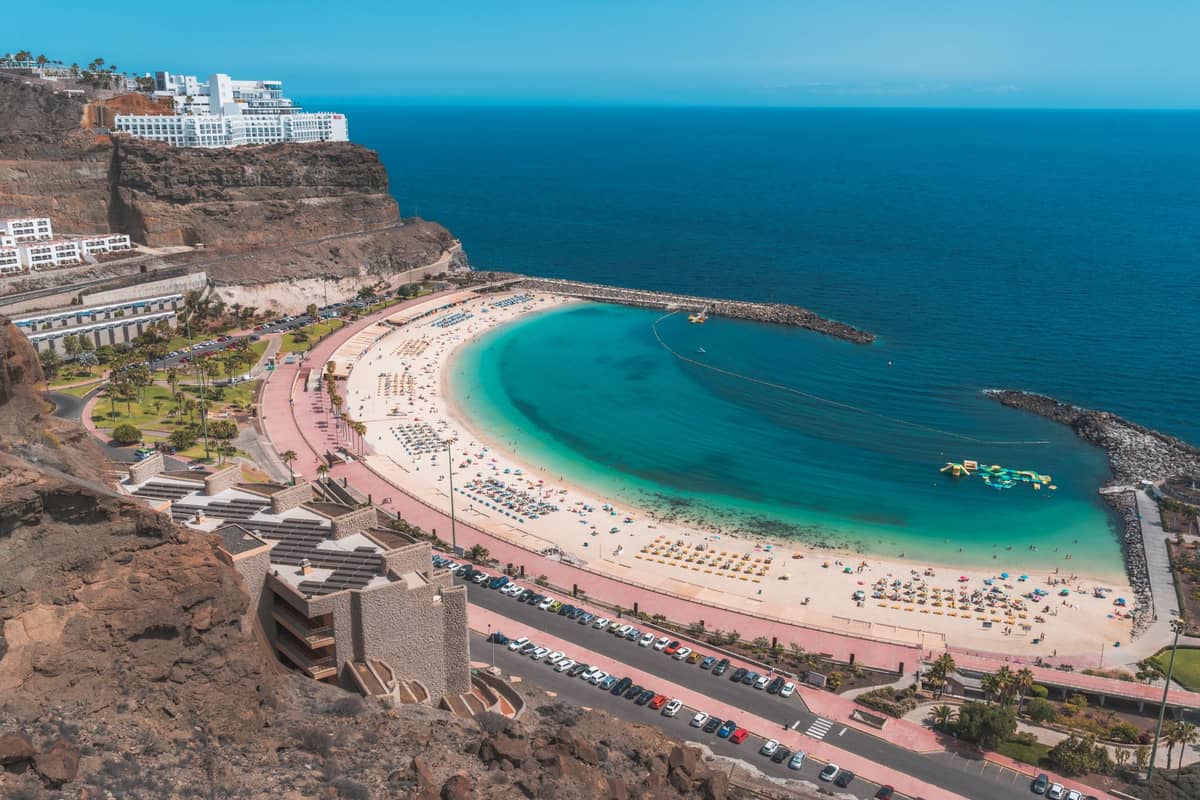
TL;DR
- Gran Canaria has three distinct accommodation zones: the north (Las Palmas, Agaete), the south (Maspalomas, Playa del Inglés, Puerto Rico, Puerto de Mogán), and the interior (Tejeda, Teror) — each with a radically different feel.
- The south coast is warmer and sunnier than the north, typically 2–3°C higher in winter, making it the better pick for guaranteed beach weather between October and April.
- Las Palmas suits travellers who want city life, culture, and the urban Las Canteras beach — not a resort holiday.
- Average nightly hotel rates across the island run around €185–250, with Playa del Inglés averaging closer to €150 at 3–4 star level — good value by European resort standards.
- May, June, and September offer the best value: fewer crowds, good weather, and noticeably lower prices. See our best time to visit Gran Canaria guide for the full seasonal breakdown.
Understanding Gran Canaria's Accommodation Zones
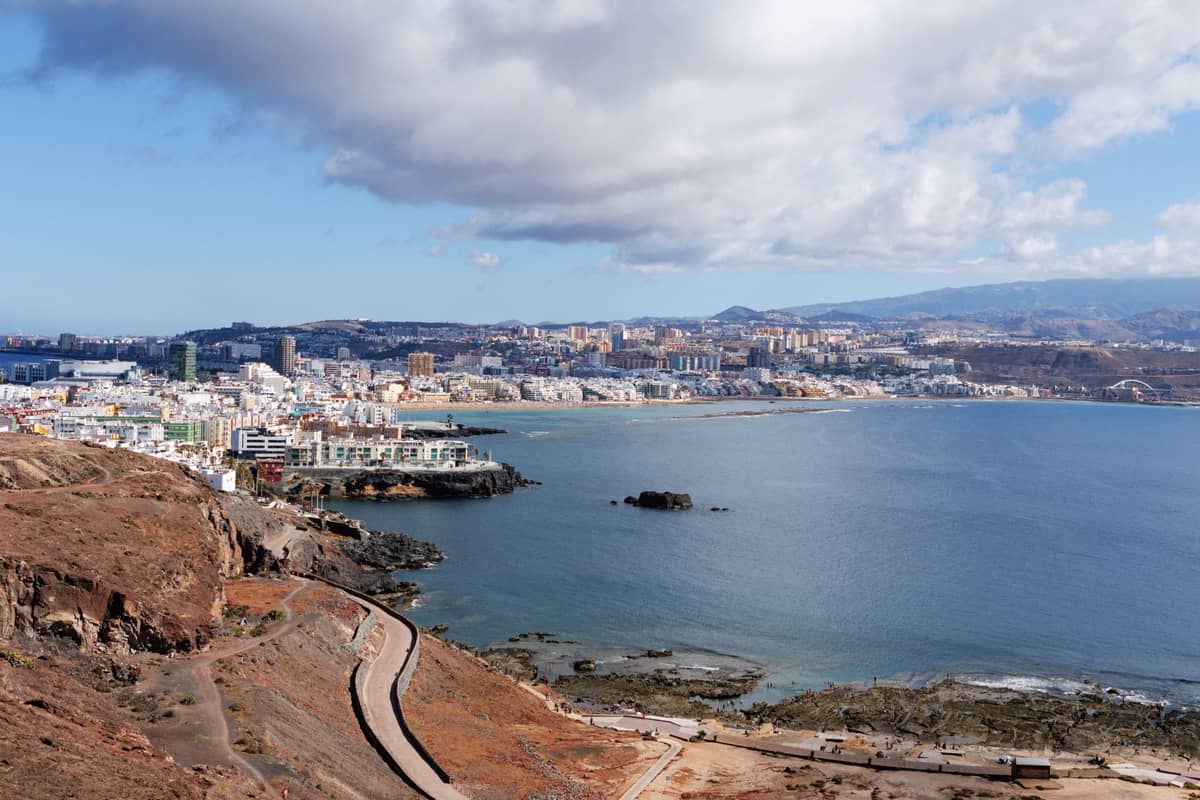
Gran Canaria covers 1,560 km² and rises to around 1,950–1,960 metres at its volcanic centre, which creates genuinely different microclimates across short distances. The north is greener, cloudier, and more culturally rich. The south is drier, sunnier, and purpose-built for beach tourism. The interior is cool, quiet, and largely undiscovered by package tourists. The zone you choose is not just about location — it determines the kind of trip you have.
Most first-time visitors default to the south coast without realising how different Las Palmas de Gran Canaria feels: it is a working city of around 380,000 people, one of Spain's ten largest, with proper neighbourhoods, a university, and a food scene that has nothing to do with all-inclusive buffets. Both options are valid, but they are not interchangeable.
ℹ️ Good to know
Gran Canaria uses the Euro (EUR). The island operates on Western European Time (UTC+0) in winter and Western European Summer Time (UTC+1) in summer, generally one hour behind mainland Spain only during the winter months — this often surprises arrivals from the peninsula who forget to adjust their watches.
Las Palmas de Gran Canaria: Best for City Stays and Urban Beaches
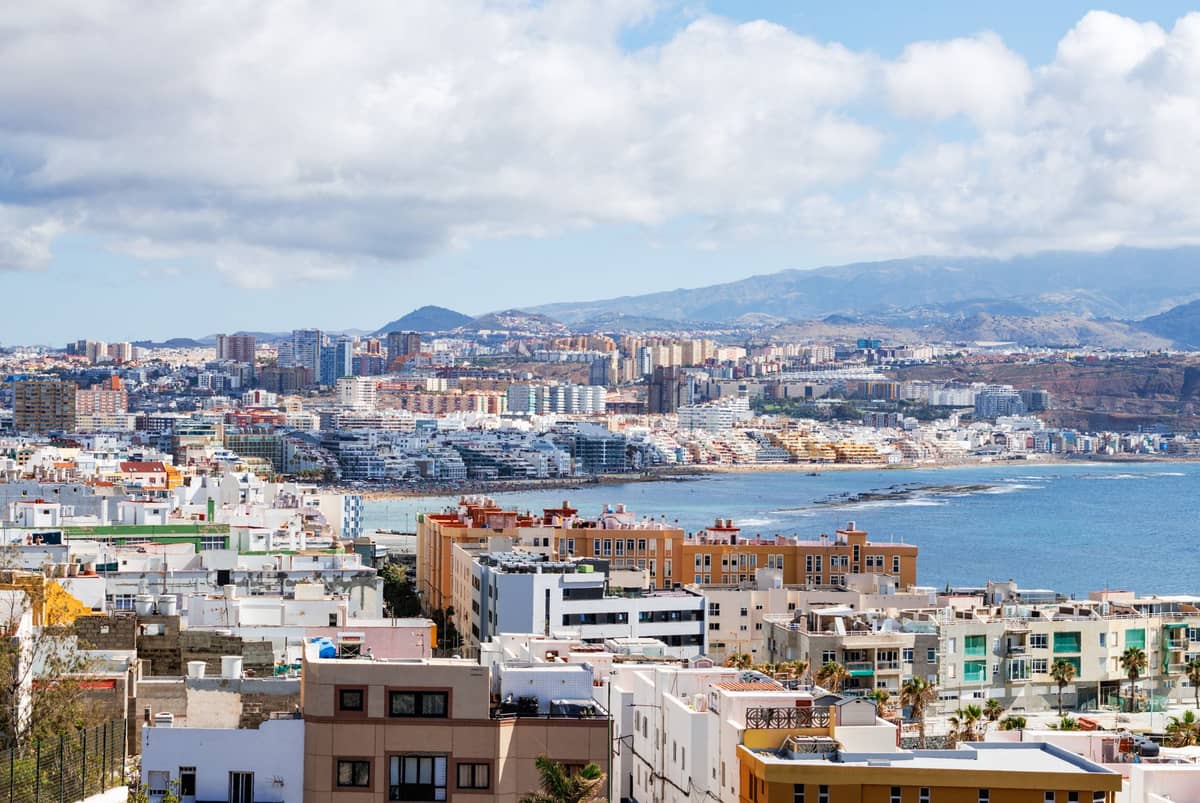
Las Palmas is the island's capital and the largest city in the Canary Islands. It splits into distinct neighbourhoods with very different characters. Vegueta, the historic old town in the south of the city, is where the colonial architecture is — the Cathedral of Santa Ana, the Casa de Colón, and the Canarian Museum all sit within easy walking distance. It is quieter than the centre and better suited to travellers who want atmosphere over convenience.
The Santa Catalina area sits at the northern end of Las Palmas, close to the port and adjacent to Las Canteras beach. This is the practical hub: bus lines originate here, taxis are easy to find, and the commercial energy is high. For most visitors staying in Las Palmas, Santa Catalina or the Las Canteras beachfront strip is the most convenient base.
- Vegueta Historic district with boutique hotels and converted townhouses. Quieter at night, walkable to key cultural sites. Better suited to culture-focused travellers than beach tourists.
- Santa Catalina Transport hub near the port and cruise terminal. Highest concentration of city hotels. Practical for short stays and onwards island travel.
- Las Canteras beachfront Hotels and apartments along a 3 km protected urban beach. The reef barrier keeps the water calm year-round. No resort atmosphere — this is a real city beach used daily by locals.
- Triana Shopping and pedestrian district between Vegueta and Santa Catalina. Some mid-range hotel options. Good central position but further from the beach.
Hotel pricing in Las Palmas tends to track the business calendar rather than sun-season demand, which means you can find competitive rates even in peak winter months. A solid 4-star in the Las Canteras strip typically runs €80–140 per night. Budget hostels and guesthouses in Vegueta and Triana can come in under €50. Full-service business hotels near the port reach €180–250 during busy periods.
💡 Local tip
Las Palmas is a genuinely year-round city. If you are visiting in July or August, be aware that locals go on holiday and some smaller restaurants close. The city is quieter but not empty — and prices often drop slightly compared to June.
The South Coast: Maspalomas, Playa del Inglés, Puerto Rico, and Puerto de Mogán
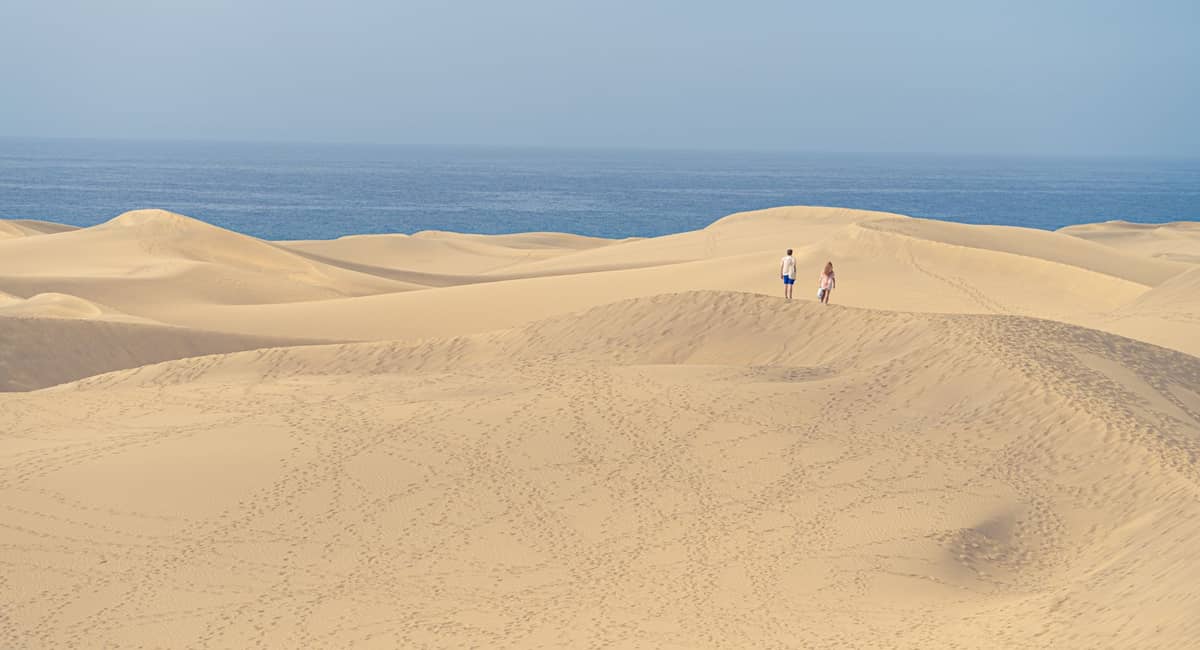
The southern resort corridor is where the majority of Gran Canaria's international visitors stay. It stretches roughly 30 km from San Agustín in the east to Puerto de Mogán in the west, with Maspalomas and Playa del Inglés forming the dense centre of mass. This zone is warmer and drier than the north by a consistent margin — in January, when Las Palmas might see cloud and occasional rain, the south regularly delivers 21–22°C and full sun.
Maspalomas itself is the flagship: a long beach backed by protected sand dunes, with the iconic Maspalomas lighthouse marking its western end. The Meloneras development just west of the dunes offers the island's most polished resort infrastructure, with upscale hotels, a seafront promenade, and a casino. Prices here are higher than in Playa del Inglés — a 5-star in Meloneras can reach €375 per night in high season, while a good 4-star in Playa del Inglés averages closer to €215.
Puerto Rico de Gran CanariaPuerto Rico de Gran Canaria is a more compact resort town about 18–20 km west of Maspalomas. It has a sheltered bay, calm water, and a slightly younger crowd. It is also one of the island's main water sports and boat trip departure points. Further west, Puerto de Mogán is often described as the most picturesque resort town on the island — a small fishing harbour surrounded by canal-threaded residential development. It is quieter, pricier, and noticeably less crowded than the Maspalomas-Playa del Inglés core.
- Maspalomas / Meloneras Best for: upscale resort stays, the famous dunes, quieter beaches. Meloneras is the smartest area on the south coast. Avoid if you want nightlife — it is very low-key after dark.
- Playa del Inglés Best for: value, variety, nightlife, and easy access to the dunes. Dense hotel and apartment stock drives prices down. Can feel overwhelming in peak season (Dec–Feb). Average 3-star around €178/night.
- Puerto Rico de Gran Canaria Best for: families, water sports, reliable sun. Compact and sheltered. Less package-heavy than Playa del Inglés but fewer dining options.
- Puerto de Mogán Best for: couples and low-key relaxation. The island's most photogenic resort village. Higher prices, smaller beach, excellent for day trips along the coast.
⚠️ What to skip
All-inclusive hotels in Playa del Inglés can trap you inside the property for days. If you book AI, choose a hotel with a good location near the promenade or the CC Yumbo area so walking out actually goes somewhere interesting. Resorts set back from the beach with no nearby restaurants leave you with no realistic alternative to the buffet.
The Interior and North: Rural Stays, Mountain Villages, and Agaete
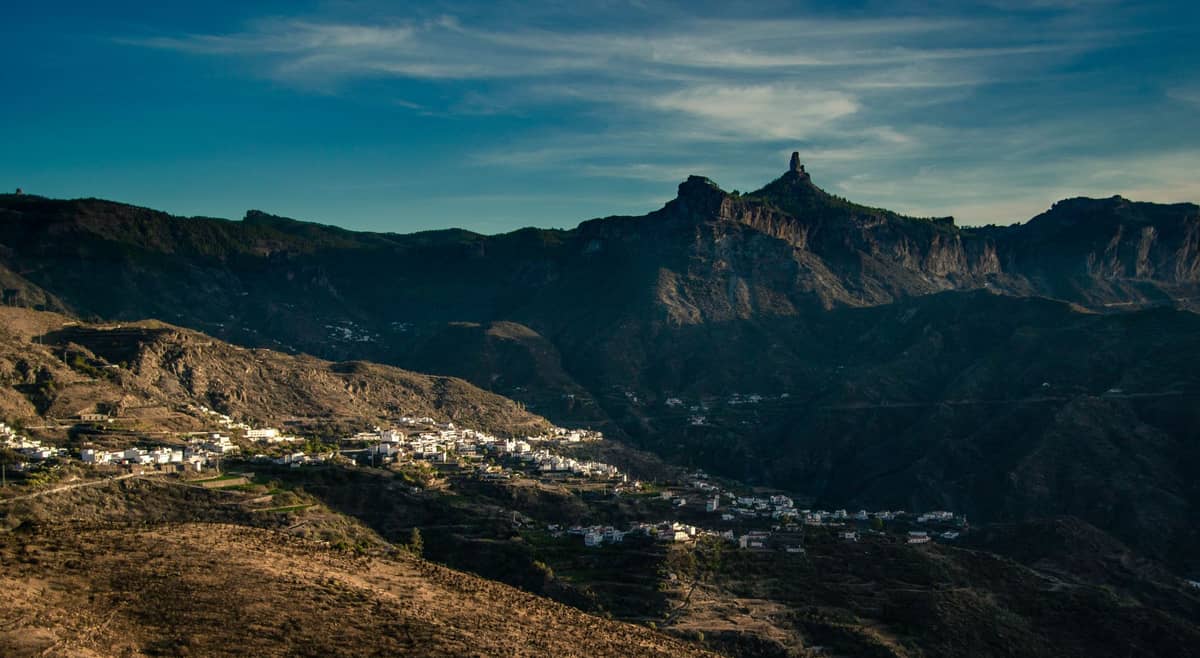
Staying inland is a minority choice, but it is increasingly worth considering for the right traveller. The mountain villages of Tejeda and Artenara sit at over 1,000 metres elevation, with views across the central caldera that are among the most dramatic on any Atlantic island. Temperatures here run 5–8°C cooler than the coast, and the pace drops dramatically. Rural casas de turismo rural (registered rural accommodation) offer self-catering houses and small guesthouses — typically €60–120 per night — that put you within walking distance of trails to Roque Nublo and the Cruz de Tejeda.
On the northwest coast, Agaete offers a completely different alternative: a small coastal town with a natural pool, a genuine local character, and far fewer tourists than the south. Accommodation is limited to small hotels and rental apartments, but the town is one of the most authentic places to base yourself if you are interested in the island rather than just the beach. It is also the departure point for ferries to Tenerife.
One honest caveat: staying in the interior or the north without a rental car is inconvenient. Public bus connections exist — Global routes link Las Palmas to Teror and Arucas, and other lines serve the interior — but services are infrequent and journey times are long. If you want to use the south coast beaches while based in Tejeda, the commute is around 45–60 minutes each way. For hikers and those genuinely interested in the island's landscape and culture, that trade-off is worth it. For beach-focused visitors, it is not.
Practical Booking Considerations: Timing, Transport, and Prices
Gran Canaria operates as a year-round destination, but the demand curve is sharply skewed toward winter. The main high season runs October through April, driven by northern Europeans escaping cold weather. December through February is peak demand and peak pricing across the south coast. If you are flexible, May, June, and September represent the sweet spot: comfortable temperatures (24–27°C), manageable crowd levels, and accommodation prices noticeably lower than high season.
Getting around is a practical factor in where you choose to stay. Gran Canaria Airport (LPA) sits on the east coast, roughly equidistant between Las Palmas and the southern resorts. A taxi to Las Palmas costs around €25–35 and takes 20–30 minutes. A taxi to Maspalomas runs approximately €35–40 and about 30 minutes. The Global bus network (Line 60) connects the airport to Las Palmas for around €2.30–2.95 — significantly cheaper, though slower — while separate routes serve Maspalomas and other south coast resorts at slightly higher fares.
- Book south coast resorts 2–3 months ahead for travel in December–February; last-minute availability tightens significantly.
- Las Palmas hotels rarely sell out in the same way — city demand is spread more evenly, and business travel provides a base floor year-round.
- Interior rural accommodation is limited in total stock; popular casas in Tejeda and the mountains can book weeks ahead during the spring hiking season (March–May).
- The TransGC rechargeable bus card offers reduced single fares on urban guaguas in Las Palmas — worth buying if you plan to use buses more than twice.
- The south coast is meaningfully sunnier and warmer in winter; if guaranteed beach weather between November and March is your priority, do not base yourself in Las Palmas hoping to commute south.
For travellers weighing different island options, our comparison of Gran Canaria vs Tenerife covers how the two islands differ across accommodation style, beaches, and overall atmosphere — useful context if you are still deciding. And if budget is a primary concern, the Gran Canaria on a budget guide covers where to find affordable stays and how to reduce costs across the board.
Who Should Stay Where: A Quick Decision Framework
Rather than listing every hotel, the most useful thing this guide can do is help you match zone to traveller type. Gran Canaria's different areas are genuinely suited to different priorities, and choosing the wrong base is the most common mistake first-time visitors make.
- Beach + nightlife + budget Playa del Inglés. High supply of apartments and hotels keeps prices competitive. Walking access to the dunes. CC Yumbo for nightlife. Busy and commercial, but delivers exactly what it promises.
- Upscale beach resort Meloneras or Maspalomas. Quieter, better-quality properties, adult-oriented. The Lopesan and IFA hotel groups dominate this stretch with polished 4 and 5-star product.
- Families with children Puerto Rico de Gran Canaria or Playa del Inglés. Both have calm water, good infrastructure, and easy access to water parks. Puerto Rico's sheltered bay is particularly good for young children.
- Couples wanting something quieter Puerto de Mogán or Agaete. Smaller, more characterful, less resort-like. Puerto de Mogán is more polished; Agaete is more authentic but has fewer facilities.
- Culture and city exploration Las Palmas de Gran Canaria, specifically the Las Canteras beachfront or Vegueta. You get a real Spanish city alongside a 3 km urban beach. No resort infrastructure, but everything else a traveller needs.
- Hiking and nature Tejeda, Artenara, or the rural interior. Requires a car. Dramatically different experience from the coast — cool nights, mountain landscapes, and trail access that puts coastal visitors on a 90-minute round trip just to reach the trailheads.
✨ Pro tip
If you are visiting for 7 nights or more, consider splitting your stay: 3–4 nights in Las Palmas and 3–4 nights on the south coast. The Global bus network and rental cars make this practical, and it gives you a genuinely rounded picture of the island rather than a single-zone experience.
FAQ
Where is the best area to stay in Gran Canaria for beaches?
The south coast is the clear answer for beach-focused visitors. Maspalomas has the most dramatic beach (backed by protected dunes), Playa del Inglés offers the widest range of accommodation at the most competitive prices, and Puerto de Mogán suits those who want something quieter and more scenic. All three areas are reliably sunnier and warmer than Las Palmas, particularly between October and April.
Is it better to stay in Las Palmas or the south of Gran Canaria?
It depends entirely on what you want. Las Palmas is a real Spanish city with culture, architecture, good restaurants, and the lovely Las Canteras beach. The south coast is purpose-built for resort tourism with guaranteed sun, large hotel complexes, and easy beach access. If you want a relaxing beach holiday, the south is better. If you want to experience the island's culture and live more like a local, Las Palmas wins.
What is the average hotel price in Gran Canaria?
Across the island, average nightly hotel rates run roughly €185–250 on major booking platforms, though this varies significantly by zone and season. In Playa del Inglés, 3-star hotels average around €178/night and 4-stars around €215. Las Palmas offers more flexibility, with good 4-star options often available for €80–140. Prices peak in December–February and dip meaningfully in May, June, and September.
When is the cheapest time to book a hotel in Gran Canaria?
May, June, and September consistently offer lower accommodation prices with good weather. The main high season is October–April, when northern European winter-sun demand drives rates up significantly, especially on the south coast. July and August are warm and popular but not as expensive as December–February for most resort areas.
Can you stay in the mountains or interior of Gran Canaria?
Yes, and it is worth considering if hiking or rural tourism is your focus. Villages like Tejeda and Artenara have registered rural accommodation (casas de turismo rural) at around €60–120 per night. The scenery is exceptional and trail access to Roque Nublo and Cruz de Tejeda is immediate. However, a rental car is essentially required — public transport connections to the interior are infrequent — and temperatures at 1,000+ metres elevation are noticeably cooler than the coast.