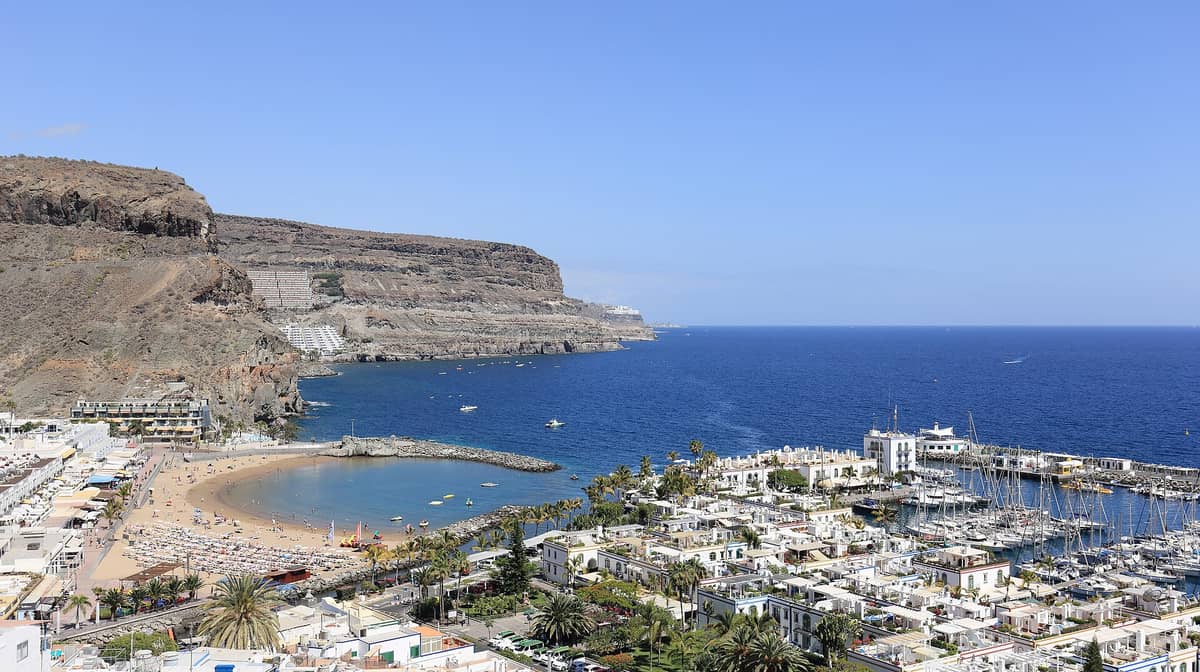
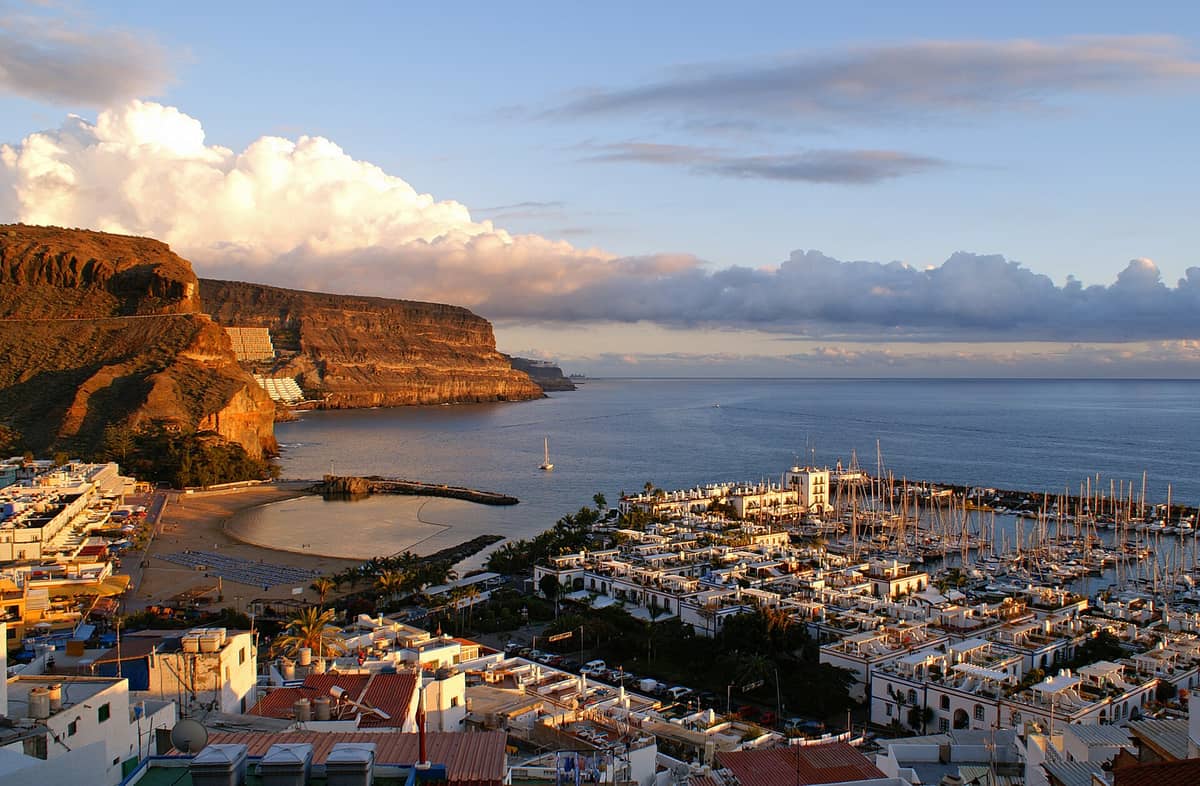
Puerto de Mogán sits at the foot of a dramatic valley on Gran Canaria's southwest coast, combining a working fishing harbour with a purpose-built marina quarter threaded by flower-covered canal bridges. It is quieter and more intimate than the resort strips to the east, and that contrast is precisely its appeal.
Puerto de Mogán occupies the southwest corner of Gran Canaria where a steep-sided valley meets the Atlantic, producing a settlement that feels genuinely different from the rest of the island's tourist coast. The marina quarter, with its whitewashed arches, bougainvillea-draped bridges, and narrow canal lanes, has earned the place its unofficial nickname 'Little Venice of the Canaries', though the comparison flatters both. What you actually get is a well-maintained fishing port that has grown into a low-rise resort without losing its original shape.
Orientation
Puerto de Mogán sits roughly 80 kilometres southwest of Las Palmas de Gran Canaria, at the far western end of the island's main resort corridor. Maspalomas and its dunes are about 25 kilometres to the east along the GC-1 motorway, and Puerto Rico is roughly 15 kilometres closer still. The village occupies the mouth of a narrow valley, which means development is constrained on three sides by steep hillsides. That geography has kept it compact and prevented the high-rise sprawl visible further along the coast.
The settlement divides naturally into three parts. The original fishing harbour, centred on the working quay and the beach of Playa de Mogán, sits to the west. The marina quarter, developed from the 1980s onwards, extends eastward along the canals, with residential apartments and tourist facilities built above arcaded walkways. Behind both of these, the valley road climbs north toward the municipality of Mogán itself, a different world of terraced agriculture and hill villages. For most visitors, the action is entirely within the flat harbour area, which is small enough to walk end to end in fifteen minutes.
The main addresses cluster around Calle de La Mina, C. La Noria, and C. La Puntilla, with the civic spaces concentrated at Plaza de Las Gañanías and Plaza Pedro Betancor. The Calle Explanada del Castillete runs along the outer edge of the harbour near the Punta del Castillete Lighthouse. For wider island context, see the guide to where to stay in Gran Canaria, which sets the southwest coast in relation to the rest of the island's accommodation zones.
Character and Atmosphere
The tempo here is slow by design, and that is either the point or the problem depending on what you are after. In the early morning, before the day-tripper coaches arrive, the fishing quay is briefly its old self: nets being sorted, a few small boats heading out, the smell of salt water and diesel. The market stalls on the harbourside are still shuttered, and the only places open are a couple of cafés serving locals strong coffee before the working day starts.
By mid-morning the character shifts. The Friday market, held near the marina entrance, draws visitors from across the southern resorts and is the busiest moment of the week. On other days, the tourist foot traffic is steady but not overwhelming. Couples drift along the canal bridges photographing the bougainvillea; families set up on the beach; people on longer stays settle into the restaurant terraces for lunches that last well into the afternoon. The light in the afternoon is particularly good here: the valley walls to the north cut the harsh overhead glare, and the low western sun catches the white-rendered buildings and turns the harbour water a strong turquoise.
After dark, Puerto de Mogán is genuinely quiet. There are bars and restaurants open into the evening, but this is not a nightlife destination. Visitors who want late-night options generally travel east to Puerto Rico or further to Playa del Inglés. The upside of that quietness is that the marina at night, lit by the boat lights and the restaurant lanterns, is one of the more atmospheric corners of the entire southwest coast. The streets are safe and well-lit, and the combination of local police and Guardia Civil presence in the area is reassuring.
ℹ️ Good to know
Puerto de Mogán is a poor choice if you want active nightlife, a wide beach, or easy access to Gran Canaria's interior. It is an excellent choice if you want a slower pace, a working harbour atmosphere, and a base that feels less manufactured than the larger resort centres.
What to See and Do
The marina and its canals are the main draw, and they reward slow exploration rather than a single loop. Walk north from the main quay into the residential marina streets, where the canal bridges are at their most photogenic in the morning before the crowds build. The Puerto de Mogán marina area also has a small commercial harbour where you can watch the interisland ferries and excursion boats come and go.
The Playa de Mogán is the beach attached to the resort quarter: a crescent of fine, calm sand protected by the harbour walls. It is considerably smaller than the beaches at Maspalomas or Puerto Rico, and in high season it fills up. The sea here is usually calm, making it suitable for families and for snorkelling along the rocky edges. For anyone interested in water sports, the marina area has operators offering diving, boat trips, and fishing excursions.
The Punta del Castillete Lighthouse at the southern tip of the harbour is a short walk along the Calle Explanada del Castillete. It is not a major attraction in itself, but the views back over the marina from that vantage point are worth the ten-minute detour. Above the town, the Mirador de Mogán can be reached by car or on foot up the valley road, and it provides a sweeping view down over the rooftops and into the harbour.
For those willing to venture a little further, the Cañada de los Gatos archaeological site lies in the hills above the village and contains pre-Hispanic remains. It is not heavily promoted and requires some navigation to find, which keeps visitor numbers low. The valley road north into the municipality of Mogán also passes through genuinely dramatic landscapes: deep ravines, terraced hillsides, and small agricultural settlements that look nothing like the coast below.
Walk the canal bridges in the marina quarter early in the morning
Friday market near the marina entrance: craft goods, local produce, clothing
Snorkelling along the rocky edges of Playa de Mogán
Boat excursions and diving trips from the harbour
Mirador de Mogán for valley and harbour views
Punta del Castillete Lighthouse walk along the outer harbour
Day trip up the valley road into the municipality of Mogán
If you are planning a wider exploration of the island's southwest, the guide to day trips in Gran Canaria covers routes into the interior that make Puerto de Mogán a practical starting point. The nearby Puerto Rico beach and the marina at Puerto Rico are also easy half-day alternatives if the Mogán beach feels too small.
Eating and Drinking
The food scene in Puerto de Mogán reflects its dual identity as a fishing village and a tourist resort. On one side of that divide are the seafood restaurants along the harbourfront, where the catch comes off the local boats and the menus lean toward grilled fish, prawn dishes, and the Canarian staple of papas arrugadas with mojo sauce. These places are generally reliable, and the setting, with tables facing the water, compensates for the predictable tourist pricing. On the other side are the marina restaurants catering more obviously to package tourists, with international menus and variable quality.
The better eating strategy is to walk slightly away from the main harbourfront terrace strip and look for the smaller, less conspicuously signed places on the side streets around Calle de La Mina and C. La Noria. Prices are lower and the cooking tends to be more careful. Local specialities to look for include fresh tuna prepared in various ways, vieja (parrotfish, a Canarian favourite), and the almond-based desserts that reflect the agricultural interior of the Mogán valley.
For breakfast and coffee, the cafés around Plaza Pedro Betancor open early and are used by a mix of locals and early-rising visitors. Bakery items here are typically better and cheaper than anything sold on the harbourfront terraces later in the day. The Friday market also has food stalls selling local produce including cheeses, honey, and prepared foods that make a good picnic.
💡 Local tip
Ask specifically for fish that arrived that morning rather than ordering generically from a seafood menu. The restaurants closest to the working fishing quay, rather than those in the marina quarter, are more likely to be serving genuinely fresh catch.
For context on what to eat across Gran Canaria more broadly, the guide to what to eat in Gran Canaria explains the island's food traditions, including the Canarian sauces and local fish varieties that appear on Puerto de Mogán menus.
Getting There and Around
From Las Palmas de Gran Canaria, the most direct bus connection typically involves taking a Global interurban service to the Faro de Maspalomas interchange and then connecting to a southwest-coast line running through Puerto Rico and on to Puerto de Mogán. The journey from Las Palmas takes around 60 to 75 minutes depending on connections. The Estación Puerto de Mogán bus station is the main arrival point, with the Puerto de Mogán stop and the nearby Lomo Quiebre stop both within walking distance of the harbour centre.
From Gran Canaria Airport, the most practical option for most visitors is a taxi or a rental car. The airport sits on the east coast near Las Palmas, and the drive to Puerto de Mogán via the GC-1 motorway takes approximately 35 to 45 minutes in normal traffic. Taxis are metered, and fares from the airport to the southern resorts run significantly higher than city fares; verify current rates before travel as these change. Bus connections from the airport require a change and add considerable journey time.
Once in Puerto de Mogán, everything within the harbour and marina area is walkable. The core is compact enough that a car is more burden than benefit for anyone staying in the village itself. Parking is limited near the harbour, which is worth knowing for day-trippers arriving by road. The marina does have some paid parking, but spaces fill quickly on Fridays when the market operates.
⚠️ What to skip
Bus timetables on Line 30 are reduced on Sundays and public holidays, and the last service back toward Puerto Rico and Maspalomas runs earlier than you might expect. Check current Global timetables before planning an evening out, as the information changes seasonally and published guides may be outdated.
For a full breakdown of bus routes, taxi costs, and car hire across the island, the guide to getting around Gran Canaria covers the options in detail. If you are considering exploring the mountain interior from this base, a rental car is essentially necessary; public transport into the upper Mogán valley is very limited.
Where to Stay
Puerto de Mogán is a small resort and the accommodation options reflect that. The main category is apartment hotels and self-catering complexes built into the marina quarter, mostly low-rise and built in the same whitewashed Canarian style as the rest of the development. These are a reasonable fit for couples and families who want a quieter alternative to the Maspalomas or Playa del Inglés hotel strips. Several of the larger properties sit directly on the marina and command premium rates for the water views.
There are no large international chain hotels in the village core. Visitors wanting all-inclusive packages with extensive amenities generally stay in the larger resorts to the east and visit Puerto de Mogán as a day trip. For anyone specifically choosing to base themselves here, the marina-side apartments offer the best location, putting you within a five-minute walk of the beach, the market, the restaurants, and the harbour promenade.
The village is particularly well-suited to couples looking for a relaxed, slower-paced base: see Gran Canaria for couples for broader recommendations across the island. Families with children who prioritise a calm, safe beach environment also find it works well, though the limited beach size is worth noting.
Honest Drawbacks
Puerto de Mogán has a carefully managed aesthetic that can tip into feeling overly manicured. The marina quarter in particular was purpose-built to look picturesque, and it succeeds, but there is not much depth behind the flower baskets and pastel walls. If you scratch the surface looking for genuine local culture, you find relatively little of it in the harbour zone: the actual Mogán municipality, with its own distinct character, is up the valley and rarely visited.
Day-tripper pressure is real, especially on Fridays when the market brings in coaches from across the southern resort belt. The harbour goes from quiet to crowded in the course of an hour, and the main restaurant terraces become difficult to navigate. Arriving early or staying overnight is the straightforward solution, but day visitors arriving late on a Friday will find a very different atmosphere from the tranquil images in the promotional photography.
The beach, while attractive, is genuinely small. In July and August, Playa de Mogán reaches capacity by mid-morning. Anyone prioritising beach time as the main activity would be better served by Puerto Rico's longer beach or the expansive sands at Maspalomas. Puerto de Mogán's strength is its atmosphere, not its beach metrics.
For comparison with the wider southern resort corridor, including the beach options and general character of neighbouring areas, see the pages on Puerto Rico and Maspalomas, which give a sense of what you are choosing between when picking a base on the southwest coast.
ℹ️ Good to know
Puerto de Mogán is genuinely worth a half-day visit from anywhere on the southern coast. Whether it earns a multi-night stay depends entirely on your priorities: it rewards visitors who want slow mornings, good seafood, and the sound of rigging in the harbour rather than poolside speakers.
TL;DR
Puerto de Mogán is a compact fishing harbour and marina village on Gran Canaria's southwest coast, roughly 25 kilometres west of Maspalomas.
Best for: couples, families with young children, travellers who want a quieter alternative to the large resort strips and value atmosphere over beach size.
The marina quarter, canal bridges, and Friday market are the main draws; the beach is attractive but small and crowded in peak summer months.
Not ideal for: nightlife seekers, travellers needing frequent bus connections, or anyone wanting a wide choice of beaches and amenities within walking distance.
Getting there is easiest by car or taxi; bus connections exist via Global Line 30 but require patience, especially on Sundays when services are reduced.
Three days is enough to experience Gran Canaria's remarkable range: a well-preserved colonial old town, Atlantic dune fields, volcanic mountain villages, and some of Spain's best urban beaches. This itinerary is built around real transport logistics, honest time estimates, and a deliberate mix of coast and interior.
Gran Canaria packs an extraordinary variety of beaches into one island: vast dune-backed shores in the south, a world-class urban beach in Las Palmas, sheltered family coves on the southwest coast, and raw Atlantic surf breaks in the north. This guide covers the best of all of them.
Gran Canaria earns its reputation as the 'island of eternal spring' for good reason. This guide breaks down every season, explains how the island's microclimates affect your plans, and tells you honestly when to go and when to avoid the crowds.
Gran Canaria packs extraordinary variety into 1,560 square kilometres. These are the best day trips from any base on the island, from the sacred peaks of the interior to the quiet fishing harbours of the west coast.
Gran Canaria is not a walkable island. This guide breaks down every realistic transport option, from Global bus routes and regulated taxi fares to car rental logistics and seasonal road warnings, so you can move around confidently from day one.
Gran Canaria all-inclusive resorts range from budget-friendly complexes in Playa del Inglés to upmarket retreats in Puerto de Mogán. This guide covers the best areas, realistic price expectations by season, and a clear take on when all-inclusive actually makes sense on this island.
Gran Canaria Carnival is one of Spain's biggest pre-Lent celebrations, centred on Las Palmas de Gran Canaria and running for four to five weeks each February and March. This guide covers every major event, how to get tickets, where to stay, and what first-timers consistently get wrong.
Gran Canaria has quietly become one of Europe's most practical bases for remote workers. Year-round subtropical warmth, 20+ coworking spaces, mid-range costs, and fast internet make Las Palmas de Gran Canaria a compelling alternative to Lisbon or Bali. This guide covers everything you need to plan a productive stay.
Everything you need to know about taking a ferry from Gran Canaria to the other Canary Islands. Covers the main routes, operators, realistic prices, departure ports, and the common mistakes that catch first-time travellers off guard.
Gran Canaria offers far more for couples than beach resorts. This guide covers the island's most romantic experiences, from volcanic viewpoints and wine-tasting in the interior to private catamaran trips and candlelit dinners in a harbour town that earns its 'Little Venice' nickname.
Gran Canaria packs an extraordinary amount of natural beauty, history, and culture into a single island — and a surprising amount of it is completely free. From sweeping volcanic landscapes and ancient Guanche sites to world-class urban beaches and genuinely free museums, here is how to get the most out of the island without opening your wallet.
Gran Canaria packs extraordinary variety into 1,560 square kilometres, yet most visitors see only a fraction of it. These are the volcanic ravines, pre-Hispanic ruins, wild coastlines, and slow villages that reward those willing to look beyond the southern resort strip.
December is one of the most underrated months to visit Gran Canaria. Daytime temperatures hover around 22°C, the southern beaches stay dry and sunny, and the island shifts into a relaxed festive rhythm. This guide covers the weather in detail, where to base yourself, what to do, and a few honest caveats about the rainy north.
Gran Canaria has over 130 luxury hotels spread across beach resorts, spa retreats, boutique city properties, and adults-only hideaways. This guide cuts through the marketing to tell you exactly where to stay, what to spend, and which areas suit different styles of upscale travel.
Gran Canaria nightlife spans four distinct zones, each with its own character, crowd, and closing time. This guide breaks down every major area, from the legendary Yumbo Centre to the bar-lined streets of Las Palmas, with practical advice on pricing, timing, and getting around after dark.
Gran Canaria offers genuine value if you know how to work the island's public transport network, tap into its free outdoor attractions, and eat where locals eat. This guide breaks down the real costs, the smart shortcuts, and the common mistakes that drain tourist wallets.
Gran Canaria packs semi-arid landscapes, volcanic peaks, and colonial towns into 1,560 km² — small enough to drive in a day, varied enough to spend a week exploring by car. This guide covers car rental costs, the best driving routes, the GC-200 road closure reality, and practical rules of the road so you can plan without surprises.
Both Gran Canaria and Tenerife promise year-round sunshine, dramatic scenery, and good value for European travellers. But they deliver very different holidays. This guide breaks down the real differences across beaches, landscapes, cost, family travel, and nightlife so you can stop second-guessing and start booking.
Gran Canaria's Atlantic coastline delivers world-class water sports year-round, from beginner surf lessons at Las Canteras to competition-level windsurfing at Pozo Izquierdo. This guide covers the best spots, realistic prices, seasonal conditions, and how to avoid the common pitfalls.
Gran Canaria delivers year-round sunshine, a stack of theme parks, safe beaches, and reliable public transport that make it genuinely practical for families. This guide cuts through the marketing to tell you exactly where to go, what to spend, and how to get around with children in tow.
Gran Canaria packs extraordinary hiking variety into 1,560 km². Alpine pine forests, volcanic rock formations, green ravines, and coastal cliffs are all within reach. This guide covers the best trails on the island, from quick walks to full-day mountain routes.
Gran Canaria packs an extraordinary range of landscapes, climates, and experiences into just 1,560 km². This guide cuts through the brochure language to tell you exactly who the island suits, what it does well, where it falls short, and how to decide if it belongs on your travel list.
Gran Canaria's volcanic coastline is dotted with natural sea pools carved from ancient lava flows. This guide covers the finest spots around the island, from well-equipped salinas in the northwest to wild rock pools on the west coast, with practical advice on when to go and what to expect.
Seven days is enough to experience Gran Canaria's remarkable contrasts: Atlantic beaches, volcanic peaks, colonial old towns, and quiet rural villages. This day-by-day itinerary covers the highlights without wasting a single afternoon.
Gran Canaria packs an extraordinary range of experiences into just 1,560 km². This guide covers the best things to do across the island, from world-class beaches and dramatic mountain hikes to historic old towns and boat trips, with practical advice on what's worth your time and what to skip.
Las Palmas de Gran Canaria is one of Spain's most underrated cities: a working Atlantic capital with a world-class urban beach, a remarkably preserved historic quarter, serious food culture, and year-round sunshine. This guide covers the best things to do across every corner of the city, with practical logistics, honest opinions, and no filler.
Gran Canaria's food culture runs deeper than most visitors expect. This guide covers the essential dishes, local ingredients, where to find authentic Canarian cooking, and what to skip — so you eat well from day one.
Gran Canaria divides neatly into three very different worlds: a cosmopolitan northern city, a sun-baked southern resort strip, and a rugged volcanic interior. Where you stay shapes your entire experience. This guide breaks down every main area by atmosphere, accommodation type, price range, and who it suits best.