Gran Canaria for Digital Nomads: The Complete Remote Work Guide
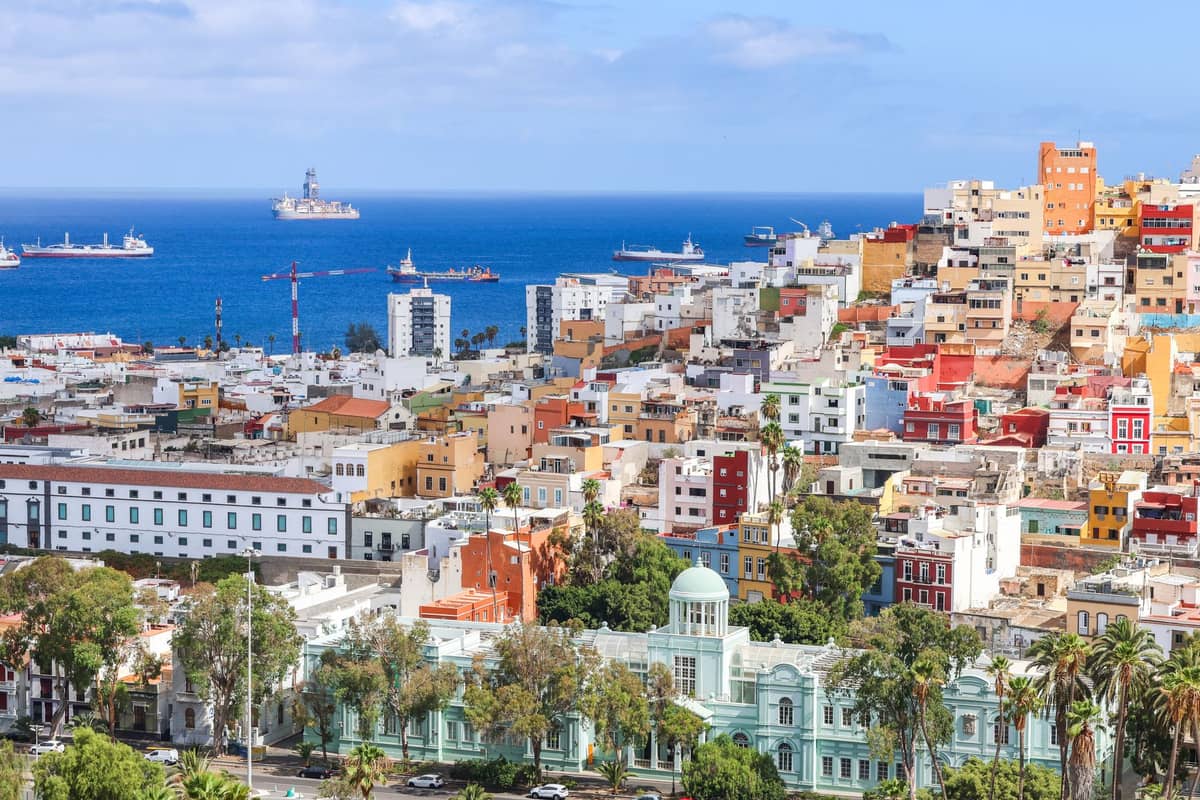
Gran Canaria has quietly become one of Europe's most practical bases for remote workers. Year-round subtropical warmth, 20+ coworking spaces, mid-range costs, and fast internet make Las Palmas de Gran Canaria a compelling alternative to Lisbon or Bali. This guide covers everything you need to plan a productive stay.
TL;DR
- Gran Canaria, part of Spain's Canary Islands, sits on UTC+0/+1 and uses the Euro, making payroll and invoicing straightforward for EU-based clients.
- Las Palmas de Gran Canaria is the main nomad hub, with 20+ coworking spaces island-wide; hot desks cost around €10–20/day and monthly memberships from €120–200. See our overview of Las Palmas de Gran Canaria for context on the city.
- The subtropical climate means mild winters (around 21°C) and warm summers (up to 28°C), with fewer than 20 rainy days per year at the coast.
- Schengen rules apply: EU and many non-EU nationals can stay 90 days visa-free, though Spain's digital nomad visa now offers a longer-stay route.
- Tap water is technically safe but often desalinated and not great-tasting; bottled water is the practical choice for most visitors.
Why Gran Canaria Works for Remote Workers
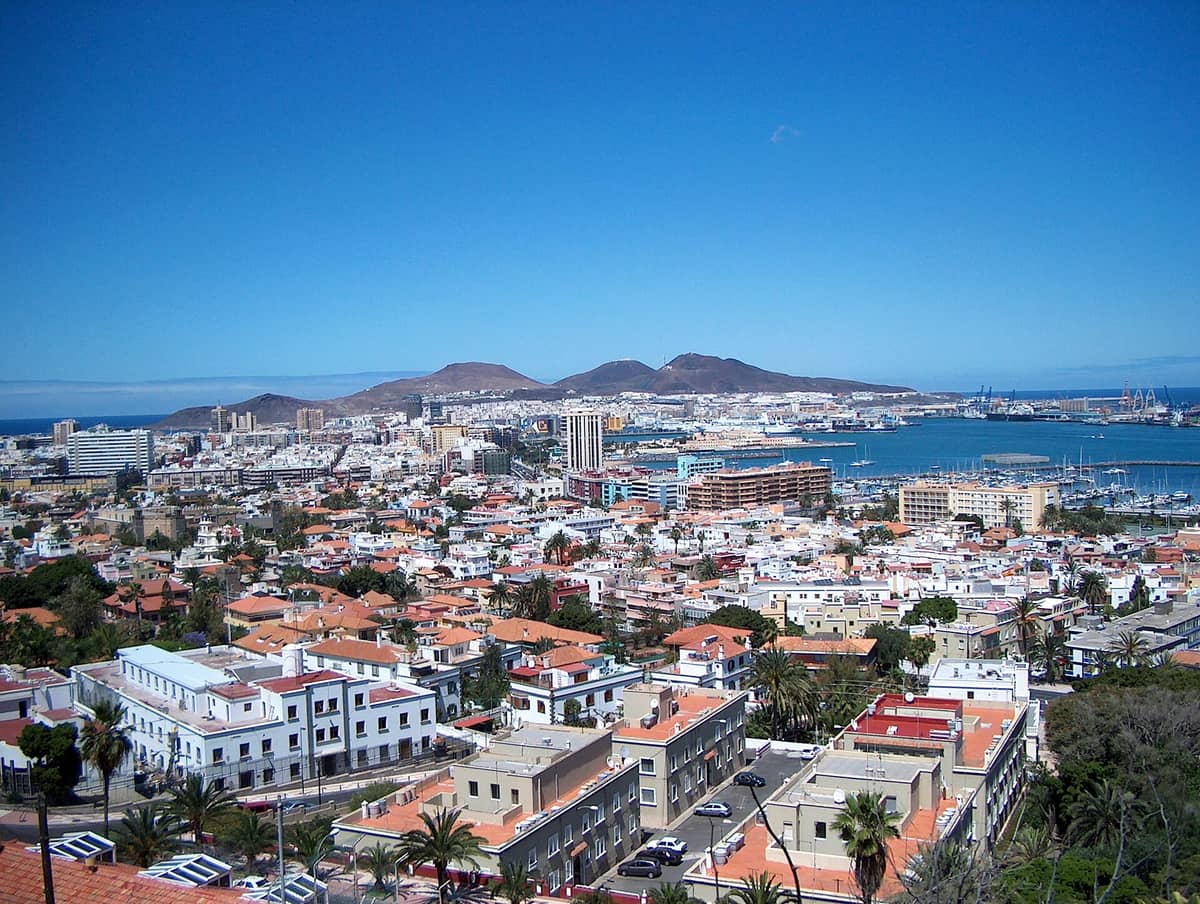
Gran Canaria sits about 210 km off the northwest coast of Africa but operates entirely on European infrastructure: Spanish law, euro pricing, EU consumer protections, and Schengen entry. For a European or EU-adjacent remote worker, that combination is genuinely rare. You get the climate of a subtropical island without the bureaucratic complexity of non-EU destinations like Morocco or Cape Verde.
The island covers 1,560 km² with a population of around 863,000, roughly half of whom live in the capital, Las Palmas de Gran Canaria. It is a real, functioning city with about 380,000 residents, not a purpose-built resort. That distinction matters: you get actual supermarkets, hospitals, universities, specialist shops, and a local social scene. The Santa Catalina district alone has more cafés with reliable Wi-Fi than most mid-sized European capitals.
The time zone is Western European Time (UTC+0 in winter, UTC+1 in summer), which keeps Gran Canaria one hour behind mainland Spain and Portugal and perfectly aligned with UK business hours. Calls to London, Amsterdam, or Berlin are easy to schedule without the awkward time-shift that makes Southeast Asia bases so frustrating for European freelancers.
ℹ️ Good to know
Gran Canaria is part of Spain and the Schengen Area, but it is NOT part of the EU VAT area. Goods bought on the island may be cheaper than mainland Spain, and VAT rules differ. If you are running a business, check the tax implications with an accountant familiar with Canary Islands fiscal law (the local regime is called the ZEC/IGIC system).
Coworking Spaces: What to Expect and What to Pay
The island now has around 20 to 22 coworking spaces, a significant expansion from just a handful five years ago. Las Palmas accounts for the majority, but there are also spaces in Maspalomas, Agaete, and Puerto de las Nieves, which broadens options if you want a slower pace outside the capital.
- Hot desk (daily) Typically €10–20 per day in Las Palmas. Most spaces require a booking via platforms like Croissant, Workin.space, or OneCoworking. Drop-in availability varies, so booking ahead is sensible.
- Flexible monthly membership Around €120–160/month for unlimited hot desk access in most Las Palmas spaces. This is the sweet spot for stays of 3–6 weeks.
- Dedicated desk (monthly) Expect €160–200/month. White Forest in Las Palmas, for example, lists dedicated desks at €179/month and day passes at €20. You get a fixed spot, lockable storage, and usually better monitor setups.
- Private office Available in some larger spaces from around €400–600/month for a small team room, though availability is limited outside the city centre.
The regional tourism board maintains an official directory of remote working spaces across Gran Canaria at hellocanaryislands.com, with addresses, contact details, and amenity listings. It is the most reliable starting point because private aggregator sites sometimes include closed or outdated listings. Cross-reference with Workin.space or GetCroissant for real-time availability and online booking.
💡 Local tip
If you are staying in Las Palmas for a month or more, visit two or three coworking spaces during your first week before committing to a membership. Community fit, noise levels, and air conditioning intensity vary a lot between spaces. Some cater heavily to startup founders; others attract freelance designers and writers with a quieter atmosphere.
Best Neighborhoods to Base Yourself
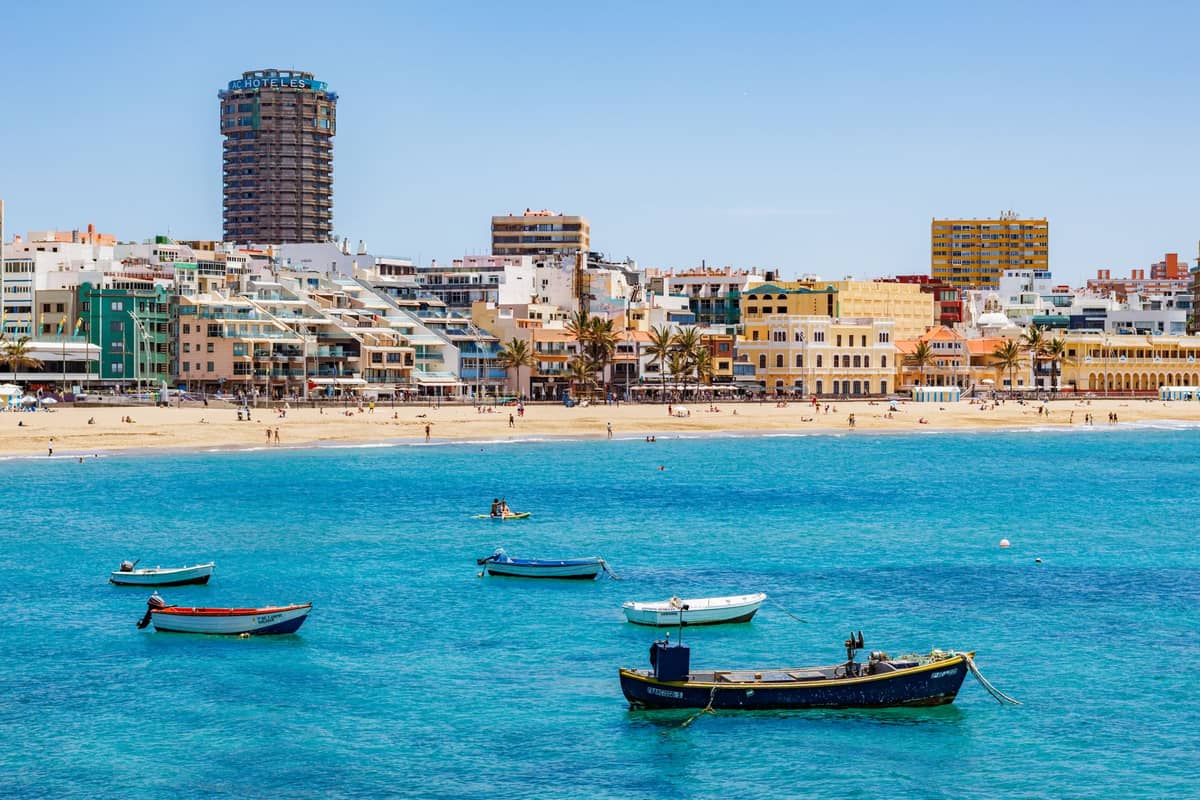
For most digital nomads, Las Palmas de Gran Canaria is the obvious base. The city has the density of infrastructure, the coworking options, the restaurant variety, and the urban beach at Las Canteras that lets you swim after work without getting in a car. The Las Canteras promenade itself is lined with cafés that have usable Wi-Fi, though speeds vary. Treat those as overflow options rather than your primary workspace.
- Las Canteras / Guanarteme The most popular nomad zone. Walkable to the beach, dense with cafés and restaurants, and close to several coworking spaces. Apartment rents are higher here but the lifestyle value is real.
- Triana / Ciudad Jardín More local and less tourist-heavy than Las Canteras. Quieter streets, good transport links, and typically 10–20% cheaper on monthly apartment rentals. Good choice if you want to live more like a local.
- Vegueta The historic old town, great for ambience but quieter on the café-workspace front. Better for evenings and weekends than as a daily work base.
- Maspalomas / Playa del Inglés (south) Works if you prioritize beaches and resort infrastructure over urban energy. Coworking options are limited compared to Las Palmas, and the social scene for solo nomads is thinner. Better suited to couples or those who value sun over socialising.
The south coast towns of Puerto de Mogán and Puerto Rico are worth visiting on weekends but function more as resort destinations than functional work bases. Internet infrastructure there has improved, but coworking supply is still minimal and grocery options are limited. They are excellent for a mid-stay reset, not for productive weeks.
Internet, Infrastructure, and Daily Costs
Fibre broadband is widely available in Las Palmas apartments, with speeds from major providers (Vodafone, Orange, Movistar) typically in the 100–600 Mbps range for residential connections. Coworking spaces generally offer stable, fast connections with backup options. Mobile data coverage across the island is solid on 4G; 5G coverage is expanding in Las Palmas but is patchy in interior mountain areas.
Monthly living costs for a single remote worker in Las Palmas typically fall between €1,400 and €2,200, depending heavily on accommodation choices. A furnished one-bedroom apartment in a good central location runs around €800–1,100/month. Food costs are reasonable: a sit-down lunch at a local restaurant (menú del día, which includes starter, main, drink, and dessert) is typically €10–13. Supermarket prices are comparable to mid-range mainland European cities, with some imported goods slightly pricier.
- Monthly apartment (1-bed, central Las Palmas): €800–1,100
- Coworking hot desk monthly membership: €120–160
- Coworking dedicated desk monthly: €160–200
- Lunch menú del día: €10–13
- Monthly grocery estimate (one person, cooking at home): €250–350
- Urban bus single fare: around €1.40 (less with TransGC rechargeable card, approx. €0.85 per trip)
- SIM card with data plan: from around €15–25/month with local operators
⚠️ What to skip
Short-term furnished apartment platforms (Airbnb, Spotahome, Idealista) show significant price variation. Peak tourist season, particularly December through February when northern Europeans flock to escape winter, pushes short-term rental prices noticeably higher. If you plan a winter stay, book accommodation at least 6–8 weeks in advance, especially near Las Canteras beach.
Climate, Seasonality, and When to Come
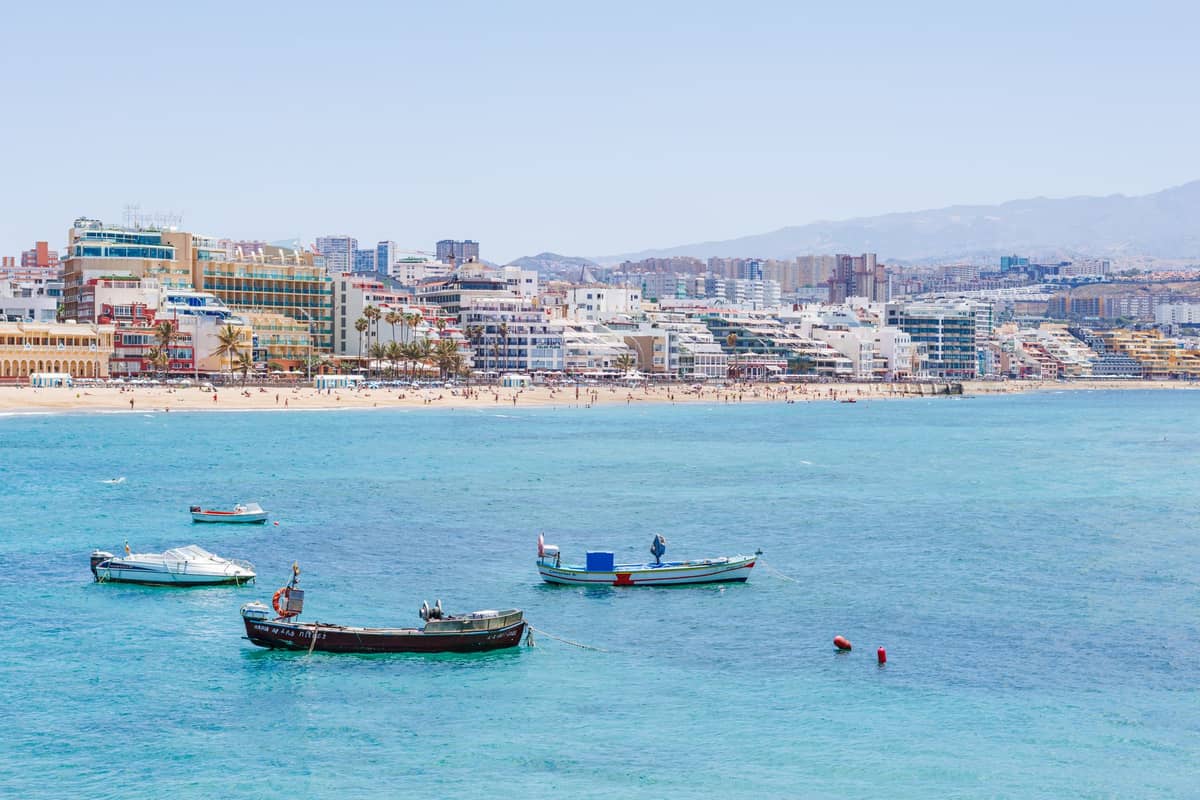
The subtropical climate is genuinely year-round workable, which is why Gran Canaria attracts nomads in every month. Winter daytime temperatures in Las Palmas hover around 21°C, summer peaks reach 26–28°C, and rain is rare: fewer than 20 rainy days per year at the coast, mostly clustered between November and February. This is not the kind of island where you need to plan around monsoon seasons. For a detailed breakdown by month, see the best time to visit Gran Canaria guide.
For nomads specifically, October through April is the most popular window. The weather is reliably pleasant but not aggressively hot, which matters if you are working inside for eight hours a day. The city is livelier in winter (more expats, more events, more language exchange meet-ups), but accommodation costs also peak. May through September offers warmer beach conditions and lower rental prices, with a less transient social scene.
One practical nuance: Gran Canaria has multiple microclimates. The north and interior can be significantly cloudier and cooler than the south coast, even on the same day. Las Palmas sits on the northeast coast and gets morning cloud cover periodically in summer (the trade wind effect), which clears by midday. This rarely impacts work but it is worth knowing if you are choosing between a Las Palmas apartment and a southern resort base primarily for sunshine.
Visas, Legal Status, and Spain's Digital Nomad Visa
Gran Canaria is part of Spain and the Schengen Area. EU and EEA nationals can live and work here indefinitely. Citizens of many other countries, including the US, Canada, Australia, and UK, can enter visa-free for up to 90 days within any 180-day period under standard Schengen rules. For stays longer than 90 days, Spain introduced a dedicated Digital Nomad Visa (officially the Visa para Nómadas Digitales) in 2023.
Spain's nomad visa allows non-EU remote workers to live in Spain for up to one year, with extensions possible up to five years. Key requirements include proof of remote employment or freelance contracts with non-Spanish clients, a minimum monthly income (around €2,160 as a baseline, subject to change), health insurance coverage, and a clean criminal record. The visa is applied for through a Spanish consulate in your home country before arrival. Given that requirements and income thresholds are periodically revised, verify current figures directly with the official Spanish immigration authority (extranjeros.inclusion.gob.es) before applying.
✨ Pro tip
If you are on a 90-day Schengen stay, the clock runs across the whole Schengen Zone, not just Spain. Days spent in Portugal, France, or Germany before arriving in Gran Canaria count toward your 90-day allowance. Plan your itinerary accordingly, or investigate the nomad visa if your work base will be Gran Canaria long-term.
Getting Around and Getting There
Gran Canaria Airport (IATA: LPA) sits on the island's east coast, roughly equidistant between Las Palmas and the southern resorts. A taxi from the airport to central Las Palmas costs around €25–35 and takes 20–30 minutes. The budget option is Global bus Line 60, which connects the airport to Santa Catalina in central Las Palmas for approximately €2.95. For the south, Global routes also serve Maspalomas, Playa del Inglés, Puerto Rico, and Mogán. More on island transport in the getting around Gran Canaria guide.
Within Las Palmas, the urban bus network (guaguas) is practical and cheap. A single fare is around €1.40, dropping to roughly €0.85 per trip with the rechargeable TransGC card. The city is also very walkable between the main nomad neighborhoods: Las Canteras to Triana is about 20–25 minutes on foot along the seafront promenade. Taxis are metered and honest by reputation. Ride-hailing apps do operate in Las Palmas, but confirm app availability before relying on them as your primary transport option.
If you plan to explore beyond the capital on weekends, renting a car gives you real freedom. The island is compact enough that the dramatic interior villages like Tejeda or the volcanic landscapes around Roque Nublo are reachable in under an hour from Las Palmas. That work-life balance between productive weekdays and genuinely spectacular weekend day trips is one of Gran Canaria's strongest arguments as a long-stay base.
FAQ
Is Gran Canaria good for digital nomads?
Yes, particularly Las Palmas de Gran Canaria. The city offers 20+ coworking spaces, fast fibre broadband in most apartments, mid-range living costs (roughly €1,400–2,200/month all-in), a year-round mild climate, and EU legal infrastructure. It lacks the raw size of Lisbon or Barcelona but the quality-of-life-to-cost ratio is strong, especially in winter when northern Europe is cold and grey.
How long can I stay in Gran Canaria without a visa?
EU and EEA nationals can stay indefinitely. Most other nationalities, including US, UK, Canadian, and Australian passport holders, can stay 90 days within any 180-day period under Schengen rules. For longer stays, Spain's Digital Nomad Visa allows up to one year (extendable). Always verify current entry requirements with Spanish immigration authorities or your country's embassy before travel.
What is the average cost of coworking in Gran Canaria?
Day passes typically cost €10–20 in Las Palmas. Monthly hot desk memberships run around €120–160, and dedicated desks start at approximately €160–200/month. Prices vary by space and amenities. Check the official Canary Islands remote working directory at hellocanaryislands.com or platforms like Workin.space for current listings and bookings.
What is the internet like in Gran Canaria?
Reliable and fast in urban areas. Fibre broadband (100–600 Mbps) is widely available in Las Palmas apartments. Coworking spaces maintain stable connections with backup systems. 4G mobile coverage is solid across most of the island; 5G is available in central Las Palmas but limited in rural or mountainous interior areas.
Is Gran Canaria better than Tenerife for remote work?
Gran Canaria has the edge for most solo nomads due to Las Palmas being a larger, more urban city with better coworking density and a more established nomad community. Tenerife's Santa Cruz is smaller and less internationally connected as a nomad base, though Puerto de la Cruz attracts a steady stream of remote workers too. The comparison ultimately depends on lifestyle preferences. See the full breakdown in our Gran Canaria vs Tenerife guide.