Playa de Las Canteras: The Urban Beach That Makes Las Palmas Worth Staying In
Playa de Las Canteras stretches for over 3 kilometres along the heart of Las Palmas de Gran Canaria, protected by a natural lava reef that keeps the water calm enough for year-round swimming. Free, accessible, and backed by a promenade full of cafes and surf shops, it is one of Spain's finest city beaches.
Quick Facts
- Location
- Las Palmas de Gran Canaria, Gran Canaria, Spain
- Getting There
- Urban guagua buses stop along the promenade; Santa Catalina park is a short walk from the southern end
- Time Needed
- 2–4 hours for a beach visit; half a day if you walk the full promenade and stop for lunch
- Cost
- Free (beach access); sunbed and umbrella rental available from private operators at seasonal rates
- Best for
- City beach days, families with young children, swimmers, surfers (La Cícer end), walkers
- Official website
- www.grancanaria.com/turismo/en/beaches/las-canteras
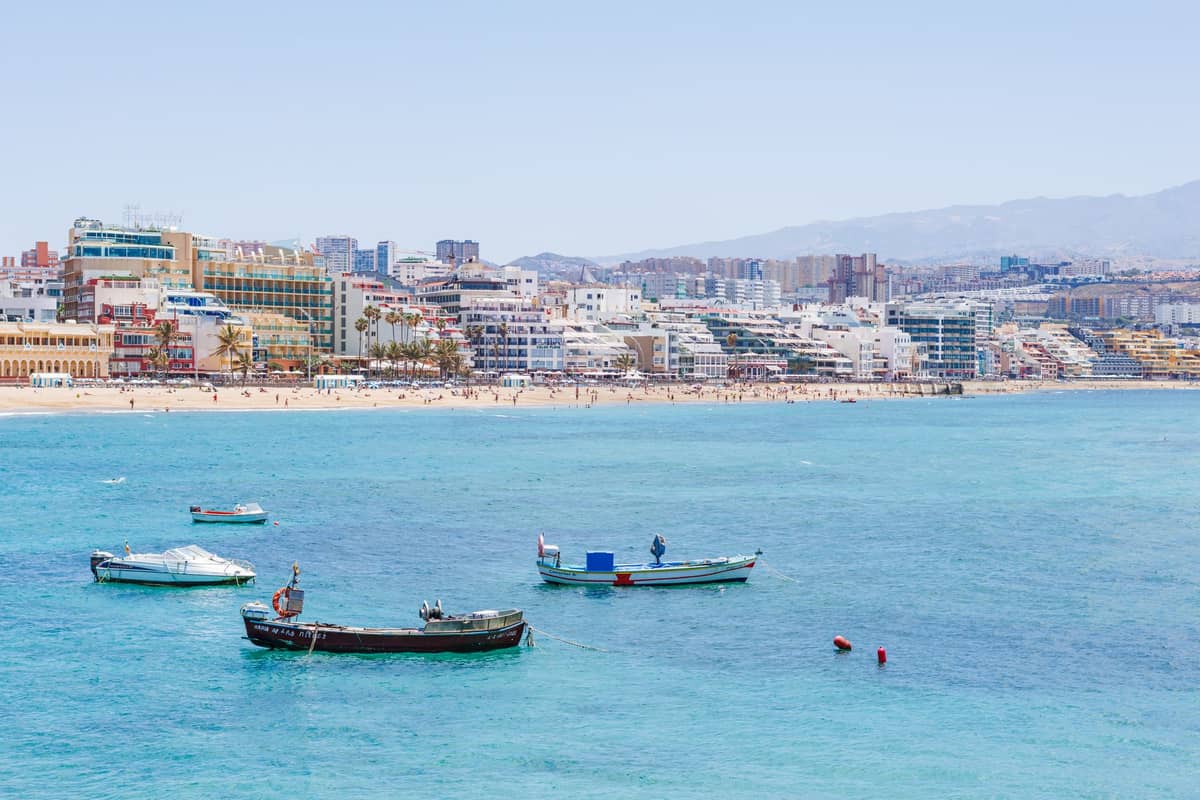
What Makes Las Canteras Different from Every Other Beach on the Island
Playa de Las Canteras is not a resort beach. It belongs to a city of roughly 380,000–385,000 people, and you feel that the moment you arrive. The promenade behind the sand, known as the Paseo de Las Canteras, is lined with surf rental shops, seafood restaurants, kiosks selling papas arrugadas, and locals walking their dogs at seven in the morning. There are no all-inclusive wristbands here. The beach has evolved organically as part of the city fabric, and that is precisely what makes it worth your time.
At approximately 3,100 metres long, it is one of the largest urban beaches in Spain. The sand is golden-pale and relatively fine, and the beach is wide enough that even on a Saturday in August it rarely feels suffocating. The defining geographical feature is La Barra, a submerged lava reef running roughly parallel to the shore. This natural breakwater flattens the Atlantic swell across most of the beach, creating a sheltered inner channel that is unusually calm for an open ocean setting.
ℹ️ Good to know
The reef does not cover the entire beach. The northern end, known as La Cícer, lies outside the protected zone and receives proper Atlantic swells, making it popular with bodyboarders and surfers. If you want flat, pool-like water, stay toward the central and southern sections.
The Beach in Three Sections
Visitors who treat Las Canteras as a single undifferentiated strip miss the point. The beach has a clear character shift as you move from south to north. At the southern end, near the Santa Catalina neighbourhood, the promenade is wider and more commercial. This is where most cruise passengers and first-time visitors gravitate. Cafe terraces spill onto the walkway, the sand fills up by 11am, and you will hear half a dozen languages before lunch.
The central section, anchored by the Tomás Miller lifeguard post, is the most family-oriented stretch. The water here is at its calmest thanks to the reef, and the depth increases gradually, making it well suited for children and weak swimmers. Wooden walkways extend across the sand to assist visitors with reduced mobility, and amphibious chairs are available at designated points during lifeguard operating hours.
The northern La Cícer end has a distinct atmosphere. The sand is darker, the crowd younger, and the energy is oriented around wave sports rather than sunbathing. Bodyboarders line up for small but consistent shore breaks on autumn and winter mornings. Even if you are not surfing, this end of the beach is worth walking to for the rock pools, the view back toward the city skyline, and the informal fish restaurants tucked into the streets immediately behind the promenade.
How the Beach Changes Through the Day
Early morning at Las Canteras is the preserve of locals. Between 7am and 9am, swimmers do serious lap-style lengths in the calm inner channel, open-water regulars who treat the beach as their daily pool. Joggers and walkers fill the promenade. The light is soft, the air smells of salt and fresh coffee from the kiosks just opening, and the sand retains the cool from overnight. This window is by far the most peaceful time to visit.
By 10am the dynamics shift. Families arrive with beach bags and folding chairs. Sunbed rental operators set up their rows. From around 11am to 3pm on warm days the central section is properly busy, though rarely unpleasantly so given the beach's scale. The water temperature in Las Palmas stays above 19°C even in winter and climbs to around 22–23°C in late summer, which means people are in the water year-round, not just in peak season.
Late afternoon shifts the mood again. The harsh midday light softens, and the promenade fills with people walking rather than sunbathing. Sunsets from the beach face west across the Atlantic and can be spectacular in clear conditions. After dark, the Paseo de Las Canteras remains lively well into the evening, with restaurants reaching full occupancy around 9pm in the Spanish dinner tradition.
💡 Local tip
For the calmest swimming and the best light for photography, aim to arrive before 9am or in the two hours before sunset. Avoid the 11am–2pm window on weekends from June through September if you prefer fewer people.
Getting There and Getting Around
Las Canteras sits in the northwest of Las Palmas, about 20–30 minutes from Gran Canaria Airport (LPA) by car or taxi. A taxi from the airport costs roughly €25–35 depending on traffic and your exact destination along the beach, though fares should be confirmed with the driver before setting off. From the airport, the Global interurban bus network also connects to Las Palmas, with Line 60 running to the Santa Catalina area near the southern end of the beach. Fares on the bus are significantly lower than taxis. Within the city, the urban guagua bus network runs along or close to the promenade. If you are staying near Santa Catalina, the beach is a flat, walkable 10–15 minutes on foot.
Drivers should be aware that parking directly adjacent to the promenade is limited and heavily contested in summer. Side streets a few blocks inland offer better availability. If you are planning a full island itinerary that combines Las Canteras with the historic centre, the Vegueta old town is accessible by city bus and worth combining into the same day.
The Promenade as an Attraction in Itself
The Paseo de Las Canteras runs the full length of the beach on a wide paved surface separated from the sand by low walls and ramp access points at regular intervals. Walking the full stretch from south to north takes about 30–35 minutes at an easy pace, or considerably longer if you stop to eat, browse, or simply watch the Atlantic from one of the benches.
The restaurants along the promenade range from straightforward beachside chiringuitos serving grilled fish by weight to more polished dining rooms with full menus of Canarian cuisine. Prices are not cheap by island standards, partly because of the prime location, but the quality at the better places is reliable. For context on what to order and what to pay, the Gran Canaria food guide covers the local staples worth seeking out.
Street food vendors, ice cream carts, and mobile kiosks operate throughout the warmer months. The promenade also hosts occasional outdoor concerts and cultural events, particularly around Carnaval in February, when Las Palmas transforms and the seafront becomes a central part of the celebrations.
Weather, Seasons, and What to Expect Year-Round
Las Canteras is genuinely usable in every month of the year, which is one of its core advantages over beaches further south. Las Palmas sits on the northeast coast of Gran Canaria and benefits from a remarkably stable subtropical climate. Daytime temperatures rarely drop below 19°C even in January, and the sea temperature follows a similar pattern. The best time to visit Gran Canaria for beach purposes is May through October, when air temperatures reach 26–28°C and rain is almost nonexistent. That said, a winter morning swim at Las Canteras in February, with the promenade almost to yourself, has its own appeal.
The occasional calima, a warm dusty wind blowing in from the Sahara, can reduce visibility and coat the beach in fine orange dust. These events are unpredictable but tend to occur more frequently in late winter and early spring. On calima days the beach remains accessible but swimming is less pleasant and the light for photography is flat. Most visitors simply wait it out, as the episodes typically clear within 24–48 hours.
⚠️ What to skip
The northern La Cícer section can have stronger currents and choppier water than the rest of Las Canteras, especially in autumn and winter when Atlantic swells increase. Non-swimmers and young children should stick to the central and southern sections, which are calmer and have lifeguard coverage during operational hours.
Accessibility, Facilities, and Practical Details
Las Canteras is one of the more accessible urban beaches in Spain. The promenade is fully flat and suitable for wheelchairs and pushchairs along its entire length. Access ramps down to the sand are provided at regular intervals, though the sand itself requires more effort to navigate. Wooden walkways extend from the promenade across the sand to assist mobility at key points.
The municipal service, LPAmar, provides assisted bathing for people with reduced mobility, including amphibious wheelchairs and trained staff to help visitors reach the water. This service operates on a seasonal schedule with different hours across summer, winter, and intermediate periods. Verify current hours directly with LPAmar before your visit, as schedules change annually.
Public showers, changing facilities, and toilets are available at several points along the beach. Sunbeds and umbrellas are rented by private operators, with pricing varying by season and operator. There is no set official rate for rentals, so expect some variation and agree on the price before settling in.
Photography Tips
The beach faces west, which means the best photographic light comes in the late afternoon when the sun drops toward the Atlantic horizon. Golden hour here is genuinely golden: the water picks up warm tones, the reef creates interesting texture in the shallow areas, and the Las Palmas skyline provides an unusual urban backdrop for an ocean photograph.
For wide shots of the full beach length, the northern end provides the best vantage point, looking south toward the promenade and city. The rocky outcrops near La Cícer also offer foreground interest for landscape compositions. Early morning is better for still water reflections because the afternoon wind tends to ripple the inner channel surface.
Insider Tips
- The small streets one block behind the northern end of the promenade have several informal fish restaurants frequented by locals that offer better value and fresher fish than the beachfront places. Look for anywhere with handwritten menus on a chalkboard.
- Bring a bag for your valuables if you plan to swim. The beach is generally safe but unattended belongings on a towel attract opportunistic theft at any busy urban beach. Lockers are not widely available along the strip.
- The inner channel between the reef and the shore is shallow enough to stand in across large sections, making it ideal for snorkelling. Bring your own mask and fins, as rental options along the promenade are limited compared to resort beaches in the south.
- If you are visiting in February, the promenade becomes part of the Carnaval celebrations, one of the most atmospheric in the Canary Islands. The beach itself hosts events and the energy on the Paseo is unlike any other time of year.
- The urban guagua buses are an easy way to travel the length of the promenade without walking the whole 3 kilometres. This is useful if you want to explore both ends and conserve energy for swimming.
Who Is Playa de Las Canteras For?
- Families with young children looking for calm, safe swimming in an urban setting with facilities nearby
- Swimmers and snorkellers who want clear water and a natural reef rather than a resort pool
- Surfers and bodyboarders focused on the La Cícer northern section during autumn and winter swells
- Travellers based in Las Palmas who want a proper beach day without renting a car or travelling to the south
- Solo travellers or couples who enjoy the atmosphere of a working city beach with good food and people-watching
Nearby Attractions
Other things to see while in Las Canteras Beach Area:
- El Confital
El Confital is a rugged, unspoiled coastal stretch at the northern tip of Las Palmas de Gran Canaria, on the La Isleta peninsula. Unlike the calm, city-beach atmosphere of Las Canteras, this is a wave-hammered, volcanic shoreline that draws surfers, photographers, and anyone looking for raw Atlantic scenery without a sunlounger in sight.