El Confital: Las Palmas' Wild Northern Shore
El Confital is a rugged, unspoiled coastal stretch at the northern tip of Las Palmas de Gran Canaria, on the La Isleta peninsula. Unlike the calm, city-beach atmosphere of Las Canteras, this is a wave-hammered, volcanic shoreline that draws surfers, photographers, and anyone looking for raw Atlantic scenery without a sunlounger in sight.
Quick Facts
- Location
- Northeast corner of La Isleta peninsula, Las Palmas de Gran Canaria
- Getting There
- Bus line 41 from Parque Santa Catalina to Cruce de Las Coloradas, then walk; or 30-min walk from the north end of Las Canteras beach
- Time Needed
- 1 to 2 hours
- Cost
- Free. No tickets, no barriers, open 24 hours (but bathing is officially prohibited)
- Best for
- Surfers, coastal walkers, sunset photographers, and anyone wanting to escape the city-beach crowds
- Official website
- lpamar.laspalmasgc.es/las-playas/el-confital
What El Confital Actually Is
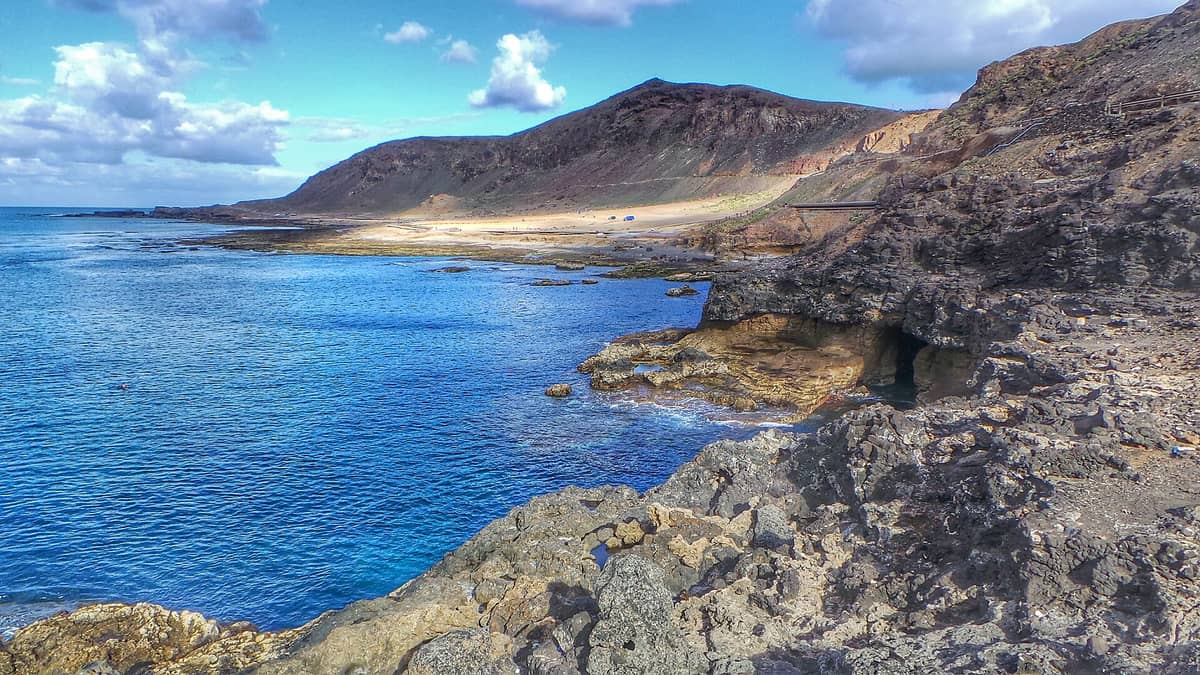
Playa de El Confital sits at the far northwestern edge of Las Palmas de Gran Canaria, where the La Isleta peninsula juts into the Atlantic and the ocean stops being polite. This is not a resort beach. There are no sunbed rentals, no chiringuito bar, no lifeguard tower. What you get instead is a stretch of dark volcanic rock and coarse sand, battered by Atlantic swells, with the city skyline visible in the distance and the open ocean stretching north toward Europe.
The beach and its surrounding coastal path have free, unrestricted public access at all hours. However, there is one critical fact every visitor needs to know before arriving: the regional health authority has ordered a permanent prohibition on bathing due to recurring water contamination episodes, and the LPAmar municipal website reflects this status. The signage at the beach makes this explicit. You can walk here, photograph here, surf here (local surfers do, at their own discretion), and watch the waves. Swimming for leisure is officially prohibited. Check the LPAmar website for any updates before your visit, as this status could only change if the permanent ban is lifted.
⚠️ What to skip
Bathing at El Confital is permanently prohibited by the health authorities due to contamination episodes. Do not swim here. Verify the current status at lpamar.laspalmasgc.es before visiting in case this ban is ever lifted.
The Walk There: Half the Experience
The most rewarding way to reach El Confital is on foot from the northern end of Las Canteras beach. The walk takes roughly 20 minutes and follows the coastal promenade as it transitions from the wide, café-lined paseo of Las Canteras into something increasingly local and unmanicured. You pass through the La Isleta neighbourhood, one of the oldest and most authentic parts of Las Palmas, where the streets narrow and the fishing-village character of the peninsula becomes tangible.
The contrast is striking. Las Canteras, with its sheltered lagoon and urban energy, gives way to a rougher coastline where the wind picks up and the smell of salt and seaweed sharpens. For context on what you are leaving behind, the Las Canteras beach guide explains the geography of the protective reef that makes Las Canteras so calm, and why El Confital, just minutes away, feels like a completely different ocean.
If you prefer public transport, bus line 41 runs from Parque Santa Catalina to Cruce de Las Coloradas in La Isleta, from where a short walk brings you to the beach. By car, a dirt road accesses the site; check locally for any current restrictions related to rockfall risk before planning to drive.
ℹ️ Good to know
The dirt road to El Confital has been subject to temporary closures due to rockfall risk in the past. Check locally for the latest information on vehicle access; access on foot is generally unaffected.
What You See, and When to Go
At ground level, El Confital is a mix of volcanic rock formations, tide pools, and patches of coarse sand. The rock is dark basalt, pitted and layered, shaped by centuries of wave action. In places the sea has carved shallow channels and pools that catch and drain with each swell. The terrain is uneven and requires careful footing, especially when wet.
Early morning is when El Confital shows its best side. The light comes in low from the east, catching the texture of the rocks and the white foam of the breaking waves. The air is cool and there are almost no other visitors at this hour, typically just a handful of surfers checking the break and perhaps a local with a dog. The ocean noise is significant: this is a place where the Atlantic genuinely announces itself. By midday, the sun is high and direct, the rocks become uncomfortable to stand on barefoot, and any wind usually picks up along this exposed northern shore.
Sunset visits are popular among locals and photographers. The western-facing aspect of the coastline means the sky behind the water turns orange and red in the hour before dark, with Las Palmas city lights beginning to glow in the background. This is the busiest time of day at El Confital, though 'busy' here means a few dozen people rather than hundreds.
Surf conditions vary significantly by season. The months from October through March bring the most consistent swells, driven by North Atlantic storm systems. Local surfers treat El Confital as a serious spot, not a learner's wave. If you are visiting to watch surfing rather than participate, position yourself on the higher rock outcrops for the clearest view of the break.
Context: La Isleta Peninsula and the Wider Setting
El Confital sits within the La Isleta peninsula, a roughly triangular headland that forms the northeastern corner of the city of Las Palmas de Gran Canaria. La Isleta was historically an almost separate community from the main city, connected by a narrow isthmus, and it retains a distinct identity. The neighbourhood immediately behind El Confital, Las Coloradas, is a residential area of low-rise buildings and local shops with none of the tourist infrastructure found in Santa Catalina or Triana.
The peninsula as a whole has significant ecological value as a transition zone between the urban coastline and open Atlantic. It is a different experience from the curated nature of the Jardín Botánico Viera y Clavijo in the south of the city, or the dramatic interior landscapes around Roque Nublo. El Confital is urban wilderness: a place that exists despite the city around it rather than because of it.
Practical Notes for Your Visit
Footwear matters more here than at most beaches. The approach path and the shoreline itself involve uneven volcanic rock. Closed-toe shoes or sturdy sandals with grip are a much better choice than flip-flops. If you plan to explore the rock pools and lower tidal areas, water shoes would serve you well.
There are no facilities at El Confital: no toilets, no food or drink vendors, no shade structures. Bring water, especially if visiting in summer when temperatures in Las Palmas typically reach the mid-to-upper 20s Celsius. Sun protection is important on the exposed headland; there is no natural shade on the rocky foreshore.
The terrain makes this site inaccessible to visitors with reduced mobility. The dirt road approach, uneven rock surfaces, and lack of any adapted infrastructure mean that access is effectively limited to those who can walk on rough ground. This is worth stating plainly before anyone makes a specific trip.
💡 Local tip
For photography, bring a lens that can handle contrast between bright sky and dark rock. Polarising filters help cut glare off the wet basalt and the surface of the water. The golden hour before sunset typically gives the most dramatic results on this coastline.
Who This Place Is Not For
If your priority is swimming, sunbathing on sand, or spending a beach day with children, El Confital is the wrong choice right now. The bathing prohibition alone rules it out as a swimming destination, and the absence of facilities makes it impractical for families spending hours outdoors. Visitors expecting the atmosphere of Las Canteras, with its promenade cafes and calm water, will find El Confital disorienting rather than rewarding.
For a more developed and family-friendly alternative within Las Palmas, Las Canteras remains one of the finest urban beaches in Spain. For those interested in the wider coastal and natural landscape of Gran Canaria, the guide to the island's best beaches covers a wide range of options across different parts of the island.
Insider Tips
- Walk rather than drive. The approach on foot from the north end of Las Canteras gives you the full geographical transition from city beach to wild coast, which is part of what makes El Confital interesting.
- Check the LPAmar website the day before visiting. The bathing prohibition is an active municipal notice and the situation has been known to shift. Do not assume conditions have improved without checking.
- If you want to photograph surfers, visit on a weekday morning in winter (November through February) when Atlantic swells are strongest and the light is directional. Weekend afternoons in summer are quiet to the point of being empty.
- The rock pools at lower tide hold small marine life including crabs and occasional eels. Low tide in the early morning exposes the most interesting sections of the volcanic shelf.
- Locals sometimes bring fishing lines to the rock outcrops at the far northern end of the beach. If you want to see the site at its most authentically local, this is the spot and the activity to look for.
Who Is El Confital For?
- Surfers and surf watchers seeking a real Atlantic break outside the resort circuit
- Photographers looking for dramatic coastal light, volcanic textures, and cityscape-meets-ocean compositions
- Walkers who want to extend the Las Canteras promenade route into genuinely wild coastal territory
- Travellers who want to see an unpolished, local-facing side of Las Palmas de Gran Canaria
- Anyone visiting in winter who wants to experience the North Atlantic in its more forceful mood
Nearby Attractions
Other things to see while in Las Canteras Beach Area:
- Playa de Las Canteras
Playa de Las Canteras stretches for over 3 kilometres along the heart of Las Palmas de Gran Canaria, protected by a natural lava reef that keeps the water calm enough for year-round swimming. Free, accessible, and backed by a promenade full of cafes and surf shops, it is one of Spain's finest city beaches.