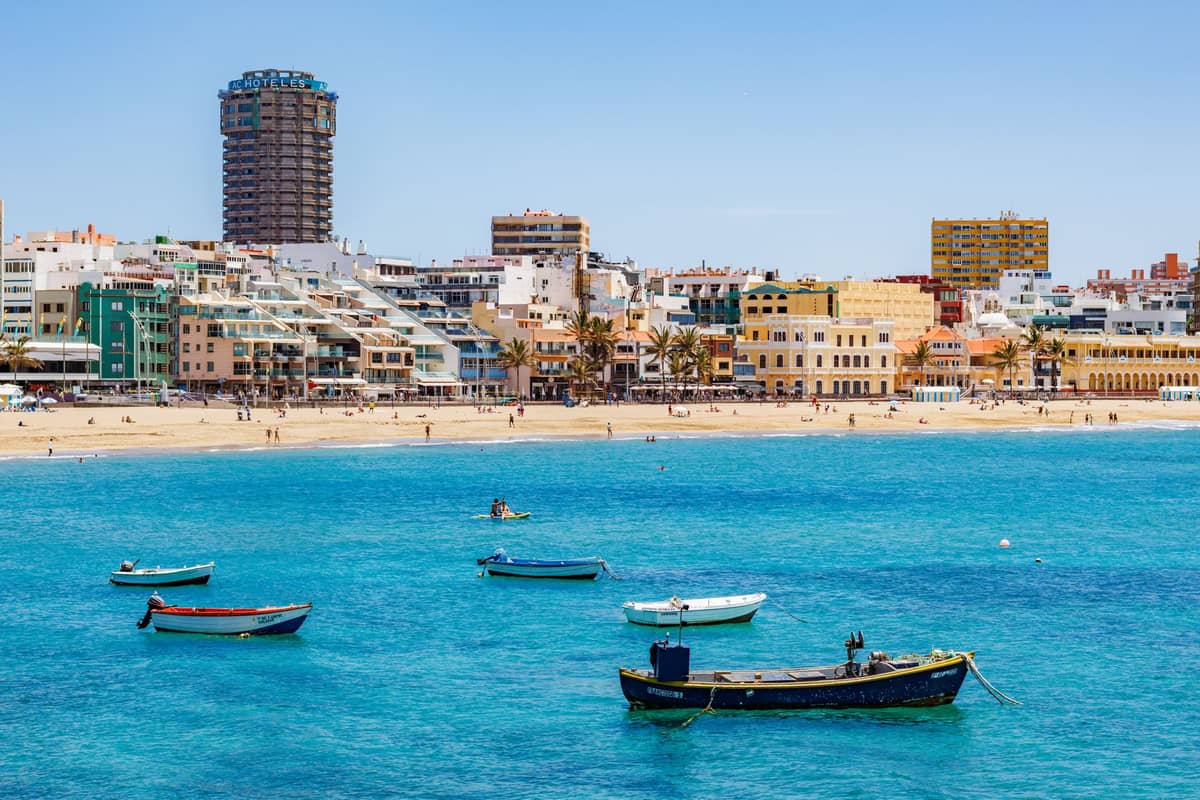
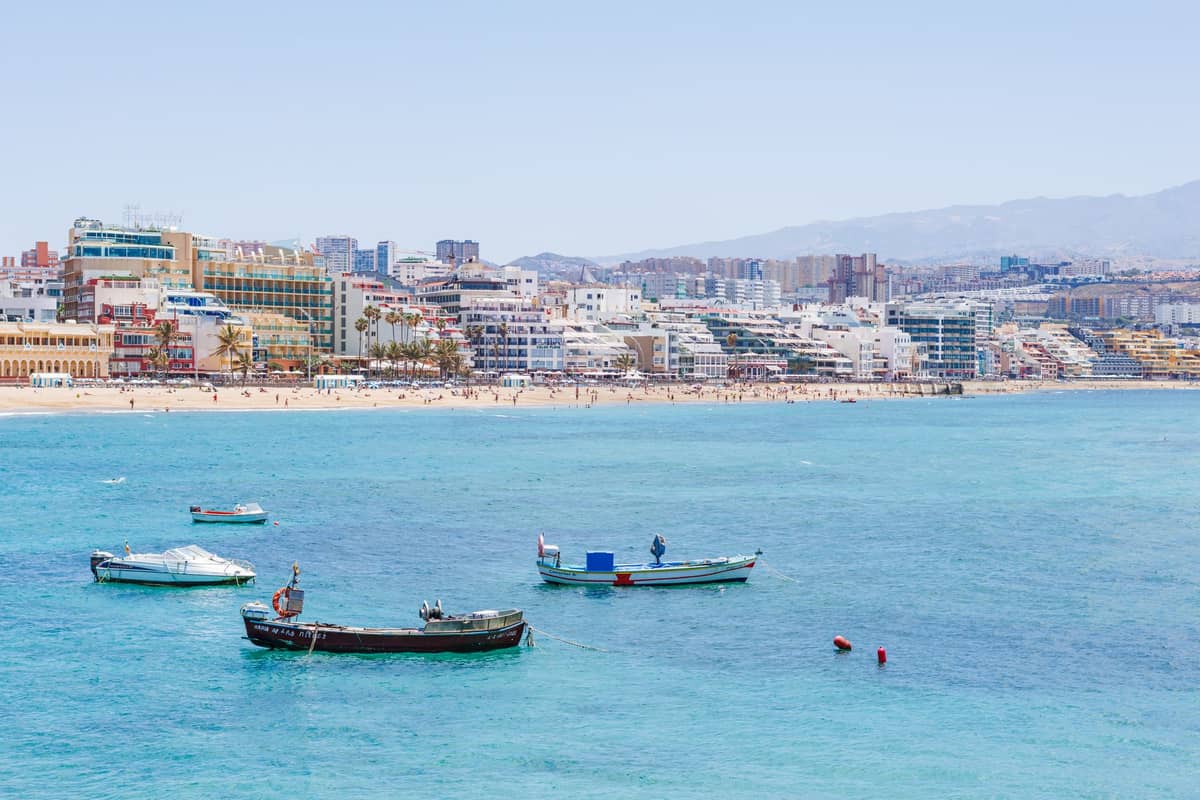
Las Canteras is the beating heart of Las Palmas de Gran Canaria, a 3km stretch of golden sand backed by a pedestrian promenade lined with restaurants, surf shops, and local cafés. Unlike the resort beaches of the island's south, this is a working city beach where surfers, office workers on lunch breaks, and long-stay travelers share the same stretch of Atlantic coastline.
Las Canteras is Las Palmas de Gran Canaria's great urban beach, a 3-kilometre sweep of sand where city life and the Atlantic Ocean meet without ceremony. Protected by a natural offshore reef called La Barra, it manages to be calm enough for families in one section and raw enough for surfers in another, all within the same uninterrupted stretch of golden shore.
Orientation
Las Canteras sits along the northwest coastline of Las Palmas de Gran Canaria, the island's capital city and largest urban center in the Canary Islands. The beach runs roughly north to south, with the Paseo de Las Canteras promenade forming a continuous pedestrian spine between the sand and the city grid immediately inland. To the north, the beach curves toward the La Isleta peninsula and the working port district. To the south, the promenade ends at the striking modernist Auditorio Alfredo Kraus, which marks the boundary with the residential neighborhood beyond.
The district is commonly understood in two functional zones. Playa Grande occupies the central and northern sections, where the natural offshore reef called La Barra shelters the water and creates calm, swimmable conditions for most of the year. At the southern end, the reef disappears and the section known as La Cicer takes over: here the Atlantic arrives with more force, making it the preferred stretch for surfers. These two zones share the same promenade but feel like different beaches in practice.
Las Canteras sits roughly 20 minutes by taxi from Gran Canaria Airport (IATA: LPA), and is walkable from the Santa Catalina neighborhood, Las Palmas's main commercial and transit hub, which lies just inland to the northeast. From Santa Catalina, the beach is a 10 to 15 minute walk heading west through residential side streets. The historic old quarter of Vegueta is about 3km to the south, best reached by urban bus rather than on foot.
Character & Atmosphere
Early mornings at Las Canteras belong to the locals. By 7am the promenade is already in use: joggers in both directions, older residents doing their daily constitutional, and a handful of swimmers wading into the water before the city fully wakes up. The light at this hour is soft and lateral, casting long shadows across the sand from the apartment buildings and hotels lining the inland edge of the paseo. Coffee comes from the neighborhood cafés that open before 8am, often nothing more than a counter, a few stools, and a decent cortado.
By late morning the promenade shifts register. Sunbathers claim their patches of sand, the water fills with swimmers, and the beach bars begin serving. Las Canteras is not a resort beach in the traditional sense: there are no all-inclusive wristbands, no daybeds for hire arranged in symmetrical rows, no animation teams with microphones. The beach chairs and umbrellas that do exist are rented individually, and the surrounding businesses are independent rather than chain-operated. This gives the whole stretch an authentically urban atmosphere that the south-coast resort areas simply cannot replicate.
Afternoons see the promenade at its most populated. The Paseo de Las Canteras is one of the genuinely great urban promenades in Spain, wide enough to accommodate cyclists, pedestrians, and terrace seating without feeling congested. The light turns golden from about 4pm onward, falling across the water in a way that makes the protected inner bay glow. This is the hour when the beach fills with people who have just finished work, and when the terrace tables start to look genuinely appealing.
After dark the promenade stays active but the character shifts toward bars and restaurants rather than beach activity. The stretch nearest the Auditorio Alfredo Kraus and La Cicer tends to attract a younger crowd, while the central sections around Playa Grande are calmer. The area is generally safe and well-lit, and the presence of families and locals well into the evening keeps the atmosphere relaxed rather than rowdy. This is not a nightlife destination in the way that the Yumbo Centre in Playa del Inglés is; it is a city beachfront that happens to have good bars.
💡 Local tip
The western-facing promenade catches the sunset directly over the Atlantic. From October through February, when the sun sets earlier and lower, the light show across the water can be genuinely spectacular. Arrive at the promenade by 5pm in winter to get a seat on the right terrace.
What to See & Do
The beach itself is the primary draw, and it rewards more time than most visitors initially plan to give it. Las Canteras Beach holds a Blue Flag designation for water quality, environmental management, and safety services, which means the lifeguard coverage, water quality, and facilities are regularly assessed and maintained. The protected Playa Grande section is the better choice for swimming, especially for children or less confident swimmers, because La Barra reef absorbs the majority of the Atlantic swell.
At the southern end, La Cicer is where the surf breaks. The waves here are consistent enough to support a small but real surf culture within the city, and several surf schools operate in this section during the main surf season from October through March. Watching surfers from the promenade while sitting at one of the nearby terrace cafés is one of the more enjoyable free activities the city offers.
The Auditorio Alfredo Kraus anchors the southern end of the promenade architecturally. Designed by the Spanish architect Oscar Tusquets Blanca and opened in 1997, it is built directly into the cliff face above the beach, with a large glass facade that frames the ocean. The auditorium hosts classical concerts, opera, and international performances throughout the year. Even if you are not attending an event, the building is worth approaching on foot from the promenade to appreciate how it sits within the coastal landscape.
Las Canteras is a practical base for exploring the rest of Las Palmas. The Parque de Santa Catalina is a 15-minute walk northeast, and from there the city's main commercial streets extend south toward Triana. The aquarium Poema del Mar, located near the port, is about 20 minutes on foot along the coast road heading north toward the harbor, and it is among the better-designed modern aquariums in Spain.
Swimming and sunbathing on Playa Grande, the sheltered central section protected by La Barra reef
Surfing or surf lessons at La Cicer during the October to March season
Walking the full 3km of the Paseo de Las Canteras promenade at any time of day
Attending a concert or performance at the Auditorio Alfredo Kraus
Watching the sunset from a west-facing terrace bar on the promenade
Day trips to Vegueta historic quarter and its colonial architecture
ℹ️ Good to know
Las Canteras holds consistent Blue Flag status, but the La Cicer surf section at the southern end can have strong currents and shore break depending on swell conditions. Non-swimmers should stay in the Playa Grande section north of the reef gap.
Eating & Drinking
The food and drink scene along the Paseo de Las Canteras covers a wide range from simple beach chiringuitos to proper sit-down restaurants with wine lists. The tourist concentration along the promenade means some restaurants do cater primarily to visitors, and pricing reflects that in places. However, the blocks immediately behind the paseo, running east into the urban grid, contain neighborhood restaurants and tapas bars where locals eat. Prices drop noticeably one or two streets back from the seafront.
Canarian cuisine is well represented along the beach area. Look for papas arrugadas, the island's small wrinkled potatoes served with mojo rojo or mojo verde sauces, and fresh fish dishes featuring locally caught species. The Canary Islands have a strong tradition of simply prepared grilled fish, and Las Palmas benefits from a working port nearby. For a broader overview of what to expect on the plate, the Gran Canaria food guide covers the island's essential dishes and where to find them.
Coffee culture in this part of Las Palmas is strong and uncomplicated. The neighborhood cafés that open early serve proper espresso-based drinks at Spanish café prices, usually under two euros for a cortado or café con leche. The promenade itself has larger terrace cafés where the same drink will cost slightly more, but the tradeoff is the view. For breakfast, the local standard is tostadas, thick slices of bread toasted and served with olive oil, tomato, or butter, and this remains the most reliable and affordable morning option anywhere along the beach.
Bar life on the promenade peaks between 6pm and 10pm, when people transition from the beach to the terrace. Local beer, wine, and the Canarian spirit ron miel (honey rum) are the standard drinks. The bars closest to La Cicer and the Auditorio tend to stay open later and have a slightly younger atmosphere. If you are looking for a full night out rather than a leisurely evening drink, the options within the immediate Las Canteras area are limited, and most serious nightlife in Las Palmas concentrates elsewhere in the city.
Getting There & Around
From Gran Canaria Airport (LPA), the most practical public transport option is the Global interurban bus network. Global Line 60 connects the airport with the Santa Catalina interchange in central Las Palmas for approximately 2.95 euros per journey (verify current fares before travel). From Santa Catalina, Las Canteras beach is a 10 to 15 minute walk heading west, or a short ride on the urban bus network. A taxi from the airport to the Las Canteras area costs approximately 25 to 35 euros depending on the time of day and exact destination, and takes around 25 to 30 minutes.
Within Las Palmas, the urban bus network operated by Guaguas Municipales serves Las Canteras directly. Lines 1, 2, 12, 17, 20, and 25 connect the beach with the port area, Santa Catalina, and other city districts. The single fare is approximately 1.40 euros, reduced to around 0.85 euros with the rechargeable TransGC card, which is worth purchasing if you plan to use the buses more than a few times. Buses stop frequently along the promenade and on the parallel streets one block inland.
Ride-hailing apps operate in Las Palmas, though availability of specific international platforms varies and should be confirmed locally. Traditional metered taxis are reliable and widely available, particularly around the Santa Catalina area. For exploring beyond Las Palmas, the Gran Canaria transport guide covers interurban bus routes, car rental options, and how to reach the island's main attractions from the capital.
Las Canteras itself is entirely walkable. The promenade runs for about 3km along the beachfront, and the neighborhood grid behind it is flat and easy to navigate. Cycling is possible on the promenade, though it becomes crowded during peak hours, particularly on weekend afternoons. The Auditorio Alfredo Kraus at the southern end and the La Isleta neighborhood to the north are both reachable on foot within around 20 minutes from the center of the promenade.
⚠️ What to skip
Bus fares, route numbers, and timetables for both Guaguas Municipales and Global interurban services change periodically. Always confirm current schedules and prices through official operator websites or the TransGC app before travel.
Where to Stay
Las Canteras is the best area in Las Palmas to stay if your priority is the beach. Hotels and apartment rentals line the blocks immediately adjacent to the promenade, and the best rooms have direct ocean views from their balconies. The promenade-facing properties tend to command higher prices and can be noisy in the evenings when the terraces below are active, so lighter sleepers should look for accommodation one or two streets back from the seafront, where prices drop and ambient noise is considerably lower.
The accommodation mix here leans toward mid-range hotels, aparthotels, and self-catering apartments rather than luxury properties. Las Palmas does not have a large luxury hotel sector compared with the south-coast resorts, but what the area lacks in five-star amenities it compensates for in authenticity and value. Longer-stay travelers, digital nomads, and surfers in particular find Las Canteras a practical base: the apartments tend to be well-equipped, the neighborhood has genuine infrastructure including supermarkets, pharmacies, and laundries, and the Atlantic-facing aspect means temperatures are marginally cooler in summer than the rest of the city.
For travelers choosing between Las Palmas and the south coast, the decision largely comes down to atmosphere. Las Canteras suits travelers who want a city experience with a beach attached. Maspalomas and Playa del Inglés suit those who want a purpose-built resort environment. The Gran Canaria accommodation guide maps out the trade-offs across the island's main areas and helps narrow down which base fits different travel styles.
Practical Tips & Honest Assessment
Las Canteras is genuinely one of the better urban beaches in Spain, and the promenade that backs it is the kind of public space that most coastal cities aspire to build. The combination of a protected natural reef, reliable year-round mild temperatures with winter daytime averages around 19 to 21 degrees and summer highs typically reaching 25 to 27 degrees, and a proper city behind it rather than a resort strip makes it unusual in the Atlantic island context.
That said, it is not for everyone. Travelers who want maximum sun, resort facilities, and easy access to the island's giant dune systems should base themselves further south. The Maspalomas Dunes and the resort infrastructure around Playa del Inglés represent a completely different proposition. Las Canteras is a city beach, and it comes with city considerations: ambient noise, urban foot traffic, and a neighborhood feel that some travelers will love and others will find less relaxing than a resort.
Pick-pocketing is a low but real risk in any busy urban promenade environment. The beach itself is generally safe, but leaving valuables unattended on the sand while swimming is inadvisable, as it is on any popular urban beach. The promenade and surrounding streets are well-lit and well-used into the late evening, and the area does not have significant safety concerns for most travelers exercising standard urban awareness.
Las Canteras works particularly well for travelers who want to use Las Palmas as a base for exploring the rest of Gran Canaria. Day trips into the mountainous interior, to the ravines and villages, or along the coast are all feasible from here, and the city's bus connections are better than from any of the southern resorts. The Gran Canaria day trip guide outlines the best excursions reachable from Las Palmas by public transport or rental car.
TL;DR
Las Canteras is the best urban beach in Las Palmas de Gran Canaria: 3km of Blue Flag sand backed by a proper city promenade, protected by a natural reef in the main swimming section and open to Atlantic surf at La Cicer in the south.
Best suited to travelers who want city life and a beach together rather than a resort environment: independent restaurants, neighborhood cafés, surf culture, and a genuinely local atmosphere set it apart from the south-coast resort strips.
Well connected by urban buses (Guaguas Municipales lines 1, 2, 12, 17, 20, 25) and a roughly 25- to 30-minute taxi ride from Gran Canaria Airport; walkable to Santa Catalina and close to most Las Palmas cultural sites.
Not the right base for travelers seeking all-inclusive resort facilities, nightlife on the scale of Playa del Inglés, or easy access to Maspalomas Dunes without significant travel time.
Accommodation ranges from mid-range hotels to long-stay apartments; ideal for digital nomads, surfers, couples, and independent travelers who want an authentic Canarian city base with the Atlantic on the doorstep.
Three days is enough to experience Gran Canaria's remarkable range: a well-preserved colonial old town, Atlantic dune fields, volcanic mountain villages, and some of Spain's best urban beaches. This itinerary is built around real transport logistics, honest time estimates, and a deliberate mix of coast and interior.
Gran Canaria packs an extraordinary variety of beaches into one island: vast dune-backed shores in the south, a world-class urban beach in Las Palmas, sheltered family coves on the southwest coast, and raw Atlantic surf breaks in the north. This guide covers the best of all of them.
Gran Canaria earns its reputation as the 'island of eternal spring' for good reason. This guide breaks down every season, explains how the island's microclimates affect your plans, and tells you honestly when to go and when to avoid the crowds.
Gran Canaria packs extraordinary variety into 1,560 square kilometres. These are the best day trips from any base on the island, from the sacred peaks of the interior to the quiet fishing harbours of the west coast.
Gran Canaria is not a walkable island. This guide breaks down every realistic transport option, from Global bus routes and regulated taxi fares to car rental logistics and seasonal road warnings, so you can move around confidently from day one.
Gran Canaria all-inclusive resorts range from budget-friendly complexes in Playa del Inglés to upmarket retreats in Puerto de Mogán. This guide covers the best areas, realistic price expectations by season, and a clear take on when all-inclusive actually makes sense on this island.
Gran Canaria Carnival is one of Spain's biggest pre-Lent celebrations, centred on Las Palmas de Gran Canaria and running for four to five weeks each February and March. This guide covers every major event, how to get tickets, where to stay, and what first-timers consistently get wrong.
Gran Canaria has quietly become one of Europe's most practical bases for remote workers. Year-round subtropical warmth, 20+ coworking spaces, mid-range costs, and fast internet make Las Palmas de Gran Canaria a compelling alternative to Lisbon or Bali. This guide covers everything you need to plan a productive stay.
Everything you need to know about taking a ferry from Gran Canaria to the other Canary Islands. Covers the main routes, operators, realistic prices, departure ports, and the common mistakes that catch first-time travellers off guard.
Gran Canaria offers far more for couples than beach resorts. This guide covers the island's most romantic experiences, from volcanic viewpoints and wine-tasting in the interior to private catamaran trips and candlelit dinners in a harbour town that earns its 'Little Venice' nickname.
Gran Canaria packs an extraordinary amount of natural beauty, history, and culture into a single island — and a surprising amount of it is completely free. From sweeping volcanic landscapes and ancient Guanche sites to world-class urban beaches and genuinely free museums, here is how to get the most out of the island without opening your wallet.
Gran Canaria packs extraordinary variety into 1,560 square kilometres, yet most visitors see only a fraction of it. These are the volcanic ravines, pre-Hispanic ruins, wild coastlines, and slow villages that reward those willing to look beyond the southern resort strip.
December is one of the most underrated months to visit Gran Canaria. Daytime temperatures hover around 22°C, the southern beaches stay dry and sunny, and the island shifts into a relaxed festive rhythm. This guide covers the weather in detail, where to base yourself, what to do, and a few honest caveats about the rainy north.
Gran Canaria has over 130 luxury hotels spread across beach resorts, spa retreats, boutique city properties, and adults-only hideaways. This guide cuts through the marketing to tell you exactly where to stay, what to spend, and which areas suit different styles of upscale travel.
Gran Canaria nightlife spans four distinct zones, each with its own character, crowd, and closing time. This guide breaks down every major area, from the legendary Yumbo Centre to the bar-lined streets of Las Palmas, with practical advice on pricing, timing, and getting around after dark.
Gran Canaria offers genuine value if you know how to work the island's public transport network, tap into its free outdoor attractions, and eat where locals eat. This guide breaks down the real costs, the smart shortcuts, and the common mistakes that drain tourist wallets.
Gran Canaria packs semi-arid landscapes, volcanic peaks, and colonial towns into 1,560 km² — small enough to drive in a day, varied enough to spend a week exploring by car. This guide covers car rental costs, the best driving routes, the GC-200 road closure reality, and practical rules of the road so you can plan without surprises.
Both Gran Canaria and Tenerife promise year-round sunshine, dramatic scenery, and good value for European travellers. But they deliver very different holidays. This guide breaks down the real differences across beaches, landscapes, cost, family travel, and nightlife so you can stop second-guessing and start booking.
Gran Canaria's Atlantic coastline delivers world-class water sports year-round, from beginner surf lessons at Las Canteras to competition-level windsurfing at Pozo Izquierdo. This guide covers the best spots, realistic prices, seasonal conditions, and how to avoid the common pitfalls.
Gran Canaria delivers year-round sunshine, a stack of theme parks, safe beaches, and reliable public transport that make it genuinely practical for families. This guide cuts through the marketing to tell you exactly where to go, what to spend, and how to get around with children in tow.
Gran Canaria packs extraordinary hiking variety into 1,560 km². Alpine pine forests, volcanic rock formations, green ravines, and coastal cliffs are all within reach. This guide covers the best trails on the island, from quick walks to full-day mountain routes.
Gran Canaria packs an extraordinary range of landscapes, climates, and experiences into just 1,560 km². This guide cuts through the brochure language to tell you exactly who the island suits, what it does well, where it falls short, and how to decide if it belongs on your travel list.
Gran Canaria's volcanic coastline is dotted with natural sea pools carved from ancient lava flows. This guide covers the finest spots around the island, from well-equipped salinas in the northwest to wild rock pools on the west coast, with practical advice on when to go and what to expect.
Seven days is enough to experience Gran Canaria's remarkable contrasts: Atlantic beaches, volcanic peaks, colonial old towns, and quiet rural villages. This day-by-day itinerary covers the highlights without wasting a single afternoon.
Gran Canaria packs an extraordinary range of experiences into just 1,560 km². This guide covers the best things to do across the island, from world-class beaches and dramatic mountain hikes to historic old towns and boat trips, with practical advice on what's worth your time and what to skip.
Las Palmas de Gran Canaria is one of Spain's most underrated cities: a working Atlantic capital with a world-class urban beach, a remarkably preserved historic quarter, serious food culture, and year-round sunshine. This guide covers the best things to do across every corner of the city, with practical logistics, honest opinions, and no filler.
Gran Canaria's food culture runs deeper than most visitors expect. This guide covers the essential dishes, local ingredients, where to find authentic Canarian cooking, and what to skip — so you eat well from day one.
Gran Canaria divides neatly into three very different worlds: a cosmopolitan northern city, a sun-baked southern resort strip, and a rugged volcanic interior. Where you stay shapes your entire experience. This guide breaks down every main area by atmosphere, accommodation type, price range, and who it suits best.