Poema del Mar Aquarium: Las Palmas' Deep-Ocean Experience Worth Knowing About
Acuario Poema del Mar is one of Europe's most ambitious indoor aquariums, set in the harbour district of Las Palmas de Gran Canaria. Across three zones and 35 recreated marine ecosystems, it takes visitors from Atlantic tide pools to deep tropical reefs. Here's what the experience actually delivers.
Quick Facts
- Location
- Muelle Sanapú, s/n, 35008 Las Palmas de Gran Canaria — harbour district, next to the cruise port
- Getting There
- City bus (guagua) from central Las Palmas; taxi from Santa Catalina area takes under 10 minutes
- Time Needed
- 2 to 3 hours for a thorough visit; allow extra time on weekends and cruise-ship days
- Cost
- Adults €29 / Children (3–11) €19 / Under 3 free — verify at purchase as prices may update
- Best for
- Families with children, marine-life enthusiasts, rainy-day visits, cruise-ship layovers
- Official website
- poema-del-mar.com
What Poema del Mar Actually Is
Acuario Poema del Mar opened in Las Palmas de Gran Canaria as one of the most technically complex aquariums in Europe. The name translates roughly as 'Poem of the Sea', and the ambition behind it matches that scale: 35 recreated marine ecosystems, over 550 animal species, and a wide variety of plant specimens, all housed inside an architectural complex built directly into the working harbour at Puerto de Las Palmas.
It is divided into three main zones, each dedicated to a distinct oceanic environment. The progression moves logically from shallower, familiar Atlantic waters through tropical reef systems and into deep-ocean environments that most visitors have never encountered in person. The building itself is purpose-built, with large acrylic tunnels, floor-to-ceiling tanks, and a cathedral-scale deep-ocean centrepiece tank that is the structural and emotional climax of the route.
The aquarium sits in the Santa Catalina harbour area, a short distance from Santa Catalina and the city's main shopping and transport hub. This is not a beach-resort attraction. It is firmly urban, built for a city with over 380,000 residents and the year-round flow of cruise passengers who dock at the adjacent port.
The Three Zones: What You Walk Through
The route is designed as a single continuous journey rather than a series of separate halls. You enter through a reception area and follow a prescribed path that gradually takes you deeper, both physically and thematically.
Zone 1: Atlantic and Canarian Waters
The opening section is grounded in waters visitors to Gran Canaria might actually swim in. Tanks recreate the subtidal ecosystems of the Canary Islands and the wider Atlantic: moray eels threading through volcanic rock formations, schools of bream suspended in columns of blue light, and rockpool species displayed at eye level. The lighting here is relatively bright and naturalistic. For families with young children, this section is the most accessible, with lower viewing panels designed for small visitors.
Zone 2: Tropical Ecosystems
The middle section shifts to warmer-water tropical environments. Coral reef tanks dominate this zone, populated with the species most people associate with aquarium visits: reef sharks, rays, lionfish, and dense schools of brightly coloured reef fish. The colour contrast after the cooler Atlantic section is immediate and striking. Ambient sound changes too, moving from the gentle gurgle of filtration systems to a slightly more immersive soundscape.
One of the most photographed features is a walk-through acrylic tunnel where rays and sharks pass directly overhead. The effect works well in person: the scale of the animals is more apparent than in a flat tank view. However, the tunnel can create a bottleneck during peak hours, particularly when cruise-ship groups are moving through in organised tours.
Zone 3: The Deep Ocean
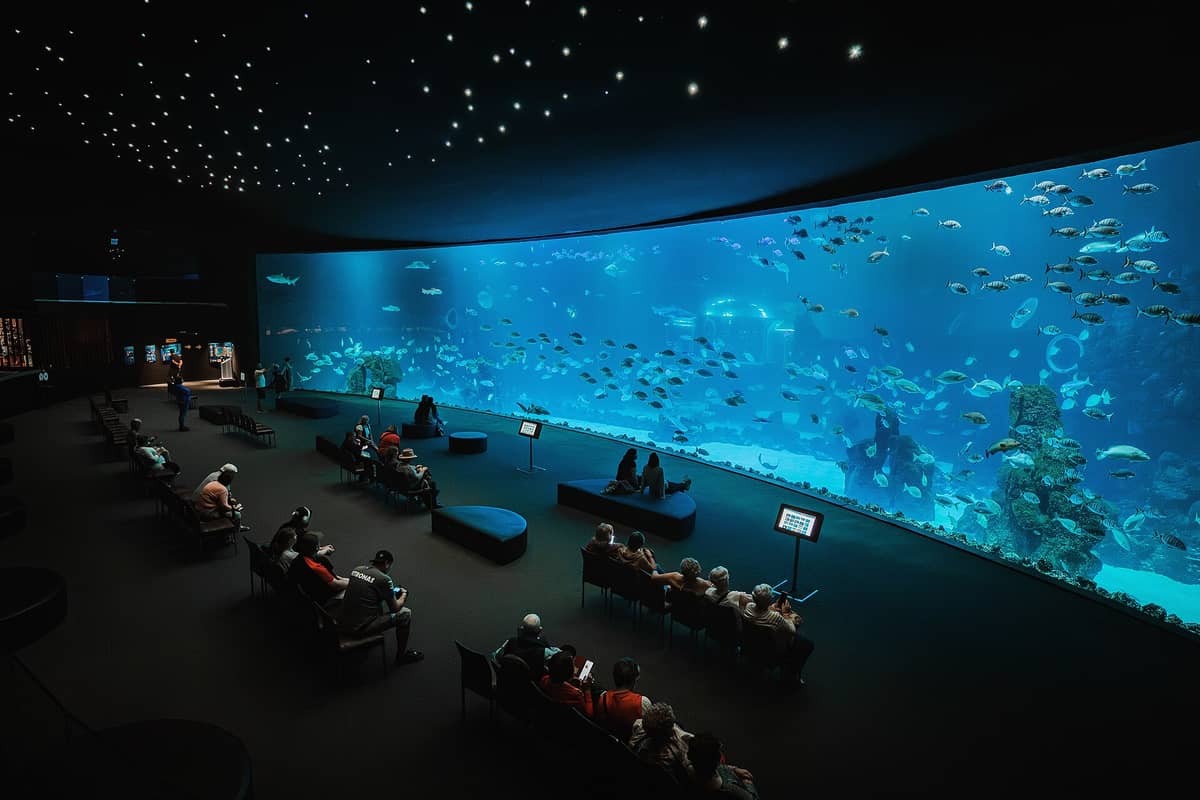
The final zone is where Poema del Mar separates itself from most aquariums visitors will have seen elsewhere. The main deep-ocean tank is among the larger display tanks in Europe by water volume, and the viewing area in front of it is genuinely large, with seating designed to let you sit and watch rather than shuffle past. The tank hosts open-ocean species including sharks, large rays, and schooling pelagic fish. Lighting is low and the blue-green cast of the water gives the whole space a contemplative quality that feels different from the busier earlier sections.
💡 Local tip
Plan to spend time in the deep-ocean viewing area rather than rushing through it. The behaviour of the animals changes over time, and the seating lets you watch movements that take several minutes to complete. If you have children, this is the section that tends to hold attention longest.
Timing Your Visit: Crowds and Best Hours
The aquarium is open every day from 09:30 to 17:30, though hours should be confirmed before your visit as some resellers list slightly different schedules. The first hour after opening, particularly on weekdays, is consistently the quietest part of the day. Crowds build from mid-morning onward, and the tunnel sections in particular feel very different with 20 people passing through versus 80.
The proximity to Las Palmas' cruise port is the single biggest variable in crowd levels. When large cruise ships are docked, organised tour groups move through the aquarium on tight schedules, and certain sections can feel congested between approximately 10:30 and 14:00. If you are staying in Las Palmas rather than arriving from a ship, arriving at opening time and moving at your own pace makes a substantial difference to the experience.
⚠️ What to skip
Check cruise-ship docking schedules before you visit if crowd levels matter to you. The Las Palmas port regularly receives large vessels, and their passengers are directed toward the aquarium as one of the closest major attractions to the terminal. Weekday mornings outside summer are typically the quietest option.
Weather in Las Palmas is stable year-round, with the subtropical climate meaning the aquarium is a genuinely useful option on overcast or drizzly days, which are most likely between November and February. For guidance on planning around the island's seasons, the best time to visit Gran Canaria guide covers the monthly pattern in detail.
Getting There and Practical Logistics
The aquarium's address is Muelle Sanapú, s/n, in the harbour district of Las Palmas. It sits adjacent to the cruise-ship terminal and the Las Arenas shopping complex. If you are staying in the Santa Catalina neighbourhood or near Las Canteras beach, it is reachable on foot in around 15 to 20 minutes, or by taxi in under 10 minutes. City buses run frequently between central Las Palmas and the port area.
Parking is available in the nearby Las Arenas shopping centre car park if you are arriving by car. The building is fully accessible: ramps and elevators connect all levels, step-free routes cover the entire route, and strollers can be pushed through the entire visit without obstruction.
Adult tickets are priced at €29 and children aged 3 to 11 at €19, with under-3s admitted free. Canary Islands residents pay reduced rates. Buying tickets in advance online is advisable during summer months and public holidays to avoid queuing at the box office.
Photography and Sensory Details
The aquarium is a genuinely good photography subject, but requires some adjustment compared to outdoor shooting. The deep-ocean and tropical zones are dimly lit, which means most smartphone cameras will struggle without a night-mode setting. A wide aperture lens or a phone with strong low-light capability will make a meaningful difference in the deep-ocean hall. The overhead tunnel is one of the better opportunities: the aquarium's upward lighting creates clean backlighting for animals moving above you.
Smells are minimal throughout, which is notable for a large aquarium. The water filtration is effective enough that the salt-and-algae scent is present but not overwhelming. Sounds shift noticeably between zones: the Atlantic section has a lighter, more open acoustic quality, while the deep-ocean hall is quiet and slightly reverberant, with low ambient music that does not intrude.
Is It Worth the Ticket Price?
At €29 per adult, Poema del Mar sits at the higher end for a single attraction in Las Palmas. Whether it justifies that price depends on what you are comparing it to. If your frame of reference is mid-tier European aquariums, it is competitive in scale and quality. The deep-ocean exhibit in particular is difficult to find elsewhere in Spain. If you are weighing it against free alternatives on the island, including the dramatic outdoor landscapes available on a day trip to places like Roque Nublo or a walk through Vegueta, the value calculation shifts.
For families with children under 12, the combination of accessibility, clear route structure, and sheer visual impact makes the price defensible. For solo travellers or couples with a strong interest in marine ecology, the deep-ocean section alone has enough substance to reward a visit. For travellers who have already visited a large European aquarium recently and have limited days on the island, other Gran Canaria experiences will likely offer more that is unique to the destination.
If budget is a consideration, the free things to do in Gran Canaria guide covers the island's no-cost alternatives, many of which are outdoors and weather-dependent in a way the aquarium is not.
Who Should Think Twice
Travellers with ethical reservations about captive marine animals will find Poema del Mar difficult to reconcile with those concerns: it holds sharks, rays, and other large pelagic species in closed systems, and that is not a minor aspect of the visit. The aquarium does not prominently position itself around conservation messaging in the way some newer facilities do.
Visitors arriving during peak cruise days who are sensitive to crowds may find the experience frustrating in the middle sections. And anyone spending only a single day in Las Palmas has a case for prioritising the city's outdoor and historic offerings, which are harder to replicate than an aquarium visit.
Insider Tips
- Arrive within the first 30 minutes of opening on a weekday. The deep-ocean viewing area is almost empty at that hour and you can sit in front of the main tank without other visitors in your sightline or competing for the bench space.
- The harbour area directly outside the aquarium has several café terraces facing the water. Finishing your visit with a coffee or lunch outside rather than using the in-building café is a notably better experience and not significantly more expensive.
- If you are visiting with a school-age child who has a specific marine interest, the Atlantic zone is worth lingering in longer than most visitors do. The tank labels are detailed and the species represented are ones they could actually encounter snorkelling off Gran Canaria's coast.
- Check the Las Palmas port schedule online before you book. On days when two or more large cruise ships are docked simultaneously, the aquarium can receive several hundred group visitors in the same mid-morning window. The difference in experience compared to a quiet weekday morning is substantial.
- Canary Islands residents pay significantly reduced admission. If you are staying long-term or know local residents, this discount is worth asking about at the ticket desk, as it is not always prominently advertised to tourists.
Who Is Poema del Mar Aquarium For?
- Families with children aged 4 to 14 looking for a structured, fully indoor half-day activity
- Cruise passengers with 4 to 6 hours in port who want a self-contained attraction close to the terminal
- Travellers in Las Palmas on a grey or rainy day when outdoor plans fall through
- Marine biology enthusiasts who want to see Atlantic and deep-ocean species in close detail
- Visitors who have exhausted the main outdoor attractions and want a change of pace from landscape tourism
Nearby Attractions
Other things to see while in Santa Catalina & La Isleta:
- Castillo de la Luz
Built in 1494 to defend Las Palmas from pirate raids, Castillo de la Luz now houses a permanent collection of sculptor Martín Chirino's work inside one of the Canary Islands' most significant late-medieval fortifications. It sits at the northern edge of La Isleta, a short walk from Las Canteras beach, and costs just 4 euros to enter.
- Elder Museum of Science and Technology
Housed in a converted industrial building inside Parque Santa Catalina, the Elder Museum of Science and Technology is Las Palmas' interactive science museum. It mixes interactive exhibits with real spacecraft hardware, making it a solid choice for curious adults and families with children.
- Parque de Santa Catalina
Parque de Santa Catalina is the cosmopolitan centerpiece of Las Palmas de Gran Canaria, sitting between the cruise port and the city's commercial district. Free to enter, open around the clock, and packed with local life at almost any hour, it is the best single spot to take the pulse of the Canarian capital.