Parque de Santa Catalina: Las Palmas' Living Room
Parque de Santa Catalina is the cosmopolitan centerpiece of Las Palmas de Gran Canaria, sitting between the cruise port and the city's commercial district. Free to enter, open around the clock, and packed with local life at almost any hour, it is the best single spot to take the pulse of the Canarian capital.
Quick Facts
- Location
- Parque Santa Catalina s/n, 35007 Las Palmas de Gran Canaria, Gran Canaria, Spain
- Getting There
- City buses (guaguas) lines 1, 12, and 17 stop near the park. Stops are wheelchair-accessible with ramps and designated spaces.
- Time Needed
- 30 minutes to wander through; 2+ hours if you sit at a terrace bar or catch an event
- Cost
- Free entry at all times. Special events may charge separately.
- Best for
- People-watching, nightlife warm-up, festival atmosphere, solo travelers, cruise day visitors
- Official website
- lpavisit.com/en/atractivo/santa-catalina-park
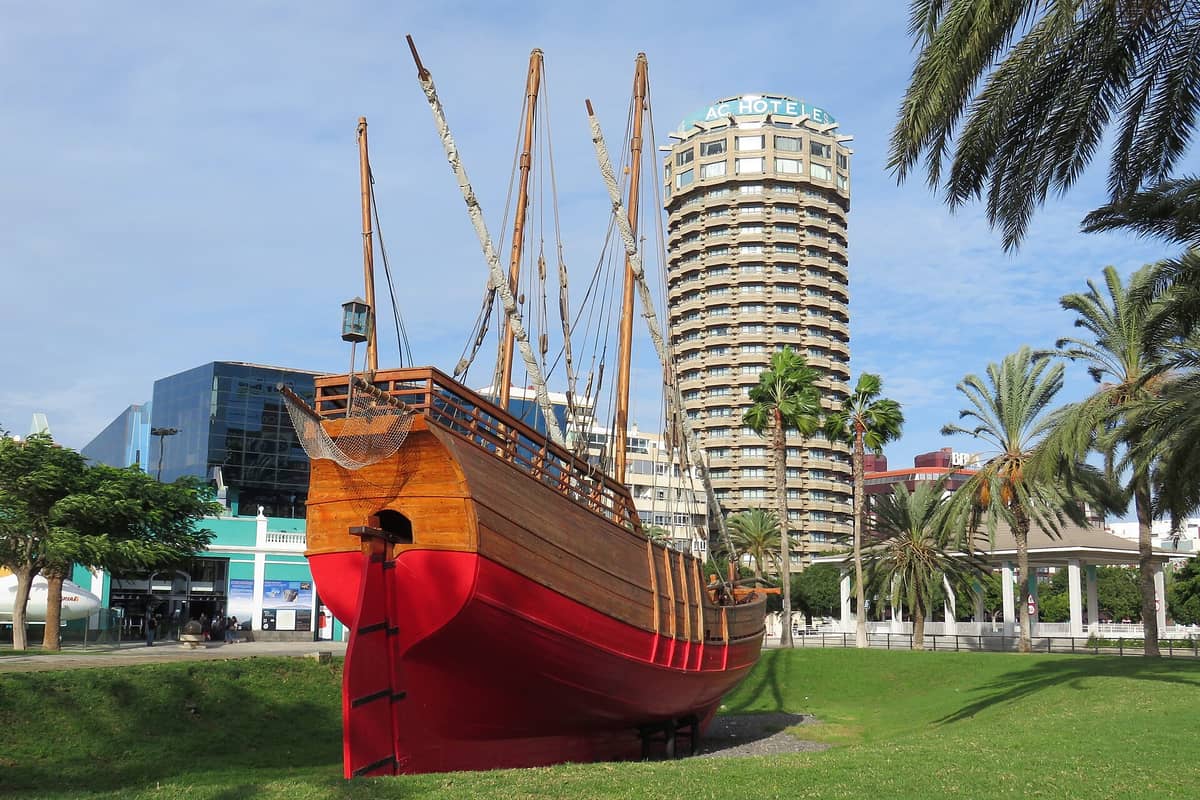
What Is Parque de Santa Catalina, Exactly?
Parque de Santa Catalina is not a park in the botanical sense. There are no manicured gardens, no hiking trails, no sweeping natural scenery. It is a large, paved public square in the Santa Catalina district of Las Palmas de Gran Canaria, and its purpose is entirely social. Think of it as the city's default gathering place: the spot where chess players set up their boards under the shade of mature trees, where locals argue over café con leche, where cruise passengers spill out from the nearby Port of Las Palmas looking slightly dazed, and where teenagers loiter until someone suggests moving on to the beach.
The square sits at a natural crossroads, positioned between the commercial energy of the city centre, the container shipping activity of the port, and the long golden stretch of Playa de Las Canteras just a few blocks to the west. That geography shapes everything about how the park feels and functions. It is not a destination for quiet reflection. It is a destination for being part of something.
ℹ️ Good to know
The square itself functions as an open public space at all hours, with no gates, formal closing times, or entrance fee of any kind. You simply walk in.
How the Park Changes Through the Day
Early mornings, from around 7am, the square belongs to dog walkers, retirees with newspapers, and the occasional jogger cutting through on the way to the seafront promenade. The terrace cafés are just opening, plastic chairs still stacked, the smell of fresh bread drifting from a nearby bakery. At this hour the park is calm in a way it rarely is later, and the light is particularly good for photography: low, warm, and soft against the pale paving stones.
By mid-morning the chess players arrive. This is not a tourist performance; it is a daily ritual. Older men, some of whom appear to have been playing the same games for decades, occupy the permanent outdoor tables near the centre of the square. Watching a match in progress for ten minutes costs nothing and tells you something real about local life that no museum exhibit can replicate.
Afternoons are the busiest stretch. The surrounding streets fill with shoppers, the terraces are packed, and the noise level rises noticeably. The kiosk bars that line the edges of the square do steady trade in cold beer and fresh juice. If a cruise ship is in port, and Las Palmas receives them regularly, expect the square to be considerably more crowded from roughly 11am to 4pm, with the particular energy of people who have a limited number of hours and are not sure what to do with them.
Evenings are when the park earns its reputation as the start of Las Palmas nightlife. From around 8pm, groups gather on the benches, music drifts from the bars, and the surrounding restaurants fill up. The park itself becomes a warm-up space, a place to meet before moving elsewhere. By midnight the crowd is younger and louder, though the square rarely feels unsafe. It is well-lit and well-trafficked.
Historical and Cultural Context
The Santa Catalina neighbourhood developed significantly during the late 19th and early 20th centuries, shaped largely by maritime commerce. Las Palmas was an important Atlantic waypoint for ships travelling between Europe, Africa, and the Americas, and the area around the port became the city's most cosmopolitan quarter. Hotels, trading houses, and cafés catered to a constant flow of international visitors.
Parque de Santa Catalina emerged from this context as a civic gathering point for a neighbourhood that had always been outward-looking. That character persists. The park continues to reflect the mixed, international texture of Las Palmas more vividly than almost anywhere else in the city. On a given afternoon you might hear Spanish, English, German, and several African languages within a single crossing of the square.
The park also serves as the principal venue for several of the city's major annual events, most notably the Gran Canaria Carnival, one of the largest carnivals in Spain. During carnival season, usually February or early March, the park transforms completely: stages are erected, the surrounding streets are closed to traffic, and tens of thousands of people in elaborate costumes pack the square for parades and performances that run well past midnight. If you visit during this period, the park experience is exceptional but the crowd levels are extreme.
Practical Walkthrough: Getting There and Getting Around
The park is easy to reach from almost anywhere in Las Palmas. City buses operated by Guaguas Municipales run frequently to stops adjacent to the square; lines 1, 12, and 17 all serve the area. Urban fares are inexpensive, and the bus network uses a rechargeable TransGC card that reduces the per-journey cost further. Verify current fares before travel, as prices are subject to change.
Arriving from Gran Canaria Airport (IATA: LPA), you can take Global Line 60 to the Santa Catalina area for around €2.95 per journey, or take a taxi for approximately €25 to €35 depending on the time of day and exact drop-off point. Journey time by taxi is roughly 20 to 25 minutes. The airport fare and duration estimates should be confirmed locally before publication, as these figures can shift.
If you are combining the park visit with a day at the beach, Playa de Las Canteras is a short walk west through the Santa Catalina shopping streets. The walk takes about 10 minutes at a leisurely pace. Equally, the park makes a natural staging point before heading into the Vegueta historic district to the south, where the city's oldest colonial architecture is concentrated.
💡 Local tip
Buses serving Santa Catalina Park are wheelchair-accessible with ramps and designated spaces. The park itself is flat and paved throughout, making it one of the most accessible public spaces in Las Palmas. Accessible parking is available adjacent to the square.
What to Expect on the Ground
The square is large but not overwhelming. Mature trees provide shade in patches, which matters considerably in the warmer months. The temperature in Las Palmas stays mild year-round, rarely exceeding 28°C even in summer, but sitting in direct afternoon sun in July is still uncomfortable. The shaded benches near the chess tables tend to fill up first.
The kiosk bars and terrace cafés around the perimeter are the main reason most people linger longer than they planned. A cold Tropical (the local beer) or a fresh-squeezed orange juice while watching the square operate is a genuinely pleasant way to spend an hour. Prices at the kiosks are reasonable by Spanish city standards; the more polished café terraces charge a small premium for the table service.
The park sees a mix of tourists and locals throughout the day, but it never feels like a tourist trap. There is no souvenir market, no staged folk performance, no ticket booth. What you get is an honest cross-section of Las Palmas street life, which is both its appeal and its limitation: if you want carefully curated heritage or natural beauty, the park will disappoint.
⚠️ What to skip
Like any busy city square, Parque de Santa Catalina attracts pickpockets, particularly during large events and when cruise ships are in port. Keep bags zipped and phones in pockets when the square is crowded.
Photography Notes and Best Timing
The square is not dramatically photogenic in the way that a mountain viewpoint or a colonial cathedral is, but it offers strong street photography opportunities. The chess players at midmorning are consistently compelling. The evening light, particularly in autumn and winter when the sun sets earlier and the golden hour falls around 6pm to 7pm, catches the warm tones of the surrounding buildings well.
For the wider Las Palmas photography circuit, the park works well as a starting point before walking west to capture the arc of Las Canteras beach from the promenade. The Santa Catalina neighbourhood itself has good architectural details in the side streets if you take time to wander beyond the square's immediate perimeter.
If your time in Las Palmas is limited and you are trying to decide where to prioritise, the Las Palmas attractions guide can help you map a logical walking route that connects the park with nearby museums and the historic old town without backtracking.
Insider Tips
- The chess tables near the centre of the square are open to challengers, not just spectators. If you play, sitting down and asking to join is generally welcomed by the regulars, though Spanish will help.
- Carnival in the park is genuinely spectacular, but arrive early for a decent position. By 9pm during the main parade nights, the square is so packed that movement becomes difficult. The side streets off the square give you a slightly less claustrophobic view of the floats passing through.
- The kiosk bars on the western edge of the square tend to be slightly cheaper than the café terraces with full table service on the main façade. Same view, lower price per round.
- If you are arriving by cruise ship and have only a few hours, the park is literally on your way into the city. Walk straight through rather than treating it as a separate detour, and you will reach Playa de Las Canteras in about 10 minutes without missing anything.
- Weekday mornings between 8am and 10am are the quietest window to visit and the best for unhurried observation. Weekend afternoons in peak tourist season (July, August, and during carnival) are the most crowded.
Who Is Parque de Santa Catalina For?
- Solo travelers who want to sit, observe, and get a feel for real city life without an agenda
- Cruise day visitors with limited time who need a central, walkable base to orient from
- Nightlife seekers using the square as a meeting point before exploring the surrounding bars and clubs
- Families with older children who want a no-cost, open space to rest between sightseeing stops
- Photography enthusiasts interested in candid street scenes rather than posed landmarks
Nearby Attractions
Other things to see while in Santa Catalina & La Isleta:
- Castillo de la Luz
Built in 1494 to defend Las Palmas from pirate raids, Castillo de la Luz now houses a permanent collection of sculptor Martín Chirino's work inside one of the Canary Islands' most significant late-medieval fortifications. It sits at the northern edge of La Isleta, a short walk from Las Canteras beach, and costs just 4 euros to enter.
- Elder Museum of Science and Technology
Housed in a converted industrial building inside Parque Santa Catalina, the Elder Museum of Science and Technology is Las Palmas' interactive science museum. It mixes interactive exhibits with real spacecraft hardware, making it a solid choice for curious adults and families with children.
- Poema del Mar Aquarium
Acuario Poema del Mar is one of Europe's most ambitious indoor aquariums, set in the harbour district of Las Palmas de Gran Canaria. Across three zones and 35 recreated marine ecosystems, it takes visitors from Atlantic tide pools to deep tropical reefs. Here's what the experience actually delivers.