Elder Museum of Science and Technology: What to Expect Before You Go
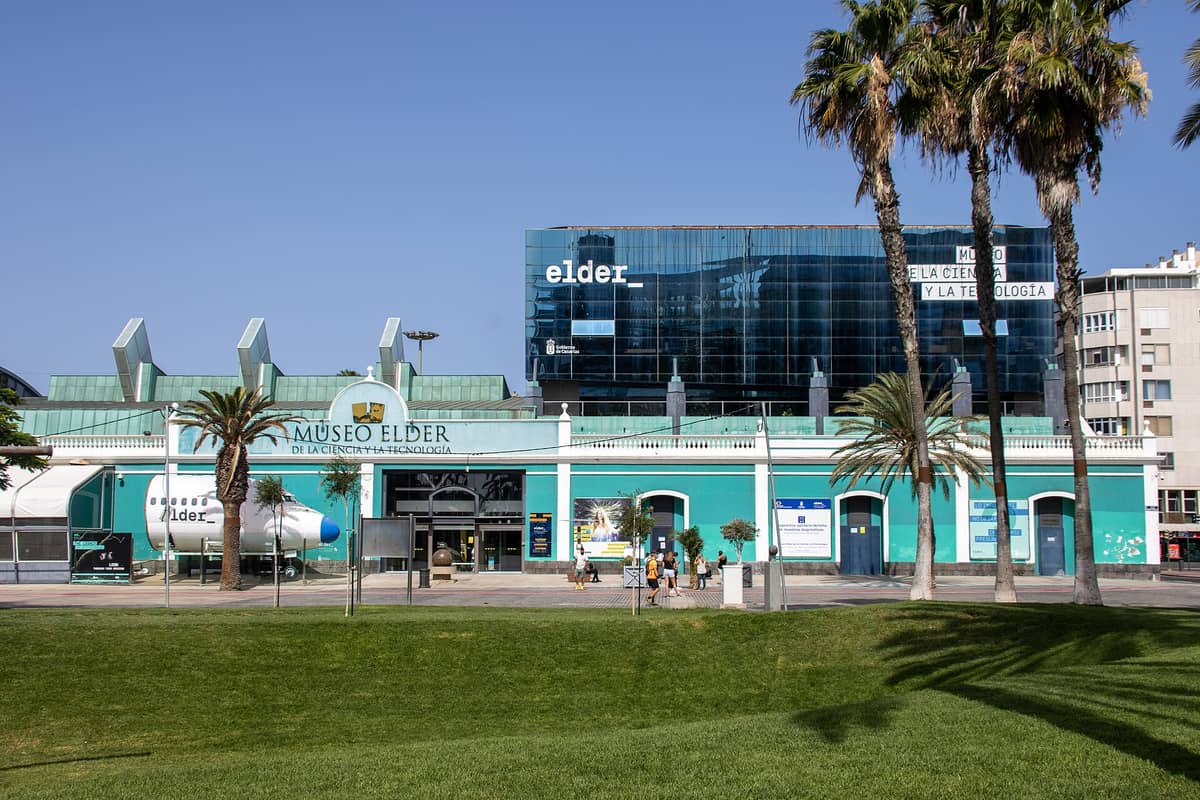
Housed in a converted industrial building inside Parque Santa Catalina, the Elder Museum of Science and Technology is Las Palmas' interactive science museum. It mixes interactive exhibits with real spacecraft hardware, making it a solid choice for curious adults and families with children.
Quick Facts
- Location
- Parque Santa Catalina s/n, 35007 Las Palmas de Gran Canaria
- Getting There
- City buses (guaguas) to Parque Santa Catalina; taxis widely available from the city centre
- Time Needed
- 2 to 3 hours for a thorough visit; 90 minutes if you move at pace
- Cost
- €8 general; €6 Canary Islands residents; reduced 50% (typically €3) for students, under-18s, over-65s, people with disabilities, unemployed and large families; free for children under 3. Verify current prices at museoelder.es
- Best for
- Families with older children, science enthusiasts, rainy-day visits, and travellers curious about space and technology
- Official website
- www.museoelder.es
What Kind of Place Is This, Really?
The Museo Elder de la Ciencia y la Tecnología is not a conventional museum in the dusty-display-case sense. It is an interactive science and technology centre occupying a renovated industrial building on the edge of Parque Santa Catalina, right in the heart of Las Palmas de Gran Canaria's northern commercial district. The building itself is a converted warehouse from the port area, and its raw industrial bones are still visible inside: exposed iron columns, high ceilings, and wide floor plates that have been filled with dozens of hands-on installations.
The museum is operated by the Fundación Canaria Museo Elder de la Ciencia y la Tecnología, The museum is operated by the Fundación Canaria Museo Elder de la Ciencia y la Tecnología. Its tone is educational but not dry. Exhibits encourage touching, pressing, pulling, and experimenting, which makes the atmosphere noticeably different from art or history museums. There is a constant low hum of activity: ventilation systems, demonstration loops, and the sound of children trying to break the laws of physics on whatever lever or pulley is closest.
ℹ️ Good to know
Opening hours vary: Tuesday to Saturday 10:00–20:00, Sunday 10:00–18:00, Monday closed (ticket office closes at 19:30). Hours can change on public holidays and during special events. Always check the official site before visiting.
The Building and Its Setting
Parque Santa Catalina is a busy, well-used square that functions as one of Las Palmas' main transport and social hubs. The museum sits at the park's edge and is easy to spot. There is no grand classical facade, no ornamental gates. The entrance is functional and clearly signed.
The park itself is worth a few minutes of your time before or after the museum. It connects the Santa Catalina neighbourhood to the waterfront area and is close to Las Canteras beach, one of the best urban beaches in Spain, a ten-minute walk to the northwest. If you are planning a full day in this part of the city, it is easy to combine both. The Santa Catalina neighbourhood also has a good range of lunch options, so factoring in a meal break around the museum visit is straightforward.
Inside the Museum: What You Actually See
The permanent collection is spread across multiple floors linked by ramps and elevators. The spatial feel is open and well-lit, with natural light supplemented by focused exhibition lighting. On busy days, particularly weekend mornings, the ground floor can get loud. School groups tend to move through in waves, and when one arrives, the noise level rises sharply. By early afternoon on weekdays, the crowds thin out considerably.
The exhibit categories cover physics, astronomy, biology, mathematics, engineering, and computing. Highlights that consistently get attention include the space-themed installations and replicas, and the physics demonstration zones where visitors can experiment with electricity, magnetism, and optics. There is a planetarium-style dome for astronomy presentations, though sessions run on a schedule and may require booking or arrival at specific times.
One section worth seeking out specifically is the collection of historical technology objects: early computing machines, analogue navigation instruments, and industrial-era mechanical devices. These sit alongside interactive digital panels, which creates an interesting contrast between the tactile and the touchscreen. The museum does not talk down to adult visitors, and there is enough depth in the accompanying text to hold the attention of anyone who reads Spanish with reasonable fluency.
💡 Local tip
If you are visiting with children, note that the museum states children under 16 must be accompanied by an adult at all times. Plan accordingly and do not expect to use the museum as a drop-off activity.
When to Visit and How the Experience Changes by Time of Day
Tuesday to Friday mornings between 10:00 and 12:00 are when school groups tend to dominate. If you are an adult without children and want a calmer experience, arriving around 14:00 on a weekday is usually a good strategy. By that point, most organised groups have moved on, and the interactive stations are more accessible.
Weekend afternoons bring a different crowd: families, couples, and older visitors who tend to move more slowly and stay longer at individual exhibits. The pace is more relaxed than weekend mornings. Sunday hours end at 18:00 rather than 20:00, which is worth factoring in if you are doing a late start.
Gran Canaria's climate is famously stable, with relatively few rainy days per year in Las Palmas, mostly between November and February. The Elder Museum becomes noticeably more crowded on those rare wet days, as it is one of the few large indoor attractions in the city. If you are visiting during the island's rainy season and have flexibility, aim for a dry-day visit to avoid queues. The Elder Museum becomes noticeably more crowded on those rare wet days, as it is one of the few large indoor attractions in the city. If you are visiting during the island's brief rainy season and have flexibility, aim for a dry-day visit to avoid queues.
Practical Details: Getting There, Tickets, and Accessibility
The museum's address is Parque Santa Catalina s/n, 35007 Las Palmas de Gran Canaria. Several urban bus lines (guaguas) stop at or near Parque Santa Catalina, making it reachable from most parts of the city without a taxi. From the Vegueta historic district, city buses run regularly and the journey is straightforward. Taxis are readily available at the park itself.
Ticket prices at time of research were Ticket prices at time of research were €8 for general admission, €6 for Canary Islands residents, and a 50% reduced rate (typically €3) for students, visitors under 18, visitors over 65, people with disabilities, unemployed visitors, and large families. Children under 3 enter free. The museum notes that ticket prices may change depending on current temporary exhibitions, so checking the official tariff page at museoelder.es before your visit is worth the thirty seconds it takes.
Accessibility is solid. Accessibility is solid. The building has ramps and elevators connecting the main exhibition areas, making it navigable for wheelchair users and visitors with prams. This is genuinely useful information given how many Las Palmas attractions are in historic buildings with narrow staircases.
💡 Local tip
Photography is generally permitted in the permanent exhibition areas. Wide-angle or standard lenses work well given the open floor plates. Low-light conditions in some zones mean a phone with a decent camera sensor will produce better results than an older compact camera.
An Honest Assessment: Who This Is For and Who It Is Not
The Elder Museum works well for families with children roughly between ages five and fifteen, for adults with a genuine interest in science and technology, and for anyone caught in a rare rainy afternoon in Las Palmas. The two to three hours you spend here will be well-paced and substantive.
If you are a traveller primarily drawn to Gran Canaria for its natural landscapes, beach life, or historical architecture, the Elder Museum is probably not a priority. The island has more distinctive experiences on offer: the extraordinary dunes at Maspalomas, the ancient rock formations at Roque Nublo, or the archaeological depth of Cueva Pintada further north. The museum is a strong urban option, but it is not what makes Gran Canaria singular.
Visitors who will find this least rewarding: those with no particular interest in science content, travellers who dislike noisy indoor environments, and anyone on a very short stay who is weighing it against the city's historic district or beach. The museum is well run and genuinely interactive, but it is not unique to the Canary Islands in the way that the island's volcanic landscapes and pre-Hispanic heritage are.
If you are building a multi-day plan for Las Palmas, the Elder Museum fits naturally into a morning that continues with a walk through Parque Santa Catalina and an afternoon at Las Canteras beach. The neighbourhood clusters well. For a structured itinerary, the guide to things to do in Las Palmas offers a useful broader context.
Insider Tips
- Arrive at 14:00 on a weekday to avoid both morning school groups and the lunchtime gap: the museum is typically at its quietest between 14:00 and 16:00 on Tuesday through Friday.
- Check the museum's website for scheduled planetarium sessions before you visit. These run at fixed times and may require booking or a separate supplement.
- Sunday hours end at 18:00, two hours earlier than Tuesday through Saturday. If you plan a leisurely afternoon visit on a Sunday, build that into your schedule or you may find yourself cut short.
- The museum's temporary exhibitions change several times a year and occasionally affect ticket prices and access to specific gallery areas. The official site at museoelder.es lists current exhibitions and any associated changes to the standard tariff.
- The park outside the museum has benches and shade, making it a practical spot to let younger children decompress after an intense two hours of interactive exhibits before moving on to the next part of your day.
Who Is Elder Museum of Science and Technology For?
- Families with children aged 5 and above who want more than a beach day
- Adults with an interest in physics, astronomy, or the history of technology
- Rainy or overcast days when outdoor Gran Canaria activities are less appealing
- Travellers combining a city day in Las Palmas with Las Canteras beach in the same afternoon
- Visitors who want a calm, well-organised indoor attraction with good accessibility
Nearby Attractions
Other things to see while in Santa Catalina & La Isleta:
- Castillo de la Luz
Built in 1494 to defend Las Palmas from pirate raids, Castillo de la Luz now houses a permanent collection of sculptor Martín Chirino's work inside one of the Canary Islands' most significant late-medieval fortifications. It sits at the northern edge of La Isleta, a short walk from Las Canteras beach, and costs just 4 euros to enter.
- Parque de Santa Catalina
Parque de Santa Catalina is the cosmopolitan centerpiece of Las Palmas de Gran Canaria, sitting between the cruise port and the city's commercial district. Free to enter, open around the clock, and packed with local life at almost any hour, it is the best single spot to take the pulse of the Canarian capital.
- Poema del Mar Aquarium
Acuario Poema del Mar is one of Europe's most ambitious indoor aquariums, set in the harbour district of Las Palmas de Gran Canaria. Across three zones and 35 recreated marine ecosystems, it takes visitors from Atlantic tide pools to deep tropical reefs. Here's what the experience actually delivers.