Puerto de Mogán Marina: Gran Canaria's Most Charming Harbour
Puerto de Mogán Marina sits at the mouth of a deep valley on Gran Canaria's southwest coast, where a working fishing fleet shares the water with leisure yachts and flower-draped canal bridges. Entry is free, the waterfront is flat and walkable, and the town around it is one of the most attractive on the island.
Quick Facts
- Location
- Urbanización Puerto de Mogán, s/n, 35138 Playa de Mogán, Las Palmas, Gran Canaria, Spain
- Getting There
- Global Bus Line 1 from Las Palmas, and Line 33 from Playa del Inglés via Puerto Rico to Puerto de Mogán. By car: GC-1 south, exit 68, then GC-200 toward the coast (~79 km from Las Palmas).
- Time Needed
- 1.5 to 3 hours for a relaxed visit; longer if you add a boat trip or lunch
- Cost
- Free to enter and walk the marina area. Berthing fees for vessels available on request.
- Best for
- Couples, photographers, slow-travel days, and anyone wanting a break from the bigger resort towns
- Official website
- www.puertomogan.es/en/home
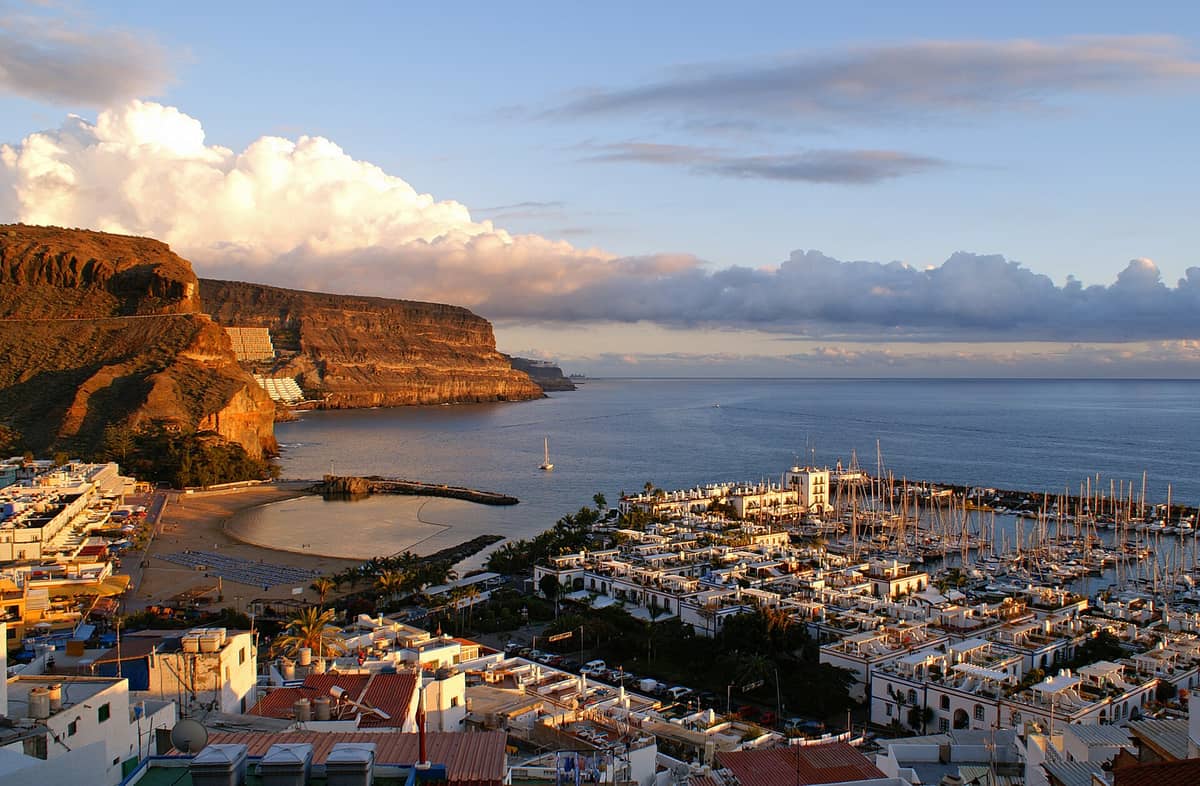
What Puerto de Mogán Marina Actually Is
Puerto de Mogán Marina is a Blue Flag sport marina on the southwest coast of Gran Canaria, tucked into the mouth of a steep-sided valley where the land drops sharply into the Atlantic. It holds 217 berths across a sheltered basin of roughly 36,560 square metres, protected by a 275-metre dock. The fleet you'll see ranges from working fishing boats heading out before dawn to mid-size yachts on long Atlantic crossings using Puerto de Mogán as a logical stopover point between Europe and the Caribbean.
But the marina is inseparable from the village that grew up around it. Puerto de Mogán was designed as an integrated resort in the 1980s, and unlike most of Gran Canaria's southern developments, it was planned around aesthetics as much as capacity. The result is a compact grid of whitewashed low-rise buildings, bougainvillea-covered archways, and small canal bridges over the inner harbour channels. Travel writers have reached for comparisons with the south of France or the Greek islands, and while those comparisons are slightly overstated, the atmosphere is genuinely distinct from anywhere else on the island.
ℹ️ Good to know
There is no admission fee to walk the marina promenade, the canal area, or the beach. The waterfront is public space and freely accessible throughout the day.
How the Marina Changes Through the Day
Early morning is when Puerto de Mogán Marina earns its quietest and most photogenic hours. The fishing fleet leaves well before sunrise, but by 7am the boats are sometimes returning with the night's catch, and the smell of salt water and fish is sharp and real in a way that the rest of the day covers over. The light at this hour is soft and lateral, and the reflections in the inner basin are nearly motionless.
By mid-morning, the character shifts. The daily market (held on Fridays) brings additional foot traffic and stalls selling jewellery, clothing, and local produce. Even on non-market days, the restaurant terraces begin filling up from around 10am with visitors who've arrived on the first bus or by boat from Puerto Rico. Excursion boats offering glass-bottom cruises and dolphin-watching trips depart from the main quay between roughly 10am and noon, which is when the marina feels most active.
Afternoons in summer can be warm and slow, with the promenade losing some of its morning freshness. If you're visiting between June and September, arriving early or after 5pm gives you better light and cooler temperatures. In winter, the afternoons are often the best part of the day, with temperatures around 21°C and long, golden light over the valley behind the town. The marina lights up gently after dark, and the waterfront restaurants stay open late, but there's no real nightlife scene here.
The Physical Layout: What You'll Actually Walk Through
The marina is small enough to cover on foot in under an hour without stopping. The outer harbour wall gives you a view back over the entire basin and toward the valley rising steeply behind the village. The fishing quay on the western side is usually where the working boats are tied up, and it's worth pausing here to look at the contrast between the utilitarian fishing gear and the leisure yachts moored nearby.
The inner canal area is the part most visitors photograph. A series of small pedestrian bridges cross the channels, each one framed by flowering plants trained over the archways above. The streets immediately behind the waterfront are lined with small shops, cafes, and restaurants, most of them occupying the ground floors of the white residential buildings. This part of the village is genuinely pleasant to wander without a destination in mind.
The small beach at Puerto de Mogán, a short walk from the marina, is calm and well-sheltered. It's less dramatic than Maspalomas Beach and much quieter, which is part of its appeal. The water is clear and relatively gentle, protected from the open Atlantic by the surrounding geography.
💡 Local tip
The best photographic angles on the canal bridges are from water level, looking along the channel toward the flowering archways. Early morning gives you the cleanest reflections and almost no other pedestrians in frame.
Historical and Cultural Context
Puerto de Mogán was originally a small fishing settlement at the mouth of the Barranco de Mogán, one of the island's deeper ravines. The municipality of Mogán covers a large inland area that climbs through terraced banana plantations and into the mountains, and the port was the community's connection to the sea and to trade.
The resort development around the marina began in the 1980s, but it was built to stricter aesthetic controls than most of what went up on Gran Canaria's south coast during the same period. Building heights were capped, materials were kept consistent, and the canal system was designed as part of the original plan rather than added later. The result is that the town feels coherent in a way that Playa del Inglés, for example, does not. It's still a purpose-built tourist resort, but the intention was different.
The surrounding municipality contains some of the island's more rewarding inland scenery. The village of Fataga lies inland along the GC-60, and the combination of a marina morning with an afternoon drive into the barranco is one of the better ways to structure a day in the southwest.
Getting There and Getting Around
By public transport, Global Bus Line 30 connects Puerto de Mogán with Maspalomas and Playa del Inglés. This is the most practical option if you're staying in the main southern resorts. Journey times vary depending on stops and traffic, but the route follows the coast and is straightforward. Bus fares are subject to change, so check current prices on the Global website or at local bus terminals before travelling.
By car, the approach from Las Palmas uses the GC-1 motorway south to exit 68, then the GC-200 down to the coast. The drive is about 79 km from the capital and takes around an hour in normal traffic. Parking in the marina area can be tight during Friday market days and summer weekends. If you're planning a broader drive around the southwest, a Gran Canaria road trip itinerary can incorporate Puerto de Mogán as a coastal starting or finishing point.
Excursion boats also run between Puerto Rico and Puerto de Mogán, offering a coastal approach that avoids road travel entirely. This is a legitimate transport option as much as a leisure activity, and arriving by sea gives you a genuinely different first impression of the marina.
⚠️ What to skip
Friday is market day in Puerto de Mogán. The village is noticeably more crowded, parking is harder, and the bus can be busy. If you want the quieter experience, visit any other day of the week.
Practical Notes: Accessibility, Photography, and What to Bring
The marina promenade and the canal streets are entirely flat and paved, making Puerto de Mogán one of the more accessible spots on the island for visitors with pushchairs or limited mobility. The transition between the beach and the marina area is also level. Harbour facilities include toilets, showers, a supermarket, and banking services, which means you don't need to plan around limited infrastructure.
For photography, the strongest subjects are the canal bridges with their flowering arches, the fishing boats at the western quay, and the wide-angle view from the harbour wall looking back at the valley. A wide lens handles the bridges well in the narrow streets. In summer, a hat and sun protection are essential by mid-morning. The town has almost no shade on the outer promenade, and the reflected light off the water and whitewashed buildings is intense.
Gran Canaria's subtropical climate means Puerto de Mogán is genuinely comfortable to visit in any month. Winter days around 21°C are warm enough for lunch on a terrace. If you're deciding when to come to the island overall, the best time to visit Gran Canaria guide covers seasonal patterns in more detail.
Who Should Temper Their Expectations
Puerto de Mogán has been called the 'Little Venice of the Canaries' often enough that some visitors arrive expecting something considerably more dramatic than it is. The canal system is charming but small, the bridges are decorative rather than numerous, and the overall scale is that of a compact resort village, not a historic port city. If you've seen a lot of genuinely old Mediterranean harbours, this one won't match them for depth of history or architectural weight.
Visitors who come specifically for beach action or water sports might find more to occupy them at Puerto Rico, which has a broader range of water sports facilities and a more animated beach scene. Puerto de Mogán suits a slower pace.
Insider Tips
- The fishing boats often return between 7am and 8am. Watching the catch come in at the western quay is one of the more authentic moments available in the southern resorts, and almost no tourists are around at that hour.
- The Friday market draws significant crowds but also brings local producers selling honey, mojo sauces, and fresh fruit from the interior valleys. If you want the market without the worst of the crowds, arrive before 10am.
- Excursion boats to Puerto Rico and glass-bottom boat trips depart from the main quay. Booking the previous afternoon at the quayside desks is usually possible without going through a hotel excursion desk, which is typically cheaper.
- The GC-200 road north along the coast toward Arguineguín passes through some striking coastal scenery. If you have a car, drive at least part of this route rather than returning immediately to the motorway.
- Restaurants directly on the marina promenade price at a premium for the view. The streets one block back offer similar food at noticeably lower prices, and the setting is still pleasant.
Who Is Puerto de Mogán Marina For?
- Couples looking for a relaxed, photogenic half-day away from the larger resort beaches
- Photographers who want harbour reflections, canal architecture, and working fishing boats in one compact location
- Families with young children, thanks to the flat terrain, calm beach, and easy walkability
- Sailors and yacht travellers using Puerto de Mogán as a staging point for Atlantic crossings
- Visitors who want to combine a coastal morning with an afternoon drive into the interior valleys of the Mogán municipality