Fataga Village: Gran Canaria's Mountain Village in the Barranco
Tucked into the dramatic Barranco de Fataga canyon in southern Gran Canaria, the whitewashed village of Fataga is a free, unhurried stop with real Canarian character. Expect palm-lined lanes, a modest stone church, and views that few visitors from the coastal resorts ever bother to seek out.
Quick Facts
- Location
- San Bartolomé de Tirajana municipality, approx. 60 to 70 km inland from Las Palmas de Gran Canaria
- Getting There
- Global bus line 18 serves Fataga Village; a rental car or taxi gives much more flexibility
- Time Needed
- 1 to 2 hours for the village itself; half a day if you combine with a drive through the barranco
- Cost
- Free to enter; no tickets or admission required
- Best for
- Landscape photography, slow travel, escaping resort crowds, scenic drives
What Fataga Actually Is
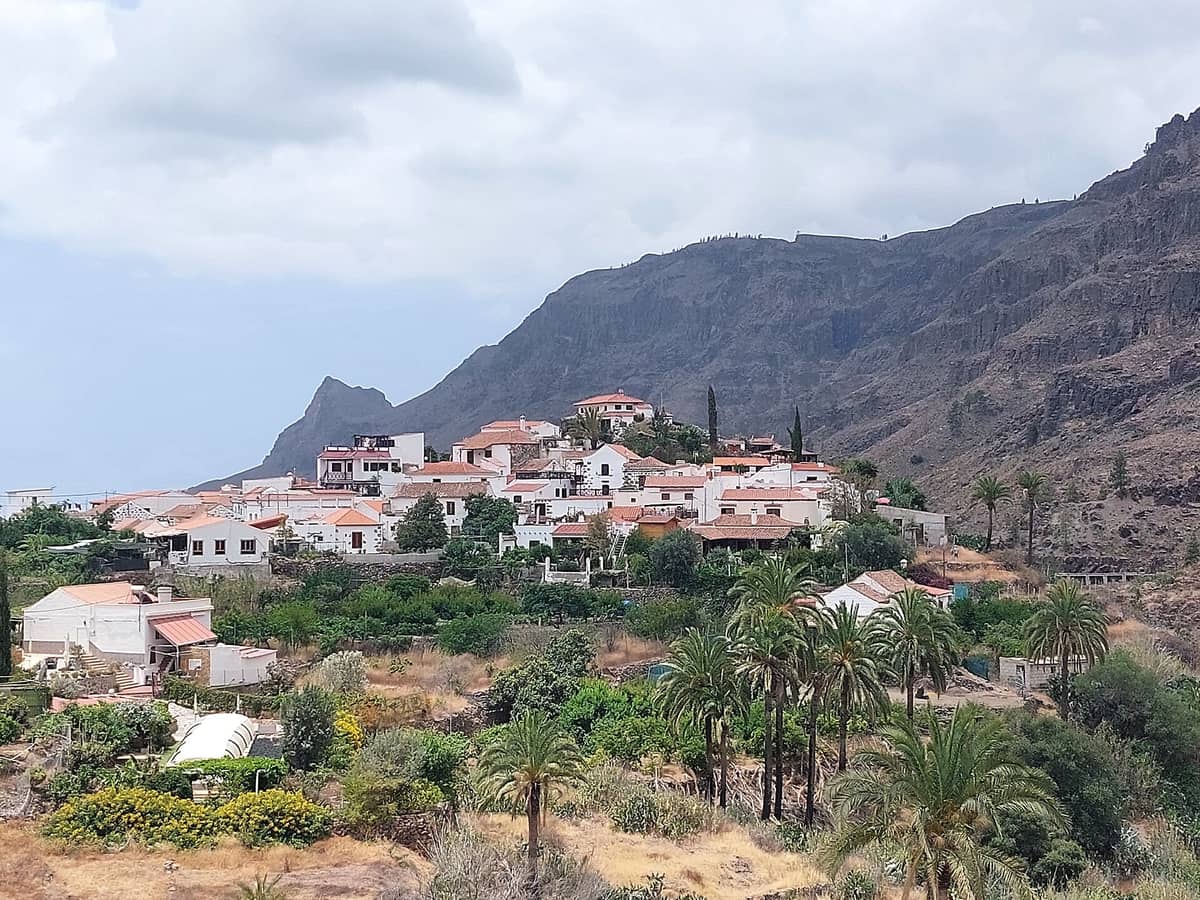
Fataga is a small rural settlement in the municipality of San Bartolomé de Tirajana, sitting roughly 600 metres above sea level inside one of Gran Canaria's most striking ravines. It is not a theme park or a ticketed heritage site. It is a functioning village with a few hundred residents, a church, a handful of restaurants and craft shops, and streets that were laid out long before any tourist infrastructure existed on this island.
What makes it notable is the combination of location and atmosphere: the Barranco de Fataga cuts deep into the southern interior of Gran Canaria, and the village clings to the canyon wall surrounded by date palms, almond trees, and terraced agricultural plots. From the right vantage point on the approach road, the whole scene looks almost North African. That is not an accident. The barranco's date palm groves are among the most photographed rural landscapes on the island.
💡 Local tip
If you are staying in Maspalomas or Playa del Inglés, Fataga is only about 25 to 30 minutes by car along the GC-60 road. It makes an easy half-morning excursion before the midday heat sets in.
Getting There: The Drive Is Half the Point
The most practical way to reach Fataga is by car. From the southern resorts, take the GC-1 toward Maspalomas, then branch inland on the GC-60. The road climbs steadily through the barranco, and the landscape changes quickly once you leave the coastal flatlands. Eucalyptus gives way to palms, the canyon walls narrow, and you will want to stop more than once before you even arrive at the village.
Global bus line 18 does run to Fataga Village, which makes the trip possible without a car, though service is infrequent and the timetable should be confirmed before you go. For visitors combining Fataga with a broader exploration of Gran Canaria's interior, having a rental car allows you to continue deeper into the island toward Cruz de Tejeda or loop back through different terrain. The island's road trip routes consistently list the Barranco de Fataga as one of the most rewarding drives on the island.
Parking in the village is limited. There is usually space on the road approaching the village centre, near the church square. Arrive before noon, especially on weekends, when day-trippers from the southern resorts occasionally fill the small car parks by mid-morning.
Walking the Village: What You Will Find
Fataga's centre is compact. The focal point is the small church of San Joaquín, which gives its name to the main square, Plaza de San Joaquín. The church itself is a simple whitewashed structure typical of rural Canarian religious architecture, not grand in scale but quietly dignified against the rocky canyon backdrop. The square around it is where life in the village visibly happens: locals sitting in the shade, a few cafe tables spilling onto the pavement.
From the square, the narrow lanes extend in a few directions. The streets are mostly unpaved or cobbled, lined with low whitewashed houses that have painted wooden doors and small pots of geraniums at the thresholds. It is genuinely picturesque without being manicured for tourism. The textures here are worth noticing: rough volcanic stone, peeling plaster in ochre and cream, the soft silver-green of palm fronds overhead.
A handful of local restaurants and craft shops operate in and around the village. The restaurants tend to serve straightforward Canarian food: papas arrugadas, grilled meats, local cheeses. Quality and opening hours vary, and some close mid-week, so do not build your entire visit around a meal without checking first.
ℹ️ Good to know
Fataga has no supermarkets or ATMs. Bring cash if you plan to eat or buy anything, and carry water if you are walking beyond the village centre.
Time of Day and Seasonal Considerations
Morning visits, roughly between 9am and midday, are noticeably better. The light in the barranco is softer before noon, the air is cooler, and the village has not yet attracted the peak of day-trip traffic. By early afternoon in summer, the canyon traps heat effectively, and the stone streets can feel quite close. By late afternoon the light returns but from a different angle, warm and golden against the white walls, which makes the village attractive again for photography.
Winter is genuinely pleasant for visiting Fataga. Gran Canaria's interior sees slightly more rainfall than the coast between November and February, but the almond trees that dot the landscape bloom in late January to February, and on clear winter days the air at 600 metres elevation is crisp without being cold. Spring, from March through May, combines comfortable temperatures with green terraces and flowers in the garden plots, and is arguably the most photogenic season.
Summer crowds are the main variable. Southern Gran Canaria's coastal resorts are extremely busy from June through August, and Fataga gets its share of organised excursions. If you are visiting in peak season and want the village to feel quiet, aim for before 10am or after 4pm. For a broader sense of when Gran Canaria is most and least crowded overall, the best time to visit Gran Canaria guide breaks down the seasonal patterns in useful detail.
The Barranco de Fataga: Context and Landscape
The village cannot really be separated from the ravine that contains it. The Barranco de Fataga is one of the longest ravines on Gran Canaria, running from the high interior of the island down toward the southern coast near Maspalomas. Along its length, a near-continuous grove of Canarian date palms (Phoenix canariensis) lines the valley floor, one of the most significant palm groves remaining in the Canary Islands and protected as part of the island's natural heritage.
The visual drama of sheer canyon walls rising above terraced palm groves is something that photographs rarely communicate properly. Standing on the road above Fataga and looking down into the ravine, you get a clear sense of how the island's volcanic geology shapes everyday life: agriculture carved into canyon terraces, houses built where there is shelter from wind, roads that twist rather than cut. For walkers, the barranco also features marked trails connecting it to the wider network explored in the hiking in Gran Canaria guide.
Photography: Practical Notes
Fataga rewards photographers who take their time. The obvious shots, white walls against blue sky, palm-filled ravine from the road above, the church tower from the square, are genuinely good. But the smaller details hold up equally well: the painted ironwork on window grilles, the shadows cast by bougainvillea across a stone wall at midday, the view through an archway toward the canyon.
Drone users should be aware that regulations around drone use in Spain have become progressively stricter, particularly near populated areas and natural spaces. Check current AESA (Spanish Aviation Safety Agency) regulations before flying. The barranco landscape can be captured effectively from the GC-60 road, which offers several natural pull-offs with unobstructed views into the valley.
Honest Assessment: Is It Worth the Trip?
Fataga is not a spectacular standalone destination in the way that, say, Roque Nublo is. It does not have a museum, an extraordinary culinary scene, or a single defining experience. What it offers is atmosphere and a break from the coastal resort environment. For visitors who have been in Maspalomas or Playa del Inglés for several days, it represents a forty-minute round trip by car and a genuinely different perspective on the island.
Travellers who are short on time and specifically visiting Gran Canaria for its beaches or nightlife will not lose much by skipping it. But if your interest runs toward landscape, rural Canarian culture, or simply driving through extraordinary terrain, the Barranco de Fataga is one of the better lesser-known inland experiences on the island. Combine it with a stop at the Arteara necropolis further down the barranco toward Maspalomas, and you have a half-day that covers landscape, history, and architecture without any entrance fees.
⚠️ What to skip
Some tour operators sell 'Camel Safari in Fataga' excursions through the barranco. These are organised tourist activities separate from visiting the village itself, and they operate from a fixed site on the GC-60. They are not connected to the village culturally and are worth knowing about mainly so you understand why you may see tour buses parked on the approach road.
Combining Fataga with Nearby Stops
The GC-60 corridor between Maspalomas and Fataga passes the Arteara necropolis, a pre-Hispanic Canarian burial site set dramatically among the palm groves at the base of the barranco. It is signed from the road and adds genuine historical depth to a drive through the area. From Fataga, continuing north and west on mountain roads takes you toward Tejeda and eventually Cruz de Tejeda at the island's geographical centre.
If you are planning a fuller day in the island's interior, pairing Fataga with Roque Nublo to the north is logical and gives you the contrast of a dramatic volcanic monolith against the quieter, more enclosed world of the barranco. The day trips guide for Gran Canaria covers several possible itineraries that route through this part of the island.
Insider Tips
- Park on the road just before the village centre rather than trying to squeeze into the tiny square. You will see more of the village approach on foot, and the first views of the church from below are better than anything from inside the square itself.
- The restaurants in Fataga serve lunch only on most days, typically from around 1pm. If you arrive before noon, the cafe near the church is usually the only option for a coffee or light snack.
- The approach road along the GC-60 has two or three unsigned pull-offs where you can park and look back down the barranco toward Maspalomas. These viewpoints are better for landscape photography than anything inside the village itself, and almost nobody stops at them.
- Almond blossom season in late January and February brings brief but beautiful colour to the terraced hillsides around Fataga. If you are visiting Gran Canaria in winter, timing a visit to coincide with this period is worthwhile.
- The Arteara necropolis is 10 to 15 minutes back down the GC-60 toward Maspalomas and is signed from the road. It takes under an hour to visit and adds real historical context to the landscape you have been driving through.
Who Is Fataga Village For?
- Visitors based in the southern resorts who want to see a different side of Gran Canaria without a full-day commitment
- Photographers interested in whitewashed village architecture, ravine landscapes, and Canarian rural details
- Road-trippers routing through the interior who want a natural stop with parking, food, and good views
- Travellers who appreciate slow, unscripted time in a place that has not been heavily optimised for tourism
- Hikers looking for a starting point or waypoint on the Barranco de Fataga trail network
Nearby Attractions
Combine your visit with:
- Arteara Necropolis
The Arteara Necropolis is the most extensive aboriginal cemetery on Gran Canaria, with 809 stone burial mounds spread across 13 hectares inside the dramatic Barranco de Fataga gorge. It offers a rare, unhurried encounter with the island's pre-Hispanic Canarii people, well away from the resort crowds of the south.
- Bandama Caldera & Crater Viewpoint
Rising 574 metres above sea level, the Pico de Bandama offers the most striking volcanic panorama on Gran Canaria. Below stretches the Caldera de Bandama, a crater around 200 metres deep and about 1,000 metres across, formed by one of the island's most recent volcanic episodes. It is free to visit, takes under an hour from Las Palmas, and rewards visitors with views that stretch from the island's green interior to the Atlantic coastline.
- Barranco de los Cernícalos
Barranco de los Cernícalos is a 7 km round-trip ravine hike in central-eastern Gran Canaria where a year-round stream cuts through laurel forest, fern-draped cliffs, and small waterfalls. It is free to enter, requires no booking, and remains genuinely quiet compared to the island's more promoted highland routes.
- Cactualdea Park
Cactualdea Park sits in the remote western municipality of La Aldea de San Nicolás, where an extraordinary collection of cacti and succulents grows against a backdrop of volcanic rock and Atlantic light. It rewards visitors who make the journey with something genuinely unusual: a curated desert landscape that feels nothing like the resort south of the island.