Cactualdea Park: Gran Canaria's Spectacular Cactus Garden in the Wild West
Cactualdea Park sits in the remote western municipality of La Aldea de San Nicolás, where an extraordinary collection of cacti and succulents grows against a backdrop of volcanic rock and Atlantic light. It rewards visitors who make the journey with something genuinely unusual: a curated desert landscape that feels nothing like the resort south of the island.
Quick Facts
- Location
- Calle Tocodomán s/n, La Aldea de San Nicolás, Gran Canaria, Spain
- Getting There
- Global bus line 38 to La Aldea de San Nicolás (verify timetable before travel); car recommended
- Time Needed
- 1.5 to 2.5 hours
- Cost
- Approx. €9.50 adults; children 0–10 free; concessions available. Verify current prices at official site.
- Best for
- Nature lovers, photographers, families with curious kids, botanical enthusiasts
- Official website
- cactualdeapark.es/en
What Is Cactualdea Park?
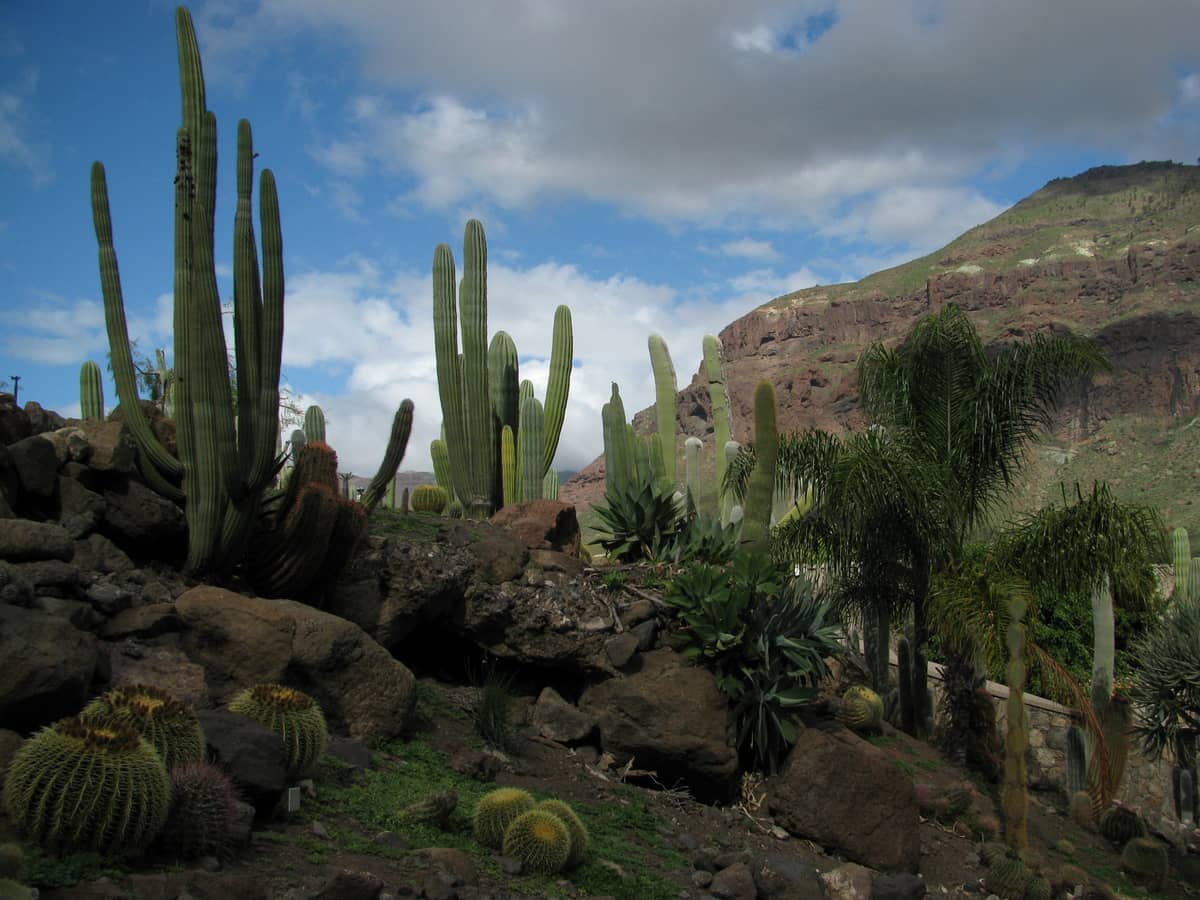
Cactualdea Park is a botanical attraction in La Aldea de San Nicolás, a municipality on Gran Canaria's remote western coast. The park is dedicated almost entirely to cacti and succulents, housing one of the largest collections of these plants in the Canary Islands. Towering columnar cacti, sprawling agaves, and compact barrel forms grow across a terraced site cut into the arid hillside alongside the GC-200 road, with the Atlantic visible in the distance on clear days.
This is not a manicured botanical garden in the formal European tradition. The landscape feels almost theatrical: spiny silhouettes against ochre soil, the faint smell of dry earth warming in the sun, the occasional flutter of a small bird that has found shelter among the thorns. The setting draws from the same volcanic and semi-arid character that makes Gran Canaria's interior so compelling, and the park uses that terrain rather than fighting it.
The park is open daily from 10:30 to 17:00, all year round, with no stated seasonal closures. It is listed on the official Gran Canaria tourism recommendations as a family-friendly attraction, and pets are also permitted, which is relatively rare for botanical parks in the Canaries.
ℹ️ Good to know
Admission prices vary by source and are updated periodically. As of the most recent available data, adult entry is approximately €9.50, with children 0–10 free and concessions for retirees, students, and people with a disability card. Always confirm current pricing at cactualdeapark.es/en/prices before visiting.
The Experience: Walking Through the Collection
The park is laid out on sloping ground, with paths winding between dense plantings and occasional open viewpoints. Cacti from the Americas, Africa, and other arid regions around the world grow in proximity, creating a landscape that is geographically improbable but visually arresting. Some specimens reach several metres in height; others barely clear ankle level. The scale varies so dramatically that it keeps the eye moving constantly.
In the morning, shortly after opening at 10:30, the light is low and lateral, casting long shadows across the spiny surfaces and giving the plants an almost sculptural quality. This is the best time for photography: the colour temperature is warm, the crowds are thin, and the park has a quiet, unhurried quality. By early afternoon, the sun is overhead and the light becomes harsher. Shadows flatten out, and the heat, particularly between June and September, can make extended walking uncomfortable. Bring water regardless of season.
The sounds of the park are not what most visitors expect. There are no fountains or background music. What you hear is wind moving through the thorn clusters, the crunch of gravel underfoot, and occasionally the dry rustle of something small retreating into the undergrowth. It is a quieter, more contemplative experience than a conventional zoo or theme park.
Getting Here: The Journey Is Part of It
La Aldea de San Nicolás sits on the west coast of Gran Canaria, and reaching it requires commitment. The GC-200 road that hugs the island's western cliffs is one of the most dramatic drives in the Canary Islands, with sheer drops to the Atlantic and mountains pressing close on the other side. Most visitors approach from the south, passing through the spectacular ravine landscape near Mogán. If you are driving from Las Palmas or the north, the route takes you through the interior before descending toward the coast.
A car is the most practical option. The Global bus line 38 does serve the area, but timetables are infrequent and should be verified directly with Global before you travel. If you are planning a wider loop of the island's west and north, this park works well as part of a Gran Canaria road trip, combining it with the nearby Valle de Agaete and the dramatic mirador at Balcón.
💡 Local tip
If you are driving from the southern resorts, allow around 45 to 60 minutes each way. The road is narrow in stretches and demands attention. Do not rush it — the coastal scenery rewards a slower pace.
Cacti and Context: Why This Collection Matters
Gran Canaria's western flank is one of the driest parts of the island, receiving very little rainfall and experiencing extreme sun exposure. This makes La Aldea de San Nicolás a logical setting for a cactus park: the climate is authentically suited to these plants, not artificially maintained. The cacti here are not growing under glass or with artificial irrigation visible at every turn. Many thrive because the conditions broadly match their native habitats.
The Canary Islands more broadly have a complicated relationship with introduced plant species. Cacti, originally from the Americas, were brought to the Canaries centuries ago and in some cases have naturalised to the point of becoming part of the recognised landscape. The park draws attention to this diversity deliberately, presenting species from different continents alongside information about their geographic origins.
For visitors interested in the island's own flora, Gran Canaria's native botanical heritage is documented in depth at the Jardín Botánico Viera y Clavijo near Las Palmas, which specialises in Canarian endemic species. Cactualdea focuses on the global arid-plant spectrum rather than local endemics, so the two complement each other well for serious plant enthusiasts.
Practical Details: What to Bring and What to Expect
Wear closed shoes. The paths are mostly firm and walkable, but loose gravel and proximity to spiny plants make sandals a poor choice. Tripping against a large cactus is not a pleasant experience. A sun hat and sunscreen are essential for the afternoon hours, when shade is limited. The park opens at 10:30 and closes at 17:00 every day of the year, so arriving between 10:30 and 12:00 gives you the coolest, quietest window.
Children generally find the park engaging, particularly when they start noticing the differences between species: the way some cacti are covered in fine white hair, the geometric regularity of others, the extreme size of the largest specimens. There are no interactive exhibits or digital installations, so younger children who lose interest in plant observation quickly may find the visit shorter than expected. That said, the park is not particularly large, and most families complete a thorough circuit in under two hours.
Accessibility information for wheelchair users is not comprehensively documented in publicly available sources. The sloped terrain and gravel paths suggest the site may present challenges for visitors with limited mobility, but specific details on step-free access should be confirmed directly with the park before visiting.
⚠️ What to skip
There is very little in the way of food and drink at the park itself. La Aldea de San Nicolás has a small town centre with cafes and local restaurants, but bring water with you to the park regardless — especially between May and October when temperatures can be high.
Photography at Cactualdea: Tips for Better Shots
The graphic forms of cacti and succulents reward careful composition. Look for repeating patterns — the spiralling ribs of a barrel cactus, a line of identical columnar specimens receding into the background — and use them to create depth. The early morning light coming from low on the eastern horizon picks up the texture of the plant surfaces in a way that midday overhead light completely flattens.
Backgrounds matter here more than in many gardens, because the park's setting includes volcanic rock, dry soil, and distant hillsides. A wide-angle lens or smartphone in standard mode can inadvertently include distracting elements. Getting low and shooting upward against the sky isolates the taller cacti dramatically. For macro photography, the surface detail on smaller specimens — particularly the fine spines and waxy coatings — is exceptional and requires nothing beyond a standard camera with a close-focus mode.
If your visit to the western coast includes other photographic stops, the view from the Mirador del Balcón on the GC-200 is one of Gran Canaria's most dramatic coastal viewpoints and sits on the natural route between La Aldea de San Nicolás and the north of the island.
Who Will Enjoy Cactualdea — and Who Might Not
The park suits travellers who are happy to move at their own pace through a visually interesting environment without the structure of a guided tour or an activity schedule. It is not a theme park, and it does not try to be. If you appreciate unusual landscapes, have an interest in plants or ecology, or simply want a break from the beach-and-pool circuit of the southern resorts, Cactualdea delivers something genuinely different.
Visitors who are primarily interested in beaches, nightlife, or conventional resort activities will find the drive significant for what the park offers. It is not something to squeeze into an already busy day. But if you are building a western-coast day that also takes in the Valle de Agaete or planning a longer day trip around Gran Canaria, Cactualdea fits naturally into the itinerary.
Anyone expecting the scale and polish of a major European botanical garden will need to recalibrate expectations. The park is well-maintained but unpretentious. Its appeal is in the quality and variety of the collection and the unusual setting, not in visitor infrastructure. There is no audio guide, no café inside the park, and no gift shop of note. That simplicity is, for many visitors, precisely the point.
Insider Tips
- Arrive as close to opening time (10:30) as possible. The light is better for photography, the temperature is lower, and you will almost certainly have stretches of the park entirely to yourself.
- Combine Cactualdea with the Mirador del Balcón, roughly 20 minutes north on the GC-200. The cliff-edge viewpoint over the Atlantic is one of Gran Canaria's most striking landscapes and adds almost no time to a western-coast loop.
- The park allows dogs, which is unusual for botanical attractions in the Canaries. If you are travelling with a pet and looking for options beyond beaches and town centres, this is one of the more accommodating choices on the island.
- If you are driving from the south, the stretch of the GC-200 between Puerto de Mogán and La Aldea de San Nicolás is among the most scenic roads on the island. Leave extra time and stop at the informal pull-offs where the road hugs the cliff edge.
- Gran Canaria residents pay a reduced entry fee compared with the general price. If you are a long-term resident rather than a tourist, bring documentation to qualify for the lower rate.
Who Is Cactualdea Park For?
- Photographers and visual artists looking for graphic, unconventional natural forms
- Families with children aged 5 and up who have some curiosity about plants and the natural world
- Travellers building a western-coast road trip itinerary who want a genuine attraction rather than a scenic stop
- Botanical enthusiasts or anyone interested in arid-climate plants from multiple continents
- Pet owners looking for pet-friendly attractions beyond Gran Canaria's beaches
Nearby Attractions
Combine your visit with:
- Arteara Necropolis
The Arteara Necropolis is the most extensive aboriginal cemetery on Gran Canaria, with 809 stone burial mounds spread across 13 hectares inside the dramatic Barranco de Fataga gorge. It offers a rare, unhurried encounter with the island's pre-Hispanic Canarii people, well away from the resort crowds of the south.
- Bandama Caldera & Crater Viewpoint
Rising 574 metres above sea level, the Pico de Bandama offers the most striking volcanic panorama on Gran Canaria. Below stretches the Caldera de Bandama, a crater around 200 metres deep and about 1,000 metres across, formed by one of the island's most recent volcanic episodes. It is free to visit, takes under an hour from Las Palmas, and rewards visitors with views that stretch from the island's green interior to the Atlantic coastline.
- Barranco de los Cernícalos
Barranco de los Cernícalos is a 7 km round-trip ravine hike in central-eastern Gran Canaria where a year-round stream cuts through laurel forest, fern-draped cliffs, and small waterfalls. It is free to enter, requires no booking, and remains genuinely quiet compared to the island's more promoted highland routes.
- Fataga Village
Tucked into the dramatic Barranco de Fataga canyon in southern Gran Canaria, the whitewashed village of Fataga is a free, unhurried stop with real Canarian character. Expect palm-lined lanes, a modest stone church, and views that few visitors from the coastal resorts ever bother to seek out.