Valle de Agaete: Gran Canaria's Most Fertile Valley
Valle de Agaete is a quietly remarkable stretch of northwest Gran Canaria where orange groves, coffee fincas, and ancient Canarian burial grounds meet the shadow of the Tamadaba pine forest. Free to explore and easy to reach from Las Palmas, it rewards slow travelers who want landscape and culture over sand and sun.
Quick Facts
- Location
- Agaete municipality, northwest Gran Canaria
- Getting There
- Global bus from Las Palmas to Agaete (check current route numbers); car recommended for valley exploration
- Time Needed
- 2–4 hours for a casual visit; full day if hiking or combining with Puerto de las Nieves
- Cost
- Free to explore the valley; Maipés Archaeological Park €3 general / €2 reduced (verify before visiting)
- Best for
- Nature lovers, hikers, history enthusiasts, slow travelers, photography
- Official website
- turismo.agaete.es/en
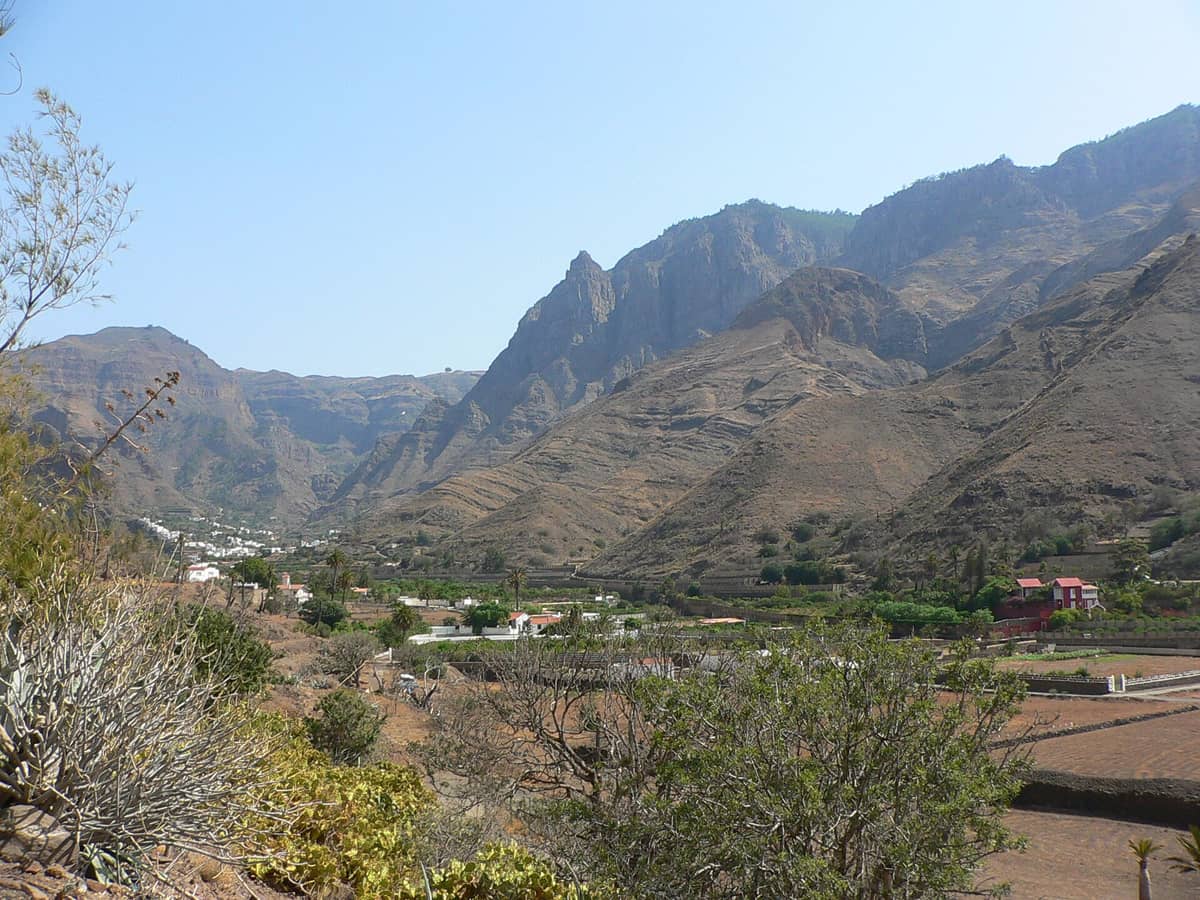
What Valle de Agaete Actually Is
Valle de Agaete is not a single attraction with an entrance gate. It is a living, working rural valley carved into the volcanic northwest corner of Gran Canaria, encompassing a string of small neighbourhoods — Barrio de San Pedro, Los Berrazales, El Sao, El Hornillo, and others — connected by a single road that climbs from the town of Agaete into the shadow of the Tamadaba massif.
What makes it worth a detour is the combination of things you rarely find together: traditional Canarian farming still actively practiced, one of the very few places in Spain where coffee is commercially grown, a pre-Hispanic burial site on the valley road, and a sense of genuine quietness that the island's southern resorts cannot offer. The valley is not polished for tourism, and that is its appeal.
The landscape here stands in sharp contrast to the dunes and resort hotels most visitors associate with Gran Canaria. If you are trying to understand the island beyond its beaches, the Agaete area and its valley offer one of the most grounded introductions available.
ℹ️ Good to know
The valley road is accessible by car and most of the landscape is free to explore year-round. Maipés Archaeological Park on the valley road charges a small entrance fee (€3 general / €2 reduced as of the latest published information — verify before visiting). The park is closed on Mondays and several public holidays.
The Drive Up: What You Pass and Why It Matters
The experience of Valle de Agaete begins the moment you leave the town of Agaete behind. Within a few hundred meters the road narrows, the buildings thin out, and the air shifts. On a warm morning you will catch the faint sweetness of citrus before you see a single orange tree. The terraced fincas on either side of the road are not decorative — they are actively farmed, and you may see workers moving between rows of fruit trees or coffee plants at various times of day.
The first significant stop on the valley road is the Maipés Archaeological Park of Agaete, located just off the road behind the town's football ground and primary school on C/ Chapín. This is an important pre-Hispanic necropolis — a burial ground used by the Guanche people, the indigenous Berber-descended population of the Canary Islands before Spanish conquest in the late 15th century. The site contains dozens of stone tumuli (funeral mounds) spread across a hillside of volcanic rock. Walking among them in the early morning, when low light picks out the texture of the stones and the valley is quiet, gives the place a real weight that disappears when tour buses arrive mid-morning.
Maipés is open Tuesday to Sunday (October to March: 10:00–17:00; April to September: 10:00–18:00; July 14 to August 31: 10:00–14:00). It is closed Mondays and on public holidays including January 1, 5 and 6, May 1, and December 24, 25 and 31. A combo ticket covering Maipés and Cenobio de Valerón costs €5; a three‑site combo including Cañada de Los Gatos costs €8.
💡 Local tip
Arrive at Maipés when it opens rather than mid-morning. By 11:00 the site can become warm and more visited. Early light also improves photographs of the tumuli against the valley backdrop.
The Valley Floor: Coffee, Oranges, and a Former Spa
Continuing up the road past Maipés, the valley deepens and the vegetation intensifies. This is one of the most genuinely green corners of Gran Canaria, fed by a micro-climate created by the Tamadaba massif trapping moisture from the trade winds. The road passes through the neighbourhood of Los Berrazales, home to a rural health hotel built around what was once a mineral-medicinal spring and spa. The spa itself no longer operates in its original form, but the area retains the atmosphere of a quiet retreat — gardens, old stone buildings, and a sense of deliberate slowness.
The fincas of the valley produce oranges, lemons, papayas, avocados, and — unusually for Europe — coffee. Agaete coffee (Café de Agaete) is produced in very small quantities and is in the process of obtaining a Protected Geographical Indication (Indicación Geográfica Protegida), rather than a full Denomination of Origin, It is not cheap and is rarely found outside the island, which makes buying a bag directly from a local producer or in Agaete town one of the more honest souvenirs you can take from Gran Canaria. Ask locally about where current-season coffee is available, as production quantities vary.
At the upper end of the driveable road, the valley closes in and the views open outward. The Tamadaba pine forest — one of the largest stands of Canarian pine on the island — covers the surrounding ridges. On clear days, the sight of dark green pines against pale volcanic rock and open Atlantic sky is the kind of image that does not photograph well but stays with you.
Hikers can connect the valley to the Tamadaba Natural Park via marked trails. This requires proper footwear and reasonable fitness, as the terrain is steep and paths are uneven. The hiking trails of Gran Canaria that pass through this area are best attempted from November through April, when temperatures are cooler and visibility is clearer.
Light and Atmosphere at Different Times of Day
The valley changes significantly depending on when you visit. In the morning, especially between 8:00 and 10:00, mist sometimes sits in the lower folds of the valley floor, particularly between October and March. The air is cool, smells of damp earth and citrus, and the only sounds are birds and the occasional tractor. This is the valley at its most photogenic and least trafficked.
By midday the mist has cleared, the light becomes flatter, and the temperature rises. The road sees more cars, particularly at weekends when local families drive up for a walk or a meal. If you are visiting in summer (June to August), midday heat makes the upper sections of the valley uncomfortable for extended walking. The shaded sections near Los Berrazales remain tolerable, but expect temperatures noticeably higher than the coast.
Late afternoon in autumn and winter can be the most atmospheric time of all. The low sun cuts horizontally across the terraces, turning the orange groves golden, and the Tamadaba ridgeline takes on a deep blue-green. By around 17:00 in winter the road begins to empty and the valley recovers its quietness. Bring a layer if staying past sunset — temperatures drop quickly once the sun clears the ridge.
Getting There and Getting Around
Agaete town is accessible by Global interurban bus from Las Palmas de Gran Canaria. Check current route numbers and timetables directly with Global (the island's interurban bus operator) before visiting, as services and fares are subject to change. The bus drops you in Agaete town, from which the valley road begins — but without a car, exploring the full length of the valley is limited.
A rental car is the most practical way to experience Valle de Agaete properly. The road up the valley is narrow in sections, but standard small cars navigate it without difficulty. There are informal parking areas near Maipés Archaeological Park and at various points along the valley road. The drive from Las Palmas takes approximately 45–55 minutes via the GC-2 coastal highway, passing through some of the island's most dramatic northern coastline along the way.
If you are combining the valley with a day out, the nearby Puerto de las Nieves — the small port and beach just below Agaete town — makes a natural first or final stop. The port has seafood restaurants that are considerably better value than anything in the southern resorts. Many visitors pair the valley visit with the northern day trip circuit that also includes Arucas and the western coast.
⚠️ What to skip
The valley road is narrow and has limited passing places in its upper section. Drive slowly and be prepared to reverse if you meet an oncoming vehicle. It is not suitable for large campervans or motorhomes.
Practical Notes for Your Visit
Wear comfortable walking shoes even if you are not planning a serious hike. The finca paths, verges, and informal viewing areas along the road involve uneven terrain. Proper hiking boots are essential if you intend to continue onto Tamadaba trails.
There are no major supermarkets in the valley itself. Pick up water and snacks in Agaete town before driving up. A small number of rural accommodation options operate in the valley, and the Los Berrazales area has hosted a rural hotel, but options are limited — check current availability locally before planning an overnight.
Photography in the valley works best with a wide-angle lens for the terraced landscape and a longer focal length for details of the Tamadaba ridgeline. The morning mist, when it appears, is difficult to predict but creates genuinely unusual images if you catch it.
Accessibility is limited for visitors with reduced mobility. The valley road itself is driveable, and views from the car window are already rewarding. However, most paths, finca areas, and the Maipés site itself involve uneven ground that is not fully wheelchair accessible. Maipés has defined visitor paths, which provide better conditions than informal rural trails.
Who Should Consider Skipping This
Valle de Agaete will not satisfy visitors whose primary aim is beaches, nightlife, or major cultural monuments. There are no museums, no guided light-and-sound shows, no souvenir shops. The 'attraction' is largely ambient — green valley, working farms, old stones, mountain views. If you need a clear payoff or dislike open-ended exploration, this is not the right destination.
Visitors with very limited time should also weigh the drive carefully. The valley is roughly an hour from Las Palmas and further from the southern resorts. Spending half a day here means not spending it at Roque Nublo, the Maspalomas dunes, or Vegueta. It is best suited to those on a multi-day stay who have already covered the island's headline stops.
Insider Tips
- Agaete coffee is produced in tiny quantities and sells out. If buying directly from a finca or local shop, morning visits mid-week give you the best chance of finding stock before weekend visitors arrive.
- The Maipés site appears on few tourist itineraries compared to other Canarian archaeological sites. Visiting on a Tuesday or Wednesday morning means you may have the necropolis almost entirely to yourself.
- The combo ticket covering Maipés Archaeological Park and Cenobio de Valerón (on the north coast road between Las Palmas and Agaete) costs €5 and makes geographic sense if you are driving the northern route in one day.
- Stop at the mirador near the upper end of the valley road — there is no formal sign but a wider verge marks the spot — for the clearest view of the Tamadaba pine forests. Late afternoon in winter produces the best light on the ridgeline.
- If the valley road is blocked by work vehicles or weather, the lower sections around Maipés and the first fincas already give a strong sense of the landscape. The full road to Los Berrazales adds depth but is not essential for a satisfying visit.
Who Is Valle de Agaete For?
- Hikers wanting a quieter alternative to the central mountain routes before connecting to Tamadaba
- Photographers looking for green valley landscapes and morning mist that contrast sharply with Gran Canaria's desert south
- Food-curious travelers interested in Canarian agriculture, particularly coffee and tropical fruit production
- History enthusiasts drawn to pre-Hispanic Guanche culture and archaeological sites outside the main tourist circuit
- Slow travelers on multi-day stays who want a genuine rural half-day away from resorts
Nearby Attractions
Other things to see while in Agaete & Puerto de las Nieves:
- Puerto de las Nieves
Puerto de las Nieves is the small port neighbourhood of Agaete on Gran Canaria's northwest coast. It combines a working fishing harbour, natural volcanic pools, whitewashed seafood restaurants, and the island's main ferry connection to Tenerife. Entry to the village, promenade, and pools is free.