Triana
Triana is the commercial and cultural heart of Las Palmas de Gran Canaria, built around the elegant Calle Mayor de Triana and packed with modernist buildings, theatres, and plazas. It sits between the historic old town of Vegueta and the city's main commercial zones, making it one of the most rewarding areas in the capital to explore on foot.
Located in Gran Canaria
Overview
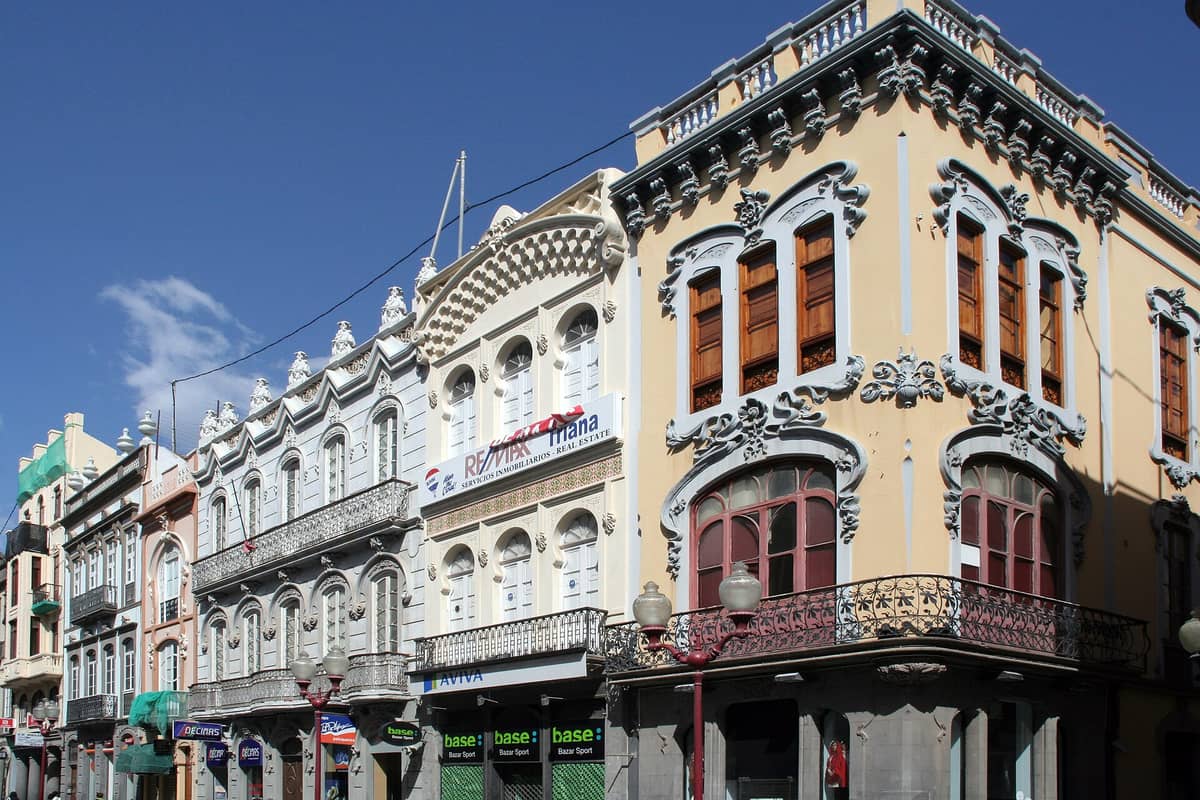
Triana is where Las Palmas de Gran Canaria does its everyday business, and has done so for centuries. Calle Mayor de Triana, the neighbourhood's pedestrianised spine, draws shoppers, café-goers, and architecture lovers in equal measure, flanked by some of the finest modernist facades on the island. It is a district that feels genuinely lived-in rather than curated for visitors, which is precisely what makes it worth your time.
Orientation
Triana occupies the southwestern edge of central Las Palmas de Gran Canaria, directly north of the Barranco de Guiniguada, the ravine that now carries the GC-5 road and forms the natural boundary between Triana and its older neighbour, Vegueta. Think of Triana as the city expanding away from its colonial origins: when Las Palmas outgrew the original settlement around the cathedral, commerce and housing pushed north across the barranco into what became the Triana plain.
The neighbourhood's rough boundaries run from the Guiniguada ravine in the south to Avenida 1 de Mayo and Calle Bravo Murillo in the north and east, and roughly the streets around Francisco Gourié to the west. Parque San Telmo anchors the northern tip and serves as the district's main transit gateway. From there, Calle Mayor de Triana runs almost perfectly straight south toward the ravine, connecting the bus station with the edge of Vegueta in about a 12-minute walk.
Triana sits between two of the city's most visited areas. To the south across the Guiniguada, Vegueta's historic old town holds the cathedral, the colonial mansions, and the major museums. To the north and east, the Santa Catalina district provides the cruise port, the city's main bus interchange with island-wide connections, and the gateway to Las Canteras beach. Triana threads between these two poles, and understanding that geography explains why the neighbourhood gets such a steady flow of people moving through it on any given day.
Character & Atmosphere
The first thing you notice on Calle Mayor de Triana is the architecture. The street runs through a neighbourhood that was declared a Historic Ensemble and Site of Cultural Interest (Conjunto Histórico y Bien de Interés Cultural) in 1993, and the protected facades explain why. and the protected facades explain why. Modernist ironwork, coloured tile panels, and ornate cornices sit above shopfronts selling everything from international fashion brands to local stationery. It is an unusual combination: serious heritage wrapped around entirely ordinary commerce.
Mornings bring a working-city energy. By 9am, office workers cut through the pedestrian zone, cafés are setting out chairs, and the first shoppers are already at the pharmacy windows. The light comes in flat and golden from the east, picking out the ironwork balconies in a way that rewards anyone who thinks to look up. Weekday mornings are the best time to walk the length of the street without fighting foot traffic.
By midday, Triana fills out considerably. The side streets around Plaza de Cairasco draw lunch crowds to the shaded terraces, and the Gabinete Literario building casts a long shadow across the square. Afternoons slow down around 2pm in the traditional Spanish rhythm, though the main shopping strip never fully empties. By late afternoon, around 5pm to 7pm, the street reaches its peak. This is when Triana feels most itself: full of locals running errands, meeting friends, and treating the pedestrian zone as a natural extension of their living rooms.
After dark, the character shifts depending on where you are. The blocks nearest Plaza de Cairasco and along Calle Mayor retain some activity from bar terraces and restaurants, but the streets closer to Parque San Telmo become noticeably quieter once the shops close around 9pm. This is not an unsafe neighbourhood by any measure, but the transition from busy shopping street to quiet back lane happens quickly on some of the side streets, and it is worth being aware of your surroundings.
💡 Local tip
Walk Calle Mayor de Triana from Parque San Telmo south to the Guiniguada ravine and back. The round trip is just under 2km and takes well under 30 minutes at an easy pace, long enough to take in the architecture and the rhythm of the street without feeling rushed.
What to See & Do
Calle Mayor de Triana itself is the primary attraction, but the neighbourhood rewards anyone willing to step off the main axis. A few of the most worthwhile stops are described below.
Plaza de Cairasco and the Gabinete Literario
Plaza de Cairasco is one of the most pleasant squares in Las Palmas. It is small enough to feel intimate and shaded enough to make sitting down for a coffee genuinely comfortable in the middle of the day. The Gabinete Literario building on its western edge is an exceptional example of 19th-century civic architecture, with a neoclassical facade and an interior that has hosted the city's cultural and intellectual life for over 180 years. The building is occasionally open for events and exhibitions, and worth a look inside if you find it accessible.
Casa-Museo Pérez Galdós
The birthplace of Benito Pérez Galdós, Spain's most celebrated 19th-century novelist, sits at the corner of Calle Cano and Calle Peregrina. The Casa-Museo Pérez Galdós is a compact but carefully curated museum set inside the original family home. Even visitors unfamiliar with Galdós's work tend to find the domestic interior interesting: the preserved rooms, the period furniture, and the collection of manuscripts and personal effects give a strong sense of 19th-century bourgeois life in the Canary Islands.
Teatro Pérez Galdós and Teatro Cuyás
Two significant theatres operate within or immediately adjacent to Triana. Teatro Pérez Galdós is the island's principal opera and classical music venue, with a grand interior that regularly hosts major productions. Teatro Cuyás, slightly further north toward Santa Catalina, programmes drama, dance, and contemporary performance. If you are visiting Las Palmas for more than a couple of days, checking what is on at either theatre is worthwhile.
Parque San Telmo
The park at the northern edge of Triana is more transit hub than garden, and the Ermita de San Telmo chapel on its edge is a small, heavily restored baroque chapel dating from the early 18th century. The park's modernist café kiosk, tiled in green and white, is a well-known local landmark and a decent place to stop for a coffee before catching a bus.
ℹ️ Good to know
Triana was declared a Historic Ensemble and Site of Cultural Interest (Conjunto Histórico y Bien de Interés Cultural) in 1993. This designation protects many street facades and building heights along Calle Mayor, which is why the streetscape has remained coherent despite decades of commercial turnover at ground level.
- Calle Mayor de Triana: walk the full pedestrianised length for the architecture
- Plaza de Cairasco: best square in the neighbourhood, good for a coffee stop
- Gabinete Literario: 19th-century cultural institution on the plaza
- Casa-Museo Pérez Galdós: birthplace of Spain's most celebrated 19th-century novelist
- Teatro Pérez Galdós: check the programme for opera and classical music
- Ermita de San Telmo: small baroque chapel at Parque San Telmo
- Cabildo de Gran Canaria building: the island government's landmark civic building
Eating & Drinking
Triana is not Las Palmas' most concentrated dining neighbourhood, but it has a solid spread of places to eat and drink, mostly aimed at the local lunchtime market and the afternoon café crowd. The area around Plaza de Cairasco has the highest density of terrace seating and the most atmospheric spots.
For local cuisine, look for small restaurants and tapas bars on the streets running parallel to Calle Mayor rather than on the main street itself. The side streets tend to have better value and a more relaxed pace. Canarian staples like papas arrugadas (wrinkled potatoes with mojo sauce), fresh fish, and gofio-based dishes appear on menus throughout the neighbourhood. For a broader overview of what to expect from the island's food culture, the guide to Canarian food covers the essentials.
Coffee culture is strong in Triana. Las Palmas as a whole takes café life seriously, and several well-established coffee bars along and around Calle Mayor draw a regular morning crowd of office workers and older residents reading newspapers. These are not Instagram-friendly specialty coffee shops but rather functional, well-run places where the coffee is reliably good and the pace is unhurried.
For evening drinks, the streets around Plaza de Cairasco and the lower section of Calle Mayor near the Guiniguada have a handful of bars with outdoor tables. The neighbourhood does not have a significant nightlife scene by Las Palmas standards; most evening energy in the city is concentrated further north in Santa Catalina. Triana is better suited to early evening drinks before moving on than to a full night out.
💡 Local tip
Lunch in Triana is typically served between 1pm and 3:30pm. Many of the neighbourhood's smaller restaurants offer a fixed-price menú del día that includes a starter, main, dessert, and drink for a reasonable price. This is almost always better value than ordering à la carte, and it is how most local workers eat.
Getting There & Around
Parque San Telmo, at the northern end of Triana, is the district's main transit point. The underground bus station beneath the park handles a large number of city and island routes, making it one of the most practical places to arrive in central Las Palmas. Urban buses (Guaguas Municipales) connect Triana with Santa Catalina, Las Canteras, Vegueta, and other city neighbourhoods. Fares on urban routes are low, and the rechargeable TransGC card reduces single journey costs further; verify current fares before travel as these change periodically.
For island-wide connections, the interurban Global bus network operates from Las Palmas, with routes serving the airport, the southern resorts at Maspalomas and Playa del Inglés, and interior mountain towns. The guide to getting around Gran Canaria covers island-wide transport options in detail. For visitors arriving by cruise ship, the port at La Luz is roughly 3km northeast of Triana, reachable by urban bus or about a 30-minute walk through Santa Catalina.
Within Triana itself, walking is the only practical way to get around. Calle Mayor is fully pedestrianised, and most of the neighbourhood's points of interest are within a 10-minute walk of each other. The walk south from Parque San Telmo to the Guiniguada ravine and across into Vegueta is flat and straightforward. Taxis queue at the rank in Parque San Telmo if you need onward transport at any hour.
From Triana, Vegueta is a 5-minute walk across the Guiniguada. The old town holds the Catedral de Santa Ana, the Casa de Colón, and the Museo Canario, making it a natural extension of a Triana visit.
Where to Stay
Triana itself has limited hotel stock compared to the seafront areas around Las Canteras, but what exists tends to reflect the neighbourhood's character: mid-range and upper-mid-range city hotels rather than beach resorts. Staying here puts you in the middle of a working Las Palmas neighbourhood, within easy walking distance of Vegueta and a short bus ride from the beach.
Triana is a good base for travellers who want to spend significant time in the capital rather than using Las Palmas as a day trip from a resort. It suits culture-focused visitors, slow travellers, and those interested in how the city actually functions. For a broader comparison of where to base yourself on the island, the where to stay in Gran Canaria guide covers all the main areas.
The most useful part of the neighbourhood for accommodation is the central stretch of Calle Mayor and the streets immediately parallel to it. Rooms here are reasonably priced by Spanish city standards and the location is walkable to nearly everything in the historic city. The one trade-off is noise: the streets around Parque San Telmo can be lively with bus traffic and commuter movement from early morning.
⚠️ What to skip
Triana is not a beach neighbourhood. Las Canteras beach is about 5km to the northwest, walkable in around 35–40 minutes or reachable by urban bus. If beach access is your primary priority, accommodation closer to Las Canteras is a more practical choice.
Practical Notes
Safety in Triana is broadly in line with other central Las Palmas neighbourhoods. The main concern for visitors is non-violent theft: pickpocketing and distraction theft occur in busy pedestrian areas, particularly along Calle Mayor during peak shopping hours. Keep bags closed and worn to the front in crowded sections of the street, and be aware that after around 9pm some of the side streets near Parque San Telmo become quiet enough that it is sensible to stay alert to your surroundings.
Triana has a year-round temperate climate typical of coastal Las Palmas. Summers are warm but rarely extreme, winters are mild, and rain is rare between May and September. For detailed seasonal guidance, the best time to visit Gran Canaria covers when different types of travellers tend to find conditions most suitable. The neighbourhood's shopping strips and café terraces are comfortable in almost any month.
Most shops on Calle Mayor operate standard Spanish retail hours: roughly 9:30am to 1:30pm and then 4:30pm to 8:30pm on weekdays, with Saturday mornings busy and Sunday trading limited. The neighbourhood's cafés and restaurants keep slightly longer hours on either end. If you arrive expecting a lively Sunday afternoon of shopping, Triana will disappoint; if you arrive on a weekday morning, it will not.
TL;DR
- Triana is Las Palmas' most intact historic commercial district, anchored by the pedestrianised Calle Mayor de Triana and protected since 1993 as a Site of Cultural Interest.
- Best for: architecture enthusiasts, culture-focused travellers, anyone wanting to experience a genuine working Las Palmas neighbourhood rather than a resort or beach zone.
- Key stops include Plaza de Cairasco, the Gabinete Literario, Casa-Museo Pérez Galdós, Teatro Pérez Galdós, and the Ermita de San Telmo.
- Transit is straightforward: the Parque San Telmo underground bus station connects Triana to the rest of the city and the island.
- Not ideal for: travellers whose priority is beach access, nightlife, or resort-style amenities. Triana is a city neighbourhood, and it rewards visitors who engage with it as such.
Related Travel Guides
- 3 Days in Gran Canaria: The Short Break Itinerary That Actually Works
Three days is enough to experience Gran Canaria's remarkable range: a well-preserved colonial old town, Atlantic dune fields, volcanic mountain villages, and some of Spain's best urban beaches. This itinerary is built around real transport logistics, honest time estimates, and a deliberate mix of coast and interior.
- Best Beaches in Gran Canaria: A Complete Guide to Every Coast
Gran Canaria packs an extraordinary variety of beaches into one island: vast dune-backed shores in the south, a world-class urban beach in Las Palmas, sheltered family coves on the southwest coast, and raw Atlantic surf breaks in the north. This guide covers the best of all of them.
- Best Time to Visit Gran Canaria: A Month-by-Month Guide
Gran Canaria earns its reputation as the 'island of eternal spring' for good reason. This guide breaks down every season, explains how the island's microclimates affect your plans, and tells you honestly when to go and when to avoid the crowds.
- Best Day Trips in Gran Canaria: Mountains, Villages & Hidden Coasts
Gran Canaria packs extraordinary variety into 1,560 square kilometres. These are the best day trips from any base on the island, from the sacred peaks of the interior to the quiet fishing harbours of the west coast.
- Getting Around Gran Canaria: Buses, Taxis, Car Hire & Airport Transfers
Gran Canaria is not a walkable island. This guide breaks down every realistic transport option, from Global bus routes and regulated taxi fares to car rental logistics and seasonal road warnings, so you can move around confidently from day one.
- Gran Canaria All-Inclusive Resorts: The Complete Guide to What's Worth Booking
Gran Canaria all-inclusive resorts range from budget-friendly complexes in Playa del Inglés to upmarket retreats in Puerto de Mogán. This guide covers the best areas, realistic price expectations by season, and a clear take on when all-inclusive actually makes sense on this island.
- Gran Canaria Carnival: Complete Guide to the Las Palmas Festivities
Gran Canaria Carnival is one of Spain's biggest pre-Lent celebrations, centred on Las Palmas de Gran Canaria and running for four to five weeks each February and March. This guide covers every major event, how to get tickets, where to stay, and what first-timers consistently get wrong.
- Gran Canaria for Digital Nomads: The Complete Remote Work Guide
Gran Canaria has quietly become one of Europe's most practical bases for remote workers. Year-round subtropical warmth, 20+ coworking spaces, mid-range costs, and fast internet make Las Palmas de Gran Canaria a compelling alternative to Lisbon or Bali. This guide covers everything you need to plan a productive stay.
- Gran Canaria Ferry Guide: Inter-Island Connections Explained
Everything you need to know about taking a ferry from Gran Canaria to the other Canary Islands. Covers the main routes, operators, realistic prices, departure ports, and the common mistakes that catch first-time travellers off guard.
- Gran Canaria for Couples: Your Complete Romantic Getaway Guide
Gran Canaria offers far more for couples than beach resorts. This guide covers the island's most romantic experiences, from volcanic viewpoints and wine-tasting in the interior to private catamaran trips and candlelit dinners in a harbour town that earns its 'Little Venice' nickname.
- Free Things to Do in Gran Canaria: 20 Experiences That Cost Nothing
Gran Canaria packs an extraordinary amount of natural beauty, history, and culture into a single island — and a surprising amount of it is completely free. From sweeping volcanic landscapes and ancient Guanche sites to world-class urban beaches and genuinely free museums, here is how to get the most out of the island without opening your wallet.
- Hidden Gems in Gran Canaria: 20 Extraordinary Places Most Visitors Never See
Gran Canaria packs extraordinary variety into 1,560 square kilometres, yet most visitors see only a fraction of it. These are the volcanic ravines, pre-Hispanic ruins, wild coastlines, and slow villages that reward those willing to look beyond the southern resort strip.
- Gran Canaria in December: Your Complete Winter Sun Guide
December is one of the most underrated months to visit Gran Canaria. Daytime temperatures hover around 22°C, the southern beaches stay dry and sunny, and the island shifts into a relaxed festive rhythm. This guide covers the weather in detail, where to base yourself, what to do, and a few honest caveats about the rainy north.
- Gran Canaria Luxury Travel Guide: Best Hotels, Areas & Insider Tips
Gran Canaria has over 130 luxury hotels spread across beach resorts, spa retreats, boutique city properties, and adults-only hideaways. This guide cuts through the marketing to tell you exactly where to stay, what to spend, and which areas suit different styles of upscale travel.
- Gran Canaria Nightlife Guide: Where to Party, What to Expect, and How to Do It Right
Gran Canaria nightlife spans four distinct zones, each with its own character, crowd, and closing time. This guide breaks down every major area, from the legendary Yumbo Centre to the bar-lined streets of Las Palmas, with practical advice on pricing, timing, and getting around after dark.
- Gran Canaria on a Budget: How to See the Island Without Overspending
Gran Canaria offers genuine value if you know how to work the island's public transport network, tap into its free outdoor attractions, and eat where locals eat. This guide breaks down the real costs, the smart shortcuts, and the common mistakes that drain tourist wallets.
- Gran Canaria Road Trip: The Ultimate Driving Guide
Gran Canaria packs semi-arid landscapes, volcanic peaks, and colonial towns into 1,560 km² — small enough to drive in a day, varied enough to spend a week exploring by car. This guide covers car rental costs, the best driving routes, the GC-200 road closure reality, and practical rules of the road so you can plan without surprises.
- Gran Canaria vs Tenerife: Which Canary Island Should You Actually Visit?
Both Gran Canaria and Tenerife promise year-round sunshine, dramatic scenery, and good value for European travellers. But they deliver very different holidays. This guide breaks down the real differences across beaches, landscapes, cost, family travel, and nightlife so you can stop second-guessing and start booking.
- Water Sports in Gran Canaria: Surfing, Diving, Windsurfing & More
Gran Canaria's Atlantic coastline delivers world-class water sports year-round, from beginner surf lessons at Las Canteras to competition-level windsurfing at Pozo Izquierdo. This guide covers the best spots, realistic prices, seasonal conditions, and how to avoid the common pitfalls.
- Gran Canaria with Kids: The Complete Family Travel Guide
Gran Canaria delivers year-round sunshine, a stack of theme parks, safe beaches, and reliable public transport that make it genuinely practical for families. This guide cuts through the marketing to tell you exactly where to go, what to spend, and how to get around with children in tow.
- Best Hikes in Gran Canaria: Trails for Every Level
Gran Canaria packs extraordinary hiking variety into 1,560 km². Alpine pine forests, volcanic rock formations, green ravines, and coastal cliffs are all within reach. This guide covers the best trails on the island, from quick walks to full-day mountain routes.
- Is Gran Canaria Worth Visiting? An Honest Assessment
Gran Canaria packs an extraordinary range of landscapes, climates, and experiences into just 1,560 km². This guide cuts through the brochure language to tell you exactly who the island suits, what it does well, where it falls short, and how to decide if it belongs on your travel list.
- Best Natural Pools in Gran Canaria: Volcanic Sea Pools Worth Seeking Out
Gran Canaria's volcanic coastline is dotted with natural sea pools carved from ancient lava flows. This guide covers the finest spots around the island, from well-equipped salinas in the northwest to wild rock pools on the west coast, with practical advice on when to go and what to expect.
- One Week in Gran Canaria: The Perfect Itinerary
Seven days is enough to experience Gran Canaria's remarkable contrasts: Atlantic beaches, volcanic peaks, colonial old towns, and quiet rural villages. This day-by-day itinerary covers the highlights without wasting a single afternoon.
- Best Things to Do in Gran Canaria: The Definitive Island Guide
Gran Canaria packs an extraordinary range of experiences into just 1,560 km². This guide covers the best things to do across the island, from world-class beaches and dramatic mountain hikes to historic old towns and boat trips, with practical advice on what's worth your time and what to skip.
- Best Things to Do in Las Palmas de Gran Canaria: The Definitive Guide
Las Palmas de Gran Canaria is one of Spain's most underrated cities: a working Atlantic capital with a world-class urban beach, a remarkably preserved historic quarter, serious food culture, and year-round sunshine. This guide covers the best things to do across every corner of the city, with practical logistics, honest opinions, and no filler.
- What to Eat in Gran Canaria: The Complete Canarian Food Guide
Gran Canaria's food culture runs deeper than most visitors expect. This guide covers the essential dishes, local ingredients, where to find authentic Canarian cooking, and what to skip — so you eat well from day one.
- Where to Stay in Gran Canaria: The Complete Area-by-Area Guide
Gran Canaria divides neatly into three very different worlds: a cosmopolitan northern city, a sun-baked southern resort strip, and a rugged volcanic interior. Where you stay shapes your entire experience. This guide breaks down every main area by atmosphere, accommodation type, price range, and who it suits best.