Basílica de Nuestra Señora del Pino: Gran Canaria's Patron Saint Shrine
Standing at the heart of Teror's colonial square, the Basílica de Nuestra Señora del Pino is the spiritual centre of Gran Canaria. Home to the island's patron saint, it draws pilgrims and curious travellers alike with its ornate façade, incense-scented interior, and one of the most atmospheric town squares in the Canary Islands.
Quick Facts
- Location
- Plaza Ntra. Sra. del Pino, s/n, 35330 Teror, Gran Canaria, Spain
- Getting There
- Global bus Line 216 from Las Palmas de Gran Canaria to Teror (verify current timetables)
- Time Needed
- 45–90 minutes for the basilica and square; half-day if exploring the full town
- Cost
- Free admission
- Best for
- History lovers, architecture fans, pilgrimage travellers, day-trippers from Las Palmas
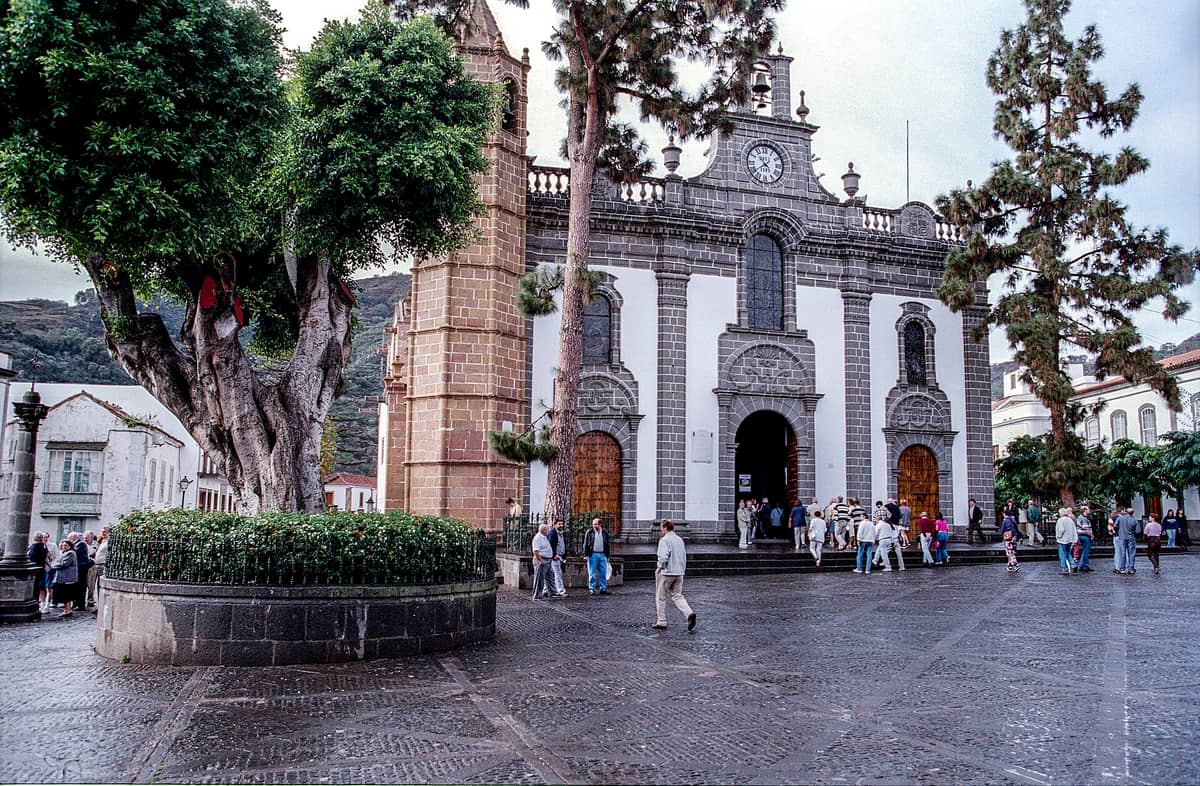
What the Basílica de Nuestra Señora del Pino Actually Is
The Basílica de Nuestra Señora del Pino is the most important religious building on Gran Canaria. It houses the image of the Virgen del Pino, the official patron saint of the island, and has served as a site of active pilgrimage for centuries. Unlike many historic churches in Spain that function primarily as museums, this basilica is genuinely alive: masses are held daily, worshippers arrive from across the island on weekdays, and on major feast days the surrounding square fills completely.
The church sits directly on Plaza de Nuestra Señora del Pino, the cobbled main square of Teror, a small mountain town about 21 kilometres by road southwest of Las Palmas de Gran Canaria. Teror itself is one of the most intact colonial-era towns in the Canary Islands, and the basilica is its architectural and emotional anchor. The surrounding streets of whitewashed houses with carved wooden balconies are worth at least an hour on their own.
ℹ️ Good to know
Entry is free of charge. The basilica opens later on Mondays (from 13:00), so plan your visit for Tuesday through Sunday if you want the full morning opening window.
The Architecture: What You'll Actually See
The façade is the first thing that stops you. Built in a restrained Canarian Baroque style, the frontage is warm grey-white stone with two bell towers that frame the square and give the church a visual weight far beyond what you'd expect from a modest mountain town. The towers are visible from the road approaching Teror, and on clear mornings they catch the light in a way that makes the building look almost golden.
Inside, the space is wide and calm. The nave is lined with wooden pews darkened by decades of use, and the smell of candle wax and incense is immediately present. The high altar is the focal point: behind it stands the image of the Virgen del Pino, dressed in elaborate embroidered robes that change with the liturgical calendar. The figure itself is relatively small, which surprises most visitors who expect a monumental image. What's striking instead is the quantity of ex-votos, silver votive offerings, and framed photographs left by grateful pilgrims around the sanctuary. These accumulations of personal devotion tell a more human story than the architecture alone.
The side chapels contain additional altarpieces and carved wooden details worth pausing over. The woodwork throughout the interior, including the carved choir stalls, reflects the same Canarian craft tradition visible in the colonial balconies outside. Photography inside is generally tolerated when services are not in progress, but keep noise levels low and avoid using flash near the main altar.
The Virgin of the Pine: Why This Place Matters
The Virgen del Pino is not simply a church decoration. She is the patron saint of Gran Canaria, and her feast day on 8 September is one of the most significant events on the island's calendar. According to tradition, the image of the Virgin appeared in a pine tree on the site in the late 15th century, shortly after the Spanish conquest of the island. The pine itself no longer exists, but the story anchors the site's importance.
The September feast draws pilgrims from across Gran Canaria and from other Canary Islands. If you're planning a visit around that date, check the best time to visit Gran Canaria for context on crowds and accommodation during the island's major religious events. The town fills completely, and the atmosphere shifts from quiet contemplation to communal celebration, with processions, music, and the entire square becoming one extended congregation.
On ordinary days, the basilica functions as an active parish church. You'll often find elderly residents praying in the side chapels, and a quiet stream of visitors moving through respectfully. There's a quality of unhurried devotion here that's genuinely distinct from the tourist-circuit churches in Las Palmas.
How the Experience Changes by Time of Day
Morning visits between 8:30 and 10:00 offer the best combination of light and quiet. The sun comes from the east and floods the entrance porch, while the interior stays cool and relatively empty. This is when the serious worshippers come: you'll find the church occupied but not crowded, and the pace is gentle. The square outside is occupied by locals getting coffee at the nearby cafes, and the market stalls along the surrounding streets are just setting up.
Midday brings day-trippers from the capital, particularly on weekends, and the square can get congested between roughly 11:00 and 13:30. The church remains open but the atmosphere changes. Coach groups sometimes arrive in clusters, and the quiet interior can briefly become louder. The basilica closes at 13:30 for the afternoon break, so if you arrive much after 12:45, you may find the doors shut before you've finished.
Late afternoon, particularly from 16:30 onwards on weekdays, is arguably the most rewarding time. The day-tripper coaches have gone, the light is softer and warmer, and the square takes on a genuinely local rhythm. Residents walk dogs, children play near the fountain, and the basilica is calm again. On Saturday evenings, the extended hours until 20:30 allow a visit that overlaps with the early evening paseo.
💡 Local tip
Sunday mornings are a special case. The basilica opens at 07:30 and masses run through the morning. If you arrive at opening, you'll experience the church as a place of worship rather than a tourist site, which is genuinely different. Just be aware that visiting during an active mass means staying at the back and observing quietly.
Getting There: Practical Route from Las Palmas
Teror is connected to Las Palmas de Gran Canaria by Global bus Line 216. The journey takes roughly 40–50 minutes depending on stops. Check current timetables with Global before travelling, as schedules vary by day of week. Visitors with a rental car will find the drive straightforward: the GC-21 road from Las Palmas climbs through pine-forested hills and gives you an early sense of Gran Canaria's interior landscape, which is a significant contrast to the coastal resorts. For context on navigating the island independently, the getting around Gran Canaria guide covers transport options in detail.
Parking in Teror on weekdays is manageable, though the area immediately around the main square is often full. There are secondary streets and a small car park a short walk from the plaza. On Sundays and feast days, parking becomes genuinely difficult and arriving by bus is the more practical option.
Teror pairs well with other sites in the north and centre of the island. The church of Arucas is another architecturally striking religious building worth combining on a half-day circuit, and both towns sit within comfortable driving distance of each other.
The Town of Teror Beyond the Basilica
Spending time only inside the church without walking the surrounding streets means missing the full picture. Teror's historic centre, with its continuous rows of colonial-era houses, is one of the best-preserved examples of traditional Canarian urban architecture on the island. The carved wooden balconies, painted in dark greens and blacks against white walls, are a recurring motif, and the overall scale of the town is intimate enough to cover on foot in an hour.
The Sunday market near the basilica is a notable draw. Local vendors sell Teror's famous chorizo de Teror (a fresh, spreadable pork sausage that is distinctly different from mainland Spanish chorizo), local cheeses, honey, and handmade goods. If you're building a broader picture of what to see in the island's northern interior, the things to do in Gran Canaria guide covers how Teror fits into a wider itinerary.
The café options on and around the plaza are genuine local spots rather than tourist operations. Coffee is inexpensive and strong, and you can sit at an outdoor table with a direct view of the basilica façade. This is the most comfortable way to appreciate the architecture without craning your neck inside: sit down, order a cortado, and look at the towers for ten minutes.
Who Should Skip This Attraction
If your Gran Canaria trip is entirely focused on beach time and the south of the island, Teror requires a deliberate inland detour of about an hour each way from the main southern resorts. It's not a casual add-on from Maspalomas or Playa del Inglés, and the basilica itself, while beautiful, is relatively compact. Travellers who have limited tolerance for religious spaces in general, or who are primarily interested in natural landscapes, may find the journey-to-content ratio doesn't work in their favour.
For those seeking dramatic landscapes in the island's interior, combining a visit to Teror with a drive toward Roque Nublo or Cruz de Tejeda makes the inland detour considerably more worthwhile.
Insider Tips
- The basilica treasury and museum (Museo de la Basílica) contains the Virgin's historic robes and votive offerings accumulated over centuries. It's a small but genuinely remarkable collection that most day-trippers miss entirely because it requires a separate entrance. Check locally for current opening hours and any admission charge, as these details change.
- Teror's Sunday market runs in the streets surrounding the basilica from the morning. It's primarily a local food market rather than a crafts fair, and the chorizo de Teror sold here is the real thing, made fresh, spreadable, and completely unlike anything you'd find in a supermarket. Bring cash.
- If you visit during the 8 September feast of the Virgen del Pino, arrive early. The procession through the town centre draws pilgrims from across Gran Canaria, and by mid-morning the square and surrounding streets are packed. It's extraordinary to witness but requires patience with crowds and noise.
- The best photographs of the façade are taken from the far end of the plaza in the early morning, when the sun is behind you and the stone has a warm tone. By midday the light becomes flat and harsh. A wide-angle lens or the wide mode on a phone camera is useful since the towers are tall relative to the plaza's depth.
- Teror sits at roughly 543 metres above sea level, and the temperature is noticeably cooler than the coast, sometimes by 5–7 degrees Celsius. A light layer is worth carrying, especially if you're visiting in winter or planning to stay into the evening.
Who Is Basílica de Nuestra Señora del Pino For?
- Travellers exploring Gran Canaria's cultural and religious heritage beyond the beach resorts
- Architecture and history enthusiasts interested in Canarian colonial-era building traditions
- Anyone visiting Gran Canaria in early September wanting to witness the island's most important religious festival
- Day-trippers from Las Palmas de Gran Canaria looking for a half-day inland excursion with food, culture, and scenery
- Photographers seeking classic Canarian townscape compositions away from tourist crowds
Nearby Attractions
Other things to see while in Northern Villages: Teror, Arucas & Gáldar:
- Arucas Church (Iglesia de San Juan Bautista)
Rising dramatically above the banana plantations and rum distilleries of Arucas, the Iglesia de San Juan Bautista is Gran Canaria's most architecturally ambitious church. Built from local dark basalt stone and completed in neo-Gothic style, it dominates the town's skyline with a presence that belies its parish status. This guide tells you exactly what to expect inside, when to go, and how to get there.
- Cenobio de Valerón
Cenobio de Valerón is one of the most remarkable archaeological sites in the Canary Islands: around 350 cavities carved into a volcanic cliff face by the island's aboriginal inhabitants to store grain. Set above the GC-2 road in the north of Gran Canaria, it rewards visitors with both history and sweeping coastal views.
- Cueva Pintada Archaeological Park
Hidden in the northern town of Gáldar, the Cueva Pintada Museum and Archaeological Park preserves an extraordinary painted cave and the remains of a Canario aboriginal settlement that predates the Spanish conquest. With a well-designed modern museum wrapped around a genuine ancient site, it is one of the most rewarding cultural stops on the island.