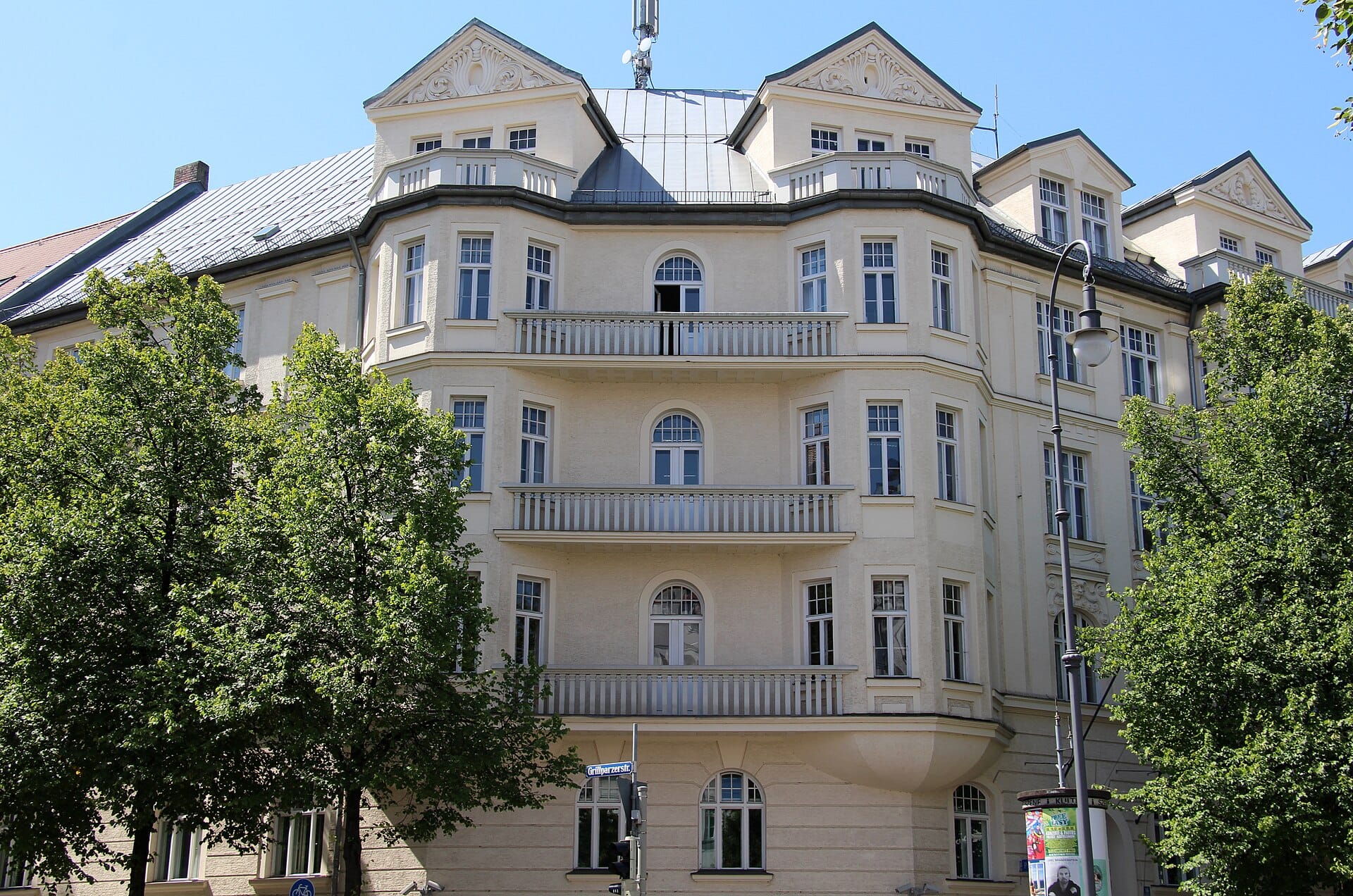
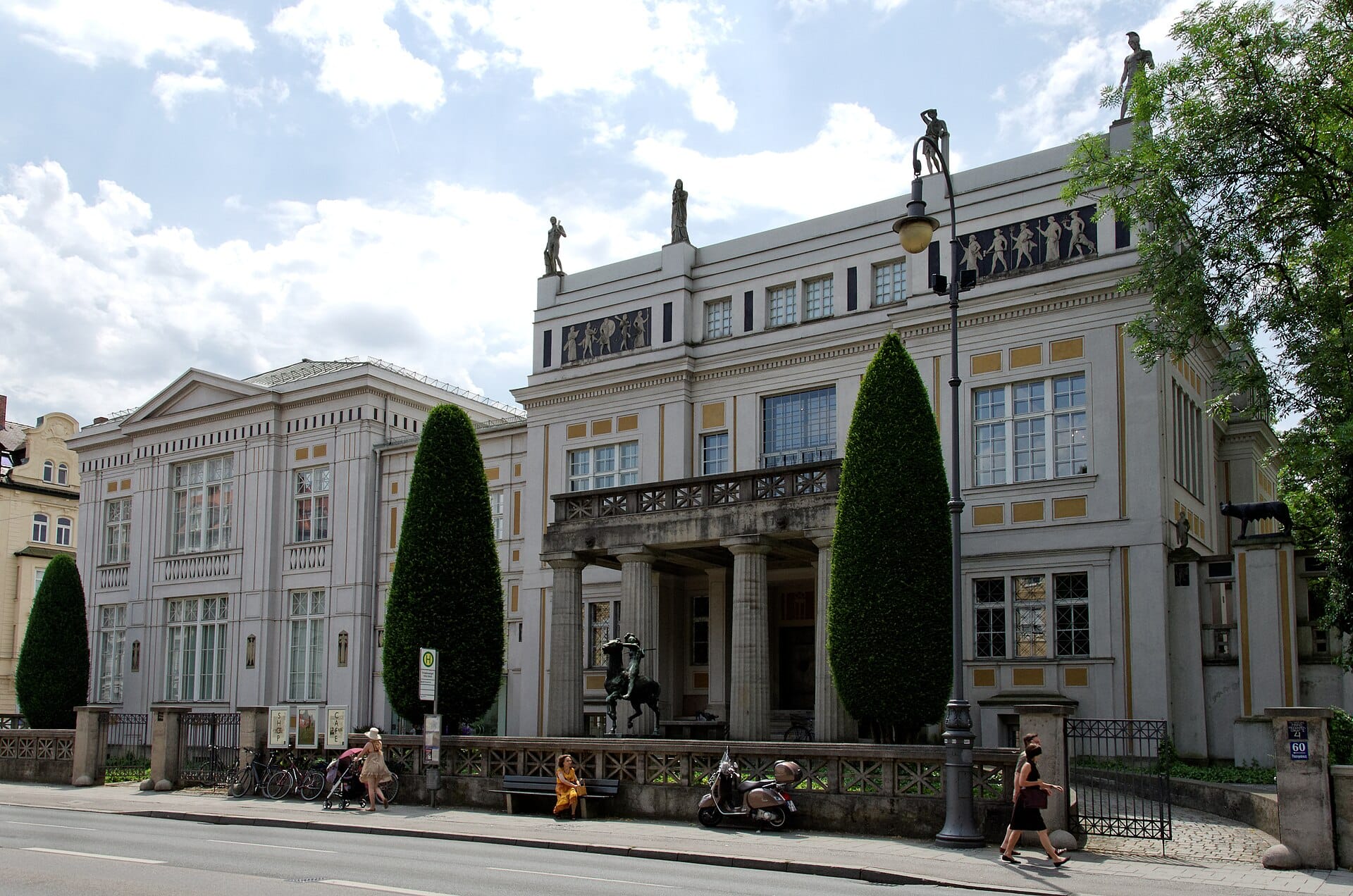
Bogenhausen is Munich's 13th borough, sitting on the east bank of the Isar in the city's northeast. Known for its grand early-20th-century villas, tree-lined avenues, and proximity to the Englischer Garten, it offers a quieter, more residential side of Munich that rewards slow exploration.
Bogenhausen is the part of Munich where old money meets cultural legacy. Grand Jugendstil villas line the streets near the Isar, foreign embassies occupy discreet mansions behind iron fences, and the Prinzregententheater rises like a monument to Bavarian civic ambition. It is not a neighborhood that performs for visitors, which is precisely what makes it worth understanding.
Orientation
Bogenhausen is Munich's 13th borough (Stadtbezirk 13), occupying the northeast of the city on the right, eastern bank of the Isar. Its western edge is defined by the river itself and the eastern flank of the Englischer Garten. From there the district spreads outward toward Munich's city limits, bordering Unterföhring to the north and Aschheim to the east. To the south it meets Haidhausen-Au, the more densely urban district that sits just across the Isar bridges from Lehel and the Altstadt.
Within Bogenhausen, the Mittlerer Ring road running through the Richard-Strauss-Tunnel marks an important internal boundary. The zone between the Isar and this ring road is what most people mean when they refer to Alt-Bogenhausen, the oldest and most architecturally distinguished part of the district. This is where the Jugendstil villas, the embassies, and the cultural institutions are concentrated. Beyond the ring road, the district transitions into more modern residential and commercial development before eventually reaching corporate office parks near the city edge.
Bogenhausen sits roughly 3 to 4 kilometers northeast of Marienplatz. The walk from the Englischer Garten into Alt-Bogenhausen takes around 20 to 25 minutes on foot along Prinzregentenstrasse, one of Munich's great ceremonial boulevards. The neighborhood connects naturally with Haidhausen to the south and, via the Englischer Garten, with Schwabing to the northwest.
Character & Atmosphere
Bogenhausen has the particular quiet of a neighborhood where people have lived well for a long time and see no reason to advertise it. In the morning, the streets of Alt-Bogenhausen are almost meditative. Dog walkers move along avenues canopied by mature linden trees, the sidewalks barely disturbed by foot traffic. The villas that line streets like Mauerkircherstrasse and the roads running parallel to Prinzregentenstrasse are mostly set back behind gardens, their facades a catalog of early-20th-century architectural confidence: Jugendstil ornamentation, neoclassical symmetry, the occasional art deco flourish.
By midday, small neighborhood cafes and bakeries do steady trade with locals. There are no tour groups here, no souvenir stalls, no queues for the next Instagram landmark. The rhythm is residential. Parents collect children from schools, older residents sit outside on fine-weather days, and the only real burst of energy comes from the tram and U-Bahn stops where commuters pass through. This is not a neighborhood where you come to be entertained in the conventional tourist sense. It rewards those who prefer to walk and observe.
In the evening, the area around Prinzregentenstrasse takes on a different weight. When performances are on at the Prinzregententheater, well-dressed Munichers arrive by U-Bahn and on foot, and the stretch of street outside the theater glows with a low-key but unmistakable sense of occasion. After the curtain falls, the nearby bars and restaurants see brief bursts of post-theater custom before the neighborhood settles back into its habitual calm. Bogenhausen after dark is safe and quiet. It is not a nightlife destination, and anyone looking for that should head south toward Haidhausen or west toward Schwabing.
ℹ️ Good to know
Bogenhausen is one of Munich's most expensive residential districts. A significant number of foreign consulates and diplomatic residences are located here, which partly explains both the security presence and the immaculate upkeep of many streets.
What to See & Do
The cultural centerpiece of Bogenhausen is the Villa Stuck, the former home and studio of Symbolist painter Franz von Stuck, completed in 1898. Von Stuck designed the building himself as a unified Gesamtkunstwerk, combining architecture, decorative arts, and painting under one roof. Today it functions as a museum and art space, hosting both a permanent display of von Stuck's work and major temporary exhibitions of modern and contemporary art. The building alone justifies the visit: the painted rooms, the studio wing, and the garden create an atmosphere unlike anywhere else in Munich.
The Prinzregententheater on Prinzregentenplatz is Bogenhausen's other major cultural institution. Built in 1901 with a neo-Baroque design influenced by the Bayreuth Festspielhaus, it was created to stage Wagner's operas and remains an active venue for opera, theater, and concerts. The building's neoclassical exterior and the open plaza in front of it make it one of the more imposing public spaces in the eastern part of Munich. Even if you are not attending a performance, the walk along Prinzregentenstrasse leading to the theater is worth making.
The Bogenhausen old cemetery (Alter Bogenhausener Friedhof) on Ismaninger Strasse is one of those places that Munich residents know well and visitors almost never find. It contains the graves of a remarkable number of artists, writers, and cultural figures who shaped Munich's intellectual life in the 19th and early 20th centuries. The cemetery is small, carefully maintained, and genuinely atmospheric, particularly on grey autumn mornings.
The Isar riverbanks on Bogenhausen's western edge are an easy walk from the main residential streets and connect to the southern reaches of the Englischer Garten. The stretch of the Isar River here is less frequented than the sections further south near Haidhausen and offers peaceful riverside walking and cycling with views across to the western bank.
Villa Stuck: Jugendstil museum and contemporary art venue on Prinzregentenstrasse
Prinzregententheater: Neo-Baroque opera and theater venue on Prinzregentenplatz
Alter Bogenhausener Friedhof: historic cemetery on Ismaninger Strasse with notable cultural graves
Hildebrand House (Hildebrandhaus): the former home and studio of sculptor Adolf von Hildebrand
Isar riverbank walks along the eastern shore, connecting to the Englischer Garten
Prinzregentenbad: historic public swimming complex near Prinzregentenstrasse
💡 Local tip
Villa Stuck runs strong temporary exhibitions alongside its permanent collection. Check the current program before you visit since the temporary shows often rival anything in the main Munich museum circuit.
Eating & Drinking
Bogenhausen's food scene reflects its residential character: solid, unhurried, and aimed at people who live here rather than people passing through. The density of restaurants is much lower than in, say, Haidhausen or the Altstadt, but the quality tends to be high because the local clientele is discerning and paying real rents. You will find a range of neighborhood restaurants along Prinzregentenstrasse and its side streets, with Italian and Mediterranean cuisine particularly well represented alongside traditional Bavarian options.
The area around Prinzregentenplatz has a concentration of cafes that do reliable breakfast and lunch trade. These are proper sit-down places with good coffee and seasonal food, not tourist-oriented grab-and-go operations. For a pre-theater dinner or a post-concert drink, the restaurants immediately surrounding the Prinzregententheater handle the demand competently, though booking ahead on performance nights is advisable.
Beer garden culture is less pronounced in Bogenhausen than in areas like Schwabing or near the Englischer Garten, but the proximity to the Isar means there are relaxed spots along the river where locals gather in warmer months. For Munich's full food picture, the combination of Bogenhausen's quieter neighborhood restaurants with a trip across the river to the Viktualienmarkt in the Altstadt covers most bases.
The U4 U-Bahn line is the primary transit connection for Bogenhausen, with Prinzregentenplatz station sitting at the heart of Alt-Bogenhausen. The U4 connects directly westward to Max-Weber-Platz (the main hub for Haidhausen), then continues through the city center to Odeonsplatz, Karlsplatz, and beyond. Journey time from Prinzregentenplatz to Odeonsplatz is around 6 to 8 minutes. A second U4 station, Böhmerwaldplatz, serves the area slightly further north and east within the district.
Several tram lines supplement the U-Bahn, running along Prinzregentenstrasse and providing connections toward the Isar and into the Altstadt. Tram 16 and tram 17 are the most useful for reaching the neighborhood from the city center direction. For visitors staying in central Munich, the combination of tram and walking is often the most practical approach: the walk along Prinzregentenstrasse from the Maximilianstrasse area is pleasant and takes around 20 to 25 minutes.
Cycling is a good option in Bogenhausen, particularly for reaching Villa Stuck or the Isar riverbank. The streets in the residential parts of Alt-Bogenhausen are generally low-traffic, and the Isar riverside path is well-suited to cycling. Munich's public bike-sharing network has docking stations in the area. The full transit system in Munich operates under the MVV fare structure; all U-Bahn, tram, and bus services in the inner zone use the same ticket.
For a full breakdown of how Munich's public transit system works, including ticket types and fare zones, see the getting around Munich guide.
💡 Local tip
The walk along Prinzregentenstrasse from the Nationalmuseum (just inside Lehel) eastward into Bogenhausen is one of Munich's great underused urban walks. It takes you past the Haus der Kunst, along the southern edge of the Englischer Garten, and delivers you directly to the Prinzregententheater and Villa Stuck in around 25 minutes.
Where to Stay
Bogenhausen is not a hotel-dense area. The accommodation that exists here tends toward the upper end of the market, reflecting the district's residential character and property values. A small number of boutique hotels and serviced apartment buildings operate in Alt-Bogenhausen, particularly in the zone between Prinzregentenplatz and the Isar. For visitors who prioritize quiet, residential neighborhoods, proximity to the Isar and Englischer Garten, and easy U-Bahn access to the center, Bogenhausen makes a practical and pleasant base.
The trade-off is that Bogenhausen is not within walking distance of the main tourist attractions in the Altstadt or Maxvorstadt. Getting to Marienplatz involves around 10 to 15 minutes by U-Bahn, or 35 to 45 minutes on foot. Visitors who want to maximize time in the historic center or in the museum quarter around Königsplatz may find it more convenient to stay closer to those areas. Bogenhausen suits travelers who want to experience a quieter, more local side of Munich and are comfortable using the U-Bahn for daily sightseeing.
For a full overview of where to stay across Munich's neighborhoods, including budget and luxury options, see the where to stay in Munich guide.
Bogenhausen in Context: History and Character
Bogenhausen's identity was largely formed in the decades around 1900, when Munich's wealthiest citizens built their grand private residences on the elevated east bank of the Isar, taking advantage of the views, the fresh air, and the separation from the industrial and working-class districts developing to the south and west. Artists, industrialists, and professionals chose Bogenhausen, and the concentration of talent in those years was extraordinary: Franz von Stuck, Adolf von Hildebrand, and other major figures of the Jugendstil movement lived and worked here, with landmarks like Villa Stuck completed in 1900 helping create a cultural density that was unusual for a purely residential district.
The regent for whom Prinzregentenstrasse and the Prinzregententheater are named was Prince Regent Luitpold of Bavaria, who governed the kingdom from 1886 to 1912. His reign saw a massive investment in public buildings, cultural institutions, and urban infrastructure, much of it concentrated along the new boulevard that bore his name. Bogenhausen was a direct beneficiary of this civic ambition, and the grandeur of Prinzregentenstrasse remains visible today in the scale of its buildings and the sweep of its alignment.
The district's cultural legacy connects to Munich's broader identity as a city of art and architecture. For visitors interested in following that thread into the museum district west of the city center, the Maxvorstadt neighborhood guide covers the Kunstareal and its cluster of major museums, including the Alte Pinakothek and the Pinakothek der Moderne.
⚠️ What to skip
Bogenhausen is genuinely residential. If you arrive expecting the energy of Haidhausen or the commercial density of the Altstadt, you may find it underwhelming. The neighborhood rewards patience and an interest in architecture, urban history, and cultural institutions over bars, markets, and crowds.
TL;DR
Bogenhausen is Munich's most architecturally distinguished residential district, best known for Villa Stuck, the Prinzregententheater, and its grand early-20th-century villa streets.
The neighborhood is quiet, safe, and largely tourist-free. It suits travelers who want to explore a different, slower side of Munich away from the Altstadt circuit.
Transit access via the U4 (Prinzregentenplatz station) makes central Munich around 10 minutes away, keeping Bogenhausen practical as a base despite its residential character.
The eating and drinking scene is solid but low-key. Expect good neighborhood restaurants and cafes rather than a diverse or late-night food strip.
Best for: culturally curious travelers, architecture enthusiasts, visitors seeking quiet accommodation, and anyone who has already covered the main Munich sights and wants to explore further.
Three days is enough time to cover Munich's historic core, its great palace estates, world-class museums, and one excellent day trip. This itinerary structures each day for maximum efficiency, with practical advice on what to skip, what to prioritize, and how to get around without wasting time.
Bavarian cuisine is one of the most distinctive regional food cultures in Europe, and Munich is its undisputed home. This guide covers the essential dishes, realistic prices, where to find authentic food, seasonal tips, and practical advice on avoiding tourist traps.
Munich has more than 80 museums, ranging from one of the world's largest science institutions to intimate Art Nouveau villas. This guide covers the 18 best, organized by theme, with practical advice on tickets, free entry days, and how long to spend at each.
Munich rewards visitors in every season, but the right time depends entirely on what you want from the trip. This guide breaks down weather, crowd patterns, hotel prices, and major events month by month so you can make an informed decision before you book.
Munich sits at the center of one of Europe's most rewarding regions for day trips. Within two hours of the city you can reach fairy-tale castles, a sobering memorial site, a foreign capital, and medieval old towns. This guide covers the best options, how to get there cheaply, what to expect, and when to go.
Munich has a reputation for being expensive, but the city rewards those who know where to look. From vast royal parks and free Baroque churches to BMW showrooms and €1 museum Sundays, there is more to experience here without paying full price than most visitors realize.
Munich has one of Europe's most comprehensive public transport networks, covering the entire city and its suburbs through a single ticketing system. This guide breaks down every option, from the S-Bahn airport connection to cycling the Isar, so you can move around Munich with confidence.
Munich consistently ranks as Germany's safest large city, with violent crime against tourists being genuinely rare. But that does not mean you can be complacent. This guide breaks down the real risks, the neighborhoods to know, seasonal crime patterns, and practical safety tips that will help you travel smarter.
The 1972 Munich Olympics were supposed to redefine Germany's image on the world stage. They did, but not in the way anyone intended. This guide covers the full story: the groundbreaking design, the athletic records, the tragedy of September 5th, and how Olympiapark stands today as both a leisure destination and a site of memory.
Munich Airport (MUC) is one of Europe's busy hubs, serving over 1,100 daily flights across two main terminals. This guide covers everything from reading the terminal map and making connections to catching the S-Bahn into Munich city center in under 40 minutes.
Munich was the birthplace of the Nazi movement and home to some of the most significant sites of 20th-century German history. This guide covers the essential locations, how to reach them, what to expect, and how to approach them with the seriousness they deserve.
Munich hosts some of Germany's most celebrated Christmas markets, from the iconic Münchner Christkindlmarkt on Marienplatz to a dozen smaller themed Weihnachtsmärkte spread across the city. This guide covers every major market, what to eat and drink, how to avoid the worst crowds, and what first-timers consistently get wrong.
The Munich City Pass bundles free entry to 40+ attractions with optional public transport into one prepaid card. But at up to €113 per person for five days, it only pays off under specific conditions. This guide breaks down exactly who benefits, how to calculate your savings, and when you're better off paying as you go.
Munich has roughly 1,200 km of bike paths, flat terrain through the city center, and landmark-packed corridors along the Isar and English Garden. This guide covers the best cycling routes, where to rent a bike, what the rules actually say, and when to go.
The Dachau Concentration Camp Memorial Site is one of the most important historical sites in Germany, located just over 20 km northwest of Munich. This guide covers exactly how to get there, what you will find on site, how long to allow, and how to prepare for a visit that demands both practical planning and emotional readiness.
Munich rewards those who look beyond Marienplatz. From a Rococo theatre tucked inside a royal palace to a Baroque beer garden in a former deer park, these lesser-known spots reveal a richer, quieter side of Bavaria's capital.
Summer transforms Munich into one of Europe's most enjoyable cities. From riverside parks and open-air festivals to world-class opera and Alpine day trips, this guide covers everything you need to make the most of June, July, and August in Bavaria's capital.
Munich (München) competes confidently with Europe's established luxury destinations. From storied 5-star hotels steps from Marienplatz to Michelin-starred kitchens and world-class cultural institutions, this guide covers everything you need to plan a genuinely high-end stay, including when to book, what to skip, and how much to budget.
Munich (München) offers far more after dark than beer halls and Oktoberfest. From techno clubs in Werksviertel-Mitte to jazz in Glockenbachviertel and cocktail bars in Schwabing, this guide covers every facet of the city's nightlife scene, with practical advice on prices, transport, and where to go depending on your taste.
Munich Oktoberfest is the world's largest folk festival, drawing nearly 7 million visitors to the Theresienwiese each year. This guide covers dates, beer tent strategy, costs, transport, dress codes, and the practical details that separate a great Wiesn from a chaotic one.
Munich (München) has a reputation as one of Germany's priciest cities, but a well-planned trip can cost far less than you'd expect. This guide breaks down realistic daily budgets, the best free and low-cost attractions, transport savings, and the key timing decisions that will make or break your spending.
Munich (München) offers one of Germany's most diverse retail landscapes, from a 2-kilometer pedestrian shopping mile to Europe-class luxury streets, historic food markets, and independent neighborhood boutiques. This guide breaks down every district, market, and Bavarian buy worth your time and money.
The Munich to Frankfurt corridor is one of Germany's most traveled routes, and you have four real options: train, flight, bus, or car. This guide breaks down journey times, realistic costs, seasonal factors, and which mode of transport actually makes sense for your trip.
Neuschwanstein Castle is one of Bavaria's most iconic sights, and Munich is the natural base for visiting it. This guide covers every transport option, ticket logistics, seasonal considerations, and practical tips for making the most of your day trip from Munich to Neuschwanstein.
The Munich to Prague train is one of central Europe's great cross-border journeys, connecting Bavaria's capital with Bohemia's in around 5.5 hours. This guide covers journey times, fares, booking strategy, route options, and practical tips for making the trip as smooth as possible.
Salzburg sits just 150 km from Munich and is one of the most rewarding day trips in Central Europe. This guide covers every practical detail: which train to take, how to save money with the Bayern Ticket, whether driving makes sense, and how to spend your time in Mozart's birthplace.
The Munich to Vienna train route is one of Central Europe's great rail journeys, covering around 355 km in roughly 4 to 4.5 hours. This guide covers every operator, ticket strategy, and practical detail you need to get from München Hauptbahnhof to Wien Hauptbahnhof without overpaying or getting caught out.
Munich sits about 50 km north of the Alps, and on a clear day, the payoff from its towers and hilltops is extraordinary. This guide covers every worthwhile viewpoint in the city, from free park hills to paid observation decks, with clear-eyed guidance on what's worth the climb and what to skip.
Munich is one of Europe's most underrated family destinations. From the hands-on Deutsches Museum to the sprawling Englischer Garten, the city offers a remarkable range of activities for children of all ages, many of them free or heavily discounted. This guide covers the best family attractions, money-saving strategies, seasonal planning, and logistics to make your trip run smoothly.
Munich rewards couples with an unexpectedly rich mix of romantic experiences: palace parks, candlelit beer halls, canal walks, and winter butterfly gardens. This guide covers the best things to do in Munich for couples across every season and budget, from free afternoon strolls to genuinely memorable evenings.
Munich (München) packs royal palaces, world-class museums, beer halls, sprawling parks, and one of Europe's great food markets into a compact, walkable city. This guide breaks down the best things to do in Munich by category, with real prices, seasonal advice, and practical guidance on what is worth your time.
Munich's dining scene runs deeper than Weißwurst and pretzels. This guide covers the best restaurants in Munich across every budget and neighborhood, from century-old beer halls to modern fine dining, with practical tips on reservations, prices, and where locals actually eat.
Choosing where to stay in Munich shapes your entire trip. This guide breaks down every major neighborhood by price, atmosphere, and proximity to key attractions, so you can book with confidence whether you're here for Oktoberfest, a city break, or a business trip.