Baixa is Porto's central downtown district, anchored by the grand Avenida dos Aliados and the azulejo-covered São Bento Station. It concentrates the city's commercial energy, major landmarks, and nightlife streets into a compact, walkable area that puts visitors within reach of almost everything Porto offers.
Baixa is Porto's downtown core in every meaningful sense: the wide boulevard of Avenida dos Aliados draws political rallies, football celebrations, and Sunday afternoon strollers alike, while the streets fanning out from it hold the city's most recognizable landmarks, its main shopping arteries, and a nightlife corridor that runs loud until the early hours. It is the neighborhood that ties all of Porto together, and the one most first-time visitors will pass through daily whether they stay here or not.
Orientation
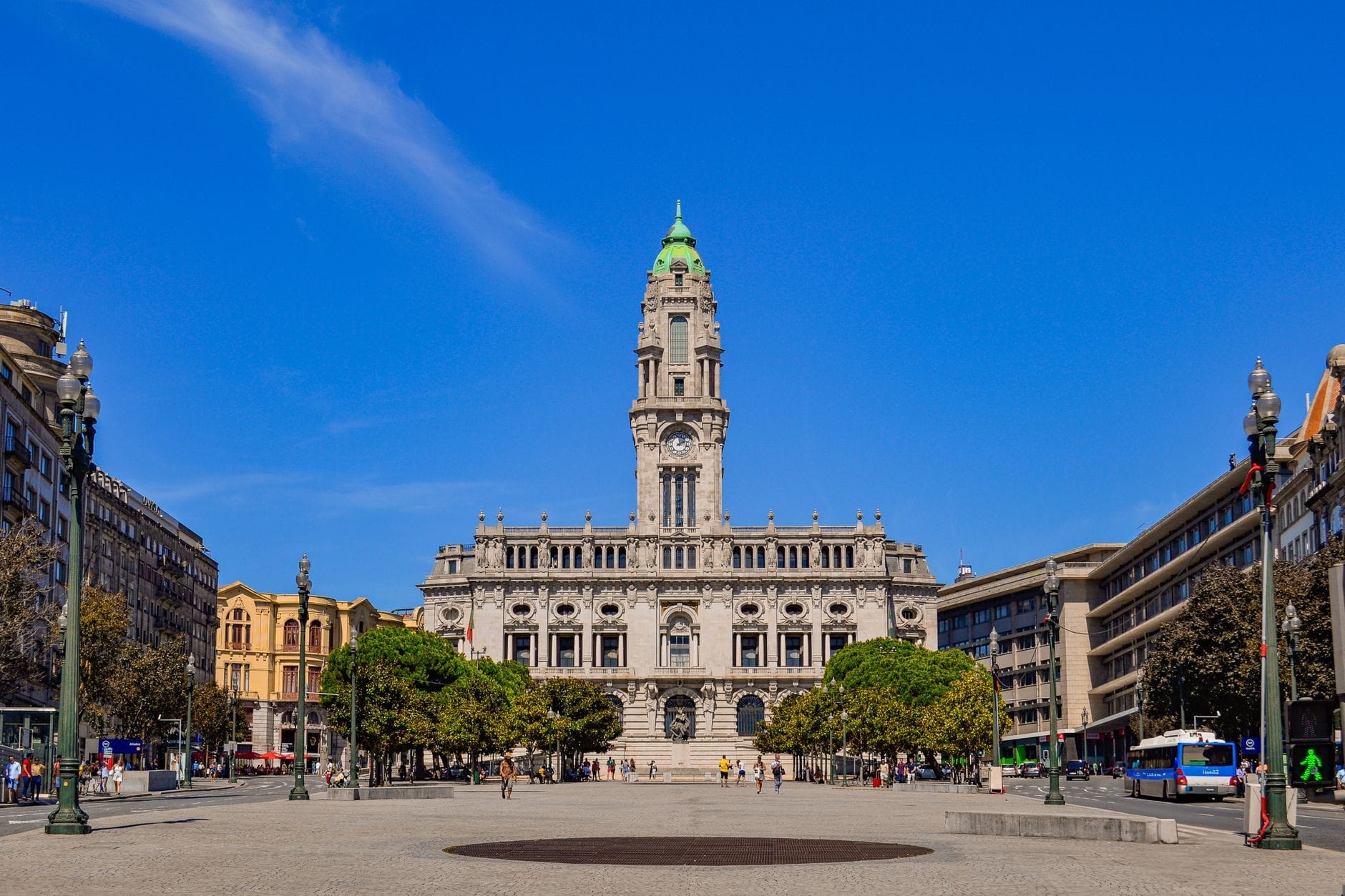
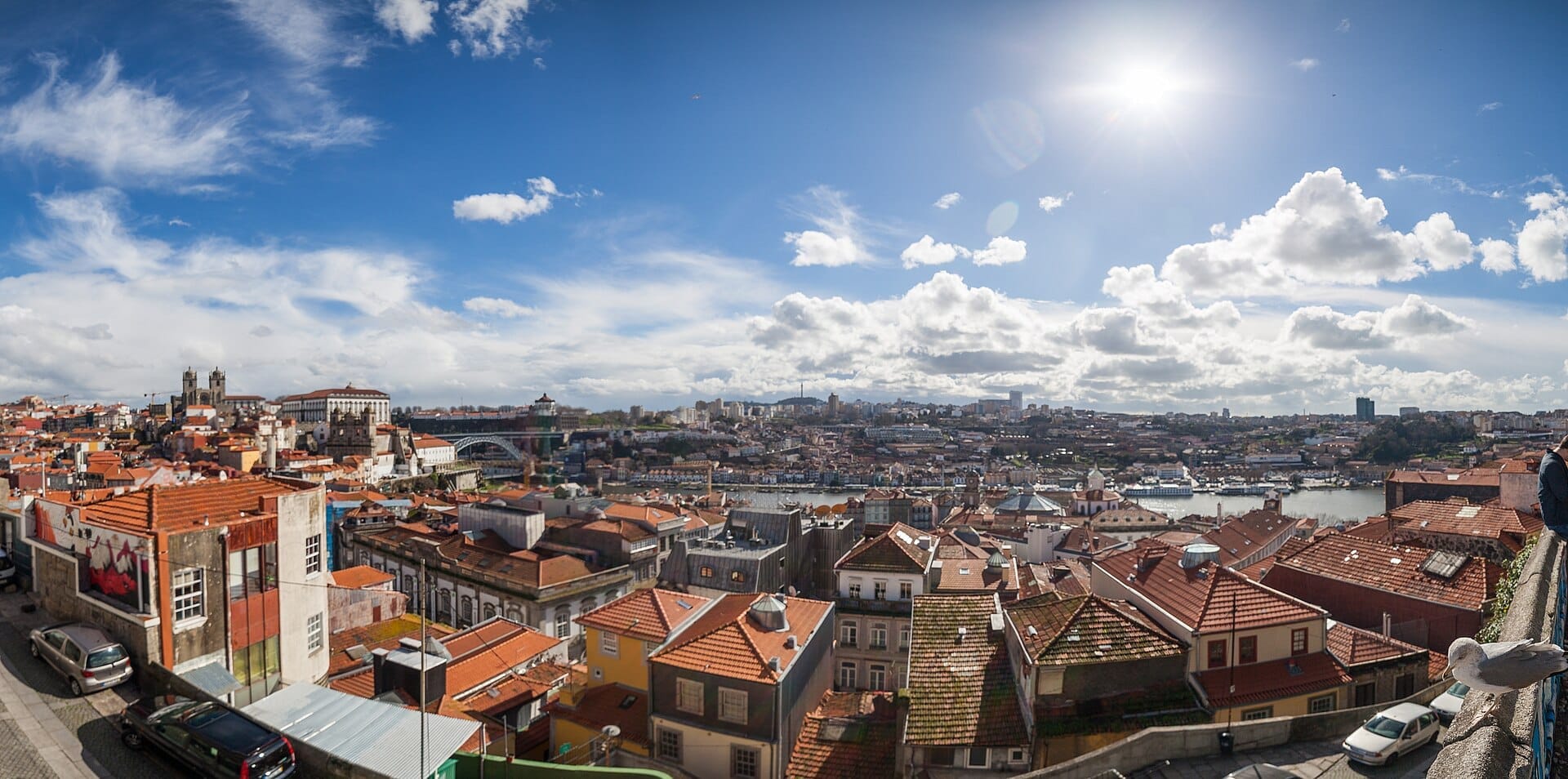
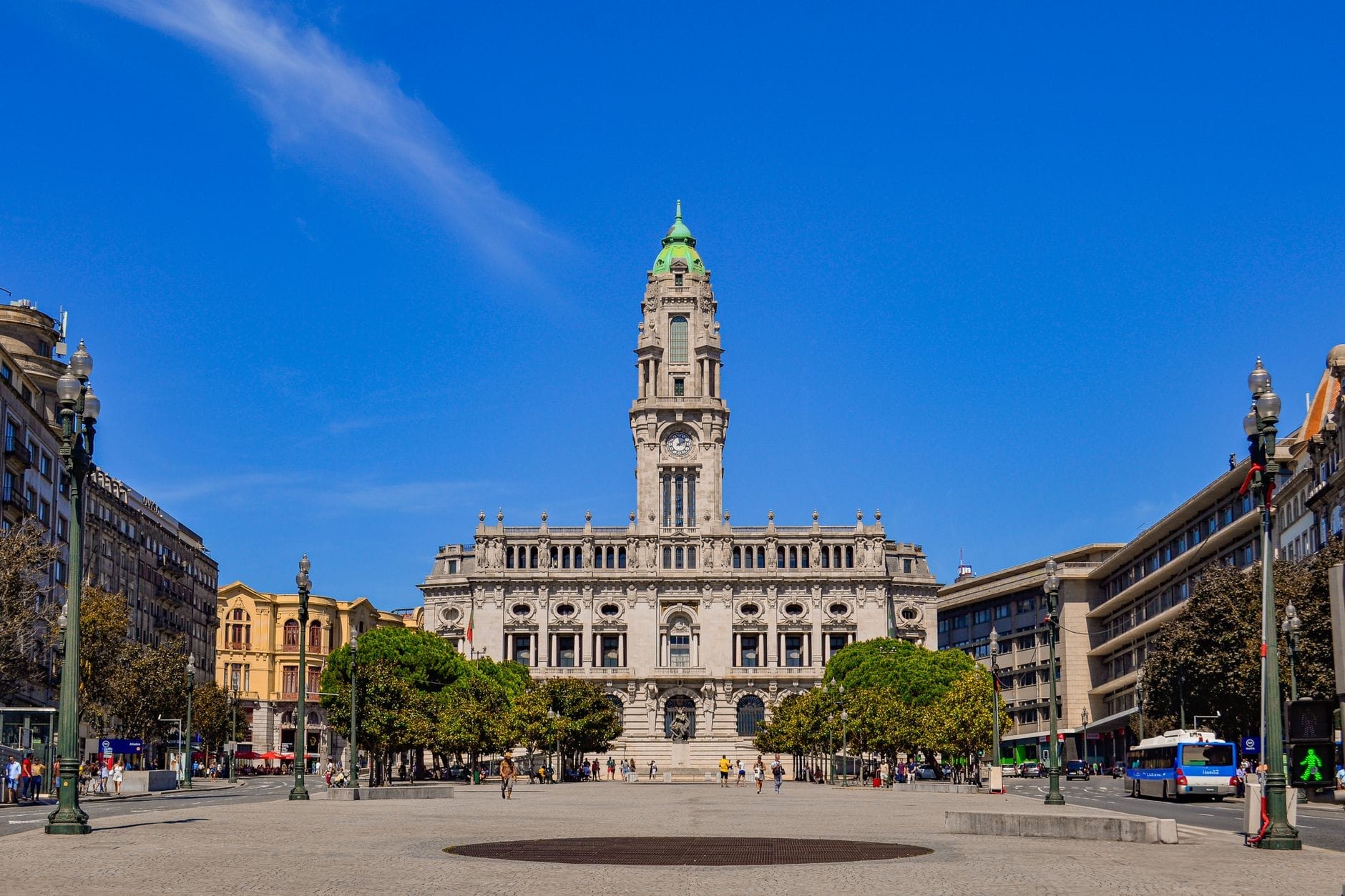
Baixa sits at the geographic and functional heart of Porto, occupying a plateau between the hillside parishes to the west and the slope that drops sharply down toward Ribeira and the Douro waterfront to the south. It is not an official administrative parish with precise borders, but its core is universally understood: Praça da Liberdade at the southern end feeds directly into Avenida dos Aliados, the wide ceremonial boulevard that runs north toward Praça General Humberto Delgado and the neoclassical Porto City Hall.
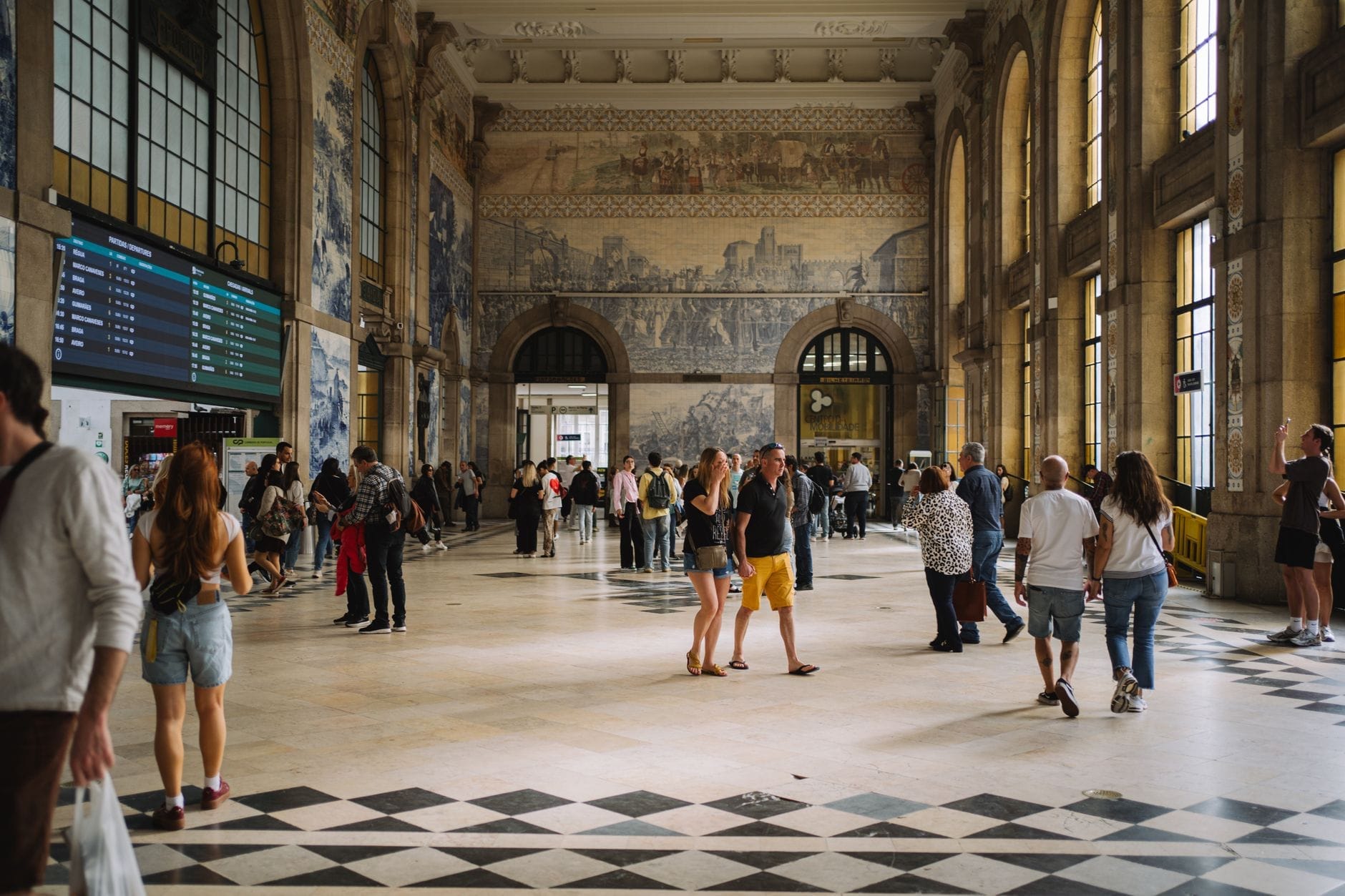
From Praça da Liberdade, São Bento Railway Station is just a few steps to the west — it functions both as a working commuter hub and as one of the city's most visited interiors, its entrance hall covered floor to ceiling in Portuguese azulejo tile panels. Walking north along Aliados for five to seven minutes brings you to Praça General Humberto Delgado, where the Trindade Metro interchange sits underground, offering connections to all six metro lines.
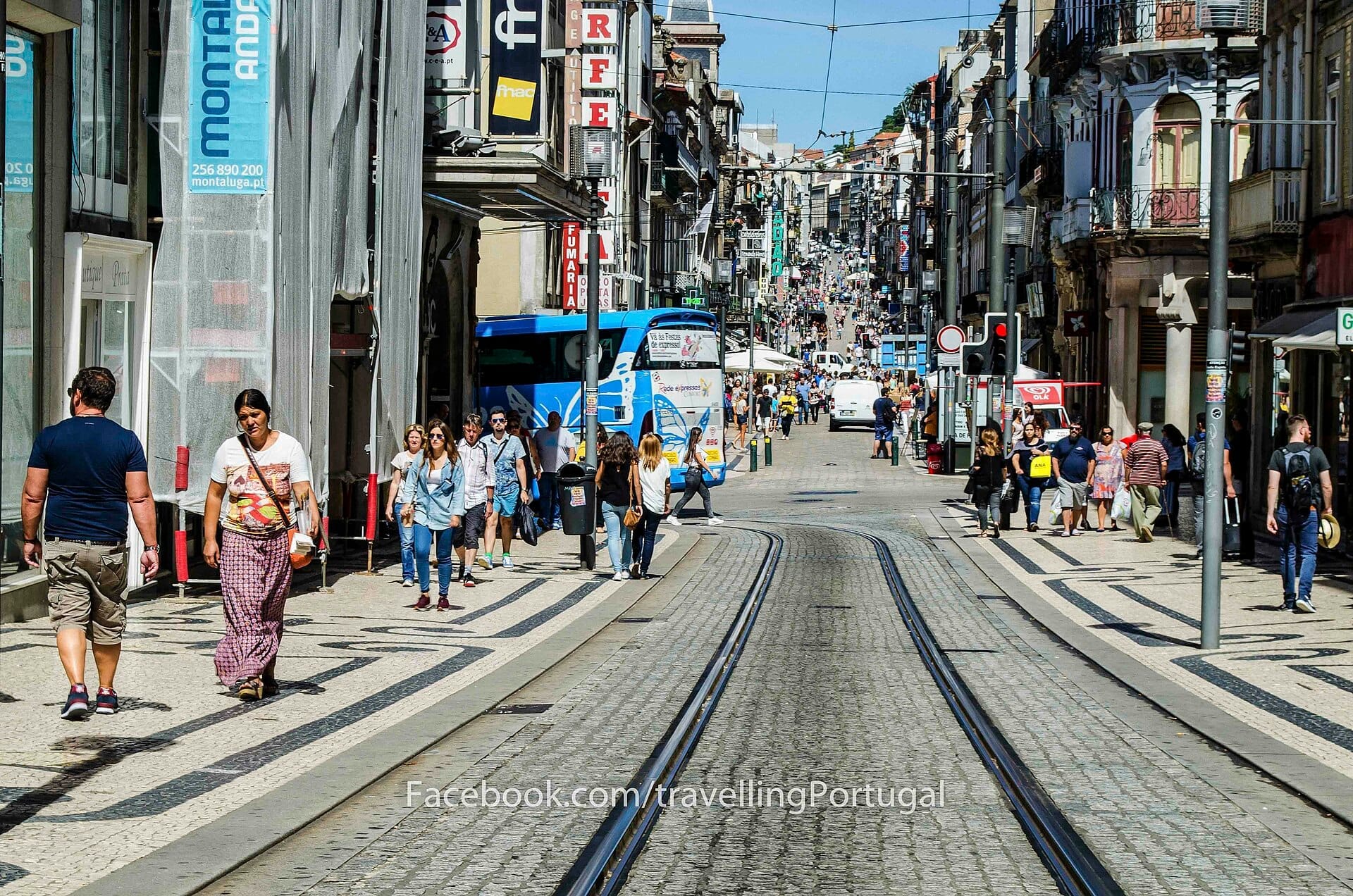
The neighborhood's informal eastern boundary runs roughly along Rua de Santa Catarina, Porto's main pedestrian shopping street, which curves toward Mercado do Bolhão. To the northwest, the streets slope slightly uphill toward Cedofeita and the bookshop district around Rua das Carmelitas. To the south, the gradient steepens toward Ribeira. Understanding Baixa as a plateau bounded by slopes on three sides helps explain its role as a transit and gathering point: it is the natural meeting ground between Porto's upper and lower city.
ℹ️ Good to know
Baixa is not an official parish boundary — different maps draw it slightly differently. For practical purposes, treat the area between São Bento Station, Mercado do Bolhão, Clérigos Tower, and Praça da Liberdade as Baixa's navigable core.
Character & Atmosphere
Baixa moves at different speeds depending on the hour. Early morning on Avenida dos Aliados is surprisingly calm: the symmetrical rows of early 20th-century buildings glow in the low Atlantic light, pigeons work the tiled plaza, and café workers are still setting out chairs. The scale of the avenue, designed to project civic confidence, feels almost theatrical when it is empty. By 9am, commuters pour through São Bento Station and the mood shifts to purposeful urban tempo.
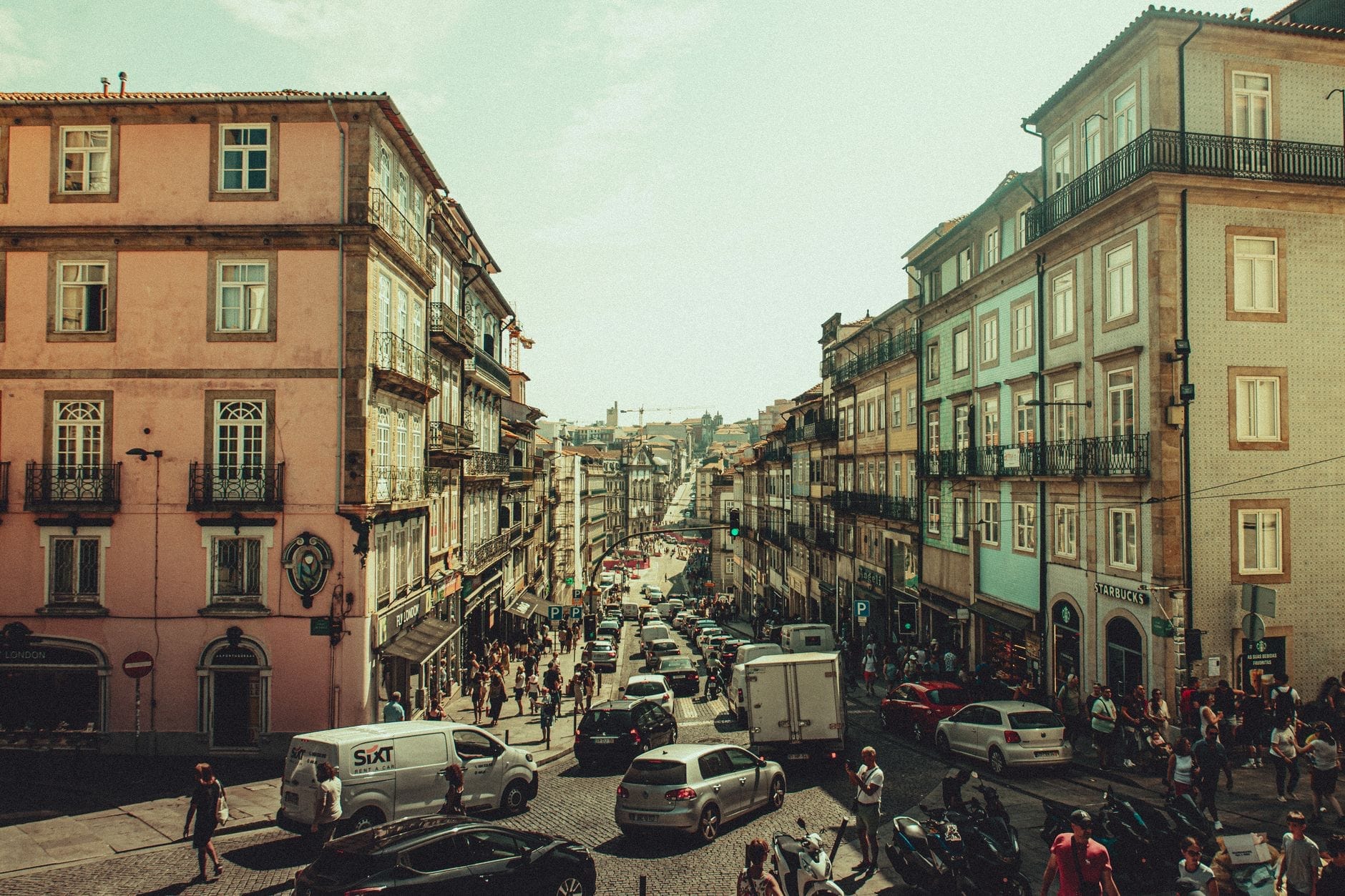
Midday the streets are dense with shoppers along Rua de Santa Catarina and the surrounding pedestrian lanes. This is when Baixa feels most like a working commercial district rather than a tourist zone — locals eating lunch at tiled counter-service cafés, delivery riders threading between pedestrians, elderly couples moving slowly through the indoor market. The summer afternoon light is flat and strong by 2pm; locals disappear for lunch and the streets briefly quiet before the after-work rush.
After dark on Thursday, Friday, and Saturday, Baixa's character changes completely. The nightlife corridor along Galerias de Paris, Rua Cândido dos Reis, and the connecting streets around Praça Guilherme Fernandes fills with a crowd that skews young and international. Bars spill onto the street and the noise level rises significantly by 11pm. Rua José Falcão and adjacent lanes follow the same pattern. This concentration of nightlife is what Baixa is known for among younger visitors and students — but it also means the neighborhood is genuinely loud on weekend nights, which is worth knowing before you book.
⚠️ What to skip
Accommodation in Baixa near the Galerias de Paris nightlife strip can be very noisy Thursday through Saturday nights, sometimes until 3 or 4am. If you are a light sleeper or traveling with children, prioritize hotels on streets facing Avenida dos Aliados itself or toward the northern end of Bolhão, away from the bar corridor.
What to See & Do
The most photographed interior in Porto is arguably inside São Bento Station. The entrance hall's 20,000 azulejo panels, painted by Jorge Colaço in the early 20th century, depict scenes from Portuguese history and rural life in deep blue and white. You don't need a train ticket to walk in — it is a working station and the hall is freely accessible. For a deeper understanding of the tiles themselves, the Porto azulejo tiles guide explains what to look for and where else in the city the tradition appears.
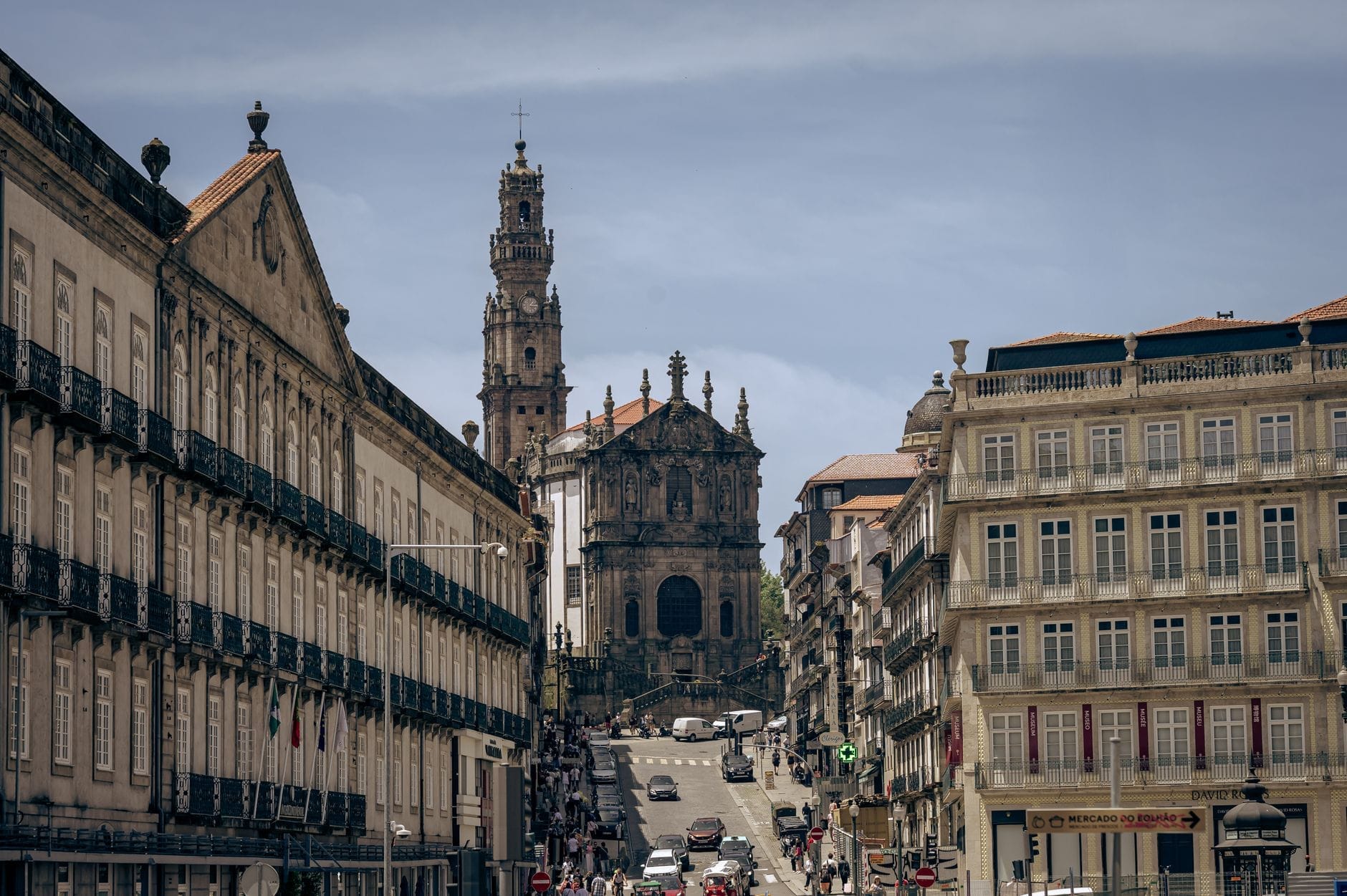
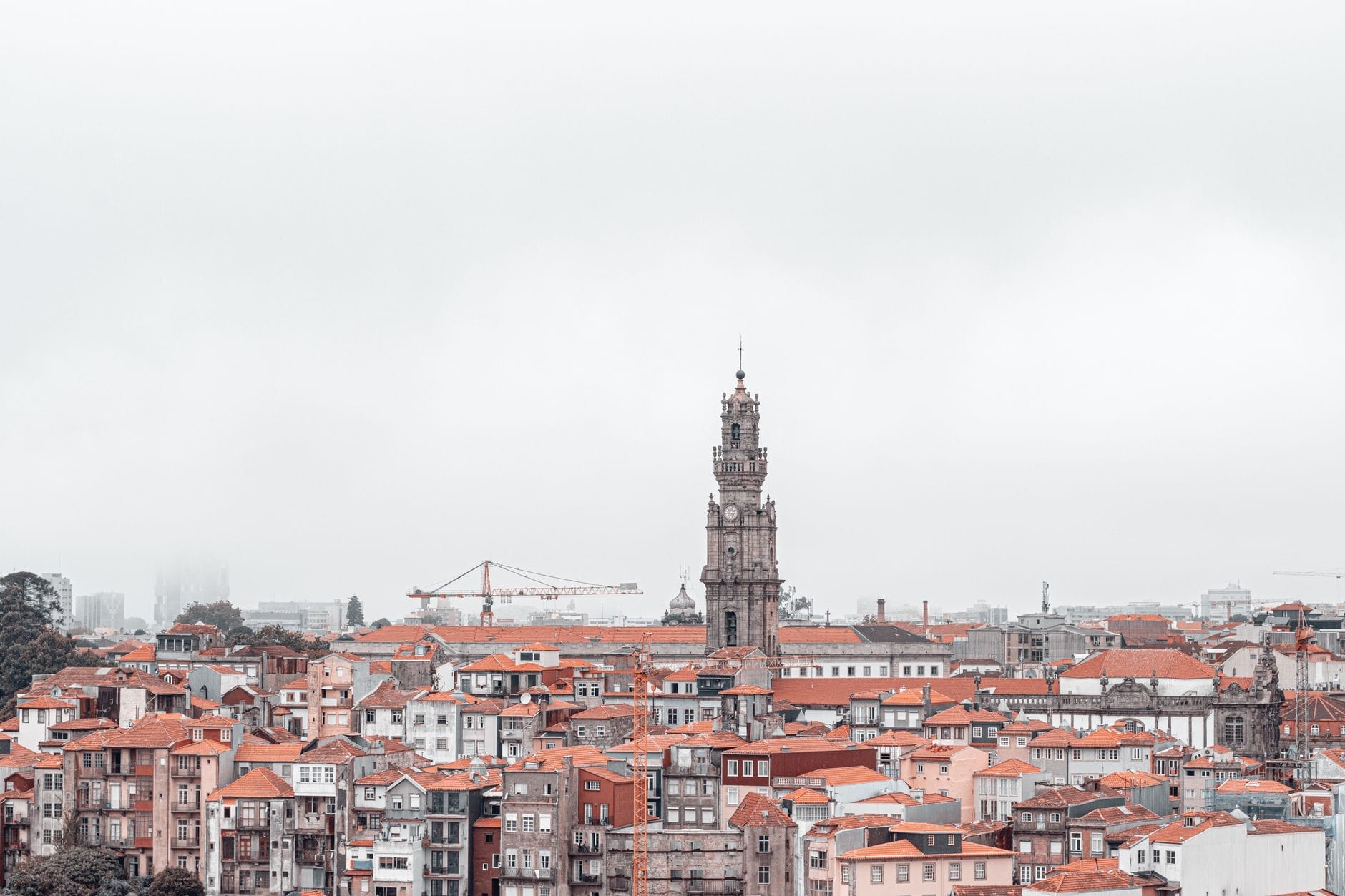
A five-minute walk west from São Bento up Rua dos Clérigos brings you to Clérigos Tower, the baroque bell tower that has served as Porto's visual landmark since 1763. Climbing its 225 steps rewards you with the clearest orientation view in the city: Ribeira and the Douro directly south, the tiled rooftops of Bonfim to the east, and the green break of Palácio de Cristal's gardens to the west. The Clérigos Church at its base is one of the finest examples of Portuguese baroque architecture and worth at least a few minutes inside.
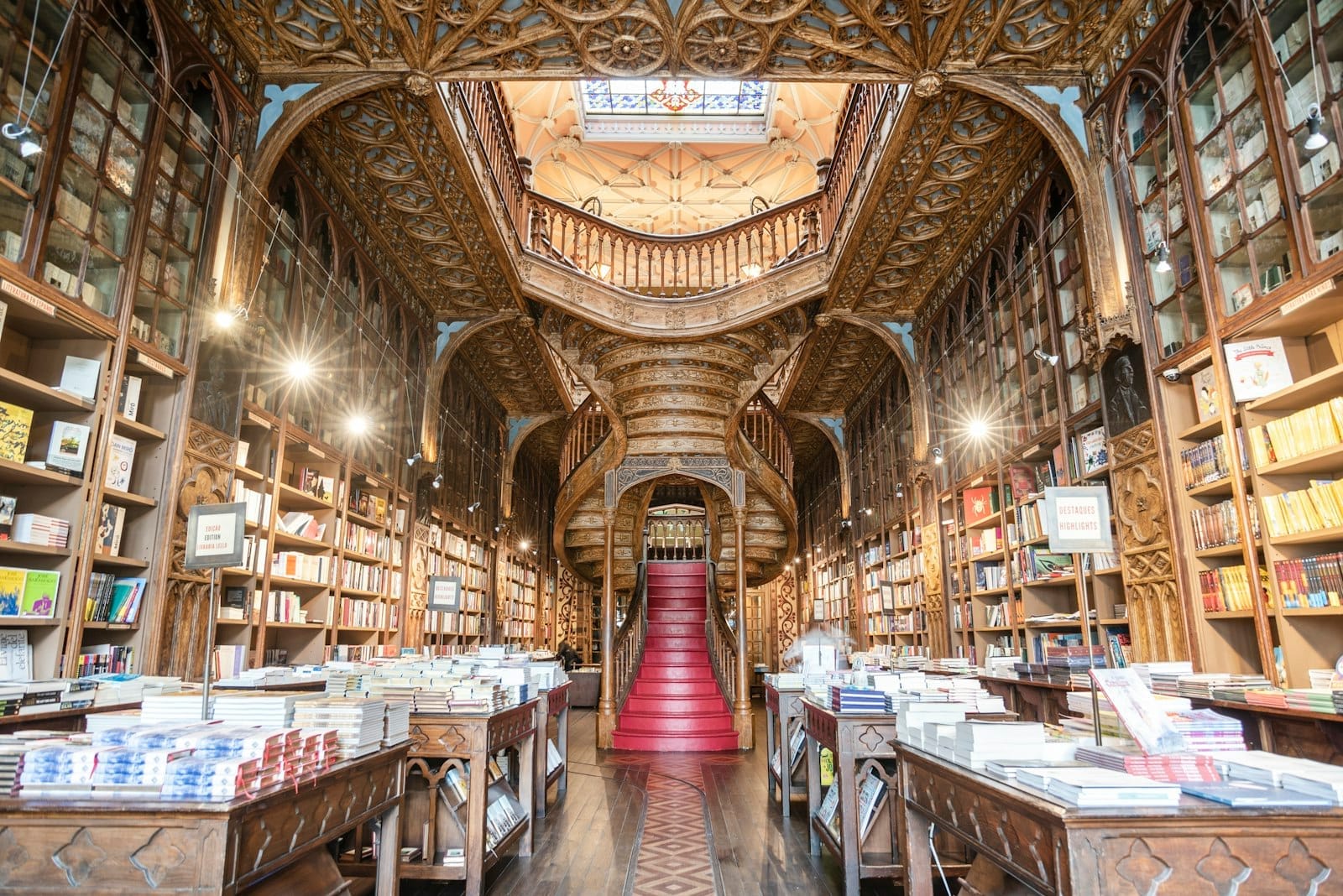
Slightly north of Clérigos, Livraria Lello draws significant crowds to its neo-Gothic façade and famous double staircase interior. Be aware that timed entry tickets are required and should be booked ahead, especially in summer. The bookshop is real and functional — buying a book applies the ticket cost as a discount — but the experience has become very crowded and is best appreciated outside peak hours.
The Avenida dos Aliados itself is worth walking slowly rather than rushing through as a corridor to something else. The flanking buildings represent a confident chapter of Porto's early 20th-century civic ambition, and the Porto City Hall at the northern end closes the vista in a way that makes the whole composition legible. Major city events and public celebrations — including the São João festival in June — happen here.
São Bento Station azulejo hall — free to enter, open during station hours
Clérigos Tower — paid climb, skip-the-line tickets recommended in summer
Livraria Lello — timed entry tickets required, book in advance
Avenida dos Aliados and Porto City Hall — free, best in morning light
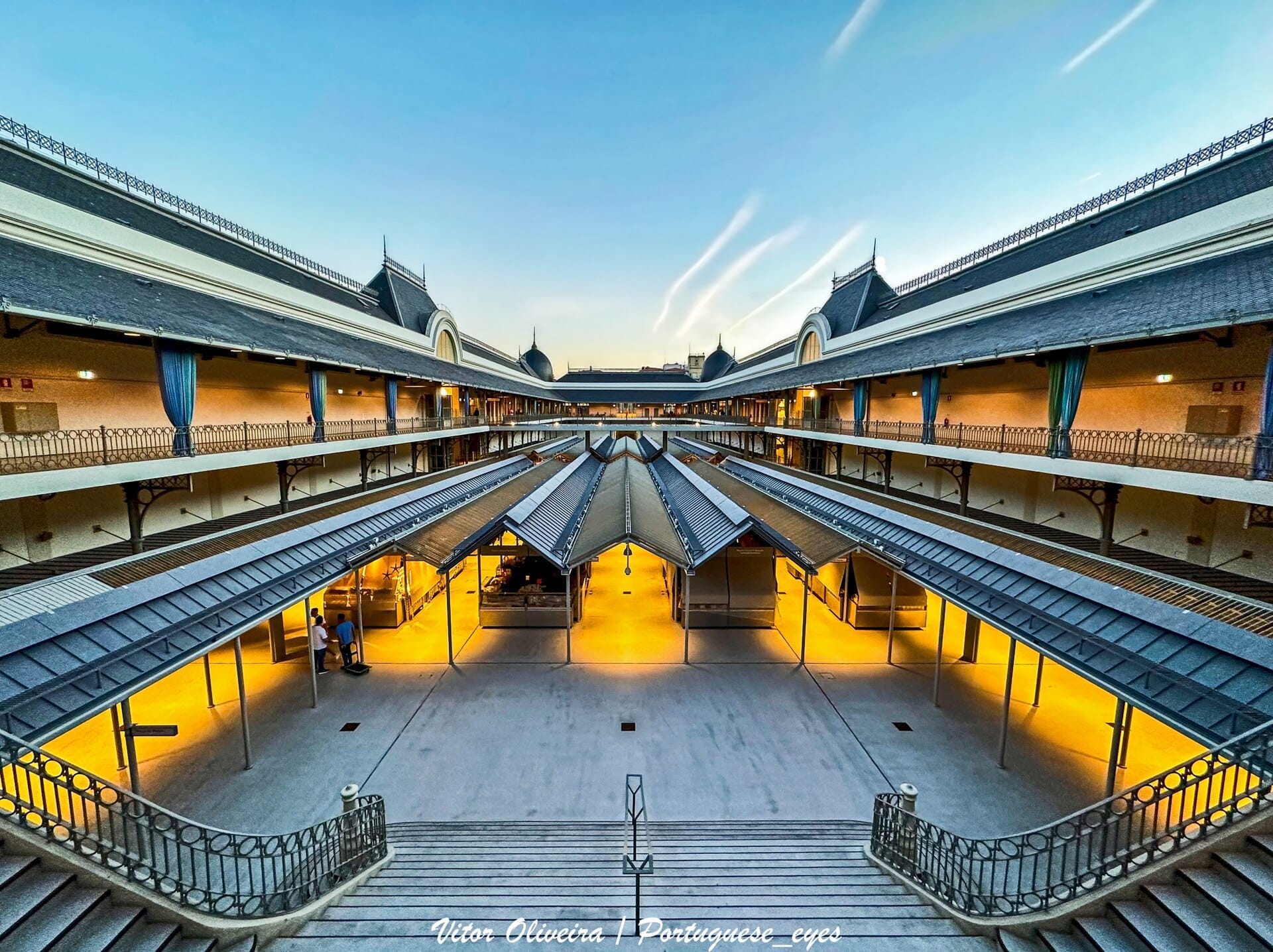
Mercado do Bolhão — restored 19th-century iron market hall, best on weekday mornings
Rua das Flores — tile-fronted street connecting Baixa south toward Ribeira
Eating & Drinking
Baixa's food scene ranges from tourist-facing restaurants along the main pedestrian streets to genuinely good counter-service cafés where workers eat a two-course lunch for under ten euros. The distinction often comes down to one block: the streets immediately bordering Avenida dos Aliados and Rua de Santa Catarina have higher prices and more English-language menus, while the parallel streets to the east and west offer more honest pricing. For a broader map of what Porto's food culture looks like, the Porto food guide covers the city's essential dishes and where to find them.
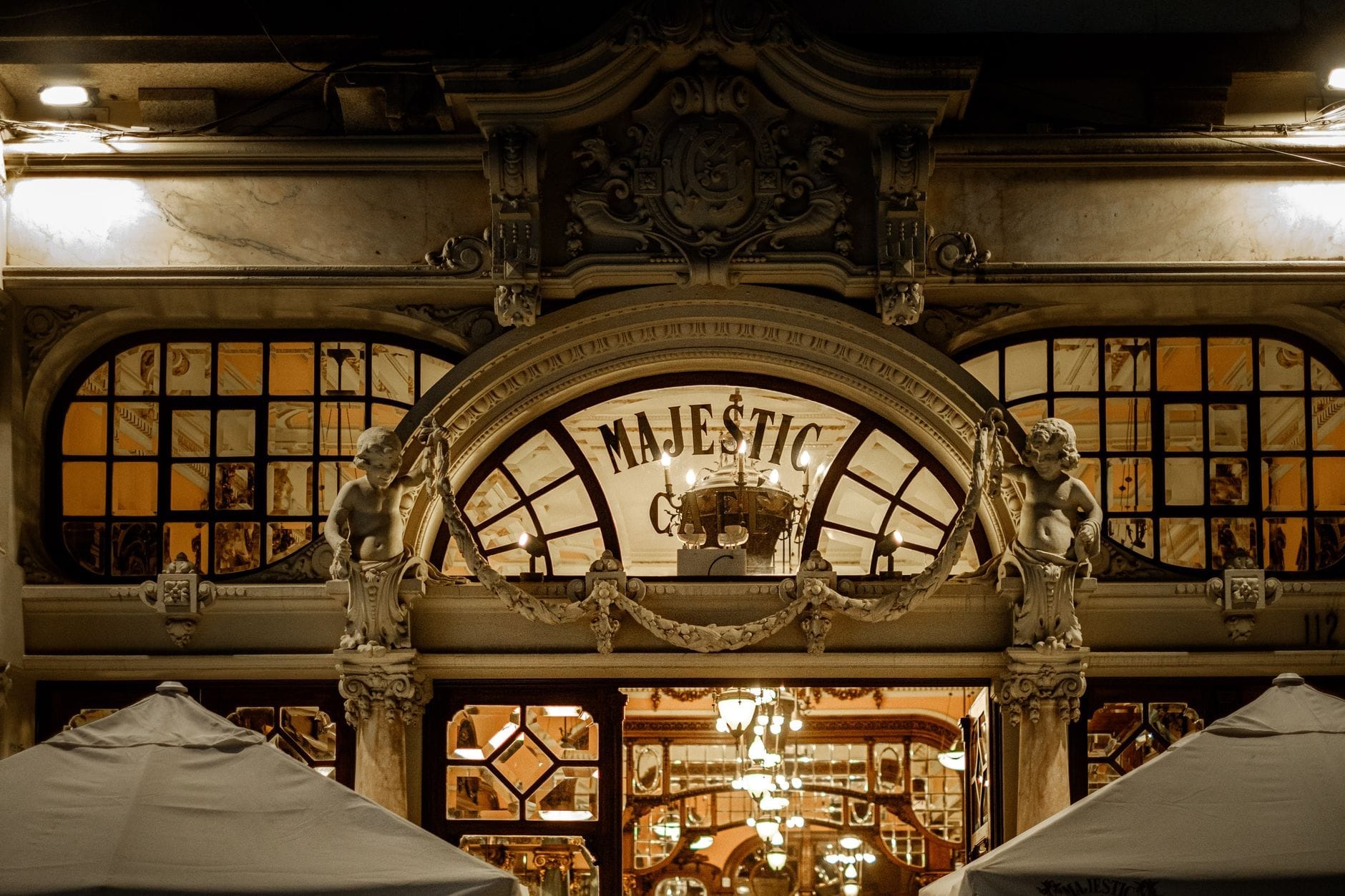
The Majestic Café on Rua de Santa Catarina is Baixa's most famous café, an Art Nouveau interior that has been operating since 1921. Coffee and pastries here are considerably more expensive than average, and there is usually a queue to be seated. It is worth seeing the room, but you should not expect a peaceful afternoon read — the experience has become performative. For actually good coffee at fair prices, the independent cafés on the side streets around Rua do Almada are a better call.
The nightlife bar scene along Galerias de Paris and Rua Cândido dos Reis is the densest concentration of bars in Porto, mostly serving cocktails and wine to a mixed crowd of university students, expats, and tourists. Prices are reasonable compared to western European capitals. Craft beer has a presence here with a handful of dedicated taprooms in the surrounding blocks. The scene starts slowly until around 11pm and peaks well after midnight on weekends.
💡 Local tip
For a traditional Portuguese lunch without tourist pricing, look for tascas (small family-run restaurants) on the streets between Rua do Almada and Rua Formosa, roughly between Bolhão and the Trindade Metro. A prato do dia (daily special) with bread, a drink, and dessert typically costs between 8 and 12 euros.
Getting There & Around
Baixa is the best-connected neighborhood in Porto for public transit. The Trindade Metro station, at the northern end of Avenida dos Aliados, is an interchange point serving multiple lines and is the most useful single hub for getting to and from the airport, Boavista, and the western neighborhoods. Metro Line D (Yellow) connects Trindade south to Jardim do Morro in Vila Nova de Gaia, giving direct access to the port wine lodge district across the river. For general navigation across Porto, the Porto transport guide covers fares, the Andante card system, and route logic.
São Bento Station handles suburban rail lines rather than metro — it connects Porto to the Douro Valley rail route and coastal towns like Aveiro. If you are planning a Douro Valley day trip, São Bento is your departure point. The station is a two-minute walk south from Praça da Liberdade.
Most of Baixa's core attractions are within a 15-minute walk of each other on relatively flat ground — the notable exception is anything heading south toward Ribeira, which involves a steep descent of about 10 to 15 minutes, and a steep return climb. Taxis and ride-hailing apps (Uber and Bolt both operate in Porto) are a practical option for that uphill return trip if you are not up for the gradient. The historic Tram Line 1, which runs along the Douro waterfront, departs from near the riverside rather than Baixa itself, so you need to descend first.
Francisco Sá Carneiro Airport is approximately 11 km from Baixa. Metro Line E connects the airport to Trindade in roughly 30 to 35 minutes using a Z4 Andante ticket. This is generally the most straightforward option for independent travelers arriving without significant luggage. Taxis and ride-hailing apps are faster in light traffic but prices vary.
Where to Stay
Baixa makes practical sense as a base if you want to walk to the city's major landmarks and have easy metro access without needing a car. Most of Porto's highest-visited attractions — São Bento, Clérigos, Lello, the historic Rua das Flores corridor toward Ribeira — are within 15 minutes on foot. That convenience has a cost: this is not a quiet residential neighborhood, and rates here reflect central location demand.
Accommodation options in Baixa range from budget hostels near the nightlife streets to mid-range and upscale hotels on and near Avenida dos Aliados. For a full breakdown of Porto's neighborhoods by traveler type, the Porto accommodation guide compares Baixa against alternatives like Cedofeita, Bonfim, and Ribeira. The key trade-off is convenience versus character: Baixa maximizes access, while neighborhoods like Cedofeita or Bonfim offer a more residential pace at generally lower prices.
The best accommodation choices within Baixa sit on the Avenida dos Aliados itself or on the parallel streets running north-south between Aliados and Rua do Almada. These positions give you central access while keeping some distance from the loudest bar streets. Avoid rooms facing the Galerias de Paris corridor unless you plan to be out late yourself.
ℹ️ Good to know
Baixa suits: first-time visitors who want to walk to major landmarks, travelers using Porto as a hub for day trips by train or metro, and anyone who wants to be in the middle of the action at night. It suits less well: light sleepers, families with young children, and travelers looking for a more local residential atmosphere.
Practical Verdict
Baixa earns its position as Porto's default central neighborhood through sheer logistical convenience, but it is not the most atmospheric place to actually live the city. The streets around Avenida dos Aliados have been polished for visitors and shoppers, and some of the spontaneity that makes Porto compelling — the crumbling tiled façades, the backstreet fado bars, the fishing-neighborhood calm — is more easily found in Ribeira to the south or in the parishes of Bonfim to the east.
That said, dismissing Baixa as purely commercial misses the texture that survives in its side streets. The iron-frame structure of Mercado do Bolhão, restored in recent years and well worth a morning visit, still hosts local vendors selling produce and dried goods. The baroque grandeur of Clérigos is genuinely impressive at close range. And the energy of Avenida dos Aliados during one of Porto's major festivals — particularly the São João festival in June — is something the quieter neighborhoods simply cannot replicate.
TL;DR
Baixa is Porto's central downtown district, anchored by Avenida dos Aliados, São Bento Station, and the streets connecting major landmarks including Clérigos Tower and Livraria Lello.
Best for: first-time visitors, transit-dependent travelers, and anyone who wants to walk to Porto's main landmarks and use Trindade Metro as a hub for the rest of the city.
Be aware: the nightlife corridor around Galerias de Paris is genuinely loud Thursday through Saturday nights — accommodation choice within Baixa matters significantly.
Daytime Baixa rewards slow walking over rushing between sights; the early morning hours on Avenida dos Aliados, and weekday mornings at Mercado do Bolhão, offer the most authentic version of the neighborhood.
For a more residential or less tourist-facing experience, consider basing yourself in Cedofeita or Bonfim instead, both of which are a short walk or metro ride from Baixa's central attractions.
Porto has over 40 museums covering everything from contemporary art and Port wine to football trophies and Age of Discovery history. This guide picks the best across every category, with tips on when to go, what to book ahead, and how to get the most from each visit.
Porto rewards visitors differently depending on the season. This guide breaks down every month of the year, covering weather patterns, crowd levels, festivals, and practical advice so you can pick the window that matches your priorities.
Porto sits at the center of one of northern Portugal's richest travel regions. Within two hours by train or car, you can reach terraced vineyards, medieval birthplace cities, canal towns, and wild national park landscapes. This guide covers the best day trips from Porto, with practical advice on how to get there and what to do.
The Douro Valley is one of the most rewarding day trips you can make from Porto. Terraced vineyards, river cruises, winery lunches, and hilltop villages await, but you have to plan carefully to avoid cramming too much into one day. This guide tells you exactly how.
Porto rewards slow, curious walkers more than almost any city in Europe. From UNESCO-listed riverfront promenades and azulejo-covered church facades to sweeping hilltop viewpoints and ancient market halls, the city's best experiences are largely free. This guide covers 23 genuinely no-cost attractions across Porto and Vila Nova de Gaia.
Porto's public transport network is more straightforward than it looks, but a few missteps — buying the wrong ticket, boarding a tram without cash, or missing a zone validation — can cost you time and money. This guide covers every option: the metro, STCP buses, historic trams, funiculars, taxis, ride-hailing apps, and how to get from Francisco Sá Carneiro Airport to the city centre without overpaying.
Port wine is Porto's most famous export, but most visitors don't realize the lodges are actually across the river in Vila Nova de Gaia. This guide covers the top cellars, what tastings cost, how to book, and the differences between port styles so you get the most from your visit.
Two days in Porto is enough to cover the city's most iconic sights — if you sequence them well. This itinerary moves logically through the historic centre, the Douro riverfront, Vila Nova de Gaia's port wine lodges, and a few stops most weekend guides skip entirely.
Francisco Sá Carneiro Airport is your gateway to one of Europe's most rewarding cities. This guide covers every transfer option from the airport to central Porto, seasonal crowd patterns, ticketing details, and the trade-offs between metro, taxi, and private transfer so you can arrive without stress.
Porto's azulejo tiles are one of the city's most distinctive and photographed features, covering church facades, railway stations, and entire building exteriors in intricate ceramic panels. This guide covers the best sites, historical context, practical visiting tips, and where to buy or create your own tiles.
Porto sits minutes from a long stretch of Atlantic coastline, with beaches ranging from wide urban surf breaks to quiet southern coves backed by pine forests. This guide covers the best beaches near Porto, how to get there, and what to do along the way.
Porto's six bridges across the Douro are more than infrastructure: they are the city's most dramatic landmarks, connecting historic quarters, framing postcard views, and offering walks you will remember long after leaving. This guide covers every bridge, how to experience each one, and the best spots to see them all.
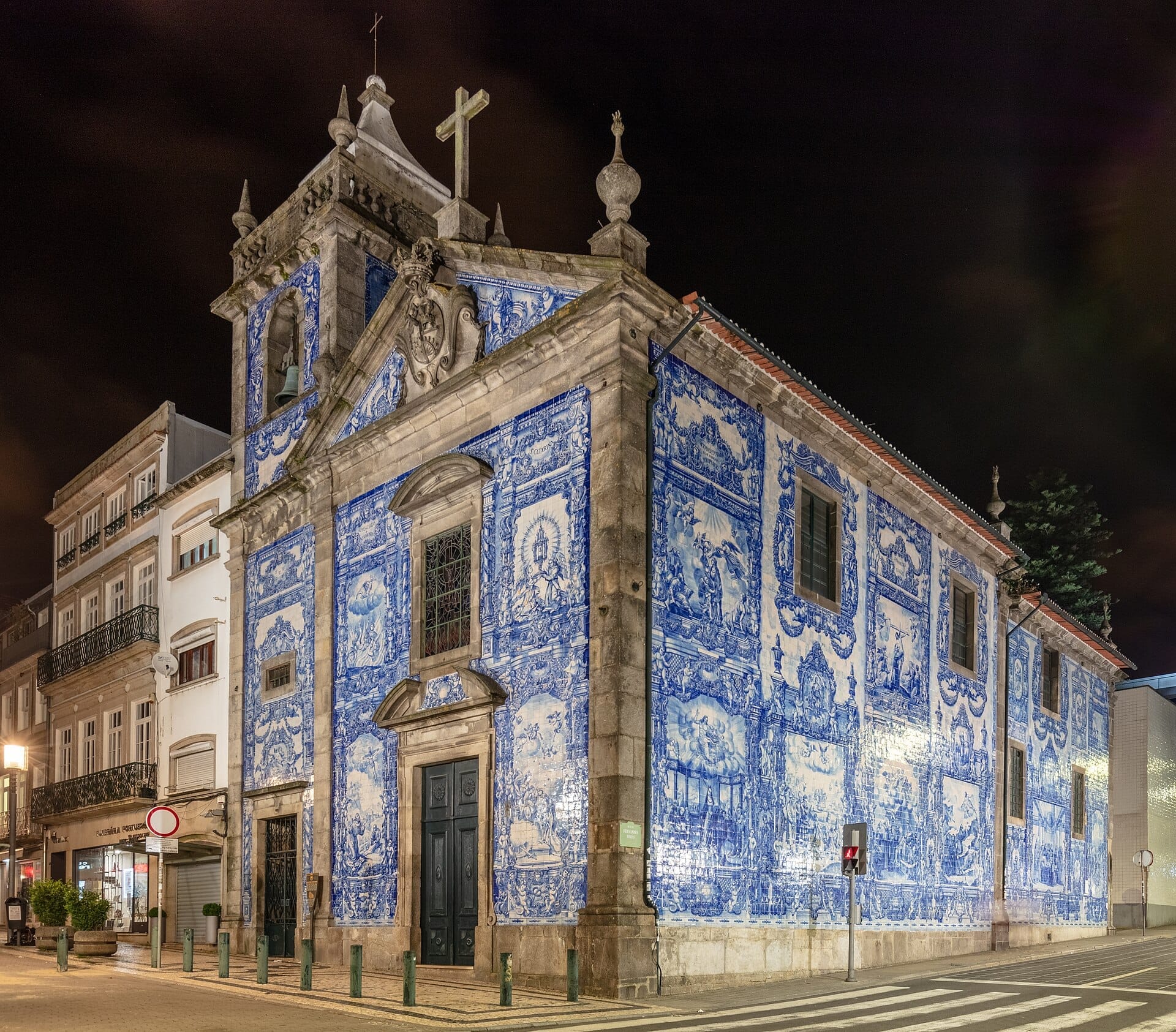
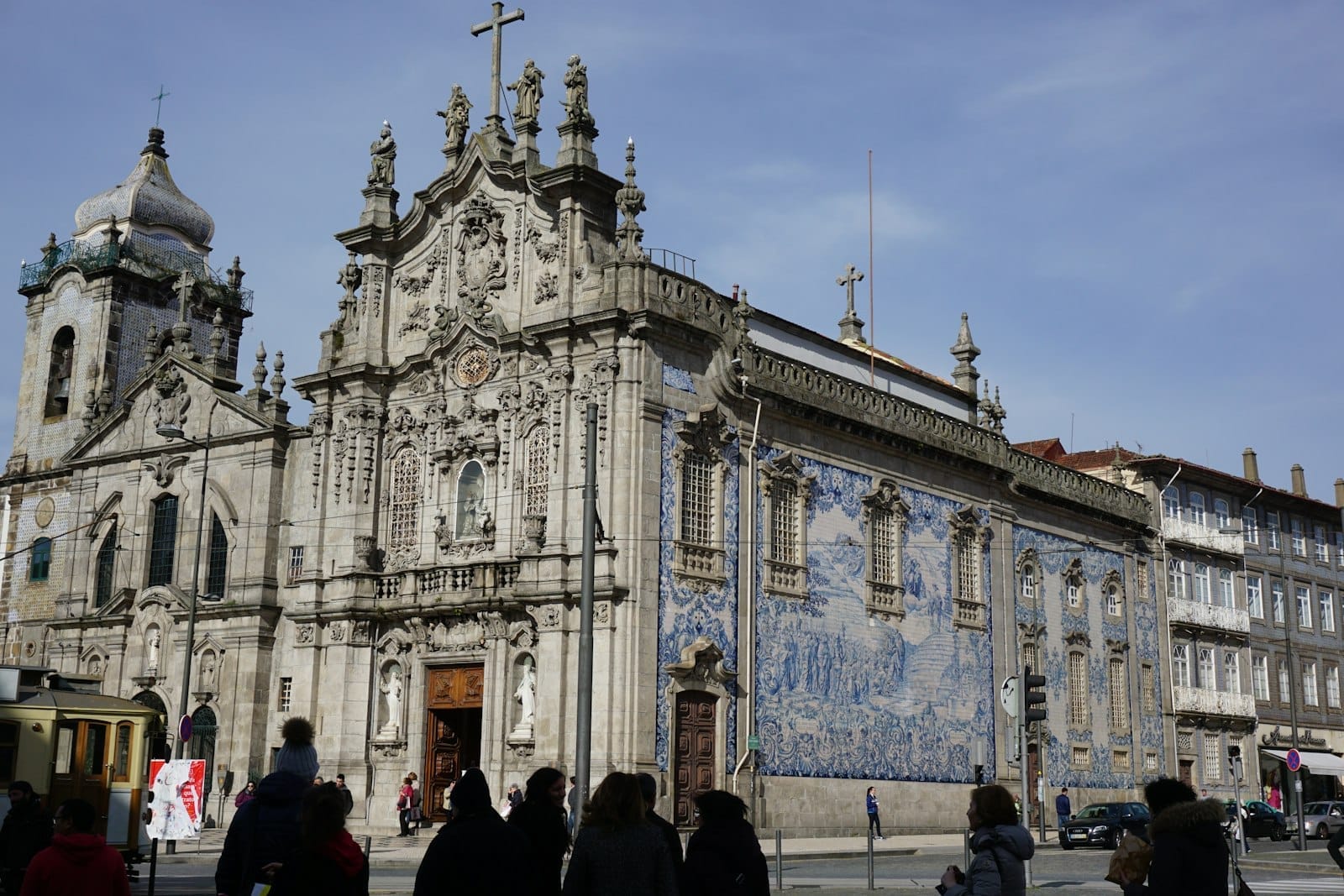
Porto's churches are among the most architecturally diverse in Europe, layering Romanesque foundations, Gothic cloisters, Baroque gilded interiors, and hand-painted azulejo facades within a walkable historic centre. This guide covers the essential religious monuments, from the cathedral on its granite hilltop to the tile-wrapped chapels of Baixa.
Porto has a dedicated fado scene that goes well beyond tourist packages. This guide breaks down the best venues, real price ranges, how to book, and what separates a genuine fado experience from a commercial one.
Porto rewards those who wander past the obvious. This guide takes you beyond the postcard stops to the viewpoints, green spaces, architectural surprises, and local haunts that most visitors walk straight past. From a free rooftop terrace above the Douro to a modernist swimming pool carved into the Atlantic coastline, Porto's best-kept secrets are hiding in plain sight.
Three days is the sweet spot for Porto. This itinerary covers the UNESCO-listed historic centre, the port wine lodges of Vila Nova de Gaia, a Douro Valley excursion, and optional coastal time at Foz, with practical tips on where to eat, what to skip, and how to get around without wasting time.
Porto's luxury scene is more intimate than many visitors expect: think palace hotels in azulejo-clad historic buildings, Michelin-starred dining with panoramic Douro views, and private rabelo boat charters rather than sprawling resort complexes. This guide covers the best 5-star hotels, fine dining, and premium experiences in Porto Portugal, with clear notes on what's worth the premium and what isn't.
Porto's nightlife runs late, starts later, and surprises almost every visitor. This guide breaks down the best neighbourhoods, bars, clubs, and after-dark experiences in Porto, Portugal, with practical tips on timing, pricing, and what to skip.
Porto is one of Western Europe's most affordable city-break destinations, but only if you know where to spend and where to save. This guide covers free sights, budget transport, cheap local food, and the common mistakes that quietly drain your wallet.
Porto, Portugal ranks among Europe's lowest-crime destinations, but that doesn't mean risk-free. This guide breaks down exactly what threats exist, which neighborhoods and situations to watch, and the practical steps that make a real difference.
From the historic Mercado do Bolhão to the independent boutiques of Cedofeita, Porto rewards shoppers who plan ahead. This guide covers every major market, the best shopping streets by neighborhood, what to actually buy, and the practical details most guides leave out.
Porto and Lisbon are Portugal's two great cities, separated by 310 km and distinct in character. This guide breaks down the real differences in cost, atmosphere, sightseeing, food, and logistics so you can decide which to visit — or plan both into one trip.
Porto is one of Europe's most walkable historic cities, and you do not need a paid tour to see the best of it. This guide covers the classic one-day route through the UNESCO-listed old town, Ribeira waterfront, and Vila Nova de Gaia, with timing advice, entry costs, and practical tips for every stage.
Porto is a great destination for families, with interactive museums, free parks, river cruises, and cable cars all within easy reach of the historic centre. This guide covers the best activities for children of all ages, what to skip, and practical logistics for navigating Porto with kids in tow.
Porto, Portugal's second-largest city, has earned its reputation as one of Europe's most compelling destinations. But is it right for your trip? This guide looks at costs, crowds, highlights, and drawbacks to help you decide.
Porto rewards couples with a rare combination of scenic riverbanks, centuries-old wine culture, Fado music, and walkable historic streets. This guide covers the most romantic experiences in the city, from sunset cruises on the Douro to garden strolls at the Crystal Palace, with practical notes on what is worth your time and money.
The Festa de São João do Porto is Porto's biggest annual celebration, held every year on the night of 23–24 June. This guide covers the history, traditions, schedule, best viewing spots, food, transport, and practical tips to help you plan around one of Portugal's most spectacular street festivals.
Porto is one of Europe's most rewarding cities for curious travelers. This guide covers the best things to do in Porto, Portugal, from crossing the Dom Luís I Bridge to exploring baroque churches, tasting port wine, and eating seafood in Matosinhos, with real logistics and no filler.
Porto's food culture runs deep, shaped by northern Portuguese cooking traditions that prize hearty ingredients, salt cod, and rich slow-cooked stews. This guide covers the essential dishes, where to find them, what they actually cost, and a few things worth skipping.
Choosing where to stay in Porto shapes your entire trip. This guide breaks down every major neighborhood, from the historic riverfront of Ribeira to the relaxed beachside calm of Foz do Douro, with clear notes on who each area suits, typical price ranges, and practical transport details.