Porto's Azulejo Tiles: A Guide to the City's Best Tile Art
Porto's azulejo tiles are one of the city's most distinctive and photographed features, covering church facades, railway stations, and entire building exteriors in intricate ceramic panels. This guide covers the best sites, historical context, practical visiting tips, and where to buy or create your own tiles.
Plan and book this trip
Tools from our partner Travelpayouts help you compare flights and hotels. If you book through them, we may earn a commission at no extra cost to you.
Flights
Hotels map
TL;DR
- Azulejos are Portuguese glazed ceramic tiles with roots in Moorish-Islamic art; Porto has some of the finest examples in the country, concentrated in churches, railway stations, and street facades.
- The unmissable starting point is São Bento Railway Station, whose main hall is covered in over 20,000 azulejo panels depicting Portuguese history.
- Most tile sites are free to view from the street; interior access to churches typically costs little to nothing, though hours vary.
- Blue-and-white is the iconic palette, but historical Porto tiles also appear in greens, yellows, and polychrome combinations.
- For broader context, pair your tile tour with a visit to Igreja de São Francisco and plan your route using our Porto walking tour guide.
What Are Azulejos, and Why Is Porto Full of Them?
The word azulejo comes from the Arabic word 'al-zulayj,' meaning polished stone. Moorish craftsmen used geometric tilework extensively across North Africa and the Iberian Peninsula, and the technique arrived in Portugal through Islamic Spain. What Portugal did next was remarkable: it absorbed those influences, developed its own production methods, and eventually turned the glazed ceramic tile into a national visual language.
Porto, in particular, became a living museum of the form. Walk almost any historic street in the city center and you will encounter tiled church facades, azulejo-covered building exteriors, and monumental interior panels that function as illustrated history books. This is not decoration for decoration's sake. In eras before mass literacy, these pictorial tile panels communicated religious narratives, military victories, and noble lineages to people who could not read.
A common misconception is that azulejos are always blue and white. That pairing, inspired by Dutch Delftware and Chinese porcelain that arrived via trade routes, became dominant from the late 17th century onward. But earlier panels often feature green, yellow, and deep ochre tones, and 20th-century examples embrace bold polychrome compositions. Porto has all of these, spread across different neighborhoods and centuries, which means a good tile itinerary is also a compressed art history lesson.
ℹ️ Good to know
Azulejo panels on building exteriors are viewable at any hour, year-round, and cost nothing. Interior church panels typically require entering during opening hours, which vary by site and season. Always verify current hours on the official venue website or at the door before making a special trip.
The Essential Azulejo Sites in Porto
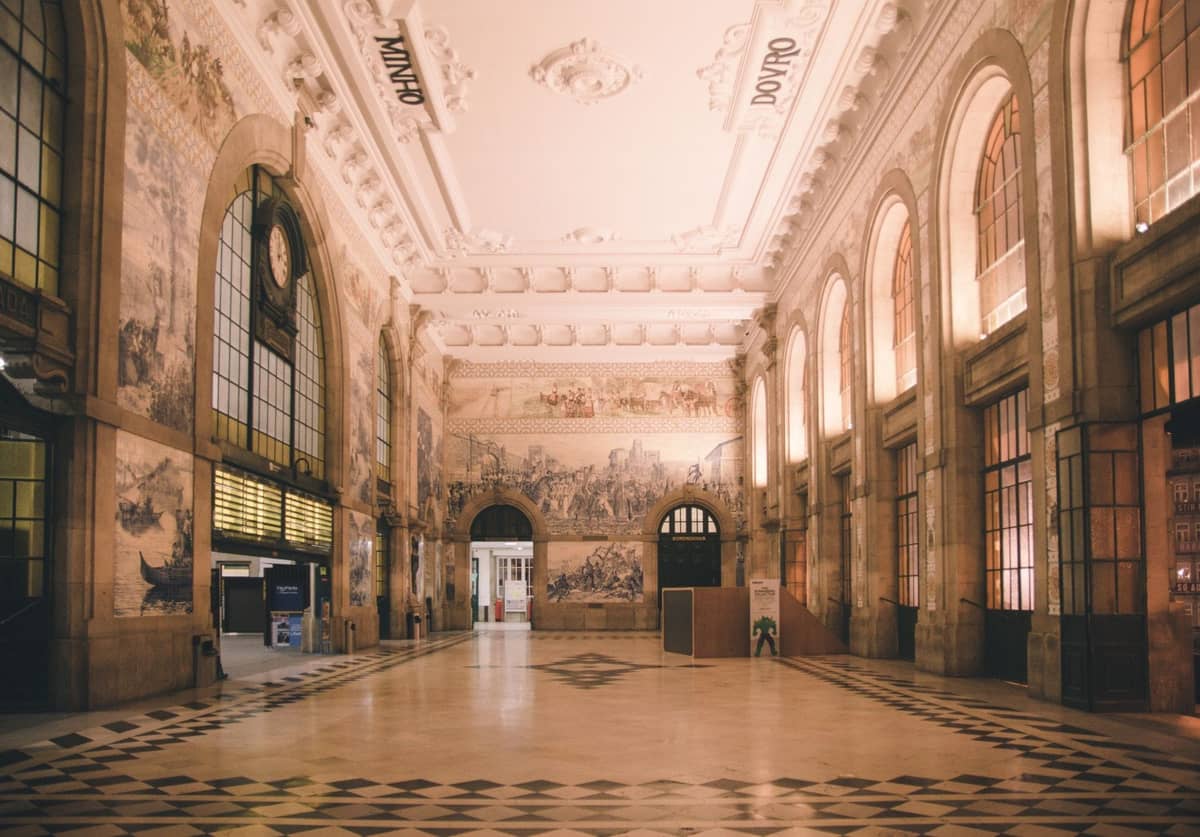
The non-negotiable starting point for any tile itinerary is São Bento Railway Station in Praça de Almeida Garrett. Its main concourse is lined with around 20,000 blue-and-white tiles designed by Jorge Colaço and installed between 1905 and 1916. The panels depict scenes from Portuguese history: the conquest of Ceuta, the Battle of Valdevez, and daily rural life from across the country. Even if you have no train to catch, the station functions as a free public gallery. Go early in the morning to avoid tour groups.
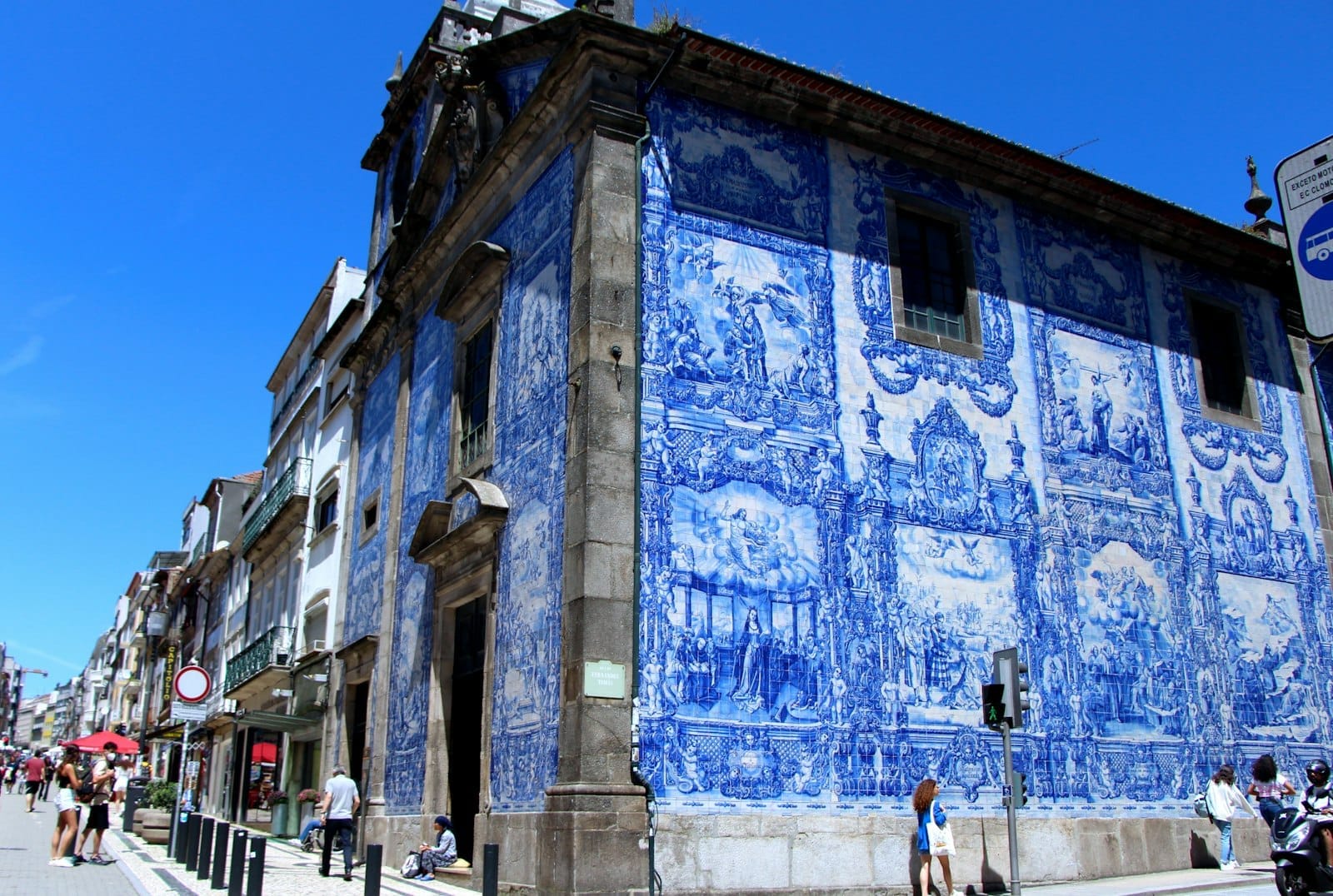
A short walk from São Bento brings you to the Chapel of Souls (Capela das Almas) on Rua de Santa Catarina. Its entire exterior facade is tiled in blue and white, covering the walls with scenes from the lives of Saint Francis of Assisi and Saint Catherine. The current tile covering was added in the early 20th century and contains around 16,000 individual tiles. It is one of the most photogenic facades in the city, and the narrow street means you need to step back to take in the full composition.
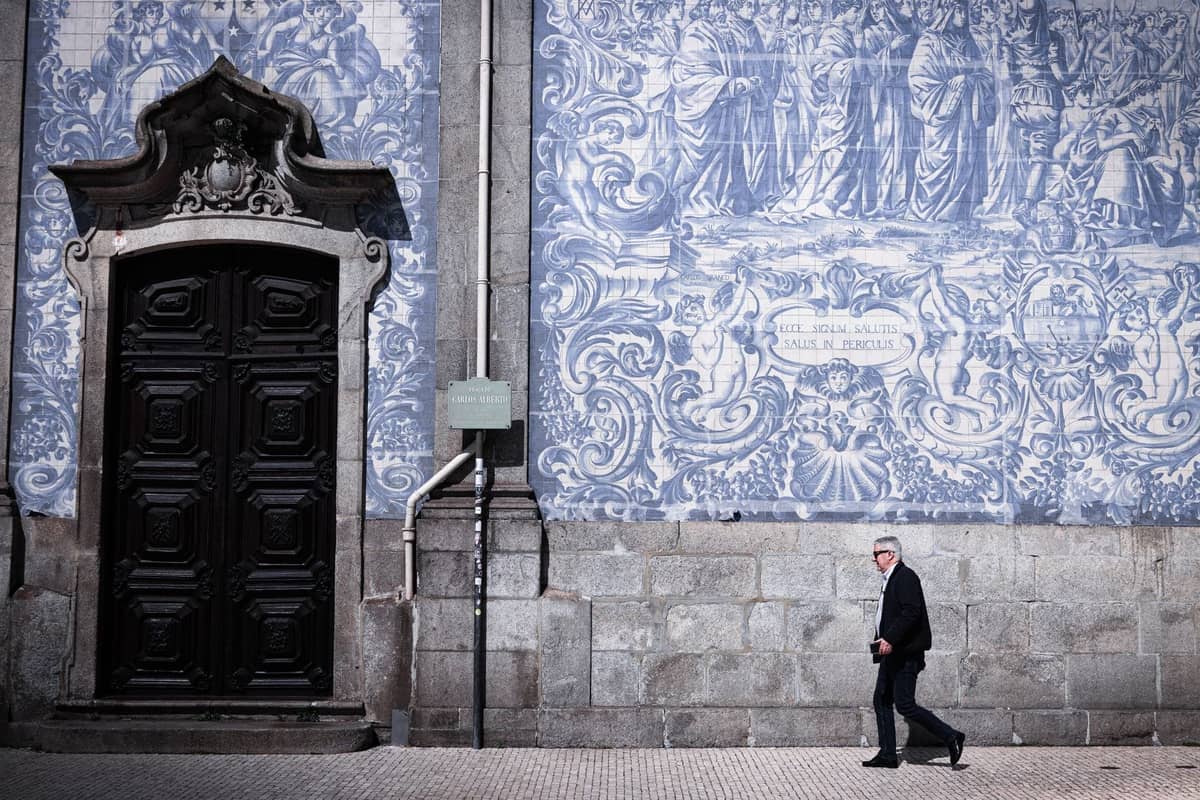
The Igreja do Carmo on Rua do Carmo features a spectacular lateral facade panel added in 1912, depicting the founding of the Carmelite Order. The panel's scale is deliberately theatrical: it was designed to be seen from across the street, and the detail rewards close inspection. Directly beside it, sharing a party wall so narrow it barely exists, stands the Igreja dos Carmelitas. The two churches sit almost flush against each other, a quirk of ecclesiastical law that prohibited nuns and monks from sharing a building.
- São Bento Railway Station Over 20,000 blue-and-white tiles by Jorge Colaço; free to enter during station hours; best visited before 9am.
- Capela das Almas (Chapel of Souls) Full exterior facade in blue-and-white tile panels; located on Rua de Santa Catarina; viewable from the street at any time.
- Igreja do Carmo Large-scale lateral facade panel from 1912; pair it with a visit to the adjacent Igreja dos Carmelitas.
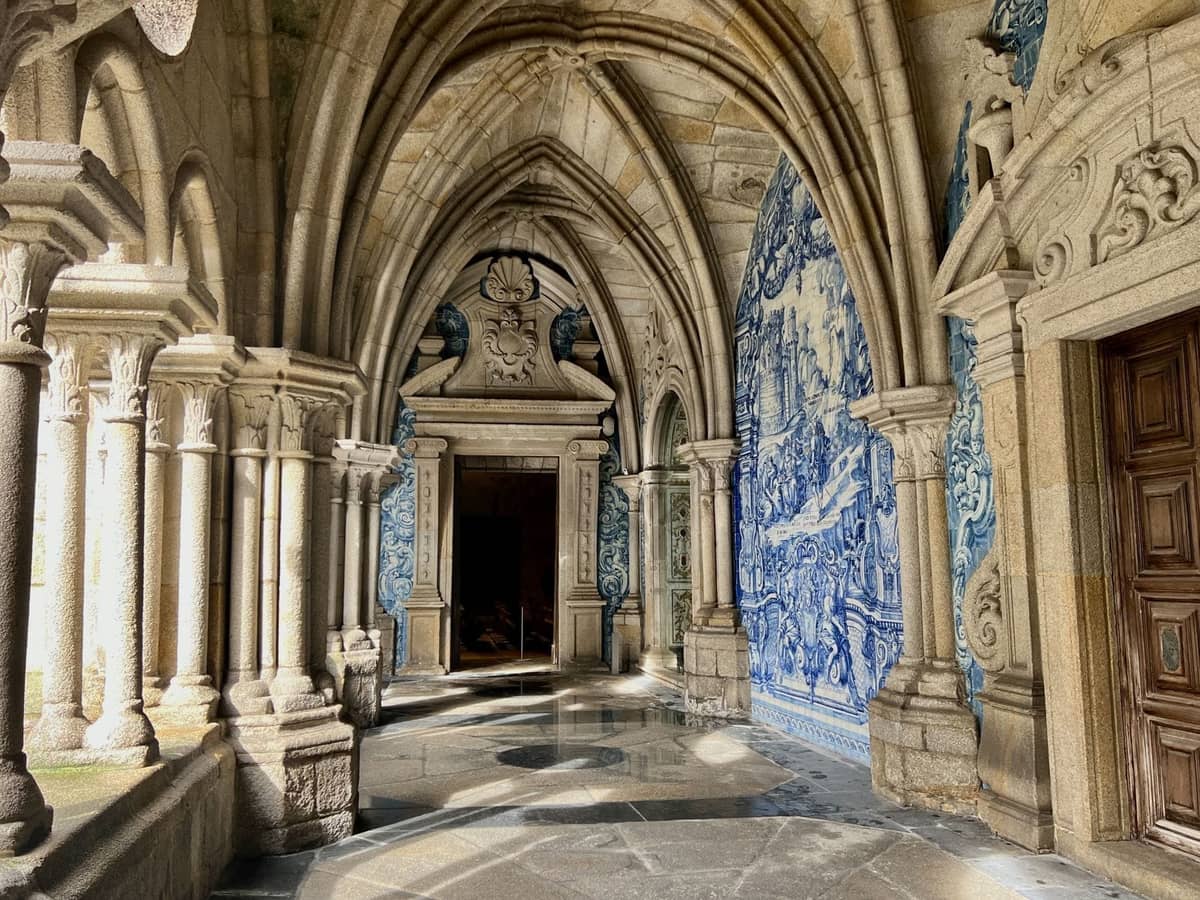
- Porto Cathedral (Sé do Porto) The Gothic cloister contains 18th-century azulejo panels depicting the life of the Virgin Mary and scenes from the Song of Solomon; entry to the cloister requires a small ticket.
- Painel da Ribeira Negra A large contemporary tile mural near the Douro riverfront; part of a city-supported public art initiative and free to view from the street.
The Porto Cathedral is primarily known for its Romanesque and Gothic architecture, but the cloister is the tile highlight. The 18th-century panels here are among the most carefully preserved in the city. Entry to the cathedral nave is free, but the cloister requires a small admission fee. Verify the current price before visiting, as it changes periodically. The cloister is compact, so crowds build quickly on weekend afternoons.
⚠️ What to skip
Several tile sites in Porto have restricted photography policies or charge separately for interior access. The cathedral cloister, in particular, requires a ticket that is separate from nave entry. Always check signage at the entrance rather than assuming free access throughout.
Understanding the Tile Styles: A Quick Visual Guide
Not all azulejos look the same, and being able to distinguish the styles helps you date a panel on sight and appreciate why certain examples are considered more significant. The earliest Portuguese tiles (15th and 16th centuries) draw directly from Moorish geometric traditions: repeating interlocking shapes in green, white, and blue, with no figurative content. These are rare in Porto but occasionally appear in museum collections.
By the 17th century, Portuguese tile makers shifted toward large figurative panels depicting religious scenes and aristocratic life. The palette broadened to include deep blues, yellows, and purples. The 18th century brought the iconic blue-and-white style, heavily influenced by Dutch and Chinese porcelain trade. This is the style most visitors associate with Porto, and it dominates the cathedral cloister and São Bento station. The 19th and early 20th centuries added a more illustrative, almost newspaper-cartoon quality to the figurative panels, which you can see on the Igreja do Carmo facade.
- 15th-16th century: geometric Moorish patterns, no figurative content, muted earth tones
- 17th century: large polychrome figurative panels, religious and aristocratic subjects
- 18th century: blue-and-white dominates, influenced by Dutch Delftware and Chinese porcelain
- 19th-early 20th century: detailed illustrative panels, often monumental in scale
- Contemporary: experimental installations, mixed color, sometimes commissioned by the city as public art
How to Plan Your Azulejo Walking Route
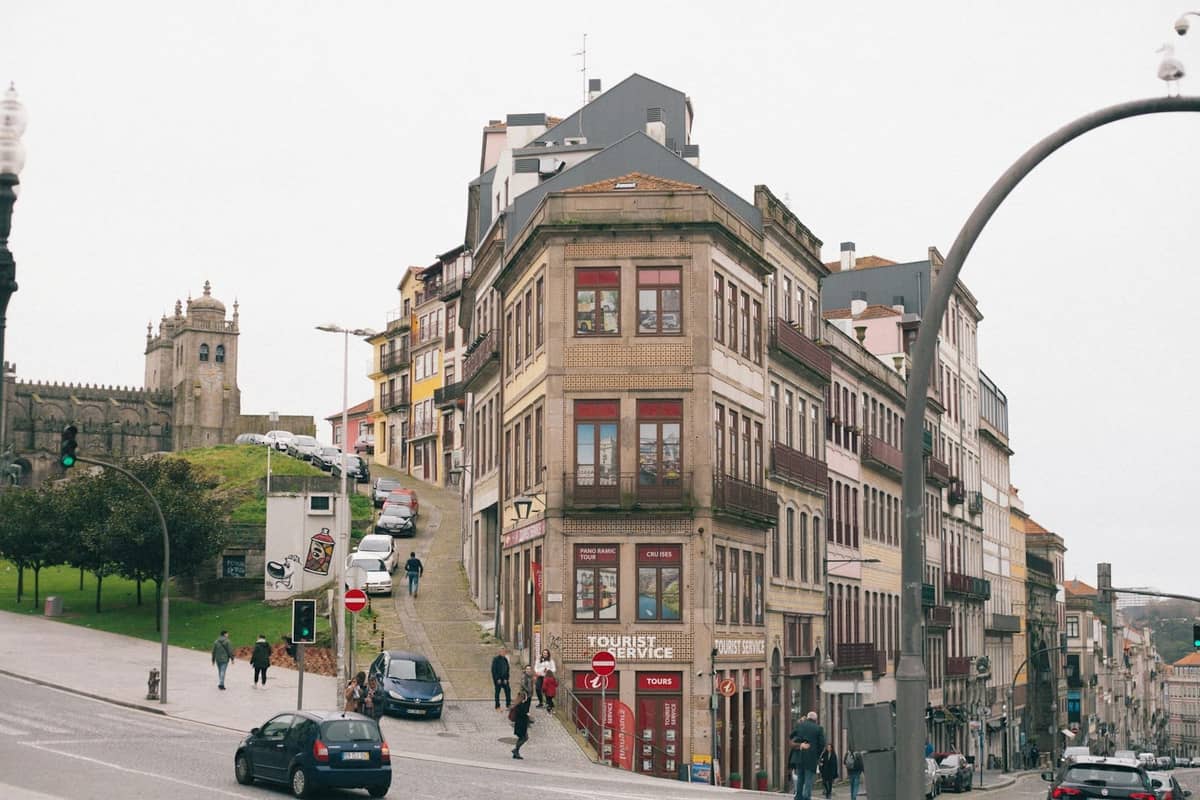
The majority of Porto's major tile sites cluster within walking distance of each other in the historic center, making a self-guided morning walk entirely practical. A logical route starts at São Bento, continues up Rua das Flores toward the Porto Cathedral, loops back via Rua do Carmo to see the Carmo facade, and finishes on Rua de Santa Catarina at the Chapel of Souls. The full circuit covers roughly 2 to 3 kilometers and takes between 90 minutes and 3 hours depending on how long you linger at each site.
For a broader look at the city's architecture and street life along the route, our Porto walking tour guide maps out the full historic center on foot. If you want to extend the tile itinerary to the Ribeira waterfront, the Painel da Ribeira Negra is about a 10-minute walk downhill from the cathedral. The Ribeira district also has scattered tile fragments on residential facades that reward slow, observant walking.
✨ Pro tip
The best light for photographing exterior tile facades hits the western-facing facades in the morning and eastern-facing ones in the late afternoon. The Carmo church lateral facade faces roughly west, so mid-to-late morning gives the clearest light without direct glare. The Chapel of Souls on Rua de Santa Catarina photographs well in overcast conditions, when diffuse light eliminates the harsh reflections from the glazed surface.
Tile Workshops, Shopping, and What to Avoid
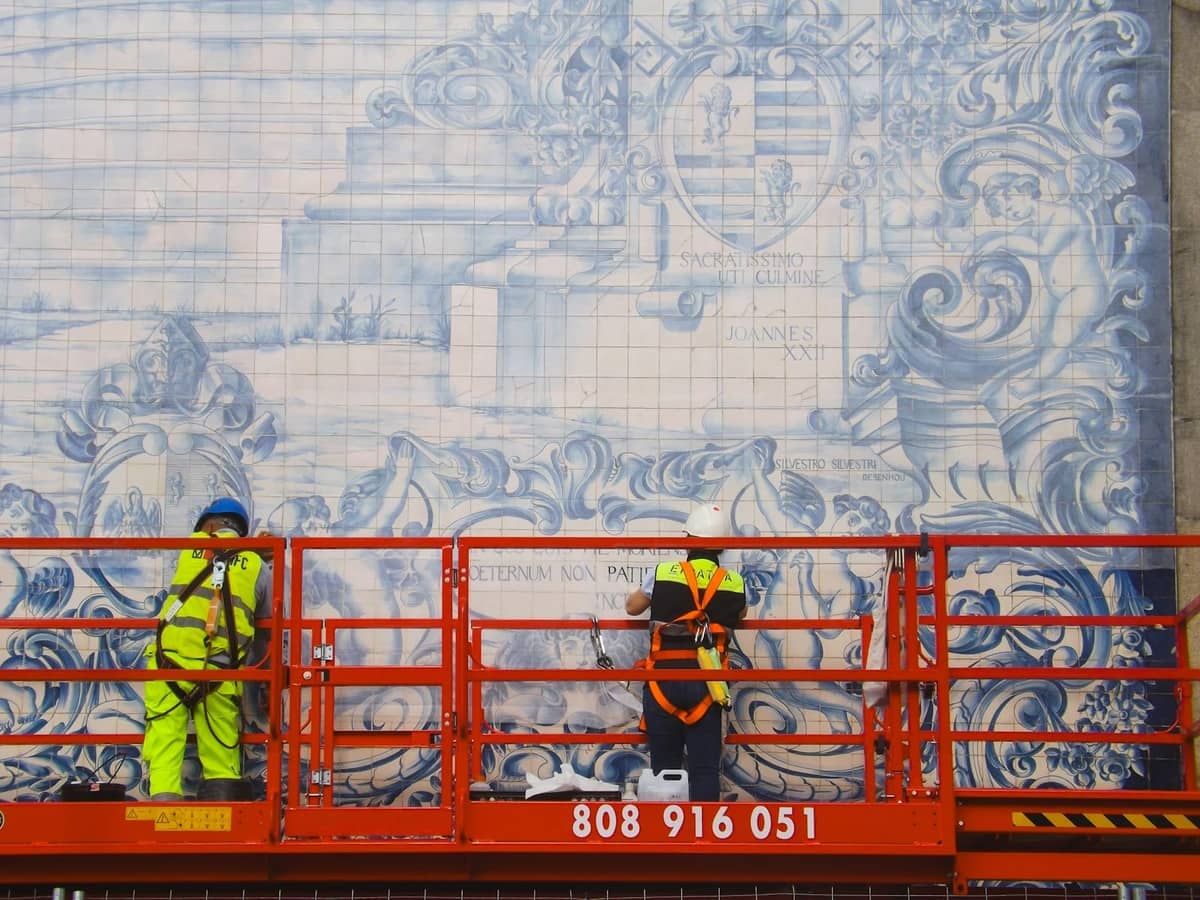
Porto has a solid range of options for buying azulejo-style tiles as souvenirs, but quality varies sharply. Mass-produced tiles sold in tourist shops near Rua de Santa Catarina are often printed ceramics, not hand-painted glazed tiles. The pattern is applied via screen printing rather than painted by hand, which significantly reduces both artistic value and durability. These are not necessarily bad purchases, but you should know what you are buying before paying premium prices.
For genuinely hand-crafted tiles and traditional production methods, look for specialist shops and studios. Names that appear consistently in reputable Porto shopping guides include Prometeu Artesanato, Fleurdelis, and Zinda.Atelier, though hours and locations should be verified before visiting. Tile-painting workshops are also available from multiple operators around the city center, where you can learn the basic technique and take home a tile you painted yourself. These typically run one to two hours and are suitable for adults and older children.
If shopping is part of your Porto visit, our Porto shopping guide covers the best areas and shops across all categories, including crafts and ceramics. For souvenirs that go beyond tiles, the Mercado do Bolhão is worth visiting for local food products and traditional crafts in a historic market setting.
Beyond the Classics: Less-Visited Tile Spots
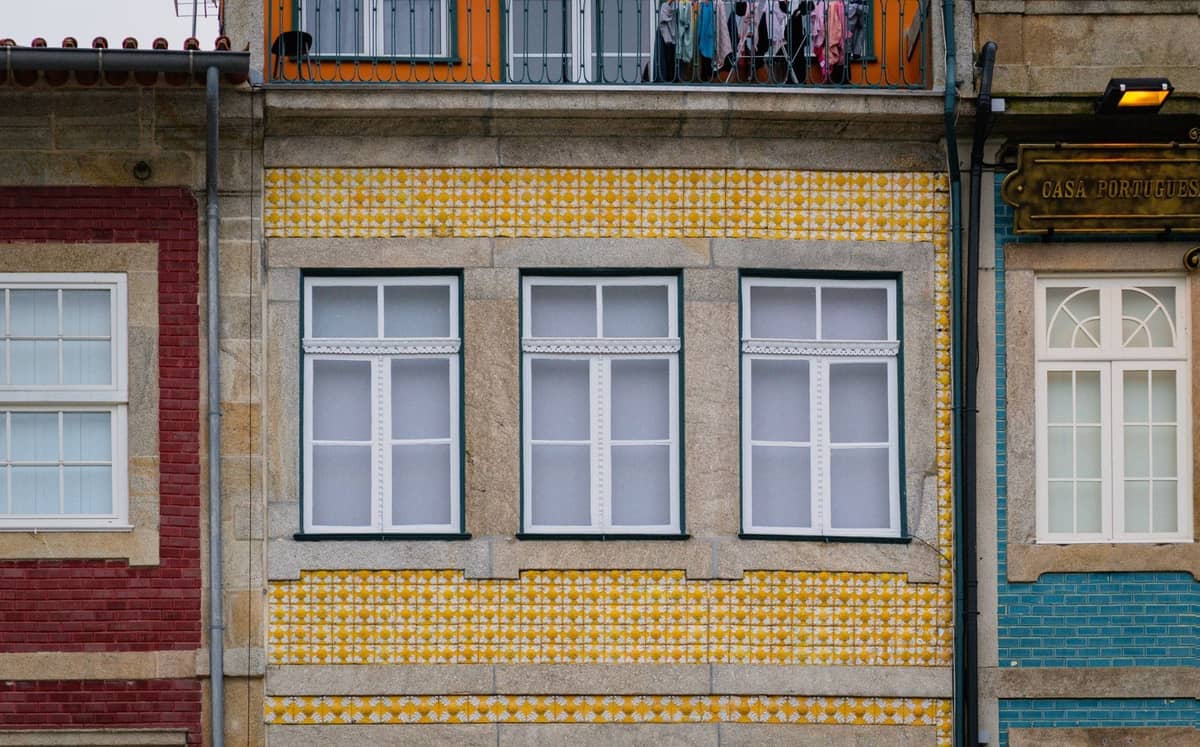
Most visitors cover São Bento and the Carmo facade and consider the tile itinerary complete. That is reasonable if time is short, but Porto rewards those who look further. The residential streets of Cedofeita and Bonfim have entire building facades covered in 19th and early 20th century tiles, often in polychrome geometric patterns rather than pictorial scenes. These are private residential buildings, not tourist attractions, so the correct etiquette is to appreciate them from the street.
Igreja de Santo Ildefonso, positioned on a hillside above the Batalha district, has an exterior facade covered in blue-and-white panels added in 1932 and depicting scenes from Ovid's Metamorphoses alongside biblical narratives. The panels were designed by Jorge Colaço, the same artist responsible for São Bento, making it a useful comparison point for understanding how his style evolved. The church sits at the top of a steep staircase and offers a good viewpoint over the surrounding area.
For a deeper context on Porto's cultural and artistic heritage beyond tiles, the Museu Nacional Soares dos Reis holds collections spanning Portuguese decorative arts from multiple centuries, including ceramics. It is a worthwhile half-day addition for anyone seriously interested in the craft traditions behind the tiles. Our guide to Porto's best museums covers it alongside the city's other top collections.
💡 Local tip
Igreja de Santo Ildefonso is often overlooked because it sits slightly off the main tourist flow between São Bento and the Ribeira. It is worth the detour: the facade scale rivals the Carmo panel and the elevated position means less pedestrian congestion for photography.
FAQ
What are azulejo tiles and why are they important in Porto?
Azulejos are glazed ceramic tiles with origins in Moorish-Islamic art. They became central to Portuguese decorative tradition from the 15th century onward. In Porto, they appear on church facades, railway stations, residential buildings, and public art installations, functioning as both decoration and illustrated history. The city's concentration of high-quality tile art across multiple centuries makes it one of the best places in Portugal to study the form.
Is São Bento Station free to visit for the azulejo panels?
Yes, São Bento Railway Station is a working public train station. Entering the main concourse to view the azulejo panels is free of charge. You do not need a train ticket to enter the building. The best time to visit is early morning on weekdays, before tour groups arrive around mid-morning.
How long does a self-guided azulejo walking tour of Porto take?
A focused self-guided route covering São Bento, the Porto Cathedral cloister, Igreja do Carmo, and the Chapel of Souls takes roughly 90 minutes to 3 hours depending on pace. Adding the Painel da Ribeira Negra and Igreja de Santo Ildefonso extends the route to a comfortable half-day. All of these sites are within 2-3 kilometers of each other in the historic center.
Where can I buy authentic azulejo tiles in Porto?
Specialist shops and studios selling genuinely hand-crafted tiles include Prometeu Artesanato, Fleurdelis, and Zinda.Atelier, though you should verify their current locations and hours before visiting. Avoid mass-market tourist shops unless you are comfortable with screen-printed rather than hand-painted tiles. For one-of-a-kind pieces, a tile-painting workshop lets you make your own to take home.
Are azulejo tiles only blue and white?
No. Blue-and-white is the most famous and widely reproduced style, dominant from the late 17th century onward. But the full history of Portuguese azulejos includes geometric patterns in greens and yellows from earlier Moorish-influenced production, polychrome 17th-century panels, and bold contemporary installations. Porto has examples from multiple eras, so a thorough tile itinerary covers a much wider color range than the iconic blue-and-white imagery suggests.