Museu Nacional Soares dos Reis: Porto's First and Most Underrated National Museum
Founded in 1833 by Pedro IV of Portugal, the Museu Nacional Soares dos Reis is Portugal's first public art museum and one of Porto's most rewarding indoor experiences. Housed inside the grand neoclassical Palácio das Carrancas on Rua Dom Manuel II, the collection spans Portuguese painting, sculpture, decorative arts, and glassware across centuries. Crowds stay thin, the rooms stay quiet, and serious art rewards the visitors who show up.
Quick Facts
- Location
- Rua Dom Manuel II 44, 4050-342 Porto
- Getting There
- São Bento station (Metro Line D), then approx. 20-minute walk; buses 201, 302, 501 stop nearby
- Time Needed
- 1.5 to 2.5 hours for the full collection
- Cost
- Approx. €10 adults; concessions available; Porto Card holders receive a discount. Verify current prices at the official website.
- Best for
- Portuguese art history, sculpture, decorative arts, escaping tourist crowds
- Official website
- museusoaresdosreis.gov.pt
Why This Museum Matters
The Museu Nacional Soares dos Reis carries a distinction that most visitors walk past without realising: it is Portugal's first public art museum, predating Lisbon's celebrated Museu Nacional de Arte Antiga by decades. Pedro IV of Portugal founded it in 1833 as the Museum of Paintings and Prints and other Fine Arts objects, a direct product of the liberal revolution that reshaped the country. When monasteries were dissolved and their assets transferred to the state, Porto's new museum became the repository for an extraordinary collection of art that had been locked behind convent walls for generations.
The museum was renamed in 1911 to honour António Soares dos Reis, the Porto-born sculptor whose emotionally charged marble works define what 19th-century Portuguese Romanticism looked like at its most technically precise. In 1932 it received its National Museum designation, and since 1940 the collection has been housed in the Palácio das Carrancas, an 18th-century neoclassical palace that gives the visit an architectural dimension well beyond a typical gallery tour.
💡 Local tip
The museum is closed on Mondays and on key public holidays including 1 January, Easter Sunday, 1 May, 24 June, and 25 December. Always check the official website before visiting, as hours are listed as Tuesday to Sunday, 10:00 to 18:00 (last entry at 17:30) but may be subject to change.
The Palace Itself: Arriving at Palácio das Carrancas
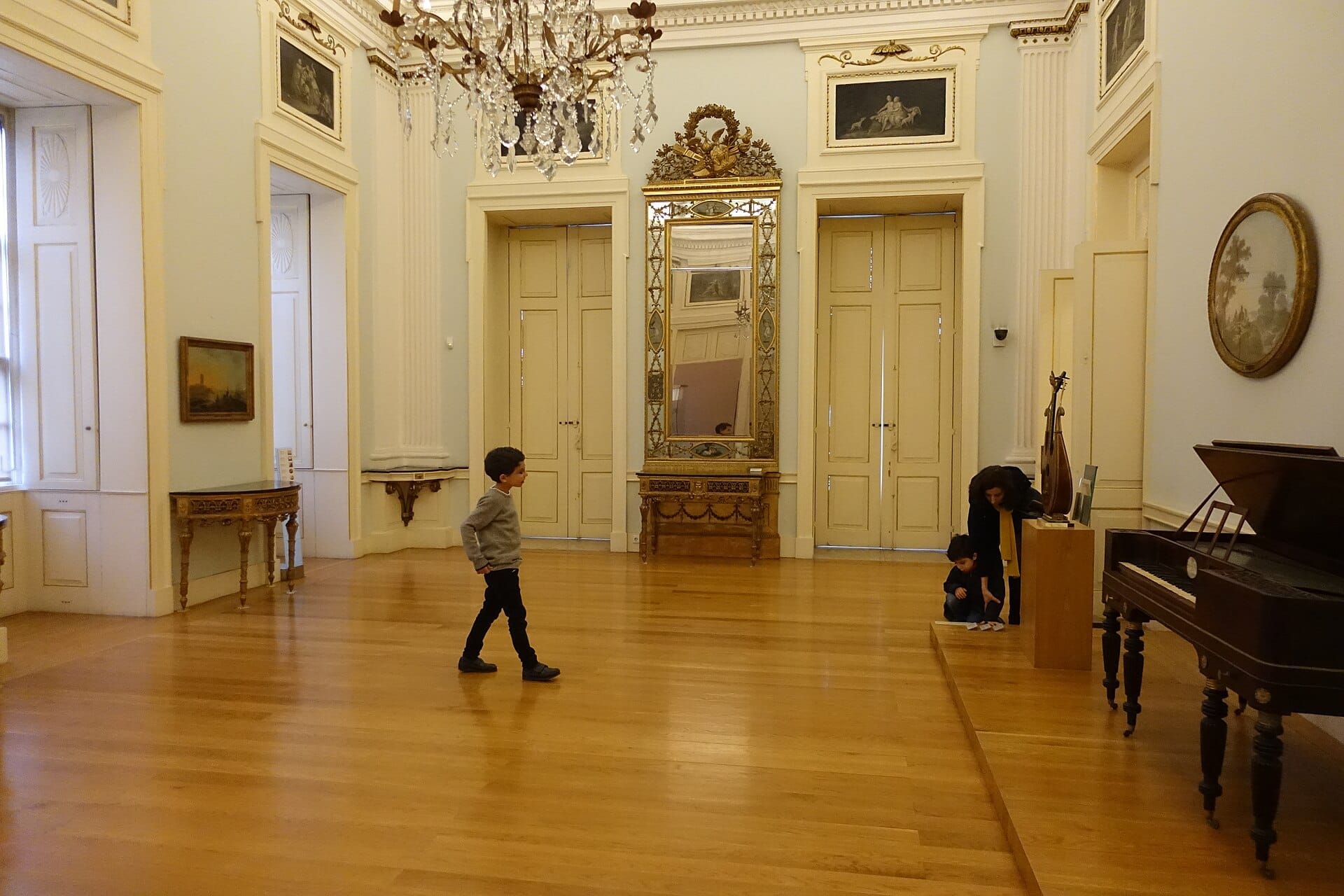
The building stops you before you reach the door. The Palácio das Carrancas rises along Rua Dom Manuel II with the composed authority of 18th-century neoclassical architecture: symmetrical facades, stone detailing, and a forecourt that filters out street noise almost immediately. The contrast with the surrounding city centre is real. Porto's Baixa can feel urgent and traffic-heavy; the palace grounds do not.
The scale of the building prepares you for a collection that is genuinely large. The palace was adapted for museum use by the mid-20th century, and the layout reflects that gradual transformation rather than a purpose-built gallery design. Rooms connect to rooms in a way that rewards slow walking. The ceilings are high, the natural light from tall windows lands differently depending on the time of day, and in the morning hours especially, the upper-floor galleries can feel almost private.
Tickets & tours
Hand-picked options from our booking partner. Prices are indicative; availability and final rates are confirmed when you complete your booking.
Entry ticket to the National Museum Soares dos Reis
From 25 €Instant confirmationPorto pass for Six Bridges Cruise and city museums
From 64 €Instant confirmationMuseu da 1ª Demarcacao, Museum of the Oldest Appellation in the World
From 5 €Instant confirmationFree cancellationWine tasting at Quinta dos Novais in Douro Valley
From 19 €Instant confirmationFree cancellation
What the Collection Actually Contains
The permanent collection covers Portuguese painting from the 16th to the early 20th century, with particular depth in the Romantic and Naturalist periods. Works by João Cristino da Silva, Silva Porto, and Henrique Pousão occupy the painting galleries alongside earlier religious panels that came directly from dissolved convents. The quality is uneven across the collection, as it is in almost every encyclopaedic museum, but the best rooms justify the entire visit.
Sculpture is where the museum earns its name. The works of António Soares dos Reis on display here include O Desterrado (The Exile), one of the most significant Portuguese sculptures of the 19th century. In marble, a seated male figure bends inward in an attitude of complete dejection. The technical execution is extraordinary: the surface of the marble shifts between textures, from smooth skin to loosely draped fabric, without ever losing emotional coherence. Seeing it in person rather than in reproduction is a substantially different experience.
Beyond painting and sculpture, the museum holds significant collections of decorative arts: Portuguese faience, glassware from the Marinha Grande factory, furniture, jewellery, and goldsmithing. Travellers who think of decorative arts as secondary often find the Portuguese faience galleries surprisingly compelling, partly because the azulejo tile tradition familiar from church facades and railway stations developed in direct dialogue with this kind of ceramic production.
Visitors already interested in Portuguese tile culture will find useful context here before or after visiting Igreja de Santo Ildefonso or exploring the broader azulejo tradition covered in the Porto azulejo guide.
How the Experience Changes by Time of Day
Morning visits, particularly on weekdays, offer the museum at its quietest. Arriving at or shortly after 10:00 means you will share the larger galleries with very few other people. The upper floors, where some of the painting collections are displayed, catch direct light through tall windows in the late morning, which changes how you read the brushwork in the Naturalist canvases. The quality of light in a Portuguese painting viewed under natural daylight is genuinely different from what you see under artificial gallery lighting.
Afternoon visits are slightly busier but rarely crowded. This is not a museum that draws the kind of lines you encounter at Livraria Lello or popular azulejo-covered churches. The pace stays slow throughout the day. Late afternoon light becomes warmer through the western-facing rooms and can make the sculpture galleries feel more dramatic, though this depends on the season and cloud cover.
ℹ️ Good to know
If you are visiting Porto during summer and the main tourist sites feel overwhelming, the museum reliably provides a cooler and quieter alternative. The thick stone walls of the palace keep interior temperatures noticeably lower than the street on warm days.
Practical Walkthrough: Getting There and Moving Through
The most straightforward approach on public transport is the Metro to São Bento station on Line D, followed by a walk of roughly 20 minutes uphill along streets connecting the riverside city centre to the higher residential-commercial area of Baixa. The museum sits on Rua Dom Manuel II, a wide street that runs through one of Porto's more composed urban zones. Bus lines 201, 302, and 501, among others, stop nearby if the walk feels like too much after a morning of sightseeing.
The surrounding streets are worth walking slowly. Rua Dom Manuel II connects to Rua das Flores and the wider downtown grid that leads back toward São Bento railway station and the Ribeira waterfront. If you are planning a full day in central Porto, combining the museum with the Palácio da Bolsa and a walk along Rua das Flores creates a coherent route without excessive backtracking.
Inside the museum, the layout is not strictly linear. Pick up a floor plan at the entrance and identify the works you most want to see before committing to a direction. The Soares dos Reis sculpture rooms are the anchor; build the rest of the visit around them. Audio guides or guided tours are occasionally available but not always; the official website has current information on this.
Accessibility within the Palácio das Carrancas requires direct inquiry with the museum. The building is an adapted historic palace, and the specifics of lift access and wheelchair routing are not consistently documented in external sources. Contact the museum directly before visiting if accessible facilities are essential to your planning.
Photography, Context, and Managing Expectations
Photography policies inside Portuguese national museums can vary by room and by exhibition, and may change over time. As a general rule in this type of institution, non-flash photography for personal use is often permitted in permanent collection galleries, but commercial or tripod photography requires prior authorisation. Check current policy at the entrance.
It is worth being direct about what this museum is not. It is not a survey of world art. The collection is almost entirely Portuguese, and the scope is deliberately national in focus. Visitors expecting a major European art museum along the lines of those in Madrid or Amsterdam will find the collection narrower. That is not a flaw; it is the point. For anyone wanting to understand what Portuguese visual culture looked like across five centuries, the Museu Nacional Soares dos Reis is the most coherent single place in Porto to develop that understanding.
For context on how Porto's broader museum landscape fits together, the best museums in Porto guide provides a useful overview of options across the city, including the contemporary art at Serralves Museum if you want to see what came after.
Insider Tips
- Tuesday mornings are consistently the quietest time to visit. Crowds pick up slightly on weekends and during school holiday periods, but rarely reach the levels of Porto's major tourist sites.
- Spend more time in the Soares dos Reis sculpture rooms than you think you need. O Desterrado rewards slow looking: walk around it, observe the marble texture from different angles, and notice how the light changes the mood of the piece depending on where you stand.
- The decorative arts and glassware collections on the lower floors are easy to rush through. If you are interested in Portuguese craft traditions, build time for them; the Marinha Grande glassware in particular is rarely exhibited anywhere else at this scale.
- The museum café or rest areas offer a quiet stop mid-visit. The palace grounds provide a small outdoor space that is calmer than nearby city streets, useful if you need to reset between gallery sections.
- If you hold a Porto Card, confirm the current discount level at the ticket desk. Porto Card benefits at national museums have varied over time, and the card may cover partial or full admission depending on current agreements.
Who Is Museu Nacional Soares dos Reis For?
- Travellers with a genuine interest in Portuguese art history and national sculpture
- Anyone wanting a quieter, cooler alternative to Porto's outdoor attractions on hot or rainy days
- Visitors already covering the historic centre who want institutional context alongside church and azulejo visits
- Art students or researchers interested in 19th-century Romantic and Naturalist painting traditions
- Slow travellers who prefer depth over ticking off sites
Nearby Attractions
Other things to see while in Baixa:
- Avenida dos Aliados
Avenida dos Aliados is the ceremonial spine of central Porto, a wide early-20th-century boulevard stretching from Praça da Liberdade to Porto City Hall. Free to visit at any hour, it serves as Porto's civic stage, commercial main street, and the most direct introduction to the city's architectural ambitions.
- Capela das Almas
Standing on Porto's main shopping street, the Capela das Almas is one of the most photographed facades in the city. Its nearly 16,000 hand-painted blue-and-white azulejo tiles tell stories of saints across 360 square metres of exterior wall. Entry is free, and it takes less than 30 minutes to absorb properly.
- Clérigos Church
Rising 75 metres above the rooftops of Baixa, Clérigos Tower is the defining silhouette of the Porto skyline. The complex combines a beautifully preserved Baroque church, a small museum, and one of the city's most rewarding panoramic viewpoints, all within a few minutes' walk of the city's main commercial streets.
- Clérigos Tower
Standing 75 metres above Porto's rooftops, the Torre dos Clérigos is the tallest campanile in Portugal and the city's most instantly recognisable silhouette. Built between 1754 and 1763 to a design by Italian-born architect Nicolau Nasoni, it rewards those willing to climb its 200-plus steps with a panorama that stretches from the Douro river to the Atlantic. This page covers what the experience actually delivers, how crowds behave at different times of day, and everything you need to plan your visit.