Clérigos Church and Tower: Porto's Most Recognizable Landmark
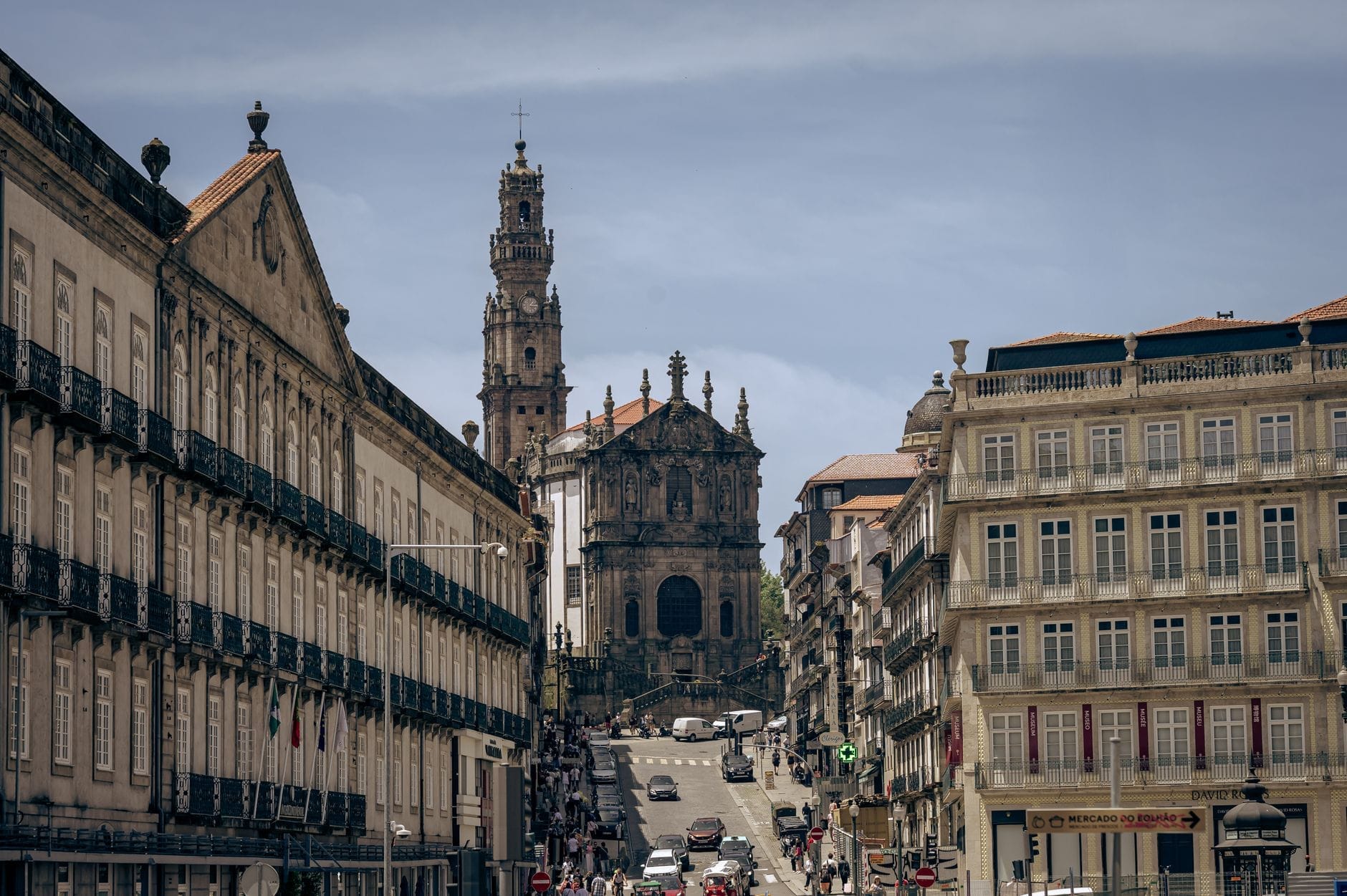
Rising 75 metres above the rooftops of Baixa, Clérigos Tower is the defining silhouette of the Porto skyline. The complex combines a beautifully preserved Baroque church, a small museum, and one of the city's most rewarding panoramic viewpoints, all within a few minutes' walk of the city's main commercial streets.
Quick Facts
- Location
- Rua de São Filipe de Nery, Baixa, Porto
- Getting There
- Metro: Aliados (Line D); Tram: Carmo stop (line 22); Bus lines 6, 20, 35, 37, 52, 78
- Time Needed
- 45–90 minutes for church, museum, and tower climb
- Cost
- Church nave: free. Combined ticket (tower + church galleries + museum): approx. €8–€10. Verify current prices at torredosclerigos.pt
- Best for
- Panoramic city views, Baroque architecture, photography, history enthusiasts
- Official website
- www.torredosclerigos.pt/en
What Is Clérigos Church?
Igreja dos Clérigos, officially known in full as the Torre dos Clérigos complex, is a Baroque church, bell tower, and museum built in the eighteenth century for the Brotherhood of the Clérigos. The complex stands at the top of one of Baixa's steeper streets and is almost impossible to miss: at 75 metres tall, Clérigos Tower punctuates the Porto skyline from nearly every elevated vantage point in the city. It is the most photographed structure in Porto and, for good reason, the first thing most visitors want to see. For more context on how the complex fits into the wider city, the Porto walking tour guide includes it as a natural anchor point in any central route.
The church was designed by Nicolau Nasoni, an Italian-born architect who shaped much of Porto's Baroque identity during the eighteenth century. Construction of the church began in 1732 and was completed around 1750, and the separate bell tower followed, with work continuing until its completion in 1763. The tower is widely cited as Portugal's tallest campanile and remains one of the most complete examples of Portuguese Baroque architecture anywhere in the country.
ℹ️ Good to know
Opening hours: generally daily 09:00–19:00 (last entry 30 minutes before closing). Extended evening openings run approximately 19:00–23:00 during Easter and summer. Verify holiday hours (24–25 Dec, 31 Dec–1 Jan) directly with the complex before visiting.
The Church Nave: Free, Quiet, and Often Overlooked
Entry to the church nave itself is free. Most visitors queue for tower tickets and walk straight past the interior, which means the nave is frequently quieter than the surrounding streets. That is worth knowing. The interior is compact but genuinely impressive: an oval-plan design that feels unusual compared to the more conventional rectangular churches nearby, with gilded wood altarpieces, ornate stonework, and the kind of dim, slightly cool atmosphere that good Baroque interiors produce. In the morning, when light filters in from the upper windows, the gold catches in ways that reward a few minutes of standing still.
If you have already visited Igreja de São Francisco, which has a more theatrical gilded interior, the Clérigos nave will feel restrained by comparison. That is not a criticism. The two churches complement each other, and visiting both in the same day gives a useful sense of the range within Porto's Baroque period.
Tickets & tours
Hand-picked options from our booking partner. Prices are indicative; availability and final rates are confirmed when you complete your booking.
Spiritus light and sound show at Clerigos Church in Porto
From 10 €Instant confirmationFree cancellationPorto Hop-On Hop-Off Bus Tour
From 0 €Instant confirmationSelf-guided audio walking tour of Porto
From 9 €Instant confirmationBest of Porto walking tour
From 0 €Instant confirmation
Climbing the Tower: 200 Steps to the Best View in Baixa
The tower climb is the main event for most visitors, and it earns that status. The staircase is narrow and winds tightly upward in a stone spiral. With approximately 200 steps and no lift, this is not a casual stroll: expect to press against the wall to let people coming down pass you on the way up, and expect your calves to notice the effort by the top. The staircase is not suitable for visitors with significant mobility impairments, pushchairs, or anyone prone to vertigo in enclosed spaces.
The platform at the top is small, open to the wind, and occasionally crowded. But the view genuinely justifies the climb. From here, the layout of central Porto becomes legible in a way it rarely is from street level: the Douro curving toward the Atlantic, the red-tiled roofscape of Ribeira, the pale facades of Avenida dos Aliados stretching northward, and, on clear days, Vila Nova de Gaia on the opposite bank with its port wine lodge signage visible across the water.
💡 Local tip
Photography tip: Morning light (before 10:30) hits the western facade and the Douro at a favorable angle. Afternoon light works better for photographing the city's eastern neighborhoods from the tower platform. Bring a wide-angle lens if you have one — the platform railing limits how far you can extend a camera outward.
The view from the top is broadly comparable to what you see from the Miradouro da Vitória, which is free and just a short walk away. The difference is elevation and perspective: Clérigos Tower puts you higher and gives a 360-degree sweep, while the Vitória viewpoint offers a more relaxed, ground-level terrace experience. Both are worth doing, but they are not identical.
The Museum and Galleries
The combined ticket includes access to the church's museum and gallery spaces, which are spread across the complex's ancillary rooms. The collection focuses on the Brotherhood of the Clérigos: religious objects, ecclesiastical silverware, archival material, and rotating exhibitions that vary by season. It is not a large or particularly dramatic museum, and visitors with limited time should prioritize the tower and church over the galleries. That said, if you are interested in the social history of Porto's religious confraternities and how they shaped the city's architecture and institutions, the material here adds real depth to the visit.
When to Visit and How Crowds Behave
The complex opens at 09:00, and the first hour is notably calmer than the rest of the day. Tour groups tend to arrive between 10:30 and midday, and the narrow staircase becomes genuinely uncomfortable during peak periods in July and August. If you are visiting in summer, arriving before 09:30 makes a tangible difference to both the queue length and the experience at the top.
The extended evening sessions during Easter and summer, running until approximately 23:00, are among the most underused options at the complex. Watching the city lights from the tower platform after dark is a completely different experience from the daytime visit: quieter, cooler, and with the Douro lit up below. If your itinerary includes an evening in Baixa, this is worth planning around. Check the best time to visit Porto guide for seasonal crowd patterns across the city.
Shoulder season visits in May, June, or September offer a reasonable balance: the weather is generally dry enough for the tower platform to be comfortable, and crowds are lighter than in August. Winter visits are quieter still, though the platform can be cold and windy, and low cloud occasionally obscures the view entirely. That is the honest tradeoff.
⚠️ What to skip
The tower platform is fully exposed to the elements. In rainy or very windy weather, the view may be partially obscured and the platform genuinely cold. Check the forecast before building your visit around the tower specifically.
Getting There and Practical Logistics
The complex sits on Rua de São Filipe de Nery in Baixa, Porto's central downtown area. The nearest metro station is Aliados on Line D, roughly a five-minute walk. Tram line 22 stops at Carmo, slightly closer. Several bus lines (6, 20, 35, 37, 52, 78) serve the surrounding streets. The area is walkable from most central accommodation, and the church is well-signed from Rua de Santa Catarina and Avenida dos Aliados.
Parking in Baixa is limited and not recommended for first-time visitors. If you are combining the church with a broader central Porto walk, the São Bento Railway Station is about a ten-minute walk downhill and makes a logical starting point for a loop that includes Clérigos, the Carmo church, and Rua das Flores.
For dress code: the church is an active religious site. Shoulders and knees should be covered for entry to the nave, as is standard across Porto's churches. The museum and tower have no specific dress requirement. Wear shoes with grip on the stone staircase, which can be smooth and slightly worn in places.
Who This Attraction Suits — and Who Might Skip It
Clérigos Tower is genuinely one of the most rewarding things to do in central Porto if you are physically comfortable with a steep, narrow staircase climb. The view at the top is informative and photogenic. The church interior is worth ten minutes even if you do not pay for the tower. The museum adds context if you have the interest.
Visitors who have already climbed the tower on a previous trip and are returning to Porto may find the experience less essential the second time. The view does not change significantly between visits, and Porto has other elevated perspectives that are free, including the Vitória viewpoint mentioned above and the Jardim do Morro across the river in Gaia, which offers a different angle on the skyline. Travelers with mobility limitations should note clearly that the tower is not accessible by lift and the staircase is narrow throughout.
Insider Tips
- Arrive within the first 30 minutes of opening (09:00–09:30) to climb the tower before the first tour groups arrive. The difference in crowd density is significant, especially in summer.
- The evening sessions during summer and Easter run until approximately 23:00 and are far less crowded than daytime. The view of Porto at night from the tower platform is worth the separate trip.
- Entry to the church nave is free. If your budget is tight or your time is short, skip the paid ticket and spend ten minutes in the nave instead — Nasoni's oval interior is distinctive and rarely crowded.
- The Miradouro da Vitória is a two-minute walk from Clérigos and offers a free elevated view of Ribeira. It is lower than the tower, but combining both in the same visit costs nothing extra and gives you two different perspectives.
- Tickets can be purchased at the entrance, but during peak summer months a short queue is common. Check the official site (torredosclerigos.pt) in advance to see whether online booking is available, which can save time at the door.
Who Is Clérigos Church For?
- First-time visitors to Porto wanting an orientation of the city from above
- Architecture and history enthusiasts interested in eighteenth-century Portuguese Baroque
- Photographers looking for the classic Porto skyline shot or elevated city perspectives
- Travelers combining a half-day walk through Baixa, the Carmo area, and Rua das Flores
- Evening visitors wanting a quieter, atmospheric experience of the tower during extended summer hours
Nearby Attractions
Other things to see while in Baixa:
- Avenida dos Aliados
Avenida dos Aliados is the ceremonial spine of central Porto, a wide early-20th-century boulevard stretching from Praça da Liberdade to Porto City Hall. Free to visit at any hour, it serves as Porto's civic stage, commercial main street, and the most direct introduction to the city's architectural ambitions.
- Capela das Almas
Standing on Porto's main shopping street, the Capela das Almas is one of the most photographed facades in the city. Its nearly 16,000 hand-painted blue-and-white azulejo tiles tell stories of saints across 360 square metres of exterior wall. Entry is free, and it takes less than 30 minutes to absorb properly.
- Clérigos Tower
Standing 75 metres above Porto's rooftops, the Torre dos Clérigos is the tallest campanile in Portugal and the city's most instantly recognisable silhouette. Built between 1754 and 1763 to a design by Italian-born architect Nicolau Nasoni, it rewards those willing to climb its 200-plus steps with a panorama that stretches from the Douro river to the Atlantic. This page covers what the experience actually delivers, how crowds behave at different times of day, and everything you need to plan your visit.
- Igreja do Carmo
Igreja do Carmo is one of Porto's most photographed buildings, its entire side façade covered in a sweeping blue-and-white azulejo tile panel added in 1912. But the church rewards visitors who go beyond the exterior: inside, seven gilded altars and a single soaring nave of late Baroque craftsmanship await, along with catacombs and the curious 'Hidden House' tucked into the wall between two churches.