Miradouro da Vitória: Porto's Most Rewarding Free Viewpoint
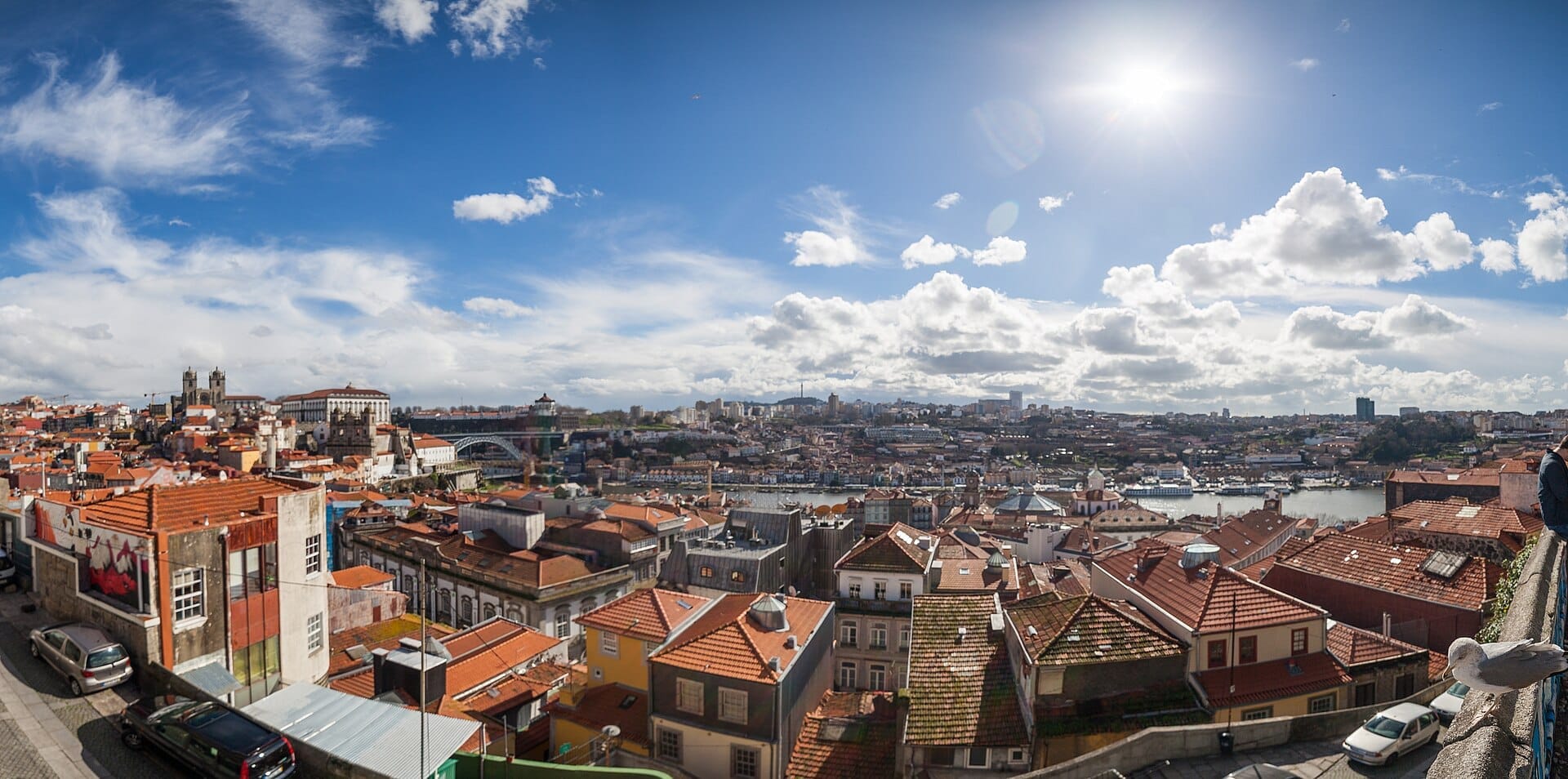
Perched at the edge of Porto's old Vitória quarter in Baixa, Miradouro da Vitória delivers an unobstructed panorama over the Ribeira, the Douro River, and the iconic Dom Luís I Bridge. It costs nothing, requires no booking, and consistently outperforms more famous viewpoints for sheer composition and atmosphere.
Quick Facts
- Location
- Rua de São Bento da Vitória 11, 4050-265 Porto
- Getting There
- Walk from São Bento railway station (~10 min) or from Aliados metro stop (~12 min on foot)
- Time Needed
- 20–40 minutes, or longer if you linger at golden hour
- Cost
- Free. No ticket, no booking required
- Best for
- Photographers, budget travelers, walkers, and anyone who wants Ribeira views without the crowds
What Miradouro da Vitória Actually Is
Miradouro da Vitória is a small open-air terrace at the end of Rua de São Bento da Vitória, tucked against the hillside above Porto's historic Ribeira district. The platform sits on private property and is generally open to visitors free of charge, with access informally permitted for tourists. There are no ticket booths, no timed entry windows, and no queue management. You simply walk in.
The viewpoint looks south and southwest, giving you a direct sightline across the gorge of the Douro River toward Vila Nova de Gaia. From this elevation, the full span of the Dom Luís I Bridge is visible without obstruction, the Cathedral (Sé) and Bishop's Palace anchor the left side of the frame, and the terracotta rooftops of Ribeira cascade down toward the waterfront below. It is one of the most compositionally coherent views in the entire city.
ℹ️ Good to know
Because this is private property with informal tourist access, there is no guarantee the gate will always be open. Visiting during daylight hours on weekdays tends to be most reliable. If the gate is closed on arrival, return later in the day.
The Walk Up: Setting the Scene
The approach is part of the experience. Rua de São Bento da Vitória is a narrow, sloping cobbled street that runs downhill from the area near the Centro Português de Fotografia, Porto's national photography archive housed in a striking former prison. The street is quiet compared to the commercial arteries nearby. You pass the facade of the Igreja de Nossa Senhora da Vitória, and the city opens up around you as you near the end of the road.
The Vitória quarter has a layered history. This part of Baixa marks the edge of Porto's historic Jewish quarter, a fact that gives the neighborhood a character distinct from the tourist-heavy streets closer to Livraria Lello or the commercial stretch of Rua de Santa Catarina. The buildings here are older and less polished, with peeling azulejo tiles and wrought-iron balconies draped in laundry. It feels like a functioning city neighborhood rather than a prepared visitor zone.
The cobblestones are uneven and the slope is real. Sturdy footwear makes a tangible difference here. Heels and smooth-soled shoes are genuinely awkward on wet stone, and Porto's oceanic climate means dampness is a regular condition outside of summer.
Tickets & tours
Hand-picked options from our booking partner. Prices are indicative; availability and final rates are confirmed when you complete your booking.
Sao Bento da Vitoria Monastery Tour with Fado Concert
From 24 €Instant confirmationFree cancellationSerralves All-Access Pass
From 24 €Instant confirmationFree cancellationSantiago de Compostela Full-Day Tour
From 79 €Instant confirmationFree cancellationPeneda Geres park full-day tour from Porto
From 100 €Instant confirmationFree cancellation
The View: What You See and When It Changes
The panorama from Miradouro da Vitória is wide enough that you need to scan it slowly. Directly below, the Ribeira's tiled rooftops form a dense mosaic of orange, brown, and grey. The Douro cuts through the middle distance, its surface color shifting from blue-grey under cloud cover to deep copper at dusk. On the Gaia side, the port wine lodge names are legible on the white-painted hillside buildings: Sandeman, Calem, Graham's, and others.
The Dom Luís I Bridge is the dominant architectural element of the view. From this angle, both its upper and lower decks are visible, and you can watch the metro cross the upper level while foot traffic and vehicles use the lower. The bridge's iron lattice frame looks particularly dramatic in low morning light or against a stormy sky.
Morning light (roughly 8–10am in summer, later in winter) illuminates the Gaia hillside and the bridge from the east, which makes for clean, well-lit photography. By midday the light flattens and the view becomes less photogenic but perfectly good for general appreciation. Late afternoon to golden hour is the peak period: the Douro catches the warm light directly and the whole valley glows. The Porto Cathedral, visible to the left of the frame, is particularly striking when lit from this angle.
💡 Local tip
For photography, arrive 30–45 minutes before sunset. The viewpoint is small and can accommodate perhaps 15–20 people comfortably. Arriving early secures the best position along the railing.
Crowds, Atmosphere, and What to Expect
Miradouro da Vitória sees fewer visitors than Porto's more publicised viewpoints, partly because it requires knowing where to look and partly because the approach street is not on any obvious tourist trail. On a weekday morning it is possible to have the terrace largely to yourself. By late afternoon in peak summer, expect a rotating group of 10–20 visitors, which is still far quieter than the terrace at Torre dos Clérigos or the viewpoints around the Cathedral.
There is no café, no vendor, no seating. The terrace itself is modest in size, the railing is simple ironwork, and the surface underfoot is uneven stone. None of this detracts from the view, but visitors who expect manicured infrastructure will find it more raw than comfortable. That rawness is precisely what keeps it from becoming crowded.
People who may not enjoy this viewpoint: those with mobility challenges will find the cobbled approach street and the uneven terrace difficult, as no adapted access or lift is documented. If step-free access is a priority, the viewpoint at Jardim do Morro in Gaia is a more accessible alternative with comparable Douro views.
How to Fit It Into Your Day
Miradouro da Vitória works well as a short detour within a broader walk through central Porto. A logical route starts at São Bento railway station, continues up through the historic lanes toward the Centro Português de Fotografia, follows Rua de São Bento da Vitória downhill to the viewpoint, and then descends further into Ribeira. The total walking time between São Bento station and the Ribeira waterfront via this route is roughly 25–35 minutes including a stop at the terrace.
If you are covering the city's churches and architectural highlights in the same half-day, the viewpoint sits conveniently close to Clérigos Tower and Igreja de São Francisco. Both can be combined into a morning or afternoon circuit without significant backtracking.
The viewpoint is equally useful as a destination in its own right for the golden hour visit. Walk up from Ribeira after dinner, spend 20 minutes watching the light change over the bridge, and walk back down. It requires no planning and costs nothing, which makes it an easy addition to any evening.
⚠️ What to skip
The street is poorly lit after dark. While Porto is generally considered safe for walking, the narrow approach to this viewpoint is not ideal for solo visitors unfamiliar with the area once night has fully set in. Aim to visit around or just after sunset rather than in full darkness.
Practical Getting There
The most straightforward approach is on foot from São Bento railway station, around a 10-minute walk on uphill streets. From Aliados metro station, the walk takes around 12 minutes. If you are arriving from the Dom Luís I Bridge or the Ribeira waterfront, the ascent to the viewpoint takes about 10–15 minutes uphill on cobbled streets, which can be strenuous in summer heat.
Ride-hailing apps including Uber and Bolt operate in Porto and can drop you at the top of Rua de São Bento da Vitória. There is limited parking in this part of Baixa, and driving in is not recommended given the narrow streets and restricted zones.
For context on how this viewpoint fits into a broader Porto walking route, the Porto walking tour guide covers several adjacent areas and gives useful sequencing advice for covering central Porto without unnecessary doubling back.
Insider Tips
- The gate is usually open during daylight hours but is not officially managed. If you find it closed, try returning an hour later rather than giving up.
- Stand at the far left of the railing to get the cleanest unobstructed sightline toward the Dom Luís I Bridge. The right side is slightly interrupted by tree branches depending on the season.
- The cobblestones on Rua de São Bento da Vitória become genuinely slippery after rain. If it has rained recently, slow down on the descent back toward Ribeira.
- This viewpoint is one of the few spots in central Porto where you can photograph the Cathedral (Sé), the Dom Luís I Bridge, and the Ribeira rooftops in a single wide-angle frame without other tourists appearing in the foreground.
- Combine the visit with the Centro Português de Fotografia, which is free to enter and located just a short walk uphill. It often hosts photography exhibitions that complement the visual experience of the viewpoint itself.
Who Is Miradouro da Vitória For?
- Photographers looking for a less-crowded vantage point with a complete Douro panorama
- Budget travelers who want the quintessential Porto view without paying for a tower or cable car
- Walkers building a self-guided tour through Baixa and Ribeira
- Couples seeking a quiet spot for the golden hour with a dramatic backdrop
- Repeat visitors who want to see Porto from an angle most first-timers miss
Nearby Attractions
Other things to see while in Baixa:
- Avenida dos Aliados
Avenida dos Aliados is the ceremonial spine of central Porto, a wide early-20th-century boulevard stretching from Praça da Liberdade to Porto City Hall. Free to visit at any hour, it serves as Porto's civic stage, commercial main street, and the most direct introduction to the city's architectural ambitions.
- Capela das Almas
Standing on Porto's main shopping street, the Capela das Almas is one of the most photographed facades in the city. Its nearly 16,000 hand-painted blue-and-white azulejo tiles tell stories of saints across 360 square metres of exterior wall. Entry is free, and it takes less than 30 minutes to absorb properly.
- Clérigos Church
Rising 75 metres above the rooftops of Baixa, Clérigos Tower is the defining silhouette of the Porto skyline. The complex combines a beautifully preserved Baroque church, a small museum, and one of the city's most rewarding panoramic viewpoints, all within a few minutes' walk of the city's main commercial streets.
- Clérigos Tower
Standing 75 metres above Porto's rooftops, the Torre dos Clérigos is the tallest campanile in Portugal and the city's most instantly recognisable silhouette. Built between 1754 and 1763 to a design by Italian-born architect Nicolau Nasoni, it rewards those willing to climb its 200-plus steps with a panorama that stretches from the Douro river to the Atlantic. This page covers what the experience actually delivers, how crowds behave at different times of day, and everything you need to plan your visit.