Avenida dos Aliados: Porto's Grand Boulevard Explained
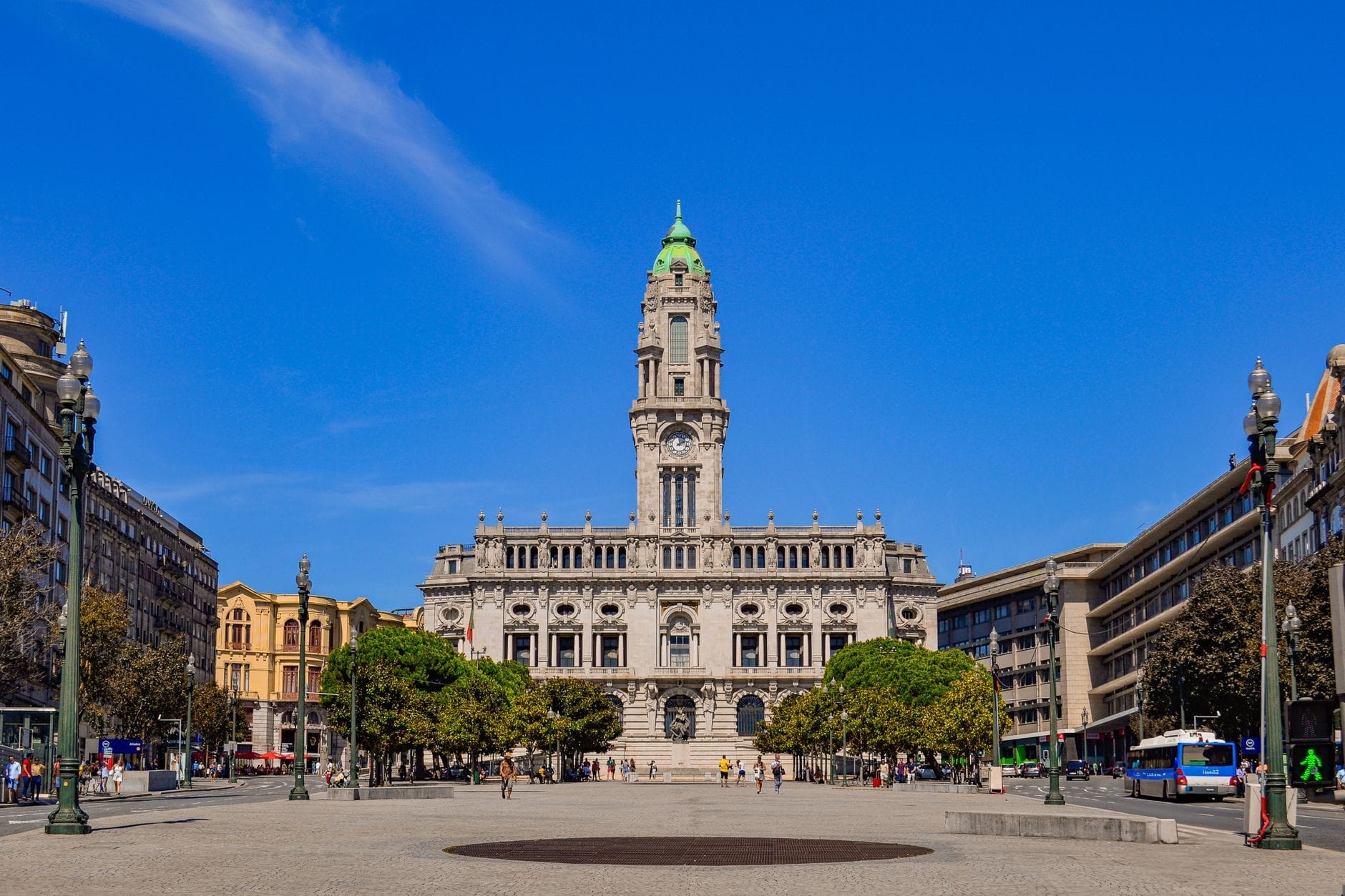
Avenida dos Aliados is the ceremonial spine of central Porto, a wide early-20th-century boulevard stretching from Praça da Liberdade to Porto City Hall. Free to visit at any hour, it serves as Porto's civic stage, commercial main street, and the most direct introduction to the city's architectural ambitions.
Quick Facts
- Location
- Avenida dos Aliados, 4000-067 Porto (Baixa district, central Porto)
- Getting There
- Aliados (Metro Line D, directly beneath the avenue); also São Bento and Trindade stations nearby; historic Tram Line 22 no longer operates
- Time Needed
- 30–60 minutes to walk and absorb; longer if you sit at a café terrace or explore adjacent streets
- Cost
- Free — the avenue and plaza are public space, open 24 hours
- Best for
- Architecture lovers, first-time visitors, city photographers, festival crowds, and anyone wanting to understand Porto's civic identity
- Official website
- www.cm-porto.pt
What Avenida dos Aliados Actually Is
Avenida dos Aliados is Porto's main ceremonial boulevard, a broad, gently sloping promenade that runs north to south through the heart of the Baixa district. At its southern foot sits Praça da Liberdade; at its northern head stands Porto City Hall, crowned by a clock tower that rises roughly 70 metres above the square. Between them lies a central pedestrian median flanked by two lanes of traffic on each side, lined with early-20th-century stone facades in varying states of grandeur.
The avenue takes its name from the Allied Nations of World War I, in which Portugal fought on the Allied side. That commemorative naming tells you something about the aspirations behind its construction: this was meant to be a European capital-grade address, a statement that Porto belonged in the same conversation as Paris or Brussels. Whether it fully delivers on that promise depends on where you stand, but few visitors leave unimpressed by the overall scale.
💡 Local tip
Arrive by metro at Aliados station (Line D) and walk up from the underground exit at the southern end for the full frontal reveal of the City Hall tower. The upward slope means the building gradually fills your view as you walk north — a deliberate effect of the original urban design.
The Story Behind the Boulevard
The avenue as it stands today dates to an early-20th-century urban plan finalised around 1916 under British planner Barry Parker and local municipal authorities. Implementing it required demolishing an entire older neighborhood called the Laranjal, as well as Porto's old Town Hall. In its place, Parker laid out a wide axis intended to modernise the city's commercial and civic core and connect the lower town to a new, purpose-built municipal building.
The surrounding buildings were developed over the following decades, and the architectural mix reflects that extended timeline. Some facades are Beaux-Arts and early Modernist, with carved stone detailing, wrought-iron balconies, and tall arched windows. Others were inserted later and sit less elegantly in the row. The overall impression is still coherent enough to feel grand, but close inspection reveals a boulevard that has been improvised and patched across a century rather than executed to a single polished vision.
The City Hall itself, which anchors the northern end at Praça General Humberto Delgado, is the clear architectural centerpiece. For more context on the civic buildings and religious architecture in Porto's historic center, the guide to Porto's azulejo tile tradition helps explain the decorative language you'll see on many surrounding facades.
Tickets & tours
Hand-picked options from our booking partner. Prices are indicative; availability and final rates are confirmed when you complete your booking.
Wine tasting at Quinta dos Novais in Douro Valley
From 19 €Instant confirmationFree cancellationEntry ticket to the National Museum Soares dos Reis
From 25 €Instant confirmationSerralves All-Access Pass
From 24 €Instant confirmationFree cancellationSantiago de Compostela Full-Day Tour
From 79 €Instant confirmationFree cancellation
How the Avenue Changes Through the Day
Early mornings, roughly 7 to 9 am, belong to commuters and café workers opening their shutters. The air carries the smell of espresso and exhaust, the stone underfoot is damp if it rained overnight, and the full width of the pedestrian median is yours to walk without weaving through anyone. The light at this hour hits the upper floors of the eastern facade at a low, warm angle that makes the stone glow before it fades into ordinary grey by mid-morning.
By midday the avenue is at full commercial energy. Office workers cut through, tourists photograph the City Hall tower from the median, and the outdoor café terraces along the ground floors fill with people watching the flow. The noise level rises considerably: traffic, voices in a dozen languages, pigeons occupying the central fountain area. If you are sensitive to noise or crowds, this is not the right hour to linger.
Late afternoon, particularly around 5 to 7 pm, brings a second wave of foot traffic as shops close and residents pass through on their way home or toward the restaurants in the streets immediately east and west. The City Hall clock tower catches the sinking sun on its western face, and the light turns the stone a warmer shade than at any other time of day. This is the best window for photography of the northern end.
After dark, Avenida dos Aliados is fully lit and used year-round. On ordinary evenings it is quieter but not empty, with people moving between the metro, restaurants, and bars in the surrounding streets. During festivals, notably the São João celebrations in June, it becomes a packed open-air gathering point with stages and crowds spilling across the entire width of the boulevard.
ℹ️ Good to know
For the São João festival in late June, Avenida dos Aliados is one of the main event zones. Expect extremely dense crowds, street food stalls, and music until well past midnight. Plan transport in advance and avoid bringing large bags.
Walking the Avenue: A Practical Route
Start at the southern end, at Praça da Liberdade. The equestrian statue of King Pedro IV stands at the center of the square, and the National Theatre São João is just to the southeast. From here, look straight up the boulevard toward City Hall — this is the axis Parker intended, and it works. The incline is gentle enough to walk without effort but noticeable enough to give the northern end a slightly elevated, commanding presence.
Walking up the central pedestrian median, the ground surface is paved with the traditional Portuguese calçada pattern, which can be slick when wet. Wear shoes with some grip if you are visiting in autumn or winter. The median itself is broad enough to accommodate slow walkers, fast walkers, and people who stop entirely to read their maps, and they all do.
The buildings lining both sides are worth scanning for ground-floor details: carved doorways, azulejo-clad pilasters on some facades, and the occasional 1970s renovation that looks out of place. At the northern end, step into the plaza in front of City Hall and look back south along the full length of the avenue for the best overview of the space. Nearby, São Bento railway station is a five-minute walk southeast and offers one of Porto's most dramatic interior spaces, worth adding to the same walking loop.
Practical Access and Getting There
The most direct metro access is Aliados station on Line D, whose exits place you directly on the boulevard. São Bento station (also Line D) is a short walk away and is often a better choice if you are already exploring the historic center. Trindade station, one stop north on Line D, connects to Lines A, B, C, E, and F and is useful if you are coming from the airport or other parts of the city.
Historic Tram Line 22 used to stop at Aliados, connecting through the Cedofeita area, but it is currently out of service, so check the latest STCP information if you specifically want a tram connection. For a broader overview of how to move around Porto without overcomplicating it, the getting around Porto guide covers metro, tram, bus, and ride-hailing options with practical fare context.
The avenue itself is a wide, largely flat pedestrian zone in its central section. The cobblestone surface on the median can be uneven, and some sections have minor lips at crossings. Aliados metro station generally includes lifts as part of the Metro do Porto network, but travelers with specific step-free requirements should confirm current station accessibility directly with Metro do Porto before visiting, as infrastructure can change.
⚠️ What to skip
Wet cobblestones are a genuine hazard. If you are visiting in November through February, the surface can be slippery even in light rain. Footwear with flat rubber soles rather than smooth leather is a practical choice.
Context Within the Baixa District
Avenida dos Aliados does not exist in isolation. The streets immediately to its east and west form the commercial and pedestrian spine of the Baixa district, Porto's downtown core. Rua de Santa Catarina, Porto's main pedestrian shopping street, runs parallel a few blocks east and connects to the famous Majestic Café and the Chapel of Souls. Rua das Flores, known for its tile-covered facades and goldsmiths, runs southwest toward the Palácio da Bolsa.
This concentration of civic and commercial architecture means Avenida dos Aliados is naturally part of almost any full-day walk through central Porto. It connects without effort to the Ribeira waterfront to the south, the Livraria Lello bookshop to the northwest, and Mercado do Bolhão to the northeast. If you are planning a structured itinerary, the two-day Porto itinerary places the avenue in the context of a logical first-morning route.
One honest note on expectations: Avenida dos Aliados is architecturally significant and worth seeing, but it is also a working city street with car traffic on both sides, chain stores occupying several ground floors, and the general wear of a commercial artery. Visitors expecting a pristine, car-free boulevard in the manner of Barcelona's La Rambla will find something more functional and less curated. That is not a flaw; it is what makes it a genuine part of the city rather than a stage set.
Photography Tips
The strongest shots from Avenida dos Aliados fall into two categories: the long axis view looking north toward City Hall from the southern end, and detail shots of the upper-floor facades and decorative stonework. For the axis view, a wide-angle lens or standard smartphone works fine; the problem is parked vehicles and crossing pedestrians in the foreground, which require patience to clear from the frame.
For facade detail, the eastern row receives better morning light and the western row catches afternoon and evening light. The City Hall tower photographs best in late afternoon from the median, when the sun hits the tower face directly. Night photography works well here given the street lighting, with the City Hall building illuminated and the boulevard lights creating a symmetrical receding line.
Insider Tips
- The best single vantage point for a full-length photograph of the avenue is the steps at the northern end, in front of City Hall, looking south. From here you see the full slope, the median, both rows of facades, and Praça da Liberdade in the distance. Most visitors photograph from the middle of the boulevard looking north, which gives a cluttered foreground.
- Café terraces on the western side of the avenue tend to be in shade for most of the morning, which makes them cooler and less crowded on hot days. If you want to sit in sun with your coffee, the eastern side is better before noon.
- The pedestrian median is unusually wide and much of it is unoccupied even during busy midday hours. Locals use it as a cut-through rather than a place to linger, so if you stop to look at the architecture, you will mostly be doing so among tourists rather than residents.
- During major public events including national holidays, football celebrations, and the São João festival, Avenida dos Aliados becomes a focal point for large gatherings. If you are not interested in crowds, these dates are a strong reason to visit the area early in the morning before the crowd builds, or to skip it entirely that day.
- Rua Clube dos Fenianos, the side street running alongside City Hall on its western flank, has several small cafés and a quieter atmosphere than the avenue itself. It is a useful shortcut toward Trindade station and less trafficked than the main boulevard.
Who Is Avenida dos Aliados For?
- First-time visitors to Porto who want a quick orientation to the city's scale and civic character
- Architecture and urban design enthusiasts interested in early-20th-century European boulevard planning
- Photographers looking for classic city compositions, especially at golden hour and after dark
- Travelers following a walking route between the historic center and the Ribeira waterfront
- Anyone visiting Porto during a festival or national event, since the avenue is the main public gathering space
Nearby Attractions
Other things to see while in Baixa:
- Capela das Almas
Standing on Porto's main shopping street, the Capela das Almas is one of the most photographed facades in the city. Its nearly 16,000 hand-painted blue-and-white azulejo tiles tell stories of saints across 360 square metres of exterior wall. Entry is free, and it takes less than 30 minutes to absorb properly.
- Clérigos Church
Rising 75 metres above the rooftops of Baixa, Clérigos Tower is the defining silhouette of the Porto skyline. The complex combines a beautifully preserved Baroque church, a small museum, and one of the city's most rewarding panoramic viewpoints, all within a few minutes' walk of the city's main commercial streets.
- Clérigos Tower
Standing 75 metres above Porto's rooftops, the Torre dos Clérigos is the tallest campanile in Portugal and the city's most instantly recognisable silhouette. Built between 1754 and 1763 to a design by Italian-born architect Nicolau Nasoni, it rewards those willing to climb its 200-plus steps with a panorama that stretches from the Douro river to the Atlantic. This page covers what the experience actually delivers, how crowds behave at different times of day, and everything you need to plan your visit.
- Igreja do Carmo
Igreja do Carmo is one of Porto's most photographed buildings, its entire side façade covered in a sweeping blue-and-white azulejo tile panel added in 1912. But the church rewards visitors who go beyond the exterior: inside, seven gilded altars and a single soaring nave of late Baroque craftsmanship await, along with catacombs and the curious 'Hidden House' tucked into the wall between two churches.