Clérigos Tower (Torre dos Clérigos): Porto's Most Recognisable Skyline Landmark
Standing 75 metres above Porto's rooftops, the Torre dos Clérigos is the tallest campanile in Portugal and the city's most instantly recognisable silhouette. Built between 1754 and 1763 to a design by Italian-born architect Nicolau Nasoni, it rewards those willing to climb its 200-plus steps with a panorama that stretches from the Douro river to the Atlantic. This page covers what the experience actually delivers, how crowds behave at different times of day, and everything you need to plan your visit.
Quick Facts
- Location
- Rua de São Filipe de Nery, 4050-546 Porto — Baixa neighbourhood
- Getting There
- Metro: Aliados station (Line D); Historic Tram: Carmo stop (Line 22); Bus: STCP lines 6, 20, 35, 37, 52, 78
- Time Needed
- 45 minutes to 1.5 hours (tower + museum)
- Cost
- Day ticket (Tower + Museum): €10 general, €7 students, free under 10. Night ticket (Tower only, seasonal): €5 general, free under 10.
- Best for
- City panoramas, Baroque architecture, first-time visitors to Porto
- Official website
- www.torredosclerigos.pt/en
What Torre dos Clérigos Actually Is
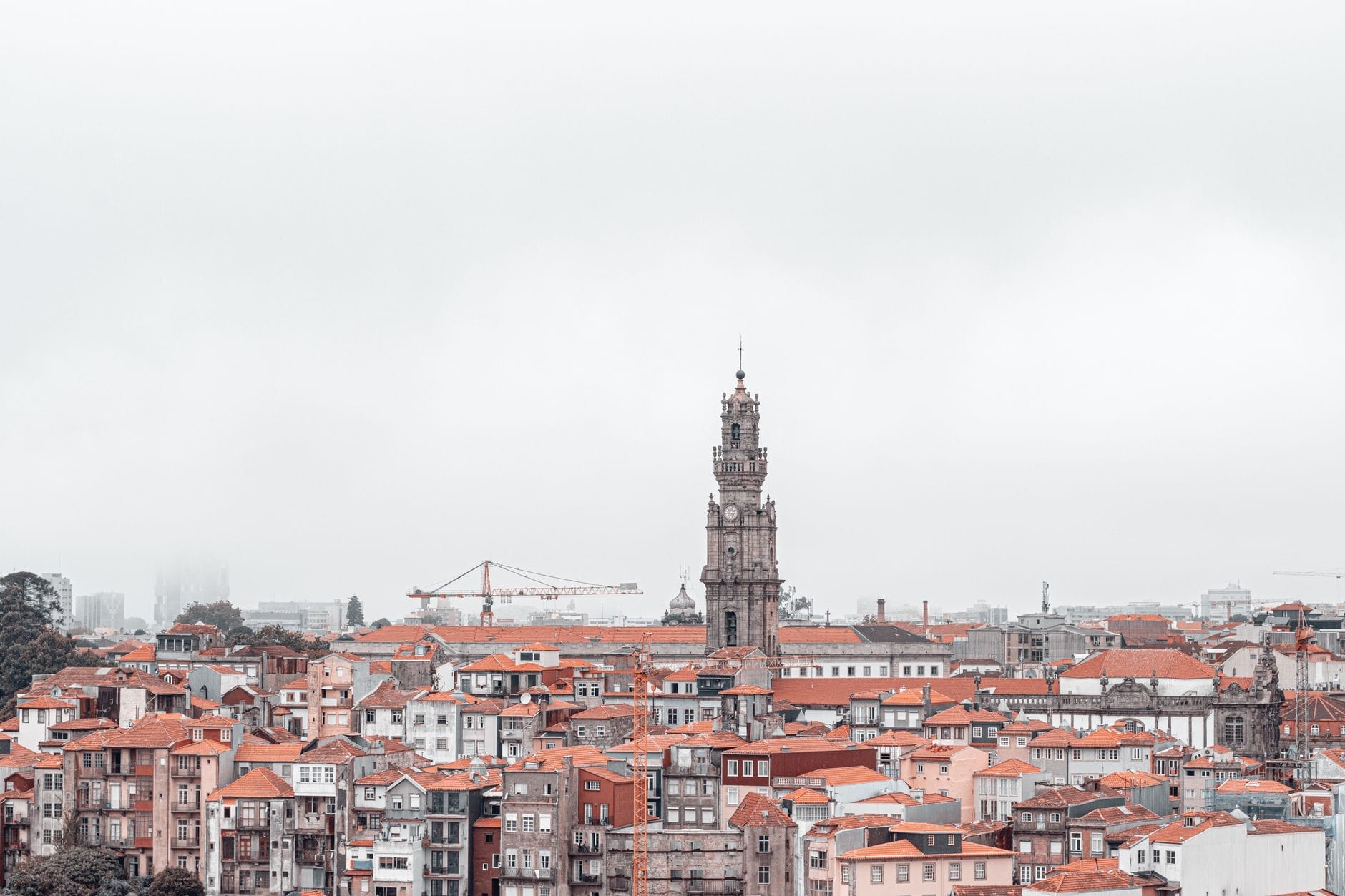
The Clérigos Tower is one of those landmarks that earns its reputation honestly. It dominates Porto's skyline not through size alone but through position: perched on high ground in Baixa, it is visible from the Douro waterfront, from the hills of Vila Nova de Gaia across the river, and from most of the city's miradouros. On clear days, the white granite shaft catches the Atlantic light and turns almost silver.
The structure is more than just a belltower. The Clérigos complex includes the elliptical Igreja dos Clérigos, built between 1732 and 1750, and the tower itself, completed in 1763. Both were designed by Nicolau Nasoni, a Florentine-born architect who spent much of his career in Porto and left a distinctive mark on the city's Baroque architecture. The tower's granite exterior rises about 75 metres and features ornate carvings of cherubs, floral scrollwork, and ecclesiastical motifs that reward close inspection before you even buy a ticket.
The complex also contains a small museum exploring the history of the Brotherhood of Clergy (Irmandade dos Clérigos), which commissioned the building, and the broader story of Nasoni's work in Porto. If you are trying to understand the city's architectural identity, this is a useful companion to a visit to the Porto Cathedral and the Palácio da Bolsa.
💡 Local tip
Buy tickets online in advance, especially in July and August. The ticket window queue can run 30 minutes on busy mornings, and timed-entry slots fill up.
The Climb: 200 Steps Up a Narrow Granite Spiral
Do not underestimate the ascent. The staircase is a tight, clockwise granite spiral and the steps are worn smooth by centuries of foot traffic. The walls are close on both sides, the lighting is dim, and there is no elevator. Visitors with claustrophobia sometimes find the upper section uncomfortable, and the staircase is too narrow for two people to pass easily in opposite directions. Staff manage traffic flow, but expect some waiting on busier days.
The climb takes most visitors around 10 to 15 minutes at a steady pace. The effort is real but modest for anyone in reasonable health. Children who are old enough to climb stairs independently manage it without difficulty. What you cannot do here with a pushchair, wheelchair, or limited mobility is reach the top. The museum on the lower levels is more accessible, but the tower itself is not. Visitors with a certified disability (degree equal to or above 60%) receive free entry, and an accompanying person gets a 50% discount on the Torre + Museu day ticket.
⚠️ What to skip
The tower is not wheelchair accessible. The staircase is a narrow, uneven granite spiral with no lift. Visitors with significant mobility limitations should factor this in before purchasing tickets.
Tickets & tours
Hand-picked options from our booking partner. Prices are indicative; availability and final rates are confirmed when you complete your booking.
Porto Hop-On Hop-Off Bus Tour
From 0 €Instant confirmationSelf-guided audio walking tour of Porto
From 9 €Instant confirmationBest of Porto walking tour
From 0 €Instant confirmationPorto Hop-On Hop-Off Bus Tour
From 0 €Instant confirmation
The View from the Top
What you get at the summit is a 360-degree open-air gallery about 75 metres above street level, ringed by a stone balustrade just wide enough to stand at. The platform is small and gets crowded quickly when groups arrive together, so you may need to wait your turn to get to the railing. Morning light from the east catches the terracotta rooftops of Baixa and the reflective surface of the Douro. Late afternoon, with the sun dropping toward the Atlantic in the west, turns the sky behind the Foz district deep orange.
Looking south, the Dom Luís I Bridge spans the Douro in its characteristic double-deck arc, with the wine lodges of Vila Nova de Gaia spread across the hillside behind it. Looking north, the city unrolls into residential streets and eventually the green fringe of Parque da Cidade. On very clear days, the sea is visible to the west. The view is genuinely one of the best in Porto, though the platform size means you should expect to share it.
Photography from the top is good but requires patience. The railing is solid stone, which limits low-angle shots. A wide-angle lens or a phone works better than a long zoom in this confined space. Shoot early morning for warm raking light and minimal people in shot; midday gives the harshest light but the clearest visibility. Avoid the two hours after the gates open on weekends if you want anything resembling a quiet moment up there.
How Time of Day Changes the Experience
Opening time, 09:00, is consistently the best window. The square below is quiet, the tour groups have not yet arrived, and the staircase is almost empty. You can linger at the top without pressure. By 10:30, particularly on weekends and in summer, the queue at the ticket window is visible from across the square, and the platform feels congested.
The seasonal night opening, available during Easter, summer, and Christmas, runs until 23:00 and offers a Night ticket for the tower only at €5 (free for children under 10). Porto at night from this height is a different sight: the Dom Luís I Bridge glows, the Ribeira waterfront lights up, and the city looks smaller and more contained than it does by day. If the night opening is available during your visit, it is worth the trip.
ℹ️ Good to know
Opening hours: daily 09:00–19:00 (last entry 30 minutes before closing). Seasonal night openings (Easter, summer, Christmas): 09:00–23:00. Christmas Eve and New Year's Eve: 09:00–14:00. Christmas Day and New Year's Day: 11:00–19:00. Verify current hours at the official site before visiting.
The Surrounding Area: Baixa at Street Level
The tower sits at the heart of Baixa, Porto's central commercial district, and the streets immediately around it repay some wandering. Livraria Lello, one of the most architecturally striking bookshops in Europe, is a five-minute walk west. The Igreja do Carmo and its famous azulejo-covered exterior wall are directly adjacent to the Clérigos complex, close enough to view in the same hour without rushing.
The Rua das Flores, one of Porto's most photogenic pedestrian streets lined with tile-fronted townhouses and independent shops, begins a short walk from the tower toward the Ribeira. For a longer orientation to the city's architecture and tile traditions, the guide to Porto's azulejo tiles puts the Clérigos complex in useful context alongside the city's other decorated facades.
The square in front of the church, Largo dos Clérigos, is one of the places where Porto shows its daily rhythms clearly. In the early morning, there are pigeons, delivery trucks, and a handful of local workers cutting through. By mid-morning in tourist season, the outdoor cafe tables fill up and the selfie-stick vendors appear. By evening, the crowd thins again and the illuminated tower makes the square a pleasant place to sit.
Is It Worth It?
For first-time visitors to Porto, yes. The tower puts the city's geography into immediate perspective: you understand in five minutes at the top how the city is laid out across its hills, where the river runs, and how close everything is. That spatial understanding is genuinely useful for the rest of your visit.
For repeat visitors who have already done the climb, the value proposition is less obvious. The museum section is compact and the narrative is fairly specialised. If you are returning specifically for the panorama, the night ticket at €5 is a much better deal than the €10 daytime ticket for tower-only appeal.
Visitors who are primarily interested in views rather than architecture or history may want to compare this with the Miradouro da Vitória, a free viewpoint that offers a very different angle on the city and costs nothing. The two are not really competitors, since the tower gives a full 360-degree view from height while the miradouros give ground-level panoramas, but it is worth knowing the free option exists.
Who should skip it: anyone with a genuine fear of enclosed spaces or heights, visitors with significant mobility limitations who cannot climb stairs, and anyone who strongly dislikes crowds in confined spaces during peak season. The staircase during a busy July afternoon is not a comfortable experience for the crowd-averse.
Insider Tips
- Arrive at 09:00 on a weekday. The ticket window is empty, the staircase is quiet, and you can take your time at the top before the first tour groups arrive around 10:00.
- If the seasonal night opening is running during your visit, the €5 tower-only night ticket is the best-value ticket in the complex. Porto lit up at night from 75 metres is a completely different experience from the daytime view.
- The granite exterior carvings at street level are worth five minutes of close attention before you go in. Nasoni's decorative vocabulary, cherubs, acanthus scrollwork, scallop shells, is unusual for Portugal and tells you something about how Italian Baroque ideas were absorbed and adapted here.
- The church interior (Igreja dos Clérigos) is included in your ticket and is often overlooked by visitors racing for the tower. The elliptical nave is architecturally unusual and takes about 10 minutes to walk through properly.
- If you are shooting photographs from the top, position yourself on the south-facing side for the river and bridge view, then rotate clockwise slowly. The best compositions tend to be toward the Douro, not the inland views, because the water and the Gaia hillside give you layers of depth that the residential streets to the north lack.
Who Is Clérigos Tower For?
- First-time visitors to Porto wanting a spatial overview of the city
- Architecture and Baroque history enthusiasts
- Photographers looking for a high 360-degree vantage point
- Travellers visiting Porto on a 2-3 day itinerary who want one signature landmark
- Evening visitors during seasonal night openings
Nearby Attractions
Other things to see while in Baixa:
- Avenida dos Aliados
Avenida dos Aliados is the ceremonial spine of central Porto, a wide early-20th-century boulevard stretching from Praça da Liberdade to Porto City Hall. Free to visit at any hour, it serves as Porto's civic stage, commercial main street, and the most direct introduction to the city's architectural ambitions.
- Capela das Almas
Standing on Porto's main shopping street, the Capela das Almas is one of the most photographed facades in the city. Its nearly 16,000 hand-painted blue-and-white azulejo tiles tell stories of saints across 360 square metres of exterior wall. Entry is free, and it takes less than 30 minutes to absorb properly.
- Clérigos Church
Rising 75 metres above the rooftops of Baixa, Clérigos Tower is the defining silhouette of the Porto skyline. The complex combines a beautifully preserved Baroque church, a small museum, and one of the city's most rewarding panoramic viewpoints, all within a few minutes' walk of the city's main commercial streets.
- Igreja do Carmo
Igreja do Carmo is one of Porto's most photographed buildings, its entire side façade covered in a sweeping blue-and-white azulejo tile panel added in 1912. But the church rewards visitors who go beyond the exterior: inside, seven gilded altars and a single soaring nave of late Baroque craftsmanship await, along with catacombs and the curious 'Hidden House' tucked into the wall between two churches.