Palácio da Bolsa: Inside Porto's Extraordinary Stock Exchange Palace
Begun by Porto's Commercial Association in 1842, Palácio da Bolsa is a neoclassical palace in the heart of the city's UNESCO-listed historic centre. Its exterior restraint gives almost no warning of the opulence inside, particularly the Arab Room, which took 18 years alone to complete.
Quick Facts
- Location
- Rua Ferreira Borges, Praça do Infante D. Henrique, Ribeira, Porto
- Getting There
- 10-15 min walk from São Bento station; served by central Porto buses around Praça do Infante D. Henrique
- Time Needed
- 1 to 1.5 hours (guided tour only for interior rooms)
- Cost
- Paid admission; verify current prices at palaciodabolsa.com before visiting
- Best for
- Architecture lovers, history enthusiasts, photography, first-time visitors to Porto
- Official website
- palaciodabolsa.com/en/intro
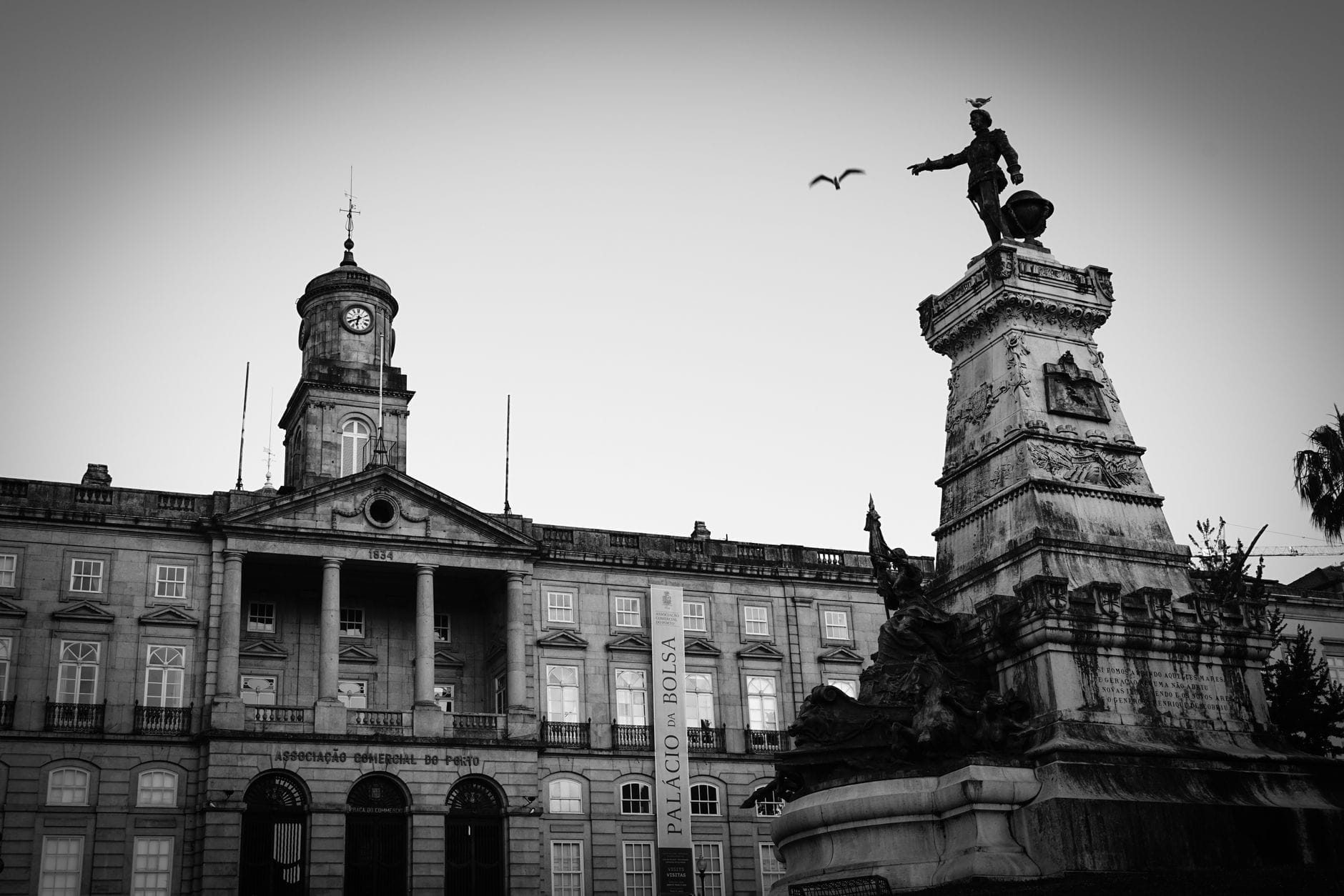
What Is Palácio da Bolsa?
Palácio da Bolsa, known in English as the Stock Exchange Palace, is a 19th-century neoclassical palace in Porto's historic Ribeira quarter, directly beside the Church of São Francisco and a short walk from the Douro riverfront. It was commissioned by the Associação Comercial do Porto (Porto's Commercial Association) as a symbol of the city's commercial ambition, with the first stone laid on 6 October 1842. Interior decoration continued for decades, with the full building considered completed by 1909. Since 1982, it has been classified as a National Monument of Portugal.
The building sits within Porto's UNESCO World Heritage historic centre, which means its immediate surroundings are also worth your attention. The square out front, Praça do Infante D. Henrique, is named after Prince Henry the Navigator, and the neighbourhood has been a centre of Porto's commercial and civic life for centuries.
ℹ️ Good to know
Access to most of the palace's interior is only possible on a guided tour. Tours depart regularly throughout the day in multiple languages. If you arrive without a booking during high season, expect a wait. Check current schedules and book tickets in advance at palaciodabolsa.com.
The Exterior: Neoclassical Restraint
From the outside, Palácio da Bolsa presents a composed, almost austere neoclassical facade. The symmetrical stonework, columned entrance, and measured proportions reflect the architectural confidence of 19th-century Porto, a city that was building institutions to match its commercial weight. It looks serious, as a stock exchange should. What it does not do is telegraph what is waiting inside.
The surrounding square sees a constant flow of visitors, particularly in the morning when tour groups assemble outside. In early afternoon, the light catches the stone facade at a useful angle for photography. If the queue at the entrance is long, the exterior and adjacent Church of São Francisco are worth exploring in the meantime.
The building's location near the Cais da Ribeira means you can combine a visit here with the riverside walk and a crossing to Vila Nova de Gaia. It also sits close to Casa do Infante, making this corner of Ribeira one of the densest concentrations of historical significance in the city.
Tickets & tours
Hand-picked options from our booking partner. Prices are indicative; availability and final rates are confirmed when you complete your booking.
Serralves All-Access Pass
From 24 €Instant confirmationFree cancellationSantiago de Compostela Full-Day Tour
From 79 €Instant confirmationFree cancellationPeneda Geres park full-day tour from Porto
From 100 €Instant confirmationFree cancellationPorto historical center and the best viewpoints on a tuk-tuk
From 39 €Instant confirmationFree cancellation
The Interior: Room by Room
The guided tour takes you through a sequence of rooms, each more elaborately decorated than the last. The first impression inside is the Glass Courtyard (Pátio das Nações), a large central atrium topped with an iron and glass roof. The floor-to-ceiling scale is immediately striking. Coats of arms representing the nations with which Portugal had commercial relations in the 19th century line the upper walls. The ironwork of the roof is a feat of industrial-era engineering that feels more Manchester than Mediterranean until you adjust to it.
The tour continues through rooms used for meetings, ceremonies, and formal receptions. Gilt-covered surfaces, painted ceilings, and inlaid wood floors accumulate as you move deeper into the building. Each room follows a different decorative scheme, which prevents the experience from becoming repetitive. The Tribunal Room, with its coffered ceiling and formal portrait gallery, reflects how Porto's merchant class understood the relationship between commerce and civic authority.
The Arab Room: The Building's Centrepiece
Nothing prepares you for the Arab Room (Salão Árabe). It took roughly 18 years to complete and represents the summit of the building's decorative ambition. The walls are covered floor to ceiling in intricately carved and gilded stucco work inspired by the Alhambra palace in Granada. The geometric patterns, calligraphy-style inscriptions, and layered relief work create an effect that is genuinely difficult to process in a single visit. It is one of the most remarkable interiors in Portugal, and that is not an overstatement.
The lighting in the Arab Room shifts the experience depending on the time of day. Morning tours often get cooler, more diffuse light that lets the pattern detail read clearly. Afternoon visits can catch warmer tones through the upper windows. Either works, but the morning is marginally better for photography if detail is your priority.
💡 Local tip
Photography is generally permitted in the Arab Room, but flash is usually restricted. A phone camera with a wide lens performs well here given the room's proportions. Position yourself near the centre of the room and shoot upward to capture the full ceiling-to-floor sweep.
How the Visit Actually Works
Tours are guided and leave at regular intervals. The tour typically lasts around 30 to 40 minutes and is conducted in multiple languages including English, Portuguese, Spanish, and French, depending on the group composition. Individual visitors join whichever language group is departing next, so if you have a strong preference for a specific language, it is worth asking at the ticket desk or booking online with your language stated.
The pace is set by the guide, so the experience is less free-form than a self-guided museum visit. Guides generally explain the historical context of each room, the decorative styles, and the significance of particular commissions. The quality of interpretation varies by individual guide, but the rooms speak for themselves even when commentary is sparse. Groups tend to move through at a steady pace, with the Arab Room receiving the most time.
Opening hours are generally 09:00 to 18:30 daily, with some variations on specific dates such as public holidays and special events; confirm current hours at palaciodabolsa.com before your visit, particularly around Christmas, New Year, and any announced closures.
Practical Planning: Timing, Crowds, and Logistics
Palácio da Bolsa is one of Porto's most visited attractions, and the combination of a relatively compact interior and group-only access means it can feel crowded during peak months. The busiest period is typically July and August, when midday queues can stretch outside. Arriving at opening time or in the late afternoon reduces wait time considerably.
May, June, and September offer a better balance of comfortable temperatures and lower visitor pressure. The palace is indoors, so wet-weather days in autumn and winter are not a deterrent, and crowds thin substantially. Porto's rain falls mostly in late autumn and winter, so a November visit to Palácio da Bolsa on a rainy morning can actually work well.
Getting here on foot from São Bento Railway Station takes about 10 to 15 minutes downhill through the historic centre. From the Ribeira waterfront it is a five-minute uphill walk. There is no dedicated metro station immediately adjacent; the most practical public transport options are central Porto buses or arriving on foot from elsewhere in the historic centre.
⚠️ What to skip
Because the building is a 19th-century historic structure, access for visitors with reduced mobility may be limited in some areas. The Visit Porto official information notes access for people with reduced mobility through a side entrance, but detailed accessibility specifications are not published; contact Palácio da Bolsa directly before your visit if step-free access or other provisions are important to your planning.
Context: Why This Building Matters
To understand Palácio da Bolsa, it helps to understand 19th-century Porto. The city had grown wealthy from trade, particularly the port wine trade with Britain, and Porto's merchant class wanted a civic architecture that announced their status to Europe. The Commercial Association that commissioned the palace was not a government body; it was a private institution of merchants, which means this extraordinary building was built by commercial ambition, not royal patronage.
The choice of neoclassicism for the exterior and the eclectic mix of styles inside, including the Moorish-influenced Arab Room, reflects 19th-century Europe's appetite for historicism and exoticism simultaneously. Porto's merchants were trading with the world and wanted a building that made that visible. In that sense, the Arab Room is not mere decoration; it is a commercial statement about global reach.
This context connects Palácio da Bolsa to the broader story of Porto's architectural identity. The city's azulejo tile tradition and its collection of ornate churches represent the same pattern: a city that consistently invested in visual richness as a form of civic and commercial identity. The palace fits naturally into a deeper exploration of Porto's religious and civic architecture.
Who Should Consider Skipping It
Palácio da Bolsa is genuinely impressive, but it is not the right fit for every traveller. If ornate 19th-century interiors leave you cold, or if you find guided group tours constraining, the experience may not justify the admission cost and time. The building has no interactive elements, no collections to browse at your own pace, and no exterior garden or outdoor component. It is a series of decorated rooms, experienced at a group pace, for roughly 30 to 40 minutes.
Families with young children may find the format difficult to manage. The combination of a structured tour, fragile interiors, and rooms where lingering or wandering freely is not possible makes it a challenging environment for restless visitors of any age. For a Porto visit focused on outdoor spaces and practical experiences, the time might be better spent elsewhere.
Insider Tips
- Book your ticket online in advance during June, July, and August. Walk-in queues on peak summer mornings can mean waiting 45 minutes or more for the next available tour in your preferred language.
- If you want the Arab Room with fewer people in your shot, request a spot in the smallest available tour group. Early morning tours at opening time tend to have fewer participants than midday ones.
- Combine this visit with the Igreja de São Francisco next door. The two buildings together give you a full picture of Porto's approach to decorative excess across very different eras and contexts.
- Wear comfortable shoes. The floors throughout the palace are largely stone or hardwood, and you will be standing for the full duration of the tour with limited opportunities to sit.
- If you are visiting Porto over multiple days, save Palácio da Bolsa for an afternoon when outdoor plans fall through due to rain. It works perfectly as a wet-weather anchor point in the Ribeira area.
Who Is Palácio da Bolsa For?
- First-time visitors to Porto wanting to understand the city's 19th-century commercial heritage
- Architecture and design enthusiasts, particularly those interested in historicist and Moorish Revival styles
- Travellers who enjoyed the Alhambra in Granada and want to see its Portuguese echo
- Photography-focused visitors looking for interiors with exceptional decorative detail
- Anyone combining a half-day in the Ribeira neighbourhood with the waterfront and nearby historic sites
Nearby Attractions
Other things to see while in Ribeira:
- Cais da Ribeira
Cais da Ribeira is Porto's historic riverside promenade along the north bank of the Douro, part of the UNESCO World Heritage-listed centre. Free to walk, lined with colourful buildings and boat tour kiosks, it is one of Portugal's most recognisable urban waterfronts.
- Casa do Infante
Casa do Infante stands on Rua da Alfândega in the heart of Porto's Ribeira district, occupying a site that has been central to the city's life since the Roman period. Built as a royal customs house in 1325 and later named for Prince Henry the Navigator, traditionally regarded as having been born here in 1394, it now operates as a unit of the Museu do Porto, housing archaeological remains and centuries of civic records beneath one roof.
- Dom Luís I Bridge
The Ponte Dom Luís I is a double-deck iron arch bridge spanning the Douro River between Porto's Ribeira quarter and Vila Nova de Gaia. Open 24 hours a day and free to cross on foot, it rewards visitors with sweeping river views from both its road-level walkway and its elevated metro deck, 45 metres above the water.
- Douro River Cruise
A Douro River cruise transforms Porto's skyline into a living panorama of medieval towers, port wine lodges, and six iron bridges. Whether you take a 50-minute sightseeing loop or a multi-day voyage into the Alto Douro Wine Region, the river gives you a perspective on Porto and its surroundings that no viewpoint on land can match.