Cais da Ribeira: Porto's Riverfront Heart
Cais da Ribeira is Porto's historic riverside promenade along the north bank of the Douro, part of the UNESCO World Heritage-listed centre. Free to walk, lined with colourful buildings and boat tour kiosks, it is one of Portugal's most recognisable urban waterfronts.
Quick Facts
- Location
- Rua Cais da Ribeira / Praça da Ribeira, 4050-510 Porto, Ribeira district
- Getting There
- São Bento (metro/rail) — 10-15 min walk downhill; buses 1, 23, 57, 91 stop nearby
- Time Needed
- 30 min for the promenade alone; 2-3 hours with a meal, river cruise, or bridge walk
- Cost
- Free (promenade); boat tours and restaurants are paid separately
- Best for
- Douro river views, historic architecture, evening atmosphere, photography
What Is Cais da Ribeira?
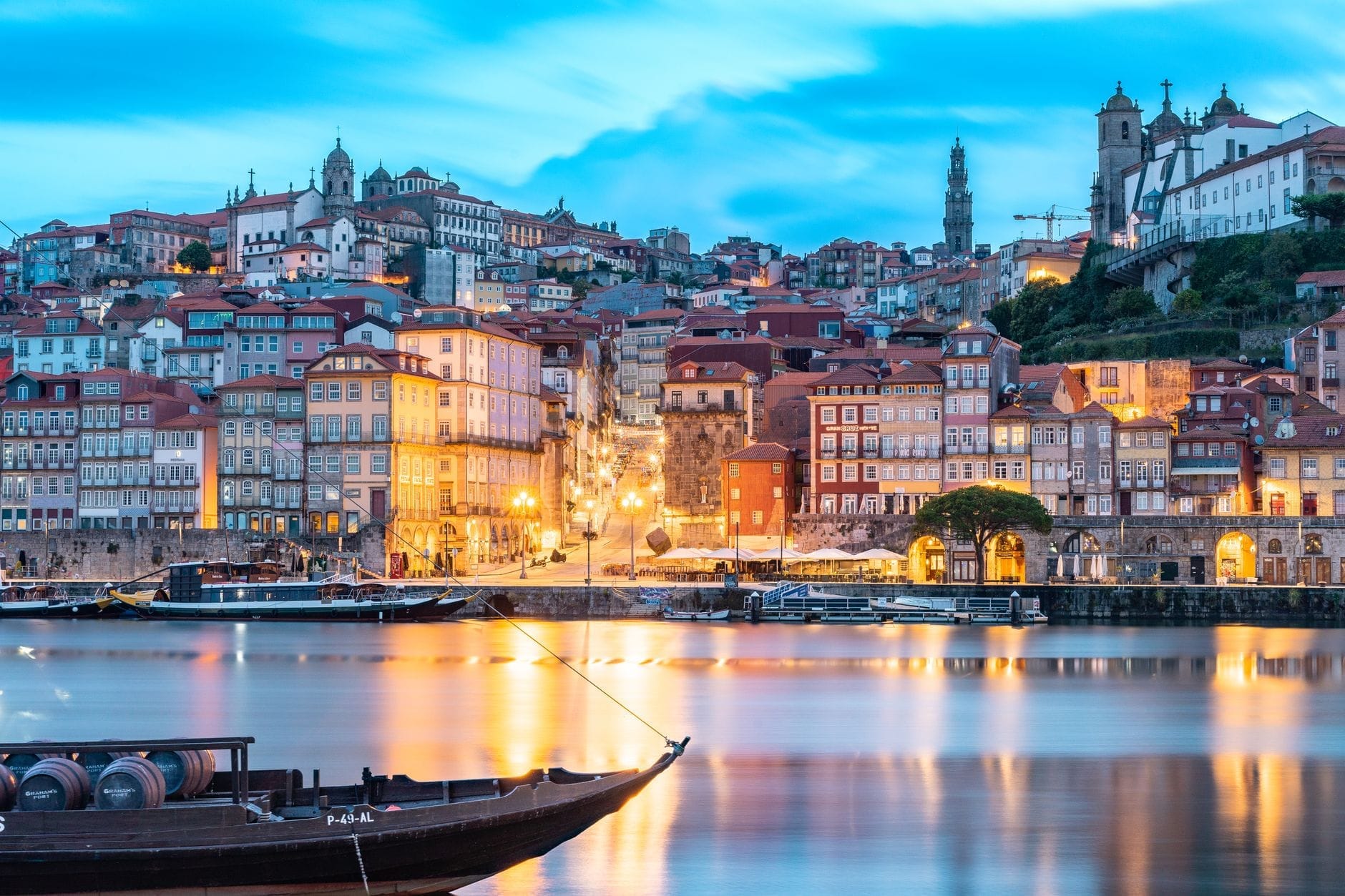
Cais da Ribeira is Porto's main riverside promenade, stretching along the north bank of the Douro River in the Ribeira quarter, Porto's oldest inhabited district. The name translates loosely as the Ribeira Quayside, and it earns that description: this was once a working port where goods moved on and off rabelo boats, the flat-bottomed wooden vessels historically used to transport port wine barrels downriver from the Douro Valley. Today the commercial loading has gone, but the bones of that trading quayside remain, compressed into a strip of medieval and baroque-era facades stacked directly against the water.
The area is part of Porto's historic centre, inscribed as a UNESCO World Heritage Site in 1996, a classification that covers not just individual buildings but the layered urban fabric of streets, alleys, churches, and the riverfront itself. Walking Cais da Ribeira, you are walking through one of the best-preserved medieval riverside streetscapes in the Iberian Peninsula.
ℹ️ Good to know
Cais da Ribeira is a public street, open 24 hours a day with no admission fee. Individual businesses, boat tour operators, and restaurants set their own hours and prices.
How the Quayside Looks and Feels
The promenade is compact. The riverside walkway itself is only a few hundred metres long, but the density of detail rewards slow exploration. The buildings immediately behind the quay rise four and five storeys, their facades a mix of ochre, terracotta, faded blue, and bare stone, with laundry occasionally visible on upper balconies and iron railings worn smooth by decades of hands. Many ground-floor units are restaurants with terrace seating that claims every possible centimetre of riverside space.
The paving is cobblestone and uneven granite, typical of Porto's historic districts. Comfortable, flat-soled shoes are genuinely important here, not just guidebook boilerplate. The flat section immediately along the water is more manageable, but the narrow lanes climbing toward the cathedral above are steep and slick when wet. Visitors with reduced mobility will find the promenade itself relatively negotiable, while the surrounding streets are more challenging.
Moored along the quay you will usually find a row of traditional rabelo boats, some used as floating restaurants, others offering river cruise departures. The boats are photogenic at any time of day, but the late afternoon light that comes from the west and catches both the Dom Luís I Bridge and the Gaia bank opposite is particularly strong.
Tickets & tours
Hand-picked options from our booking partner. Prices are indicative; availability and final rates are confirmed when you complete your booking.
Serralves All-Access Pass
From 24 €Instant confirmationFree cancellationSantiago de Compostela Full-Day Tour
From 79 €Instant confirmationFree cancellationPeneda Geres park full-day tour from Porto
From 100 €Instant confirmationFree cancellationPorto historical center and the best viewpoints on a tuk-tuk
From 39 €Instant confirmationFree cancellation
Cais da Ribeira by Time of Day
The character of the quay shifts noticeably across the day, and when you choose to visit will shape your experience.
Early morning, roughly 7 to 9am, is the quietest window. The restaurant terraces are empty, delivery vehicles are occasionally parked at awkward angles in the narrow streets, and the light is soft and low. The smell at this hour is river water mixed with the faint, slightly sweet brine of the Douro estuary. Photographers specifically targeting architecture or the bridge reflection on the water tend to prefer this window.
By mid-morning the tour groups begin arriving in earnest, and by noon the terrace restaurants fill quickly. The midday period in summer can feel genuinely crowded, with cruise passengers, day-trippers, and walking-tour groups converging on the same short stretch simultaneously. Anyone who dislikes navigating around selfie sticks and tour guides with numbered umbrellas should account for this.
Late afternoon and evening is when the quayside comes into its own as a social space. The restaurant terraces fill with a mix of tourists and Portuguese families, the light on the Gaia hillside opposite turns warm and golden, and the Dom Luís I Bridge is dramatically backlit before sunset. After dark, the quay is well-lit, lively with diners and drinkers, and quite safe, though the narrow streets above can feel quieter.
💡 Local tip
For photographs of the Dom Luís I Bridge and the Vila Nova de Gaia wine lodge hillside, the best light is typically in the hour before sunset, shooting from the middle section of the promenade facing south.
Historical and Cultural Context
The Ribeira district's identity as Porto's trading heart stretches back to the medieval period, when the quayside was the city's economic engine. Porto was one of Portugal's principal ports for export, and the Douro provided the route for wine, olive oil, and other goods to reach the coast. The distinctive rabelo boats that still moor here were purpose-built for the shallow, rocky upper Douro, capable of navigating the river's seasonal conditions to bring barrels of port wine to the lodges in Vila Nova de Gaia.
Much of the Ribeira's urban form survived Portugal's later modernisation because the area fell into disrepair rather than being redeveloped. What looked like neglect in the mid-20th century turned out to preserve an architectural record that more prosperous areas lost. The 1996 UNESCO designation recognised this accidental preservation, protecting both the historic cathedral district above and the riverside quarter below as an interconnected whole.
Praça da Ribeira, the small square at the eastern end of the quayside, anchors the area and is marked by the Cube Fountain, a 20th-century sculpture that sits somewhat incongruously among the medieval stonework. It is a common meeting point and the informal centre of the neighbourhood's street life.
Getting There and Getting Around
Cais da Ribeira sits at the bottom of Porto's historic centre, which means arriving on foot from most central points involves a descent. From São Bento railway station, the walk takes roughly 10 to 15 minutes downhill through Rua das Flores and then through progressively narrower streets toward the river. The descent is enjoyable on the way down; the return uphill is steeper than it looks and will feel it after a long day.
Several city bus lines stop near the riverfront, including lines 1, 23, 57, and 91. The Porto Metro does not serve the riverbank directly; São Bento (Metro Line D) and Trindade are the most useful stations for the Ribeira, each a 10–15-minute walk downhill. For an oriented overview of moving around the city, the Porto transport guide covers all options including tram, bus, and metro routes.
Driving to Cais da Ribeira is possible but strongly inadvisable. The streets are extremely narrow, parking in the immediate area is almost nonexistent, and loading zones are frequently blocked by delivery vehicles during the morning hours. Ride-hailing via Uber or Bolt and being dropped at the top of the descent near the cathedral is a more practical approach if arriving by car.
⚠️ What to skip
The cobblestone streets around Cais da Ribeira become slippery when wet, which in Porto's rainy season (November through January particularly) is frequent. Non-slip soles are worth prioritising.
What to Do Along the Quayside
The primary activity at Cais da Ribeira is walking and looking. Beyond that, the quay is the main departure point for Douro River cruise boats, ranging from the classic Six Bridges cruise to longer Douro Valley excursions. Booking through operators directly at the kiosks is possible, though pre-booking online often secures better prices and avoids the aggressive tout culture that operates on the quayside during peak season.
The restaurants along the terrace vary significantly in quality and price. Some are genuinely good, particularly for grilled fish and traditional Portuguese dishes; others are squarely oriented toward tourist traffic and price accordingly. The practical rule: the further from the most photographed section of the quay, the more likely the food-to-price ratio improves.
From the eastern end of the quay, it is a short walk across or under the Dom Luís I Bridge to reach Vila Nova de Gaia and the famous port wine lodges on the opposite bank. The upper level of the bridge is pedestrianised and carries the metro line; the lower level has separate lanes for pedestrians and vehicles. Crossing to Gaia opens up a full afternoon of wine cellar visits and the cable car up to the Monastery of Serra do Pilar.
Photography Notes and Practical Tips
Cais da Ribeira is one of Porto's most photographed locations, and managing expectations matters. The postcard shot of the colourful building facades reflected in the Douro is real, but in high season the terrace seating, moored boats, and foot traffic will be in your frame. Truly unobstructed shots of the full quay require either early morning timing or a position from the water itself, which a river cruise provides.
The view from the opposite bank in Vila Nova de Gaia is arguably stronger for full-width shots of the Ribeira skyline. The quay at Cais de Gaia, a short walk from the Gaia end of the Dom Luís I Bridge, gives a clean sightline across the river to the stacked facades of the Ribeira. This is where the iconic straight-on view of the Porto waterfront is captured.
Drone photography is subject to Portuguese regulations and is typically not permitted over the UNESCO historic centre without authorisation. For wide aerial-style perspectives, the Gaia cable car offers elevated views without regulatory concerns.
Insider Tips
- Visit on a weekday morning before 9am if you want to photograph the facades and bridge without crowds. The Ribeira fills fast once the first tour groups arrive, usually by 10am in summer.
- Boat tour touts on the quay can be persistent. If you want a cruise, walk the full length of the kiosk row and compare prices before committing. Pre-booking online the night before is usually cheaper and skips the pressure entirely.
- The square at Praça da Ribeira is a good spot to orientate yourself but an expensive place to sit down. The restaurants tucked into the lanes one or two streets back from the water tend to charge less for the same dishes.
- If you are crossing to Vila Nova de Gaia, use the lower level of the Dom Luís I Bridge for the easiest pedestrian route to the Gaia waterfront. The upper level is more dramatic but deposits you at a higher elevation, requiring a descent to reach the wine lodges.
- The Ribeira neighbourhood directly above the quay, accessible via steep staircases and alleys, is quieter and genuinely less visited. A 10-minute climb from the waterfront takes you into residential streets with local cafes and far fewer other tourists.
Who Is Cais da Ribeira For?
- First-time visitors to Porto who want an immediate, context-setting introduction to the city
- Photographers seeking classic Douro River and bridge compositions
- Travellers using the waterfront as a launching point for wine lodge visits in Vila Nova de Gaia
- Evening diners wanting outdoor terrace tables with direct river views
- History-focused visitors interested in Porto's medieval trading heritage and UNESCO World Heritage architecture
Nearby Attractions
Other things to see while in Ribeira:
- Casa do Infante
Casa do Infante stands on Rua da Alfândega in the heart of Porto's Ribeira district, occupying a site that has been central to the city's life since the Roman period. Built as a royal customs house in 1325 and later named for Prince Henry the Navigator, traditionally regarded as having been born here in 1394, it now operates as a unit of the Museu do Porto, housing archaeological remains and centuries of civic records beneath one roof.
- Dom Luís I Bridge
The Ponte Dom Luís I is a double-deck iron arch bridge spanning the Douro River between Porto's Ribeira quarter and Vila Nova de Gaia. Open 24 hours a day and free to cross on foot, it rewards visitors with sweeping river views from both its road-level walkway and its elevated metro deck, 45 metres above the water.
- Douro River Cruise
A Douro River cruise transforms Porto's skyline into a living panorama of medieval towers, port wine lodges, and six iron bridges. Whether you take a 50-minute sightseeing loop or a multi-day voyage into the Alto Douro Wine Region, the river gives you a perspective on Porto and its surroundings that no viewpoint on land can match.
- Igreja de São Francisco
A Gothic church on the outside, a Baroque fever dream on the inside. Igreja de São Francisco contains one of Europe's most extravagant gilded interiors, plus a network of catacombs beneath your feet. Here is everything you need to visit well.