Gaia Cable Car (Teleférico de Gaia): What to Expect Before You Ride
The Teleférico de Gaia is a 562-metre cable car linking the Vila Nova de Gaia riverfront to the upper deck of the Dom Luís I Bridge. The ride lasts under four minutes, but the panoramic views across the Douro to Porto's old city make it one of the most photogenic short journeys in northern Portugal.
Quick Facts
- Location
- Av. de Ramos Pinto 331, Vila Nova de Gaia (lower station)
- Getting There
- Metro Line D – Jardim do Morro station (upper station, short walk)
- Time Needed
- 30–60 minutes including both stations and river views
- Cost
- From €7 one-way (adult); verify current prices at gaiacablecar.com
- Best for
- Panoramic Douro views, families, photography, avoiding the bridge climb on foot
- Official website
- gaiacablecar.com
What Is the Gaia Cable Car?
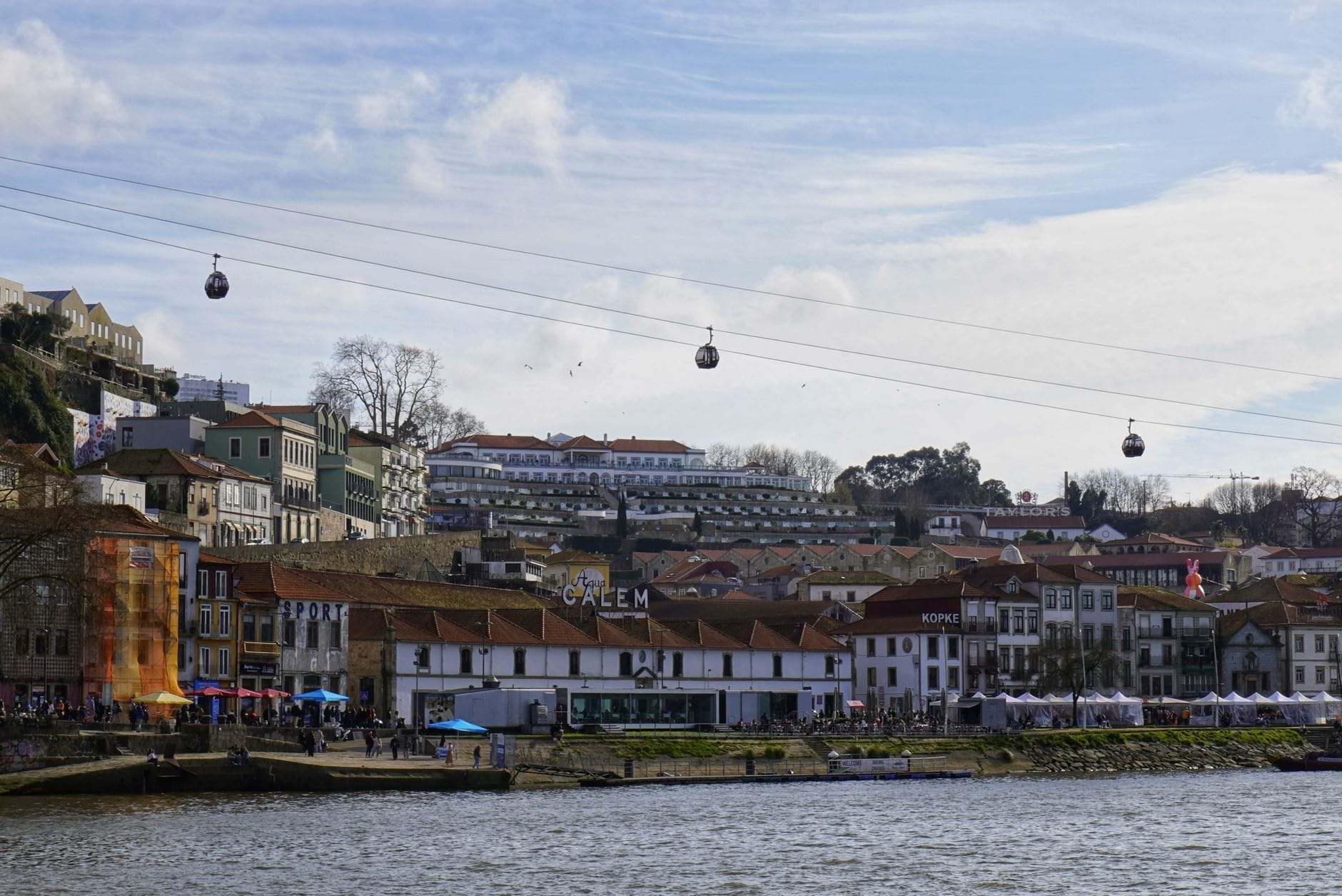
The Teleférico de Gaia is an urban gondola line that runs along the southern bank of the Douro River in Vila Nova de Gaia. Opened in April 2011 after construction began in March 2009, it stretches approximately 562 metres between two points that would otherwise require a steep, leg-burning walk: the riverfront promenade at the base of the port wine lodges and the upper level of the iconic Dom Luís I Bridge near Jardim do Morro. The journey takes under four minutes each way.
This is not a mountain cable car whisking you to some remote summit. It is a practical piece of urban infrastructure that doubles as one of the best vantage points in the Douro valley. At its highest point, the gondola clears the rooftops of Gaia's lodge district and gives you an unobstructed aerial perspective across the river to Porto's layered skyline: the Ribeira waterfront at water level, the medieval alleys climbing toward the Sé Cathedral, and the Clérigos Tower rising above it all.
💡 Local tip
Ticket prices and seasonal timetables change year to year. Always check the current schedule and fares at gaiacablecar.com before your visit rather than relying on third-party listings.
The Ride: What You Actually See
From the lower station on Avenida de Ramos Pinto, the gondola lifts you slowly at first, past the ochre and white facade of the port wine lodge buildings that crowd the hillside. The terracotta rooftiles are almost close enough to touch. Within thirty seconds you clear the top of the closest buildings and the full panorama opens up. On one side: the Douro, wide and grey-green, with rabelo boats moored below and the stone arches of the Dom Luís I Bridge framing the view. On the other: the stacked hillside of Gaia itself, with centuries-old lodge names painted in enormous letters across rooftops.
The far bank draws the eye most. Porto's Cais da Ribeira waterfront is laid out in a single horizontal strip of coloured facades, and above it the city climbs in waves of stone and tile toward the cathedral and the Baroque tower of Clérigos Tower. On a clear day, the view extends far enough up and down the river to understand why this stretch of the Douro valley carries UNESCO World Heritage status.
The upper station drops you close to the entrance of Jardim do Morro, a terraced garden park that itself functions as one of Gaia's best free viewpoints. From the upper station you can also step directly onto the upper deck of the Dom Luís I Bridge and walk across to Porto's old town on foot. This combination, ride the cable car up, cross the bridge on foot, is a logical and scenic way to move between the two riverbanks without retracing your steps.
Tickets & tours
Hand-picked options from our booking partner. Prices are indicative; availability and final rates are confirmed when you complete your booking.
Porto Walking Tour with River Cruise and Cable Car Ride
From 50 €Instant confirmationFree cancellationSunset cruise Gaia
From 25 €Instant confirmationFree cancellationPorto Card without Transport
From 8 €Instant confirmationFree cancellationRiver sightseeing from Gaia
From 18 €Instant confirmationFree cancellation
Morning vs. Afternoon: How the Experience Changes
Morning visits, roughly between 10:00 and 11:30, tend to offer the clearest light for photography. The sun comes in from the east and illuminates Porto's Ribeira facades directly, giving the pastel buildings their warmest tones. Crowds are lighter, queues at the lower station are short, and the river tends to be calmer, with tour boats not yet in full circulation.
Midday and early afternoon are the busiest periods, especially in July and August when the lower Gaia promenade is packed with visitors moving between port lodge tours. Expect waits of 15 to 20 minutes at the lower station during peak summer hours. The gondola itself is small and operates continuously, so queues move steadily, but patience helps.
Late afternoon, around 17:00 to 19:00 in summer, is arguably the most rewarding time for the ride. The light shifts warmer and lower, the shadows lengthen across the hillside, and Porto's skyline catches a golden tone that photographers specifically target. Crowds thin slightly as day-trippers begin heading back. Sunset from the upper station or the adjacent Jardim do Morro terrace is genuinely striking, with the Dom Luís I Bridge reflected in the evening water below.
⚠️ What to skip
The cable car operates outdoors and can be suspended during strong winds or severe weather. If you are visiting in autumn or winter, check conditions before making it the centrepiece of your plans.
Getting There: From Porto and Within Gaia
The most straightforward approach from central Porto is the Dom Luís I Bridge. Walk across the upper deck (a 10-minute walk from Porto's historic centre) and you arrive at the cable car's upper station near Jardim do Morro. Alternatively, take Porto Metro Line D to the Jardim do Morro stop, which deposits you steps from the upper station.
If you prefer to start at the lower station on the Gaia riverfront, walk along the Cais de Gaia promenade from the base of the Dom Luís I Bridge heading west. The lower station at Avenida de Ramos Pinto 331 is clearly signposted along the waterfront. From the lower station you ride up; from the upper station you can walk back down through the lodge district or cross to Porto on the bridge.
For those combining the cable car with port wine lodge visits, the lower station is conveniently placed near several major cellars. Calem Cellars and Sandeman Cellars are both within a short walk of the Gaia waterfront, making it easy to combine a lodge tour with the cable car in the same afternoon.
Tickets, Hours, and Practical Logistics
As of recent seasons, indicative ticket prices are approximately €7 for a one-way adult fare and €10 for a return. Child fares (ages 5 to 12) run roughly €3.50 one-way and €5 return. A family ticket covering two adults and two children is available at around €22.50 for the return journey. These figures should be treated as a general guide only. Prices are confirmed and updated at the official site before any visit.
Operating hours vary seasonally. In high season, the cable car typically runs daily from 10:00 to 20:00, but hours shorten in winter and may be adjusted on public holidays or during events. The official timetable page at gaiacablecar.com carries the current schedule, and it is worth checking the day before your visit rather than assuming year-round consistency.
Accessibility is generally good for an attraction of this type. The cable car is designed as urban transport and can accommodate visitors with reduced mobility. For precise details about wheelchair access, boarding assistance, or hearing support, the operator's contact page is the most reliable source, since these provisions can change with station upgrades.
Is It Worth the Price?
Four minutes for €7 to €10 is genuinely steep by any comparative measure, and it is fair to say the Gaia Cable Car leans toward tourist pricing rather than value transport. The views are real and photogenic, but they are not dramatically superior to what you get standing free of charge on the upper deck of the Dom Luís I Bridge or at the Jardim do Morro terrace, both of which are free. If you are already visiting those spots on foot, the cable car adds a different perspective and the novelty of the gondola ride itself, but it does not unlock a view that is otherwise inaccessible.
That said, for families with children, the ride is a highlight rather than a supplement. For anyone with mobility difficulties who wants to avoid the steep hillside climb from the riverfront, it is genuinely useful. And for photographers specifically aiming for aerial shots of the Douro that include the gondola itself, pairing the ride with a position at the Jardim do Morro terrace creates a compelling composition. Buy the return ticket if you plan to enjoy both stations without retracing your walk.
Photography Tips
The gondola windows are glass and generally clean, but reflections are a challenge in bright midday sun. If you want to photograph through the glass, position your lens close to the surface and shade it with your hand or a lens hood to cut glare. The ride is smooth enough for sharp shots at standard shutter speeds, so motion blur is not a significant concern.
The most distinctive shots come from outside the gondola: photographing the car itself from the upper station platform as it descends, with the Douro and Porto's skyline as a backdrop, or from the Jardim do Morro terrace using a telephoto lens to compress the bridge and cable car into a single frame. Early morning or the golden hour before sunset give the best light for both approaches.
ℹ️ Good to know
The cable car gondola is small and operates as a continuous circuit. You cannot stop mid-ride or request longer cabin time. If you want to linger with the view, plan to spend time at the upper station terrace or Jardim do Morro after riding.
Insider Tips
- Buy your return ticket at the lower station before boarding rather than deciding at the top. The price difference between one-way and return is small, and you avoid having to queue again for a ticket at the upper station if you change your mind.
- The upper station terrace offers almost the same panoramic view as the gondola at its peak height, and it is free to stand there without riding. If the queue is long, walk up via Jardim do Morro first to check if the view alone satisfies you before paying.
- Morning light between 09:30 and 11:00 illuminates Porto's Ribeira facades from the east. If your priority is photography of the Porto skyline from the gondola, this window gives the most direct, warm light without the harsh contrast of midday.
- The ride ends at Jardim do Morro, which is Metro Line D's stop of the same name. If you are heading back to central Porto by metro rather than on foot across the bridge, exit through the garden toward the station entrance rather than doubling back to the bridge deck.
- Combining the cable car with a port lodge tour is efficient and logical. Ride the cable car first when energy is high and crowds are lighter, then walk along the riverfront to whichever cellar you have booked. The two activities complement each other without significant backtracking.
Who Is Gaia Cable Car (Teleférico de Gaia) For?
- Families with children looking for a short, engaging ride with genuine wow-factor views
- Photographers targeting aerial perspectives of the Douro and Porto skyline
- Visitors with limited mobility who want the upper-bridge viewpoint without the steep hillside walk
- Travellers combining a port wine lodge tour with a scenic interlude on the Gaia waterfront
- Anyone with a short itinerary who wants to cover the Gaia riverfront and the Dom Luís I Bridge area efficiently in a single loop
Nearby Attractions
Other things to see while in Vila Nova de Gaia:
- Cais de Gaia Waterfront
Cais de Gaia is the riverside promenade of Vila Nova de Gaia, stretching along the south bank of the Douro directly opposite Porto's UNESCO-listed Ribeira quarter. Free to walk at any hour, it offers some of the most photogenic views of Porto's skyline, the Dom Luís I Bridge, and the traditional Rabelo boats. For first-time visitors and returning travelers alike, this waterfront rewards those who cross the river.
- Cálem Port Wine Cellars
Founded in 1859 and set directly on the Douro waterfront in Vila Nova de Gaia, Cálem is one of Porto's most recognizable port wine cellars. Guided tours take visitors through atmospheric barrel-lined galleries, covering the history and craft of port production, and end with a tasting. Here is what to expect before you go.
- Graham's Port Lodge
Graham's Port Lodge sits on a hill above the Douro in Vila Nova de Gaia, offering guided cellar tours through a beautifully restored 1890 lodge and tasting experiences that range from a straightforward introductory pour to a luxury vintage flight. It is one of the more polished port wine experiences on the Gaia side of the river, with serious production credentials to back it up.
- Jardim do Morro
Perched on the Gaia hillside just south of the Dom Luís I Bridge's upper deck, Jardim do Morro is a free public garden with some of the most direct, unobstructed views of Porto's historic waterfront. Open around the clock and served by its own metro station, it rewards visitors at every hour, from hazy morning light to the full gold of a Douro sunset.