Cais de Gaia Waterfront: The South Bank That Rivals Porto's Famous Ribeira
Cais de Gaia is the riverside promenade of Vila Nova de Gaia, stretching along the south bank of the Douro directly opposite Porto's UNESCO-listed Ribeira quarter. Free to walk at any hour, it offers some of the most photogenic views of Porto's skyline, the Dom Luís I Bridge, and the traditional Rabelo boats. For first-time visitors and returning travelers alike, this waterfront rewards those who cross the river.
Quick Facts
- Location
- Av. de Ramos Pinto, Vila Nova de Gaia 4400-261, Portugal
- Getting There
- Walk across the lower deck of Dom Luís I Bridge from Ribeira; also accessible by bus, taxi, or Uber/Bolt
- Time Needed
- 45 minutes to 2 hours depending on pace and stops
- Cost
- Free (public promenade, open 24 hours)
- Best for
- Skyline photography, port wine culture, leisurely river walks
What Is Cais de Gaia?
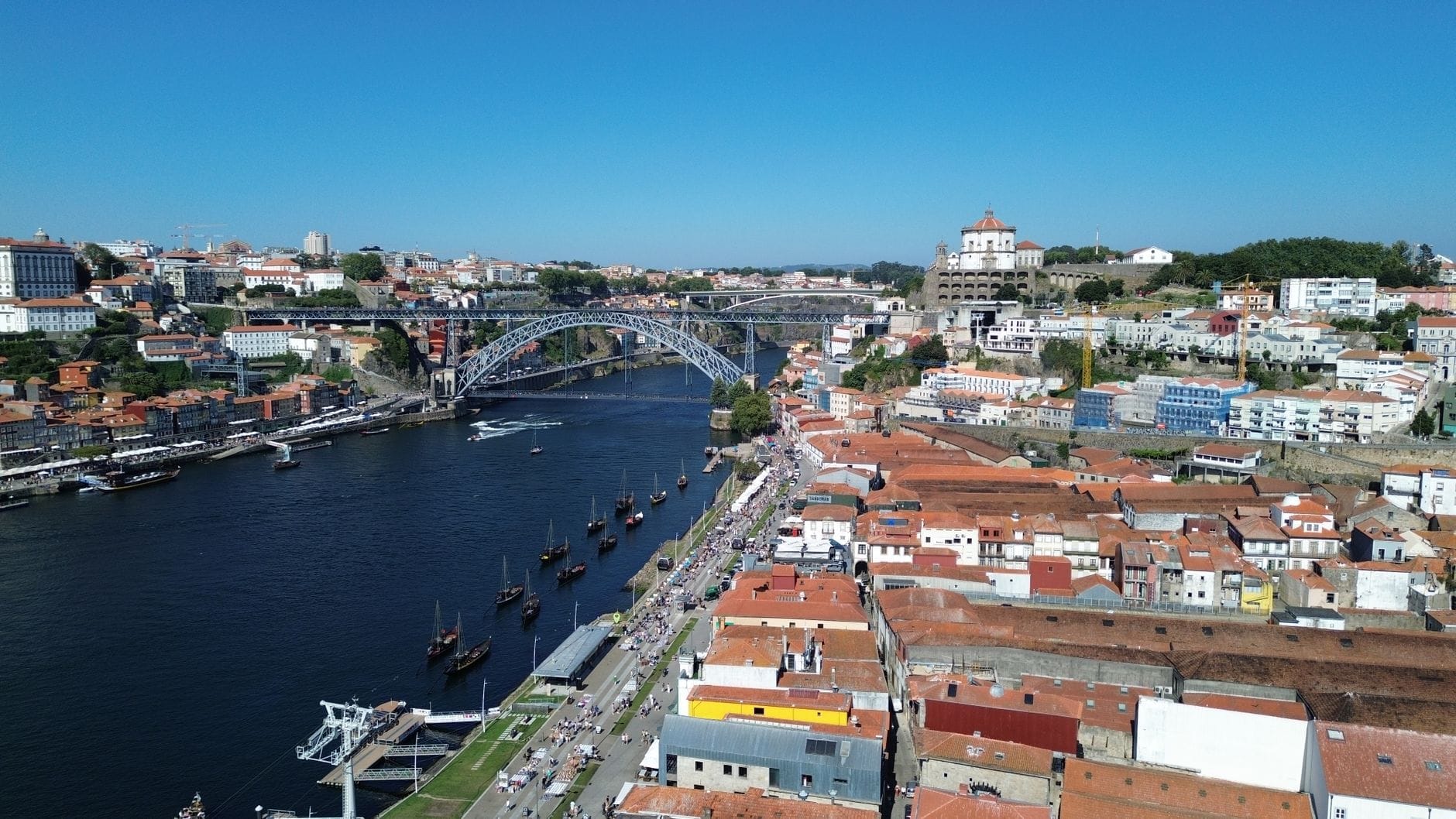
Cais de Gaia is the public waterfront promenade running along the south bank of the Douro River in Vila Nova de Gaia, the municipality directly across from Porto. Despite being a separate city administratively, Gaia is visually and physically inseparable from Porto at river level, and this quayside strip is the southern anchor of one of Europe's most striking urban waterfronts. The promenade stretches along Avenida de Ramos Pinto, flanked on the hillside by the famous port wine lodges and on the riverside by outdoor cafes, Rabelo boats moored at the quay, and an uninterrupted panorama of Porto's historic center.
The waterfront is not a ticketed attraction. There are no gates, no queues, and no entrance fees. It is simply a well-paved riverside walkway that happens to sit at the intersection of centuries of wine trade history and one of Portugal's most photographed urban views. That combination of accessibility and scenic richness is what makes it so consistently popular with travelers.
💡 Local tip
The most efficient approach is to walk across the lower deck of Dom Luís I Bridge from the Ribeira side. The transition from Porto to Gaia takes about five minutes on foot, and the views from the bridge itself are worth pausing for.
The View: What You're Actually Looking At
Standing on the Gaia waterfront and looking north across the Douro, you face one of Porto's defining images: the terraced facades of the Ribeira rising steeply from the riverbank, the double-decked iron arc of the Dom Luís I Bridge cutting across the sky, and the Sé Cathedral perched above it all on the granite ridge. It is a view that prints well on a postcard and holds its own in person. At this distance, roughly 150–200 meters of river separating you from the Porto bank, the scale of the old city becomes legible in a way that is impossible when you are standing inside it.
The view changes significantly by time of day. Morning light falls directly on the Porto side, making the golden and ochre facades of the Ribeira glow against the dark water. Late afternoon softens the contrast. The most dramatic window, however, is after sunset: Porto's monuments and bridge are floodlit, and the reflections stretch across the Douro in long amber ribbons. If photography is your primary goal, arrive around dusk and stay for the first thirty minutes of darkness. For more on how Porto's bridges look from ground level and above, see the full Porto bridges guide.
Tickets & tours
Hand-picked options from our booking partner. Prices are indicative; availability and final rates are confirmed when you complete your booking.
Sunset cruise Gaia
From 25 €Instant confirmationFree cancellationRiver sightseeing from Gaia
From 18 €Instant confirmationFree cancellationDiscovery Game Porto's Vila Nova de Gaia views and Port wines
From 26 €Instant confirmationFree cancellationSerralves All-Access Pass
From 24 €Instant confirmationFree cancellation
The History Behind the Quay
The Cais de Gaia promenade is not decorative in origin. For centuries, this quayside served a functional role in the port wine trade. Rabelo boats, the flat-bottomed wooden vessels designed to navigate the Douro's rapids, would carry barrels of wine down from the Douro Valley to the lodges climbing the Gaia hillside above. The boats would dock here, wine would be unloaded, and production would continue in the cavernous stone warehouses now signposted with the names of houses like Graham's, Sandeman, and Cálem. The system was the logistical backbone of an export trade that made both Porto and Gaia internationally significant from the 17th century onward.
Today, several Rabelo boats remain moored along the quay as floating exhibits, their hulls painted with lodge logos. They are a photogenic reminder of what the waterfront once was. A major remodeling project in the early 2000s transformed the quay from a working industrial dock into the pedestrian promenade it is today, adding cafes, restaurants, and proper paving while retaining the historic character. If the port wine history interests you beyond the view, the Cálem Cellars and Graham's Port Lodge are both within walking distance up the hillside.
Walking the Promenade: A Practical Orientation
The core stretch of the Gaia waterfront that most visitors walk runs roughly from the base of Dom Luís I Bridge westward along Avenida de Ramos Pinto. The path is mostly flat and well-paved, which makes it unusually accessible compared to the steep lanes of Porto's Ribeira. Families with strollers, older travelers, and anyone who has already climbed too many Porto hills will appreciate the even terrain.
Restaurants and café terraces line the promenade for much of its length. The quality varies: some spots have clearly prioritized view over kitchen, and menus in multiple languages with laminated photos are a reliable signal to keep walking. That said, a cold Sagres or a glass of local wine while looking directly at Porto across the water is a genuinely good experience at almost any of the terrace bars along the strip.
If you want to extend the walk westward, the promenade connects toward the Jardim do Morro, the garden park on the Gaia hilltop where the upper deck of Dom Luís I Bridge meets the south bank. From there, the views look down onto the entire waterfront scene from above. The Gaia cable car runs between the riverside and the hilltop garden, so it is possible to walk the lower promenade and ride back up, or vice versa.
When to Visit and What to Expect by Season
The promenade is open at all hours, every day, and there is genuinely no bad time to walk it in terms of access. But conditions vary considerably. Summer brings the highest foot traffic, particularly in July and August when the restaurant terraces fill quickly by early evening. Weekends in summer, especially Saturday nights, see this stretch become one of the liveliest outdoor dining corridors in the Porto area. If you prefer a calmer experience, weekday mornings between late spring and early autumn hit the right balance of good weather and manageable crowds.
Porto's climate is temperate and damp. From late autumn through winter, rain is frequent and the waterfront can feel exposed and wind-swept. The views do not disappear in poor weather, but the experience shifts considerably. For a full breakdown of seasonal conditions, the best time to visit Porto guide covers month-by-month expectations in detail.
⚠️ What to skip
The Gaia waterfront is fully exposed to wind off the river. On grey or rainy days, the promenade can be cold even in October. Bring a layer regardless of the forecast.
Who Should Think Twice
If your time in Porto is very limited, spending it on the Gaia side rather than exploring Porto's own historic center requires a clear reason. The promenade itself is a walk, not a destination with programming or exhibits. Travelers who want structured experiences, audio guides, or cultural depth should pair a Gaia waterfront walk with a port wine lodge visit rather than treating the quay alone as a half-day activity.
It is also worth setting realistic expectations about the restaurant quality. The waterfront dining scene has improved considerably since the 2003 redevelopment, but it remains a mixed picture. Some spots are genuinely good. Others are tourist traps calibrated entirely around the view. Reading recent reviews before sitting down will save frustration.
Getting There and Getting Around
The simplest route is on foot via the lower deck of the Dom Luís I Bridge, which deposits you directly at the western end of the Gaia waterfront. From the Ribeira, this is a five-minute walk. If you are coming from farther into Porto, several bus lines serve Vila Nova de Gaia, and taxis or ride-hailing apps (Uber and Bolt both operate in the area) drop off directly along Avenida de Ramos Pinto. Street parking exists along some sections but can be difficult on weekends. There is no metro station at river level on the Gaia side, though metro connections exist at higher elevations.
Accessibility along the main promenade is good. The surface is paved and mostly level, and the main stretch from the bridge base westward has no significant obstacles. Some of the connecting streets going up toward the wine lodges are steep and cobblestoned, which can be challenging for wheelchairs or mobility aids.
Insider Tips
- For the best Porto skyline shot, position yourself roughly midway along the waterfront, level with the Rabelo boats, and shoot at dusk when the bridge lights come on but the sky still holds some color. This window lasts about twenty minutes.
- The western end of the promenade near the cable car base tends to be less crowded than the stretch directly in front of the bridge, even on busy summer evenings. The views there are equally good and the restaurant terrace density is lower.
- If you visit in June, Porto's São João festival (June 23-24) turns both the Ribeira and the Gaia waterfront into one continuous street party. The Gaia side is slightly less chaotic and offers a better vantage point for watching fireworks over the river.
- The Rabelo-style boats moored along the quay operate short river cruises. Boarding from the Gaia side rather than the Porto side often involves shorter queues on busy days.
- Combine the flat waterfront walk with the Jardim do Morro above for a complete Gaia experience. The cable car links the two levels and the hilltop garden is far quieter than the quayside even in summer.
Who Is Cais de Gaia Waterfront For?
- Photographers wanting Porto's skyline from the best possible angle
- Port wine enthusiasts visiting the Gaia lodges who want to bookend a lodge tour with a riverside walk
- Travelers with limited mobility who want a scenic riverside walk without steep hills
- Couples looking for a relaxed evening with river views and outdoor dining
- Visitors arriving on a first trip to Porto who want to understand the city's geography by seeing it from the other side
Nearby Attractions
Other things to see while in Vila Nova de Gaia:
- Cálem Port Wine Cellars
Founded in 1859 and set directly on the Douro waterfront in Vila Nova de Gaia, Cálem is one of Porto's most recognizable port wine cellars. Guided tours take visitors through atmospheric barrel-lined galleries, covering the history and craft of port production, and end with a tasting. Here is what to expect before you go.
- Gaia Cable Car (Teleférico de Gaia)
The Teleférico de Gaia is a 562-metre cable car linking the Vila Nova de Gaia riverfront to the upper deck of the Dom Luís I Bridge. The ride lasts under four minutes, but the panoramic views across the Douro to Porto's old city make it one of the most photogenic short journeys in northern Portugal.
- Graham's Port Lodge
Graham's Port Lodge sits on a hill above the Douro in Vila Nova de Gaia, offering guided cellar tours through a beautifully restored 1890 lodge and tasting experiences that range from a straightforward introductory pour to a luxury vintage flight. It is one of the more polished port wine experiences on the Gaia side of the river, with serious production credentials to back it up.
- Jardim do Morro
Perched on the Gaia hillside just south of the Dom Luís I Bridge's upper deck, Jardim do Morro is a free public garden with some of the most direct, unobstructed views of Porto's historic waterfront. Open around the clock and served by its own metro station, it rewards visitors at every hour, from hazy morning light to the full gold of a Douro sunset.