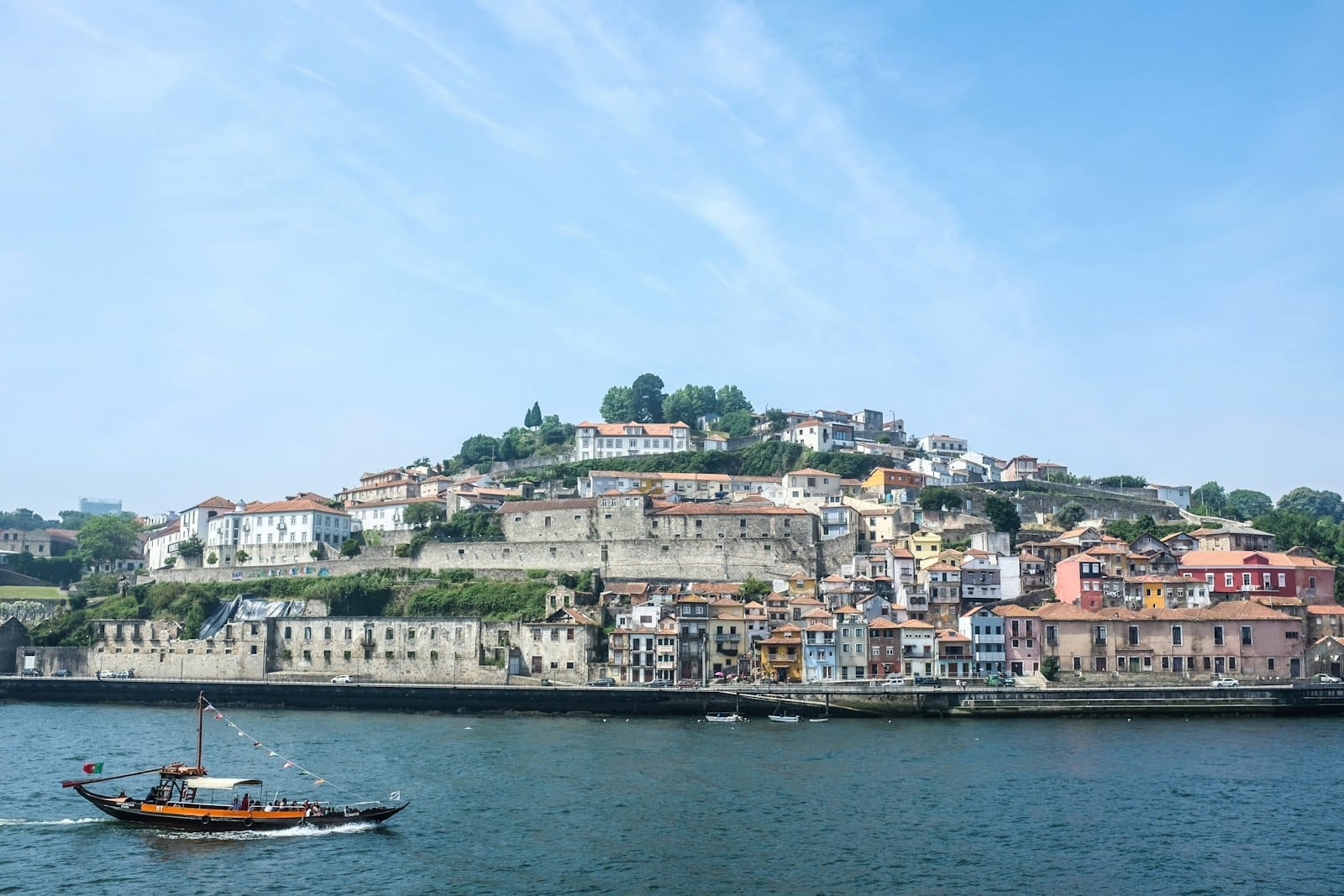
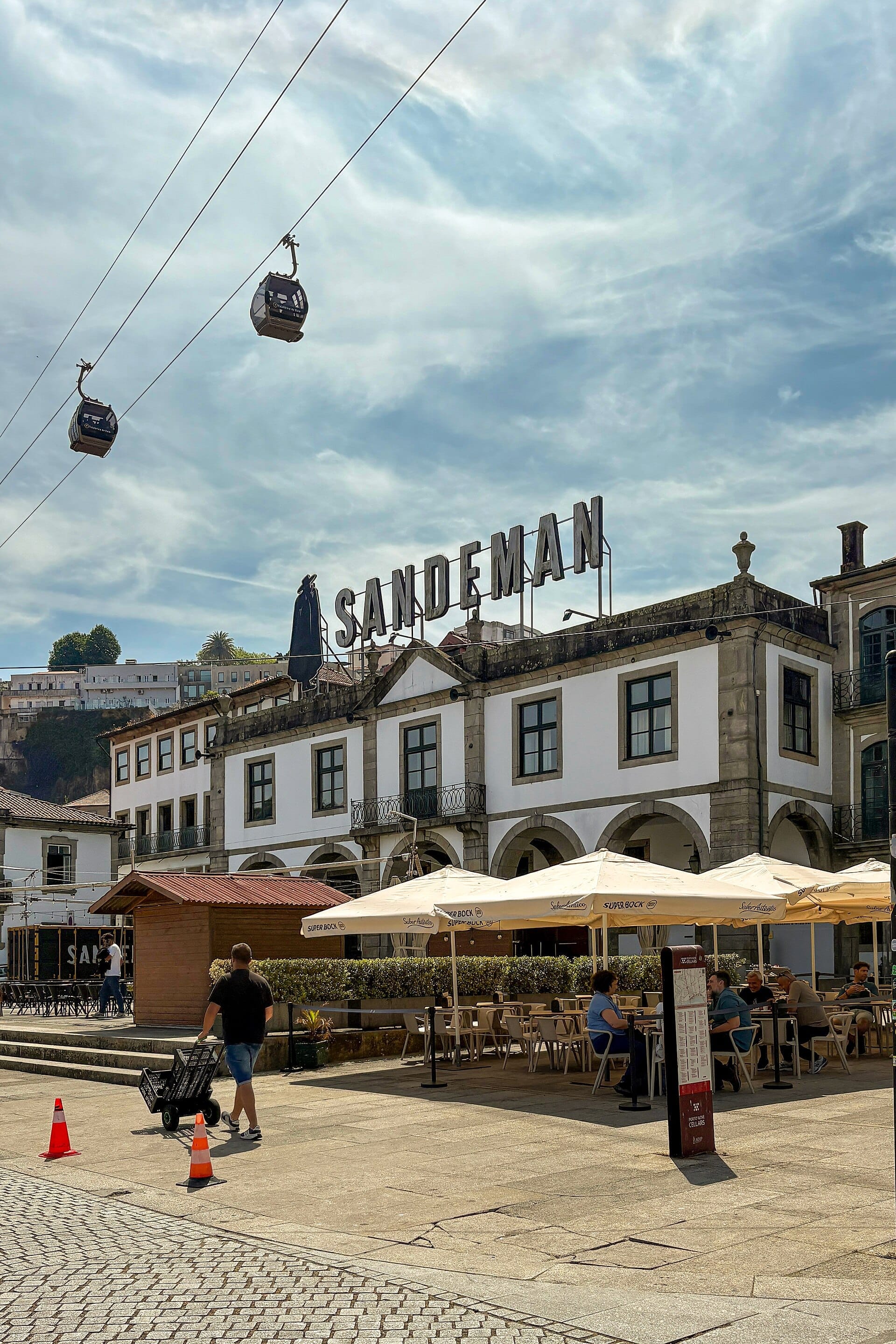
Vila Nova de Gaia sits directly across the Douro from Porto, and while it is technically a separate municipality, most visitors treat it as an extension of the city. It is the home of Portugal's port wine aging cellars, the hilltop Serra do Pilar viewpoint, and a long Atlantic coastline stretching south toward Granja beach.
Vila Nova de Gaia is Porto's southern counterpart: a separate municipality on the south bank of the Douro that most visitors cross into within their first day. The riverfront strip is lined with the warehouses of port wine lodges, the hilltop Serra do Pilar offers the most photographed view of Porto, and beyond the urban core the municipality fans out across hills and Atlantic coastline that feel nothing like the tourist trail above.
Orientation: Where Gaia Sits and How It Fits
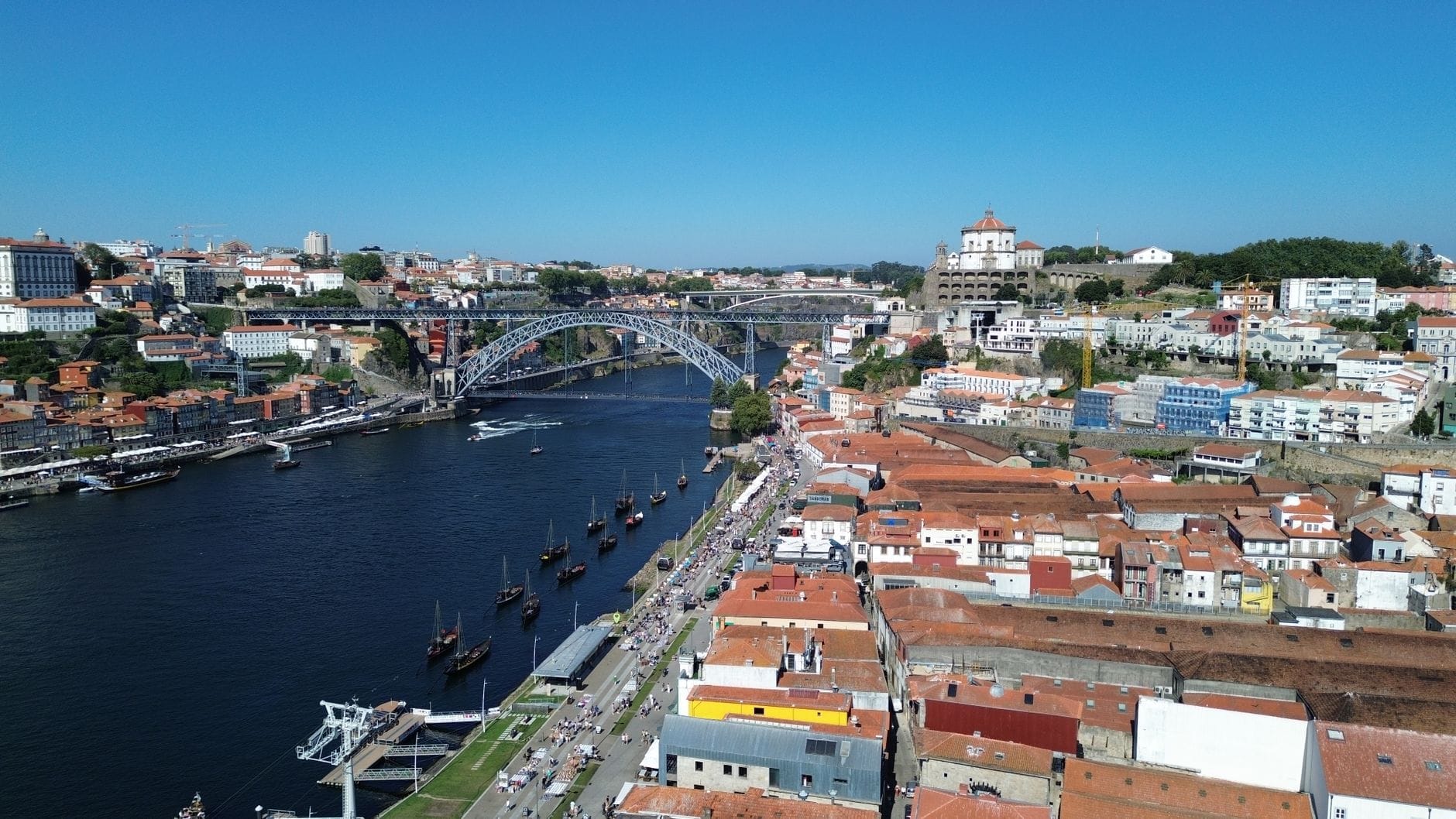
Vila Nova de Gaia is not a neighborhood of Porto. It is its own city and municipality, Portugal's most populous municipality in the Porto Metropolitan Area, sitting on the south bank of the Douro River directly opposite Porto's Ribeira quarter. The Douro separates the two cities, and several bridges span that gap, the most famous of which is the double-deck Dom Luís I bridge linking Ribeira to the Gaia waterfront below, and the upper deck to the Serra do Pilar plateau above.
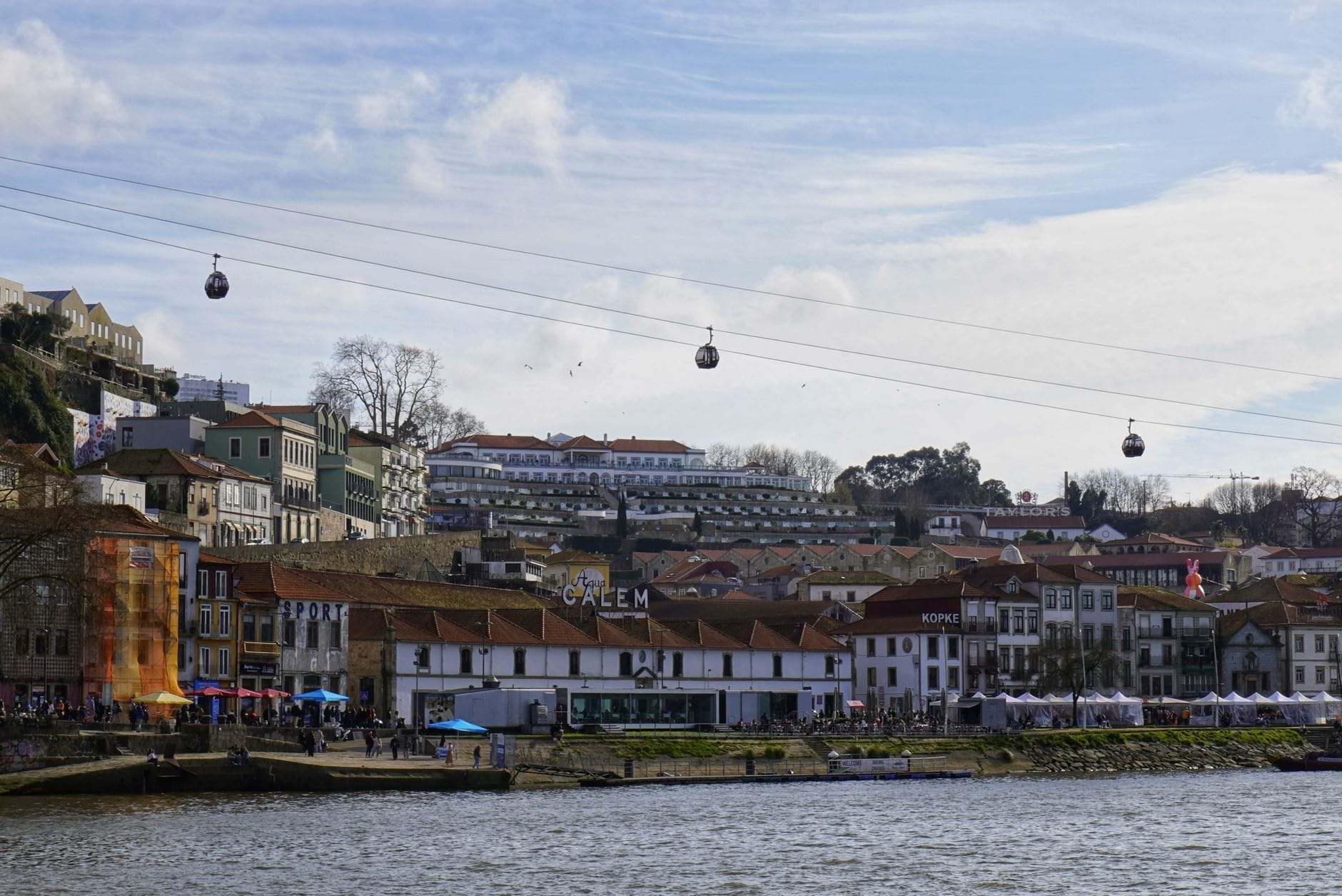
The urban fabric of Gaia is built on a series of terraces rising steeply from the riverfront. Down at water level, the Cais de Gaia is the main visitor strip, a promenade backed by the lodge warehouses. From there, Avenida da República runs north to south as the main spine of the city, climbing through residential and commercial neighborhoods before reaching the larger inland parishes. To the west, the municipality eventually meets the Atlantic, where beach towns like Miramar, Madalena, and Granja are part of Gaia but feel like a different world from the wine cellars.
Understanding this geography matters for planning. The riverfront is compact and walkable, and most first-time visitors spend their entire time in Gaia within a few hundred meters of the Douro. But the municipality is large, and the coastal beaches require a separate trip, either by metro or car.
ℹ️ Good to know
Vila Nova de Gaia and Porto are separate municipalities divided by the Douro River. Crossing the Dom Luís I bridge puts you in a different city, though in practice the tourist experience flows seamlessly between the two.
Character and Atmosphere
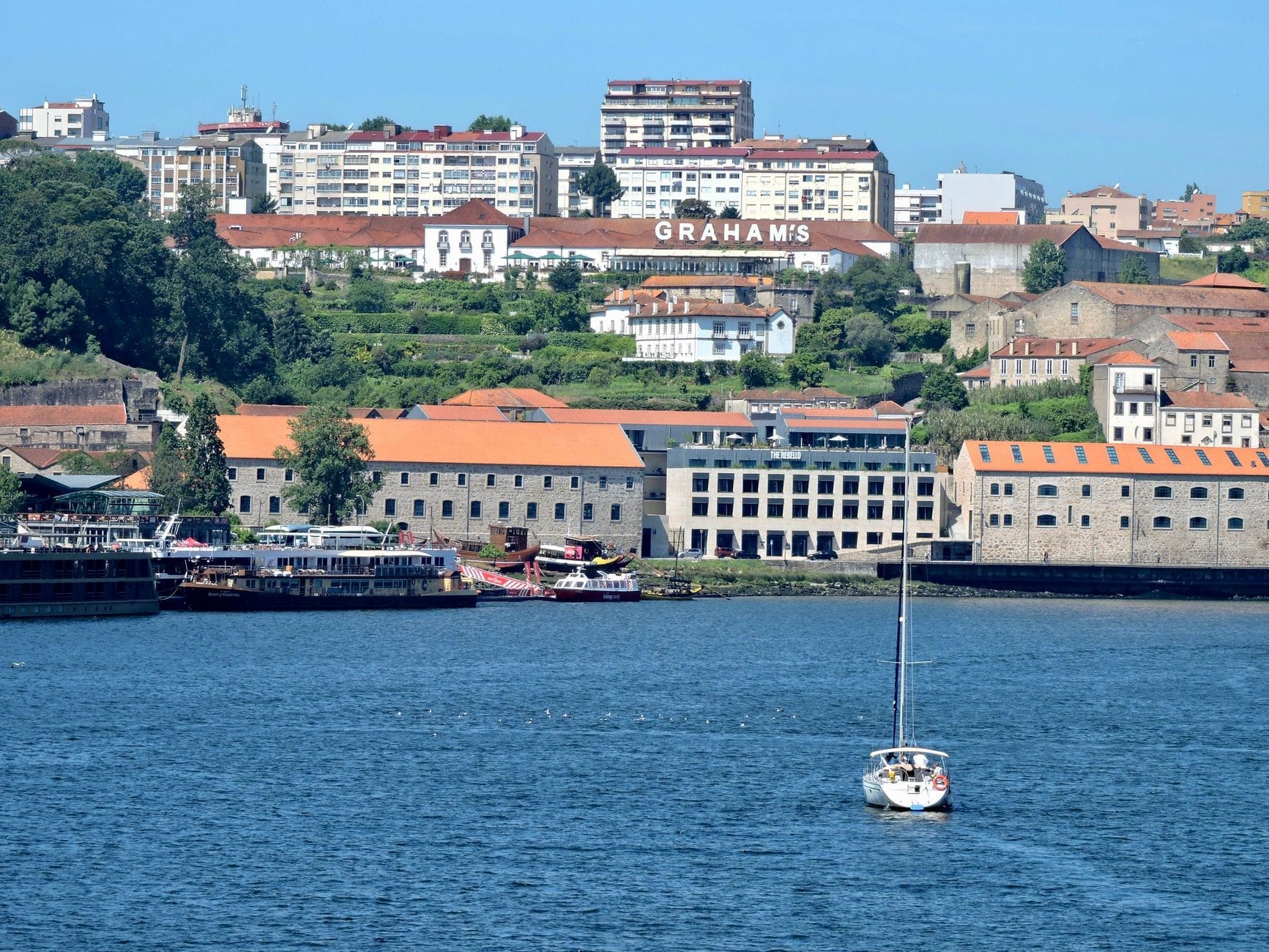
The Gaia waterfront has a more open, less frenetic energy than the Ribeira quarter across the water. The streets are wider, the facades are lower, and there is always a breeze off the river. In the morning, the cais is quiet enough to hear the Rabelo boats creaking against their moorings. The light comes in low from the east, catching the white and terracotta walls of the lodge buildings and the granite of the Dom Luís I bridge above.
By mid-morning the tour groups arrive, and the promenade fills with people moving between lodge entrances. This is when the riverfront shifts from local to tourist-facing, and it is worth knowing that some parts of the cais feel like a theme park version of a port wine town, with aggressive touts outside certain lodges and souvenir kiosks between the tasting rooms. The best lodges have enough history and depth to rise above this, but you will notice the contrast.
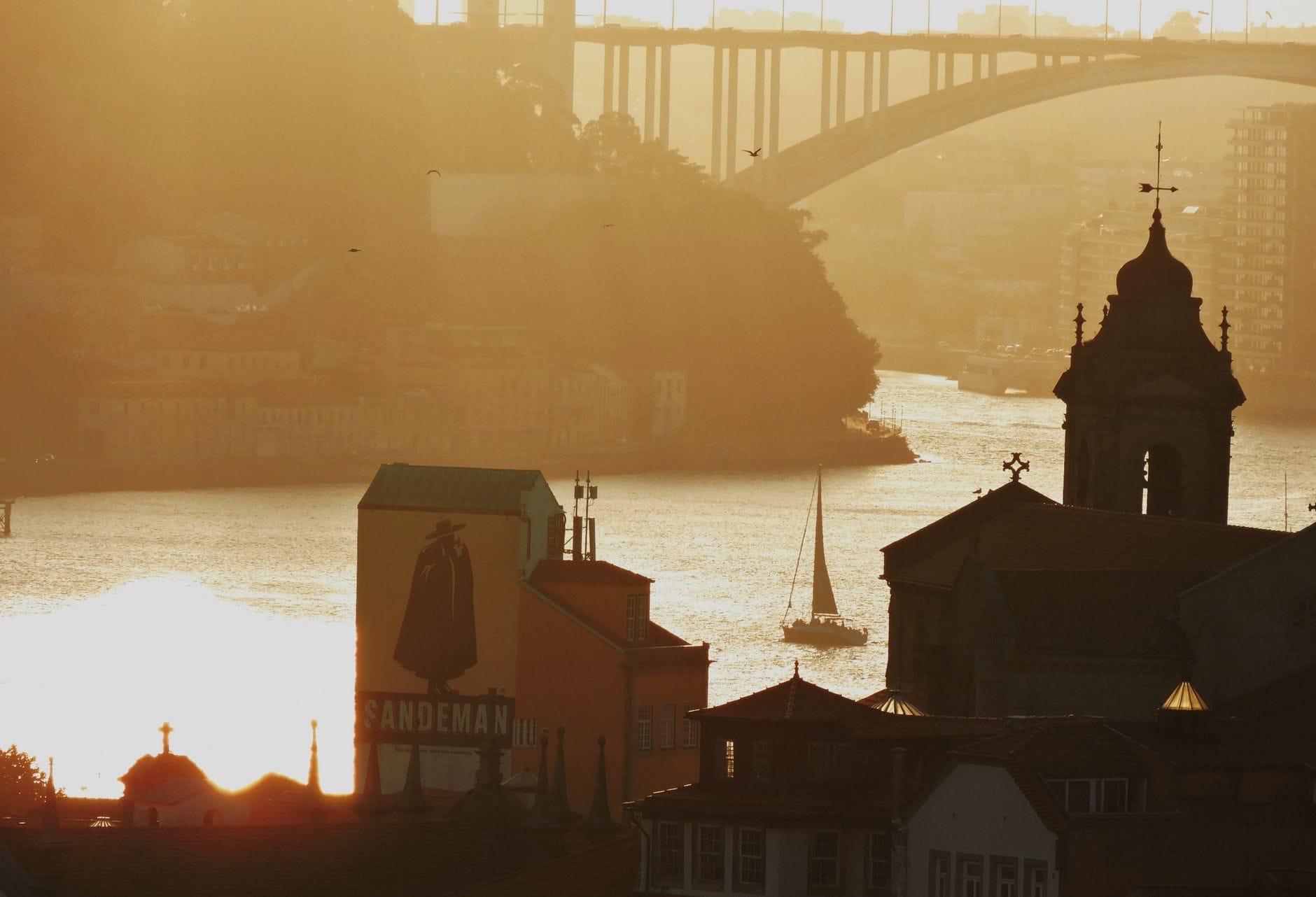
In the afternoon, once you climb up to Serra do Pilar, the atmosphere changes completely. The hilltop around the monastery is calmer, with wide views across Porto's rooftops. Later in the day, as the light softens and the city below glows amber, this becomes one of the best places to simply sit and watch Porto from a distance. The cable car station nearby adds a queue to the experience, but the view from the top justifies it.
After dark, the cais stays lively into the evening, with restaurant terraces full and a younger crowd gravitating toward the bars on the river-facing streets. It is not as frenetic as Porto's Cais da Ribeira on a Saturday night, but it holds its own, and the illuminated bridges reflecting on the Douro add a layer the other bank cannot match.
What to See and Do
The port wine lodges are the central attraction and the reason most people cross the bridge. Nearly every major port house maintains its aging cellars in Gaia, and most offer tours and tastings. The experience varies significantly between lodges. Larger commercial operations run timed English-language tours every 20-30 minutes and can feel assembly-line. Smaller or more historically oriented lodges offer more intimate experiences. Prices and tour formats change seasonally, so it is worth checking directly before arriving.
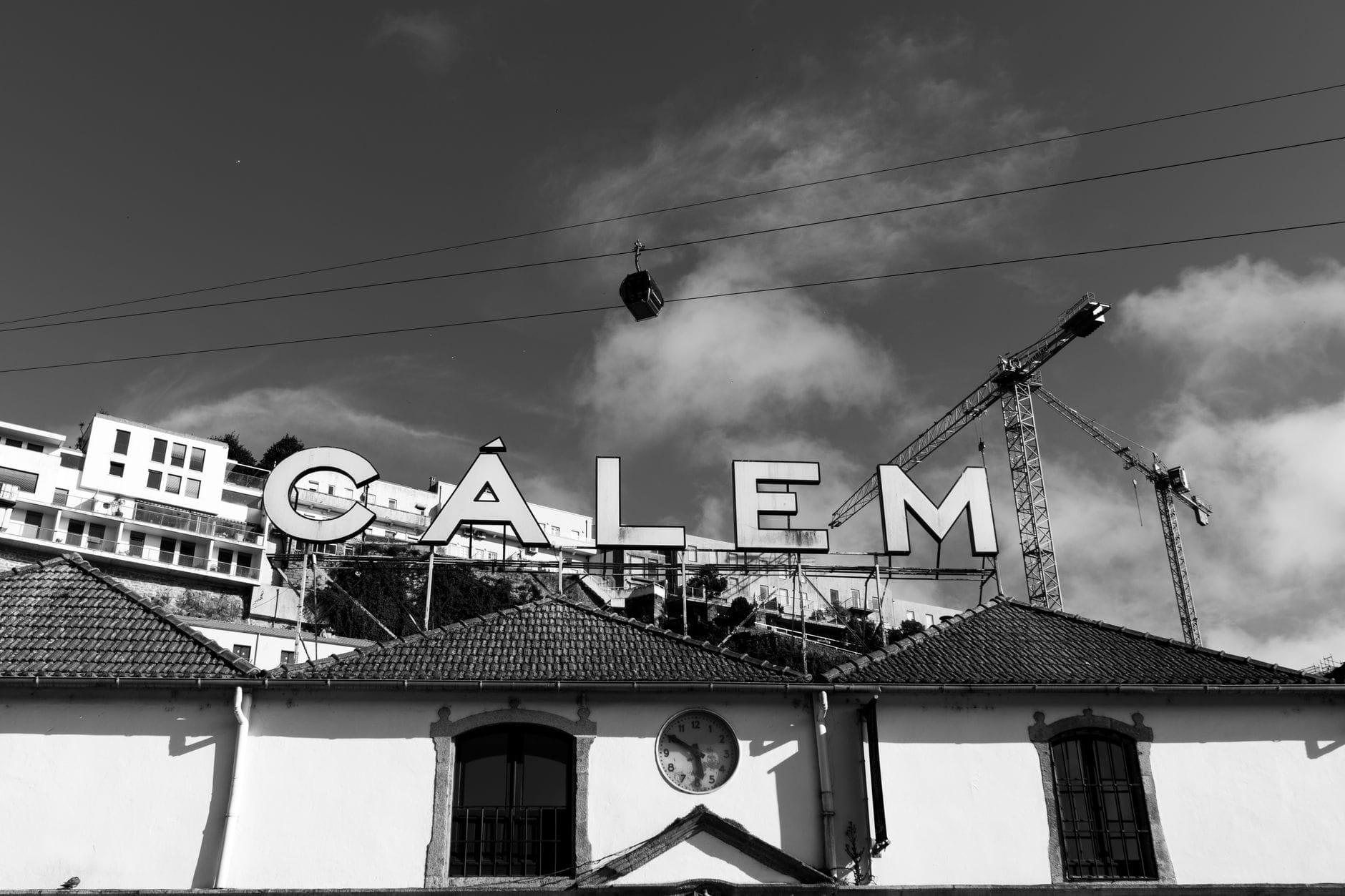
Among the well-regarded options, Graham's Port Lodge sits higher up the slope with a terrace view that rivals the Serra do Pilar, while Sandeman Cellars is one of the most recognizable names on the riverfront. Calem Cellars is known for pairing its cellar tour with fado music, which is a combination that may appeal to visitors who want to combine two Portuguese experiences in one visit. For more context on what to taste and why, the port wine guide for Porto covers the essentials before you commit to a tasting.
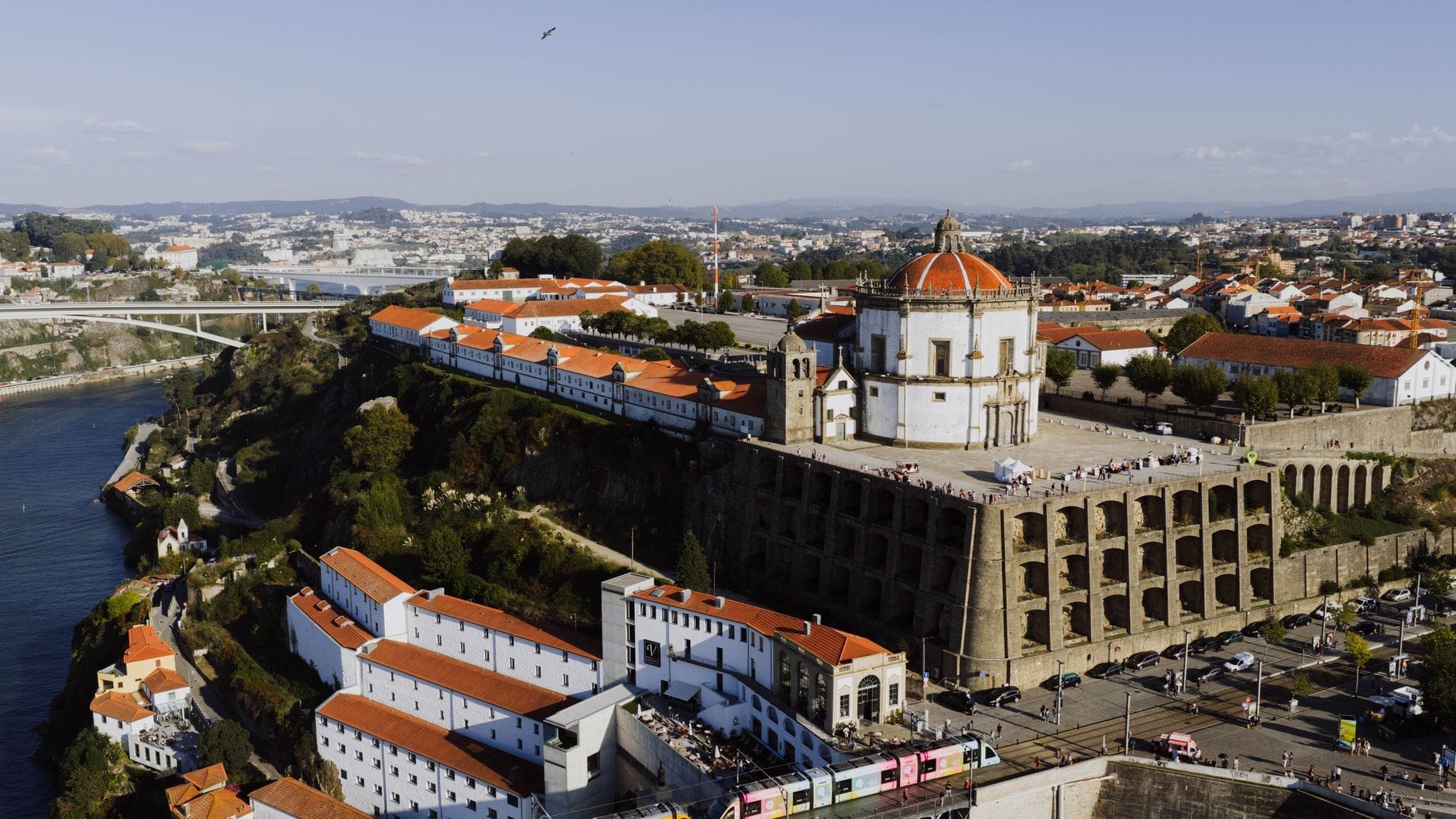
The Monastery of Serra do Pilar is a UNESCO World Heritage site that anchors the high ground above the bridge. The circular cloister is architecturally unusual and the views from the esplanade in front are genuinely spectacular, looking straight across to Porto's Ribeira and up the river valley. It does not take long to visit, but the walk up from the riverfront is steep enough to be worth knowing about in advance.
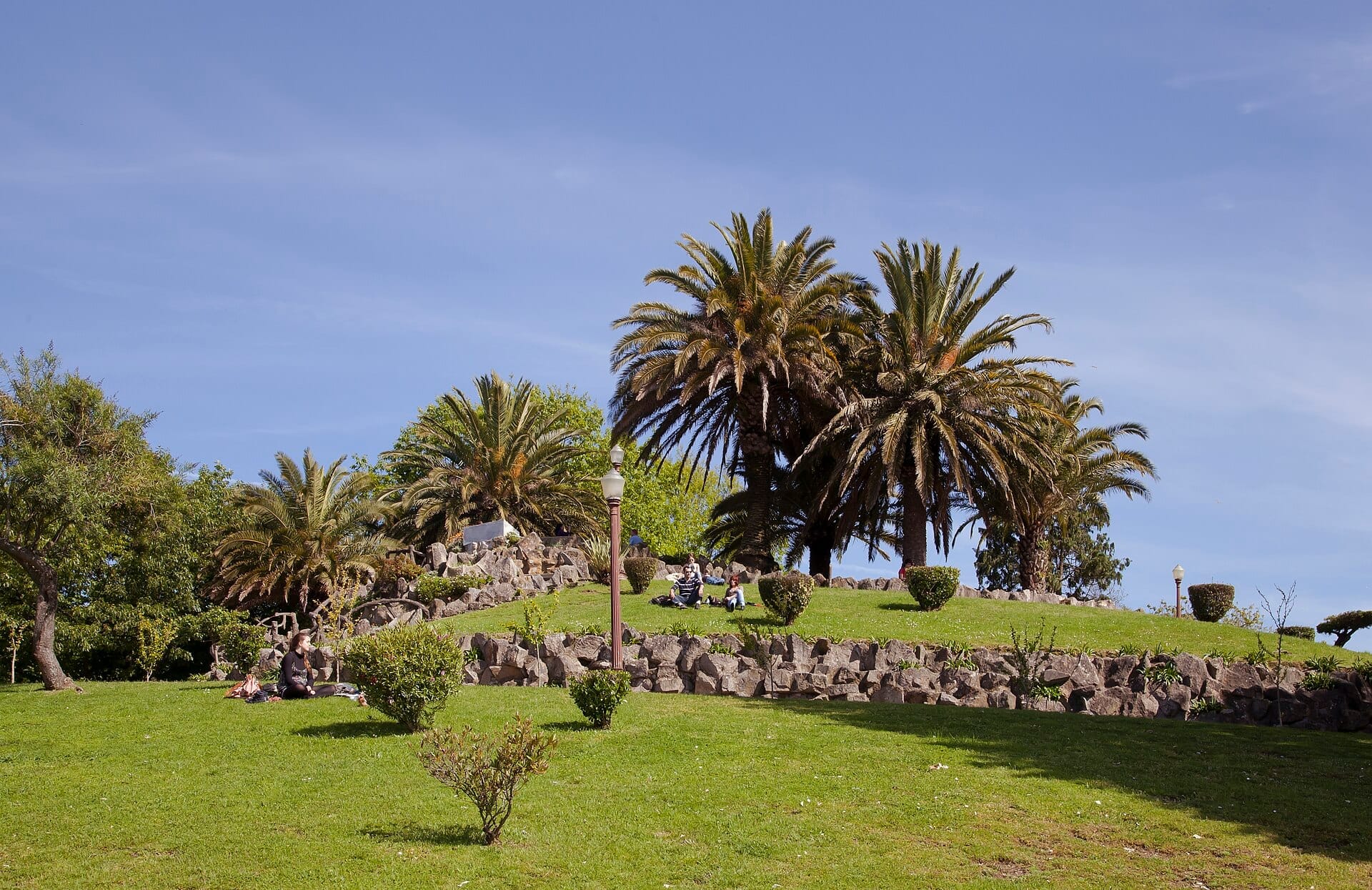
The Gaia cable car connects the riverfront level to the Serra do Pilar plateau and is useful if you want to avoid the climb. Queues build quickly on summer afternoons, so either go early or walk up and take the cable car back down. The Jardim do Morro at the top of the cable car is a terrace garden that gives another angle on Porto's skyline.
Port wine lodge tours and tastings along the Cais de Gaia riverfront
Serra do Pilar viewpoint and monastery cloisters
Gaia cable car between river level and the upper plateau
Jardim do Morro hilltop garden with Porto views
Afurada fishing village near the Douro mouth, accessible by riverside path
Miramar beach and the oceanside Senhor da Pedra chapel
Granja and Madalena beaches further south along the Atlantic coast
WOW Porto cultural district, a multi-museum complex in converted lodge buildings
The WOW Porto complex has converted a cluster of historic lodge warehouses into a cultural and dining destination with several themed museums covering topics including wine, cork, and Portuguese tiles. It is a substantial commitment of time and money if you do the full experience, but individual museums can be visited separately.
If you are crossing to Gaia as part of a broader Porto visit, the Dom Luís I bridge is worth walking across at both levels if your legs allow. The lower deck is for road traffic and pedestrians; the upper deck carries the metro and a narrow pedestrian walkway with views straight down to the river 60 meters below.
💡 Local tip
Walk the upper deck of the Dom Luís I bridge eastward in the late afternoon for the best light on Porto's Ribeira. The return crossing on the lower deck gives a different perspective at water level.
Eating and Drinking
The food scene on the Gaia riverfront divides fairly cleanly between tourist-facing restaurants on the cais itself and better-value eating a few streets back or up the hill. The promenade is convenient but prices are high and the focus is on capturing foot traffic rather than local diners. Menus tend to run toward seafood, grilled fish, and bacalhau dishes presented in a way that appeals to international visitors.
Moving away from the waterfront, the streets climbing toward Avenida da República have more everyday Portuguese restaurants with lunch menus (pratos do dia) that represent significantly better value. Portions are generous, wine is cheap, and you are more likely to be eating alongside office workers from the local council buildings than other tourists.
The WOW Porto complex has added several restaurants and bars of a different register, with a focus on wine pairing and more considered Portuguese cuisine. These are in a different price bracket from a riverside pastel de nata and coffee, but the quality and setting justify the cost for a longer lunch or dinner.
For drinks, most of the port wine lodges have terrace bars where you can order a glass without committing to a full tour. The combination of a chilled white port or tawny with a view of the Douro in the early evening is one of the more straightforward pleasures Gaia offers. Bars along the cais stay open late on weekends and draw a younger crowd after 10pm.
💡 Local tip
White port served chilled over ice with tonic and a slice of lemon, known as a port tonic or portónico, is a local aperitif that many visitors discover for the first time at a Gaia terrace. It is lighter than the tawny versions and a good starting point.
Getting There and Around
From central Porto, the most direct route to the Gaia waterfront is on foot across the lower deck of the Dom Luís I bridge from Ribeira. The crossing takes roughly 5–10 minutes and deposits you directly onto the cais. From higher points in Porto such as the Batalha or Aliados area, walking the upper deck and taking the cable car down is a more scenic approach.
Porto Metro Line D (Yellow) crosses the Douro via the upper level of the Dom Luís I bridge. The Jardim do Morro stop is the first station on the Gaia side, sitting above the cable car station and Serra do Pilar. Continuing south on Line D, stations serve Avenida da República and the João de Deus stop near the El Corte Inglés shopping center. This makes the metro genuinely useful for reaching the broader Gaia city center beyond the tourist riverfront. For practical advice on using Porto's metro and other transport options, the guide to getting around Porto covers the Andante card system and ticketing.
For the Atlantic coast beaches within the Gaia municipality, including Madalena, Miramar, and Granja, the Linha do Norte railway runs south from Porto Campanhã station with stops serving the coastal parishes. Journey times are short, and the coastal rail line gives direct access without a car. Check current COMBOIOS DE PORTUGAL timetables before travel.
Taxis and ride-hailing services such as Uber and Bolt operate throughout Gaia and are a practical option for reaching areas not well served by metro, particularly the fishing village of Afurada or lodges higher up the hillside. Walking within the riverfront zone is straightforward on flat ground, but the climb to Serra do Pilar is steep. The cable car is available as an alternative, though queues form quickly in peak hours.
⚠️ What to skip
The streets immediately behind the cais can be confusing to navigate on foot because the hillside rises quickly and paths zigzag between lodge buildings. Download an offline map before exploring above the riverfront level.
Where to Stay
Gaia's riverfront is a legitimate alternative base for exploring Porto, and accommodation here has expanded considerably as the wine lodge district has developed. Staying on the Gaia side means waking up to views of Porto's Ribeira and Clerigos tower across the water, which is a genuinely attractive proposition. The trade-off is that Porto's historic core, including São Bento station, Livraria Lello, and most of the city's museums, requires a bridge crossing every time you leave.
The riverfront zone and the immediate streets above it have the highest concentration of hotels and short-term rentals, mostly pitched at visitors who want to be close to the cellar tours and river views. These are well-positioned for the Gaia attractions but add walking distance to Porto's center. The Jardim do Morro area, at the top of the cable car, provides slightly easier metro access to Porto without being at the very bottom of the slope.
Travelers who want Porto's historic character at close range and do not mind crossing the bridge daily will find staying in Gaia a reasonable choice. Those who plan to spend most of their time in Porto itself, visiting churches, markets, and the Aliados area, may prefer a base in Ribeira or Baixa. The guide to where to stay in Porto covers both sides of the river and helps match accommodation areas to travel priorities.
What Works and What Does Not
Gaia's riverfront is one of the most visited areas in the entire Porto region, and it shows. The density of tour groups in front of the lodges between 10am and 3pm can make parts of the cais feel like a bottleneck. The touts outside some cellars are persistent, and the restaurants immediately on the waterfront are priced for people who are not going to come back tomorrow. None of this ruins the experience, but going in with realistic expectations matters.
The deeper municipal territory of Gaia, the residential inland neighborhoods, the coastal rail towns, and the Afurada fishing village, is almost entirely off the tourist map. This is where Gaia functions as a real Portuguese city of nearly 300,000 people, and a half-day exploring beyond the river rewards curiosity with a different texture than anything in the Ribeira or Baixa.
Safety across Gaia is consistent with other parts of the Porto area. Normal precautions apply, particularly in crowded areas on the cais. The coastal cliff and beach areas at Miramar, Madalena, and Granja have Atlantic surf and tidal conditions that require attention to posted warnings. For general advice on navigating the Porto area, the Porto safety tips guide covers the relevant precautions.
TL;DR
Vila Nova de Gaia is a separate municipality from Porto, linked by the Dom Luís I and other Douro bridges, and best known for its port wine cellars along the Cais de Gaia riverfront.
The riverfront is walkable and compact, but the wider municipality extends south to Atlantic beaches and fishing villages that require the train or a car to reach.
Port wine lodge tours vary significantly in quality and format; booking ahead and researching individual lodges before arriving pays off.
The Serra do Pilar hilltop offers the definitive panoramic view of Porto and is worth the climb or cable car ride at any time of day, particularly in late afternoon light.
Best suited for travelers who want the port wine experience, cross-river Porto views, and a slightly calmer base than the Ribeira, but it is less convenient than staying in Porto proper for exploring the historic city center.
Porto has over 40 museums covering everything from contemporary art and Port wine to football trophies and Age of Discovery history. This guide picks the best across every category, with tips on when to go, what to book ahead, and how to get the most from each visit.
Porto rewards visitors differently depending on the season. This guide breaks down every month of the year, covering weather patterns, crowd levels, festivals, and practical advice so you can pick the window that matches your priorities.
Porto sits at the center of one of northern Portugal's richest travel regions. Within two hours by train or car, you can reach terraced vineyards, medieval birthplace cities, canal towns, and wild national park landscapes. This guide covers the best day trips from Porto, with practical advice on how to get there and what to do.
The Douro Valley is one of the most rewarding day trips you can make from Porto. Terraced vineyards, river cruises, winery lunches, and hilltop villages await, but you have to plan carefully to avoid cramming too much into one day. This guide tells you exactly how.
Porto rewards slow, curious walkers more than almost any city in Europe. From UNESCO-listed riverfront promenades and azulejo-covered church facades to sweeping hilltop viewpoints and ancient market halls, the city's best experiences are largely free. This guide covers 23 genuinely no-cost attractions across Porto and Vila Nova de Gaia.
Porto's public transport network is more straightforward than it looks, but a few missteps — buying the wrong ticket, boarding a tram without cash, or missing a zone validation — can cost you time and money. This guide covers every option: the metro, STCP buses, historic trams, funiculars, taxis, ride-hailing apps, and how to get from Francisco Sá Carneiro Airport to the city centre without overpaying.
Port wine is Porto's most famous export, but most visitors don't realize the lodges are actually across the river in Vila Nova de Gaia. This guide covers the top cellars, what tastings cost, how to book, and the differences between port styles so you get the most from your visit.
Two days in Porto is enough to cover the city's most iconic sights — if you sequence them well. This itinerary moves logically through the historic centre, the Douro riverfront, Vila Nova de Gaia's port wine lodges, and a few stops most weekend guides skip entirely.
Francisco Sá Carneiro Airport is your gateway to one of Europe's most rewarding cities. This guide covers every transfer option from the airport to central Porto, seasonal crowd patterns, ticketing details, and the trade-offs between metro, taxi, and private transfer so you can arrive without stress.
Porto's azulejo tiles are one of the city's most distinctive and photographed features, covering church facades, railway stations, and entire building exteriors in intricate ceramic panels. This guide covers the best sites, historical context, practical visiting tips, and where to buy or create your own tiles.
Porto sits minutes from a long stretch of Atlantic coastline, with beaches ranging from wide urban surf breaks to quiet southern coves backed by pine forests. This guide covers the best beaches near Porto, how to get there, and what to do along the way.
Porto's six bridges across the Douro are more than infrastructure: they are the city's most dramatic landmarks, connecting historic quarters, framing postcard views, and offering walks you will remember long after leaving. This guide covers every bridge, how to experience each one, and the best spots to see them all.
Porto's churches are among the most architecturally diverse in Europe, layering Romanesque foundations, Gothic cloisters, Baroque gilded interiors, and hand-painted azulejo facades within a walkable historic centre. This guide covers the essential religious monuments, from the cathedral on its granite hilltop to the tile-wrapped chapels of Baixa.
Porto has a dedicated fado scene that goes well beyond tourist packages. This guide breaks down the best venues, real price ranges, how to book, and what separates a genuine fado experience from a commercial one.
Porto rewards those who wander past the obvious. This guide takes you beyond the postcard stops to the viewpoints, green spaces, architectural surprises, and local haunts that most visitors walk straight past. From a free rooftop terrace above the Douro to a modernist swimming pool carved into the Atlantic coastline, Porto's best-kept secrets are hiding in plain sight.
Three days is the sweet spot for Porto. This itinerary covers the UNESCO-listed historic centre, the port wine lodges of Vila Nova de Gaia, a Douro Valley excursion, and optional coastal time at Foz, with practical tips on where to eat, what to skip, and how to get around without wasting time.
Porto's luxury scene is more intimate than many visitors expect: think palace hotels in azulejo-clad historic buildings, Michelin-starred dining with panoramic Douro views, and private rabelo boat charters rather than sprawling resort complexes. This guide covers the best 5-star hotels, fine dining, and premium experiences in Porto Portugal, with clear notes on what's worth the premium and what isn't.
Porto's nightlife runs late, starts later, and surprises almost every visitor. This guide breaks down the best neighbourhoods, bars, clubs, and after-dark experiences in Porto, Portugal, with practical tips on timing, pricing, and what to skip.
Porto is one of Western Europe's most affordable city-break destinations, but only if you know where to spend and where to save. This guide covers free sights, budget transport, cheap local food, and the common mistakes that quietly drain your wallet.
Porto, Portugal ranks among Europe's lowest-crime destinations, but that doesn't mean risk-free. This guide breaks down exactly what threats exist, which neighborhoods and situations to watch, and the practical steps that make a real difference.
From the historic Mercado do Bolhão to the independent boutiques of Cedofeita, Porto rewards shoppers who plan ahead. This guide covers every major market, the best shopping streets by neighborhood, what to actually buy, and the practical details most guides leave out.
Porto and Lisbon are Portugal's two great cities, separated by 310 km and distinct in character. This guide breaks down the real differences in cost, atmosphere, sightseeing, food, and logistics so you can decide which to visit — or plan both into one trip.
Porto is one of Europe's most walkable historic cities, and you do not need a paid tour to see the best of it. This guide covers the classic one-day route through the UNESCO-listed old town, Ribeira waterfront, and Vila Nova de Gaia, with timing advice, entry costs, and practical tips for every stage.
Porto is a great destination for families, with interactive museums, free parks, river cruises, and cable cars all within easy reach of the historic centre. This guide covers the best activities for children of all ages, what to skip, and practical logistics for navigating Porto with kids in tow.
Porto, Portugal's second-largest city, has earned its reputation as one of Europe's most compelling destinations. But is it right for your trip? This guide looks at costs, crowds, highlights, and drawbacks to help you decide.
Porto rewards couples with a rare combination of scenic riverbanks, centuries-old wine culture, Fado music, and walkable historic streets. This guide covers the most romantic experiences in the city, from sunset cruises on the Douro to garden strolls at the Crystal Palace, with practical notes on what is worth your time and money.
The Festa de São João do Porto is Porto's biggest annual celebration, held every year on the night of 23–24 June. This guide covers the history, traditions, schedule, best viewing spots, food, transport, and practical tips to help you plan around one of Portugal's most spectacular street festivals.
Porto is one of Europe's most rewarding cities for curious travelers. This guide covers the best things to do in Porto, Portugal, from crossing the Dom Luís I Bridge to exploring baroque churches, tasting port wine, and eating seafood in Matosinhos, with real logistics and no filler.
Porto's food culture runs deep, shaped by northern Portuguese cooking traditions that prize hearty ingredients, salt cod, and rich slow-cooked stews. This guide covers the essential dishes, where to find them, what they actually cost, and a few things worth skipping.
Choosing where to stay in Porto shapes your entire trip. This guide breaks down every major neighborhood, from the historic riverfront of Ribeira to the relaxed beachside calm of Foz do Douro, with clear notes on who each area suits, typical price ranges, and practical transport details.