Sandeman Port Wine Cellars: What to Expect Before You Go
One of the Douro riverside's most recognizable wine lodges, Sandeman Port Wine Cellars has been aging port across the river from Porto since 1797. Guided tours move through centuries-old cellars and finish with structured tastings, making it a strong introduction to port wine for first-timers and a worthwhile revisit for enthusiasts.
Quick Facts
- Location
- Largo Miguel Bombarda 47, Vila Nova de Gaia, Portugal
- Getting There
- 18 min walk from Porto center via Dom Luís I Bridge; ~8 min by car or taxi
- Time Needed
- 1.5 to 2 hours including tour and tasting
- Cost
- From approx. €30/person for guided tour with tasting; verify current prices at sandeman.com
- Best for
- Wine lovers, history enthusiasts, couples, first-time Porto visitors
- Official website
- www.sandeman.com/port-wine/visit/cellars-porto
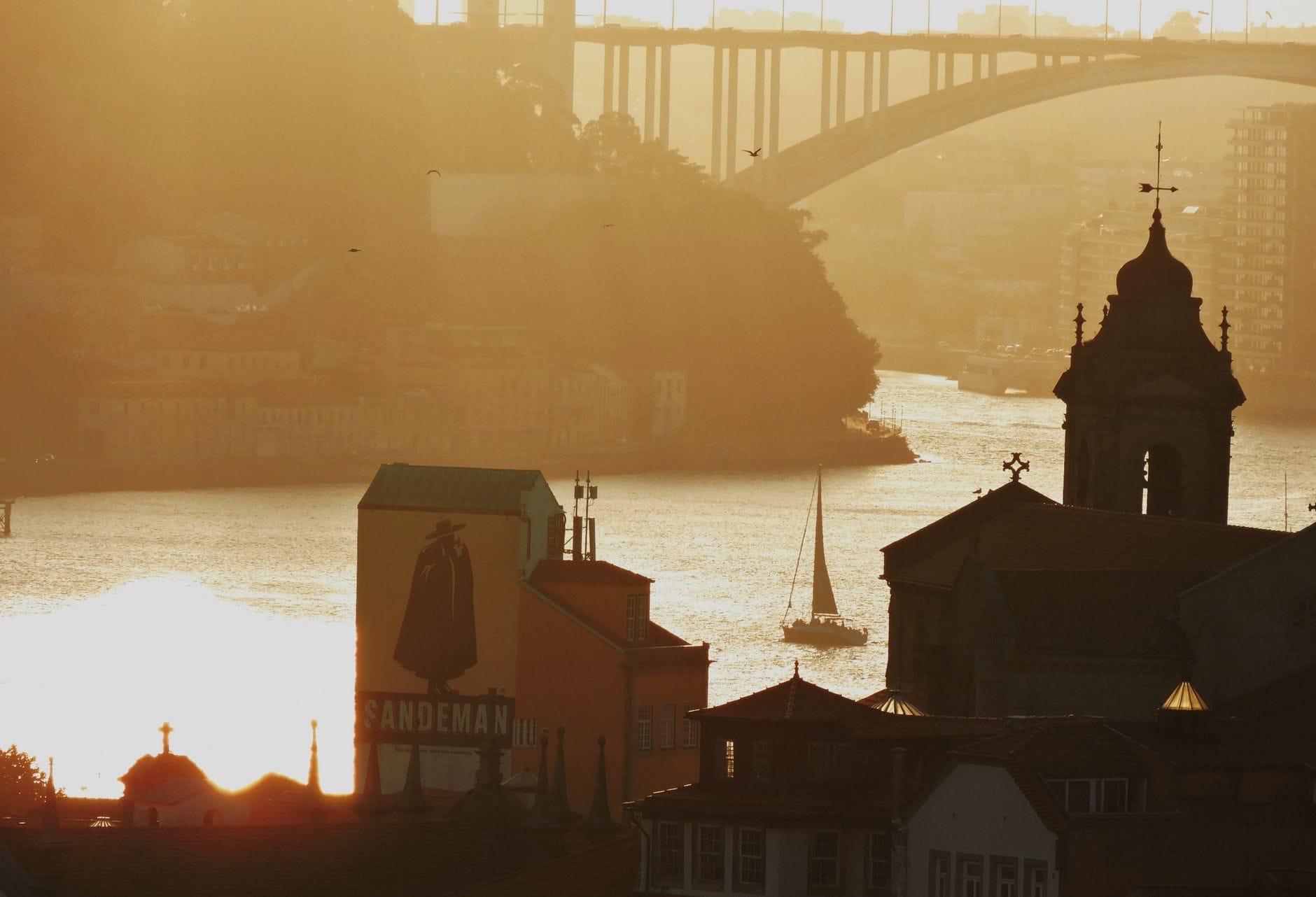
What Sandeman Cellars Actually Is
The Sandeman Port Wine Cellars — officially Caves de Vinho do Porto Sandeman — sit on the Vila Nova de Gaia waterfront at Largo Miguel Bombarda, directly across the Douro River from Porto's historic center. The Sandeman brand dates to 1790, when George Sandeman founded his wine-trading house in London, and the cellars have long been associated with port aging in Gaia.
What you're visiting is a working wine lodge, not a museum replica. The casks are real, the wine inside them is real, and the cool, dim barrel halls that give the tour its atmosphere are the same spaces where port has matured through warm Gaia summers and cool Atlantic winters for generations. The guided experience is designed to be accessible to visitors without wine expertise, though there's enough depth to satisfy someone who already knows their tawny from their ruby.
💡 Local tip
Book online in advance, especially in summer (July and August) and around major holidays. Walk-in availability exists but tour slots fill earlier in the day than most visitors expect.
The Setting: Vila Nova de Gaia and Why It Matters
Vila Nova de Gaia is a separate municipality from Porto, though to the eye they read as one city divided by the Douro. The south bank has been home to port wine lodges since the 17th and 18th centuries, partly because trade agreements and later regulations required that port be stored and shipped from Gaia rather than from the Douro Valley vineyards where it was made. The result is a riverside strip where more than a dozen major lodges operate side by side, their names painted in large letters across the hillside. Sandeman, with its unmistakable black-caped Don logo, is among the most visible. For context on this broader port wine culture, the port wine guide for Porto covers the full landscape of lodges and tastings across Gaia.
The walk from Porto's historic center to the cellars takes roughly 18 minutes on foot, mostly by crossing the Dom Luís I Bridge at its lower level and following the Gaia riverfront west. This walk is itself part of the experience: the promenade passes wine lodge facades, rabelo boats moored at the quay, and a clear view back toward the Porto skyline. Coming by taxi or rideshare takes about 8 minutes and drops you close to the lodge entrance.
Tickets & tours
Hand-picked options from our booking partner. Prices are indicative; availability and final rates are confirmed when you complete your booking.
Self-Guided Taylor's Port Cellars Tour and Tasting in Porto
From 25 €Instant confirmationFree cancellationPorto 48 hours hop-on hop-off bus with wine cellars
From 36 €Instant confirmationFree cancellation3-hour guided tour of Porto with wine cellars' visit and final tasting
From 44 €Instant confirmationFree cancellationPorto half-day tour of Port wine cellars and cheese tasting
From 64 €Instant confirmationFree cancellation
Inside the Cellars: What the Tour Covers
Tours begin with a short orientation on Sandeman's history and the basics of port wine production, explaining how a fortified wine differs from a table wine and why the Douro Valley's schist soils and extreme summer heat produce grapes suited to this style. Guides are knowledgeable and accustomed to mixed audiences, calibrating detail to the group without becoming patronizing.
The cellar walk itself is the centerpiece. The interior is cool even in summer, the air carrying the faint sweetness of old wood and evaporating wine, a phenomenon winemakers call the 'angel's share.' Rows of large wooden casks line the barrel halls, their staves darkened from decades of use. The scale of storage is quietly impressive: the sheer number of barrels in a single hall communicates something about volume and patience that no verbal explanation quite matches. Lighting is low and directional, which is atmospheric but means photography requires patience or a steady hand.
The tasting portion typically covers multiple styles, often including a younger ruby, a tawny with some age, and a white port. Guides walk through each style's characteristics, production differences, and food pairing logic. This is not a perfunctory pour-and-move-on situation: there is time to ask questions, compare glasses, and understand what you're actually tasting.
ℹ️ Good to know
Premium tour packages with older tawnies or vintage ports are usually available at higher price points. Check the official site (sandeman.com) for the current tour menu, as offerings and prices are updated periodically.
Best Time to Visit and How the Experience Changes
Sandeman reports opening daily from 10:00 to 12:30 and 14:00 to 18:00, though hours can shift seasonally. Confirm times directly before visiting. The first tours of the day tend to be smaller and quieter; groups grow in size through mid-morning and into early afternoon, particularly in July and August. If you prefer a more relaxed pace with better access to your guide, arriving close to opening or in the late afternoon (after 15:00, before the final tour slots) generally works well. Confirm times directly before visiting. The first tours of the day tend to be smaller and quieter; groups grow in size through mid-morning and into early afternoon, particularly in July and August. If you prefer a more relaxed pace with better access to your guide, arriving close to opening or in the late afternoon (after 15:00, before the final tour slots) generally works well.
Visiting Sandeman as part of a broader Gaia riverside afternoon pairs naturally with a walk along the Cais de Gaia waterfront, a ride on the Gaia cable car up to the hilltop views, or crossing back to Porto via the lower deck of the Dom Luís I Bridge at dusk. The riverside gets noticeably less crowded after 17:00 on weekdays, making the late-afternoon window pleasant for exploring before dinner.
In rainy or overcast weather, the interior cellar tour is completely unaffected. The underground barrel halls are cool year-round regardless of outside temperature, which also means a light layer is worth having in summer if you run cold in air-conditioned spaces.
History and the Sandeman Brand
George Sandeman started his company in 1790 in London, initially trading both port and sherry. By the early 19th century the company had established its Gaia cellars as the center of its port operations. The Sandeman visitor site in Vila Nova de Gaia reflects that long history.
The Sandeman 'Don' figure, the black-caped silhouette that appears on bottles and signage, became one of the brand's most recognizable symbols. Seeing that logo on the building facade before you enter, against the backdrop of the Douro and the Porto hillside beyond, is one of those moments where marketing history and physical place coincide in a way that is genuinely interesting rather than merely commercial.
Sandeman is one of several historic lodges open to visitors on the Gaia riverfront. If you want to compare styles and production philosophies, Graham's Port Lodge Sandeman is one of several historic lodges open to visitors on the Gaia riverfront. If you want to compare styles and production philosophies, Graham's is another well-regarded option with strong tasting and tour programs, set slightly higher on the Gaia hillside., set slightly higher on the Gaia hillside.
Practical Details and Accessibility
The address is Largo Miguel Bombarda 47, 4400-222 Vila Nova de Gaia. The address is Largo Miguel Bombarda 47, 4400-222 Vila Nova de Gaia. From Porto Airport, the journey by car takes approximately 20 minutes; by public transport, expect around 1 hour 10 minutes. For most visitors already in Porto's center, the walk over the Dom Luís I Bridge is the most direct and scenic option.
Ticket prices are listed on Sandeman's official booking page and should be confirmed there before your visit, as packages and pricing are updated. Ticket prices are listed on Sandeman's official booking page and should be confirmed there before your visit, as packages and pricing are updated. A recent visitor report placed the cost at approximately €30 per person for a guided tour with tasting, but this figure may not reflect the current tariff or all available options.
Accessibility is not fully detailed on Sandeman's public-facing pages. Historic wine lodge buildings often involve uneven stone floors, steps, and low-ceilinged barrel halls that can present challenges for visitors with mobility needs. Anyone requiring specific accessibility information, including step-free routes or adapted facilities, should contact Sandeman directly through the contact details on their website before booking.
⚠️ What to skip
If you are visiting with young children, note that port wine tastings are the core of the experience. Children are generally welcome on tours, but the content is adult-oriented. If you are visiting with young children, note that port wine tastings are the core of the experience. Children are generally welcome on tours, but the content is adult-oriented. Check Sandeman's current policy before booking.
Who Should Skip This
Visitors with no interest in wine who are primarily seeking architecture or river views will find the cellar visit relatively brief for the ticket price. The Gaia riverside itself is free to walk and offers excellent views of Porto without entering any lodge. If the goal is simply to understand port wine at a surface level, a well-stocked wine bar in Ribeira with a knowledgeable server might satisfy curiosity at lower cost and without scheduling constraints.
Porto has significant free and low-cost cultural attractions that compete for the same two-hour window. If your time in the city is short, weigh Sandeman against options like the São Bento railway station azulejo panels or the Palácio da Bolsa, both of which are free or low-cost to enter and architecturally extraordinary.
Insider Tips
- The 'Don' statue at the entrance makes for a clean, uncluttered photograph in the morning light before tour groups congregate around it. By midday the forecourt is typically busy.
- Ask your guide specifically about the difference between colheita and LBV ports during the tasting. Most group tours don't go there by default, but guides are well-equipped to explain it and it dramatically improves your ability to read a port wine list.
- If you're combining multiple lodge visits in one afternoon, do Sandeman before Graham's (which is uphill) rather than after, so you finish with the higher vantage point and better views for the walk back.
- The gift shop at the exit sells older tawnies and single-harvest colheitas at cellar prices that can be meaningfully lower than Porto city center wine shops for the same bottles. Worth a look if you plan to carry wine home.
- During the São João festival in late June, the Gaia riverside becomes very crowded in the evenings. Daytime cellar visits in that period are fine, but factor extra time into any riverside walk before or after.
Who Is Sandeman Port Wine Cellars For?
- First-time visitors to Porto who want a structured introduction to port wine culture
- Wine enthusiasts seeking comparative tasting experiences across multiple grape styles and aging methods
- Couples looking for a relaxed, indoor afternoon activity with a strong sensory component
- Travelers interested in 18th and 19th century commercial history and European trade
- Anyone building a half-day Gaia riverside itinerary combining views, wine, and waterfront walking
Nearby Attractions
Other things to see while in Vila Nova de Gaia:
- Cais de Gaia Waterfront
Cais de Gaia is the riverside promenade of Vila Nova de Gaia, stretching along the south bank of the Douro directly opposite Porto's UNESCO-listed Ribeira quarter. Free to walk at any hour, it offers some of the most photogenic views of Porto's skyline, the Dom Luís I Bridge, and the traditional Rabelo boats. For first-time visitors and returning travelers alike, this waterfront rewards those who cross the river.
- Cálem Port Wine Cellars
Founded in 1859 and set directly on the Douro waterfront in Vila Nova de Gaia, Cálem is one of Porto's most recognizable port wine cellars. Guided tours take visitors through atmospheric barrel-lined galleries, covering the history and craft of port production, and end with a tasting. Here is what to expect before you go.
- Gaia Cable Car (Teleférico de Gaia)
The Teleférico de Gaia is a 562-metre cable car linking the Vila Nova de Gaia riverfront to the upper deck of the Dom Luís I Bridge. The ride lasts under four minutes, but the panoramic views across the Douro to Porto's old city make it one of the most photogenic short journeys in northern Portugal.
- Graham's Port Lodge
Graham's Port Lodge sits on a hill above the Douro in Vila Nova de Gaia, offering guided cellar tours through a beautifully restored 1890 lodge and tasting experiences that range from a straightforward introductory pour to a luxury vintage flight. It is one of the more polished port wine experiences on the Gaia side of the river, with serious production credentials to back it up.