Dom Luís I Bridge: Porto's Most Photographed Iron Arch
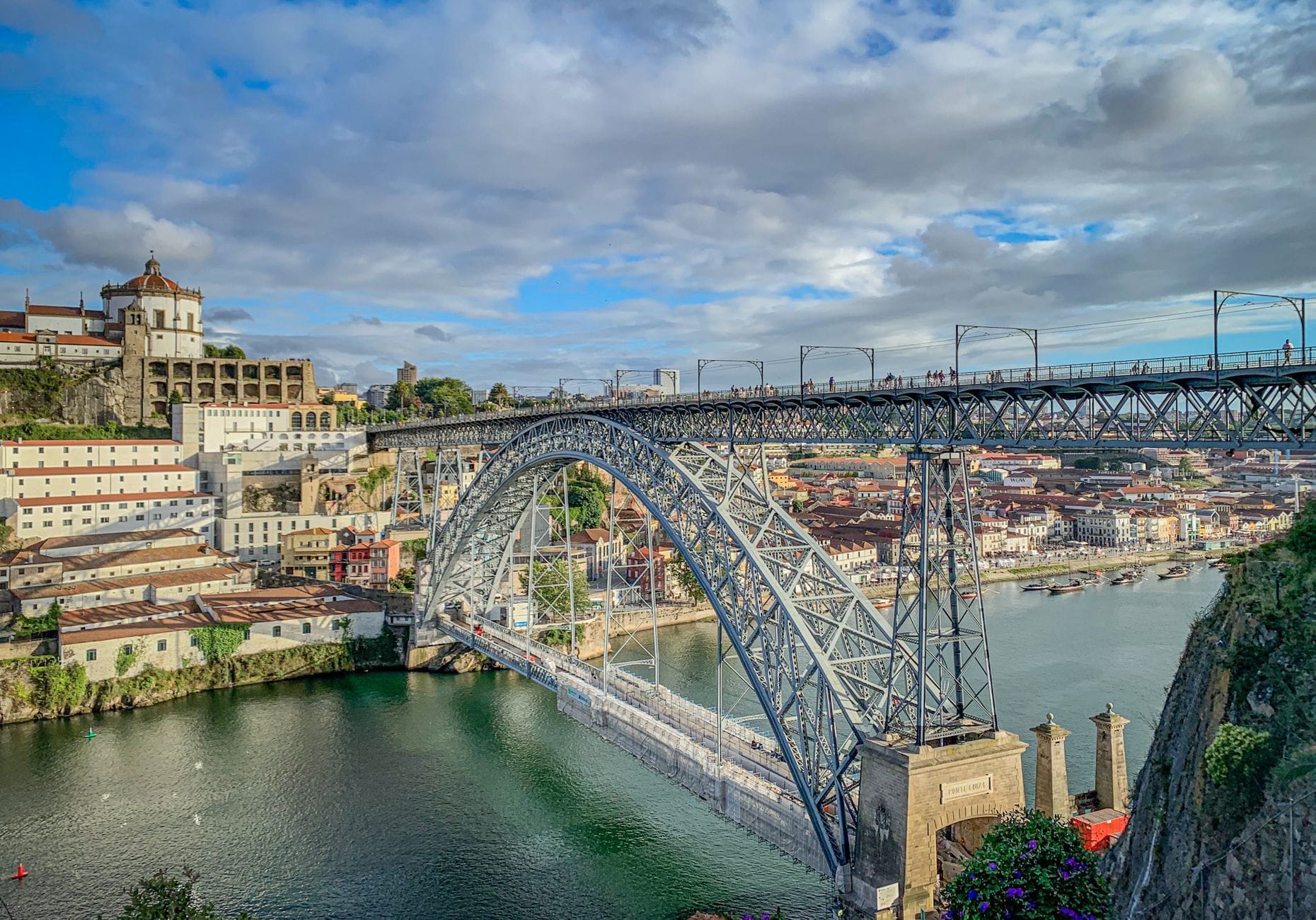
The Ponte Dom Luís I is a double-deck iron arch bridge spanning the Douro River between Porto's Ribeira quarter and Vila Nova de Gaia. Open 24 hours a day and free to cross on foot, it rewards visitors with sweeping river views from both its road-level walkway and its elevated metro deck, 45 metres above the water.
Quick Facts
- Location
- Douro River, between Ribeira (Porto) and Vila Nova de Gaia
- Getting There
- Upper deck: Metro Line D (Jardim do Morro station, Gaia side). Lower deck: walkable from Cais da Ribeira
- Time Needed
- 30–60 minutes to cross and linger; longer if combining with nearby wine lodges or miradouros
- Cost
- Free to cross on foot at any time
- Best for
- Panoramic Douro views, sunset photography, city-to-Gaia walks
What the Dom Luís I Bridge Actually Is
The Ponte Dom Luís I is a double-deck metal arch bridge that has connected Porto and Vila Nova de Gaia across the Douro River since 1886. Designed by Théophile Seyrig, a former partner of Gustave Eiffel, it stretches roughly 385–395 metres in total length, with a central arch span of 172 metres rising almost 45 metres above the river. In engineering terms, it was one of the longest iron arch bridges in the world when it opened.
The bridge operates on two separate levels, each serving a different purpose. The lower deck carries road vehicles and has a narrow but usable pedestrian walkway on each side. The upper deck, reached by foot from the Porto side via steps from Rua Augusto Rosa or from the Jardim do Morro garden on the Gaia side, is where the Metro do Porto's Line D runs. Pedestrians share the upper deck with metro trains, which is worth knowing before you step out with a wide camera lens.
💡 Local tip
For the best unobstructed views, walk the upper deck from the Porto side toward Gaia early in the morning, before tour groups arrive. Return via the lower deck for a completely different perspective on the river and the terracotta rooftops above Ribeira.
A Brief History: From 1881 to Metro Line D
Construction of the Ponte Dom Luís I began in 1881 and the bridge was inaugurated in 1886, named in honour of King Dom Luís I of Portugal. It replaced an older suspension bridge that had stood at roughly the same location and was no longer adequate for the traffic demands of a growing industrial city. The choice of an iron arch design was itself a statement: Porto was positioning itself as a modern European city, comfortable with the engineering language of the age.
For most of its life, both decks carried road and tram traffic. In 2005, the upper deck was converted for exclusive use by Metro do Porto's Line D and pedestrians, with the lower deck now used by buses, taxis, cyclists and pedestrians, linking the São Bento area of Porto with Jardim do Morro station in Gaia. The conversion cleaned up the upper walkway considerably, and today it is one of the more pleasant elevated walks in any Portuguese city: wide enough to stop and photograph, with iron railings that are open rather than opaque.
The bridge sits within Porto's UNESCO-listed historic centre, which was inscribed in 1996. The surrounding area, including the Cais da Ribeira waterfront directly below on the Porto side, contributes to a protected urban landscape that planners and preservationists have worked to keep largely intact.
Tickets & tours
Hand-picked options from our booking partner. Prices are indicative; availability and final rates are confirmed when you complete your booking.
Porto's six bridges speedboat tour along the Douro River
From 45 €Instant confirmationFree cancellationPorto sightseeing by tuk-tuk and six bridges cruise on the Douro River
From 51 €Instant confirmationPorto pass for Six Bridges Cruise and city museums
From 64 €Instant confirmation516 Arouca Bridge and Paiva Walkways Day Trip from Porto
From 120 €Instant confirmationFree cancellation
What You See From Each Level
Lower Deck: Close to the Water
At road level, the experience is intimate rather than panoramic. You are close enough to see the worn granite steps descending to the river on the Porto side, the traditional rabelo boats moored below, and the mossy base of the piers themselves. The smell here is damp stone and river water, especially in early morning or after rain. Traffic noise is constant on this level, so it is not a peaceful stroll, but the low angle gives you a sense of the bridge's mass that the upper deck does not.
From the lower deck, you also look up at the underside of the arch, which is genuinely impressive at close range. This is the level most naturally connected to the rabelo boats and river cruise departure points on the Porto waterfront.
Upper Deck: The Classic View
The upper deck is what most people mean when they talk about crossing the Dom Luís I Bridge. At roughly 45 metres above the river, the view in both directions is extraordinary. To the east, the Douro curves inland through layered hills. To the west, the river widens toward the Atlantic and you can pick out the round green-domed Serra do Pilar monastery on the Gaia hilltop just a few dozen metres from where you stand.
Porto itself unfolds to the north in tiers: the tightly packed medieval houses of Ribeira at river level, then the hilltop churches and baroque towers of the upper city. On clear days you can see the Clérigos Tower well to the northwest. The light in the late afternoon falls on the Porto side of the river from a favourable angle, which is why the hour before sunset attracts photographers in numbers. Mornings are quieter and the Gaia wine lodge rooftops catch the early light well.
When to Visit and What to Expect at Different Hours
The bridge is open 24 hours and free at all times, which means there is no wrong time to visit in practical terms, but the experience varies considerably by hour. Between roughly 10:00 and 17:00 on summer days, the upper deck becomes genuinely crowded, with tour groups stopping at intervals and tour guides raising their voices over the metro noise. The lower deck is less congested but noisier from traffic.
Arriving before 9:00 in the morning gives you the upper deck almost to yourself. The light is soft, the river is quiet, and you can hear the water and the iron structure itself. This is also when the morning mist sometimes sits in the Douro valley below you, which produces a distinctive view that afternoon visitors never see.
The sunset hour, roughly 45 minutes before dusk, draws a crowd but the spectacle earns the company. The western sky over the Douro estuary turns the river surface gold and the warm stone of both riverbanks deepens in colour. After dark, the bridge is lit and the reflections on the water are worth a slow walk, though the lower deck can feel isolated at night so walking in company is sensible.
⚠️ What to skip
Metro trains pass frequently on the upper deck and are quieter than you might expect. Pay attention to the track when you stop to photograph: stay within the pedestrian lane marked on the deck and step clear of the rail zone when the train signal sounds.
Getting There and Practical Logistics
The lower deck entrance on the Porto side is at the western edge of the Ribeira quarter, a short walk from the main riverside promenade at Cais da Ribeira. From São Bento railway station, allow about 10 minutes on foot downhill through Rua do Infante Dom Henrique. The upper deck on the Porto side is accessed from Rua Augusto Rosa, which runs along the top of the cliff above Ribeira.
The easiest way to reach the upper deck without climbing steep streets is to take Metro Line D to Jardim do Morro station in Vila Nova de Gaia and walk straight onto the bridge from the Gaia side. The Jardim do Morro garden beside the station has its own river views and is a pleasant waiting point before or after the crossing.
There is no dedicated car parking at the bridge itself. Visitors arriving by car are better served by parking in the wider Ribeira area and walking. Taxis and ride-hailing services (Uber and Bolt both operate in Porto) can drop you at the Ribeira waterfront within a few minutes of the lower deck entrance.
ℹ️ Good to know
If you plan to cross the bridge as part of a wine lodge visit in Vila Nova de Gaia, the upper deck walk takes you directly to the hillside above the main lodge strip. From Jardim do Morro station it is a short descent to the cave entrances along the Gaia riverfront.
Photography and Accessibility Notes
The bridge photographs well from almost every angle, but the most reproduced shots are taken from the Gaia waterfront looking back at Porto with the arch framing the hilltop city. This view is free and requires only that you walk the Cais de Gaia promenade in either direction from the bridge base. A wide-angle lens handles the arch span comfortably from a distance; a standard focal length from the bridge deck itself produces the intimate cityscape images.
For accessibility: the lower deck pedestrian walkways are flat and reachable from street level on both banks. The upper deck involves stairs on the Porto side (Rua Augusto Rosa) or the funicular at Guindais, though the Jardim do Morro approach from the Gaia side via metro is step-free to the bridge entrance. The upper deck surface is even but there are no pavement edges separating pedestrians from the rail zone, so visitors with mobility aids should take care.
Weather affects the experience directly. The bridge is fully exposed, and the wind off the Douro on the upper deck can be surprisingly sharp even on mild days. Rain makes the iron deck surface slippery. In winter, bring an extra layer regardless of the forecast. For a broader look at how Porto's climate affects sightseeing throughout the year, the best time to visit Porto guide breaks down month-by-month conditions.
Is It Worth Your Time?
The Dom Luís I Bridge is genuinely one of the most rewarding things to do in Porto, and the fact that it costs nothing and can be visited at any hour makes it very easy to include in any itinerary. It is not overhyped: the views from the upper deck are real and substantial, and the engineering itself is worth examining closely.
That said, visitors who dislike heights may find the upper deck uncomfortable. The open iron railing is sturdy but the drop is visible, and the deck sways very slightly when a metro train passes, which is not frightening but is noticeable. The lower deck, by contrast, is entirely unthreatening and still delivers a close-up view of the structure.
Travellers who want to build a half-day around the bridge can pair it with a visit to the Monastery of Serra do Pilar on the Gaia hilltop, which has one of the best elevated views of Porto from directly above the southern bridge anchor point. Alternatively, crossing into Gaia opens the entire port wine lodge district. The port wine guide for Porto covers the main lodges, tasting options, and how to combine them into a coherent visit.
Insider Tips
- Arrive at the upper deck before 9:00 on any day of the week. The pedestrian lanes are practically empty and the morning light on the Porto hillside is at its best in that first hour after sunrise.
- Walk the bridge in both directions on different levels: upper deck going to Gaia, lower deck returning to Porto. The two experiences are completely different and together give you a full sense of the structure.
- The Guindais funicular, located just east of the lower deck entrance on the Porto side, is a practical and scenic way to descend from the upper city to the Ribeira waterfront if your legs are tired from the uphill climb back from the bridge.
- Street vendors near the lower deck sell the usual tourist items but the riverside café terraces in Ribeira, just 100 metres west, offer a much better place to sit with a coffee and look back at the arch without paying inflated tourist-zone prices.
- After dark, the bridge is illuminated and the reflections on the Douro are striking, particularly from the Cais da Ribeira side looking east. The city is quieter after 22:00 and the light photography conditions are actually better without the midday haze.
Who Is Dom Luís I Bridge For?
- Photographers wanting Porto's most iconic river panorama from the upper deck
- Walkers combining a Ribeira stroll with a wine lodge visit in Vila Nova de Gaia
- Architecture enthusiasts interested in 19th-century iron engineering
- Budget travellers: the crossing is free and connects two of Porto's best free areas
- Couples visiting at sunset or after dark when the bridge is illuminated
Nearby Attractions
Other things to see while in Ribeira:
- Cais da Ribeira
Cais da Ribeira is Porto's historic riverside promenade along the north bank of the Douro, part of the UNESCO World Heritage-listed centre. Free to walk, lined with colourful buildings and boat tour kiosks, it is one of Portugal's most recognisable urban waterfronts.
- Casa do Infante
Casa do Infante stands on Rua da Alfândega in the heart of Porto's Ribeira district, occupying a site that has been central to the city's life since the Roman period. Built as a royal customs house in 1325 and later named for Prince Henry the Navigator, traditionally regarded as having been born here in 1394, it now operates as a unit of the Museu do Porto, housing archaeological remains and centuries of civic records beneath one roof.
- Douro River Cruise
A Douro River cruise transforms Porto's skyline into a living panorama of medieval towers, port wine lodges, and six iron bridges. Whether you take a 50-minute sightseeing loop or a multi-day voyage into the Alto Douro Wine Region, the river gives you a perspective on Porto and its surroundings that no viewpoint on land can match.
- Igreja de São Francisco
A Gothic church on the outside, a Baroque fever dream on the inside. Igreja de São Francisco contains one of Europe's most extravagant gilded interiors, plus a network of catacombs beneath your feet. Here is everything you need to visit well.