Rabelo Boats on the Douro: Porto's Historic River Craft
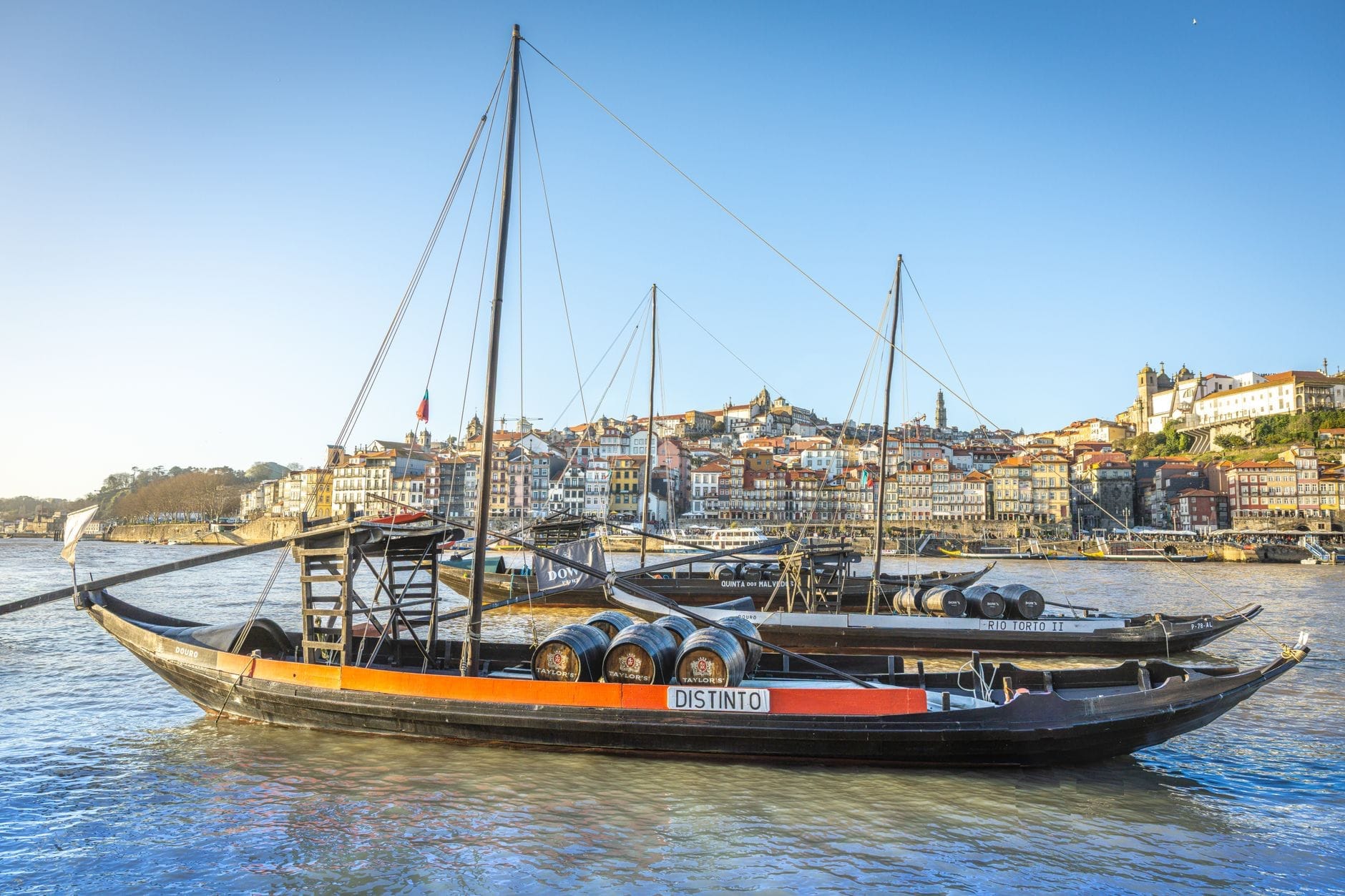
Rabelo boats are the flat-bottomed wooden vessels that once carried port wine barrels down the Douro River from the valley to Porto's wine lodges. Today they operate as sightseeing cruises from Ribeira and Cais de Gaia, offering one of the most atmospheric ways to experience the city from the water.
Quick Facts
- Location
- Cais da Ribeira, Porto / Cais de Gaia, Vila Nova de Gaia
- Getting There
- Walk 10–15 min downhill from São Bento station; Metro Line D to Jardim do Morro for Gaia side
- Time Needed
- 50–60 minutes for a standard 6-Bridges cruise
- Cost
- Around €15 per person for a 6-Bridges cruise (verify with operator). Multi-day Douro Valley voyages are separate products booked through river-cruise operators, not short Ribeira departures.
- Best for
- History lovers, photography, families, first-time visitors to Porto
- Official website
- www.douroazul.com/rabelo-boats/?lang=en
What Rabelo Boats Are and Why They Matter
The barcos rabelo, or rabelo boats, are Porto's most recognisable watercraft: long, shallow-drafted wooden vessels with a distinctive high stern platform and a single square sail. They were the workhorses of the Douro River for centuries, carrying pipes (large wooden barrels) of port wine down from the terraced quintas of the Douro Valley to the wine lodges of Vila Nova de Gaia. Documented on the river since at least the 13th century, the boats came under formal regulation in 1792 when the Companhia Geral da Agricultura das Vinhas do Alto Douro issued rules covering load limits and sailing hours.
The journey downriver from the Douro Valley was genuinely dangerous. Before the construction of river locks, the Douro ran through a series of rapids and narrow gorges. Crews used the high stern platform to work long oars and rudder poles, reading the current in real time. The Linha do Douro railway, completed in 1887, began drawing freight traffic away from the river, and road transport accelerated the decline. The last commercial rabelo voyage carrying wine barrels is believed to have taken place in 1971. What survived is the form of the boat itself, preserved now in tourism and in the annual São João Rabelo Boat Regatta held each year on 24 June.
Understanding this history changes what you see when you stand on the quayside at Cais da Ribeira. The colourful boats moored along the waterfront are not decorative props. They are working descendants of a transport system that built Porto's relationship with port wine and, by extension, much of the city's economy for several hundred years.
What the Cruise Experience Actually Looks Like
💡 Local tip
Cruises depart from both the Porto side (Cais da Ribeira) and the Gaia side (Cais de Gaia). If you want to board near the port wine cellars, the Gaia departure is marginally easier to reach by metro. Both give you the same route.
Most operators run a six-bridges cruise: a roughly 50-minute loop that passes under all six of Porto's major Douro bridges. You board at river level, where the gangway is typically a short wooden plank over the water. The boats sit low, which means the city rises steeply above you from the moment you leave the dock. The stone facades of Ribeira, the iron arch of Dom Luís I Bridge overhead, and the terracotta rooftops climbing toward the old city walls create a skyline that looks completely different from water level than from any street in Porto.
The route heads west toward the sea first, passing under the Arrábida Bridge, then turns and works back east past the Maria Pia Bridge and the Infante Dom Henrique Bridge. Wind comes off the Atlantic in the late afternoon, and you will feel it. Spray is rare on calm days but the boats are open-sided, so bring a layer in spring or autumn. Seating is on benches along the hull, and the sightlines are unobstructed in all directions.
If you want to extend the experience onto the water for longer, the Douro River cruise options from Porto also include half-day and full-day journeys upriver into the wine country, some of which use larger vessels rather than traditional rabelos.
Tickets & tours
Hand-picked options from our booking partner. Prices are indicative; availability and final rates are confirmed when you complete your booking.
Douro valley wine venture and boat trip
From 125 €Free cancellationPorto's six bridges speedboat tour along the Douro River
From 45 €Instant confirmationFree cancellationPorto private sailing lesson in a racing boat
From 80 €Instant confirmationFree cancellationParty Boat on Douro River with sunset option
From 30 €Instant confirmationFree cancellation
Best Time of Day and Season to Go
Morning departures, typically from around 10am, offer the flattest light and the thinnest crowds on the embarkation quays. Midday in summer brings tour groups in quantity, and the queue for tickets at the dock can stretch back along the waterfront. Late afternoon, roughly from 4pm onward, is popular for photography because the low westward sun catches the tiled facades of Ribeira directly, turning them gold. The trade-off is that those same departures tend to sell out faster in July and August.
For the season, the cruises run year-round. Winter is quieter and cheaper but Porto's weather in November and December can be genuinely wet and windy, and an open boat on a cold river is a different experience from the same cruise in June. May, June, and September offer the most reliable combination of warm weather and manageable crowd levels. The São João festival on 24 June is worth noting separately: the Rabelo Boat Regatta takes place that day, and the boats race each other on the river in front of thousands of spectators along both banks. It is a singular event that happens once a year and feels nothing like a tourist cruise.
ℹ️ Good to know
The São João Rabelo Boat Regatta on 24 June is held from the riverbanks. It is one of the few occasions when the boats are crewed competitively and the atmosphere on both quaysides is closer to a sporting event than a sightseeing outing.
Getting There and Boarding Logistics
From central Porto, the most straightforward approach is to walk. From São Bento railway station or the Aliados area, the walk downhill to the Ribeira waterfront takes 10 to 15 minutes through the old city's narrow lanes. The descent is steep in places and the cobblestones are uneven, so flat-soled shoes with grip are worth wearing regardless of what you plan to do at the river.
For the Gaia side, Metro Line D from central Porto stops at Jardim do Morro, from where you walk down toward the waterfront. The upper deck of the Dom Luís I Bridge connects Porto directly to the Jardim do Morro station at the top, while the lower deck drops you at river level on the Gaia bank, a short walk from Cais de Gaia.
Tickets can be bought at the dock from operators' kiosks or, in most cases, booked online in advance. In peak summer, booking ahead is practical. Off-season, walk-up availability is rarely a problem. Bring the confirmation on your phone or printed; most operators scan a QR code at the gangway.
⚠️ What to skip
Accessibility varies significantly by operator and vessel. Traditional rabelo boats have steps, narrow gangways, and no handrails in some sections. The embarkation points at both Ribeira and Cais de Gaia involve cobbled surfaces and sloped ramps. If you have reduced mobility, contact your chosen operator directly before booking to confirm what is available.
The Boats as Objects: What to Look at Before You Board
Even if you decide not to take a cruise, the moored rabelos at Cais da Ribeira are worth examining up close. The boats are typically around 20 to 23 metres long and just 4 to 5 metres wide, remarkably narrow for a cargo vessel designed to carry several tonnes of wine barrels. The stern platform, raised well above the waterline, was where the steersman worked a large oar called the espadela, standing exposed to the weather to maintain line through the rapids. Many of the moored boats carry the name and logo of a port wine house on their mainsails, a tradition that dates from when the lodges owned their own transport fleets.
The port wine houses on the Gaia bank, visible from the water and from the Porto quayside, include some of the most historically significant producers in the Douro. If the boats spark your interest in the wine itself, the Sandeman Cellars and Graham's Port Lodge both offer cellar tours and tastings a short walk uphill from the Gaia waterfront.
Photography Tips and Practical Notes
The best photographs of the rabelo boats, rather than from them, are taken from the upper deck of Dom Luís I Bridge or from the miradouros above Ribeira. From those elevated positions you get the full silhouette of the boats against the river, with the Gaia wine lodges and the bridge arches framing the scene. From the water, the challenge is the backlight: in afternoon sun, shooting back toward the Ribeira facades means shooting almost directly into the light. A lens hood is useful, and adjusting exposure compensation by half a stop or more can preserve detail in the stonework.
The boats themselves are mostly open to the sky, so overcast days produce flatter, more even light for shooting the bridge ironwork from below. Wide-angle lenses suit the scale of the Arrábida and Dom Luís I bridges when you pass directly beneath them. The gap under Dom Luís I at the lower level is visually dramatic from the water, particularly on the return leg when you are looking east toward the city.
Ribeira as a whole rewards time spent before and after the cruise. The square at the base of the old quarter is the centre of the Ribeira neighbourhood, Porto's most photographed district and part of the city's UNESCO World Heritage-listed historic centre. Arriving early gives you the waterfront largely to yourself before the cruise operators begin their first departures.
Insider Tips
- If you are combining the cruise with a visit to the port wine lodges, board on the Gaia side at Cais de Gaia rather than at Ribeira. You end up back at the same point and can walk straight uphill to the cellars without crossing the bridge.
- The boats carry the branding of port wine houses on their sails, but the cruise itself is not affiliated with any winery. The sail colours are cosmetic, not a sign of which house operated the original vessel.
- On the São João festival night and on 24 June, the entire Ribeira waterfront fills from around 10pm onward. The regatta takes place on 24 June. Securing a spot along the low wall at Cais da Ribeira by late morning gives you an unobstructed view of the race.
- Rabelo boat cruises and standard Douro river cruises operate from the same embarkation points and often look similar at the dock. The difference is vessel type: rabelos are traditional wooden craft; other cruises use glass-canopy or catamaran vessels. Check what boat you are actually booking.
- The cruise route goes west toward the sea before turning back east, so you pass under the main bridges on the loop. Sit on alternating sides at each bridge if you want photographs from both angles without moving across other passengers.
Who Is Rabelo Boats on the Douro For?
- First-time visitors to Porto who want an orientation of the city's river geography in under an hour
- History and wine culture enthusiasts interested in how port wine was transported before the railway era
- Photographers looking for unusual angles of Porto's bridges and Ribeira facades from water level
- Families with children who find open boats and moving water engaging without requiring a long attention span
- Visitors attending the São João festival on 24 June who want to watch or take part in the Rabelo Boat Regatta
Nearby Attractions
Other things to see while in Ribeira:
- Cais da Ribeira
Cais da Ribeira is Porto's historic riverside promenade along the north bank of the Douro, part of the UNESCO World Heritage-listed centre. Free to walk, lined with colourful buildings and boat tour kiosks, it is one of Portugal's most recognisable urban waterfronts.
- Casa do Infante
Casa do Infante stands on Rua da Alfândega in the heart of Porto's Ribeira district, occupying a site that has been central to the city's life since the Roman period. Built as a royal customs house in 1325 and later named for Prince Henry the Navigator, traditionally regarded as having been born here in 1394, it now operates as a unit of the Museu do Porto, housing archaeological remains and centuries of civic records beneath one roof.
- Dom Luís I Bridge
The Ponte Dom Luís I is a double-deck iron arch bridge spanning the Douro River between Porto's Ribeira quarter and Vila Nova de Gaia. Open 24 hours a day and free to cross on foot, it rewards visitors with sweeping river views from both its road-level walkway and its elevated metro deck, 45 metres above the water.
- Douro River Cruise
A Douro River cruise transforms Porto's skyline into a living panorama of medieval towers, port wine lodges, and six iron bridges. Whether you take a 50-minute sightseeing loop or a multi-day voyage into the Alto Douro Wine Region, the river gives you a perspective on Porto and its surroundings that no viewpoint on land can match.