Casa do Infante: Porto's Oldest Building and the Room Where an Age of Exploration Began
Casa do Infante stands on Rua da Alfândega in the heart of Porto's Ribeira district, occupying a site that has been central to the city's life since the Roman period. Built as a royal customs house in 1325 and later named for Prince Henry the Navigator, traditionally regarded as having been born here in 1394, it now operates as a unit of the Museu do Porto, housing archaeological remains and centuries of civic records beneath one roof.
Quick Facts
- Location
- Rua da Alfândega 10, Ribeira, Porto
- Getting There
- São Bento Metro/Train Station (lines A, B, C, E, F); STCP buses 500, 900, 901
- Time Needed
- 45–90 minutes
- Cost
- Around €4 for adults; free on Sundays. Verify current tariffs at museudoporto.pt
- Best for
- History enthusiasts, architecture lovers, travellers with rainy-day plans
- Official website
- museudoporto.pt/en/estacao/casa-do-infante
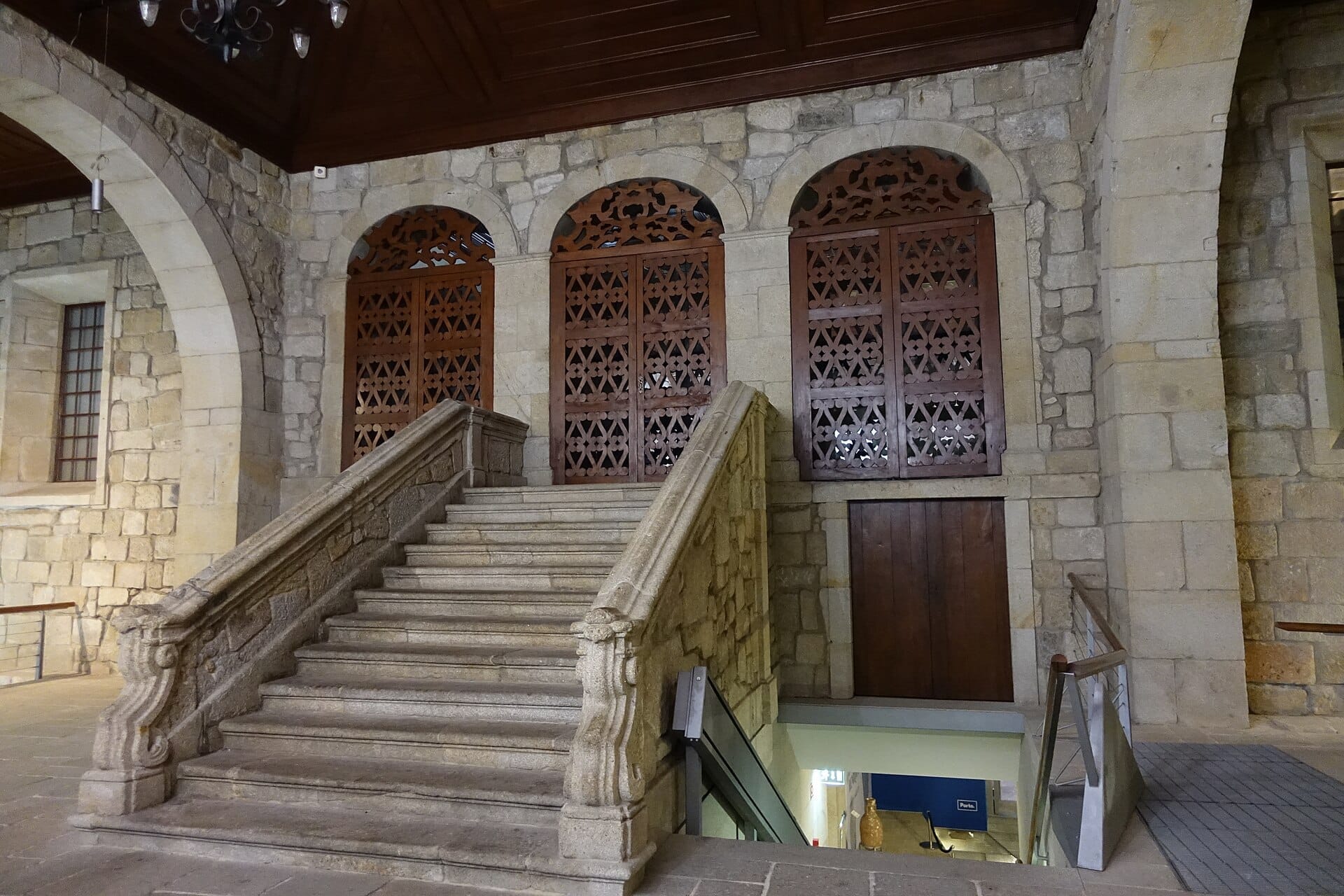
What Is Casa do Infante?
Casa do Infante is one of the oldest surviving civic buildings in Porto, and one of the most layered in terms of historical meaning. Built in 1325 on the orders of King Afonso IV to serve as Porto's royal customs house and warehouse, the building sits on Rua da Alfândega, just a two-minute walk from the Douro waterfront. Its stone facade and arched ground-floor gallery look relatively modest from the outside, easy to walk past if you do not know what is inside.
The name translates literally as House of the Prince, and the prince in question is Henry the Navigator, the Portuguese royal who coordinated much of the country's early maritime exploration. Traditions hold that he was born in this building in 1394, a detail that gives Casa do Infante a significance well beyond Porto itself. Without Henry's systematic programme of Atlantic and African coastal exploration, the Portuguese maritime empire, and the broader European Age of Discovery, would have unfolded very differently, if at all.
The building was classified as a National Monument in 1924 and has operated as a museum since the late 20th century, now functioning as a unit of the Museu do Porto. It holds the city's historical archive, displays focused on Porto's medieval and early modern development, and a remarkable in-situ archaeological zone where Roman-period structures and mosaic floors are preserved and visible beneath floor-level glass panels.
ℹ️ Good to know
Opening hours: Tuesday to Sunday, 10:00–17:30. Closed Mondays and public holidays. Admission is around €4 for adults, with free entry on Sundays. Check museudoporto.pt for current pricing before you visit.
The Archaeological Layer: What Lies Beneath the Floor
The most visually arresting part of Casa do Infante is not the medieval stonework or the archive documents. It is the floor. Excavations carried out during restoration work revealed Roman-period structures directly beneath the medieval building, including remnants of mosaic flooring characteristic of a wealthy urban residence. These are not reconstructions or replicas. The original Roman materials remain in place, now protected beneath glass walkways so visitors can look straight down at surfaces laid roughly two thousand years ago.
The juxtaposition is genuinely striking. You are standing in a 14th-century customs house, looking through the floor at Roman domestic architecture, in a building named for a 15th-century navigator whose voyages helped reshape the known world. Very few attractions in Porto compress so much time into such a small physical space.
The Roman remains indicate that the Ribeira site was already a place of some prominence in antiquity, likely occupied by an affluent household rather than a simple workshop or storage space. This fits with what archaeologists understand about Portus Cale, the Roman-era settlement from which Porto takes its name and from which the word Portugal ultimately derives.
Tickets & tours
Hand-picked options from our booking partner. Prices are indicative; availability and final rates are confirmed when you complete your booking.
Casa da Guitarra Porto fado show
From 15 €Instant confirmationFree cancellationSerralves All-Access Pass
From 24 €Instant confirmationFree cancellationSantiago de Compostela Full-Day Tour
From 79 €Instant confirmationFree cancellationPeneda Geres park full-day tour from Porto
From 100 €Instant confirmationFree cancellation
The Building's History: From Royal Customs House to Royal Mint
When Afonso IV commissioned the building in 1325, Porto was already an important Atlantic trading port. The Alfândega Régia, or royal customs house, was where goods arriving by river were assessed and taxed before entering the city. The thick stone walls, vaulted ground floor, and direct access to the waterfront all reflect this original function.
Later in the 14th century, the building also housed the Casa da Moeda, Porto's royal mint. Coins were struck here for circulation across Portugal and its growing overseas territories. The building therefore served simultaneously as the point where foreign goods entered the city and where the money to pay for them was produced. That concentration of fiscal power in a single riverside structure tells you a great deal about how medieval Porto was governed and how the monarchy kept control of its revenue.
The connection to Henry the Navigator adds another dimension. Porto was a natural base for the early voyages: it had Atlantic access, a tradition of shipbuilding further up the river, and a merchant class with appetite for trade. If you want to understand how the city fits into the broader history of Portuguese exploration, a visit to Casa do Infante pairs well with what you will read at the Palácio da Bolsa, Porto's 19th-century stock exchange, which celebrates the commercial confidence that flowed in part from those same seafaring roots.
What the Visit Feels Like, Hour by Hour
The building is cool and stone-quiet inside, even when the Ribeira waterfront outside is noisy with tourists and river cruise traffic. The interior light is relatively low, which suits the archaeological exhibits well but means photography without a tripod or stabilised lens produces mixed results. Mornings on weekdays, between 10:00 and noon, see the fewest visitors. The small scale of the exhibition spaces means that even a modest crowd of fifteen or twenty people makes the rooms feel congested.
Sundays bring more visitors partly because entry is free, and the late afternoon slot between 16:00 and closing at 17:30 tends to get crowded as people arriving from the waterfront after lunch work their way up Rua da Alfândega. If you plan to spend time looking at the Roman floor panels carefully, a Tuesday or Wednesday morning is the most comfortable option.
The exhibition information is available in Portuguese, with additional material in English provided via handouts or other resources. The level of detail is thorough rather than spectacular: this is a serious municipal museum, not a theatrical experience. If you are hoping for immersive displays or audiovisual installations, adjust expectations accordingly. What it offers instead is access to genuine primary materials, including archive documents and cartographic items, presented in their actual historical location.
💡 Local tip
The floor-level glass panels over the Roman mosaics can reflect overhead lighting, making them difficult to photograph in certain conditions. Crouch down to reduce glare and shoot slightly sideways rather than straight down for cleaner results.
Getting There and the Surrounding Area
Casa do Infante sits at Rua da Alfândega 10, a short walk from the river. The nearest metro station is São Bento, served by lines A, B, C, E, and F, which makes it straightforward to reach from most parts of the city. Several STCP bus lines stop nearby, including 500, 900, 901, 906, ZM, ZR, and 1. If you are driving, the Praça do Infante D. Henrique car park is the closest option, though parking in Ribeira is limited and the narrow streets are not designed for easy navigation.
The building is part of a historically dense cluster of attractions. São Bento Railway Station is a five-minute walk uphill and worth combining in the same half-day. The Cais da Ribeira waterfront is immediately to the south, and the Porto Cathedral sits on the hill directly above. None of these detours adds significant distance.
If you are putting together a full day in the historic centre, the Porto walking tour guide maps out a logical sequence that includes Casa do Infante alongside the other monuments on this side of the Ribeira district.
Practical Considerations: Accessibility, Weather, and What to Bring
As a historic building with an in-situ archaeological zone, Casa do Infante has some inherent physical constraints. The floors in the exhibition areas are uneven in places, and the building's 14th-century bones mean that certain spaces have steps without alternatives. The official museum page lists an access section but does not specify full step-free routes. Visitors with significant mobility requirements are advised to contact the museum directly before visiting to confirm what is accessible.
The interior is covered, which makes it a genuinely useful option on a rainy day. Porto sees its heaviest rainfall between November and March, and the Ribeira waterfront loses much of its appeal in sustained rain. Casa do Infante, by contrast, works perfectly well in any weather. The stone walls keep the temperature cool even in summer, so bring a light layer if you are visiting in July or August.
⚠️ What to skip
Casa do Infante is closed on Mondays and on public holidays. Portugal has a number of national and local public holidays throughout the year. Check the calendar before building your itinerary around a visit.
Is It Worth Your Time?
Casa do Infante is not the most immediately dramatic attraction in Porto. It does not have the visual impact of the Igreja de São Francisco's gilded interior or the sheer scale of the Dom Luís I Bridge. What it offers is historical depth and authenticity in a compact format: a single building that has served as warehouse, mint, and archive, sitting on top of a Roman residence, in a city that shaped the modern Atlantic world.
For travellers with a genuine interest in Portuguese history or the Age of Discovery, this is one of the most meaningful stops in the city. For travellers focused primarily on scenic photography, river views, or port wine tasting, Vila Nova de Gaia across the river will likely hold more appeal. Casa do Infante rewards curiosity and a slow pace. Those who rush through it in twenty minutes will come away underwhelmed. Those who read the panels and spend time at the archaeological floor will leave with a substantially different understanding of why Porto matters.
Insider Tips
- Sunday admission is reportedly free, making it a smart choice for budget-conscious travellers, but weekday mornings are significantly quieter if you want unobstructed time with the Roman floor panels.
- The museum is officially a unit of the Museu do Porto, so check whether a combined ticket with other Museu do Porto sites offers better value if you plan to visit more than one of them.
- The narrow Rua da Alfândega can be disorienting to find for first-timers. Walk south from São Bento station toward the river and turn left before you reach the waterfront promenade. The arched facade of the building is visible once you round the corner.
- The archive holdings at Casa do Infante include medieval documents relating to Porto's civic history. These are not all on public display, but occasional temporary exhibitions draw from the collection and can significantly change what you see on any given visit. Check the museum's website for current programming before you go.
- The building is only a few minutes from the Dom Luís I Bridge. Combining Casa do Infante with a walk across the upper deck of the bridge and a visit to a port lodge in Gaia makes for a coherent half-day centred on Porto's historical relationship with the Douro.
Who Is Casa do Infante For?
- History and archaeology enthusiasts who want to engage with Porto beyond its photogenic surface
- Travellers on rainy days looking for a covered, meaningful alternative to outdoor sightseeing
- Anyone following the history of Portuguese exploration and the Age of Discovery
- Budget travellers visiting on Sundays when admission is reportedly free
- Visitors combining the Ribeira district's key monuments into a single morning walk
Nearby Attractions
Other things to see while in Ribeira:
- Cais da Ribeira
Cais da Ribeira is Porto's historic riverside promenade along the north bank of the Douro, part of the UNESCO World Heritage-listed centre. Free to walk, lined with colourful buildings and boat tour kiosks, it is one of Portugal's most recognisable urban waterfronts.
- Dom Luís I Bridge
The Ponte Dom Luís I is a double-deck iron arch bridge spanning the Douro River between Porto's Ribeira quarter and Vila Nova de Gaia. Open 24 hours a day and free to cross on foot, it rewards visitors with sweeping river views from both its road-level walkway and its elevated metro deck, 45 metres above the water.
- Douro River Cruise
A Douro River cruise transforms Porto's skyline into a living panorama of medieval towers, port wine lodges, and six iron bridges. Whether you take a 50-minute sightseeing loop or a multi-day voyage into the Alto Douro Wine Region, the river gives you a perspective on Porto and its surroundings that no viewpoint on land can match.
- Igreja de São Francisco
A Gothic church on the outside, a Baroque fever dream on the inside. Igreja de São Francisco contains one of Europe's most extravagant gilded interiors, plus a network of catacombs beneath your feet. Here is everything you need to visit well.