Porto Cathedral (Sé do Porto): History, What to See, and How to Visit
Standing on a granite hilltop above Porto's historic centre, the Sé do Porto is the oldest and most significant religious building in the city. Built from the 12th century onward, it layers Romanesque solidity, Gothic elegance, and Baroque flourish into a single complex that rewards unhurried visitors.
Quick Facts
- Location
- Terreiro da Sé, 4050-573 Porto — hilltop above the Ribeira district
- Getting There
- São Bento station (Metro Line D), then a short but steep uphill walk
- Time Needed
- 45–90 minutes for cathedral, cloisters, and museum
- Cost
- Cathedral entry often free; combined ticket (cloisters, museum, tower) approx. €3–4. Verify on-site.
- Best for
- History lovers, architecture enthusiasts, and anyone seeking a panoramic view over the Douro
- Official website
- www.visitportugal.com/en/content/se-catedral-do-porto
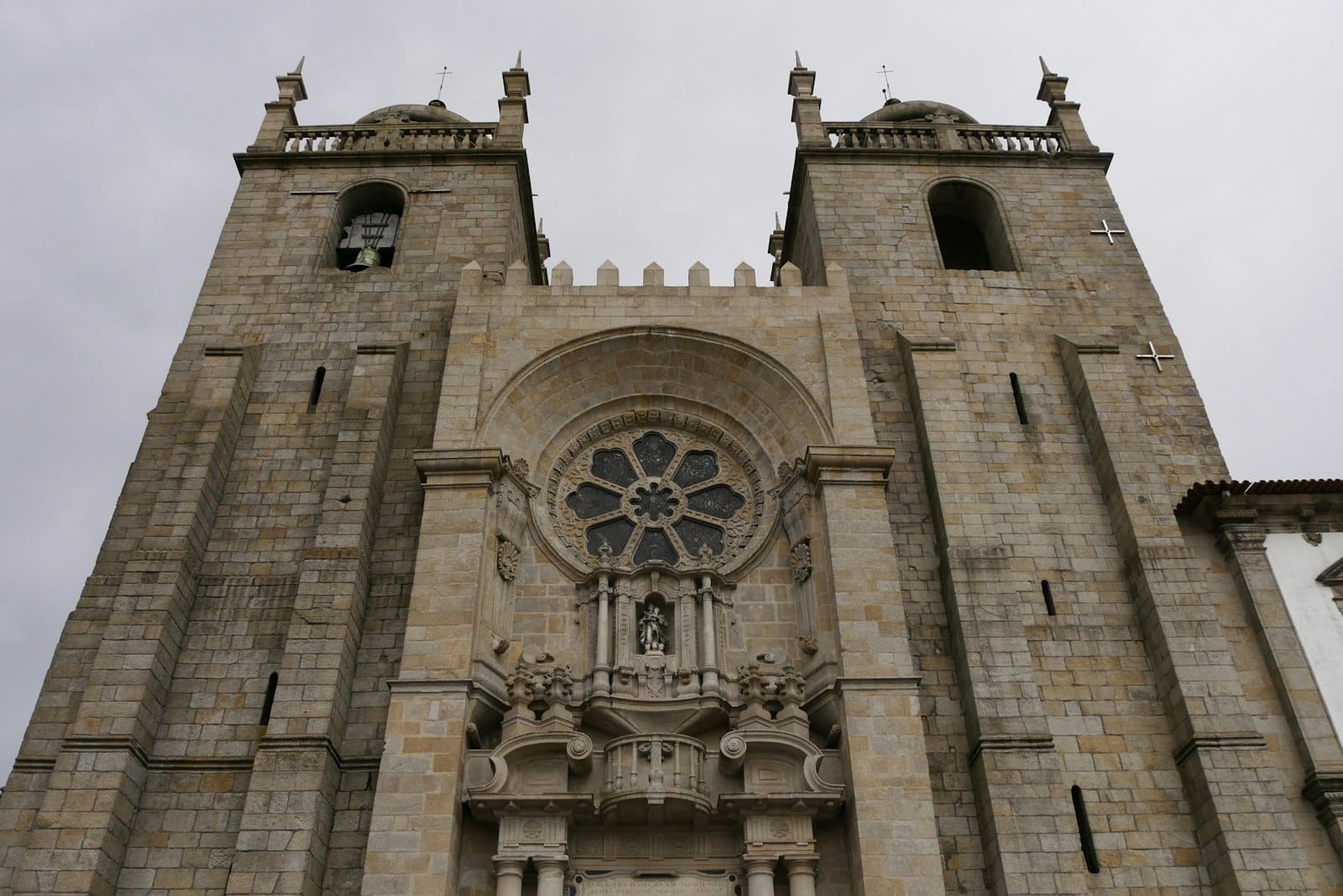
What the Sé do Porto Actually Is
The Porto Cathedral, known locally as the Sé do Porto or Sé Catedral do Porto, is the mother church of the Diocese of Porto and the oldest surviving building of significant scale in Porto. It occupies the highest point of the historic centre, visible from across the Douro and from the hills of Vila Nova de Gaia. This is not a decorative showpiece cathedral: the facade is severe, the walls are thick, and the towers are more fortress than filigree. That austerity is part of its character.
Construction began in the 12th century under the initiative of Bishop D. Hugo, and the building reached its present dimensions through the 13th century. What followed was eight hundred years of layered modification: a Gothic cloister added in the 14th century, Baroque alterations to the exterior and interior throughout the 17th and 18th centuries, and periodic interventions since. The result is a building that tells the full arc of Portuguese architectural history within a single perimeter.
ℹ️ Good to know
The main cathedral nave can often be entered for free. The combined ticket covering the Gothic cloister, treasury museum, and tower costs approximately €3–4. Prices should be verified at the ticket desk or on the official site before your visit, as they are subject to change.
The Approach: Arriving at the Cathedral Terrace
Most visitors approach from São Bento railway station, a ten-minute uphill walk through increasingly narrow streets. The gradient is real: wear shoes with grip, particularly after rain, when the granite cobblestones become slick. The effort pays off at the Terreiro da Sé, the broad terrace in front of the cathedral. From here, the view southward over the Douro rooftops and across to the lodges of Vila Nova de Gaia is already worth the climb.
On the terrace, look for the 14th-century pelourinho, the stone pillory that once served as an instrument of civic justice. There is also a bronze equestrian statue of Vimara Peres, the 9th-century nobleman credited with reconquering the region from Moorish rule. The square itself functions as a gathering point: locals cross it as a shortcut, tour groups photograph the Romanesque rose window, and older residents sit on the low walls in the late afternoon sun. For a sense of how the cathedral fits into the city's broader geography, the guide to São Bento Railway Station is worth reading before you come, since many visitors combine both in a single morning.
Tickets & tours
Hand-picked options from our booking partner. Prices are indicative; availability and final rates are confirmed when you complete your booking.
Santiago de Compostela guided tour from Porto
From 110 €Instant confirmationFree cancellationPeneda Geres park full-day tour from Porto
From 100 €Instant confirmationFree cancellationPorto historical center and the best viewpoints on a tuk-tuk
From 39 €Instant confirmationFree cancellationPorto 48 hours hop-on hop-off bus tour
From 22 €Instant confirmationFree cancellation
Inside the Cathedral: Romanesque Bones, Baroque Skin
The interior of the Sé do Porto is darker than you expect coming in from the Portuguese sun. The nave is Romanesque in structure: broad, barrel-vaulted, with the deliberate heaviness of a building designed to last centuries rather than to dazzle. Your eyes adjust gradually, and the scale becomes apparent. Side chapels branch off both aisles, each with its own carved altarpiece and devotional candles.
The most visually prominent interior feature is the Baroque silver altarpiece in the Chapel of the Blessed Sacrament, on the north side of the nave. Constructed in the 18th century, it is ornate to the point of overwhelming in the cathedral's otherwise restrained context. This contrast, between Romanesque structure and Baroque decoration, is the essential tension of the building. Neither style wins. They coexist in the way that Porto itself tends to coexist: old beside new, plain beside gilded, without much apology on either side.
Photography inside is permitted, but low light makes handheld shots challenging without a wide aperture or a steady surface. Flash photography is discouraged out of respect for worshippers, and the cathedral does remain an active place of worship throughout its opening hours. Mass is held regularly, and if you arrive during a service, tourist access to parts of the nave may be temporarily restricted. This is worth knowing if your schedule is tight.
The Gothic Cloister: The Reason to Buy the Ticket
If the main nave is the cathedral's skeleton, the 14th-century Gothic cloister is its soul. Accessed via a door on the north side of the nave, the cloister is a two-story arcade surrounding a central garden. The lower level is lined with 18th-century azulejo tile panels depicting scenes from the Song of Songs and the life of the Virgin. These blue-and-white compositions are among the finest examples of narrative tile work in Porto, designed in the 18th century and traditionally attributed to painter Valentim de Almeida, with architectural input from Nicolau Nasoni, the Italian-born architect whose influence is visible throughout the city.
The cloister has a particular quality in morning light, when sun enters from the east and throws long shadows across the tile panels. The geometric tracery of the Gothic arches casts patterns on the stone floor that shift as the hour progresses. For anyone interested in the history of azulejo as a Portuguese art form, this is one of the most concentrated and coherent examples in the city, comparable in quality to the exterior panels at Igreja de Santo Ildefonso but in an interior setting where you can get much closer to the detail.
💡 Local tip
The cloister is included in the combined ticket. Visit early in the day, ideally when the cathedral opens at 09:00, to see the tile panels in morning light and before group tours arrive. By 11:00 in summer, the cloister is significantly more crowded.
Opening Hours and Best Time to Visit
The cathedral is open to visitors throughout the year, generally from 09:00 until late afternoon or early evening (around 17:30–19:00 depending on the season). The cloisters and museum follow a similar daily schedule, usually with slightly shorter hours than the main church. Both the cathedral complex and museum are commonly closed on Christmas Day and Easter Sunday. Hours can change for liturgical events or maintenance, so checking the official VisitPortugal page before visiting is recommended.
The best time to visit is early morning on a weekday, when the cathedral is quiet and the cloister light is at its most interesting. Midday, particularly in summer, brings large groups who have walked up from the Cais da Ribeira along the river. Late afternoon is also pleasant: the western facade catches the low sun and the terrace empties as tour groups head back to the riverfront. If you visit in winter, the interior is cool and the crowds thin considerably, though the shorter opening hours for the cloister require attention to timing.
The View from the Tower and the Treasury Museum
The combined ticket includes access to the cathedral's treasury museum and, depending on current arrangements, a view from the upper level of the cloister arcade. The museum houses ecclesiastical silver, vestments, and religious artifacts accumulated over centuries of donations and commissions. It is a specialist collection: the objects are significant within the history of Portuguese religious art, but visitors without a specific interest in liturgical objects may find it dry. Allocate fifteen minutes rather than forty.
The more rewarding payoff for the combined ticket is the view from the upper cloister gallery, which looks out northward over the rooftops of Porto's historic centre. From this elevation, the tile roofs, church towers, and terraced hillsides of the Baixa district are laid out without obstruction. For a more dedicated panoramic experience, the Clérigos Tower offers a higher vantage point, but the cathedral view has a different quality: it looks into the city rather than above it.
Accessibility and Practical Logistics
The cathedral sits on a steep hill, and the walk from São Bento station involves significant inclines and uneven cobblestones. Visitors with reduced mobility should plan accordingly. The cathedral interior is accessible at ground level, but the Gothic cloister upper gallery, the museum, and any tower access involve stairs without lifts. If this is a concern, the ground-floor nave and the lower cloister arcade still offer the most significant architectural and decorative elements of the visit.
Dress code is generally modest: visitors are expected to dress respectfully inside, as the building is an active house of worship, but there is no strictly enforced requirement for covered shoulders and knees. This is practical advice rather than a formality: the interior is cool year-round, so a light layer is useful regardless of the season outside. There is no dedicated parking adjacent to the cathedral; visitors arriving by car should use one of the nearby public car parks and walk. The metro and bus routes serving São Bento station are the most straightforward access options.
⚠️ What to skip
Pickpocketing on the approach streets and the terrace has been reported by visitors. Keep bags closed and phones in pockets when taking photos from the terrace. The area itself is heavily visited and generally safe, but opportunistic theft is not unknown at major tourist sites in Porto.
Is the Porto Cathedral Worth Your Time?
The Sé do Porto is not a cathedral that performs for visitors. It does not have the gilded interior theatrics of Igreja de São Francisco, which lies a short walk downhill and offers arguably more visual drama per square metre. What the cathedral offers instead is depth: eight centuries of accumulated history in a building that has outlasted empires, religious upheaval, and the full span of Portuguese nationhood. The Gothic cloister alone justifies the small combined admission fee.
Visitors looking for a quick photographic stop will find the terrace satisfying and can skip the interior. Those with a genuine interest in Romanesque and Gothic architecture, in azulejo tile history, or in the broader narrative of Porto's development as a city will find it one of the most substantive stops in the historic centre. For context on how this fits into a fuller day, the Porto walking tour guide routes the cathedral alongside the other major landmarks of the upper historic centre.
Insider Tips
- Arrive at opening time (09:00) on a weekday. The cloister in early morning light, before the first tour groups, is a different experience from midday. The tile panels pick up a warm directional light that flattens out as the sun rises higher.
- The pelourinho on the terrace is often overlooked by visitors focused on the facade. The carved stone pillar dates to the 14th century and was a site of public punishment: it is one of the best-preserved examples in northern Portugal.
- If you hear organ music from inside the nave, pause before entering. Rehearsals and services occasionally fill the stone interior with sound in a way that no guided tour can replicate. Standing in the doorway and listening costs nothing.
- The upper cloister gallery offers a rooftop-level view that is rarely photographed. Most visitors stop at the lower level. The stairs up from the cloister corridor are steep but manageable, and the view from the top is significantly wider than from the terrace below.
- Combine the cathedral visit with the Palácio da Bolsa and Igreja de São Francisco, both located downhill toward the river. All three can be done in a single morning, and the contrast between the cathedral's austerity and the Palácio's rococo excess is genuinely instructive about how Porto's identity evolved across centuries.
Who Is Porto Cathedral (Sé do Porto) For?
- Architecture enthusiasts interested in the layering of Romanesque, Gothic, and Baroque styles within a single building
- Visitors keen on azulejo tile history who want to see narrative panels up close in a coherent interior setting
- Travellers building a full walking day through Porto's historic centre, using the cathedral as the elevated starting point
- History-focused visitors interested in the medieval origins of Porto as a city and a diocese
- Anyone who wants a genuine panoramic view of the Douro rooftops without paying the prices of a dedicated viewpoint attraction
Nearby Attractions
Other things to see while in Ribeira:
- Cais da Ribeira
Cais da Ribeira is Porto's historic riverside promenade along the north bank of the Douro, part of the UNESCO World Heritage-listed centre. Free to walk, lined with colourful buildings and boat tour kiosks, it is one of Portugal's most recognisable urban waterfronts.
- Casa do Infante
Casa do Infante stands on Rua da Alfândega in the heart of Porto's Ribeira district, occupying a site that has been central to the city's life since the Roman period. Built as a royal customs house in 1325 and later named for Prince Henry the Navigator, traditionally regarded as having been born here in 1394, it now operates as a unit of the Museu do Porto, housing archaeological remains and centuries of civic records beneath one roof.
- Dom Luís I Bridge
The Ponte Dom Luís I is a double-deck iron arch bridge spanning the Douro River between Porto's Ribeira quarter and Vila Nova de Gaia. Open 24 hours a day and free to cross on foot, it rewards visitors with sweeping river views from both its road-level walkway and its elevated metro deck, 45 metres above the water.
- Douro River Cruise
A Douro River cruise transforms Porto's skyline into a living panorama of medieval towers, port wine lodges, and six iron bridges. Whether you take a 50-minute sightseeing loop or a multi-day voyage into the Alto Douro Wine Region, the river gives you a perspective on Porto and its surroundings that no viewpoint on land can match.