Jardim do Morro: The Viewpoint Above the Douro That Porto Keeps Forgetting to Mention
Perched on the Gaia hillside just south of the Dom Luís I Bridge's upper deck, Jardim do Morro is a free public garden with some of the most direct, unobstructed views of Porto's historic waterfront. Open around the clock and served by its own metro station, it rewards visitors at every hour, from hazy morning light to the full gold of a Douro sunset.
Quick Facts
- Location
- Avenida da República, Vila Nova de Gaia, Portugal (south bank of the Douro, opposite Ribeira)
- Getting There
- Jardim do Morro station, Metro Line D (Yellow) — the station sits directly adjacent to the park
- Time Needed
- 30–60 minutes for the views; longer if combining with the Gaia Cable Car or the Dom Luís I Bridge walk
- Cost
- Free entry. Open 24 hours, 7 days a week
- Best for
- Sunset photography, a quiet morning coffee stop, first-time Porto visitors wanting immediate context for the city's geography
What Jardim do Morro Actually Is
Jardim do Morro is a public hilltop garden in Vila Nova de Gaia, positioned on the south bank of the Douro River at roughly the same elevation as the upper walkway of the Dom Luís I Bridge. That positioning is the whole point. From the garden's main terrace, the entire northern bank of the Douro unfolds in front of you: Porto's Ribeira district stretching along the waterfront, the tiled and terracotta rooflines of the Baixa climbing the hill behind it, and the twin towers of the Clérigos Church visible on the ridge in the distance.
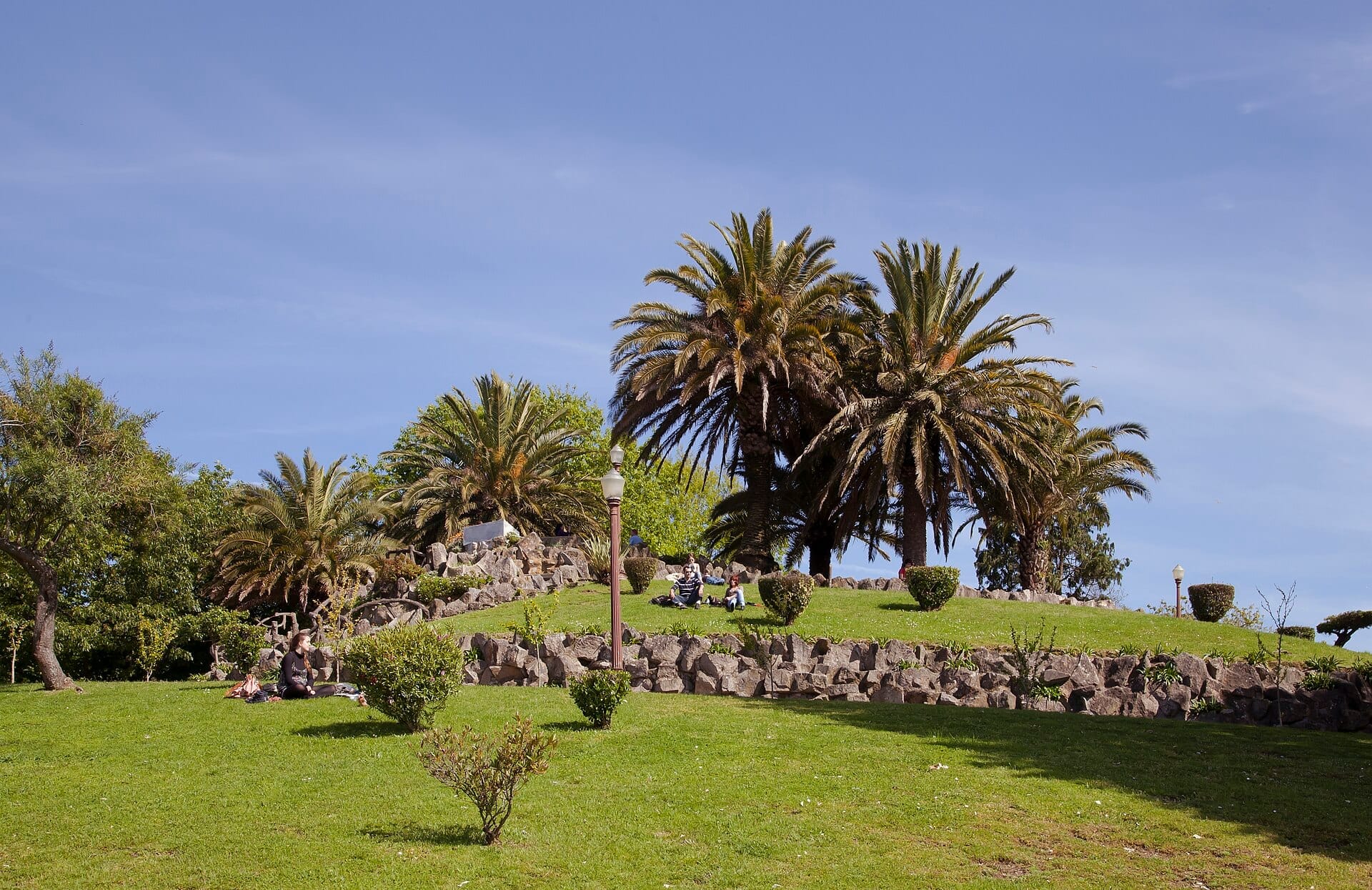
The garden itself is modest in scale. There are paved paths, benches, some shaded areas with trees, and small planted sections that add texture without demanding horticultural attention. It is not a formal botanical garden or a grand civic showpiece. The draw is almost entirely the view and the ease of access to it. Vila Nova de Gaia is its own municipality, distinct from Porto proper, but this side of the river has become deeply woven into the Porto visitor experience, largely through the port wine lodges lower on the hill and the pedestrian bridge that connects both banks at this height.
💡 Local tip
Arrive via the upper deck of the Dom Luís I Bridge on foot from Porto's Batalha area for the most dramatic approach. The bridge walk takes roughly 10 minutes from the Porto side, and you step directly into the garden as you cross to Gaia.
The View: What You're Actually Looking At
Standing at the main belvedere of Jardim do Morro, you are looking almost due north across the Douro. The river is wide at this point, flowing toward its mouth at the Atlantic roughly 5 kilometres west. The Ribeira quayside sits almost directly below you on the far bank, recognisable by its narrow, colourful building facades that press right against the water. Above that, the old city stacks upward in layers.
The Dom Luís I Bridge frames the left side of the view when you face Porto. Its iron double-deck arch is one of the most photographed structures in northern Portugal, and from this garden you have a mid-distance angle that captures the full arch without the distortion of shooting from directly beneath it. The lower deck of the bridge, used by pedestrians and road traffic, sits much closer to the waterline. The upper deck, at garden level, is shared with Metro Line D.
Photography here rewards patience. In the morning, the north-facing Porto skyline catches soft, diffuse light, and the river surface is usually calm before the tour boats begin their runs. By midday, harsh overhead light flattens the scene. Late afternoon and golden hour are the peak windows: the warm light rakes across the terracotta rooftops and the Douro turns from grey-green to amber, especially in summer when the sun sets far to the northwest and catches the hillside at a low angle.
Tickets & tours
Hand-picked options from our booking partner. Prices are indicative; availability and final rates are confirmed when you complete your booking.
Serralves All-Access Pass
From 24 €Instant confirmationFree cancellationSantiago de Compostela Full-Day Tour
From 79 €Instant confirmationFree cancellationPeneda Geres park full-day tour from Porto
From 100 €Instant confirmationFree cancellationPorto historical center and the best viewpoints on a tuk-tuk
From 39 €Instant confirmationFree cancellation
How the Experience Changes Through the Day
Early morning, roughly from 7am to 9am, is the quietest window. Locals sometimes pass through on the way to the metro, a few joggers use the paths, and the city across the river has a slow, unhurried quality before the tour groups arrive on the bridges. The air at this hour often carries a faint river smell: damp stone and a mineral freshness from the Douro. Mist occasionally lingers over the water in autumn and late spring, partially obscuring the lower Ribeira and giving the view an atmospheric rather than panoramic quality.
By mid-morning, the garden fills with visitors who have walked across the upper bridge deck from Porto. Couples, solo travellers with cameras, and groups consulting maps occupy the benches and the terrace railing. The noise level rises noticeably: conversations in Portuguese, Spanish, English, and French overlap, and the metro arriving at the adjacent station adds a periodic low hum. It is never aggressively crowded, but the solitude of early morning is gone.
Sunset, typically between 8pm and 9pm in summer and around 5:30pm to 6pm in winter, draws the largest gatherings. People line the terrace railing and perch on the low walls, phones and cameras raised. There is a collective, shared-moment quality to it that many visitors describe as the most memorable part of a Porto trip. If you find the crowds off-putting, arriving 30 minutes after the sun has gone down gives you the blue-hour city lights reflected in the river with far fewer people around.
ℹ️ Good to know
The garden is open 24 hours with no fence or gate. Night visits are possible and the illuminated bridge and Porto skyline are striking after dark, though the garden itself has limited lighting. Exercise standard urban awareness if visiting late at night.
Getting Here: Three Practical Routes
The most straightforward option is the metro. Jardim do Morro station on Metro Line D (Yellow) deposits you almost directly in the garden. The station has surface-level side platforms on Avenida da República and step-free access, making this the best choice for visitors with limited mobility or with luggage. Line D connects through central Porto stations including Trindade and São Bento, so it is easy to reach from most parts of the city.
On foot from Porto's Batalha neighbourhood, the walk across the upper deck of the Dom Luís I Bridge takes about 10 minutes and is a worthwhile experience in itself. The bridge deck at this level is shared with Metro Line D tracks, so trains pass at close range as you walk. The views down the Douro open up as you cross, and you arrive at the garden having already earned the perspective. The nearby Porto Bridge Climb is a separate ticketed experience on the same structure, for those who want to go higher.
From the Vila Nova de Gaia riverside, the Gaia Cable Car runs from the Cais de Gaia promenade up to the hilltop, dropping you close to the garden. The cable car is a ticketed ride and worth considering if you are already at the riverside and want to avoid the uphill walk, though the garden is not the cable car's only terminus attraction.
Combining Jardim do Morro With the Surrounding Area
The garden sits at the top of the Gaia hill, which means several of Vila Nova de Gaia's main draws are on the slope below it. The port wine lodges, including Sandeman Cellars and Graham's Port Lodge, are accessible on foot downhill via winding streets. A logical sequence is to visit the garden first for orientation, then descend to a lodge for a tasting, and finish at the Cais de Gaia riverside promenade for a meal.
Directly adjacent to the garden is the Serra do Pilar area, where the Monastery of Serra do Pilar occupies the rounded hilltop. This 16th-century monastery is a UNESCO World Heritage site as part of Porto's historic centre designation, and its circular church and cloister are architecturally unusual for Portugal. The monastery's own terrace also offers elevated views, though Jardim do Morro's open platform gives a slightly wider angle toward the Ribeira.
If you are crossing back into Porto after visiting the garden, the upper bridge walk returns you near Batalha, which is a short distance from Rua de Santa Catarina and the Bolhão market area. This makes Jardim do Morro a natural anchor point at the start or end of a day that moves between both banks of the river.
Practical Considerations
The garden itself is low-maintenance and not especially manicured. Expect clean but simple public park infrastructure: some benches may be worn, the paving is uneven in places, and while facilities are limited, there is a small café/bar within or immediately adjacent to the garden and additional options nearby. If you need food or a coffee, the metro station exit area and the streets leading toward the monastery have a handful of small bars and cafés.
The terrain involves gentle slopes and paved paths on a hillside. Flat-soled shoes or trainers are comfortable enough. The main viewpoint terrace is paved, but moving through the garden on its side paths requires some care on uneven stone surfaces, particularly after rain when the tiles can be slippery.
Weather matters significantly here. On overcast or rainy days, the view is still present but the low cloud flattens the contrast and the colours that make the Porto skyline distinctive are muted. Wind on the exposed terrace can be sharp in autumn and winter. A light jacket is worth carrying even in summer evenings, when the temperature at this elevation drops a few degrees after sunset compared to the city streets below.
⚠️ What to skip
Jardim do Morro is not the right choice for visitors who want a structured, interpretive experience. There are no information panels, no guides, no ticketed activities, and almost no shade in the main viewpoint area during summer midday. It is a park that asks nothing of you except to stop and look.
For those planning a full Porto itinerary, this viewpoint fits naturally into a two-day Porto itinerary as an afternoon or early evening stop on the Gaia side of the river, after the port wine lodge visits and before returning to Porto for dinner in the Ribeira or Batalha.
Insider Tips
- The best photography angle for the Dom Luís I Bridge with Porto behind it is from the far eastern edge of the garden terrace, where you get the full arch without the metro station infrastructure in the foreground.
- Sunset in summer draws the largest crowds, but the 20 minutes immediately after sunset, when the sky is deep blue and the Porto hillside lights begin to appear, offers equally good photography with noticeably fewer people at the railing.
- The Gaia Cable Car upper station is a short walk from the garden. If you are descending to the riverside rather than returning to Porto via the bridge, the cable car saves a steep downhill walk on cobbled streets and gives a different aerial perspective on the river.
- The Monastery of Serra do Pilar, immediately adjacent to the garden, has its own terrace open to visitors and is frequently overlooked by those who stop only at the park. The monastery's terrace looks slightly more east and is worth comparing for different compositions of the same view.
- On summer evenings, particularly during and around the São João festival in late June, the garden becomes one of the most atmospheric spots in the entire Porto area. The bridge and hillside light up, and the festival atmosphere carries across the river.
Who Is Jardim do Morro For?
- First-time visitors to Porto who want an immediate, orienting panorama of the city before exploring at street level
- Photographers seeking golden-hour and blue-hour shots of the Dom Luís I Bridge and the Ribeira waterfront from the Gaia hillside
- Travellers following a Gaia riverside itinerary who want a free, high-elevation break between port wine lodge visits
- Anyone crossing between Porto and Gaia on foot via the upper bridge deck, for whom the garden is a natural stopping point
- Visitors on a tight budget who want a genuinely rewarding experience without any admission cost
Nearby Attractions
Other things to see while in Vila Nova de Gaia:
- Cais de Gaia Waterfront
Cais de Gaia is the riverside promenade of Vila Nova de Gaia, stretching along the south bank of the Douro directly opposite Porto's UNESCO-listed Ribeira quarter. Free to walk at any hour, it offers some of the most photogenic views of Porto's skyline, the Dom Luís I Bridge, and the traditional Rabelo boats. For first-time visitors and returning travelers alike, this waterfront rewards those who cross the river.
- Cálem Port Wine Cellars
Founded in 1859 and set directly on the Douro waterfront in Vila Nova de Gaia, Cálem is one of Porto's most recognizable port wine cellars. Guided tours take visitors through atmospheric barrel-lined galleries, covering the history and craft of port production, and end with a tasting. Here is what to expect before you go.
- Gaia Cable Car (Teleférico de Gaia)
The Teleférico de Gaia is a 562-metre cable car linking the Vila Nova de Gaia riverfront to the upper deck of the Dom Luís I Bridge. The ride lasts under four minutes, but the panoramic views across the Douro to Porto's old city make it one of the most photogenic short journeys in northern Portugal.
- Graham's Port Lodge
Graham's Port Lodge sits on a hill above the Douro in Vila Nova de Gaia, offering guided cellar tours through a beautifully restored 1890 lodge and tasting experiences that range from a straightforward introductory pour to a luxury vintage flight. It is one of the more polished port wine experiences on the Gaia side of the river, with serious production credentials to back it up.