Batalha and Bonfim occupy the eastern edge of Porto's inner city, where Praça da Batalha anchors a neighborhood of azulejo-covered churches and working-class streets that have been gradually reshaped by artists, architects, and specialty coffee shops. It is the part of Porto where tourists thin out after about ten minutes of walking, and where the city starts to feel like it belongs to the people who actually live in it.
Batalha and Bonfim form Porto's quiet eastern flank: a stretch of the city where the grand azulejo facades of the historic centre give way to lived-in residential streets, art studios, and organic cafés that haven't yet been listed in every travel roundup. If you want to understand Porto beyond the postcard version, this is where to start walking.
Orientation
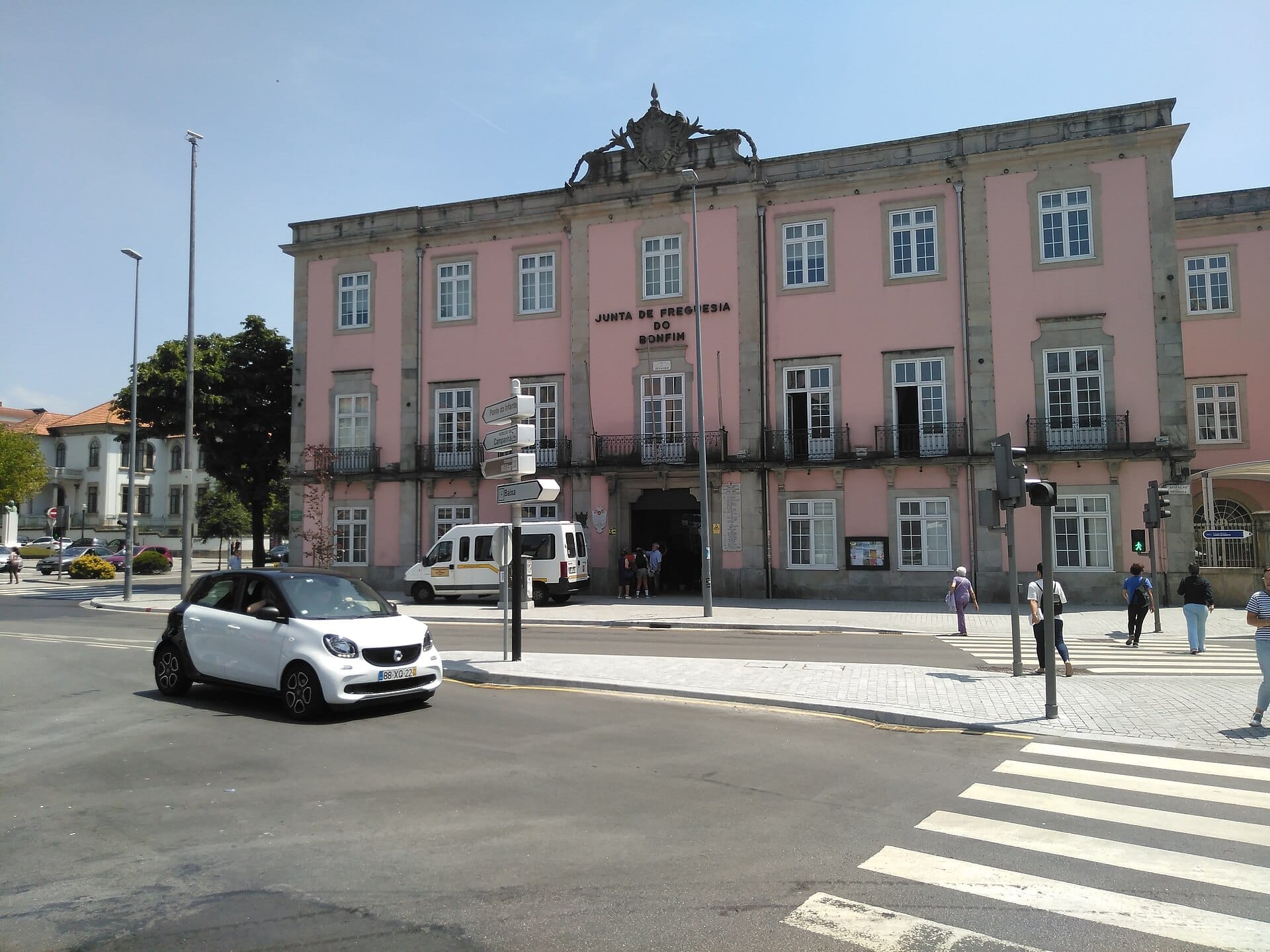
Batalha and Bonfim are two overlapping identities rather than two sharply divided zones. Batalha refers to the area centered on Praça da Batalha, a broad square that sits at the eastern edge of the historic centre, roughly equidistant between São Bento railway station (a few minutes west on foot) and the Douro escarpment dropping south. Bonfim is the larger parish that continues east from here along axes including Rua de Santos Pousada, Rua do Bonfim, and Avenida de Fernão de Magalhães, eventually reaching Heroísmo and the border with Campanhã.
To build a mental map: stand at Praça da Batalha and look north up Rua de Santa Catarina, Porto's main pedestrian shopping street, which connects directly to the Bolhão area and beyond. Look south and the ground falls sharply toward the Fontainhas escarpment and the Douro. Walk east and the streets become quieter, more residential, and increasingly interesting. The neighborhood sits above the river but never quite reaches it, separated by steep drops and old retaining walls. For context on how this fits into Porto's wider geography, the Porto neighborhood overview maps out how Batalha and Bonfim relate to Baixa, Cedofeita, and the riverfront.
The main metro stations serving the Bonfim portion of the neighborhood are 24 de Agosto and Heroísmo on the yellow line (D line), and Marquês and Combatentes on the green line (C line), all on the metro network. Campo 24 de Agosto, the square itself, functions as one of Porto's busiest regional bus hubs, which tells you something about how central and well-connected this area actually is, even if it rarely features in tourist itineraries.
Character & Atmosphere
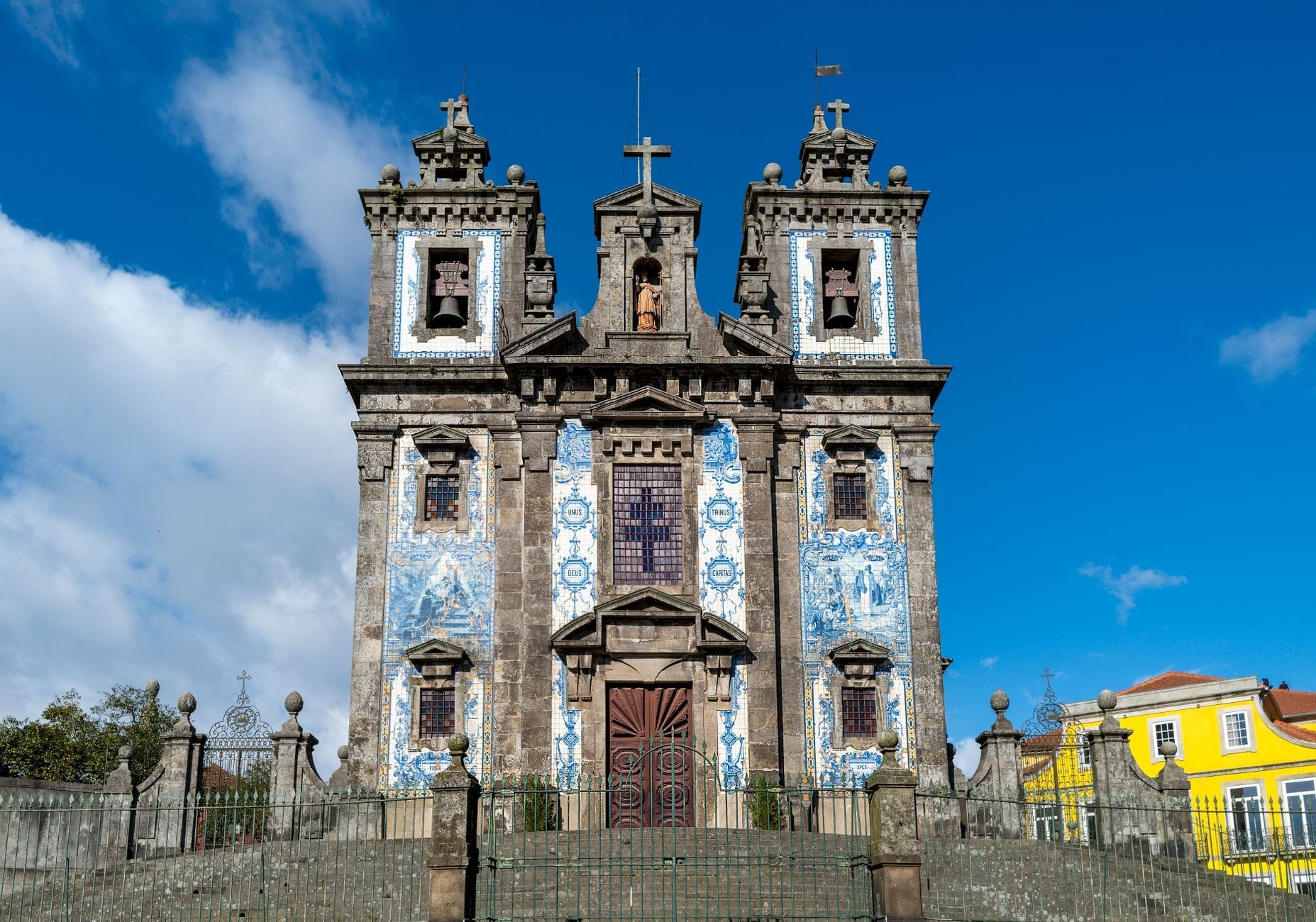
Early morning in Batalha is quiet in a productive way. Shopkeepers pull up metal shutters, bakeries exhale the smell of fresh bread, and the square itself belongs mostly to people on their way somewhere else. The Igreja de Santo Ildefonso catches the morning light on its azulejo facade, the blue and white tiles depicting biblical and allegorical scenes glinting against the stone. By mid-morning the square fills with commuters transferring between bus lines and locals grabbing coffee at the small cafés that face the Teatro Nacional São João.
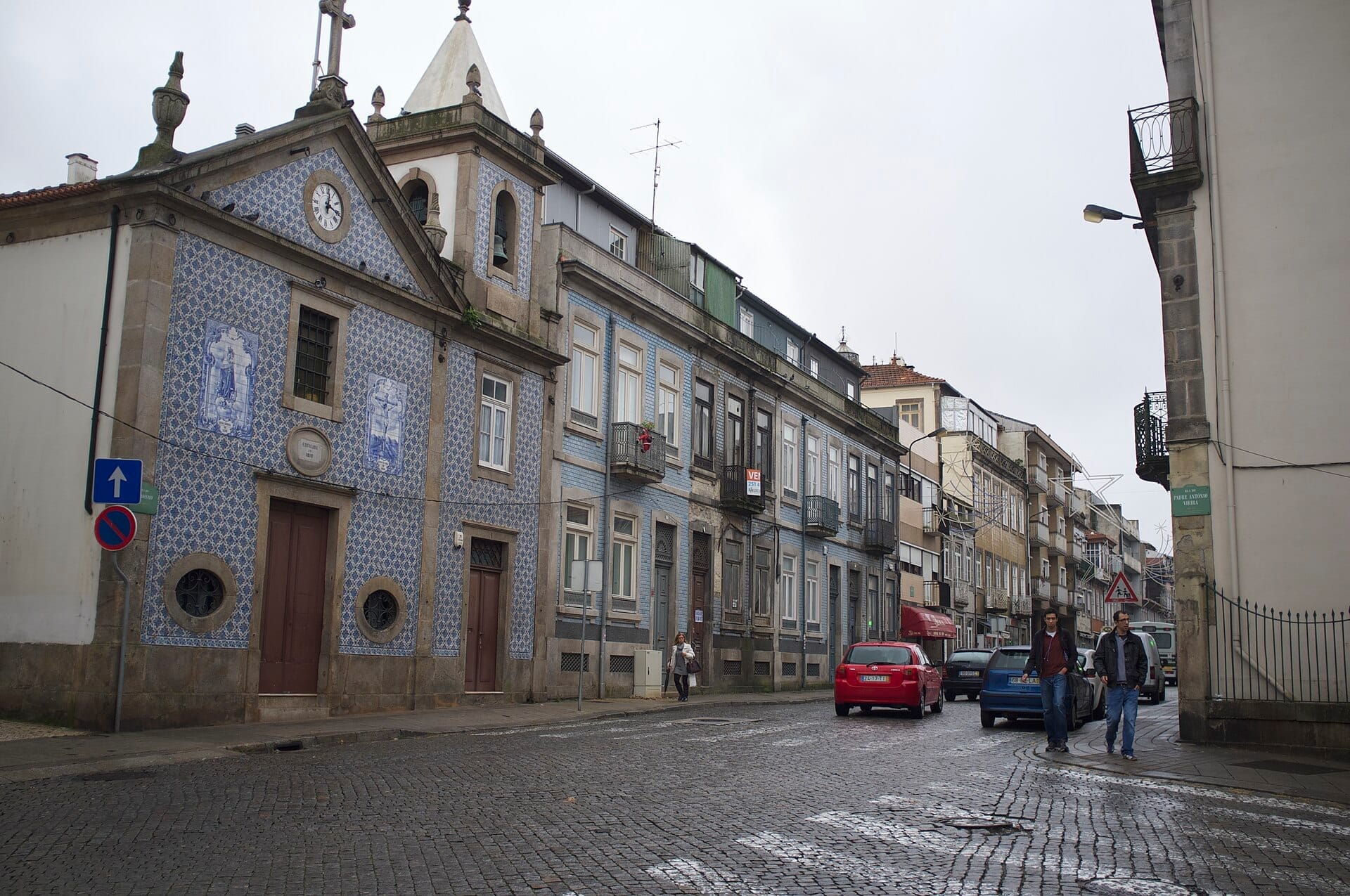
Walk east into Bonfim proper and the character shifts almost immediately. Rua de Santos Pousada and the streets branching off it have the texture of a neighborhood in the middle of figuring out what it wants to be. Traditional shops selling hardware, fabrics, and dried goods share blocks with specialty coffee bars, natural wine shops, and small galleries. The Faculty of Fine Arts at the University of Porto draws students into this part of the city, and their presence is legible in the street art, the independent bookshops, and the general tolerance for unusual shop concepts.
By afternoon, particularly on weekends, the outdoor seating at Bonfim's cafés fills up with a mix of young professionals, students, and long-term residents who have no particular interest in the tourist circuit. The light in late afternoon, falling along the east-west streets, is warm and long. By evening the neighborhood's bars start to fill, and the demographic skews younger. This is not a late-night destination in the way that some parts of Porto are, but it has enough going on after dark to be worth staying for dinner and a drink rather than retreating to the centre.
ℹ️ Good to know
Bonfim is one of Porto's most actively gentrifying inner neighborhoods. Prices are still lower than in Cedofeita or Baixa, but the gap is narrowing. What you gain is a more local atmosphere and less competition for tables at the better cafés.
What to See & Do
The most photographed landmark in this part of Porto is the Igreja de Santo Ildefonso, the tile-covered church just off Praça da Batalha whose facade is one of the city's most recognizable images. The interior is worth seeing too, though the exterior is what stops most people in their tracks. The church sits above a staircase on Rua de Santo Ildefonso, giving it a theatrical presence over the surrounding streets.
The Teatro Nacional São João on Praça da Batalha is Porto's principal national theater and one of the city's most important cultural institutions. Even if you are not catching a performance, the neoclassical building anchors the square visually and the adjacent streets host some of the area's better cafés. Checking the program is worthwhile, especially if your visit coincides with a production.
In Bonfim, the Fontainhas viewpoint offers one of Porto's less-visited but genuinely rewarding perspectives over the Douro River and the rooftops of Campanhã below. The approach through the old lanes around Calçada do Duque de Cascais gives a sense of the escarpment geography that defines Porto's relationship with its river. The Cemitério do Prado do Repouso, Bonfim's historic cemetery, is worth a slow walk for its elaborate 19th-century funerary sculpture and the quiet it provides, which is a different kind of quiet from the tourist-facing historic centre.
The Military Museum of Porto, located within the parish, covers Portuguese military history across several floors and is rarely crowded. It suits travelers who want to understand the country's history beyond wine and azulejos. Further east, the Quinta da Nova Sintra gardens and wooded grounds overlooking the Douro offer public access to green space with historic fountains and contemporary public art installations.
Igreja de Santo Ildefonso: the azulejo facade is one of Porto's great tile displays
Teatro Nacional São João: check the current program before your visit
Fontainhas viewpoint: quieter than Miradouro da Vitória and equally rewarding
Cemitério do Prado do Repouso: 19th-century funerary sculpture in a calm setting
Military Museum of Porto: undervisited and genuinely informative
Quinta da Nova Sintra: public gardens with Douro views and historic features
Campo 24 de Agosto: the square itself is worth seeing for its local market activity and weekend energy
If you are combining this area with broader Porto sightseeing, Campo 24 de Agosto is a practical staging point: the metro stops here, buses connect to the wider city, and the square has enough life around it to make it more than just a transit interchange. From here you can reach Baixa in about fifteen minutes on foot walking west, or take the metro one stop toward central Porto.
💡 Local tip
The walk from Praça da Batalha south toward Fontainhas takes you through some of Porto's most atmospheric backstreets. Allow extra time and go without a specific goal — the lane patterns and tiled house fronts reward wandering more than rushing.
Eating & Drinking
Bonfim's food scene is one of Porto's most interesting precisely because it hasn't been entirely reshaped by tourism. You still find traditional tascas serving prego sandwiches and francesinhas alongside specialty coffee operations and natural wine bars that would feel at home in Lisbon's Mouraria or Barcelona's Gràcia. The price point is generally lower than in the historic centre, and the quality-to-cost ratio at the better places is hard to match elsewhere in the city.
Specialty coffee culture is well-established here. Independent cafés with single-origin filter coffee and proper espresso technique have set up on several of Bonfim's key streets, catering to the arts-adjacent population that lives in the area. These are good places for a morning working session or a slow afternoon. For context on the wider Porto food scene, the Porto food guide covers local specialties like the francesinha (a Porto-specific meat and cheese sandwich drenched in spiced tomato-beer sauce) that you will find throughout this neighborhood.
The bar scene in Bonfim leans toward craft beer and natural wine rather than cocktails and shots. A number of small venues on and around Rua de Santos Pousada and the streets feeding off Campo 24 de Agosto have developed a loyal local following. They tend to stay open late on weekends and have outdoor seating that spills onto the pavement when the weather allows. The atmosphere is inclusive and low-key rather than performatively cool.
For a more traditional sit-down meal, the neighborhood has a range of family-run restaurants serving bacalhau (salt cod in various preparations), grilled meats, and the kind of daily specials chalked on boards outside that change with whatever came in fresh that morning. Lunch menus at these places often include bread, starter, main, and a drink for well under fifteen euros.
💡 Local tip
If you are visiting on a weekday, look for restaurants displaying a 'menu do dia' sign. The two-course lunch with drink is one of the best-value ways to eat well in Porto, and Bonfim's versions tend to be less touristically priced than those in Ribeira or Baixa.
Getting There & Around
Batalha is walkable from the historic centre in five to ten minutes. From São Bento railway station in Baixa, head east along Rua 31 de Janeiro and you arrive at Praça da Batalha quickly. From the Aliados area, Rua de Santa Catarina runs south into the square. Neither approach requires a metro trip, and the walk is flat enough that it doesn't require planning.
For the deeper parts of Bonfim, the metro is the most reliable option. The 24 de Agosto station on the yellow line (D line) drops you at Campo 24 de Agosto, which is the natural entry point for exploring the neighborhood east of Batalha. Heroísmo station, also on the yellow line, takes you further east toward Campanhã and is useful if your accommodation is in that part of Bonfim. Marquês and Combatentes stations serve the northern edge of the parish on the green line (C line) and connect well with Cedofeita.
Campo 24 de Agosto also functions as one of Porto's most important regional bus hubs, with a large number of intercity connections departing daily. For visitors arriving from other Portuguese cities or planning day trips, this is a practical transit point. The guide to getting around Porto explains the Andante card system used across the metro, bus, and some tram routes, which is the most economical way to use public transport in the city.
Ride-hailing apps including Uber and Bolt operate in Porto and are generally available in this part of the city, though coverage can vary by time of day. Taxis are available at dedicated ranks around Praça da Batalha. Within the neighborhood itself, walking is the most practical mode of transport: the street grid is dense and the distances between points of interest are short enough that a metro journey is rarely worth it once you are already in Bonfim.
Where to Stay
Batalha has become a credible base for visitors who want proximity to the historic centre without paying the premium of Ribeira or the most central parts of Baixa. The area around Praça da Batalha has a growing number of hotels and guesthouses, including design-focused properties that have converted old buildings. The square itself can be noisy in the evenings, so rooms facing inward or on side streets are worth requesting.
Deeper into Bonfim, accommodation options include smaller guesthouses and apartment rentals. The tradeoff is a slightly longer walk to the main tourist sites, offset by lower prices and a neighborhood that actually feels inhabited. Travelers who prioritize local immersion over proximity to the Ribeira waterfront will find Bonfim a practical and satisfying base.
The neighborhood is not ideal for travelers who want to be within immediate walking distance of the Dom Luís I Bridge or the port wine lodges in Gaia. From Bonfim, those destinations require a metro ride or a fifteen to twenty-five minute walk depending on your precise starting point. For travelers focused on the historic centre's main monuments, Batalha is fine as a base; for anything further west toward Foz or south to Gaia, factor in the transit time.
⚠️ What to skip
Praça da Batalha and the streets immediately around it can be noisy at night, particularly on weekends, due to bar traffic and the transit activity at the square. If you are a light sleeper, ask specifically about room positioning when booking.
Who This Neighborhood Is For
Batalha and Bonfim are not Porto's showpiece neighborhoods. They do not have the riverside drama of Ribeira or the design-forward confidence of Cedofeita. What they offer instead is a version of Porto that is still recognizably a working city, where the people eating lunch at the place on the corner are the people who live on that corner. For certain kinds of traveler, that is exactly what they came for.
The neighborhood suits independent travelers who are comfortable navigating without a concentrated cluster of attractions to tick off. It suits people who read the Porto off-the-beaten-path guide and want to act on it. It suits anyone doing an extended Porto stay who has already covered the central highlights and wants to understand what the city looks like for the people who live there year-round.
It is less suited to first-time visitors with limited time who want to maximize monument density per hour. The Igreja de Santo Ildefonso is genuinely worth seeing, but beyond that, the value of Batalha and Bonfim is diffuse rather than concentrated. You get it through accumulation of small details over a half-day walk, not from a single landmark that justifies the taxi fare.
TL;DR
Batalha anchors around Praça da Batalha and the Igreja de Santo Ildefonso, within easy walking distance of São Bento station and the historic centre; Bonfim extends east toward Campo 24 de Agosto and Heroísmo.
The neighborhood has a genuine local character: independent cafés, craft beer bars, and small galleries coexist with traditional tascas and hardware shops in a neighborhood still working through its gentrification.
Metro access is excellent via lines D (yellow) and C (green) (24 de Agosto, Heroísmo, Marquês, Combatentes stations), and Campo 24 de Agosto is one of Porto's main regional bus hubs.
Best suited to travelers who want to experience Porto beyond the tourist circuit, those on extended stays, and anyone looking for good-value food and accommodation near but not inside the historic centre.
Not the right base for visitors who want immediate access to the Dom Luís I Bridge or Vila Nova de Gaia port wine lodges; factor in a fifteen to twenty-five minute walk or a metro ride for those destinations.
Porto has over 40 museums covering everything from contemporary art and Port wine to football trophies and Age of Discovery history. This guide picks the best across every category, with tips on when to go, what to book ahead, and how to get the most from each visit.
Porto rewards visitors differently depending on the season. This guide breaks down every month of the year, covering weather patterns, crowd levels, festivals, and practical advice so you can pick the window that matches your priorities.
Porto sits at the center of one of northern Portugal's richest travel regions. Within two hours by train or car, you can reach terraced vineyards, medieval birthplace cities, canal towns, and wild national park landscapes. This guide covers the best day trips from Porto, with practical advice on how to get there and what to do.
The Douro Valley is one of the most rewarding day trips you can make from Porto. Terraced vineyards, river cruises, winery lunches, and hilltop villages await, but you have to plan carefully to avoid cramming too much into one day. This guide tells you exactly how.
Porto rewards slow, curious walkers more than almost any city in Europe. From UNESCO-listed riverfront promenades and azulejo-covered church facades to sweeping hilltop viewpoints and ancient market halls, the city's best experiences are largely free. This guide covers 23 genuinely no-cost attractions across Porto and Vila Nova de Gaia.
Porto's public transport network is more straightforward than it looks, but a few missteps — buying the wrong ticket, boarding a tram without cash, or missing a zone validation — can cost you time and money. This guide covers every option: the metro, STCP buses, historic trams, funiculars, taxis, ride-hailing apps, and how to get from Francisco Sá Carneiro Airport to the city centre without overpaying.
Port wine is Porto's most famous export, but most visitors don't realize the lodges are actually across the river in Vila Nova de Gaia. This guide covers the top cellars, what tastings cost, how to book, and the differences between port styles so you get the most from your visit.
Two days in Porto is enough to cover the city's most iconic sights — if you sequence them well. This itinerary moves logically through the historic centre, the Douro riverfront, Vila Nova de Gaia's port wine lodges, and a few stops most weekend guides skip entirely.
Francisco Sá Carneiro Airport is your gateway to one of Europe's most rewarding cities. This guide covers every transfer option from the airport to central Porto, seasonal crowd patterns, ticketing details, and the trade-offs between metro, taxi, and private transfer so you can arrive without stress.
Porto's azulejo tiles are one of the city's most distinctive and photographed features, covering church facades, railway stations, and entire building exteriors in intricate ceramic panels. This guide covers the best sites, historical context, practical visiting tips, and where to buy or create your own tiles.
Porto sits minutes from a long stretch of Atlantic coastline, with beaches ranging from wide urban surf breaks to quiet southern coves backed by pine forests. This guide covers the best beaches near Porto, how to get there, and what to do along the way.
Porto's six bridges across the Douro are more than infrastructure: they are the city's most dramatic landmarks, connecting historic quarters, framing postcard views, and offering walks you will remember long after leaving. This guide covers every bridge, how to experience each one, and the best spots to see them all.
Porto's churches are among the most architecturally diverse in Europe, layering Romanesque foundations, Gothic cloisters, Baroque gilded interiors, and hand-painted azulejo facades within a walkable historic centre. This guide covers the essential religious monuments, from the cathedral on its granite hilltop to the tile-wrapped chapels of Baixa.
Porto has a dedicated fado scene that goes well beyond tourist packages. This guide breaks down the best venues, real price ranges, how to book, and what separates a genuine fado experience from a commercial one.
Porto rewards those who wander past the obvious. This guide takes you beyond the postcard stops to the viewpoints, green spaces, architectural surprises, and local haunts that most visitors walk straight past. From a free rooftop terrace above the Douro to a modernist swimming pool carved into the Atlantic coastline, Porto's best-kept secrets are hiding in plain sight.
Three days is the sweet spot for Porto. This itinerary covers the UNESCO-listed historic centre, the port wine lodges of Vila Nova de Gaia, a Douro Valley excursion, and optional coastal time at Foz, with practical tips on where to eat, what to skip, and how to get around without wasting time.
Porto's luxury scene is more intimate than many visitors expect: think palace hotels in azulejo-clad historic buildings, Michelin-starred dining with panoramic Douro views, and private rabelo boat charters rather than sprawling resort complexes. This guide covers the best 5-star hotels, fine dining, and premium experiences in Porto Portugal, with clear notes on what's worth the premium and what isn't.
Porto's nightlife runs late, starts later, and surprises almost every visitor. This guide breaks down the best neighbourhoods, bars, clubs, and after-dark experiences in Porto, Portugal, with practical tips on timing, pricing, and what to skip.
Porto is one of Western Europe's most affordable city-break destinations, but only if you know where to spend and where to save. This guide covers free sights, budget transport, cheap local food, and the common mistakes that quietly drain your wallet.
Porto, Portugal ranks among Europe's lowest-crime destinations, but that doesn't mean risk-free. This guide breaks down exactly what threats exist, which neighborhoods and situations to watch, and the practical steps that make a real difference.
From the historic Mercado do Bolhão to the independent boutiques of Cedofeita, Porto rewards shoppers who plan ahead. This guide covers every major market, the best shopping streets by neighborhood, what to actually buy, and the practical details most guides leave out.
Porto and Lisbon are Portugal's two great cities, separated by 310 km and distinct in character. This guide breaks down the real differences in cost, atmosphere, sightseeing, food, and logistics so you can decide which to visit — or plan both into one trip.
Porto is one of Europe's most walkable historic cities, and you do not need a paid tour to see the best of it. This guide covers the classic one-day route through the UNESCO-listed old town, Ribeira waterfront, and Vila Nova de Gaia, with timing advice, entry costs, and practical tips for every stage.
Porto is a great destination for families, with interactive museums, free parks, river cruises, and cable cars all within easy reach of the historic centre. This guide covers the best activities for children of all ages, what to skip, and practical logistics for navigating Porto with kids in tow.
Porto, Portugal's second-largest city, has earned its reputation as one of Europe's most compelling destinations. But is it right for your trip? This guide looks at costs, crowds, highlights, and drawbacks to help you decide.
Porto rewards couples with a rare combination of scenic riverbanks, centuries-old wine culture, Fado music, and walkable historic streets. This guide covers the most romantic experiences in the city, from sunset cruises on the Douro to garden strolls at the Crystal Palace, with practical notes on what is worth your time and money.
The Festa de São João do Porto is Porto's biggest annual celebration, held every year on the night of 23–24 June. This guide covers the history, traditions, schedule, best viewing spots, food, transport, and practical tips to help you plan around one of Portugal's most spectacular street festivals.
Porto is one of Europe's most rewarding cities for curious travelers. This guide covers the best things to do in Porto, Portugal, from crossing the Dom Luís I Bridge to exploring baroque churches, tasting port wine, and eating seafood in Matosinhos, with real logistics and no filler.
Porto's food culture runs deep, shaped by northern Portuguese cooking traditions that prize hearty ingredients, salt cod, and rich slow-cooked stews. This guide covers the essential dishes, where to find them, what they actually cost, and a few things worth skipping.
Choosing where to stay in Porto shapes your entire trip. This guide breaks down every major neighborhood, from the historic riverfront of Ribeira to the relaxed beachside calm of Foz do Douro, with clear notes on who each area suits, typical price ranges, and practical transport details.