FC Porto Museum & Estádio do Dragão: The Complete Visitor Guide
Home to one of Portugal's most decorated football clubs, the FC Porto Museum and Estádio do Dragão offer an immersive look at a century of silverware, passion, and stadium architecture. Whether you follow the sport or simply appreciate ambitious design, this complex in eastern Porto rewards a half-day visit.
Quick Facts
- Location
- Via Futebol Clube do Porto, 4350-415 Porto, Portugal
- Getting There
- Estádio do Dragão metro station (Lines A – Blue, B – Red, E – Purple, F – Orange)
- Time Needed
- 2–3 hours for museum and stadium tour combined
- Cost
- Combined museum and stadium tour from approx. €25; museum-only entry when available from approx. €17. Verify current pricing at store.fcporto.pt before visiting.
- Best for
- Football fans, architecture lovers, families, sports history enthusiasts
- Official website
- www.fcporto.pt/en/club/estadio-do-dragao
What to Expect at the FC Porto Museum and Estádio do Dragão
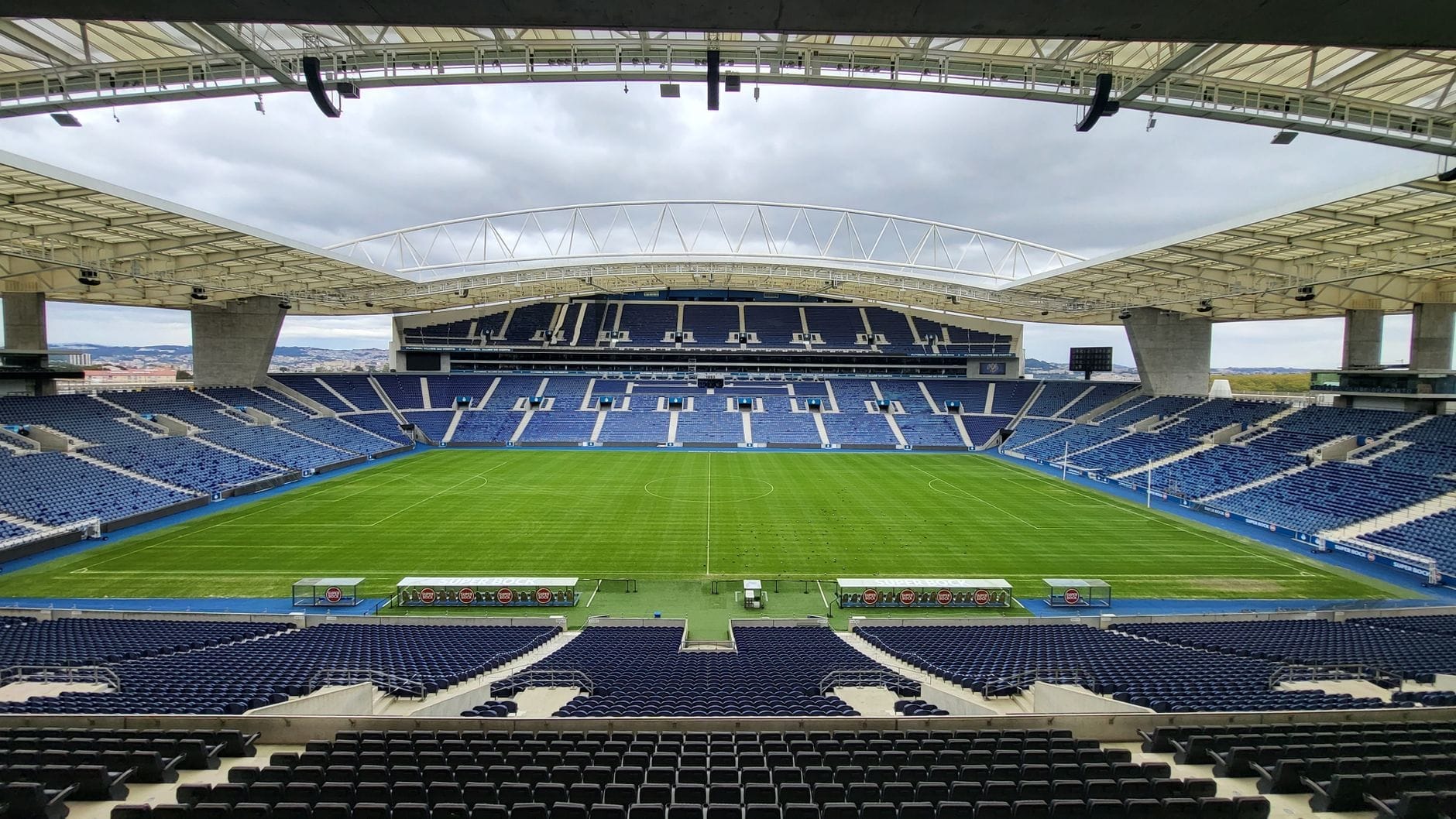
The FC Porto Museum and Estádio do Dragão sit together as a single integrated attraction on the eastern edge of Porto, about 3 kilometres from the historic centre. The stadium opened in 2003, built specifically to host matches during UEFA Euro 2004, and its design by architect Manuel Salgado has become one of the defining structures of modern Porto. With a capacity of just over 50,000 spectators, it is one of the largest stadiums in Portugal and remains the fortress of a club that has won multiple UEFA Champions League and Europa League titles.
A visit here works on two levels. For dedicated FC Porto supporters, it is a pilgrimage: the trophy rooms, match-worn shirts, and recorded crowd noise create something close to the feeling of a live match day. For everyone else, it is a lesson in how a football club can function as the cultural backbone of a city, and the stadium tour itself offers architectural access that few venues provide.
⚠️ What to skip
Stadium tours are not available on match days or UEFA match day evenings. Always check the FC Porto official website before booking to confirm tour availability around your travel dates.
Inside the FC Porto Museum: Trophies, Shirts, and Atmosphere
The Museu Futebol Clube do Porto is open daily, with Tuesday to Sunday hours running 10:00 to 19:00 and Monday hours from 14:30 to 19:00 (verify current hours before visiting, as schedules can change). The museum is housed within the stadium complex itself, which means you move between display rooms and stadium corridors in a way that blurs the line between exhibition and experience.
The collection is organised chronologically, tracing the club's history from its founding in 1893 through to the present. Display cases hold League title trophies, the UEFA Champions League cups from 1987 and 2004, and the UEFA Cup from 2003; the latter two arrived under manager José Mourinho in what remains one of the most celebrated periods in Portuguese football. The presentation is polished rather than sentimental: video screens play archival match footage at regular intervals, and the lighting is designed to make the silverware feel genuinely dramatic.
One section focuses on individual players who defined eras at the club, with life-sized photography, match statistics, and audio commentary available in Portuguese and English. The museum moves at a comfortable pace for non-specialist visitors; you do not need to know Porto's league record to find the storytelling engaging.
Tickets & tours
Hand-picked options from our booking partner. Prices are indicative; availability and final rates are confirmed when you complete your booking.
Peneda Geres park full-day tour from Porto
From 100 €Instant confirmationFree cancellationPorto historical center and the best viewpoints on a tuk-tuk
From 39 €Instant confirmationFree cancellationPorto 48 hours hop-on hop-off bus tour
From 22 €Instant confirmationFree cancellationSecret Porto walking tour
From 35 €Instant confirmationFree cancellation
The Stadium Tour: Pitch Level, Press Box, and the Players' Tunnel
The stadium tour typically operates at scheduled start times between late morning and late afternoon (often including 11:00, early afternoon, and mid-afternoon slots) and takes visitors through areas normally closed to the public on match days. The route varies slightly depending on the day's schedule, but typically includes the dressing rooms, the players' tunnel leading to the pitch, the dugouts, the press conference room, and sections of the upper stands with panoramic views across the pitch.
Standing at pitch level is the moment most visitors remember. The scale of an around 50,000-seat stadium is genuinely different when you are looking up at it from the grass rather than down from a seat. Early morning tours, just after 11:00, tend to have fewer visitors and better light on the pitch. By mid-afternoon, tour groups from cruise ships or organised excursions can make the dressing rooms crowded and the commentary harder to follow.
The architecture of the Estádio do Dragão is worth noting in its own right. The roof structure uses a series of cantilevered steel supports that leave the seating bowl entirely unobstructed by columns, which gives the interior a clarity unusual for stadiums of this size. From the upper tiers, on a clear day, you can see north across the Bonfim district toward the hills beyond Porto's eastern edge.
💡 Local tip
For the best photographs inside the stadium, visit on a morning with clear skies. The roof design channels natural light directly onto the pitch around midday, giving the green surface an almost theatrical intensity.
Getting There: Metro, Location, and the Surrounding Area
The stadium has its own dedicated metro station, Estádio do Dragão, served by Metro Lines A – Blue, B – Red, E – Purple, and F – Orange. From central Porto, the journey from Trindade or Bolhão takes roughly 10–15 minutes. The station exits directly onto the stadium plaza, so there is no ambiguity about where to walk. This is one of the easiest major attractions in Porto to reach by public transport.
The surrounding area is primarily residential and commercial, with little of the tourist infrastructure found near the Ribeira or Baixa. There are cafes and a few restaurants near the stadium entrance, but if you plan to combine the visit with lunch or dinner, it is worth heading back toward the centre or into the Bonfim neighbourhood, which has a growing number of local restaurants along its main streets.
The museum and stadium are described as fully accessible, with ramps and elevators throughout. Visitors with mobility needs can complete both the museum and stadium tour without stairs, though it is worth contacting FC Porto directly to confirm the accessibility of any specific tour route on the day of your visit.
Tickets, Pricing, and What to Book in Advance
Tickets can be purchased at the stadium box office or through official online channels. At the time of writing, combined museum and stadium tour packages start from approximately €25 for general admission, while museum-only entry is available on select dates from approximately €17. These prices should be verified directly at store.fcporto.pt before your visit, as they are subject to change.
Booking online in advance is advisable, particularly during summer months and on weekends, when tour groups can fill available slots for the stadium walkthrough. Match day tickets for actual FC Porto games are sold separately through the club's official ticketing system and are outside the scope of the museum tour.
ℹ️ Good to know
If you are planning to attend a live match, note that the stadium tour operation is a separate product from match tickets. Check the official FC Porto website for both the tour schedule and fixture calendar.
Who Will Get the Most From This Visit
For football fans, especially those with any connection to FC Porto or Portuguese football, this is one of the more satisfying stadium experiences in Europe. The museum collection is well curated, the tour access is genuine rather than performative, and the scale of the stadium itself delivers. Allow at least two hours; three is more comfortable if you want to read the exhibits properly.
Visitors with no interest in football will find the museum engaging for roughly the first 45 minutes, after which the trophy-to-context ratio may feel repetitive. If architecture is your primary interest, the exterior of the Estádio do Dragão can be appreciated freely from the surrounding plaza without paying for entry. Porto has other museums that may reward non-football visitors more generously; see our guide to the best museums in Porto for alternatives.
Families with children who follow football, even casually, tend to respond very well to pitch-level access and the dressing room section of the tour. The child-friendly pacing and clear bilingual signage make it accessible for younger visitors. Families with very small children should note that some areas of the stadium tour involve walking longer distances across open concourses.
If you are building a two or three day itinerary for Porto and weighing your options, this attraction works well as either a standalone half-morning or afternoon, or as part of a day exploring the eastern parts of the city. For full itinerary suggestions, see our 3-day Porto itinerary.
Insider Tips
- Visit on a weekday morning, ideally Tuesday through Thursday, to avoid tour groups. The 11:00 tour slot on these days typically has fewer than ten people, which gives you much more time in the dressing rooms and on the pitch.
- The museum gift shop carries official FC Porto merchandise at the same prices as the online store, so there is no premium for buying on-site. It is smaller than the main club store but has a focused selection of scarves, shirts, and prints that make good souvenirs even for non-fans.
- If you want to photograph the exterior of the stadium, the best angles are from the north side of the plaza in late afternoon, when the light catches the steel roof structure against the sky. Match days bring crowds that make this impossible.
- Combine the visit with a walk through the Bonfim neighbourhood afterward. The streets east of the stadium have a distinctly local character, with 19th-century tile-fronted buildings and neighbourhood cafes that see almost no tourist traffic.
- Check the UEFA and Primeira Liga fixture lists before booking a tour. The blackout includes not just match days but also UEFA match day evenings, which can affect mid-week windows during European competition rounds.
Who Is FC Porto Museum & Estádio do Dragão For?
- FC Porto supporters visiting Porto for the first time or returning for a match
- Football enthusiasts who enjoy comparing stadium experiences across Europe
- Families with school-age children interested in sport and live venues
- Architecture or design-focused travellers curious about the stadium's structural engineering
- Travellers on a slightly longer Porto itinerary who have covered the main historic centre sites and want something different
Nearby Attractions
Other things to see while in Batalha & Bonfim:
- Campo 24 de Agosto
Campo 24 de Agosto is a relaxed public square in Porto's Bonfim neighborhood, sitting directly above one of the city's busiest metro hubs. Free to enter at any hour, it offers an honest slice of Porto's daily life, shaded benches, and a quietly fascinating backstory stretching back to the Liberal Revolution of 1820.
- Igreja de Santo Ildefonso
Standing at Praça da Batalha, Igreja de Santo Ildefonso is one of Porto's most photographed churches, its west-facing facade wrapped in approximately 11,000 hand-painted blue-and-white azulejo tiles. Entry is free, the location is central, and the interior holds more than most visitors expect.