Campo 24 de Agosto: Porto's Everyday Square With a Revolutionary Past
Campo 24 de Agosto is a relaxed public square in Porto's Bonfim neighborhood, sitting directly above one of the city's busiest metro hubs. Free to enter at any hour, it offers an honest slice of Porto's daily life, shaded benches, and a quietly fascinating backstory stretching back to the Liberal Revolution of 1820.
Quick Facts
- Location
- Campo 24 de Agosto, 4300-506 Porto — Bonfim parish, east of the historic centre
- Getting There
- Campo 24 de Agosto Metro Station (Lines A, B, C, E, F) — the station is directly adjacent to the square
- Time Needed
- 15–30 minutes on its own; combine with Bonfim or Batalha for a half-day walk
- Cost
- Free — open public square, no ticket required
- Best for
- Orientation walks, people-watching, understanding Porto beyond the tourist corridor
What Campo 24 de Agosto Actually Is
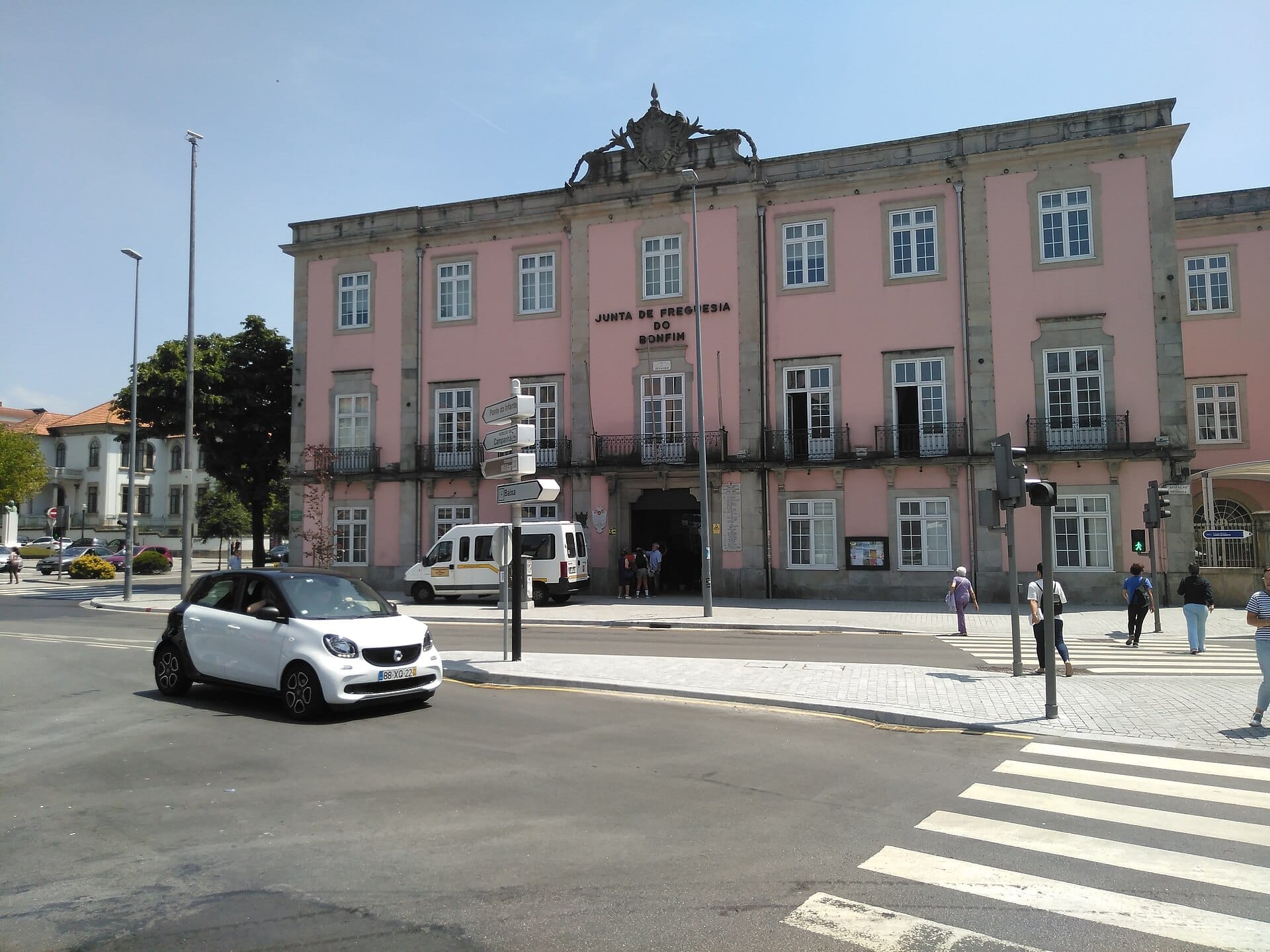
Campo 24 de Agosto is an open urban square in Porto's Bonfim parish, roughly a ten-minute walk east of the Batalha area and the historic centre. It is not a manicured garden or a grand civic plaza in the European monumental tradition. It is, more accurately, a neighborhood pivot point: part transit interchange, part shaded gathering space, part daily-life crossroads for the people who live in this part of the city.
This matters for expectation-setting. Visitors who arrive here expecting the grandeur of Avenida dos Aliados or the riverside drama of the Ribeira will be underwhelmed. Those who come looking for an unpretentious, working corner of Porto — where schoolchildren cut through on the way home and older residents occupy the same benches at the same hour each morning — will find exactly that.
💡 Local tip
The square is directly above Campo 24 de Agosto Metro Station. If you're using the metro to get anywhere in central Porto, this is one of the most useful interchanges on the network — five lines share the common trunk that stops here.
The Name and What It Commemorates
The square's name is a date, not a person or a place. It refers to 24 August 1820, when the Liberal Revolution broke out in Porto — a constitutionalist uprising that sought to end absolute monarchy in Portugal and bring the royal court back from Brazil, where it had relocated after Napoleon's invasions. The revolution succeeded in its immediate aims and became one of the defining moments in Portugal's transition toward constitutional governance.
The square was renamed Campo 24 de Agosto by municipal edict on 1 August 1860, four decades after the revolution it commemorates. Before that renaming, the area carried a rather different identity: it was called Campo de Mijavelhas, and it housed the Arca de Água de Mijavelhas, a water cistern that served as a key part of Porto's urban water supply infrastructure.
This older history came back to light when the Porto Metro was constructed beneath the square. Workers uncovered remains of the historic water structure, including a well shaft approximately six metres deep. Rather than simply removing the discovery, Porto's metro authority incorporated a reconstructed version of it into the station mezzanine level. It is now visible to passengers waiting for trains below — a small but genuine piece of urban archaeology accessible for free with any metro ticket.
ℹ️ Good to know
When you descend into Campo 24 de Agosto metro station, look for the displayed remnants of the Arca de Água de Mijavelhas in the station concourse. It is easy to walk past if you are in a hurry, but worth pausing for.
Tickets & tours
Hand-picked options from our booking partner. Prices are indicative; availability and final rates are confirmed when you complete your booking.
Serralves All-Access Pass
From 24 €Instant confirmationFree cancellationSantiago de Compostela Full-Day Tour
From 79 €Instant confirmationFree cancellationPeneda Geres park full-day tour from Porto
From 100 €Instant confirmationFree cancellationPorto historical center and the best viewpoints on a tuk-tuk
From 39 €Instant confirmationFree cancellation
The Experience by Time of Day
Early morning brings the most local character to the square. Café owners in the surrounding streets roll up shutters, delivery vehicles maneuver through the narrow roads around the perimeter, and commuters emerge from the metro entrance in a steady rhythm. At this hour, the air carries the particular combination of coffee and diesel exhaust that belongs to this type of urban square across southern Europe. The paving stones are still cool underfoot.
Midday quietens the immediate area as locals retreat for lunch, and the square shifts into a transit mode: people passing through rather than stopping. This is also when the sun hits the paved centre most directly. In July and August, the exposed sections of the square collect heat noticeably — there is shade along the fringes from buildings and some trees, but the square is not heavily canopied. In spring and autumn, midday is actually the most comfortable time to sit here.
Late afternoon and early evening, particularly from around 5pm onward on weekdays, bring the square back to life. People leaving work from offices and shops in the Bonfim and Batalha neighborhoods converge on the metro entrance. Small groups form at the café terraces along the square's edges. On warm evenings, it has a genuinely social feel — unhurried in a way that central Porto tourist zones rarely manage after dark.
The Surrounding Neighborhood
Campo 24 de Agosto sits at the boundary of two of Porto's most interesting residential districts for independent travelers: Batalha to the west and Bonfim extending to the east. Neither has the concentrated postcard density of the Ribeira or Clerigos area, but both reward slow walking. The streets immediately north and east of the square are residential in character, with azulejo-fronted buildings, small grocery shops, and the kind of ordinary urban commerce that reflects how Porto actually functions day-to-day. For context on the broader tiled architecture of the city, the Porto azulejo tiles guide is worth reading before this walk.
The Batalha and Bonfim area as a whole is worth treating as a half-day circuit. From the square, it is a short walk west toward the Teatro Nacional São João, the Chapel of Souls on Rua de Santa Catarina, and down toward the historic centre. Heading east takes you deeper into Bonfim's quieter residential fabric. The Porto walking tour guide includes a route through this part of the city if you want a structured path.
Photography: What Works and What Doesn't
The square itself is not a primary photography subject in the way that, say, the Dom Luís I Bridge or the Clérigos Tower are. There is no single iconic angle. What the square does offer is street photography opportunity: the metro entrance framed against 19th-century building facades, portrait light on café terraces in the late afternoon, and the compressed energy of commuter traffic during peak hours.
For architectural photographs, the buildings on the northern edge of the square show the kind of layered Porto facade that accumulates decades of modification — original stone, added tile, faded paint, modern signage — in a single frame. This is more interesting to a photographer looking for texture than to someone wanting clean postcard images. Wide-angle shooting from inside the metro entrance, looking up toward the street, gives an unusual compositional angle of the square's paving and surrounding buildings.
⚠️ What to skip
Photography inside the metro station is subject to Metro do Porto's standard policies. The Arca de Água de Mijavelhas display is visible from the public concourse area, but check current guidelines on the Metro do Porto website before shooting extensively inside the station.
Practical Information and Getting There
The square is accessible 24 hours a day, every day of the year, at no charge. There is nothing to queue for and no reservation system. The Campo 24 de Agosto metro station beneath the square is served by Lines A, B, C, E, and F — making it one of the best-connected points in the entire Porto Metro network. From the city centre's main hub at Trindade station, it is two stops away on these lines. Metro fares use the Andante card system; single journey prices should be verified on the Metro do Porto website before travel, as fares are subject to change.
If you are arriving from the airport on Metro Line E (the purple line to Aeroporto), Campo 24 de Agosto is on your route into the city centre. Many travelers pass through here without stopping, but it is worth a brief pause if your itinerary allows. For a wider view of how to move around Porto using public transport, the getting around Porto guide covers options in detail.
The square sits at street level with paved surfaces and no significant elevation change at its main access points. The metro station is part of the modern Porto Metro network and was built with accessibility in mind, including elevator access on the central sections, though lift availability should be confirmed with Metro do Porto before relying on it. The square itself has no formal accessibility audit published, but its flat paving and open layout make it generally manageable.
Who Should and Should Not Make a Special Trip
Campo 24 de Agosto rewards visitors who are already spending time in Bonfim or Batalha, or who use the metro and happen to surface here. It does not reward a special detour from, say, the Ribeira waterfront or Vila Nova de Gaia purely to see the square. The honest assessment is that it is a good-quality neighborhood square with a genuine historical footnote and an excellent metro connection, not a destination attraction.
Travelers on very tight schedules of two days or fewer should prioritize Porto's more concentrated attractions. But if you are following a three-day Porto itinerary and want to see the city beyond the postcard version, Campo 24 de Agosto is a natural waypoint. It makes particular sense as a starting point for a walk eastward into Bonfim, or as a transit hub when moving between the historic centre and the eastern neighborhoods.
Those who will not enjoy it: visitors who have limited time and want maximum visual payoff per hour, travelers specifically looking for curated attractions with explanatory signage and guided context, and anyone expecting a garden or green space to sit quietly in. The square has some seating and some shade, but it is primarily an urban transit environment rather than a park.
Insider Tips
- Descend into the metro station even if you are not taking a train — the reconstructed Arca de Água de Mijavelhas well structure on the mezzanine level is the most tangible historical artifact in the entire square, and almost no one pauses to look at it.
- Weekday mornings between 8am and 9am give you the most authentic reading of how this part of Porto actually functions, with the least tourist foot traffic of any time of day.
- The café terraces on the western edge of the square tend to have better sun exposure in the afternoon and are slightly cheaper than equivalent spots a few streets closer to Batalha, simply because of the foot-traffic difference.
- If you are walking toward the historic centre from here, take Rua de Augusto Rosa westward rather than following navigation apps along busier roads — the street-level azulejo facades on this route are among the least-photographed in the city.
- Lines A, B, C, E, and F all stop at this station but serve different outer destinations. Check the line and direction on the platform display before boarding — the inner-city stops are shared, but the outer ends of each line diverge considerably.
Who Is Campo 24 de Agosto For?
- Independent travelers building a self-guided walking route through Bonfim and Batalha
- Transit-oriented visitors who want to orient themselves quickly in the eastern part of the city centre
- Porto regulars returning for a longer stay and looking to fill in the city's less-visited residential fabric
- Street and documentary photographers interested in ordinary urban life rather than landmark shots
- Visitors with an interest in urban history and infrastructure, particularly the buried water systems of historic Porto
Nearby Attractions
Other things to see while in Batalha & Bonfim:
- FC Porto Museum & Estádio do Dragão
Home to one of Portugal's most decorated football clubs, the FC Porto Museum and Estádio do Dragão offer an immersive look at a century of silverware, passion, and stadium architecture. Whether you follow the sport or simply appreciate ambitious design, this complex in eastern Porto rewards a half-day visit.
- Igreja de Santo Ildefonso
Standing at Praça da Batalha, Igreja de Santo Ildefonso is one of Porto's most photographed churches, its west-facing facade wrapped in approximately 11,000 hand-painted blue-and-white azulejo tiles. Entry is free, the location is central, and the interior holds more than most visitors expect.