Mercado do Bolhão: Porto's Living Market, Restored
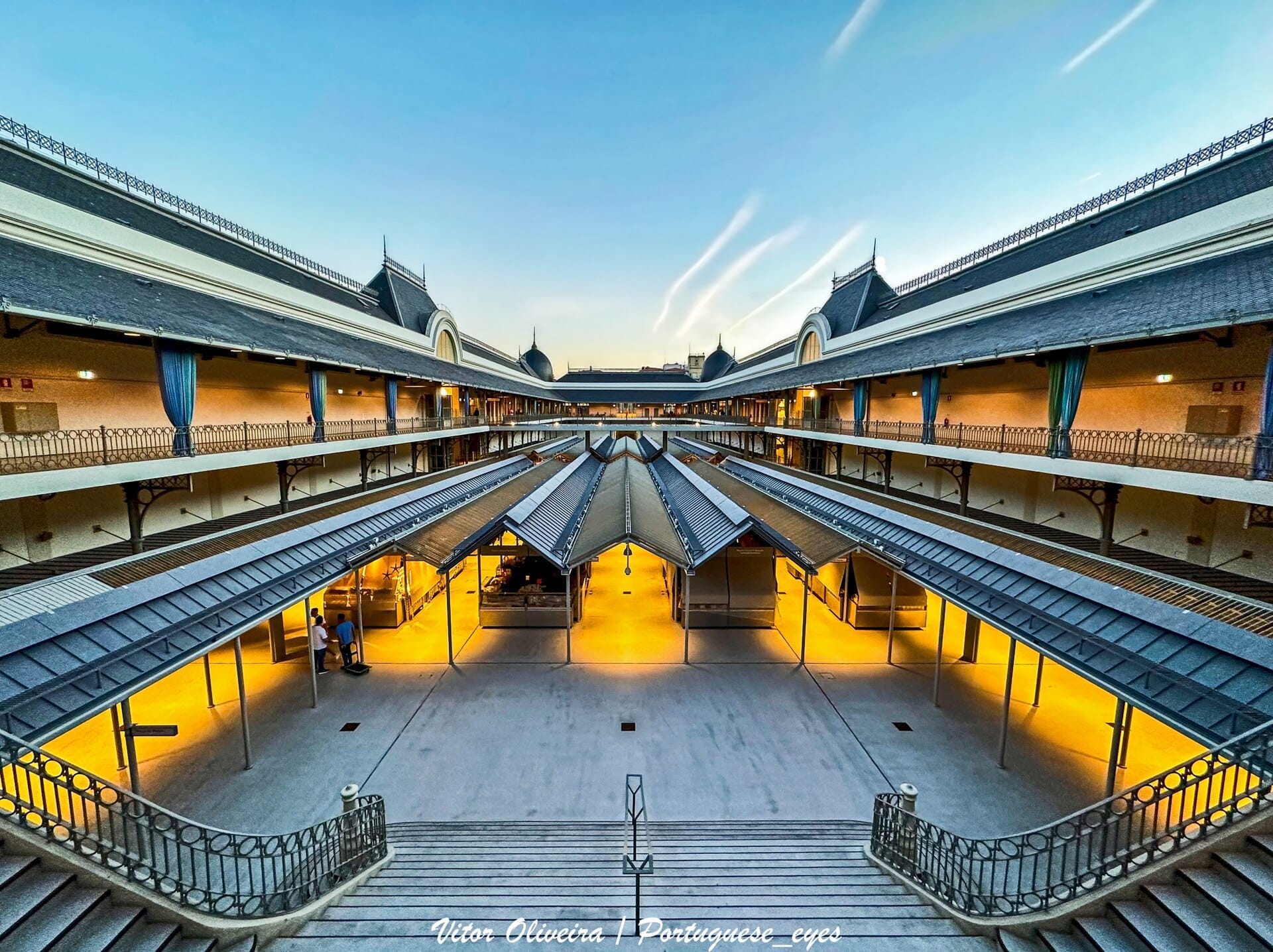
Mercado do Bolhão is Porto's most storied public market, a two-storey iron-and-stone structure built in 1914 that reopened in 2022 after a major renovation. Entry is free, the vendors are real locals, and it sits in the heart of Baixa within walking distance of the city's main transit hubs.
Quick Facts
- Location
- Rua Formosa 322, Baixa, Porto
- Getting There
- Bolhão or Trindade (both a short walk)
- Time Needed
- 45 minutes to 1.5 hours
- Cost
- Free entry; purchases extra
- Best for
- Food lovers, architecture fans, Porto culture seekers
- Official website
- mercadobolhao.pt/en/homepage-2
What Mercado do Bolhão Actually Is
Mercado do Bolhão is not a food hall, a pop-up, or a tourist rebranding exercise. It is a functioning public market that has served Porto's residents since it officially opened in 1914. Designed by architect José Marques da Silva, the structure is a two-level open courtyard ringed by iron balustrades and arched galleries, built on a sloped site in the Baixa district. It is the kind of place where a vendor knows your name by the third visit and the price of bacalhau shifts with the week's catch.
The market closed for a major renovation in 2018 and reopened in 2022, after roughly four years of closure, prompting some debate among Porto regulars about whether the restored version would retain its character or become another sanitised attraction. The honest answer: the renovation cleaned and reinforced the structure, added elevators, and improved circulation, but the vendor mix and the general atmosphere of a real working market survived largely intact. It is worth your time, though not quite for the same reasons as before the renovation.
ℹ️ Good to know
Opening hours: Monday to Friday 08:00–19:00, Saturday 08:00–18:00. Closed Sunday. Entry is free.
The Architecture: Why the Building Matters
José Marques da Silva is best known in Porto for his work on São Bento Railway Station, and looking up at Bolhão's ironwork galleries, the same hand is recognisable. The market occupies a rectangular excavated block, so you enter at street level and find yourself standing above the lower trading floor, looking down into the courtyard. The proportions are generous, with wide covered arcades on both levels providing shade in summer and shelter from rain in the wetter months.
The 2022 renovation restored the original ironwork, re-tiled large sections of the flooring, and added accessibility infrastructure without removing the structural character. Natural light floods the central courtyard from above, which means photographs taken around midday tend to have a sharp, warm quality that the covered indoor sections of the upper galleries cannot replicate. If you have any interest in Porto's early 20th-century civic architecture, this is one of the most legible examples still in active daily use.
The market sits close to Avenida dos Aliados, Porto's grand civic boulevard, so combining both in a morning walk is straightforward. The architectural contrast between the Beaux-Arts formality of the avenue and the market's utilitarian iron structure tells you a great deal about how the city organises its public life.
Tickets & tours
Hand-picked options from our booking partner. Prices are indicative; availability and final rates are confirmed when you complete your booking.
Serralves All-Access Pass
From 24 €Instant confirmationFree cancellationSantiago de Compostela Full-Day Tour
From 79 €Instant confirmationFree cancellationPeneda Geres park full-day tour from Porto
From 100 €Instant confirmationFree cancellationPorto historical center and the best viewpoints on a tuk-tuk
From 39 €Instant confirmationFree cancellation
What You Will Find Inside
The ground floor focuses on fresh produce: vegetables, fruit, fresh fish and shellfish, dried cod, olives, and fresh herbs. The smell in the fish section is direct and unsentimental. This is not a criticism. It means the fish is fresh and the vendors are not performing for tourists. The upper floor and covered galleries house cheese and charcuterie stalls, florists, and a growing number of café and prepared food counters that arrived with or after the renovation.
Among the things worth buying: local varieties of presunto (cured ham), regional cheeses from northern Portugal, fresh bread from vendors who arrive early, and bunches of dried herbs that weigh almost nothing in a bag. The florists on the upper level often have seasonal cut flowers at prices well below what you would pay at a European florist.
Some visitors note that the number of purely tourist-facing stalls selling packaged goods, ceramics, and port wine has increased since the renovation. These stalls are visible and clearly distinguishable from the produce vendors. They are not the reason to come here, but they are present. If you focus on the ground floor, you are mostly looking at a functional neighbourhood market.
💡 Local tip
Go on a weekday morning, between 09:00 and 11:00, when vendors are fully stocked and the pace is slower than midday. Saturday mornings are lively but more crowded. Avoid arriving after 17:00 on any day, as many fresh produce stalls begin packing up.
How the Experience Changes by Time of Day
At 08:30 on a Tuesday, the market is at its most functional. The vendors are arranging stock, the light is low and golden through the upper galleries, and the regulars are completing their weekly shop. Conversation between stall holders and customers moves fast and mostly in Portuguese. This is the version of Bolhão that Porto residents describe when they say the market matters to the city.
By 11:00, the courtyard has more visitors and more movement. The light in the open central section is stronger and photographs improve. The café counters on the upper level are serving espresso and small pastries, and there is a reasonable amount of foot traffic from people passing through on their way between Rua de Santa Catarina and the broader Baixa area.
The late afternoon has a different energy. Some stalls close early, the produce selection thins out, and the market takes on a quieter character. If your main interest is people-watching and atmosphere rather than buying, this can actually be a pleasant time. For a longer walk through the commercial streets nearby, Rua de Santa Catarina runs close to the market and connects you toward the Batalha area.
Getting There and Getting Around
The two most convenient metro stations are Bolhão and Trindade, both a short walk from the market entrance on Rua Formosa. Porto's metro is reliable and straightforward to navigate with an Andante card. Taxis and ride-hailing services (Uber and Bolt are both active in Porto) can drop you at the street entrance, though the surrounding streets can be slow with traffic during morning hours.
The market is accessible via elevators added during the 2022 renovation, which connect the street-level entrance to the lower courtyard floor. This makes it one of the more accessible markets in Porto's historic centre, where uneven cobbled surfaces and steep gradients are common. Bring a small bag or basket if you plan to buy anything substantial, as larger rolling luggage becomes unwieldy in the narrower stall sections.
If you are building a half-day in the Baixa area, the market pairs naturally with Rua das Flores to the south and a coffee stop at one of the cafés on Avenida dos Aliados. A more complete overview of what to do in Porto's centre is in the Porto walking tour guide.
Who Should Reconsider
If you are visiting Porto with very limited time and have to choose between Mercado do Bolhão and the city's major architectural or historic sites, the market ranks below the São Bento railway station, the Igreja de São Francisco, and the Palácio da Bolsa in terms of sheer spectacle. The renovation, while well executed, removed some of the faded, stratified character that made pre-renovation Bolhão photogenic in a particular way.
Travellers who are not interested in food markets, local produce, or everyday city life may find 20 minutes is sufficient. The market is not large, and once you have walked both levels and the central courtyard, you have seen it. It is not a place to linger for two hours unless you are shopping seriously or eating at one of the café counters.
For travellers focused primarily on food and where to eat in Porto rather than where to buy ingredients, the Porto food guide covers restaurants and petiscos bars across the city.
Photography Notes
The upper gallery walkway offers the best overall framing of the courtyard below. Stand at the iron railing on the second level at the north end of the market for the widest view of the open-air section. Midday in summer produces strong contrast between the sunlit courtyard and the shaded arcades, which can be either a problem or an asset depending on your approach.
The fish and vegetable stalls on the ground floor photograph well in the softer morning light. Ask before photographing individual vendors closely. Most are accustomed to it, but a brief gesture of acknowledgement goes a long way and occasionally results in an animated subject rather than a turned back.
Insider Tips
- Weekday mornings between 09:00 and 11:00 give you the best combination of full stall selection, manageable crowds, and natural light in the open courtyard.
- The cheese and charcuterie vendors on the upper level often offer small tastes before you buy. Take them up on it; the regional variation in northern Portuguese cheeses is wider than most visitors expect.
- If you want a quick, cheap breakfast inside the market, look for the coffee counters on the upper arcade rather than the ground floor. Espresso and a pastry cost roughly what a local would pay, not a tourist-facing markup.
- The elevator is on the Rua Formosa entrance side. If you arrive through one of the secondary entrances, it is not immediately obvious, so look for signage rather than hunting for stairs.
- Buying a bunch of fresh herbs or a small wedge of cheese is a reasonable way to support the vendors without committing to a full shop. The market's survival as a functioning local institution depends on actual purchasing, not just foot traffic.
Who Is Mercado do Bolhão For?
- Food travellers who want to see what Porto actually eats, not just what it serves to tourists
- Architecture enthusiasts interested in early 20th-century Portuguese civic buildings
- Self-catering visitors looking for fresh local produce, charcuterie, or cheese
- Travellers building a Baixa half-day itinerary that includes multiple nearby stops
- Photographers working with available natural light and unposed everyday subjects
Nearby Attractions
Other things to see while in Baixa:
- Avenida dos Aliados
Avenida dos Aliados is the ceremonial spine of central Porto, a wide early-20th-century boulevard stretching from Praça da Liberdade to Porto City Hall. Free to visit at any hour, it serves as Porto's civic stage, commercial main street, and the most direct introduction to the city's architectural ambitions.
- Capela das Almas
Standing on Porto's main shopping street, the Capela das Almas is one of the most photographed facades in the city. Its nearly 16,000 hand-painted blue-and-white azulejo tiles tell stories of saints across 360 square metres of exterior wall. Entry is free, and it takes less than 30 minutes to absorb properly.
- Clérigos Church
Rising 75 metres above the rooftops of Baixa, Clérigos Tower is the defining silhouette of the Porto skyline. The complex combines a beautifully preserved Baroque church, a small museum, and one of the city's most rewarding panoramic viewpoints, all within a few minutes' walk of the city's main commercial streets.
- Clérigos Tower
Standing 75 metres above Porto's rooftops, the Torre dos Clérigos is the tallest campanile in Portugal and the city's most instantly recognisable silhouette. Built between 1754 and 1763 to a design by Italian-born architect Nicolau Nasoni, it rewards those willing to climb its 200-plus steps with a panorama that stretches from the Douro river to the Atlantic. This page covers what the experience actually delivers, how crowds behave at different times of day, and everything you need to plan your visit.