Rua de Santa Catarina: Porto's Commercial Heart and Street Life
Rua de Santa Catarina is Porto's principal pedestrian shopping artery, stretching roughly 1.5 km through the Baixa district. It mixes international retailers with historic landmarks like the Majestic Café and the azulejo-covered Chapel of Souls, offering a genuine cross-section of how the city moves through its day.
Quick Facts
- Location
- Baixa, Porto (postcode area 4000-447)
- Getting There
- Bolhão Metro (lines A/B/C/E); also walkable from Trindade and São Bento stations
- Time Needed
- 1–2 hours for a relaxed walk with stops; half a day if shopping
- Cost
- Free (public street); individual shops and cafés charge separately
- Best for
- City orientation, street photography, café culture, people-watching
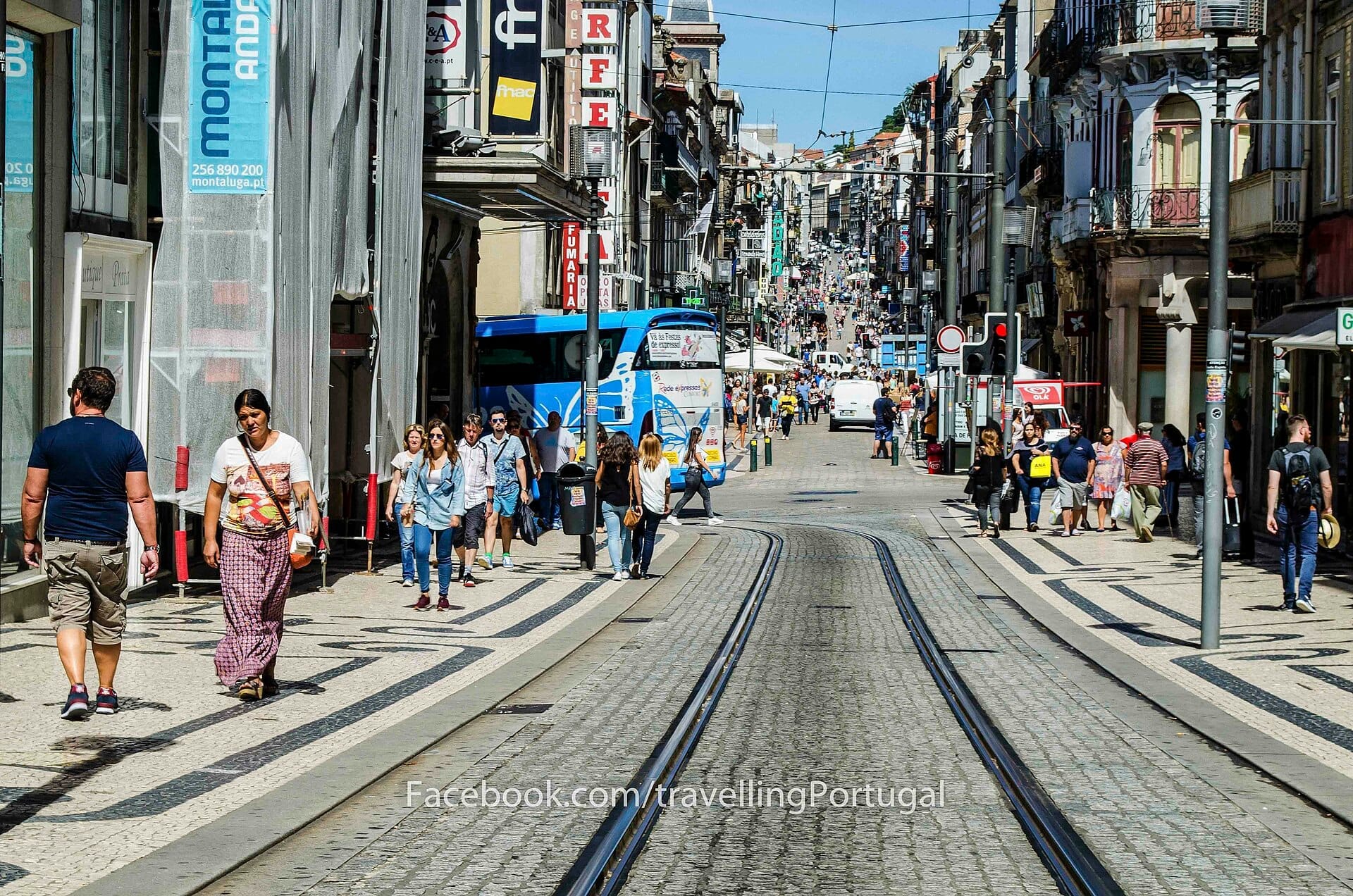
What Rua de Santa Catarina Actually Is
Rua de Santa Catarina is Porto's main commercial street: roughly 1.5 km of pedestrian-only paving that cuts through the Baixa district from Praça da Batalha in the south toward the Bolhão area in the north. It is not a curated tourist strip — it is the street where Portuenses actually shop, catch the tram, argue over coffee, and pass through twice a day. That combination of function and heritage gives it a texture that more picturesque corners of the city sometimes lack.
The street has no admission charge and no opening time. It is a public thoroughfare, accessible around the clock. What changes is the quality of the experience depending on when you arrive: mid-morning on a weekday feels entirely different from a Saturday afternoon in July.
💡 Local tip
For the best balance of activity and breathing room, arrive on a weekday morning before 10:30. Shops are just opening, the light on the tile facades is sharp, and the Majestic Café has tables free.
The Street at Different Hours
Early morning, roughly 8–9 AM, Rua de Santa Catarina belongs to delivery workers, older residents heading to the Bolhão market, and the occasional tourist who read a guidebook carefully. The black-and-white calcada stone underfoot catches the low northern light cleanly. The cafés are serving their first pastel de nata. There is traffic noise from parallel streets but the pedestrian zone itself is quiet enough to hear the echo of footsteps.
By mid-morning the street fills steadily. International chain stores open their shutters alongside smaller Portuguese shops selling shoes, household goods, and clothing. The Via Catarina Shopping Center, an indoor mall partway along the street, draws a separate current of shoppers away from the exterior pavement. Weekend afternoons from June through August are the most congested: the street narrows effectively at several points because the pavement is lined with people pausing to look at window displays or check their phones, and forward movement slows to a shuffle.
After around 7 PM on weekdays the shopping crowd thins. Restaurants on the side streets begin filling. The Chapel of Souls, lit from below, reads entirely differently at dusk than in flat daytime light. If your goal is photography rather than shopping, the hour before sunset in good weather produces the most interesting conditions.
⚠️ What to skip
Weekend afternoons in summer are genuinely crowded to a degree that makes relaxed exploration difficult. If you have the flexibility, a Tuesday or Wednesday morning avoids the worst of it.
Tickets & tours
Hand-picked options from our booking partner. Prices are indicative; availability and final rates are confirmed when you complete your booking.
Santiago de Compostela Full-Day Tour
From 79 €Instant confirmationFree cancellationSantiago de Compostela guided tour from Porto
From 110 €Instant confirmationFree cancellationSerralves All-Access Pass
From 24 €Instant confirmationFree cancellationPeneda Geres park full-day tour from Porto
From 100 €Instant confirmationFree cancellation
The Majestic Café: A Landmark Worth Understanding
At number 112, the Majestic Café opened in 1921 and is one of the finest examples of Art Nouveau commercial interior design in Portugal. The ceiling cherubs, the mirrored walls, the carved dark wood, and the wrought iron detailing are genuine and well-preserved, not a recent recreation. It was called Elite Café originally and renamed Majestic in 1929, reportedly to avoid appearing elitist. It remained a meeting place for Porto's literary and intellectual circles through much of the 20th century.
For a traveler deciding whether to sit down: the coffee and pastries are good but not exceptional for the price, which is noticeably above the Porto average. What you are paying for is the room itself and a legitimate piece of the city's social history. The queue for tables is real on busy days. If you want to see the interior without committing to a full sit-down, step inside and look around — no one will stop you. For a longer café comparison across the city, see the Majestic Café attraction page.
Chapel of Souls: The Tiled Facade You Will Stop For
The Igreja de Santa Catarina, better known as the Chapel of Souls, sits near the northern end of the street and stops most walkers in their tracks. The exterior is covered in azulejo panels — blue and white tin-glazed tiles depicting scenes from the lives of Saint Francis of Assisi and Saint Catherine of Alexandria. These were added in 1929 by the artist Eduardo Leite, covering almost every centimetre of the building's street-facing walls with approximately 16,000 tiles.
The chapel itself is 18th century in origin, but the tile cladding is what draws visitors and photographers. Azulejo tile decoration is one of Portugal's most distinctive art forms, found on churches, railway stations, and private houses across Porto. The Chapel of Souls is one of the most fully realised examples in the city. If you want a deeper grounding in the tradition, the Porto azulejo tiles guide covers the context and other key examples worth seeking out.
Photography note: the facade faces roughly east-northeast, so morning light hits it directly in the earlier hours and fades to flat or backlit conditions by afternoon. A slightly overcast day often produces the most even results for tile photography — direct harsh sun creates glare on the glazed surface.
The Street as a Commercial and Practical Artery
Beyond its two flagship landmarks, Rua de Santa Catarina functions as Porto's everyday retail spine. International fashion brands sit alongside Portuguese shoe shops, pharmacies, phone repair stalls, and one or two survivors of older neighborhood commerce. The Via Catarina Shopping Center provides a covered, air-conditioned alternative when the weather turns, which in Porto's wet winters happens frequently and without much warning.
A short detour off the street on Rua Fernandes Tomás brings you to the Mercado do Bolhão, Porto's historic food market. After extensive renovation, it has reopened and returned to something close to its original function: a two-storey iron-framed building selling produce, fish, cheese, flowers, and local foodstuffs. The combination of the street and the market is one of the better ways to understand how central Porto feeds and supplies itself.
Rua de Santa Catarina also connects naturally to the wider Baixa district. Avenida dos Aliados, Porto's formal civic boulevard, is a short walk west and provides a useful point of orientation. São Bento railway station, with its famous azulejo panels, is also within comfortable walking distance to the southwest.
Getting There and Getting Around
The most convenient metro stop is Bolhão, served by lines A, B, C, and E. From the station exit it is roughly a two-minute walk to the street. Trindade and São Bento stations are both within five to ten minutes on foot. Heritage tram Line 22 no longer operates; Line 18 and buses serve the Batalha area at the southern end of the street.
The street itself is pedestrian-only for most of its length and paved in flat calcada stone, which makes it accessible for strollers and generally manageable for wheelchairs. Individual buildings, including the Majestic Café and the Chapel of Souls, may have step entries typical of historic structures, so access inside each venue varies. For a broader orientation to moving around Porto's central districts, the getting around Porto guide covers transit options in detail.
What to Carry and What to Expect Underfoot
The black-and-white calcada pavimento — traditional Portuguese cobblestone mosaic — looks striking and reads well in photographs, but is uneven in places and can be slippery when wet. Porto gets significant rainfall between October and March. Wear shoes with a non-slip sole and meaningful grip. Visitors in flat-soled dress shoes or smooth-bottomed trainers regularly find themselves walking more carefully than expected after rain.
Pick-pocketing risk on busy pedestrian streets in Porto is low but not zero, particularly on crowded weekend afternoons. Carry valuables in a front pocket or a bag you can keep in front of you. No particular caution beyond standard urban common sense is needed.
ℹ️ Good to know
Rua de Santa Catarina is also genuinely useful as an orientation axis for first-time visitors. Walking its full length from Praça da Batalha northward to the Bolhão area takes about 20 minutes at a slow pace and gives a working mental map of central Porto.
Insider Tips
- The Majestic Café is busiest from 11 AM to 3 PM. Arrive at 9 AM for breakfast and you will likely get a table without waiting, at noticeably lower prices than the tourist-hour menu suggests.
- The Chapel of Souls is a working church, not just a photographic backdrop. It opens for Mass and general visiting; check the door for current hours before making a specific detour to see the interior.
- Rua de Santa Catarina's side streets are where local shops survive with less tourist pressure. Rua Fernandes Tomás toward Bolhão market and the streets running west toward Cedofeita repay a few minutes of wandering.
- The Via Catarina Shopping Center has clean, free public toilets. In a city where street-level public WCs are rare, this is a practical piece of information worth knowing on a long walking day.
- For tile photography, position yourself across the street from the Chapel of Souls rather than directly beneath it. The full facade reads much better from distance, and the morning hours before 11 AM give the cleanest light on the blue-and-white panels.
Who Is Rua de Santa Catarina For?
- First-time Porto visitors needing a central orientation walk
- Shoppers looking for a mix of Portuguese and international retail in one corridor
- Architecture and tile enthusiasts tracking Porto's azulejo tradition
- Café culture seekers with an interest in early-20th-century interiors
- Families who need a flat, stroller-friendly route through central Porto
Nearby Attractions
Other things to see while in Baixa:
- Avenida dos Aliados
Avenida dos Aliados is the ceremonial spine of central Porto, a wide early-20th-century boulevard stretching from Praça da Liberdade to Porto City Hall. Free to visit at any hour, it serves as Porto's civic stage, commercial main street, and the most direct introduction to the city's architectural ambitions.
- Capela das Almas
Standing on Porto's main shopping street, the Capela das Almas is one of the most photographed facades in the city. Its nearly 16,000 hand-painted blue-and-white azulejo tiles tell stories of saints across 360 square metres of exterior wall. Entry is free, and it takes less than 30 minutes to absorb properly.
- Clérigos Church
Rising 75 metres above the rooftops of Baixa, Clérigos Tower is the defining silhouette of the Porto skyline. The complex combines a beautifully preserved Baroque church, a small museum, and one of the city's most rewarding panoramic viewpoints, all within a few minutes' walk of the city's main commercial streets.
- Clérigos Tower
Standing 75 metres above Porto's rooftops, the Torre dos Clérigos is the tallest campanile in Portugal and the city's most instantly recognisable silhouette. Built between 1754 and 1763 to a design by Italian-born architect Nicolau Nasoni, it rewards those willing to climb its 200-plus steps with a panorama that stretches from the Douro river to the Atlantic. This page covers what the experience actually delivers, how crowds behave at different times of day, and everything you need to plan your visit.